
Montana
Montana Video Recording Laws: Consent Rules, Surveillance, and Penalties (2026)
Independently fact-checked against primary sources (last audited August 22, 2026). · Reviewed by the RecordingLaw editorial team. · Law checked current as of August 22, 2026. · 9 primary sources cited on this page. How we verify our legal content
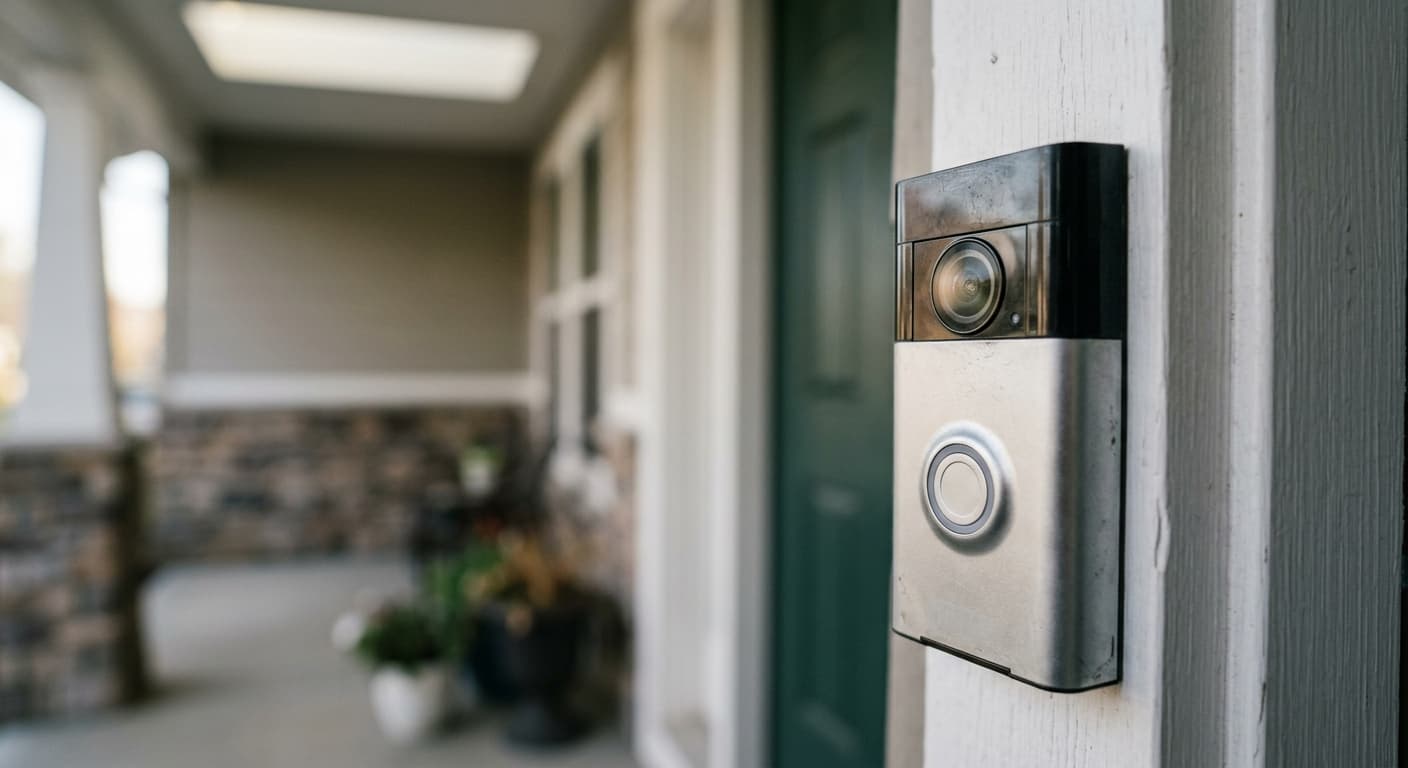
In Montana, silent video recording in public is generally lawful under the First Amendment and falls outside MCA 45-8-213. Video that captures audio requires all-party knowledge under MCA 45-8-213. Secretly filming an occupant of a residence, or recording anyone's sexual or intimate parts in a public place without their knowledge, is prohibited by MCA 45-5-223.
Montana does not have a single comprehensive video recording statute. Instead, video recording is governed by a combination of the privacy in communications law (MCA 45-8-213), the surreptitious visual observation statute (MCA 45-5-223), and constitutional privacy protections under Article II, Section 10 of the Montana Constitution.
The legal analysis depends on two key factors: whether the video captures audio, and whether the recording takes place in a public or private setting. Understanding these distinctions is critical for anyone using cameras, smartphones, or surveillance equipment in Montana.
Video Recording With Audio vs. Without Audio
The most important distinction in Montana video recording law is whether the recording captures sound.
Silent Video Recording
Silent video recording (no audio) is generally not covered by MCA 45-8-213 because that statute specifically addresses the recording of "a conversation" using a hidden device. Where there is no audio capture of human conversation, the communications statute does not apply.
Silent video recording in public spaces is protected activity under the First Amendment. Courts, including the Ninth Circuit Court of Appeals (which covers Montana), have recognized a constitutional right to record matters of public interest in public places.
However, even silent video recording can violate MCA 45-5-223 if it involves secretly filming an occupant of a residence or recording someone's sexual or intimate parts in a public place without their knowledge.
Video Recording With Audio
When video recording also captures audio of a private conversation, the full weight of MCA 45-8-213 applies. The recording is treated the same as an audio-only recording: all parties must have knowledge of the recording, or the warning exception must be invoked.
In practice, this means that turning on a video camera in a private setting where conversations are taking place requires either:
- A warning to all parties that the recording is happening (satisfying MCA 45-8-213(2)(a)(iii)), or
- The recording involves a public official performing official duties or a public meeting (other statutory exceptions).
Surreptitious Visual Observation: MCA 45-5-223
Montana's MCA 45-5-223 addresses secret visual recording and observation. This statute is separate from the communications law and applies even when no audio is captured.
What the Law Prohibits
MCA 45-5-223 covers two distinct categories of prohibited conduct. Under the first prong, a person commits an offense if they knowingly or purposely hide, wait, or loiter in person or by remote electronic device within or near a private dwelling house, apartment, or other place of residence to watch, gaze at, or electronically observe or record an occupant of that residence without the occupant's knowledge. This prong is residence-specific and does not, by its own text, reach general observation or filming in a non-residential space such as a hotel room, business restroom, or locker room.
Under the second prong, it is illegal to knowingly or purposely observe or record the sexual or intimate parts of another person in a public place without their knowledge when they have a reasonable expectation of privacy. This prong applies regardless of whether the location is a residence, but it reaches only recording of intimate body parts specifically, not general (non-intimate) filming.
Reasonable Expectation of Privacy
A person retains a reasonable expectation of privacy regarding their sexual or intimate parts specifically (triggering the statute's public-place prong if those parts are recorded) in locations such as:
- Bedrooms and bathrooms in private residences (residences additionally trigger the statute's separate observation prong regardless of what is recorded)
- Changing rooms and fitting rooms in retail stores
- Restrooms in any facility
- Hotel and motel rooms
- Locker rooms and shower areas
- Any other location where a person is in a state of undress and reasonably expects they are not being observed
General (non-intimate-parts) filming in a non-residential space like a hotel room, business restroom, or locker room may fall outside both prongs of this specific statute, even though it may be independently actionable under other privacy law.
Penalties for Surreptitious Visual Observation
- First offense: Misdemeanor, punishable by up to 6 months in jail and a $500 fine
- Second conviction: Up to 1 year in jail and a $1,000 fine
- Third or subsequent conviction: Up to 5 years and a $10,000 fine. MCA 45-5-223(4) has its own graduated penalty structure that escalates with repeat convictions, similar to MCA 45-8-213.
Video Recording in Public Spaces
Recording video in public spaces in Montana is generally lawful, with some important caveats.
First Amendment Protections
The First Amendment to the U.S. Constitution protects the right to record in public places. This includes recording:
- Streets, sidewalks, parks, and other public areas
- Government buildings (common areas accessible to the public)
- Public events, protests, and demonstrations
- Interactions with public officials performing official duties
The Ninth Circuit, which has jurisdiction over Montana, has recognized these recording rights in multiple decisions.
Limitations on Public Recording
Even in public spaces, certain recording activities may be restricted:
- Recording that interferes with law enforcement operations can result in obstruction charges, although the act of recording itself is not interference.
- Recording in areas with restricted access (military installations, certain government facilities) may be prohibited by federal or state regulations.
- Video recording that captures audio of private conversations in public still triggers MCA 45-8-213 if a hidden device is used. For example, placing a hidden camera with a microphone to capture a conversation at a restaurant table would violate the statute, even though the restaurant is a public place.
Video Surveillance on Private Property

Property owners in Montana have broad rights to install video surveillance on their own property, subject to certain restrictions.
What Property Owners May Do
- Install security cameras on the exterior of their property
- Record video of common areas within a business
- Use video doorbells and similar devices
- Monitor driveways, parking lots, and entryways
Restrictions on Private Property Surveillance
- Cameras placed to observe occupants of bedrooms or bathrooms in a residence risk violating MCA 45-5-223's residence-observation prong, and any camera capturing someone's sexual or intimate parts without their knowledge in a bathroom or changing room risks violating the statute's public-place prong
- If cameras capture audio, the all-party knowledge requirement of MCA 45-8-213 applies
- MCA 45-5-223 prohibits secret visual observation of persons in private spaces, even on the property owner's own premises
- Montana's constitutional right to privacy (Article II, Section 10) may provide additional protections for individuals recorded on someone else's property
Signage and Notice
While Montana does not have a specific statute requiring signage for video surveillance, posting visible signs serves several purposes:
- It may satisfy the "knowledge" requirement under MCA 45-8-213 if the cameras also capture audio
- It reduces the risk of civil liability for invasion of privacy claims
- It aligns with Montana's constitutional privacy values by providing transparency
Non-Consensual Intimate Images: 2025 Amendment
The 2025 amendment to MCA 45-8-213 added important provisions addressing video recordings of an intimate nature.
What the Amendment Covers
Under new subsections (1)(d) and (1)(e), it is a criminal offense to:
- Publish, distribute, or disclose real or digitally fabricated (including AI-generated) photographs, images, or videos of an identifiable person without consent, with the purpose to terrify, intimidate, threaten, harass, or injure, if the images show intimate body parts or sexual activity.
- Possess and threaten to disclose such images to obtain money or other valuable consideration.
AI-Generated Content
The statute specifically defines "digitally fabricated" to include media created using artificial intelligence that realistically misrepresents a person as engaging in conduct they did not actually engage in. This places Montana among the growing number of states addressing deepfake pornography.
Penalties
- First offense: Misdemeanor
- Second or subsequent offense: Felony, up to 5 years in prison and a $25,000 fine
Exceptions
The law includes exceptions for voluntary public exposure, disclosures in the public interest (including reporting unlawful conduct), law enforcement activities, legal proceedings, medical treatment, and educational or scientific materials.
Drone Video Recording
Montana addresses drone (unmanned aerial vehicle) recording through two separate statutes: MCA 46-5-109, which limits how drone-gathered evidence can be used in court, and MCA 45-6-210, which makes it a criminal offense to fly a drone low over another person's property without authorization.
Drone Surveillance Restrictions
Under Montana law:
- Knowingly flying a drone 200 feet or lower over another person's property or residence without that person's authorization is criminal trespass by unmanned aerial vehicle under MCA 45-6-210, punishable by a $500 fine.
- Information gathered by a drone is not admissible in a Montana prosecution or other proceeding unless it was obtained under a search warrant, a judicially recognized exception to the warrant requirement, or during the investigation of a public-roadway crash (MCA 46-5-109).
- Drone-obtained information also cannot be used in a probable cause affidavit to obtain a search warrant unless it meets one of those same conditions.
- MCA 45-6-210's trespass offense exempts government agencies acting for public safety, environmental protection, firefighting, law enforcement, or emergency response, along with certain licensed utility and business operations.
Federal Aviation Administration Rules
Drone operators in Montana must also comply with Federal Aviation Administration (FAA) regulations, including registration requirements, altitude restrictions, and airspace rules. These federal rules apply in addition to Montana's state-level trespass and evidence restrictions.
Recording in the Workplace
Video recording in Montana workplaces raises issues under both state recording law and employment law.
Employer Video Surveillance
Employers may generally install visible security cameras in common areas of the workplace (hallways, lobbies, production floors). However:
- A camera capturing an employee's sexual or intimate parts in restrooms, locker rooms, or changing areas violates MCA 45-5-223's public-place prong, though the statute's text does not clearly reach a camera in those areas that captures no intimate footage
- Audio-enabled cameras trigger MCA 45-8-213, requiring employee knowledge or warning
- Montana is the only state with the Wrongful Discharge from Employment Act (WDEA), codified at MCA 39-2-901 through 39-2-915, which may be relevant if recording disputes lead to termination
Employee Video Recording
Employees who wish to record in the workplace should:
- Provide a clear warning if capturing audio
- Be aware that employer policies may prohibit recording even when state law permits it
- Understand that violating a workplace recording policy may result in discipline, though Montana's WDEA provides more protections against wrongful termination than most states
Admissibility of Video Evidence
Video recordings are generally admissible in Montana courts if they were obtained lawfully. Key considerations include:
- Video obtained in violation of MCA 45-8-213 (hidden audio recording without knowledge) is inadmissible
- Video obtained in violation of MCA 45-5-223 (surreptitious visual observation) may face admissibility challenges
- Properly obtained video evidence must still satisfy rules of authentication and relevance under the Montana Rules of Evidence
TAKE IT DOWN Act (Federal, May 19 2025)
The TAKE IT DOWN Act, signed May 19, 2025 (Pub. L. 119-12), criminalizes publishing non-consensual intimate images (NCII) online, including AI-generated deepfakes, without the subject's consent. The Act's one-year platform-compliance deadline of May 19, 2026 has now passed. Online platforms must remove flagged content within 48 hours of a valid takedown request. The Act creates federal criminal liability and a civil enforcement mechanism.
For video recordings, the TAKE IT DOWN Act provides a federal takedown and enforcement layer that works alongside Montana's MCA 45-8-213(1)(d)/(1)(e) intimate-image provisions and MCA 45-5-223. Where a video recording is used to create or distribute NCII, all three frameworks may apply simultaneously in Montana.
More Montana Recording Laws
Audio Recording | Video Recording | Voyeurism & Hidden Cameras | Workplace Recording | Recording Police | Phone Call Recording | Security Cameras | Recording in Public | Landlord-Tenant | Dashcam Laws | Schools | Medical Recording
Back to Montana Recording Laws
More Montana Recording Topics
More Montana Laws
Frequently Asked Questions
Is it legal to record video in public in Montana?
Yes. Recording video in public spaces is generally protected under the First Amendment. Montana law does not prohibit video recording in public areas like streets, parks, and government buildings. However, if the video also captures audio of a private conversation using a hidden device, MCA 45-8-213 applies. Additionally, MCA 45-5-223 separately prohibits secretly filming an occupant of a residence, and prohibits recording anyone's sexual or intimate parts in a public place, such as a restroom, without their knowledge.
Can I install security cameras on my property in Montana?
Yes. Property owners may install video surveillance cameras on their own property. Cameras should not be placed to observe occupants inside a residence's bathrooms or guest bedrooms, and cameras must never capture anyone's sexual or intimate parts without their knowledge in a public place. If cameras capture audio, you must satisfy the all-party knowledge requirement of MCA 45-8-213, which can be met by posting visible signs warning that recording is taking place.
Does Montana's recording law apply to silent video?
MCA 45-8-213 specifically covers recordings of conversations using hidden devices, so silent video does not trigger that statute. However, MCA 45-5-223 separately prohibits secretly filming an occupant of a residence and prohibits recording anyone's sexual or intimate parts in a public place without their knowledge. Silent video recording can violate this separate statute if it involves either kind of conduct.
What are the penalties for illegal video recording in Montana?
Penalties depend on which statute is violated. Under MCA 45-8-213 (hidden audio/video recording of conversations), a first offense is a misdemeanor with up to 6 months in jail and a $500 fine, with felony penalties for repeat offenses. Under MCA 45-5-223 (surreptitious visual observation), a first offense is a misdemeanor with similar penalties. The 2025 amendment adds felony penalties of up to 5 years and $25,000 for repeat distribution of non-consensual intimate images.
Can I use a drone to record video in Montana?
Drone video recording in Montana is governed by two statutes. MCA 45-6-210 makes it a criminal offense (a $500 fine) to fly a drone 200 feet or lower over another person's property or residence without authorization. MCA 46-5-109 separately limits when drone-gathered information can be used as evidence, requiring a search warrant, a recognized warrant exception, or a public-roadway crash investigation. Drone operators must also comply with Federal Aviation Administration regulations regarding registration, altitude limits, and airspace restrictions.
Updates
Corrected the TAKE IT DOWN Act's signing date from 2026 to the correct 2025.
Independently fact-checked against the cited primary sources; governing law re-checked for recent changes
Governing law re-checked for recent changes
Corrected the drone-recording section to the real Montana statutes (MCA 46-5-109 evidence rule and MCA 45-6-210 overflight trespass, not the flag-desecration statute previously cited as MCA 45-8-215), added MCA 45-5-223's actual graduated repeat-offense penalties, and fixed a pinpoint citation from 45-8-213(2)(c) to 45-8-213(2)(a)(iii).
Governing law re-checked for recent changes
Reviewed and approved by an editor
The Law Behind This Article
This article rests on the statutory provisions below, held in our own legal record and retrieved from the official source. Tap a section to read the operative text.
Montana Code Annotated, Title 45
§ 45-5-223Surreptitious Visual Observation Or Recordation -- Place Of Residence -- Public Place -- ExceptionsIn forcecited in 9 of our articles
45-5-223. Surreptitious visual observation or recordation -- place of residence -- public place -- exceptions. (1) A person commits the offense of surreptitious visual observation or recordation in a place of residence if the person purposely or knowingly hides, waits, or otherwise loiters in person or by means of a remote electronic device within or in the vicinity of a private dwelling house, apartment, or other place of residence for the purpose of: (a) watching, gazing at, or looking upon any occupant in the residence in a surreptitious manner without the occupant's knowledge; or (b) by means of an electronic device, surreptitiously observing or recording the visual image of any occupant in the residence without the occupant's knowledge. (2) A person commits the offense of surreptitious visual observation or recordation in public if the person purposely or knowingly observes or records a visual image of the sexual or intimate parts of another person in a public place without the other person's knowledge when the victim has a reasonable expectation of privacy.
Official text (excerpt) · last checked 2026-08-31 · Read the full text in our law library · Verify at mca.legmt.gov
Cited in 1 court opinions in our collectionLatest citing opinion in our collection: 2026
Opinions citing this section in our collection:
- United States v. Watkins (Court of Appeals for the Tenth Circuit 2026)“…nn. § 609.746;1 Miss. Code Ann. § 97-29-61;2 MPC § 250.12;1 Mont. Code Ann. 45-5-223;3 Neb. Rev. Stat. § 28-311.08; Nev. Rev…”
Identified automatically from the court opinions citing this section — not a ranking of which case controls.
Also relied on in: Montana Recording Laws (2026): Announcement Exception and Penalties, Montana Laws on Recording in Public: First Amendment Rights and Limitations (2026), Montana Workplace Recording Laws: Employee Rights, Employer Monitoring, and the WDEA (2026)
§ 45-8-213Privacy In CommunicationsIn forcecited in 23 of our articles
45-8-213. Privacy in communications. (1) Except as provided in 69-6-104, a person commits the offense of violating privacy in communications if the person knowingly or purposely: (a) with the purpose to terrify, intimidate, threaten, harass, or injure, communicates with a person by electronic communication and threatens to inflict injury or physical harm to the person or property of the person or makes repeated use of obscene, lewd, or profane language or repeated lewd or lascivious suggestions; (b) uses an electronic communication to attempt to extort money or any other thing of value from a person or to disturb by repeated communications the peace, quiet, or right of privacy of a person at the place where the communications are received; (c) records or causes to be recorded a conversation by use of a hidden electronic or mechanical device that reproduces a human conversation without the knowledge of all parties to the conversation; (d) with the purpose to terrify, intimidate, threaten, harass, or injure or to obtain money or other valuable consideration, publishes, distributes, or discloses real or digitally fabricated printed or electronic photographs, pictures, images, or…
Official text (excerpt) · last checked 2026-08-31 · Read the full text in our law library · Verify at mca.legmt.gov
Cited in 23 court opinions in our collectionLatest citing opinion in our collection: 2025
In the courts (editorial summary, independently checked):State v. Dugan (2013) struck the statute's prima facie intent clause as overbroad. State v. Brown (1988) noted the statute still bars recording without all participants' permission and rejected an overbreadth attack on its public-official exception. State v. DuBray (2003) found no violation where the defendant knew of the recording.
Opinions citing this section in our collection:
- State v. Smith (Montana Supreme Court 2004, 322 Mont. 206)✓A man who phoned threats to kill his estranged wife's boyfriend argued he should have been charged under section 45-8-213(1)(a) instead of assault with a weapon. The court held the two statutes punish different conduct, so the charge was within prosecutorial discretion.
- State v. Dugan (Montana Supreme Court 2013, 369 Mont. 39)“…rbroad, the Court today strikes the prima facie language in § 45-8-213, MCA. However, a narrow application would be…”
- In re C.S. (Montana Supreme Court 1984, 210 Mont. 144)“…n of privacy in communication, a misdemeanor as provided in Section 45-8-213, MCA. The facts underlying the offense were…”
Identified automatically from the court opinions citing this section — not a ranking of which case controls.
Also relied on in: Montana Landlord-Tenant Recording Laws: Camera Rules, Privacy Rights, and Disputes (2026), Montana Security Camera Laws: Home, Business, and Surveillance Rules (2026), Montana Voyeurism Laws: Hidden Cameras, Peeping, and Penalties (2026)
Montana Code Annotated, Title 46
§ 46-5-109Limitations On Unmanned Aerial VehiclesIn forcecited in 3 of our articles
46-5-109. Limitations on unmanned aerial vehicles. (1) In any prosecution or proceeding within the state of Montana, information from an unmanned aerial vehicle is not admissible as evidence unless the information was obtained: (a) pursuant to the authority of a search warrant; (b) in accordance with judicially recognized exceptions to the warrant requirement; or (c) during the investigation of a motor vehicle crash scene that occurs on or involves a public roadway. (2) Information obtained from the operation of an unmanned aerial vehicle may not be used in an affidavit of probable cause in an effort to obtain a search warrant unless the information was obtained under the circumstances described in subsection (1)(a), (1)(b), or (1)(c). (3) For the purposes of this section, "unmanned aerial vehicle" means an aircraft that is operated without direct human intervention from on or within the aircraft. The term does not include satellites.
Official text (excerpt) · last checked 2026-08-31 · Read the full text in our law library · Verify at mca.legmt.gov
United States Code Title 18
§ 2511Interception and disclosure of wire, oral, or electronic communications prohibitedIn forcecited in 422 of our articles
Except as otherwise specifically provided in this chapter any person who— intentionally intercepts, endeavors to intercept, or procures any other person to intercept or endeavor to intercept, any wire, oral, or electronic communication; intentionally uses, endeavors to use, or procures any other person to use or endeavor to use any electronic, mechanical, or other device to intercept any oral communication when— such device is affixed to, or otherwise transmits a signal through, a wire, cable, or other like connection used in wire communication; or such device transmits communications by radio, or interferes with the transmission of such communication; or such person knows, or has reason to know, that such device or any component thereof has been sent through the mail or transported in interstate or foreign commerce; or such use or endeavor to use (A) takes place on the premises of any business or other commercial establishment the operations of which affect interstate or foreign commerce; or (B) obtains or is for the purpose of obtaining information relating to the operations of any business or other commercial establishment the operations of which affect interstate or foreign…
Official text (excerpt) · last checked 2026-08-28 · Read the full text in our law library · Verify at uscode.house.gov
Cited in 2,045 court opinions in our collectionLatest citing opinion in our collection: 2026
In the courts (editorial summary, independently checked):Griggs-Ryan v. Smith (1990) applied the Section 2511(2)(d) prior-consent exception, treating a tenant repeatedly told that all incoming calls were taped as having impliedly consented. United States v. United States District Court (1972) read the then-current Section 2511(3) as conferring no presidential surveillance power.
Opinions citing this section in our collection:
- Mitchell v. Forsyth (Supreme Court of the United States 1985, 472 U.S. 511)✓The Attorney General authorized a warrantless 1970 national security wiretap that caught the plaintiff's calls; the Court held the since-repealed Section 2511(3) disclaimer left the tap lawful under Title III, and that Mitchell had qualified immunity.
- United States v. United States District Court for the Eastern District of Michigan (Supreme Court of the United States 1972, 407 U.S. 297)✓The Attorney General approved warrantless wiretaps on members of a domestic group accused of bombing a CIA office; the Court read Section 2511(3) as a congressional disclaimer conferring no surveillance power, then held the Fourth Amendment required prior judicial approval.
- Forsyth v. Barr (Court of Appeals for the Fifth Circuit 1994, 19 F.3d 1527)✓Dallas police used, in an internal affairs probe of an officer, calls private parties allegedly intercepted illegally; assuming that was unlawful, the Fifth Circuit held Section 2517(1) and (2) allowed the disclosure and use, defeating the Section 2511(1)(c) and (d) claims.
Identified automatically from the court opinions citing this section — not a ranking of which case controls.
Also relied on in: Connecticut Recording Laws (2026): Hybrid Consent Rules Explained, Oregon Recording Laws (2026): Hybrid One-Party and All-Party Rules, US Recording Laws by State (2026): All 50 States Explained
Search our full record of US law — 2.1 million sections, every state + federal →
Sources and References
- Montana Code Annotated 45-8-213 - Privacy in Communications(leg.mt.gov).gov
- Montana Code Annotated 45-5-223 - Surreptitious Visual Observation or Recordation(leg.mt.gov).gov
- Montana Constitution Article II, Section 10 - Right of Privacy(leg.mt.gov).gov
- MCA 46-5-109 - Limitations on Unmanned Aerial Vehicles(mca.legmt.gov).gov
- Federal Aviation Administration - Unmanned Aircraft Systems(faa.gov).gov
- 18 U.S.C. 2511 - Federal Wiretap Act(law.cornell.edu)
- Montana Code Annotated 45-8-213 - Privacy in Communications(mca.legmt.gov).gov
- Montana Code Annotated 45-5-223 - Surreptitious Visual Observation or Recordation(mca.legmt.gov).gov
- Montana Constitution Article II, Section 10 - Right of Privacy(mca.legmt.gov).gov
- MCA 46-5-109 - Limitations on Unmanned Aerial Vehicles(mca.legmt.gov).gov