
Oregon
Oregon Ring Doorbell Laws: What You Need to Know in 2026
Independently fact-checked against primary sources (last audited August 17, 2026). · Reviewed by the RecordingLaw editorial team. · Law checked current as of August 17, 2026. · 10 primary sources cited on this page. How we verify our legal content
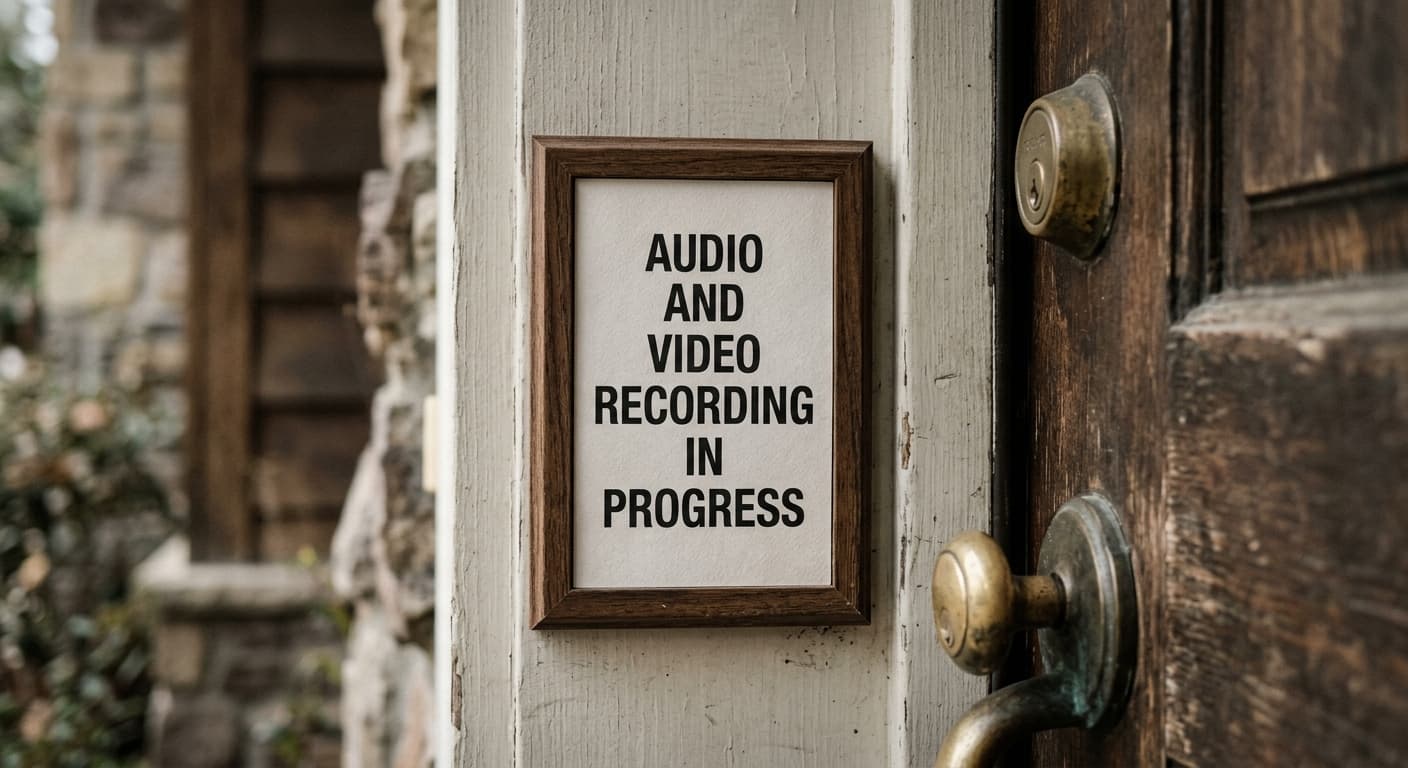
Ring doorbells capture video and audio around the clock, and Oregon law treats those two functions very differently. Video recording from your own property is broadly legal, but audio recording triggers Oregon's distinctive split consent framework under ORS 165.540. Portland adds a local facial recognition ordinance, Chapter 34.10, but that ordinance reaches private entities in places of public accommodation and expressly excludes private residences from the places it covers.
Oregon homeowners, renters, and landlords all need to understand these overlapping rules. A Ring doorbell that records the wrong conversation or enables the wrong feature could lead to criminal charges, civil liability, or both. This guide covers every relevant Oregon statute, Portland's local ordinance, and practical steps for staying on the right side of the law.
Audio Recording Laws and Ring Doorbells in Oregon
The biggest legal concern with Ring doorbells in Oregon centers on audio recording. Every Ring doorbell model includes a built-in microphone that captures sound alongside video. This audio capability triggers Oregon's eavesdropping statute, and the rules depend on the type of communication being recorded.
Telephone and Electronic Communications: One-Party Consent
Under ORS 165.540(1)(a), Oregon prohibits obtaining the contents of a telecommunication or radio communication without the consent of at least one participant. This is a standard one-party consent framework. If you are a participant in a phone call or electronic communication through your Ring doorbell, your own consent satisfies this requirement.
When someone rings the doorbell and you answer through the Ring app, that two-way conversation qualifies as an electronic communication. Your participation and consent make the recording legal under this subsection.
In-Person Conversations: All Parties Must Be Informed
Oregon's rules change for in-person conversations. Under ORS 165.540(1)(c), a person may not obtain or attempt to obtain any part of a conversation "if not all participants in the conversation are specifically informed that their conversation is being obtained."
This creates a significant distinction for Ring doorbell owners. When your Ring doorbell passively records audio of people talking on or near your porch, those individuals are having an in-person conversation. If they have not been specifically informed that their conversation is being recorded, the recording may violate ORS 165.540(1)(c).
The Home Exemption in ORS 165.540(3)
ORS 165.540 carries an exemption that Ring owners should know about before assuming the worst. Subsection (3) provides that the prohibitions in subsection (1) do not apply to "subscribers or members of their family who perform the acts prohibited in subsection (1) of this section in their homes."
Read on its face, that language points directly at a homeowner recording at their own residence. Its scope is not settled, though, and two features of the text cut against relying on it. The term "subscribers" is used elsewhere in ORS 165.540 in the context of telecommunication service, which suggests the exemption may have been written for a narrower situation than a modern camera. And a doorbell camera records visitors standing outside the house, so whether that counts as an act performed "in their homes" is a genuine open question rather than a settled rule.
Treat subsection (3) as an argument that may be available to a homeowner, not as a safe harbor you can plan around. The practical steps below cost nothing and do not depend on how a court eventually reads it.
Practical Implications for Ring Owners
The safest approach in Oregon involves two strategies. First, post a visible notice near your Ring doorbell stating that audio and video recording is in progress. This helps satisfy the "specifically informed" requirement for in-person conversations. Second, consider disabling the audio recording feature on your Ring doorbell through the Ring app if you want to eliminate legal risk entirely.
Ring doorbells record audio by default. Oregon law places the burden on the device owner to ensure compliance, not on the visitors who may not realize they are being recorded.

Video Recording Laws and Ring Doorbells
Oregon takes a more permissive approach to video surveillance than audio recording. No state statute prohibits video recording from your own property when the camera captures publicly visible areas like sidewalks, streets, driveways, and front porches.
ORS 163.700: Invasion of Personal Privacy
The primary video restriction in Oregon comes from ORS 163.700, which prohibits recording another person in a state of nudity without consent when that person is in a place where they have a reasonable expectation of privacy. This statute targets voyeurism rather than general security camera use.
For Ring doorbell owners, ORS 163.700 means your camera cannot be positioned to record into areas where people have a reasonable expectation of privacy, such as bathroom windows, bedrooms, or enclosed backyard spaces. A Ring doorbell pointed at your front door and the public sidewalk beyond it does not typically raise ORS 163.700 concerns.
Violation of ORS 163.700 is a Class A misdemeanor. Under ORS 161.615(1), the maximum term of imprisonment for a Class A misdemeanor is 364 days, and the maximum fine is $6,250.
Neighbor Privacy Considerations
While Oregon does not have a specific statute banning security cameras that capture a neighbor's property, pointing a Ring doorbell or supplemental camera directly at a neighbor's windows or private spaces could support a civil claim for invasion of privacy. Oregon courts recognize the tort of intrusion upon seclusion, which applies when someone intentionally intrudes on the private affairs of another in a manner that would be highly offensive to a reasonable person.
Portland's Facial Recognition Ban and Ring Familiar Faces
Portland, Oregon enacted one of the most comprehensive facial recognition bans in the country. Chapter 34.10 of the Portland City Code prohibits private entities from using face recognition technologies in places of public accommodation within city limits. The ordinance took effect on January 1, 2021.
What the Ordinance Covers
Under Section 34.10.020, "Face Recognition Technologies" means automated or semi-automated processes that assist in identifying, verifying, detecting, or characterizing facial features of an individual. Section 34.10.030 prohibits any private entity from using these technologies in places of public accommodation within Portland.
The scope of that phrase is what matters most to a homeowner. Section 34.10.020 also defines "Places of Public Accommodation," and that definition expressly excludes "an institution, bona fide club, private residence, or place of accommodation that is in its nature distinctly private." A Ring doorbell mounted on your own house sits outside what the ordinance prohibits. The ban reaches businesses and other private entities operating public-facing locations inside Portland, not residents running cameras at home.
Amazon launched Ring's Familiar Faces facial recognition feature in December 2025. This feature allows Ring doorbells to identify known visitors by comparing captured images against a database of faces the owner has tagged. Ring does not make the feature available in Portland. Chapter 34.10 does not itself impose that limit on a camera at a private residence, for the reasons above.
Penalties for Violations
Under Section 34.10.050, any person injured by a material violation of the ordinance has a cause of action against the violating private entity. Damages are set at the greater of actual damages sustained or $1,000 per day for each day of violation.
Because the prohibition does not extend to private residences, that cause of action does not give a visitor a claim against a homeowner for face recognition running on a doorbell camera at that home. It runs against private entities using the technology in places of public accommodation.
Exceptions
The ordinance includes limited exceptions under Section 34.10.040. Face recognition is permitted for user verification purposes (such as unlocking a personal device with Face ID) and when necessary to comply with federal, state, or local laws. A Portland business that is open to the public cannot rely on these exceptions to run a visitor-identification system on its premises.
HOA Rules and Ring Doorbells in Oregon
Oregon homeowners associations operate under the Oregon Planned Community Act (ORS Chapter 94) and the Oregon Condominium Act (ORS Chapter 100). Both statutes grant HOAs authority to establish and enforce Covenants, Conditions, and Restrictions (CC&Rs) that govern property modifications within the community.
What HOAs Can Regulate
HOAs in Oregon can adopt rules that affect Ring doorbell installation in several ways:
- Exterior modifications: Many CC&Rs require architectural review committee approval before any exterior changes, including mounting a Ring doorbell.
- Placement restrictions: HOAs may specify where cameras can be mounted to maintain uniform community appearance.
- Color and style requirements: Some associations require devices to match the home's exterior color scheme.
- Common area recording: HOAs can prohibit cameras that record shared spaces like hallways, lobbies, or pool areas.
What HOAs Cannot Do
HOAs cannot override Oregon state recording laws. Even if an HOA permits Ring doorbells, the owner remains responsible for complying with ORS 165.540 (audio recording) and ORS 163.700 (visual privacy). An HOA approval does not create a legal shield against eavesdropping charges.
Oregon homeowners considering a Ring doorbell installation in an HOA community should review their CC&Rs and submit any required modification requests before mounting the device.
Landlord and Tenant Rights
Oregon's Residential Landlord and Tenant Act (ORS Chapter 90) governs the relationship between landlords and tenants regarding property modifications, including Ring doorbell installation.
Tenant Installation Rights
Oregon law does not specifically address doorbell camera installation by tenants. Under general lease terms, tenants typically need written landlord permission before making exterior modifications to rental property. Installing a Ring doorbell involves drilling into the door frame or wall, which most leases classify as an alteration requiring approval.
Some landlords include security device provisions in their lease agreements. Tenants should check their lease for language about exterior modifications, security cameras, or smart home devices before installing a Ring doorbell.

Landlord Surveillance Restrictions
Landlords who install Ring doorbells on rental properties face additional considerations. Under ORS 90.322, landlords have limited rights to access tenant premises. A Ring doorbell that records a tenant's comings and goings could raise privacy concerns, particularly if the landlord monitors the footage without the tenant's knowledge.
Landlords who install shared-area Ring doorbells on multi-unit properties should provide written notice to all tenants that audio and video recording is in progress. This notice helps satisfy the "specifically informed" requirement under ORS 165.540(1)(c) for in-person conversations captured in common areas.
Security Deposits and Removal
If a tenant installs a Ring doorbell with landlord permission, the lease should address whether the device stays when the tenant moves out. Under Oregon law, tenants are generally responsible for returning the property to its original condition. Holes from Ring doorbell mounting may be deducted from the security deposit unless the lease provides otherwise.
Law Enforcement Access to Ring Footage in Oregon
Oregon law enforcement can access Ring doorbell footage through several legal channels, each with different requirements.
Warrant-Based Access
A search warrant issued by an Oregon court is the most common method for obtaining Ring footage. Under the Fourth Amendment and Article I, Section 9 of the Oregon Constitution, law enforcement generally needs a warrant supported by probable cause to compel disclosure of private recordings.
Subpoenas and Court Orders
Law enforcement can also obtain Ring footage through grand jury subpoenas or court orders. These legal instruments carry different standards than search warrants but still require judicial oversight.
Amazon's Disclosure Policies
Amazon's Ring has changed its law enforcement access policies multiple times. In January 2024, Ring announced it would no longer facilitate warrantless police requests for footage through the Request for Assistance tool on the Neighbors app. However, Amazon may still disclose footage without user consent when it believes someone faces "danger of death or serious physical injury," a determination Amazon makes without court review.
In 2023, the Federal Trade Commission settled with Ring for $5.8 million after finding that Ring employees had accessed customer videos without authorization and that the company failed to implement adequate security protections.
Voluntary Disclosure
Ring doorbell owners in Oregon can voluntarily share footage with law enforcement at any time. No warrant or subpoena is needed when the owner consents to disclosure. Oregon law does not prohibit homeowners from choosing to cooperate with police investigations by sharing their own recordings.
Penalties for Illegal Recording in Oregon
Oregon imposes criminal and civil penalties for recording violations, and the severity depends on which statute was violated.
Criminal Penalties
| Violation | Classification | Maximum Jail Time | Maximum Fine |
|---|---|---|---|
| ORS 165.540 (Eavesdropping) | Class A Misdemeanor | 364 days | $6,250 |
| ORS 163.700 (Invasion of Privacy) | Class A Misdemeanor | 364 days | $6,250 |
| Portland Chapter 34.10 (face recognition by a private entity in a place of public accommodation; private residences are excluded) | Civil cause of action | N/A | $1,000/day or actual damages |
Civil Liability
Victims of illegal recording in Oregon can pursue civil damages through a lawsuit. Oregon recognizes the tort of intrusion upon seclusion, which allows individuals whose privacy has been invaded to seek compensatory and potentially punitive damages.
Portland's facial recognition ordinance creates its own civil cause of action. Any person injured by a violation can sue for actual damages or $1,000 per day, whichever is greater. That claim lies against a private entity using face recognition in a place of public accommodation, not against a resident's camera at home.
How to Use a Ring Doorbell Legally in Oregon
Following these guidelines can help Oregon residents use Ring doorbells within the boundaries of state and local law:
-
Post a visible recording notice. Place a sign or sticker near your Ring doorbell stating that audio and video recording is in progress. This helps satisfy the "specifically informed" requirement under ORS 165.540(1)(c).
-
Consider disabling audio recording. The Ring app allows you to turn off the microphone. Disabling audio eliminates the risk of violating Oregon's eavesdropping statute entirely.
-
Aim your camera at public areas. Point your Ring doorbell toward your door, porch, walkway, and public sidewalk. Avoid angles that capture neighbors' private spaces like windows or enclosed yards.
-
Know what Portland's facial recognition ordinance actually reaches. Chapter 34.10 bars private entities from using face recognition technologies in places of public accommodation, and Section 34.10.020 excludes a private residence from that definition, so the ordinance does not prohibit face recognition on a camera at your own home. If you run a Portland business that is open to the public, the ban does apply to face recognition on those premises.
-
Review HOA rules before installing. If you live in a planned community or condominium, check your CC&Rs for exterior modification requirements and obtain any necessary approvals.
-
Get landlord permission if renting. Tenants should obtain written approval from their landlord before mounting a Ring doorbell on rental property.
-
Understand law enforcement access. Know that police can request your footage with a warrant, and Amazon may disclose recordings in emergency situations without your consent.
-
Keep your Ring account secure. Enable two-factor authentication and use a strong, unique password. The FTC's 2023 settlement with Ring highlighted the importance of account security for protecting recorded footage.
More Oregon Laws
Oregon has specific laws across many legal areas that affect residents and visitors. Explore these related guides:
- Oregon Recording Laws cover the full scope of audio and video recording rules beyond doorbell cameras.
This article provides general legal information about Oregon Ring doorbell laws as of April 2026. Laws and their interpretations can change. Consult an attorney for advice specific to your situation.
Frequently Asked Questions
Is it legal to use a Ring doorbell in Oregon?
Yes, Ring doorbells are legal in Oregon. Video recording of public areas from your own property is permitted. Audio recording requires that all participants in an in-person conversation be specifically informed under ORS 165.540(1)(c), so posting a visible recording notice near the doorbell is recommended. ORS 165.540(3) exempts subscribers and their family members who perform the otherwise prohibited acts in their homes, but its application to a doorbell camera recording visitors outside the house is unsettled, so it is not a substitute for posting notice.
Does Portland's facial recognition ban apply to Ring doorbells?
Not to a camera on your own home. Chapter 34.10 bars private entities from using face recognition technologies in places of public accommodation, and Section 34.10.020 expressly excludes a private residence from that definition, so a Ring doorbell on a house in Portland falls outside the ban. Ring does not make its Familiar Faces feature available in Portland. The ordinance does reach a private entity using face recognition at a public-facing business location, where an injured person can recover actual damages or $1,000 per day, whichever is greater.
Can my HOA prevent me from installing a Ring doorbell in Oregon?
Oregon HOAs can regulate exterior modifications through CC&Rs under ORS Chapter 94. Many associations require architectural review committee approval before mounting devices on the exterior of a home. Check your community's specific rules and submit any required modification requests before installation.
Can Oregon police access my Ring doorbell footage without my permission?
Law enforcement in Oregon generally needs a valid search warrant or court order to compel access to your Ring footage. Amazon may disclose footage without your consent in emergency situations involving danger of death or serious physical injury. You can also voluntarily share footage with police at any time.
What happens if I record someone illegally with my Ring doorbell in Oregon?
Illegal eavesdropping under ORS 165.540 is a Class A misdemeanor in Oregon. Under ORS 161.615(1) the maximum jail term for a Class A misdemeanor is 364 days, with fines up to $6,250. Victims can also pursue civil damages through a lawsuit. Portland's facial recognition ordinance adds no liability for a camera at a private residence, because it excludes private residences from the places it covers.
Updates
Corrected the scope of Portland's Chapter 34.10 facial recognition ban, which excludes private residences and so does not reach a doorbell camera at your own home, disclosed the home exemption in ORS 165.540(3), and fixed the Class A misdemeanor jail maximum to 364 days under ORS 161.615(1).
Independently fact-checked against the cited primary sources; governing law re-checked for recent changes
Governing law re-checked for recent changes
Reviewed and approved by an editor
The Law Behind This Article
This article rests on the statutory provisions below, held in our own legal record and retrieved from the official source. Tap a section to read the operative text.
Oregon Revised Statutes, Chapter 165: Offenses Involving Fraud or Deception
§ 165.540Obtaining contents of communicationsIn forcecited in 19 of our articles
(1) Except as otherwise provided in ORS 133.724 or 133.726 or subsections (2) to (8) of this section, a person may not: (a) Obtain or attempt to obtain the whole or any part of a telecommunication or a radio communication to which the person is not a participant, by means of any device, contrivance, machine or apparatus, whether electrical, mechanical, manual or otherwise, unless consent is given by at least one participant. (b) Tamper with the wires, connections, boxes, fuses, circuits, lines or any other equipment or facilities of a telecommunication or radio communication company over which messages are transmitted, with the intent to obtain unlawfully the contents of a telecommunication or radio communication to which the person is not a participant. (c) Obtain or attempt to obtain the whole or any part of a conversation by means of any device, contrivance, machine or apparatus, whether electrical, mechanical, manual or otherwise, if not all participants in the conversation are specifically informed that their conversation is being obtained.
Official text (excerpt) · last checked 2026-08-31 · Read the full text in our law library · Verify at oregonlegislature.gov
Cited in 76 court opinions in our collectionLatest citing opinion in our collection: 2026
In the courts (editorial summary, independently checked):State v. Fleetwood (2000) applied ORS 165.540 to body wire evidence, holding that words spoken into a telephone are a telecommunication under subsection (1)(a) and that the (5)(a)(B) exception fails unless the officer or the officer's agent shares reciprocally in the conversation, so the recordings were inadmissible.
Opinions citing this section in our collection:
- State v. Klein (Oregon Supreme Court 2012, 352 Or. 302)“…eing 3 recorded. Conversations recorded in violation of ORS 165.540 are not admissible in 4 court excep…”
- North Pacific Lumber Co. v. Oliver (Oregon Supreme Court 1979, 286 Or. 639)✓A lumber wholesaler secretly monitored traders' calls; on de novo review the court said the practice may have violated ORS 165.540 but refused to rest unclean hands on it, since the ex-employee's calls were never monitored. The employer's noncompete suit failed on other grounds.
- State v. Fleetwood (Oregon Supreme Court 2000, 331 Or. 511)✓A detective wired an informant and recorded the suspect's side of a phone call and his talks with his mother and a juvenile seller; the court held those interceptions violated ORS 165.540(1)(a) and (1)(c) because the informant was not a participant, and upheld suppression.
Identified automatically from the court opinions citing this section — not a ranking of which case controls.
Also relied on in: Oregon Recording Laws (2026): Hybrid One-Party and All-Party Rules, Oregon Voyeurism and Hidden Camera Laws: Offenses, Penalties, and Protections, Oregon Audio Recording Laws: Split Consent Rules for Conversations and Calls
Oregon Revised Statutes, Chapter 163: Offenses Against Persons
§ 163.700Invasion of personal privacy in the second degreeIn forcecited in 11 of our articles
(1) Except as provided in ORS 163.702, a person commits the crime of invasion of personal privacy in the second degree if: (a)(A) For the purpose of arousing or gratifying the sexual desire of the person, the person is in a location to observe another person in a state of nudity without the consent of the other person; and (B) The other person is in a place and circumstances where the person has a reasonable expectation of personal privacy; or (b)(A) The person knowingly makes or records a photograph, motion picture, videotape or other visual recording of another person’s intimate area without the consent of the other person; and (B) The person being recorded has a reasonable expectation of privacy concerning the intimate area. (2) As used in this section and ORS 163.701: (a) “Intimate area” means nudity, or undergarments that are being worn by a person and are covered by clothing.
Official text (excerpt) · last checked 2026-08-31 · Read the full text in our law library · Verify at oregonlegislature.gov
Cited in 16 court opinions in our collectionLatest citing opinion in our collection: 2023
In the courts (editorial summary, independently checked):State v. McQueen (2020) held that a person who intentionally exposes an intimate area to another has no reasonable expectation of privacy as to that person under ORS 163.700(1)(b)(B), reversing a conviction for secretly recording consensual sex. State v. Mayes (2008) read the nudity definition as reaching only post-pubescent people.
Opinions citing this section in our collection:
- State v. Parra-Sanchez (Court of Appeals of Oregon 2023, 324 Or. App. 712)“…wrong, and likely a criminal invasion of her privacy under ORS 163.700. To the extent that our case law regard…”
- State v. Rodriguez-Ganegar (Court of Appeals of Oregon 2003, 186 Or. App. 530)“…hat people were making love in it, the person would violate ORS 163.700(1)(b) by looking into the room in the m…”
- State v. Mayes (Court of Appeals of Oregon 2008, 220 Or. App. 385)✓A man hid cameras in workplace and office restrooms and secretly recorded women and two girls, ages nine and seven. The court held the nudity definition in ORS 163.700 reaches only post-pubescent people, measured from the onset of puberty, and reversed the seven-year-old's count.
Identified automatically from the court opinions citing this section — not a ranking of which case controls.
Also relied on in: Oregon Landlord-Tenant Recording Laws: Surveillance, Privacy, and Consent, Oregon Medical Recording Laws: Patient Rights, HIPAA, and Consent, Oregon School Recording Laws: Student, Parent, and Teacher Rights
Search our full record of US law — 2.1 million sections, every state + federal →
Sources and References
- ORS 165.540 - Obtaining contents of communications(oregonlegislature.gov).gov
- ORS 163.700 - Invasion of personal privacy(oregonlegislature.gov).gov
- Portland City Code Chapter 34.10 - Prohibit the use of Face Recognition Technologies by Private Entities(portland.gov).gov
- Portland City Code Section 34.10.030 - Prohibition(portland.gov).gov
- Portland City Code Section 34.10.040 - Exceptions(portland.gov).gov
- ORS Chapter 94 - Oregon Planned Community Act(oregonlegislature.gov).gov
- ORS Chapter 90 - Residential Landlord and Tenant(oregonlegislature.gov).gov
- Oregon Constitution - Article I, Section 9(oregonlegislature.gov).gov
- FTC - Ring employees illegally surveilled customers, failed to stop hackers (May 2023)(ftc.gov).gov
- City Council Approves Ordinances Banning Use of Facial Recognition Technologies(portland.gov).gov
- Portland City Code Section 34.10.020 - Definitions (Places of Public Accommodation excludes a private residence)(portland.gov)
- ORS 161.615 - Maximum terms of imprisonment for misdemeanors (Class A: 364 days)(oregonlegislature.gov)