
Maryland
Maryland Laws on Recording Police: Your Rights and Limits (2026)
Independently fact-checked against primary sources (last audited August 22, 2026). · Reviewed by the RecordingLaw editorial team. · Law checked current as of August 22, 2026. · 6 primary sources cited on this page. How we verify our legal content
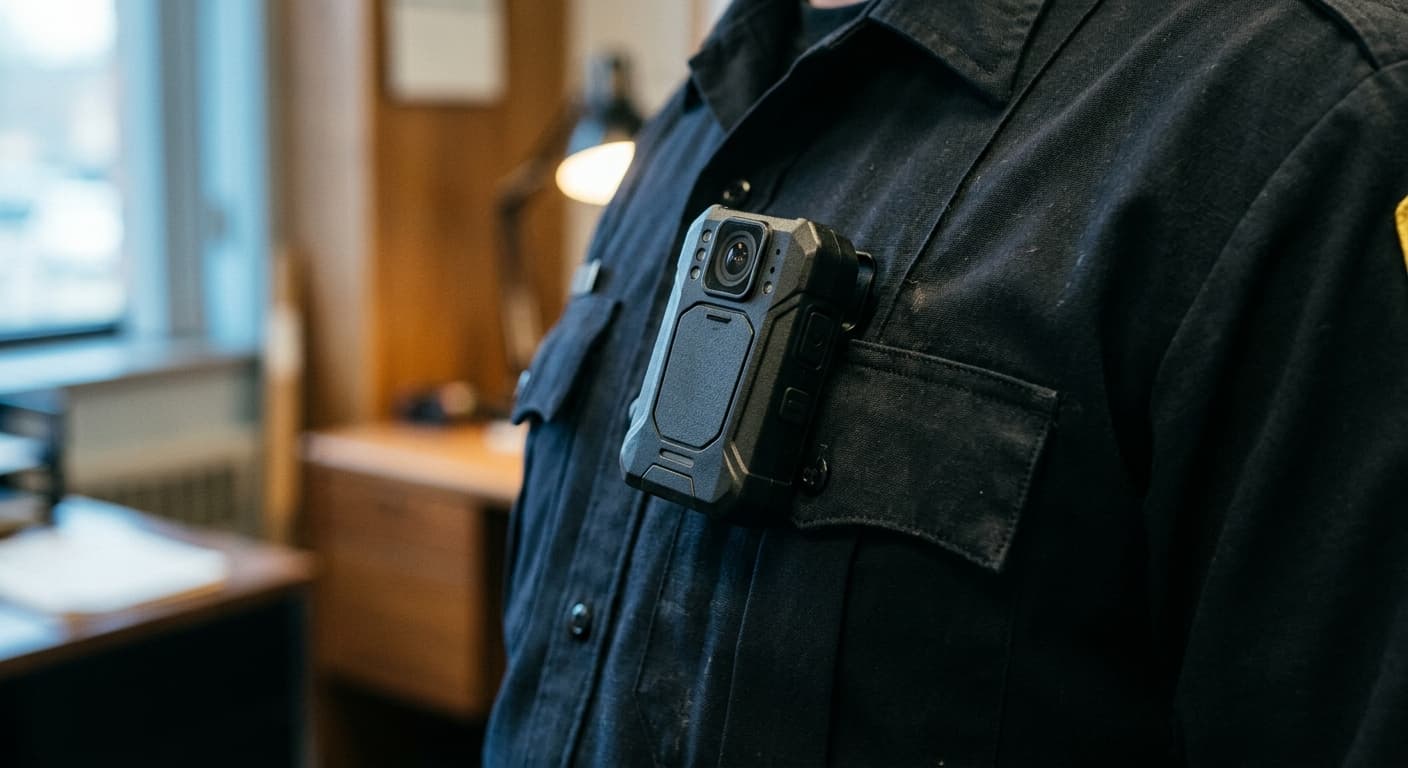
Maryland generally permits recording on-duty police officers in public. Although Maryland requires all-party consent under Md. Code Cts. and Jud. Proc. 10-402, the First Amendment protects this right, and courts have held that officers performing public duties have no reasonable expectation of privacy in those interactions.
Recording police officers in Maryland involves a balance between First Amendment rights and the state's strict all-party consent wiretapping law. While the right to record police in public is well established, Maryland's unique legal landscape requires citizens to understand both their rights and the boundaries.
This guide explains when you can record police, how body-worn camera rules work, and what the landmark Graber case means for your rights in Maryland.
Your Right to Record Police in Public
Constitutional Foundation
The First Amendment to the U.S. Constitution protects the right of citizens to record police officers performing their official duties in public. Multiple federal circuit courts have recognized this right, and the U.S. Department of Justice has issued guidance confirming that citizens may record law enforcement activities in public spaces.
The ACLU of Maryland has repeatedly affirmed this right, stating that individuals can photograph or record police officers and their activities in public places.
State v. Graber (2010): Maryland's Landmark Case
The most significant Maryland case on recording police is State v. Graber (2010), decided in the Harford County Circuit Court. Anthony Graber, a motorcyclist, was pulled over by a plainclothes Maryland State Police officer who drew his gun during the traffic stop. Graber had a helmet-mounted camera that recorded the entire encounter.
After Graber posted the video online, he was charged with violating the wiretapping statute under ss 10-402. The state argued that recording the officer's statements without consent constituted illegal interception of an oral communication.
The court dismissed the charges. Judge Emory Plitt Jr. ruled that the officer had no reasonable expectation of privacy in statements made during a public traffic stop while performing official duties. The court held that the wiretapping statute's protection of "oral communications" applies only when the speaker has a reasonable expectation of privacy, and a police officer conducting a roadside traffic stop does not meet that standard.
What the Graber Case Established
The Graber decision established several important principles for Maryland:
- Police officers performing public duties lack a reasonable expectation of privacy in their on-duty statements
- The wiretapping statute does not criminalize recording police interactions that occur in public
- The location and circumstances matter. A public traffic stop is fundamentally different from a private conversation
- Posting recordings online does not create separate criminal liability when the original recording was lawful
How to Legally Record Police in Maryland
Best Practices
Follow these guidelines when recording police in Maryland:
Do:
- Record openly, not secretly
- Maintain a safe distance from the officers and the scene
- Identify yourself if asked, but you are not required to explain why you are recording
- Keep your hands visible and avoid sudden movements
- Stay on public property or property where you have a right to be
- Continue recording even if an officer tells you to stop (you have the right to record)
- Store recordings in a secure location (cloud backup) immediately after the encounter
Do not:
- Physically interfere with police activities
- Obstruct traffic or block the officer's path
- Touch officers or their equipment
- Resist if an officer attempts to stop you (comply and assert your rights afterward)
- Consent to a search of your recording device (police may lawfully seize the device itself without a warrant, but searching its contents requires one)
- Enter private property to get a better recording angle
Can Police Order You to Stop Recording?
An officer cannot legally order you to stop recording in a public place. Recording police activity is a constitutionally protected right. However, an officer can lawfully order you to:
- Move back if you are physically interfering with their duties
- Step out of a dangerous area for safety reasons
- Stop obstructing traffic or blocking access
If an officer orders you to stop recording or attempts to seize your device, comply in the moment to avoid arrest, but document the encounter afterward and consider filing a complaint. The recording itself is protected, and seizing or destroying it may constitute a civil rights violation.
What If Police Seize Your Recording Device?
Police may lawfully seize your recording device without a warrant, for example incident to an arrest or under exigent circumstances, but under Riley v. California, 573 U.S. 373 (2014), they need a warrant to search its digital contents, such as viewing photos or videos or unlocking it. Seizure and search are legally distinct: do not physically resist a seizure, but do not consent to a search. If police seize your device:
- State clearly: "I do not consent to a search of my device"
- Do not provide passwords or unlock the device
- Note the officer's name, badge number, and agency
- File a complaint with the police department and consider consulting an attorney
- If your footage was backed up to the cloud, it remains accessible even if the device is seized
Body-Worn Camera Laws in Maryland
The Statutory Exception: ss 10-402(c)(11)
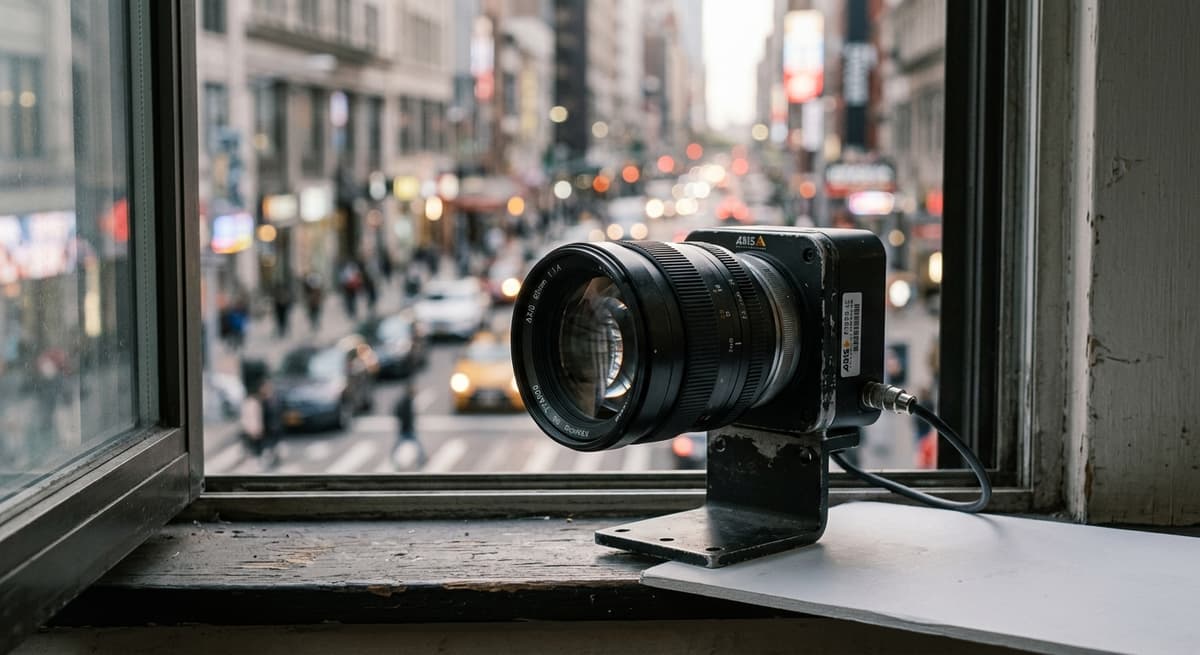
Maryland law includes a specific exception to the wiretapping statute for law enforcement body-worn cameras. Under ss 10-402(c)(11), an officer may use a body camera to record oral communications when:
- The officer is in uniform or prominently displays a badge, insignia, or other identification
- Reasonable efforts are made to conform to established standards for body camera use
- The officer is a party to the oral communication being recorded
- The officer notifies the person being recorded as soon as practicable
This exception recognizes that body cameras serve important accountability and evidentiary purposes while balancing the privacy concerns embedded in Maryland's wiretapping law.
HB 748 (2025): A Proposed Expansion That Did Not Pass
HB 748 (2025) would have expanded the body-worn camera exception to include municipal enforcement officers in the definition of "law enforcement officer" for body camera purposes. The bill passed the House 115-22 but died in the Senate Judicial Proceedings Committee when the 2025 session adjourned sine die, and it never became law. Parking enforcement, code enforcement, and other municipal officers are not covered by the § 10-402(c)(11) exception; it remains limited to the officers described above.
Body Camera Footage: Public Access
Maryland's body camera footage is subject to the state's Public Information Act (PIA). However, access to body camera footage involves balancing transparency with privacy and law enforcement interests.
Key considerations for public access include:
- Body camera footage is generally considered a public record
- Law enforcement agencies may deny access if disclosure would interfere with an ongoing investigation
- Footage that captures individuals in private settings may be redacted or withheld
- Requests for footage should be submitted in writing to the relevant law enforcement agency
Recording Police in Private Settings
When All-Party Consent Still Applies
While the Graber case established that police have no privacy expectation during public interactions, different rules may apply in private settings. If a police officer enters your home or conducts an interview in a private location:
- The officer may have a reduced expectation of privacy even in a private setting, but this area of law is less settled
- Audio recording of the private interaction may trigger the all-party consent requirement under ss 10-402
- Body camera recordings by the officer are covered by the ss 10-402(c)(11) exception
- Silent video recording of your own property (such as a home security camera) is generally permissible
The safest approach when police enter a private space is to announce that you are recording and give the officers the opportunity to consent or object.
Recording at Public Government Meetings
Maryland Open Meetings Act
Maryland's Open Meetings Act (General Provisions Title 3) protects the right to record at public government meetings. Public bodies must adopt rules regarding videotaping, photographing, broadcasting, and recording of their meetings, but they cannot prohibit recording entirely.
Meetings covered by the Open Meetings Act include:
- City and county council sessions
- School board meetings
- Planning and zoning commission hearings
- Public comment periods
- State agency open meetings
Closed Sessions
The Open Meetings Act allows public bodies to hold closed sessions for specific purposes, including personnel matters, legal advice, and certain real estate transactions. Recording during closed sessions may not be permitted, and participants may be asked to leave.
The One-Party Consent Exception for Law Enforcement Investigations
When Police Can Record Without Full Consent
Maryland law provides a significant exception for law enforcement investigations. Under ss 10-402(c)(2), police officers may intercept communications with the consent of only one party when investigating certain serious crimes, including:
- Murder, and conspiracy or solicitation to commit murder
- Kidnapping
- Human trafficking
- Drug trafficking and distribution
- Gambling, bribery, and extortion offenses
- Other offenses specified in § 10-402(c)(2)(ii)(1), including sexual offenses, child abuse, and robbery
This exception allows officers to conduct undercover operations and use informants wearing recording devices without obtaining consent from the target of the investigation.
Limitations on Law Enforcement Recording
Even with the one-party consent exception, law enforcement recordings face restrictions:
- The investigation must target one of the specific crimes listed in the statute
- Recordings obtained outside the scope of the authorized investigation may be suppressed
- Officers must follow department policies and procedures for recording
- Body wire recordings used for officer safety cannot be used as evidence against a defendant
Penalties for Interfering with Recording Rights
Interfering with a Citizen's Right to Record
While Maryland does not have a specific statute penalizing police officers who interfere with citizens recording, officers who seize recording devices, delete footage, or arrest individuals for lawful recording may face:
- Civil rights lawsuits under 42 U.S.C. ss 1983
- Department disciplinary action
- Internal affairs investigations
Interfering with Police Activities While Recording
Citizens who cross the line from recording to interfering with police can face charges including:
- Obstructing or hindering a police officer (Criminal Law ss 9-305)
- Disorderly conduct
- Failure to obey a lawful order
- Resisting arrest (if physical resistance is involved)
The key distinction is between passive recording (protected) and active interference (criminal). Standing nearby with a phone recording is protected. Physically blocking an officer or shouting instructions to a suspect during an arrest is not.
2025-2026 Legislative Updates
Several bills in recent sessions have addressed the intersection of recording and law enforcement:
SB 661 (2026) and HB 802 (2026) would allow intercepted communications to be admissible as evidence in criminal proceedings under certain circumstances. If passed, these bills could change how recordings of police encounters are treated in court.
SB 61 (2025) proposed allowing people to record audio in public when the speaker should reasonably anticipate being overheard, which would further strengthen the right to record police in public settings.
All of these bills failed when the Maryland General Assembly adjourned sine die on April 13, 2026. SB 661 passed the Senate 36-2 but died in the House; HB 802 and SB 61 (2025) also did not advance. The all-party consent law is unchanged as of May 2026. For the controlling Fourth Circuit precedent, see Sharpe v. Winterville Police Dep't, 59 F.4th 674 (4th Cir. 2023): the court held that livestreaming a traffic stop is First Amendment-protected activity going forward, but that this right was not clearly established as of the 2018 incident, so the individual officer received qualified immunity (the town's blanket no-livestreaming policy was separately vacated and remanded). The right is now recognized prospectively in the Fourth Circuit, but Sharpe itself does not guarantee a similarly-situated officer today would be denied qualified immunity.
More Maryland Recording Laws
Audio Recording | Video Recording | Voyeurism & Hidden Cameras | Workplace Recording | Recording Police | Phone Call Recording | Security Cameras | Recording in Public | Landlord-Tenant | Dashcam Laws | Schools | Medical Recording
Back to Maryland Recording Laws
More Maryland Recording Topics
More Maryland Laws
Frequently Asked Questions
Can I legally record police officers in Maryland?
Yes. The First Amendment protects your right to record police officers performing their duties in public. The Maryland court in State v. Graber (2010) confirmed that police officers have no reasonable expectation of privacy during public interactions. Record openly, maintain a safe distance, and do not interfere with police activities.
Can police officers in Maryland order me to stop recording?
No. An officer cannot lawfully order you to stop recording in a public place. However, an officer can order you to move if you are physically interfering with their duties, blocking traffic, or in a dangerous area. If an officer orders you to stop recording, comply to avoid arrest but assert your rights afterward and file a complaint.
Do Maryland police have to wear body cameras?
Maryland law does not mandate body cameras for all police officers, but it provides a legal framework for their use under ss 10-402(c)(11). Officers who wear body cameras must be in uniform (or display identification), follow established standards, and notify the person being recorded as soon as practicable. A 2025 bill, HB 748, would have expanded this exception to municipal enforcement officers, but it died in the Senate and never became law.
Can police seize my phone if I record them in Maryland?
Police may lawfully seize your phone without a warrant, for example incident to an arrest, but under Riley v. California (2014) they need a warrant to search its contents, such as viewing your photos or videos. If police attempt to seize your device, do not resist the seizure, but state that you do not consent to a search. Back up your footage to cloud storage whenever possible.
Can I record police inside my own home in Maryland?
This is a gray area. While you generally have the right to record on your own property, audio recording in a private setting may trigger the all-party consent requirement under ss 10-402. The safest approach is to announce that you are recording when police enter your home. Silent video recording from a security camera on your own property is generally permissible.
Updates
Corrected a claim that a 2025 bill (HB 748) enacted a body-camera expansion to municipal enforcement officers; the bill died in the Senate. Fixed a widely repeated error conflating a phone's seizure with a search of its contents; only the search requires a warrant under Riley v. California. Corrected an inverted description of Sharpe v. Winterville Police Department, which found the right to livestream police not clearly established at the time (resulting in qualified immunity for the officer), not a settled right as the page stated. Also fixed a meta description citing the wrong statute subsection and a paraphrased list of crimes that didn't match the statute's actual wording.
Independently fact-checked against the cited primary sources; governing law re-checked for recent changes
Governing law re-checked for recent changes
Reviewed and approved by an editor
The Law Behind This Article
This article rests on the statutory provisions below, held in our own legal record and retrieved from the official source. Tap a section to read the operative text.
Maryland Code, Courts and Judicial Proceedings Article
§ 10-402In forcecited in 26 of our articles
§10–402. (a) Except as otherwise specifically provided in this subtitle it is unlawful for any person to: (1) Willfully intercept, endeavor to intercept, or procure any other person to intercept or endeavor to intercept, any wire, oral, or electronic communication; (2) Willfully disclose, or endeavor to disclose, to any other person the contents of any wire, oral, or electronic communication, knowing or having reason to know that the information was obtained through the interception of a wire, oral, or electronic communication in violation of this subtitle; or (3) Willfully use, or endeavor to use, the contents of any wire, oral, or electronic communication, knowing or having reason to know that the information was obtained through the interception of a wire, oral, or electronic communication in violation of this subtitle. (b) Any person who violates subsection (a) of this section is guilty of a felony and is subject to imprisonment for not more than 5 years or a fine of not more than $10,000, or both.
Official text (excerpt) · last checked 2026-08-31 · Read the full text in our law library · Verify at mgaleg.maryland.gov
Cited in 12 court opinions in our collectionLatest citing opinion in our collection: 2026
In the courts (editorial summary, independently checked):Applying section 10-402, Fearnow v. Chesapeake & Potomac Telephone Co. (1995) held that liability under the Maryland Wiretap Act requires proof the defendant acted willfully, an intentional violation or reckless disregard of a known legal duty; an employee's failure to check for a court order was only a jury factor on willfulness.
Opinions citing this section in our collection:
- Fearnow v. Chesapeake & Potomac Telephone Co. (Court of Special Appeals of Maryland 1995, 104 Md. App. 1)✓Police hid a tape recorder on an officer's headquarters phone line with a phone company employee's help and no court order; the court held a section 10-402(a) claim requires proof of willful interception, and failing to ask about a court order went only to willfulness.
- Maryland Attorney General Opinion 110OAG60 (Maryland Attorney General Reports 2025)“…or wire communications without the consent of all parties. Md. Code Ann., Cts. & Jud. Proc. § 10-402(a). However, the Wiretap Act contains e…”
- Boehner, John A. v. McDermott, James A. (Court of Appeals for the D.C. Circuit 1999, 191 F.3d 463)“…1992); Me.Rev.Stat. Ann. tit. 15, §§ 710, 711 (West 1998); Md.Code Ann., Cts & Jud. Proc. § 10-402 (1998); Mass. Gen. Laws Ann. ch. 272,…”
Identified automatically from the court opinions citing this section — not a ranking of which case controls.
Also relied on in: US Recording Laws by State (2026): All 50 States Explained, Is Plaud HIPAA Compliant? Kind Of. Here's What to Know (2026), Maryland Audio Recording Laws: Two-Party Consent Rules and Penalties (2026)
Maryland Code, General Provisions Article
§ 3-301In forcecited in 2 of our articles
§3–301. Except as otherwise expressly provided in this title, a public body shall meet in open session.
Official text (excerpt) · last checked 2026-07-29 · Read the full text in our law library · Verify at mgaleg.maryland.gov
Also relied on in: Maryland Laws on Recording in Public: Rights, Limits, and Exceptions (2026)
§ 4-101In force
§4–101. (a) In this title the following words have the meanings indicated. (b) “Applicant” means a person or governmental unit that asks to inspect a public record. (c) “Board” means the State Public Information Act Compliance Board. (d) “Custodian” means: (1) the official custodian; or (2) any other authorized individual who has physical custody and control of a public record. (e) “News media” means: (1) newspapers; (2) magazines; (3) journals; (4) press associations; (5) news agencies; (6) wire services; (7) radio; (8) television; and (9) any printed, photographic, mechanical, or electronic means of disseminating news and information to the public. (f) “Official custodian” means an officer or employee of the State or of a political subdivision who is responsible for keeping a public record, whether or not the officer or employee has physical custody and control of the public record.
Official text (excerpt) · last checked 2026-07-29 · Read the full text in our law library · Verify at mgaleg.maryland.gov
Search our full record of US law — 2.1 million sections, every state + federal →
Sources and References
- Md. Code, Cts. & Jud. Proc. ss 10-402 - Interception of Communications(mgaleg.maryland.gov).gov
- HB 748 (2025) - Body-Worn Camera Municipal Officers(mgaleg.maryland.gov).gov
- SB 661 (2026) - Intercepted Communications Admissibility(mgaleg.maryland.gov).gov
- Maryland Open Meetings Act - General Provisions Title 3(law.justia.com).gov
- ACLU of Maryland - Right to Record Police Actions(aclu-md.org)
- Maryland Public Information Act ss 4-101(mgaleg.maryland.gov).gov
- Maryland Open Meetings Act - General Provisions Title 3(mgaleg.maryland.gov).gov