
Minnesota
Minnesota Ring Doorbell Laws: What You Need to Know in 2026
Independently fact-checked against primary sources (last audited August 17, 2026). · Reviewed by the RecordingLaw editorial team. · Law checked current as of August 17, 2026. · 8 primary sources cited on this page. How we verify our legal content
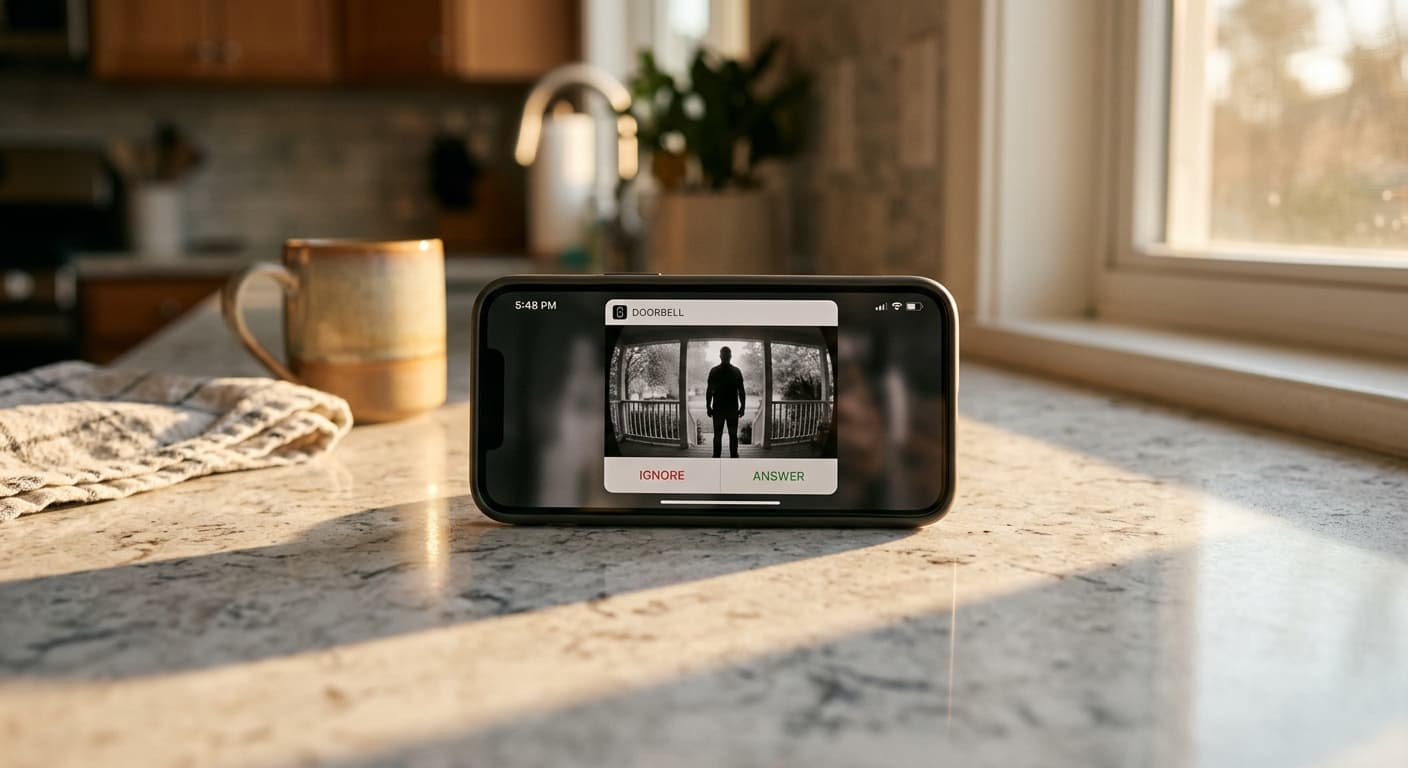
Minnesota residents can legally use Ring doorbell cameras, but the state's wiretapping and privacy statutes set clear boundaries on audio recording, video surveillance, and how footage can be shared. The primary laws governing Ring doorbell use are Minnesota Statutes Chapter 626A (wiretapping and electronic surveillance) and Section 609.746 (interference with privacy).
Minnesota Audio Recording Laws and Ring Doorbells
Minnesota Statutes Section 626A.02 governs the interception of wire, electronic, and oral communications. The statute makes it a crime to intentionally intercept or attempt to intercept any wire, electronic, or oral communication without proper authorization.
One-Party Consent Rule
Under Minn. Stat. 626A.02, subdivision 2(d), it is not unlawful for a person to intercept a wire, electronic, or oral communication where that person is a party to the communication or where one of the parties to the communication has given prior consent to the interception. This one-party consent standard applies equally to phone calls and in-person conversations.
The critical limitation: the recording cannot be made for the purpose of committing any criminal or tortious act. Recording a conversation to use as blackmail, for example, would not be protected by the one-party consent exception.
How This Applies to Ring Doorbells
Ring doorbells with audio capabilities record sound when motion is detected or the doorbell is pressed. The homeowner is typically not a party to conversations that happen on their porch between visitors, delivery drivers, or passersby. Recording those third-party conversations without any participant's consent could violate Minn. Stat. 626A.02.
Posting visible signage that audio recording is in progress provides a practical safeguard. When visitors see the notice and continue speaking, a court may find that they implicitly consented to the recording. Without notice, a Ring doorbell that captures private conversations between people who are unaware of the recording creates potential criminal liability for the homeowner.
Minn. Stat. 626A.02 Penalties
Criminal violations of Minnesota's wiretapping statute carry severe penalties. Any person who violates the statute faces a fine of up to $20,000, imprisonment for up to 5 years, or both. These penalties are among the harshest in the country for recording violations.
Video Recording Laws and Ring Doorbells in Minnesota
Minnesota does not have a standalone residential video surveillance statute. Instead, video recording by Ring doorbells is governed primarily by Minn. Stat. 609.746, the state's interference with privacy law.
What 609.746 Prohibits
Minn. Stat. 609.746 targets surveillance that intrudes on privacy in specific settings, and each of its paragraphs is built from a short list of elements that must all be present.
Subdivision 1(b), the paragraph most often cited in camera disputes, makes it a gross misdemeanor to do three things together: (1) enter upon another's property, (2) surreptitiously install or use any device for observing, photographing, recording, amplifying, or broadcasting sounds or events through the window or any other aperture of a house or place of dwelling of another, and (3) do so with intent to intrude upon or interfere with the privacy of a member of the household. Physical entry onto the other person's property is the first element, not an optional detail. Subdivision 1(a) applies the same three-element structure to peeping in person rather than through a device.
Paragraphs (c) through (e) require no entry onto anyone's property, but each is narrow. Paragraphs (c) and (d) reach peeping or device surveillance into a hotel sleeping room, a tanning booth, or another place where a reasonable person would expect privacy and has exposed or is likely to expose intimate parts. Paragraph (e) reaches the use of a device to photograph, record, or broadcast an image of a person in a house or dwelling, hotel sleeping room, tanning booth, bathroom, locker room, changing room, indoor shower facility, or any place carrying a reasonable expectation of privacy, and only when the device is used with the intent to capture that person's intimate parts without consent.
Ring Doorbells and Reasonable Expectation of Privacy
A Ring doorbell aimed at the homeowner's front porch, walkway, driveway, and the adjacent public sidewalk or street generally does not raise issues under 609.746. People in these areas do not have a reasonable expectation of privacy.
A camera whose field of view happens to reach a neighbor's window is a harder fit for 609.746 than it first appears. Paragraphs (a) and (b) both begin with entry upon another's property, so a camera bolted to the owner's own wall does not satisfy their first element regardless of what it captures. The paragraph that can reach a fixed camera is subdivision 1(e), and it applies only where the device is used with the intent to photograph, record, or broadcast an image of a person's intimate parts without that person's consent. Absent that intent, a camera angled into a neighbor's window is ordinarily a civil matter, pursued as a nuisance or invasion-of-privacy claim or through a local code complaint, rather than a criminal one. Where 609.746 does apply, the offense is a gross misdemeanor, and Minn. Stat. 609.03(2) sets the maximum at 364 days in jail and a $3,000 fine.
Commercial Establishment Exception
Minn. Stat. 609.746 includes an exception for commercial establishments that post conspicuous signs warning of surveillance. While this exception does not directly apply to residential Ring doorbells, it reinforces the legal significance of posting visible recording notices.
HOA and Ring Doorbells in Minnesota
Minnesota does not have a state statute specifically addressing HOA or condominium association authority over Ring doorbells. The authority to regulate these devices comes from each association's governing documents and the Minnesota Common Interest Ownership Act (Minn. Stat. Chapter 515B).
Condominium Associations
Under Minnesota's Common Interest Ownership Act, the association controls common elements. In most condominiums, the exterior walls, doors, and hallways qualify as common elements. Because Ring doorbells mount on or near the front door, the board typically has authority to approve or deny installation requests.
A Minnesota condo board may adopt rules that limit Ring doorbell use. Common restrictions include requiring board approval before installation, limiting the camera's field of view to the unit owner's immediate entryway, prohibiting continuous recording in shared hallways, and requiring that audio recording be disabled in common areas.
Single-Family HOA Communities
HOAs governing single-family homes have more limited authority over Ring doorbells. Unless the association's covenants, conditions, and restrictions (CC&Rs) specifically address security cameras or exterior modifications, the HOA may lack the legal basis to prohibit Ring doorbells entirely.
However, an HOA with architectural review authority could require that Ring doorbells meet aesthetic standards (color, size, placement) or that homeowners submit an application before installation. Minnesota courts generally enforce reasonable HOA restrictions that are consistently applied.
Landlord and Tenant Rights for Doorbell Cameras
Minnesota's landlord-tenant relationship is governed by Chapter 504B of the Minnesota Statutes. While this chapter does not specifically address Ring doorbells, several provisions affect how both landlords and tenants can use these devices.
Tenant Privacy Rights
Minn. Stat. 504B.211 establishes that a landlord may enter rented premises only for a reasonable business purpose and after making a good faith effort to give the tenant at least 24 hours' notice. This privacy protection means landlords cannot use Ring doorbells or other surveillance devices to monitor the interior of a tenant's unit or to track tenant movements in ways that would constitute an unreasonable intrusion.
A tenant cannot waive this right to prior notice of entry as a condition of the lease. This provision prevents landlords from requiring tenants to accept constant surveillance as a condition of renting.
Tenant Installation Rights
Tenants who want to install a Ring doorbell on a rental property face practical and legal considerations. Interior installation within the rented unit is generally permitted as long as it does not cause damage. Exterior installation typically requires landlord approval because it involves modifying the building's exterior.
Battery-powered Ring doorbell models that attach with adhesive or a simple bracket cause minimal or no damage to the property. Landlords are more likely to approve these models compared to hardwired versions that require electrical work.
Landlord Use of Ring Doorbells
Minnesota landlords can install Ring doorbells and security cameras in common areas of multi-unit properties, such as lobbies, parking areas, and building entrances. They cannot install recording devices inside a tenant's unit or direct cameras at areas where tenants have a reasonable expectation of privacy, such as through apartment windows.
If a landlord installs Ring doorbells with audio recording in common areas, the one-party consent issue applies. Since the landlord is not a party to tenant conversations in hallways, recording audio could violate Minn. Stat. 626A.02. Disabling audio recording or posting conspicuous notice helps reduce this risk.
Law Enforcement Access to Ring Footage in Minnesota
Law enforcement access to Ring doorbell footage in Minnesota has changed significantly since 2024.
Ring's Evolving Policies
In January 2024, Amazon permanently ended Ring's Request for Assistance feature, which had allowed police departments to request footage from Ring users through the Neighbors app. In April 2025, Ring announced a new partnership with Axon, live since roughly October 2025: verified public safety agencies with Axon Evidence accounts can post a voluntary "Community Request" tied to a specific case number to the Neighbors feed. Ring camera owners near the request can review their footage and choose whether to share any of it. Users who decline are not identified to the requesting agency, and the request stays open for up to 60 days. Separately, in October 2025 Ring announced a partnership with Flock Safety, a company that provides automated license plate recognition and video evidence management tools used by law enforcement. Ring canceled that partnership in February 2026 following public backlash and a comprehensive review; it was never officially implemented and should not be confused with the active Axon program.
How Minnesota Police Access Ring Footage Now
As of 2026, Minnesota law enforcement can obtain Ring doorbell footage through these channels:
-
Community Requests via Axon: A verified local agency can post a voluntary request for footage tied to a case number through Ring's Axon partnership. Sharing any clip is entirely opt-in, declines are not disclosed to the agency, and the request stays open for up to 60 days.
-
Voluntary consent: A Ring owner can also share footage directly with an officer at any time outside that program. This is entirely voluntary, and there is no penalty for declining.
-
Search warrant: Police can obtain a warrant from a Minnesota court, compelling Amazon to provide Ring footage stored in the cloud. A warrant requires a showing of probable cause.
-
Subpoena: A grand jury or court-issued subpoena can compel the production of Ring footage, though the legal standards differ from a warrant.
-
Emergency exception: Under the federal ECPA, Amazon can share footage without a warrant when there is an imminent threat of death or serious bodily injury.
Minnesota residents are not legally obligated to share Ring footage with police absent a valid court order.
Penalties for Illegal Recording in Minnesota
Minnesota imposes both criminal and civil penalties for illegal recording.
Criminal Penalties
Section 609.746 classifies its offenses as gross misdemeanors but sets no jail term or fine of its own for them. Those numbers come from Minnesota's general penalty statute, Minn. Stat. 609.03(2), which caps a gross misdemeanor at 364 days and $3,000.
| Violation | Offense statute | Penalty statute | Maximum Prison | Maximum Fine |
|---|---|---|---|---|
| Wiretapping/eavesdropping | Minn. Stat. 626A.02 | Minn. Stat. 626A.02, subd. 4 | 5 years | $20,000 |
| Peeping into a dwelling after entering another's property | Minn. Stat. 609.746, subd. 1(a) | Minn. Stat. 609.03(2) | 364 days | $3,000 |
| Surveillance device used into a dwelling after entering another's property | Minn. Stat. 609.746, subd. 1(b) | Minn. Stat. 609.03(2) | 364 days | $3,000 |
| Recording intimate images without consent | Minn. Stat. 609.746, subd. 1(e) | Minn. Stat. 609.03(2) | 364 days | $3,000 |
Civil Remedies
Under Minn. Stat. 626A.13, any person whose wire, electronic, or oral communication is intercepted in violation of Chapter 626A can bring a civil action. The court may award:
- Actual damages (three times actual damages plus the violator's profits) or statutory damages of $100 per day of violation or $10,000, whichever is greater
- Punitive damages in appropriate cases
- Litigation costs and reasonable attorney's fees
The statute of limitations for civil claims is two years from the date the victim first has a reasonable opportunity to discover the violation.
How to Use a Ring Doorbell Legally in Minnesota
These practices can help Minnesota residents operate Ring doorbells within state law:
Post visible recording notices. Place a sign near your Ring doorbell indicating that audio and video recording is in progress. This helps establish consent for audio recording and demonstrates that surveillance is not surreptitious.
Aim the camera at your property. Position your Ring doorbell to capture your porch, walkway, and driveway. Avoid angles that look into neighboring windows or private outdoor spaces where people have a reasonable expectation of privacy.
Consider disabling audio. If you are concerned about capturing conversations between visitors on your porch, disable audio recording in the Ring app settings. Video-only recording avoids wiretapping issues entirely.
Review HOA or condo rules. Check your association's governing documents for restrictions on security cameras, exterior modifications, or common element alterations before installing a Ring doorbell.
Get landlord permission. Tenants should get written approval from their landlord before installing a Ring doorbell on the exterior of a rental property.
Respond appropriately to police requests. Sharing Ring footage with law enforcement is voluntary unless you receive a valid warrant or subpoena. You have the right to decline voluntary requests without consequence.
Keep recordings secure. Minn. Stat. 626A.02 prohibits using intercepted communications for criminal or tortious purposes. Sharing Ring footage publicly to harass or defame someone could create legal liability.
More Minnesota Laws
Explore other Minnesota legal topics covered on Recording Law:
This article provides general legal information about Ring doorbell laws in Minnesota. It is not legal advice. Laws and court interpretations change over time. Consult a Minnesota attorney for advice specific to your situation.
Frequently Asked Questions
Is it legal to have a Ring doorbell camera in Minnesota?
Ring doorbell cameras are legal in Minnesota. Video recording of your own property and public areas is permitted. Audio recording requires one-party consent under Minn. Stat. 626A.02, so posting a visible notice helps establish consent from visitors on your property.
Can my neighbor record me with a Ring doorbell in Minnesota?
Your neighbor can legally record video of their own property and public areas visible from their doorbell camera. A camera that happens to capture your window is usually not a crime: the dwelling-peeping paragraphs of Minn. Stat. 609.746, subdivision 1(a) and (b), require the person to enter upon your property, which a camera mounted on the neighbor's own house does not do. The statute reaches a fixed camera only under subdivision 1(e), which applies where a device is used with intent to record a person's intimate parts without consent. Otherwise the ordinary remedy is civil, through a nuisance or invasion-of-privacy claim or a complaint to your city under local rules.
Do Minnesota police need a warrant for Ring doorbell footage?
As of 2026, Minnesota police need a warrant, subpoena, or voluntary consent from the Ring owner to access footage. Ring ended its Request for Assistance program in 2024. Its Flock Safety partnership, announced in October 2025, was withdrawn in February 2026 without ever being implemented. Ring's active channel today is a partnership with Axon, live since late 2025, through which verified agencies post voluntary Community Requests that owners can choose to answer. Beyond consent, the only exception is an emergency involving imminent threat of death or serious injury.
What are the penalties for illegal recording in Minnesota?
Wiretapping violations under Minn. Stat. 626A.02 carry up to 5 years in prison and a $20,000 fine. Privacy interference under Minn. Stat. 609.746 is a gross misdemeanor. That section sets no numbers itself, so the maximum comes from Minnesota's general penalty statute, Minn. Stat. 609.03(2): 364 days in jail and a $3,000 fine. Civil damages can include the greater of actual damages or statutory damages of $100 per day of violation or $10,000 under Minn. Stat. 626A.13.
Can my Minnesota landlord install a Ring doorbell that records my apartment door?
A landlord can install Ring doorbells in common areas like building entrances and lobbies. However, Minn. Stat. 504B.211 protects tenant privacy, and audio recording in areas where tenants have private conversations could violate the wiretapping statute. Landlords should disable audio recording or post clear notice.
Updates
Corrected the interference-with-privacy discussion: Minn. Stat. 609.746 requires entry onto another's property for its dwelling-peeping paragraphs, so a camera on your own house is reached only under subdivision 1(e), and the gross-misdemeanor maximum is 364 days and $3,000 under Minn. Stat. 609.03(2), not one year.
Added a description of Ring's active Axon 'Community Requests' law-enforcement program (live since late 2025), which the page had omitted, leaving readers with the impression that Ring's withdrawn Flock Safety deal was the only post-2024 police-request channel.
Independently fact-checked against the cited primary sources; governing law re-checked for recent changes
Governing law re-checked for recent changes
Corrected the subd. 1(a) peeping penalty from misdemeanor-level figures to the statute's actual gross-misdemeanor maximum, fixed the mislabeled "repeat offenders" civil-damages rule (it's the general Subd. 3(b) formula, not a repeat-offense scheme), and relabeled the 626A.09 citation to match its actual subject (disclosure/use of intercepted communications, not obtaining an interception order).
Corrected the FAQ description of civil damages: Minn. Stat. 626A.13's statutory-damages formula applies generally to violations, not only to repeat offenders.
Governing law re-checked for recent changes
Reviewed and approved by an editor
The Law Behind This Article
This article rests on the statutory provisions below, held in our own legal record and retrieved from the official source. Tap a section to read the operative text.
Minnesota Statutes, Chapter 626A: WIRE, ELECTRONIC, OR ORAL COMMUNICATIONS; INTERCEPTION
§ 626A.02INTERCEPTION AND DISCLOSURE OF WIRE, ELECTRONIC, OR ORAL COMMUNICATIONS PROHIBITEDIn forcecited in 18 of our articles
Subdivision 1. Offenses. Except as otherwise specifically provided in this chapter any person who: (1) intentionally intercepts, endeavors to intercept, or procures any other person to intercept or endeavor to intercept, any wire, electronic, or oral communication; (2) intentionally uses, endeavors to use, or procures any other person to use or endeavor to use any electronic, mechanical, or other device to intercept any oral communication when: (i) such device is affixed to, or otherwise transmits a signal through, a wire, cable, or other like connection used in wire communication; or (ii) such device transmits communications by radio, or interferes with the transmission of such communication; (3) intentionally discloses, or endeavors to disclose, to any other person the contents of any wire, electronic, or oral communication, knowing or having reason to know that the information was obtained through the interception of a wire, electronic, or oral communication in violation of this subdivision; or (4) intentionally uses, or endeavors to use, the contents of any wire, electronic, or oral communication, knowing or having reason to know that the information was obtained through the…
Official text (excerpt) · last checked 2026-08-31 · Read the full text in our law library · Verify at revisor.mn.gov
Cited in 20 court opinions in our collectionLatest citing opinion in our collection: 2025
In the courts (editorial summary, independently checked):Copeland v. Hubbard Broadcasting, Inc. (1995) applied the 626A.02 party exemption, finding a secret recording made for commercial newsgathering was not intercepted for the purpose of a tortious act. State v. Page (1986) held an officer's use of a regular telephone extension in the ordinary course of duty was not an interception.
Opinions citing this section in our collection:
- Copeland v. Hubbard Broadcasting, Inc. (Court of Appeals of Minnesota 1995, 526 N.W.2d 402)“…l to the federal wiretapping statutes. Compare Minn.Stat. § 626A.02, subd. 1 (1992), with 18…”
- State v. Page (Court of Appeals of Minnesota 1986, 386 N.W.2d 330)“…g rule applies. See 18 U.S.C. § 2511 (1982); Minn.Stat. § 626A.02 (1984). The federal rule makes it unlaw…”
- State v. Olkon (Supreme Court of Minnesota 1980, 299 N.W.2d 89)✓An undercover deputy posing as an injury client taped his calls and office meetings with a lawyer later convicted of attempted theft by swindle; the court rejected suppression, holding one party's consent meant no warrant was needed, citing the statute's consent exception.
Identified automatically from the court opinions citing this section — not a ranking of which case controls.
Also relied on in: Minnesota Smart Glasses Recording Laws 2025, Minnesota AI Meeting Recording Laws (2026), Minnesota Surveillance Camera Laws (2026 Guide)
§ 626A.13CIVIL REMEDIESIn forcecited in 8 of our articles
Subdivision 1. In general. Except as provided in section 2511 (2)(a)(ii) of title 18 of the United States Code, a person whose wire, oral, or electronic communication is intercepted, disclosed, or intentionally used in violation of this chapter may in a civil action recover from the person or entity that engaged in that violation relief as may be appropriate. Subd. 2. Relief. In an action under this section, appropriate relief includes: (1) temporary and other equitable or declaratory relief as may be appropriate; (2) damages under subdivision 3 and punitive damages in appropriate cases; and (3) a reasonable attorney's fee and other litigation costs reasonably incurred. Subd. 3. Computation of damages.
Official text (excerpt) · last checked 2026-07-29 · Read the full text in our law library · Verify at revisor.mn.gov
Cited in 3 court opinions in our collectionLatest citing opinion in our collection: 1996
Opinions citing this section in our collection:
- Molenaar v. United Cattle Co. (Court of Appeals of Minnesota 1996, 553 N.W.2d 424)“…upp.) (false reports of maltreatment of vulnerable adults); Minn.Stat. § 626A.13, subd. 2(2) (1994) (wiretapping). [2]…”
- State v. Monsrud (Supreme Court of Minnesota 1983, 337 N.W.2d 652)“…338 A.2d 284 (1975). We decline to follow it. [4] Minn.Stat. § 626A.13 (1982), provides: Any person whose w…”
- American Computer Trust Leasing v. Jack Farrell Implement Co. (District Court, D. Minnesota 1991, 763 F. Supp. 1473)“…In Count VII, defendants seek treble damages pursuant to Minn.Stat. § 626A.13 for the alleged violation of Minn.Stat.…”
Identified automatically from the court opinions citing this section — not a ranking of which case controls.
Also relied on in: Minnesota Audio Recording Laws: One-Party Consent Rules and Penalties, Minnesota Phone Call Recording Laws: One-Party Consent and Interstate Rules, Minnesota Security Camera Laws: Residential, Commercial, and Privacy Rules
§ 626A.09AUTHORIZATION FOR DISCLOSURE AND USE OF INTERCEPTED WIRE, ELECTRONIC, OR ORAL COMMUNICATIONSIn force
Subdivision 1. Disclosure. Any investigative or law enforcement officer who, by any means authorized by this chapter, has obtained knowledge of the contents of any wire, electronic, or oral communication, or evidence derived therefrom may disclose such contents to another investigative or law enforcement officer to the extent that such disclosure is appropriate to the proper performance of the official duties of the officer making or receiving the disclosure. Subd. 2. Use of contents of wiretaps. Any investigative or law enforcement officer who, by any means authorized by this chapter, has obtained knowledge of the contents of any wire, electronic, or oral communication or evidence derived therefrom may use such contents to the extent such use is appropriate to the proper performance of official duties. Subd. 3. Disclosure while giving testimony.
Official text (excerpt) · last checked 2026-07-29 · Read the full text in our law library · Verify at revisor.mn.gov
Minnesota Statutes, Chapter 609: CRIMINAL CODE
§ 609.746INTERFERENCE WITH PRIVACYIn forcecited in 17 of our articles
Subdivision 1. Surreptitious intrusion; observation device. (a) A person is guilty of a gross misdemeanor who: (1) enters upon another's property; (2) surreptitiously gazes, stares, or peeps in the window or any other aperture of a house or place of dwelling of another; and (3) does so with intent to intrude upon or interfere with the privacy of a member of the household. (b) A person is guilty of a gross misdemeanor who: (1) enters upon another's property; (2) surreptitiously installs or uses any device for observing, photographing, recording, amplifying, or broadcasting sounds or events through the window or any other aperture of a house or place of dwelling of another; and (3) does so with intent to intrude upon or interfere with the privacy of a member of the household.
Official text (excerpt) · last checked 2026-08-31 · Read the full text in our law library · Verify at revisor.mn.gov
Cited in 15 court opinions in our collectionLatest citing opinion in our collection: 2026
In the courts (editorial summary, independently checked):State v. Pakhnyuk (2019) held the intent to intrude on privacy in section 609.746, subd. 1(a) attaches only to the peeping, not to entering the property. State v. Ulmer (2006) applied subd. 1(c) to a public restroom, holding the space above a urinal partition is an aperture and the shielded space is private.
Opinions citing this section in our collection:
- State v. Pakhnyuk (Supreme Court of Minnesota 2019, 926 N.W.2d 914)✓A houseguest sat on the roof and watched a 14-year-old undressing through a bedroom window; the Minnesota Supreme Court held the intent to intrude element attaches only to the peeping clause, not to entering the property, and affirmed the conviction.
- State v. Ulmer (Court of Appeals of Minnesota 2006, 719 N.W.2d 213)✓A man leaned over a urinal partition in a store restroom to watch a seven-year-old boy urinate; the court of appeals held a user has an expectation of privacy in that partitioned space and that the gap above the partition is an aperture under the statute.
- State v. Morris (Court of Appeals of Minnesota 2002, 644 N.W.2d 114)✓A man carried a camera concealed in a bag and filmed up a store clerk's skirt; the court of appeals held the area under a skirt is a place with an expectation of privacy and the camera itself an aperture, and rejected the commercial-establishment exemption.
Identified automatically from the court opinions citing this section — not a ranking of which case controls.
Also relied on in: Minnesota Landlord-Tenant Recording Laws: Cameras, Privacy, and Rights, Minnesota Medical Recording Laws: Patient Rights, HIPAA, and Provider Rules, Minnesota Laws on Recording in Public: Rights, Limits, and Privacy Rules
Minnesota Statutes, Chapter 504B: LANDLORD AND TENANT
§ 504B.211RESIDENTIAL TENANT'S RIGHT TO PRIVACYIn forcecited in 3 of our articles
Subdivision 1. Definitions. For purposes of this section, "landlord" has the meaning defined in section 504B.001, subdivision 7, and also includes the landlord's agent or other person acting under the landlord's direction and control. Subd. 2. Entry by landlord. Except as provided in subdivision 4, a landlord may enter the premises rented by a residential tenant only for a reasonable business purpose and after making a good faith effort to give the residential tenant reasonable notice under the circumstances of not less than 24 hours in advance of the intent to enter. A residential tenant may permit a landlord to enter the rented premises with less than 24 hours notice if desired. The notice must specify a time or anticipated window of time of entry and the landlord may only enter between the hours of 8:00 a.m. and 8:00 p.m. unless the landlord and tenant agree to an earlier or later time. A residential tenant may not waive and the landlord may not require the residential tenant to waive the residential tenant's right to prior notice of entry under this section as a condition of entering into or maintaining the lease. Subd. 3. Reasonable purpose.
Official text (excerpt) · last checked 2026-07-29 · Read the full text in our law library · Verify at revisor.mn.gov
Cited in 7 court opinions in our collectionLatest citing opinion in our collection: 2024
Opinions citing this section in our collection:
- State v. Dotson (Court of Appeals of Minnesota 2017, 900 N.W.2d 445)“…rested him without probable cause. Because we conclude that Minn. Stat. § 504B.211 does not give a landlord or property ma…”
- State of Minnesota v. Daniel Joseph Devens (Supreme Court of Minnesota 2014, 852 N.W.2d 255)“…made a good faith effort to notify Devens of the entry. See Minn. Stat. § 504B.211, subd. 2 (2012). By contrast, Devens di…”
- Negassi H. Ghebrehiwet v. Khaled Ghneim (Court of Appeals of Minnesota 2016)“…at Ghebrehiwet violated the Ghneims’ right to privacy under Minn. Stat. § 504B.211, subd. 2 (2014) and that the Ghneims we…”
Identified automatically from the court opinions citing this section — not a ranking of which case controls.
Also relied on in: Minnesota Landlord-Tenant Laws (2026): Deposits, Notice, and Tenant Rights
Explore the law
This article also draws on these acts and chapters (opening at their first section): Minnesota Statutes, Chapter 626A: WIRE, ELECTRONIC, OR ORAL COMMUNICATIONS; INTERCEPTION § 626A.01 (DEFINITIONS)
Related law for further reading — not part of this article’s citations.
Search our full record of US law — 2.1 million sections, every state + federal →
Sources and References
- Minn. Stat. 626A.02 - Interception of Communications Prohibited(revisor.mn.gov).gov
- Minnesota Statutes Chapter 626A - Full Text(revisor.mn.gov).gov
- Minn. Stat. 609.746 - Interference with Privacy(revisor.mn.gov).gov
- Minn. Stat. 626A.13 - Civil Action for Violations(revisor.mn.gov).gov
- Minn. Stat. 504B.211 - Tenant Right to Privacy(revisor.mn.gov).gov
- Minnesota Chapter 504B - Landlord and Tenant(revisor.mn.gov).gov
- Minn. Stat. 626A.09 - Disclosure and Use of Intercepted Communications(revisor.mn.gov).gov
- FTC Action Against Ring for Privacy Violations(ftc.gov).gov
- Ring Ends Law Enforcement Request Feature (NPR)(npr.org)
- Ring Cancels Flock Safety Partnership (Snopes)(snopes.com)
- Minn. Stat. 609.03 - Punishment When Not Otherwise Prescribed (gross misdemeanor: 364 days, $3,000)(revisor.mn.gov)