
Nevada
Nevada Ring Doorbell Laws: What You Need to Know in 2026
Independently fact-checked against primary sources (last audited August 17, 2026). · Reviewed by the RecordingLaw editorial team. · Law checked current as of August 17, 2026. · 8 primary sources cited on this page. How we verify our legal content
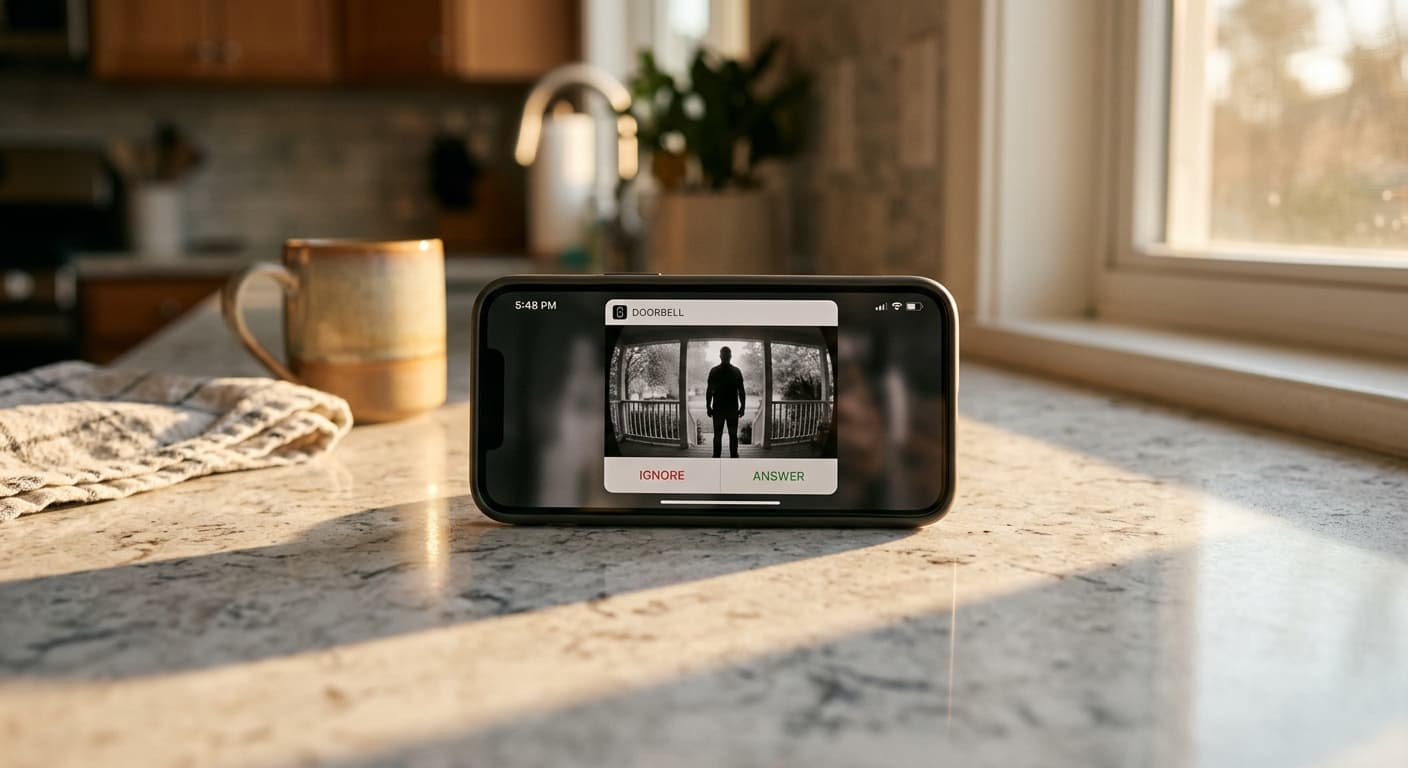
Ring doorbells are legal in Nevada for video recording public-facing areas and your own property. Audio recording follows a split consent framework: in-person conversations require only one-party consent, but intercepting wire communications requires all-party consent under NRS 200.620, making audio capture a more serious legal consideration.
Ring doorbells record both video and audio of activity near your front door. In Nevada, the legality of that recording depends on what your camera captures and where it points. Video surveillance of public-facing areas is broadly permitted, but audio recording triggers Nevada's distinctive split consent framework, which treats in-person and telephone conversations under different standards.
Understanding these rules matters. A Ring doorbell that records a neighbor's private conversation through an open window could expose you to felony charges. This guide covers every relevant Nevada statute, explains how courts have handled doorbell camera evidence, and provides practical steps for staying on the right side of the law.
Audio Recording Laws and Ring Doorbells
Nevada's audio recording rules are more complex than most states because the legislature created two separate statutes with different consent requirements.
In-Person Conversations: One-Party Consent (NRS 200.650)
NRS 200.650 prohibits surreptitiously listening to, monitoring, or recording any private conversation "unless authorized to do so by one of the persons engaging in the conversation." Under this standard, if you are a participant in a face-to-face discussion, your own consent satisfies the statute.
For Ring doorbell owners, this creates an important distinction. When you answer your Ring doorbell and engage in a two-way conversation with a visitor, you are a participant. Your consent as one party to that conversation makes the audio recording legal under NRS 200.650.
The risk arises when your Ring doorbell records conversations between other people on or near your property. If two visitors have a private conversation on your porch while you are not participating, NRS 200.650 requires that at least one of them authorize the recording. Your Ring doorbell capturing that exchange without either person's knowledge could constitute a violation.
Wire Communications: All-Party Consent (NRS 200.620)
NRS 200.620 governs the interception of wire communications and requires consent from every party to the communication. The Nevada Supreme Court established this all-party requirement in Lane v. Allstate Ins. Co., 969 P.2d 938 (1998).
This statute applies primarily to phone calls, not Ring doorbell recordings. However, if your Ring doorbell picks up audio from someone's phone conversation through an open door or window, intercepting that wire communication without all parties' consent violates NRS 200.620.
Practical Audio Considerations for Ring Owners
Ring doorbells have microphones that activate automatically. As of April 2026, Ring devices allow users to disable audio recording in the app settings. Nevada homeowners concerned about legal exposure from audio capture have two options:
- Disable audio recording entirely through the Ring app settings
- Post a visible notice near the doorbell informing visitors that audio and video recording is in progress, which can help establish implied consent
Posting a notice does not guarantee legal protection under Nevada law, but it reduces the argument that recording was "surreptitious," which is the specific conduct NRS 200.650 prohibits.
Video Recording Laws and Ring Doorbells
Nevada does not have a blanket statute prohibiting outdoor video surveillance. Video recording from a Ring doorbell pointed at public areas, sidewalks, streets, or your own property is legal.
NRS 200.604: Private Area Image Capture
NRS 200.604 makes it unlawful to capture an image of the "private area" of another person without that person's consent if the image is captured under circumstances where the person has a reasonable expectation of privacy. "Private area" under this statute refers to body parts covered by clothing that a person expects to be shielded from public view.
A Ring doorbell that records video of a public-facing area like a porch, driveway, or sidewalk does not violate NRS 200.604. Problems arise only if the camera angle captures areas where someone has a reasonable expectation of privacy, such as through a window into a bathroom or bedroom.
Pointing Your Camera: Key Boundaries
Nevada courts apply a "reasonable expectation of privacy" analysis derived from the Fourth Amendment. Areas visible from the public right-of-way carry a diminished expectation of privacy. A Ring doorbell that captures:
- Your own porch, driveway, and walkway: Legal
- The public sidewalk and street: Legal
- A neighbor's front yard visible from the street: Generally legal
- Through a neighbor's window into private rooms: Potentially illegal under NRS 200.604
Positioning your Ring doorbell to avoid capturing interior views of neighboring homes is the safest approach under Nevada law.
HOA and Ring Doorbells in Nevada
Nevada's Common-Interest Communities are governed by NRS Chapter 116. This statute gives HOA boards authority to adopt and enforce rules through Covenants, Conditions, and Restrictions (CC&Rs), including rules about exterior modifications and device installation.
What HOAs Can Regulate
Many Nevada HOAs have adopted rules covering exterior devices, including doorbell cameras. Common HOA restrictions include:
- Requirements for architectural approval before installation
- Limits on camera color, size, or visibility from the street
- Rules about where cameras can point relative to common areas
- Restrictions on mounting hardware that damages exterior surfaces
Limits on What HOAs Can Do
Association rules in Nevada are constrained by NRS 116.31065, which requires that a rule be reasonably related to the purpose for which it was adopted, be explicit enough to tell an owner what compliance requires, be consistent with the association's governing documents, avoid arbitrarily restricting conduct, and be uniformly enforced against all owners in the same or similar circumstances. A rule that is not uniformly enforced may not be enforced against any owner at all.
NRS 116.2111 adds a second limit: in approving or disapproving an improvement or alteration to a unit, an association may not act in violation of any state or federal law. That section also bars an association from unreasonably restricting or withholding approval for a short list of specific additions, including extra locks and security shutters. Doorbell cameras are not on that list. NRS 116.2111(1)(b) separately provides that a unit's owner may not change the exterior appearance of a unit without the association's permission, which is why a visible doorbell camera generally does run through architectural review.
Nevada law does not include a specific statute guaranteeing the right to install security cameras that overrides HOA restrictions, unlike some other states. Homeowners who face HOA pushback on Ring doorbell installation should start with their association's architectural review process.
If that fails, NRS 38.310 requires that a civil claim about the interpretation, application, or enforcement of CC&Rs or association rules be submitted to mediation, or referred to a Division program, under NRS 38.300 to 38.360 before any lawsuit is filed, and that the association's own administrative procedures be exhausted first. A court must dismiss an action filed without that step. The "Division" for this purpose is the Real Estate Division of the Department of Business and Industry (NRS 38.300), and the Office of the Ombudsman for Owners in Common-Interest Communities, created within that Division by NRS 116.625, assists owners with claims submitted to mediation or arbitration. An owner who believes the association violated NRS Chapter 116 may also file a written affidavit with the Division, within one year of discovering the alleged violation, under NRS 116.760.
Practical Approach
Before installing a Ring doorbell in an HOA community in Nevada, review your CC&Rs for any provisions covering exterior devices, security cameras, or architectural modifications. Submitting a formal request to the architectural review committee, if one exists, can prevent fines and disputes.
Landlord and Tenant Rights
Nevada's landlord-tenant law (NRS Chapter 118A) does not specifically address doorbell camera installation. The general framework for modifications and access applies.
Tenant Installation Rights
Tenants in Nevada can typically install a Ring doorbell if they:
- Obtain written permission from the landlord before making any exterior modifications
- Agree to restore the property to its original condition upon move-out
- Ensure the camera does not record areas beyond the tenant's leased space in ways that violate other tenants' privacy
Under NRS 118A.330, landlords must provide at least 24 hours' notice before entering a rental unit (except in emergencies). A Ring doorbell does not change this requirement, but footage from the device could document whether a landlord complied with notice requirements.
Landlord Installation
Landlords who install Ring doorbells on rental property exteriors should disclose the presence of cameras to tenants. While Nevada law does not specifically mandate this disclosure for exterior cameras, failing to inform tenants about recording devices could raise privacy concerns under the broader framework of NRS 200.650, particularly regarding audio capture.
Cameras installed by landlords should never be pointed at areas where tenants have a reasonable expectation of privacy, such as through windows into the rental unit.
Law Enforcement Access to Ring Footage
How police access Ring doorbell footage in Nevada involves both federal constitutional protections and Amazon's corporate policies.
Warrant Requirements
The Fourth Amendment protects against unreasonable searches and seizures. Nevada courts recognize that the area immediately surrounding a home (the "curtilage") receives strong constitutional protection. Law enforcement seeking Ring footage generally needs one of the following:
- A valid search warrant issued by a Nevada court based on probable cause
- Homeowner consent to voluntarily share footage
- A subpoena or court order in certain circumstances
Amazon Ring's Policy
As of 2024, Amazon discontinued the "Request for Assistance" tool that allowed police to ask Ring users for footage through the Neighbors app. Law enforcement agencies must now obtain Ring footage through:
- A legally binding warrant or court order served to Amazon
- Direct requests to the homeowner, who can voluntarily share footage
- Emergency disclosure requests, which Amazon evaluates on a case-by-case basis for imminent threats to life
The FTC's 2023 settlement with Ring required the company to strengthen its privacy protections and delete certain unlawfully obtained data, reinforcing the expectation that Ring footage access follows proper legal channels.
Ring Footage as Court Evidence
Ring doorbell footage is admissible as evidence in Nevada courts when it meets standard authentication requirements. As reported by KSNV News 3 Las Vegas, doorbell camera video has been used in Nevada criminal cases. Key factors courts consider include:
- Whether the footage was obtained legally
- Whether the recording system was functioning properly
- Whether the footage has been altered or tampered with
- The chain of custody for the digital files
Because homeowners (not police) own Ring doorbells, footage recorded by a homeowner's device typically does not constitute a warrantless government search under the Fourth Amendment.

Penalties for Illegal Recording in Nevada
Violating Nevada's recording laws carries significant consequences.
Criminal Penalties (NRS 200.690)
Under NRS 200.690, willfully and knowingly violating NRS 200.620 through NRS 200.650 is a Category D felony in Nevada. Penalties include:
| Penalty | Details |
|---|---|
| Prison | 1 to 4 years in Nevada State Prison |
| Fine | Up to $5,000 |
| Probation | May be available for first-time offenders |
Civil Liability
Victims of illegal recording can also bring a civil lawsuit. Under NRS 200.690(1)(b), a person whose wire or oral communication was intercepted without consent may recover:
- Actual damages or liquidated damages of $100 per day of violation but not less than $1,000, whichever is greater. The statute makes these alternatives, not two awards that stack.
- Punitive damages
- Costs reasonably incurred in the action, including a reasonable attorney's fee
Because the liquidated-damages figure accrues per day, a Ring doorbell that continuously recorded a neighbor's private conversations over a long period could produce a liquidated-damages number larger than the provable actual harm. Where that happens, the larger figure is the one the plaintiff recovers, not both.
Voyeurism Charges (NRS 200.604)
If a Ring doorbell captures images of a person's "private area" without consent, the offender faces:
- First offense: Gross misdemeanor
- Subsequent offenses: Category E felony, punished as provided in NRS 193.130
Category E is Nevada's least severe felony class, and NRS 193.130(2)(e) treats it differently from the others. The sentencing range is a minimum of 1 year and a maximum of 4 years, with a fine of up to $5,000, but the court must suspend execution of that sentence and grant probation unless one of two narrow exceptions applies (NRS 176A.100(1)(b) or NRS 453.336(2)(a)). The court may require up to 1 year in county jail as a condition of that probation. A second voyeurism conviction is therefore a felony conviction that in most cases does not carry immediate state prison time.
How to Use a Ring Doorbell Legally in Nevada
Following these guidelines helps Nevada residents operate Ring doorbells within the bounds of state law.
1. Position the camera carefully. Aim your Ring doorbell at your own property and public-facing areas. Avoid angles that capture through neighbors' windows or into private spaces.
2. Consider disabling audio. Turning off audio recording in the Ring app eliminates exposure to NRS 200.620 and NRS 200.650 entirely. This is the most conservative approach under Nevada's split consent framework.
3. Post a visible notice. A sign near your Ring doorbell stating "Audio and Video Recording in Progress" helps establish that recording is not surreptitious. While not a guarantee of legal compliance, it weakens any claim that visitors had a reasonable expectation of privacy.
4. Check your HOA rules. Before installing, review your CC&Rs and submit any required architectural modification requests.
5. Get landlord permission if renting. Tenants should obtain written approval before installing any exterior device.
6. Secure your Ring account. Enable two-factor authentication, use a strong password, and review shared access regularly. The FTC's 2023 findings highlighted security vulnerabilities; protecting your account prevents unauthorized access to your footage.
7. Understand your rights with police. You are not legally required to share Ring footage with law enforcement without a warrant or court order. Sharing is voluntary unless compelled by legal process.
More Nevada Laws
Nevada has additional laws covering related topics that affect residents:
- Nevada Recording Laws cover the full scope of audio and video recording rules in the state.
- Nevada Hit and Run Laws explain reporting requirements and penalties for leaving the scene of an accident.
- Nevada Lemon Law outlines protections for consumers who purchase defective vehicles.
This article provides general legal information about Nevada Ring doorbell laws as of April 2026. Laws and their interpretations can change. Consult an attorney licensed in Nevada for advice specific to your situation.
Frequently Asked Questions
Can I record audio with my Ring doorbell in Nevada?
Nevada permits audio recording of in-person conversations with one-party consent under NRS 200.650. If you are a participant in the conversation (for example, speaking through Ring's two-way talk feature), your consent satisfies the law. Recording conversations between third parties without any participant's consent may violate the statute.
Is it legal to point my Ring doorbell at a neighbor's property in Nevada?
You can record video of areas visible from public spaces, including a neighbor's front yard. Pointing your Ring doorbell to capture through a neighbor's windows or into private interior areas could violate NRS 200.604, which prohibits capturing images of private areas without consent.
Can my Nevada HOA ban Ring doorbells?
An HOA in Nevada can regulate the installation and appearance of exterior devices through CC&Rs, including requiring architectural approval, and NRS 116.2111(1)(b) says a unit's owner may not change a unit's exterior appearance without the association's permission. Under NRS 116.31065, however, any rule must be reasonably related to its purpose, consistent with the governing documents, and uniformly enforced against all owners. Review your community's governing documents before installation.
Do police in Nevada need a warrant to access my Ring footage?
Generally, yes. The Fourth Amendment requires law enforcement to obtain a warrant based on probable cause to access Ring footage from Amazon. Police can also ask you directly to share footage voluntarily. Amazon's policy as of 2024 requires a valid warrant or court order for law enforcement requests.
What are the penalties for illegal recording with a Ring doorbell in Nevada?
Violating Nevada's eavesdropping laws (NRS 200.620 through NRS 200.650) is a Category D felony, punishable by 1 to 4 years in state prison and fines up to $5,000. Under NRS 200.690(1)(b), a victim can also sue for the greater of actual damages or liquidated damages of $100 per day of violation with a $1,000 floor, plus punitive damages and reasonable attorney's fees and costs.
Updates
Corrected the HOA section, which cited two Nevada statutes that do not say what the article claimed, and clarified two penalty points: a repeat voyeurism conviction is a category E felony that carries mandatory probation under NRS 193.130, and the civil remedies in NRS 200.690 award actual or liquidated damages, whichever is greater, rather than both.
Independently fact-checked against the cited primary sources; governing law re-checked for recent changes
Governing law re-checked for recent changes
Reviewed and approved by an editor
The Law Behind This Article
This article rests on the statutory provisions below, held in our own legal record and retrieved from the official source. Tap a section to read the operative text.
Nevada Revised Statutes, Chapter 200: CRIMES AGAINST THE PERSON
§ 200.650Unauthorized, surreptitious intrusion of privacy by listening device prohibited.In forcecited in 19 of our articles
Except as otherwise provided in NRS 179.410 to 179.515, inclusive, and 704.195, a person shall not intrude upon the privacy of other persons by surreptitiously listening to, monitoring or recording, or attempting to listen to, monitor or record, by means of any mechanical, electronic or other listening device, any private conversation engaged in by the other persons, or disclose the existence, content, substance, purport, effect or meaning of any conversation so listened to, monitored or recorded, unless authorized to do so by one of the persons engaging in the conversation.
Official text (excerpt) · last checked 2026-08-26 · Read the full text in our law library · Verify at leg.state.nv.us
Cited in 13 court opinions in our collectionLatest citing opinion in our collection: 2025
In the courts (editorial summary, independently checked):Nevada courts read NRS 200.650 to permit a recording authorized by a participant. Summers v. State (1986) upheld a body-wire recording because the informant taking part in the conversation authorized it. Abid v. Abid (2017) held the section carries no suppression rule, so a custody expert could consider recordings made in violation of it.
Opinions citing this section in our collection:
- Lane v. Allstate Insurance (Nevada Supreme Court 1998, 114 Nev. 1176)✓A former employee secretly taped hundreds of phone calls with company personnel; the court read NRS 200.650 as allowing in-person private conversations to be recorded when one participant authorizes it, and contrasted that in holding NRS 200.620 bars one-party taping of calls.
- Summers v. State (Nevada Supreme Court 1986, 102 Nev. 195)✓Police taped a transmitter to an informant, who recorded his conversation with Summers about the murder guns; the court held such a recording needs no court order so long as the authorization requirement of NRS 200.650 is met, and the informant had authorized it.
- ABID VS. ABID (CHILD CUSTODY) (Nevada Supreme Court 2017, 2017 NV 94)“…to this recording, the father's actions likely violated NRS 200.650, which prohibits the…”
Identified automatically from the court opinions citing this section — not a ranking of which case controls.
Also relied on in: Nevada Recording Laws (2026): Hybrid One-Party/All-Party Consent, Nevada Windshield Mounting Laws (2026 Guide), Nevada Dashcam Laws: Legal Rules for Dashboard Cameras (2026)
§ 200.620Interception and attempted interception of wire communication prohibited; exceptions.In forcecited in 18 of our articles
1. Except as otherwise provided in subsection 5 and NRS 179.410 to 179.515, inclusive, 209.419 and 704.195, it is unlawful for any person to intercept or attempt to intercept any wire communication unless: (a) The interception or attempted interception is made with the prior consent of one of the parties to the communication; and (b) An emergency situation exists and it is impractical to obtain a court order as required by NRS 179.410 to 179.515, inclusive, before the interception, in which event the interception is subject to the requirements of subsection 3. If the application for ratification is denied, any use or disclosure of the information so intercepted is unlawful, and the person who made the interception shall notify the sender and the receiver of the communication that: (1) The communication was intercepted; and (2) Upon application to the court, ratification of the interception was denied.
Official text (excerpt) · last checked 2026-08-28 · Read the full text in our law library · Verify at leg.state.nv.us
Cited in 18 court opinions in our collectionLatest citing opinion in our collection: 2025
In the courts (editorial summary, independently checked):Nevada reads NRS 200.620 as an all-party consent rule for phone recording, with a territorial limit. Lane v. Allstate Insurance held a participant who taped his own calls without the other parties' consent violated it; DITECH FINANCIAL, LLC VS. BUCKLES held it does not reach calls recorded from outside Nevada.
Opinions citing this section in our collection:
- Lane v. Allstate Insurance (Nevada Supreme Court 1998, 114 Nev. 1176)✓A former employee secretly taped hundreds of his own phone calls with his ex-employer's staff to build his suit; the court held NRS 200.620 bars recording a call without every party's consent, so the tapes were excluded and the dismissal of his suit was reversed.
- State v. Reyes (Nevada Supreme Court 1991, 107 Nev. 191)✓Police had an interpreter listen on a station extension phone while an informant set up a drug buy; the court held that officers' use of regularly installed telephone equipment in the ordinary course of their duties is not an interception under NRS 200.620.
- ABID VS. ABID (CHILD CUSTODY) (Nevada Supreme Court 2017, 2017 NV 94)“…corded phone conversations in violation of NRS 200.620 to obtain evidence to support tort…”
Identified automatically from the court opinions citing this section — not a ranking of which case controls.
Also relied on in: Nevada Smart Glasses Recording Laws 2026, Nevada Audio Recording Laws: Split Consent Rules and Penalties (2026), Nevada Landlord-Tenant Recording Laws: Rights for Renters and Property Owners (2026)
§ 200.604Capturing image of private area of another person; distributing, disclosing, displaying, transmitting or publishing image of private area of another person; penalties; exceptions; confidentiality of image.In forcecited in 12 of our articles
1. Except as otherwise provided in subsection 4, a person shall not knowingly and intentionally capture an image of the private area of another person: (a) Without the consent of the other person; and (b) Under circumstances in which the other person has a reasonable expectation of privacy. 2. Except as otherwise provided in subsection 4, a person shall not distribute, disclose, display, transmit or publish an image that the person knows or has reason to know was made in violation of subsection 1. 3. Unless a greater penalty is provided pursuant to NRS 200.780 or 212.188, a person who violates this section: (a) For a first offense, is guilty of a gross misdemeanor. (b) For a second or subsequent offense, is guilty of a category E felony and shall be punished as provided in NRS 193.130. 4. This section does not prohibit any lawful law enforcement or correctional activity, including, without limitation, capturing, distributing, disclosing, displaying, transmitting or publishing an image for the purpose of investigating or prosecuting a violation of this section.
Official text (excerpt) · last checked 2026-07-29 · Read the full text in our law library · Verify at leg.state.nv.us
Cited in 4 court opinions in our collectionLatest citing opinion in our collection: 2018
Opinions citing this section in our collection:
- Coleman v. State (Nevada Supreme Court 2018, 416 P.3d 238)“…By the Court, PICKERING, J.: NRS 200.604 prohibits a person from knowingly and i…”
- COLEMAN (SOLOMON) VS. STATE (Nevada Supreme Court 2018, 2018 NV 28)“…y the Court, PICKERING, J.: NRS 200.604 prohibits a person from knowingly and…”
- Brian Olsen v. City of Henderson (Court of Appeals for the Ninth Circuit 2016, 648 F. App'x 628)“…amily. Nichols reasonably believed that Olsen had violated Nev. Rev. Stat. § 200.604 by capturing and publishing to his per…”
Identified automatically from the court opinions citing this section — not a ranking of which case controls.
Also relied on in: Nevada Medical Recording Laws: Patient Rights and Healthcare Privacy (2026), Nevada Laws on Recording in Public: Rights and Restrictions (2026), Nevada School Recording Laws: Rules for Students, Parents, and Teachers (2026)
Explore the law
This article also draws on these acts and chapters (opening at their first section): Nevada Revised Statutes, Chapter 116: COMMON-INTEREST OWNERSHIP (UNIFORM ACT) § 116.001 (Short title.) · Nevada Revised Statutes, Chapter 118A: LANDLORD AND TENANT: DWELLINGS § 118A.010 (Short title.)
Related law for further reading — not part of this article’s citations.
Search our full record of US law — 2.1 million sections, every state + federal →
Sources and References
- NRS 200.650 - Unauthorized, surreptitious intrusion of privacy by listening device prohibited(leg.state.nv.us).gov
- NRS 200.620 - Interception and attempted interception of wire communication prohibited; exceptions(leg.state.nv.us).gov
- NRS 200.604 - Capturing image of private area of another person(leg.state.nv.us).gov
- NRS 200.690 - Penalties for violations of NRS 200.620 to 200.650(leg.state.nv.us).gov
- NRS Chapter 116 - Common-Interest Ownership (Uniform Act)(leg.state.nv.us).gov
- NRS Chapter 118A - Landlord and Tenant: Dwellings(leg.state.nv.us).gov
- Lane v. Allstate Ins. Co., 969 P.2d 938 (Nev. 1998)(law.justia.com)
- FTC - Ring employees illegally surveilled customers, failed to stop hackers(ftc.gov).gov
- FTC Blog - Ring lax practices led to privacy and security violations(ftc.gov).gov
- KSNV News 3 - Are doorbell cameras admissible in court?(news3lv.com)
- NRS 116.31065 - Rules (association rules must be reasonable, consistent with governing documents and uniformly enforced)(leg.state.nv.us)
- NRS 116.2111 - Alterations of units; access to units(leg.state.nv.us)
- NRS 116.625 - Ombudsman for Owners in Common-Interest Communities and Condominium Hotels: creation of office; powers and duties(leg.state.nv.us)
- NRS 116.760 - Right of person aggrieved by alleged violation to file affidavit with Real Estate Division(leg.state.nv.us)
- NRS 38.300 - Definitions (mediation and arbitration of common-interest community disputes)(leg.state.nv.us)
- NRS 38.310 - Limitations on commencement of certain civil actions (mediation prerequisite for CC&R disputes)(leg.state.nv.us)
- NRS 193.130 - Categories and punishment of felonies(leg.state.nv.us)