
Idaho
Idaho Ring Doorbell Laws: What You Need to Know in 2026
Independently fact-checked against primary sources (last audited August 17, 2026). · Reviewed by the RecordingLaw editorial team. · Law checked current as of August 17, 2026. · 7 primary sources cited on this page. How we verify our legal content

Idaho's recording laws provide a relatively straightforward framework for Ring doorbell camera use. As a one-party consent state, Idaho permits audio recording when you participate in the conversation. Video recording of your own property's exterior is generally legal, though specific restrictions apply to private places and areas where people have a reasonable expectation of privacy. Idaho residents considering a Ring doorbell should understand how the state's wiretapping statute, video voyeurism law, and property regulations interact with doorbell camera technology.
Audio Recording Laws and Ring Doorbells in Idaho
Idaho's One-Party Consent Rule
Idaho follows a one-party consent standard for intercepting wire, electronic, or oral communications. Under Idaho Code § 18-6702, it is lawful for a person to intercept a communication when one of the parties to the communication has given prior consent to the interception.
For Ring doorbell owners, this means audio recording at your front door is legal when you are an active participant in the conversation. When someone rings your doorbell and you respond through the Ring app's two-way talk feature, you become a party to that conversation and satisfy the one-party consent requirement. You do not need to inform the visitor that the conversation is being recorded.
Limitations on Audio Recording
The one-party consent exception applies only when you are a party to the conversation or have consent from one of the participants. If your Ring doorbell passively records audio of visitors talking to each other on your porch without your participation, the analysis depends on whether those visitors have a reasonable expectation of privacy in that location.
The chapter reaches only an "oral communication," a term Idaho Code § 18-6701(2) defines as a communication "uttered by a person exhibiting an expectation that such communication is not subject to interception under circumstances justifying such expectation." That test asks whether the speaker justifiably expected not to be intercepted, not whether the speaker had a general expectation of privacy in the location. An open front porch visible from the street, with a doorbell camera in plain view, makes such an expectation harder to justify than an enclosed entryway or gated courtyard. Posting a visible notice that audio and video recording is in progress at your entrance strengthens your legal position by undercutting any claim that a speaker justifiably expected not to be intercepted.
The statute also prohibits intercepting communications for the purpose of committing any criminal act, regardless of whether you have consent. Using Ring doorbell audio to facilitate harassment, stalking, or other criminal conduct is illegal even if you are a party to the conversation.
Video Recording Laws and Ring Doorbells
General Video Surveillance Rules
Idaho does not have a broad statute prohibiting video surveillance on private property. Homeowners can install security cameras, including Ring doorbells, to monitor their own property. Video recording of driveways, front walkways, porches, and other exterior areas of your home is generally lawful.
The primary restriction comes from Idaho's video voyeurism statute (Idaho Code § 18-6605). Subsection (2) makes it an offense to "use, install or permit the use or installation of an imaging device at a place where a person would have a reasonable expectation of privacy, without the knowledge or consent of the person using such place," when done with intent to arouse or gratify sexual desire, for lascivious entertainment or prurient interest, or to sexually degrade or abuse another person. Note what that subsection does not require: it does not require that the camera capture intimate areas, and it does not require that anything actually be recorded. Capturing "intimate areas" (nude genitals, nude pubic area, nude buttocks, or nude female nipple) is an element of the separate dissemination offense in subsection (3). Deliberately aiming a Ring doorbell to capture the interior of a neighbor's bedroom, bathroom, or other private space therefore carries real legal risk under this statute even if no usable footage results.
Video Voyeurism Under Idaho Code § 18-6605
Idaho's video voyeurism statute, Idaho Code § 18-6605, specifically targets the use of imaging devices in places where a person has a reasonable expectation of privacy. The statute defines a "place where a person has a reasonable expectation of privacy" as a place where a reasonable person would believe he could undress, be undressed, or engage in sexual activity in privacy without being viewed or recorded by an imaging device, or a place where a person might reasonably expect to be safe from casual or hostile surveillance by an imaging device.
While this statute primarily targets intentional voyeuristic conduct, it reinforces the principle that Ring doorbell cameras should not be aimed at areas where people expect privacy. Standard doorbell placement at your front entrance, capturing the porch and walkway, does not implicate this statute. But repositioning or angling a Ring camera to peer into a neighbor's windows or other private spaces could create legal exposure.

Neighbor Property Concerns
Ring doorbell cameras typically have a wide-angle lens (155 to 180 degrees) that may capture portions of neighboring properties. In Idaho, incidental recording of a neighbor's front yard, driveway, or other areas visible from public view is generally not a legal issue. The concern arises when a camera is positioned to intentionally surveil private areas of an adjacent property.
To avoid disputes, position your Ring doorbell so it primarily captures your own property and public-facing areas. Use Ring's privacy zone feature to block out sensitive areas of neighboring properties from the camera's recording field.
HOA and Ring Doorbells in Idaho
HOA Authority Under Idaho Law
Idaho homeowners associations operate under the Idaho Homeowners Association Act (Idaho Code Title 55, Chapter 32), a chapter the legislature has continued to add to, including sections on association powers and enforcement (§ 55-3204A), board membership and proxy votes (§ 55-3204B), and restrictions on rental limits, accessory dwelling units, and family daycare homes (§§ 55-3211 through 55-3213). Under this act, HOAs derive their authority to regulate exterior modifications from their governing documents, including the declaration of covenants, conditions, and restrictions (CC&Rs), bylaws, and architectural guidelines.
An HOA in Idaho can require architectural committee approval before installing a Ring doorbell, mandate specific camera models or mounting methods that comply with community aesthetics, restrict the camera's field of view to prevent recording of common areas or neighboring units, and prohibit audio recording features in certain shared spaces.
Limits on HOA Fine Authority
The Idaho Homeowners Association Act includes protections for homeowners regarding fines. Under the statute, fines cannot be imposed unless the authority to impose a fine is clearly set forth in the covenants and restrictions, and a majority vote by the board is required before any fine may be imposed on a member for a violation. This means an HOA cannot fine you for installing a Ring doorbell unless its governing documents specifically address security camera or exterior modification restrictions.
Protected Modifications
Idaho law specifically protects certain exterior modifications from HOA restriction, including solar panels (Idaho Code § 55-3208), political signs (Idaho Code § 55-3209), and flags (Idaho Code § 55-3210). Security cameras and Ring doorbells are not currently listed among these protected modifications, meaning HOAs retain the authority to regulate them through their governing documents.
Landlord and Tenant Rights
Tenant Installation of Ring Doorbells
Idaho's landlord-tenant laws do not specifically address tenant installation of doorbell cameras. The general principle is that tenants should avoid making modifications to the rental property without landlord permission, as the lease agreement typically restricts alterations to the premises.
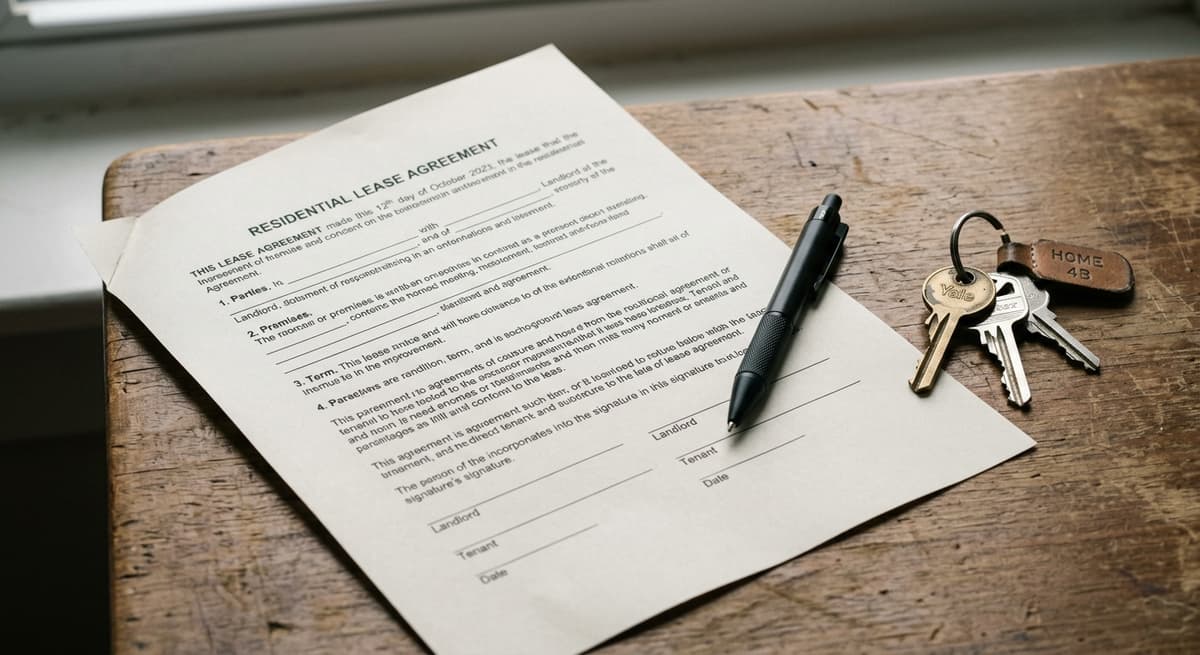
Installing a Ring doorbell involves mounting hardware to the door frame or exterior wall, which could be considered a property modification. Before purchasing a Ring doorbell for your rental, review your lease agreement for provisions about exterior modifications, security devices, or property alterations. Getting written permission from your landlord provides the clearest protection against potential lease violations.
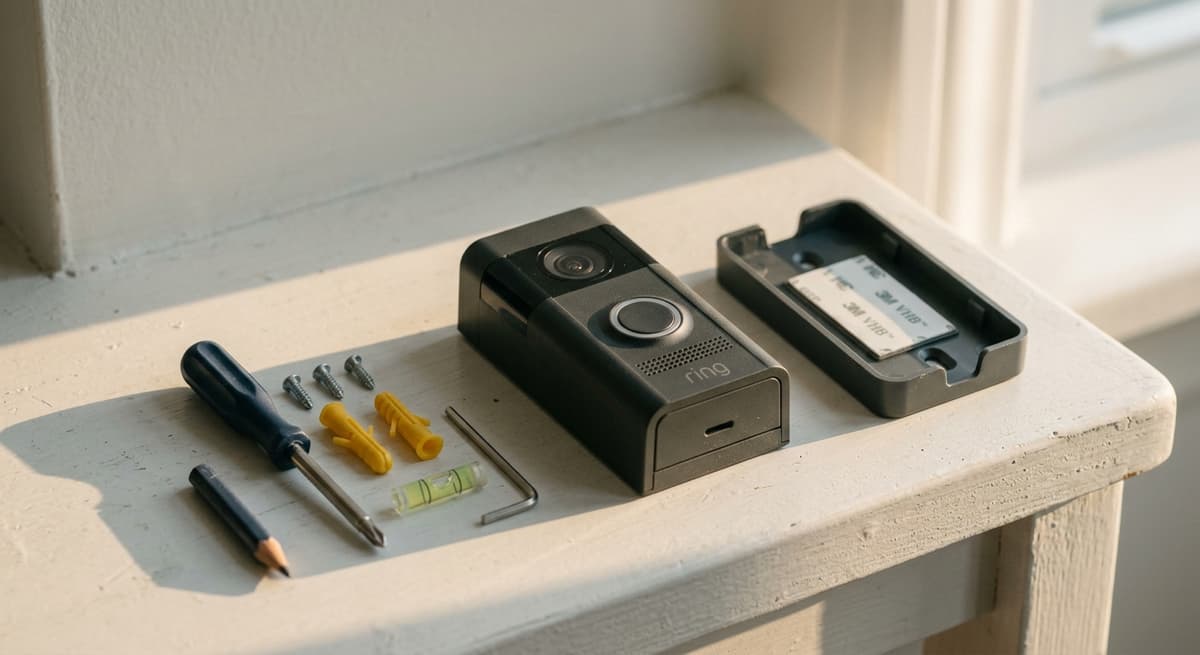
Battery-powered Ring doorbell models that attach with adhesive or minimal hardware may be easier to install without permanent modification, which could make landlord approval more likely.
Landlord Surveillance Restrictions
Idaho landlords who install surveillance cameras on rental properties face privacy limitations. Cameras in common areas like parking lots, building entrances, and shared hallways are generally permissible, but landlords cannot place cameras inside individual rental units or in areas where tenants have a reasonable expectation of privacy, such as bathrooms, bedrooms, or private living spaces.
Best practices for Idaho landlords include disclosing the location of all surveillance cameras in the lease agreement or through separate written notice, limiting camera placement to exterior and common areas, avoiding audio recording in areas where tenants might have private conversations, and providing tenants reasonable access to footage relevant to their safety or security concerns.
A landlord who installs hidden cameras inside a tenant's rental unit could face criminal liability under Idaho's wiretapping and video voyeurism statutes.
Law Enforcement Access to Ring Footage in Idaho
Warrant Requirements
Idaho law enforcement officers generally need a valid search warrant to compel access to Ring doorbell footage. Article I, Section 17 of the Idaho Constitution protects against unreasonable searches and seizures, stating that "the right of the people to be secure in their persons, houses, papers and effects against unreasonable searches and seizures shall not be violated."
Ring's corporate policy, updated in 2024, requires a valid search warrant or explicit user consent before the company releases video content to law enforcement. Ring does not produce content information in response to subpoenas alone.
Voluntary Sharing of Footage
Idaho residents can voluntarily share their Ring doorbell footage with law enforcement at any time. Police may request footage during investigations of crimes that occurred in the vicinity of your home. You are free to cooperate or decline. Voluntary sharing does not require a warrant because you, as the recording owner, are consenting to its release.
Emergency Exceptions
Under the federal Electronic Communications Privacy Act (18 U.S.C. § 2702), Ring may disclose user footage to law enforcement without a warrant when the company believes there is an imminent danger of death or serious physical injury. This emergency exception is narrow and applies only in genuinely life-threatening situations.
Penalties for Illegal Recording in Idaho
Criminal Penalties
Violating Idaho's wiretapping statute under Idaho Code § 18-6702 is a felony. Conviction carries up to 5 years in the state prison, a fine of up to $5,000, or both. This applies to illegal interception of wire, electronic, or oral communications without proper consent.
Video voyeurism under Idaho Code § 18-6605 is also a felony. Subsection (4) of that statute says only that "a violation of this section is a felony" and sets no term or fine of its own, so the general felony default in Idaho Code § 18-112 supplies the maximum: imprisonment in the state prison not exceeding five years, a fine not exceeding $50,000, or both. This statute targets the use or installation of imaging devices where a person has a reasonable expectation of privacy, with voyeuristic intent.

Civil Liability
Under Idaho Code § 18-6709, anyone whose communications have been illegally intercepted, disclosed, or used may recover actual damages, punitive damages, attorney's fees, and litigation costs through a civil lawsuit. This provides a private right of action for victims of illegal recording, separate from any criminal prosecution.
The availability of punitive damages means that courts can impose additional financial penalties beyond the actual harm suffered, particularly in cases involving willful or egregious violations.
How to Use a Ring Doorbell Legally in Idaho
Following these guidelines can help Idaho residents stay within the law when using a Ring doorbell camera:
Camera Placement: Position your Ring doorbell to capture your own property and public-facing areas. Avoid angling the camera toward a neighbor's windows, enclosed patio, or backyard. Use Ring's privacy zone feature to exclude sensitive areas from the recording field.
Audio Recording: Idaho's one-party consent law permits audio recording when you are a party to the conversation. Posting a visible sign near your Ring doorbell indicating that audio and video recording is in progress provides additional legal protection and eliminates any claim of a privacy expectation.
HOA Compliance: If you live in an HOA community, review your CC&Rs and architectural guidelines before installation. The Idaho Homeowners Association Act requires that fine authority be clearly established in the governing documents, so understand your community's specific rules before mounting a Ring doorbell.
Lease Review: Tenants should check their lease agreement and get written landlord permission before installing a Ring doorbell. Battery-powered models that avoid permanent modifications are often easier to get approved.
Privacy Settings: Enable end-to-end encryption on your Ring account, use two-factor authentication, and regularly review which users have access to your footage. Adjust motion zones to minimize recording of areas outside your property boundaries.
Footage Management: While Idaho law does not set a specific retention limit for personal security recordings, be thoughtful about how long you store footage and who has access to it.
Law Enforcement Requests: Know your rights when police ask for Ring footage. You can voluntarily share recordings, but law enforcement generally needs a valid search warrant to compel access. Consulting with an Idaho attorney before responding to formal legal requests is advisable.
More Idaho Laws
Explore additional Idaho legal topics on Recording Law:
- Idaho Recording Laws cover the full scope of audio and video recording rules across the state.
- Idaho Hit and Run Laws explain reporting requirements and penalties for leaving the scene of an accident.
- Idaho Lemon Law outlines protections for buyers of defective vehicles.
This article provides general legal information about Ring doorbell laws in Idaho as of April 2026. Laws change, and their application depends on specific circumstances. Consult an Idaho attorney for advice specific to your situation.
Frequently Asked Questions
Can my Ring doorbell legally record audio in Idaho?
Yes. Idaho is a one-party consent state under Idaho Code § 18-6702. Your Ring doorbell can record audio when you are participating in the conversation, such as during two-way talk through the Ring app. You do not need to notify the other person that the conversation is being recorded.
Is it legal for my Ring doorbell to capture my neighbor's property in Idaho?
Incidental recording of a neighbor's front yard, driveway, or areas visible from public view is generally legal in Idaho. However, installing or aiming your Ring camera at a neighbor's windows, bedroom, or other place where a person has a reasonable expectation of privacy, with a sexual or sexually degrading purpose and without that person's consent, can violate Idaho Code § 18-6605(2) even if nothing is ever recorded, because that subsection does not require any captured image. Use Ring's privacy zone feature to exclude sensitive neighboring areas.
Can my HOA in Idaho restrict Ring doorbell installation?
Yes. Idaho HOAs can regulate exterior modifications through their CC&Rs and architectural guidelines under the Idaho Homeowners Association Act. However, the HOA can only impose fines if the authority to fine is clearly stated in the governing documents and approved by a board majority vote. Security cameras are not among the modifications Idaho law specifically protects from HOA restriction.
Do Idaho police need a warrant to access my Ring footage?
Generally, yes. Article I, Section 17 of the Idaho Constitution protects against unreasonable searches and seizures. Ring's 2024 policy update requires a valid search warrant or user consent before releasing video content to law enforcement. You can voluntarily share footage, but police cannot compel access without proper legal process.
What are the penalties for illegal recording in Idaho?
Illegal wiretapping under Idaho Code § 18-6702 is a felony with up to 5 years in prison and $5,000 in fines. Video voyeurism under Idaho Code § 18-6605 is a felony; that statute sets no penalty of its own, so Idaho Code § 18-112 supplies the general felony maximum of 5 years in prison, a $50,000 fine, or both. Victims can also sue for actual damages, punitive damages, and attorney's fees under Idaho Code § 18-6709.
Updates
Corrected the audio-recording discussion to attribute the "expectation of interception" test to Idaho Code § 18-6701(2) rather than § 18-6702, restated the video voyeurism elements under § 18-6605(2) (which requires no captured image and no intimate areas), sourced the felony penalty figures to Idaho Code § 18-112, and updated the Idaho Homeowner's Association Act discussion to reflect the sections added since the chapter was last described.
Independently fact-checked against the cited primary sources; governing law re-checked for recent changes
Scoped an overstated claim that any doorbell footage of a neighbor's interior 'would violate Idaho privacy protections' down to what Idaho's video voyeurism statute actually requires: prurient/sexual intent and exposure of statutorily defined intimate areas.
Governing law re-checked for recent changes
Reviewed and approved by an editor
The Law Behind This Article
This article rests on the statutory provisions below, held in our own legal record and retrieved from the official source. Tap a section to read the operative text.
Idaho Code
§ 18-6702Interception and disclosure of wire, electronic or oral communications prohibitedIn forcecited in 21 of our articles
18-6702. Interception and disclosure of wire, electronic or oral communications prohibited. (1) Except as otherwise specifically provided in this chapter, any person shall be guilty of a felony and is punishable by imprisonment in the state prison for a term not to exceed five (5) years or by a…
Official text (excerpt) · last checked 2026-08-31 · Read the full text in our law library · Verify at legislature.idaho.gov
Cited in 6 court opinions in our collectionLatest citing opinion in our collection: 2019
In the courts (editorial summary, independently checked):Idaho courts have applied section 18-6702 to intercepted phone calls. Hoskins v. Howard (1998) held cordless telephone conversations are protected wire communications, so scanning, recording and disclosing one supported a claim. Chapman v. NYK Line North America (2009) noted 18-6702(2)(d) makes one-party-consent recording lawful.
Opinions citing this section in our collection:
- Hoskins v. Howard (Idaho Supreme Court 1998, 132 Idaho 311)✓A sheriff's deputy used a scanner to record a neighbor's cordless call and passed the tape on; the court held such calls are protected wire communications when part of the call crosses the phone network, so Section 18-6702 reached him, and vacated summary judgment in his favor.
- Chapman v. NYK LINE NORTH AMERICA, INC. (Idaho Supreme Court 2009, 147 Idaho 178)“…rsation with the consent of one party to the conversation. Idaho Code § 18-6702 (2)(d). Of course, an employer could im…”
- Bartnicki v. Vopper (Supreme Court of the United States 2001, 532 U.S. 514)“…16-11-66.1 (1996); Haw. Rev. Stat. § 803-42 (1993); Idaho Code § 18-6702 (1997); Ill. Comp. Stat., ch. 720, § 5…”
Identified automatically from the court opinions citing this section — not a ranking of which case controls.
Also relied on in: Idaho Recording Laws (2026): One-Party Consent Rules, Idaho Security Camera Laws: Home, Business, and Surveillance Rules (2026), Idaho Medical Recording Laws: Patient Rights, HIPAA, and One-Party Consent (2026)
§ 18-6605video voyeurismIn forcecited in 13 of our articles
18-6605. video voyeurism. (1) As used in this section: (a) "Broadcast" means the electronic transmittal of a visual image with the intent that it be viewed by a person or persons. (b) "Disseminate" means to make available by any means to any person.
Official text (excerpt) · last checked 2026-08-31 · Read the full text in our law library · Verify at legislature.idaho.gov
Cited in 14 court opinions in our collectionLatest citing opinion in our collection: 2026
Opinions citing this section in our collection:
- State v. Gomez-Alas (Idaho Supreme Court 2020, 167 Idaho 857)“…does not constitute an infamous crime against nature under Idaho Code sections 18-6605 and 18-6606; (2) there was…”
- State v. Martinez (Idaho Supreme Court 1986, 111 Idaho 281)“…4 ; Robbery, Idaho Code § 18-6503 ; Crime against nature, Idaho Code § 18-6605 ; Forcible sexual penetration by use of…”
- State v. Cook (Idaho Court of Appeals 2008, 146 Idaho 261)“…is unconstitutional. Id. at 712, 69 P.3d at 132. Idaho Code Section 18-6605, provides: Every pers…”
Identified automatically from the court opinions citing this section — not a ranking of which case controls.
Also relied on in: Idaho Laws on Recording in Public: Photography, Filming, and Audio Rights (2026), Idaho Workplace Recording Laws: Employee and Employer Rights (2026), Idaho Smart Glasses Recording Laws: One-Party Consent
§ 18-6709Recovery of civil damages authorized. Any person whose wire, electronic or oral communication is intercepted, disclosed, or used in violation of this chapter shall have a civil cause of action against any person who intercepts, discloses, uses, or procures any other person to intercept, disclose, or use such communications, and shall be entitled to recover from any such person:In forcecited in 14 of our articles
18-6709. Recovery of civil damages authorized. Any person whose wire, electronic or oral communication is intercepted, disclosed, or used in violation of this chapter shall have a civil cause of action against any person who intercepts, discloses, uses, or procures any other person to intercept,…
Official text (excerpt) · last checked 2026-08-01 · Read the full text in our law library · Verify at legislature.idaho.gov
Also relied on in: Idaho Audio Recording Laws: One-Party Consent Rules and Penalties (2026), Idaho Dashcam Laws: Recording Rules, Windshield Mounting, and Legal Limits (2026), Idaho Landlord-Tenant Recording Laws: Cameras, Privacy Rights, and Disputes (2026)
United States Code Title 18
§ 2702Voluntary disclosure of customer communications or recordsIn forcecited in 18 of our articles
Except as provided in subsection (b) or (c)— a person or entity providing an electronic communication service to the public shall not knowingly divulge to any person or entity the contents of a communication while in electronic storage by that service; and a person or entity providing remote computing service to the public shall not knowingly divulge to any person or entity the contents of any communication which is carried or maintained on that service— on behalf of, and received by means of electronic transmission from (or created by means of computer processing of communications received by means of electronic transmission from), a subscriber or customer of such service; solely for the purpose of providing storage or computer processing services to such subscriber or customer, if the provider is not authorized to access the contents of any such communications for purposes of providing any services other than storage or computer processing; and a provider of remote computing service or electronic communication service to the public shall not knowingly divulge a record or other information pertaining to a subscriber to or customer of such service (not including the contents of…
Official text (excerpt) · last checked 2026-07-28 · Read the full text in our law library · Verify at uscode.house.gov
Cited in 259 court opinions in our collectionLatest citing opinion in our collection: 2026
In the courts (editorial summary, independently checked):Freeman v. Directv, Inc. (2006) held Sections 2702 and 2707 do not support secondary liability claims such as aiding and abetting or conspiracy. Alexander v. Verizon Wireless (2017) applied Section 2702(c)(4)'s emergency exception and found a provider's good-faith reliance on a law enforcement request a complete defense.
Opinions citing this section in our collection:
- Matthew Alexander v. Verizon Wireless Services, LL (Court of Appeals for the Fifth Circuit 2017, 875 F.3d 243)✓A detective sent Verizon a certified emergency form after an arson, and Verizon released the subscriber's non-content cell records; the Fifth Circuit applied an objective good faith standard to section 2702(c)(4) and held Verizon statutorily immune from the SCA suit.
- Doe 1 v. AOL LLC (Court of Appeals for the Ninth Circuit 2009, 552 F.3d 1077)“…rs, alleging violations of federal electronic privacy law, 18 U.S.C. § 2702 (a). A subclass of AOL members who are…”
- Freeman v. Directv, Inc. (Court of Appeals for the Ninth Circuit 2006, 457 F.3d 1001)✓Users whose message board posts were seized from a website operator and passed to DirecTV sued for aiding and abetting and conspiracy; the Ninth Circuit held sections 2702 and 2707 name who can be liable and do not support secondary liability, affirming dismissal.
Identified automatically from the court opinions citing this section — not a ranking of which case controls.
Also relied on in: Stored Communications Act Explained: 18 U.S.C. § 2701, Georgia Ring Doorbell Laws: What You Need to Know in 2026, Hawaii Ring Doorbell Laws: What You Need to Know in 2026
Search our full record of US law — 2.1 million sections, every state + federal →
Sources and References
- Idaho Code § 18-6702 - Interception and Disclosure of Communications Prohibited(legislature.idaho.gov).gov
- Idaho Code § 18-6605 - Video Voyeurism(legislature.idaho.gov).gov
- Idaho Code § 18-6709 - Civil Liability for Illegal Interception(legislature.idaho.gov).gov
- Idaho Homeowners Association Act (Title 55, Chapter 32)(legislature.idaho.gov).gov
- Idaho Constitution - Article I, Section 17(legislature.idaho.gov).gov
- Idaho Attorney General Landlord and Tenant Manual(ag.idaho.gov).gov
- Electronic Communications Privacy Act (18 U.S.C. § 2702)(law.cornell.edu)
- FTC Action Against Ring LLC - Privacy Violations(ftc.gov).gov
- Idaho Recording Laws - Reporters Committee for Freedom of the Press(rcfp.org)
- Ring Law Enforcement Information Requests Policy(ring.com)
- Idaho Code § 18-6701 - Definitions (Interception of Communications)(legislature.idaho.gov)
- Idaho Code § 18-112 - Punishment for Felony When Not Otherwise Prescribed(legislature.idaho.gov)