
Kansas
Kansas Laws on Recording Police
Independently fact-checked against primary sources (last audited August 15, 2026). · Reviewed by the RecordingLaw editorial team. · Law checked current as of August 15, 2026. · 6 primary sources cited on this page. How we verify our legal content
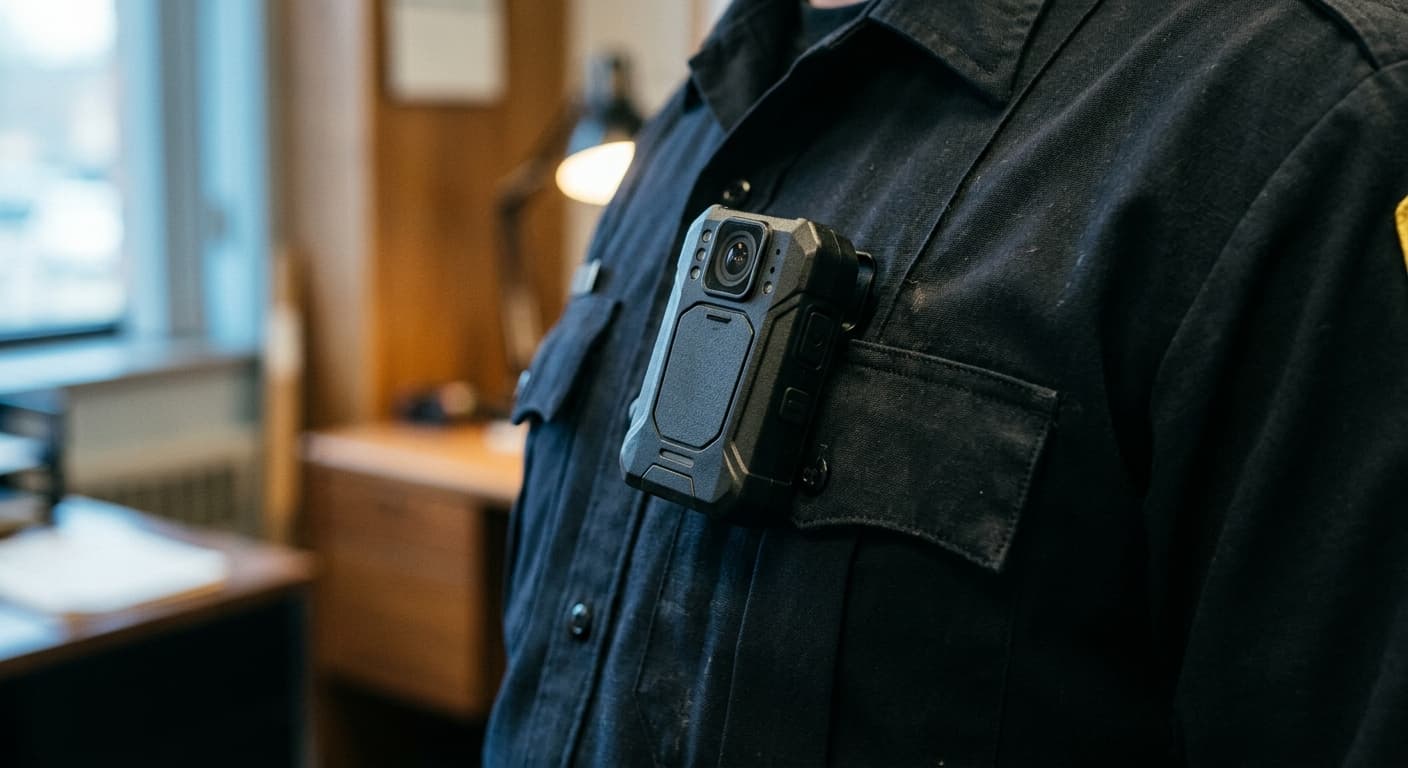
Kansas residents have a constitutional right to record police officers on duty in public spaces. The Tenth Circuit confirmed this First Amendment protection in Irizarry v. Yehia (2022), and K.S.A. 21-6101 lets you audio record any police interaction you participate in without notifying the officer.
Recording law enforcement officers in Kansas is protected under both the First Amendment and Kansas one-party consent law. The U.S. Court of Appeals for the Tenth Circuit, which has jurisdiction over Kansas, explicitly recognized the constitutional right to record police in Irizarry v. Yehia, 38 F.4th 1282 (10th Cir. 2022).
This guide covers your legal right to record police in Kansas, the boundaries of that right, police body camera policies, how to access law enforcement recordings through public records requests, and what to do if your recording rights are violated.
The Constitutional Right to Record Police
First Amendment Protection
The right to record government officials, including police officers, performing their duties in public is rooted in the First Amendment to the U.S. Constitution. The Tenth Circuit's decision in Irizarry v. Yehia established this as settled law in the circuit that includes Kansas, Colorado, Oklahoma, New Mexico, Utah, and Wyoming.
In that case, the court held that recording police "falls squarely within the First Amendment's core purposes to protect free and robust discussion of public affairs, hold government officials accountable, and check abuse of power." The court emphasized that this right was "clearly established" and that officers who violate it can be held personally liable under 42 U.S.C. 1983.
What the Tenth Circuit Ruling Means for Kansas
The Irizarry decision means that in Kansas:
- You have a clearly established constitutional right to record police officers performing their duties in public
- Officers cannot order you to stop recording without a lawful basis
- Officers cannot confiscate or seize your recording device without a warrant
- Officers cannot delete footage from your device
- Officers who violate your recording rights may face personal civil liability
- Qualified immunity is not available as a defense because the right is clearly established
Kansas State Law Protections
In addition to the First Amendment, Kansas's one-party consent law under K.S.A. 21-6101 supports your right to record. As a participant in an interaction with a police officer, you satisfy the one-party consent requirement for audio recording. This means:
- You can record audio and video of your own traffic stops
- You can record conversations with officers during arrests, questioning, or detentions
- You can record interactions at police stations when you are a party to the conversation
- Your recording does not need to be disclosed to the officer
What You Can Record
Traffic Stops
You can record your own traffic stop in Kansas, including:
- The officer approaching your vehicle
- Questions asked and your responses
- Field sobriety tests
- Vehicle searches
- The issuance of citations or warnings
When recording a traffic stop, keep your phone or camera in a visible location. If you need to reach for a device to start recording, announce what you are doing before making sudden movements.
Arrests in Public
You can record arrests happening in public spaces, whether you are the person being arrested or a bystander. Bystander recording serves an important accountability function and is specifically protected by the Tenth Circuit's ruling.
Police Encounters on the Street
You can record any police activity visible from a public place, including:
- Officers conducting patrols
- Interactions between officers and other civilians
- Police responses to emergencies or incidents
- Officers executing searches or seizures
Public Protests and Demonstrations
You have a clear right to record police activity at public protests and demonstrations. Law enforcement agencies cannot create "no recording zones" around protest activity, and officers cannot target people for recording.
Government Buildings Open to the Public
You can generally record in areas of government buildings that are open to the public, such as lobbies, hallways, and public meeting rooms. However, specific areas within government buildings may have recording restrictions based on security concerns or court rules.
Limitations on Recording Police
Do Not Interfere With Police Operations
While you have the right to record, you must not physically interfere with police operations. Interference can include:
- Physically blocking an officer's path or movements
- Getting too close to an active arrest or volatile situation
- Crossing police barriers or crime scene tape
- Grabbing an officer or their equipment
- Refusing lawful orders to move back to a safe distance
Kansas law on obstruction of official duty (K.S.A. 21-5904) makes it a crime to knowingly obstruct, resist, or oppose any person authorized by law in the discharge of an official duty, classified as a Class A nonperson misdemeanor or, depending on the disposition, a severity level 9 nonperson felony. Recording itself is not obstruction, but actions taken while recording may cross the line.
Reasonable Distance Requirements
Officers may ask you to step back to a reasonable distance from an active scene. A "reasonable distance" is one that allows you to continue recording while not interfering with the officer's duties or creating a safety hazard. Courts have generally held that orders to move back must be based on legitimate safety concerns, not on a desire to prevent recording.
Private Property
If police activity occurs on private property where you are trespassing, you do not have a right to remain on that property to record. Your recording rights do not override trespassing laws under K.S.A. 21-5808.
Courtrooms
Kansas district courts may restrict recording in courtrooms. Supreme Court Rule 1001 governs media coverage of court proceedings in Kansas, and individual judges have discretion to permit or restrict cameras and recording devices during proceedings.
What to Do If Police Violate Your Recording Rights
During the Encounter
If a police officer orders you to stop recording or attempts to confiscate your device:
- Remain calm and do not physically resist
- Clearly state: "I am exercising my First Amendment right to record"
- Do not voluntarily hand over your device without a warrant
- If the officer seizes your device, do not resist physically
- Note the officer's name, badge number, and patrol car number
- Note the time, location, and any witnesses present
After the Encounter
If your recording rights were violated, you have several options:
File an internal complaint. Contact the police department's internal affairs division or civilian complaint board. Document what happened in writing and include details about the officer, the time, the location, and any witnesses.
File a complaint with the Kansas Commission on Peace Officers' Standards and Training (KS-CPOST). KS-CPOST oversees certification and discipline of Kansas law enforcement officers. Complaints about officer misconduct can be submitted directly.
Pursue a Section 1983 lawsuit. Under 42 U.S.C. 1983, you can file a federal civil rights lawsuit against officers who violate your clearly established constitutional right to record. Because the Tenth Circuit has ruled this right is clearly established, officers cannot claim qualified immunity as a defense. Damages may include:
- Compensatory damages for emotional distress, legal fees, and other losses
- Punitive damages if the officer's conduct was willful or malicious
- Attorney fees and litigation costs under 42 U.S.C. 1988
Contact a civil rights attorney. An attorney experienced in Section 1983 litigation can evaluate your case and advise on the best course of action.
Police Body Cameras in Kansas
State Law on Body Cameras
Kansas does not have a statewide mandate requiring all law enforcement officers to wear body cameras. Individual agencies make their own decisions about body camera adoption and policies. However, many Kansas law enforcement agencies, including the Wichita Police Department and the Kansas City, Kansas Police Department, have voluntarily adopted body camera programs.
Agency-Level Policies
Body camera policies vary by department but typically address:
- When officers must activate cameras (during traffic stops, arrests, use of force incidents, searches)
- When cameras may be deactivated (during administrative tasks, conversations with informants, inside sensitive locations)
- How footage is stored and for how long
- Who can access footage within the department
- How the public can request access to footage
Accessing Body Camera Footage
Body camera footage from Kansas law enforcement agencies is generally subject to the Kansas Open Records Act. K.S.A. 45-254 specifically governs the disclosure of law enforcement recordings, including body camera footage, under KORA (K.S.A. 45-215 et seq.). Public records requests for body camera footage should be submitted in writing to the records custodian of the relevant law enforcement agency.
The agency may deny access under certain exemptions, including:
- Active criminal investigation files (K.S.A. 45-221(a)(10))
- Records that would reveal the identity of confidential informants
- Records that would create a risk to personal safety
- Records subject to other statutory confidentiality protections
If a request is denied, you can appeal to the Kansas Attorney General's office or file a lawsuit under the Kansas Open Records Act.
Recording Government Officials Beyond Police
Kansas Open Meetings Act
The Kansas Open Meetings Act (K.S.A. 75-4318) specifically provides that the use of cameras, photographic lights, and recording devices cannot be prohibited at open public meetings. This covers:
- City council meetings
- County commission meetings
- School board meetings
- State legislative proceedings
- Public hearings and forums
- Meetings of any public body subject to the Act
The Act allows the governing body to establish reasonable rules and regulations to ensure orderly proceedings, but these rules cannot amount to a blanket prohibition on recording.
Recording Other Government Employees
You can record interactions with other government employees under Kansas one-party consent law, including:
- Department for Children and Families (DCF) workers
- Kansas Department of Motor Vehicles (DMV) employees
- Tax officials and revenue agents
- Building inspectors and code enforcement officers
- Public school administrators and teachers (subject to student privacy laws)
- Social workers and government benefits administrators
As a participant in the conversation, your knowledge of the recording satisfies the one-party consent requirement.
Police Use of Surveillance and Recording
Wiretapping by Law Enforcement
Kansas law enforcement can conduct wiretapping and electronic surveillance only with proper judicial authorization. While K.S.A. 21-6101 does not explicitly detail the process for law enforcement wiretap orders, Kansas courts follow procedures similar to those under the federal Wiretap Act (18 U.S.C. 2516-2518).
A wiretap order requires:
- Probable cause that a specific crime has been, is being, or will be committed
- A showing that normal investigative procedures have been tried and failed, or are unlikely to succeed
- Identification of the person whose communications will be intercepted
- A time limitation on the surveillance
- Judicial oversight and approval
Police Dash Cameras
Many Kansas law enforcement vehicles are equipped with dashboard cameras. Dash camera footage is typically retained as part of official law enforcement records and is subject to the Kansas Open Records Act. Footage from dash cameras that captures your interaction with police during a traffic stop may be obtained through a public records request.
License Plate Readers and Other Surveillance
Kansas law enforcement agencies use various surveillance technologies, including automated license plate readers (ALPRs), surveillance drones, and closed-circuit television systems. The use of these technologies must comply with the Fourth Amendment's prohibition on unreasonable searches and seizures.
Using Police Encounter Recordings as Evidence
Criminal Defense
Recordings of police encounters can be powerful evidence in criminal cases. Common uses include:
- Challenging the legality of a traffic stop
- Disputing an officer's account of events
- Documenting Miranda rights violations
- Showing that a confession was coerced
- Demonstrating excessive use of force
Civil Rights Claims
Recordings serve as critical evidence in civil rights lawsuits against law enforcement. They can document:
- Excessive force
- False arrest
- Unlawful searches and seizures
- Racial profiling
- Violations of recording rights
Internal Affairs Investigations
Citizen recordings can prompt and support internal affairs investigations into police misconduct. Many Kansas police departments accept video evidence from the public as part of complaint investigations.
More Kansas Recording Laws
Audio Recording | Video Recording | Voyeurism Laws | Workplace Recording | Recording Police | Phone Call Recording | Security Cameras | Recording in Public | Landlord-Tenant Recording | Dashcam Laws | School Recording | Medical Recording
More Kansas Recording Topics
More Kansas Laws
Frequently Asked Questions
Can I legally record police officers in Kansas?
Yes. The First Amendment protects your right to record law enforcement officers performing their duties in public. The Tenth Circuit Court of Appeals, which covers Kansas, confirmed this right as clearly established in Irizarry v. Yehia (2022). Kansas one-party consent law under K.S.A. 21-6101 also allows you to audio record your own interactions with police.
Can a police officer order me to stop recording in Kansas?
No, an officer cannot order you to stop recording simply because they do not want to be recorded. The Tenth Circuit has ruled that this right is clearly established, meaning officers are on notice that they cannot prevent lawful recording. However, officers can give lawful orders to move back to a safe distance if your proximity interferes with their duties.
Can police confiscate my phone or camera in Kansas?
Officers cannot seize your recording device without a warrant. If an officer takes your phone, do not resist physically, but clearly state that you do not consent to the seizure. You can later pursue a civil rights claim under 42 U.S.C. 1983 for the unlawful seizure of your property and violation of your First Amendment rights.
Can I get police body camera footage in Kansas?
Yes. Body camera footage is generally subject to the Kansas Open Records Act (K.S.A. 45-215). Submit a written request to the records custodian of the law enforcement agency. The agency may deny access under certain exemptions, such as active criminal investigations, but you can appeal a denial to the Kansas Attorney General or file a lawsuit.
What should I do if police delete my recording or take my phone?
Document everything: the officer's name, badge number, time, location, and witnesses. File an internal complaint with the police department and a complaint with the Kansas Commission on Peace Officers' Standards and Training (KS-CPOST). Consult a civil rights attorney about filing a Section 1983 lawsuit for violation of your First Amendment rights. The Tenth Circuit has ruled this right is clearly established, so qualified immunity is not available as a defense.
Updates
Independently fact-checked against the cited primary sources; governing law re-checked for recent changes
Governing law re-checked for recent changes
Corrected the penalty classification for obstruction of official duty (K.S.A. 21-5904): the offense can be a Class A nonperson misdemeanor or a severity level 9 nonperson felony depending on the disposition, not only a misdemeanor as previously stated.
Governing law re-checked for recent changes
Confirmed Irizarry v. Yehia, 38 F.4th 1282 (10th Cir. 2022) as the controlling Tenth Circuit precedent for the First Amendment right to record police in Kansas. Added K.S.A. 45-254 (KORA body-camera-specific provision) alongside K.S.A. 45-215 for body camera records requests. Confirmed K.S.A. 75-4318 KOMA recording rights. Added UpdatesLog.
Reviewed and approved by an editor
The Law Behind This Article
This article rests on the statutory provisions below, held in our own legal record and retrieved from the official source. Tap a section to read the operative text.
Kansas Statutes Annotated, Chapter 21: CRIMES AND PUNISHMENTS
§ 21-6101Breach of privacy.In forcecited in 26 of our articles
(a) Breach of privacy is knowingly and without lawful authority: (1) Intercepting, without the consent of the sender or receiver, a message by telephone, telegraph, letter or other means of private communication; (2) divulging, without the consent of the sender or receiver, the existence or contents of such message if such person knows that the message was illegally intercepted, or if such person illegally learned of the message in the course of employment with an agency in transmitting such message; (3) entering with intent to listen surreptitiously to private conversations in a private place or to observe the personal conduct of any other person or persons entitled to privacy therein; (4) installing or using outside or inside a private place any device for hearing, recording, amplifying or broadcasting sounds originating in such place, which sounds would not ordinarily be audible or comprehensible without the use of such device, without the consent of the person or persons entitled to privacy therein; (5) installing or using any device or equipment for the interception of any telephone, telegraph or other wire or wireless communication without the consent of the person in…
Official text (excerpt) · last checked 2026-08-31 · Read the full text in our law library · Verify at ksrevisor.gov
Cited in 8 court opinions in our collectionLatest citing opinion in our collection: 2026
In the courts (editorial summary, independently checked):Recent Kansas decisions construe the image-dissemination subsection, K.S.A. 21-6101(a)(8), not the interception subsections. State v. Ivy (2025) held a reasonable expectation of privacy under that subsection has a subjective and an objective component. State v. Jamil (2026), unpublished, found disseminating needs no jury definition.
Opinions citing this section in our collection:
- State v. Ivy (Court of Appeals of Kansas 2025)✓Ivy posted on Snapchat a sexual video his ex-girlfriend had recorded and texted him during their relationship; the court applied a subjective and objective two-part test and held a jury could find she kept a reasonable expectation of privacy, affirming the conviction.
- In re Belcher (Supreme Court of Kansas 2024, 552 P.3d 1213)“…deotape, photograph, film or image obtained in violation of K.S.A. 21-6101(a)(6) or (a)(8), and amendments…”
- State v. Jamil (Court of Appeals of Kansas 2026)✓Jamil secretly filmed a woman undressed and unconscious at his home, then sent the videos to her boyfriend; the court held that sharing with a single recipient can be disseminating under K.S.A. 21-6101(a)(8) and that intent to harass could be inferred from his conduct.
Identified automatically from the court opinions citing this section — not a ranking of which case controls.
Also relied on in: Kansas Audio Recording Laws, Kansas Dashcam Laws: Mounting Rules, Audio Recording, and Evidence (2026), Kansas Phone Call Recording Laws
§ 21-5808Criminal trespass.In forcecited in 4 of our articles
(a) Criminal trespass is entering or remaining upon or in any: (1) Land, nonnavigable body of water, structure, vehicle, aircraft or watercraft by a person who knows such person is not authorized or privileged to do so, and: (A) Such person enters or remains therein in defiance of an order not to enter or to leave such premises or property personally communicated to such person by the owner thereof or other authorized person; (B) such premises or property are posted as provided in K.S.A. 32-1013, and amendments thereto, or in any other manner reasonably likely to come to the attention of intruders, or are locked or fenced or otherwise enclosed, or shut or secured against passage or entry; or (C) such person enters or remains therein in defiance of a restraining order issued pursuant to K.S.A. 60-3105, 60-3106, 60-3107, 60-31a05 or 60-31a06 or K.S.A.
Official text (excerpt) · last checked 2026-07-29 · Read the full text in our law library · Verify at ksrevisor.gov
Cited in 6 court opinions in our collectionLatest citing opinion in our collection: 2026
Opinions citing this section in our collection:
- State v. Lyon (Court of Appeals of Kansas 2020, 58 Kan. App. 2d 474)“…ger of such premises not to enter such premises pursuant to K.S.A. 21-5808, and amendments thereto, except…”
- State v. Vano – Per Curiam – Affirmed – Johnson (Court of Appeals of Kansas 2023)“…raining order must have prevented him from being there. See K.S.A. 21-5808 (defining criminal trespassing). Yet no…”
- State v. Swopes (Court of Appeals of Kansas 2017)“…801(a)(1) and (b)(3); (4) criminal trespass in violation of K.S.A. 21-5808(a)(1)(B); and (5) theft—less than $1,00…”
Identified automatically from the court opinions citing this section — not a ranking of which case controls.
Also relied on in: Kansas Laws on Recording in Public, Kansas Security Camera Laws, Kansas Video Recording Laws
§ 21-5904Interference with law enforcement.In force
(a) Interference with law enforcement is: (1) Falsely reporting to a law enforcement officer, law enforcement agency or state investigative agency: (A) That a particular person has committed a crime, knowing that such information is false and intending that the officer or agency shall act in reliance upon such information; (B) that a law enforcement officer has committed a crime or committed misconduct in the performance of such officer's duties, knowing that such information is false and intending that the officer or agency shall act in reliance upon such information; (C) any information, knowing that such information is false and intending to influence, impede or obstruct such officer's or agency's duty; or (D) any information concerning the death, disappearance or potential death or disappearance of a child under the age of 13, knowing that such information is false and intending that the officer or agency shall act in reliance upon such information; (2) concealing, destroying or materially altering evidence with the intent to prevent or hinder the apprehension or prosecution of any person; (3) knowingly obstructing, resisting or opposing any person authorized by law to…
Official text (excerpt) · last checked 2026-07-29 · Read the full text in our law library · Verify at ksrevisor.gov
Cited in 30 court opinions in our collectionLatest citing opinion in our collection: 2026
Opinions citing this section in our collection:
- In re Wrongful Conviction of Sims (Supreme Court of Kansas 2024, 542 P.3d 1)“…th a law enforcement officer and related misdemeanors under K.S.A. 21-5904(a)(3) and (b)(5)(A). . . .…”
- In re D.J. (Supreme Court of Kansas 2025)“…s); K.S.A. 21-5706(b) (criminalizing marijuana possession); K.S.A. 21-5904(a)(4) (criminalizing knowingly fleeing…”
- State v. Brown (Court of Appeals of Kansas 2026)“…convicted of interference with law enforcement pursuant to K.S.A. 21-5904(a)(3). Brown's charge stemmed from his…”
Identified automatically from the court opinions citing this section — not a ranking of which case controls.
Kansas Statutes Annotated, Chapter 45: PUBLIC RECORDS, DOCUMENTS AND INFORMATION
§ 45-215Title of act.In forcecited in 6 of our articles
K.S.A. 45-215 through 45-223 shall be known and may be cited as the open records act.
Official text (excerpt) · last checked 2026-07-29 · Read the full text in our law library · Verify at ksrevisor.gov
Cited in 69 court opinions in our collectionLatest citing opinion in our collection: 2024
Opinions citing this section in our collection:
- State v. Myers (Supreme Court of Kansas 1996, 260 Kan. 669)“…e subject to the provisions of the Kansas Open Records Act, K.S.A. 45-215 et seq. Myers asserts,…”
- Wichita Eagle & Beacon Publishing Co. v. Simmons (Supreme Court of Kansas 2002, 274 Kan. 194)“…996 through 1999, under the Kansas Open Records Act (KORA), K.S.A. 45-215 et seq. The district court…”
- Harris Enterprises, Inc. v. Moore (Supreme Court of Kansas 1987, 241 Kan. 59)“…e exempt from disclosure under the Kansas Open Records Act, K.S.A. 45-215 et seq. This case aros…”
Identified automatically from the court opinions citing this section — not a ranking of which case controls.
Also relied on in: Kansas Police Body Camera Laws: Access & K.S.A. 45-254, Public Records Laws by State: FOIA Guide for All 50 States (2026), Kansas Public Records Laws: The Kansas Open Records Act (KORA) Explained
§ 45-221Certain records not required to be disclosed; separation of open and closed information required; disclosure of statistical information; records over 70 years old open, exceptions.In forcecited in 9 of our articles
(a) Except to the extent disclosure is otherwise required by law, a public agency shall not be required to disclose: (1) Records the disclosure of which is specifically prohibited or restricted by federal law, state statute or rule of the Kansas supreme court or rule of the senate committee on confirmation oversight relating to information submitted to the committee pursuant to K.S.A. 75-4315d, and amendments thereto, or the disclosure of which is prohibited or restricted pursuant to specific authorization of federal law, state statute or rule of the Kansas supreme court or rule of the senate committee on confirmation oversight relating to information submitted to the committee pursuant to K.S.A. 75-4315d, and amendments thereto, to restrict or prohibit disclosure. (2) Records that are privileged under the rules of evidence, unless the holder of the privilege consents to the disclosure. (3) Medical, psychiatric, psychological or alcoholism or drug dependency treatment records that pertain to identifiable patients.
Official text (excerpt) · last checked 2026-09-02 · Read the full text in our law library · Verify at ksrevisor.gov
Cited in 46 court opinions in our collectionLatest citing opinion in our collection: 2025
In the courts (editorial summary, independently checked):Kansas courts construe the K.S.A. 45-221 exceptions narrowly, and the exceptions permit withholding rather than require it. In Telegram Publishing Co. v. Kansas Department of Transportation (2003) the agency carried the burden and lost an (a)(1) claim. Harris Enterprises, Inc. v. Moore (1987) affirmed a denial under (a)(10).
Opinions citing this section in our collection:
- State, Department of Social & Rehabilitation Services v. Public Employee Relations Board of the Kansas Department of Human Resources (Supreme Court of Kansas 1991, 249 Kan. 163)✓A state hospital gave a certified union its employees' names but withheld home addresses; the Kansas Supreme Court held K.S.A. 45-221 does not prohibit disclosure but leaves it discretionary with the records custodian, so the agency could not refuse the disclosure order.
- Wichita Eagle & Beacon Publishing Co. v. Simmons (Supreme Court of Kansas 2002, 274 Kan. 194)✓A newspaper sought corrections records on parolees charged with murder; the Kansas Supreme Court held the K.S.A. 45-221(a)(20) exemption covers proposed policies, not actions already taken, and that subsection (d) required the agency to furnish redacted records.
- Harris Enterprises, Inc. v. Moore (Supreme Court of Kansas 1987, 241 Kan. 59)✓A newspaper sued for the Duffield murder investigation files; applying K.S.A. 45-221(a)(10), the Kansas Supreme Court put the public-interest burden on the requester and the other four findings on the agency, and affirmed the discretionary denial after in camera review.
Identified automatically from the court opinions citing this section — not a ranking of which case controls.
Also relied on in: Are Autopsy Reports Public in Kansas? (2026 Guide), Vital Records Explained: Are birth certificates public records?, Kansas Police Reports: Crash Reports, Records Requests, and Bodycam Footage
§ 45-254Law enforcement recordings using body camera or vehicle camera; criminal investigation records; disclosure.In forcecited in 9 of our articles
(a) Every audio or video recording made and retained by law enforcement using a body camera or a vehicle camera shall be considered a criminal investigation record as defined in K.S.A. 45-217, and amendments thereto. (b) In addition to any disclosure authorized pursuant to the open records act, K.S.A. 45-215 et seq., and amendments thereto, a person described in subsection (c) may make a request in accordance with procedures adopted under K.S.A. 45-220, and amendments thereto, to listen to an audio recording or to view a video recording made by a body camera or a vehicle camera. The law enforcement agency shall allow the person to listen to the requested audio recording or to view the requested video recording within 20 days after making the request, and may charge a reasonable fee for such services provided by the law enforcement agency.
Official text (excerpt) · last checked 2026-08-31 · Read the full text in our law library · Verify at ksrevisor.gov
Cited in 1 court opinions in our collectionLatest citing opinion in our collection: 2022
Opinions citing this section in our collection:
- McRoberts v. Overland Park, Kansas, City of (District Court, D. Kansas 2022)“…aintiff he would respond further by March 4, 2022.12 Under Kan. Stat. Ann. § 45-254(b), however, the custodian has twenty d…”
Identified automatically from the court opinions citing this section — not a ranking of which case controls.
Also relied on in: Kansas Recording Laws (2026): One-Party Consent Rules, Idaho Public Records Laws: Title 74 and the Resident vs Non-Resident Clock, Georgia Public Records Laws: The Georgia Open Records Act Explained
Kansas Statutes Annotated, Chapter 75: STATE DEPARTMENTS; PUBLIC OFFICERS AND EMPLOYEES
§ 75-4318Meetings of state and subdivisions open to public; exceptions; secret ballots; notice; agenda; cameras; photographic lights; recording devices; subordinate groups; live streaming of meetings, requirements, exceptions.In forcecited in 4 of our articles
(a) Subject to the provisions of subsection (g), all meetings for the conduct of the affairs of, and the transaction of business by, all legislative and administrative bodies and agencies of the state and political and taxing subdivisions thereof, including boards, commissions, authorities, councils, committees, subcommittees and other subordinate groups thereof, receiving or expending and supported in whole or in part by public funds shall be open to the public and no binding action by such public bodies or agencies shall be by secret ballot. Meetings of task forces, advisory committees or subcommittees of advisory committees created pursuant to a governor's executive order shall be open to the public in accordance with this act.
Official text (excerpt) · last checked 2026-07-29 · Read the full text in our law library · Verify at ksrevisor.gov
Cited in 40 court opinions in our collectionLatest citing opinion in our collection: 2024
Opinions citing this section in our collection:
- State Ex Rel. Murray v. Palmgren (Supreme Court of Kansas 1982, 231 Kan. 524)“…s to furnish information as required by subsection ( b ) of K.S.A. 75-4318 shall be liable for the payment of a ci…”
- Attorney General Opinion No. (Kansas Attorney General Reports 2007)“…ngs of bodies representing public agencies, as set forth by K.S.A. 75-4318 . 1 K.S.A. 72-4468 et seq. autho…”
Identified automatically from the court opinions citing this section — not a ranking of which case controls.
Also relied on in: Kansas School Recording Laws: Student, Parent, and Teacher Rights (2026)
United States Code Title 42
§ 1983Civil action for deprivation of rightsIn forcecited in 50 of our articles
Every person who, under color of any statute, ordinance, regulation, custom, or usage, of any State or Territory or the District of Columbia, subjects, or causes to be subjected, any citizen of the United States or other person within the jurisdiction thereof to the deprivation of any rights, privileges, or immunities secured by the Constitution and laws, shall be liable to the party injured in an action at law, suit in equity, or other proper proceeding for redress, except that in any action brought against a judicial officer for an act or omission taken in such officer’s judicial capacity, injunctive relief shall not be granted unless a declaratory decree was violated or declaratory relief was unavailable. For the purposes of this section, any Act of Congress applicable exclusively to the District of Columbia shall be considered to be a statute of the District of Columbia.
Official text (excerpt) · last checked 2026-07-28 · Read the full text in our law library · Verify at uscode.house.gov
Cited in 282,365 court opinions in our collectionLatest citing opinion in our collection: 2026
Opinions citing this section in our collection:
- Ashcroft v. Iqbal (Supreme Court of the United States 2009, 556 U.S. 662)“…its brought against state officials under Rev. Stat. §1979, 42 U. S. C. §1983.” Hartman, 547 U. S., at 254, n. 2. Cf.…”
- Celotex Corp. v. Catrett, Administratrix of the Estate of Catrett (Supreme Court of the United States 1986, 477 U.S. 317)“…policeman as she left. Petitioner brought an action under 42 U. S. C. § 1983 claiming that the refusal of service a…”
- Monell v. New York City Dept. of Social Servs. (Supreme Court of the United States 1978, 436 U.S. 658)“…decided less than two decades ago. Focusing new light on 42 U. S. C. § 1983 , that decision widened access to the f…”
Identified automatically from the court opinions citing this section — not a ranking of which case controls.
Also relied on in: Alabama Laws on Recording Police: Your Rights and Limits, Alaska Laws on Recording Police: Your Rights and Limits (2026), Arkansas Laws on Recording Police: Your Rights and Limits (2026)
§ 1988Proceedings in vindication of civil rightsIn forcecited in 6 of our articles
The jurisdiction in civil and criminal matters conferred on the district courts by the provisions of titles 13, 24, and 70 of the Revised Statutes for the protection of all persons in the United States in their civil rights, and for their vindication, shall be exercised and enforced in conformity with the laws of the United States, so far as such laws are suitable to carry the same into effect; but in all cases where they are not adapted to the object, or are deficient in the provisions necessary to furnish suitable remedies and punish offenses against law, the common law, as modified and changed by the constitution and statutes of the State wherein the court having jurisdiction of such civil or criminal cause is held, so far as the same is not inconsistent with the Constitution and laws of the United States, shall be extended to and govern the said courts in the trial and disposition of the cause, and, if it is of a criminal nature, in the infliction of punishment on the party found guilty. In any action or proceeding to enforce a provision of sections 1981, 1981a, 1982, 1983, 1985, and 1986 of this title, title IX of Public Law 92–318 [20 U.S.C.
Official text (excerpt) · last checked 2026-07-28 · Read the full text in our law library · Verify at uscode.house.gov
Cited in 17,943 court opinions in our collectionLatest citing opinion in our collection: 2026
Opinions citing this section in our collection:
- Monell v. New York City Dept. of Social Servs. (Supreme Court of the United States 1978, 436 U.S. 658)“…cts of its deputies and sheriff,” id., at 696 , under 42 U. S. C. § 1988 . In rejecting this vicarious-liability…”
- Gall v. United States (Supreme Court of the United States 2007, 552 U.S. 38)“…ssing the Civil Rights Attorney’s Fees Awards Act of 1976, 42 U. S. C. § 1988 ). See also United States v. Oakland…”
- Hensley v. Eckerhart (Supreme Court of the United States 1983, 461 U.S. 424)“…ing the proper amount of an award of attorney’s fees under 42 U. S. C. § 1988 .” Ante, at 440. I agree with the Cou…”
Identified automatically from the court opinions citing this section — not a ranking of which case controls.
Also relied on in: Georgia Laws on Recording Police: Your First Amendment Rights (2026), New Mexico Laws on Recording Police: Your First Amendment Rights (2026), Virginia Laws on Recording Police: Your Rights and Limitations
Search our full record of US law — 2.1 million sections, every state + federal →
Sources and References
- Irizarry v. Yehia, 38 F.4th 1282 (10th Cir. 2022)(ca10.uscourts.gov).gov
- K.S.A. 21-6101 - Breach of Privacy (Kansas Revisor of Statutes)(ksrevisor.org).gov
- 42 U.S.C. 1983 - Civil Action for Deprivation of Rights(law.cornell.edu)
- K.S.A. 45-215 - Kansas Open Records Act (Kansas Revisor of Statutes)(ksrevisor.org).gov
- K.S.A. 75-4318 - Kansas Open Meetings Act (Kansas Revisor of Statutes)(ksrevisor.gov).gov
- K.S.A. 21-5904 - Obstruction of Official Duty (Kansas Revisor of Statutes)(ksrevisor.org).gov
- Kansas Commission on Peace Officers Standards and Training (KS-CPOST)(kscpost.org).gov