
New Mexico
New Mexico Laws on Recording Police: Your First Amendment Rights (2026)
Independently fact-checked against primary sources (last audited August 15, 2026). · Reviewed by the RecordingLaw editorial team. · Law checked current as of August 15, 2026. · 5 primary sources cited on this page. How we verify our legal content
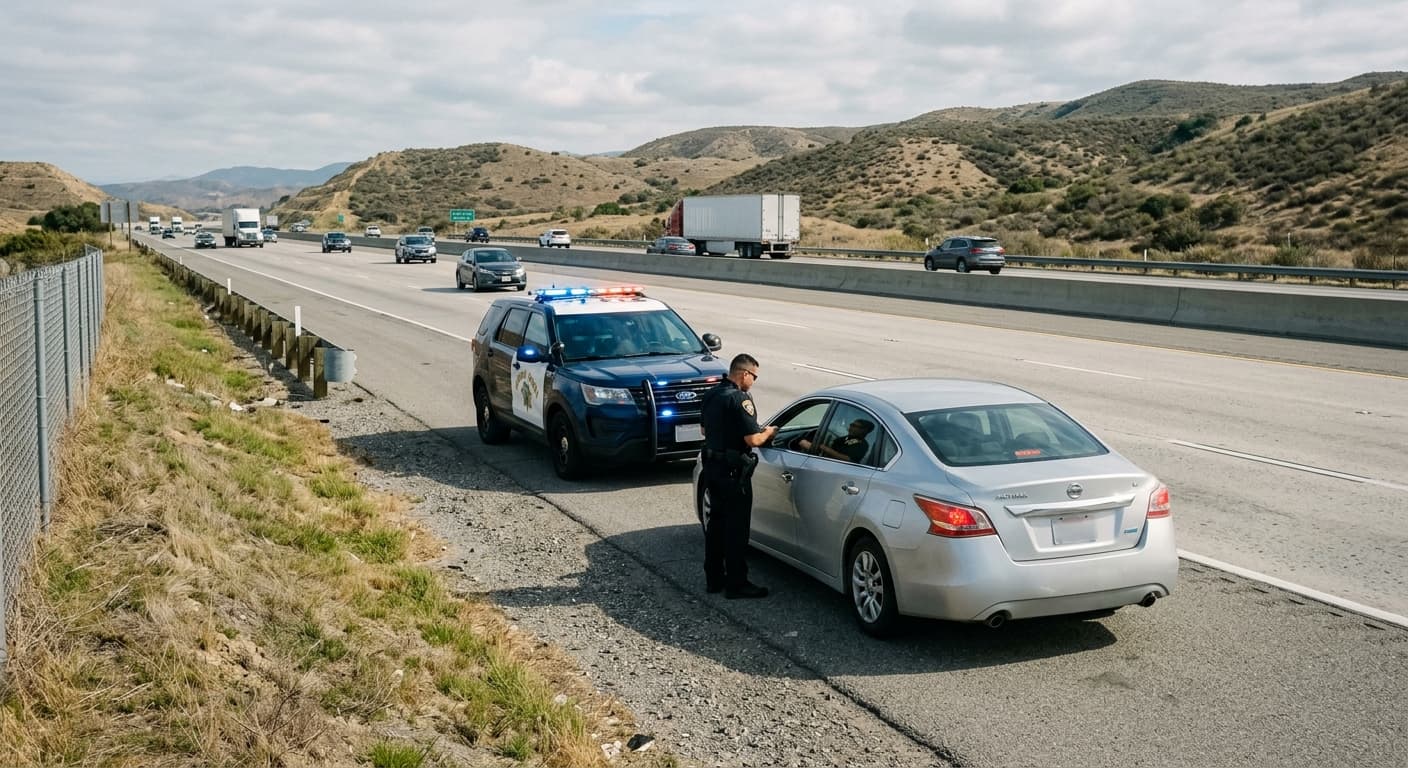
New Mexico residents have a First Amendment right to record on-duty police officers in public spaces, as recognized by the Tenth Circuit Court of Appeals. In-person police encounters fall outside the wiretapping statute at N.M. Stat. Ann. § 30-12-1, so no officer consent is required to film or photograph law enforcement.
New Mexico residents have a clearly established right to record police officers performing their duties in public. The Tenth Circuit Court of Appeals, which has jurisdiction over New Mexico, formally recognized this First Amendment right in Irizarry v. Yehia (2022). This right exists alongside New Mexico's permissive recording laws, where the wiretapping statute under N.M. Stat. Ann. § 30-12-1 covers only telephone and wire communications and does not apply to in-person encounters.
This guide explains your rights to record law enforcement in New Mexico, what officers can and cannot do in response, how to safely exercise your recording rights, and what happens if an officer violates those rights.
The Constitutional Right to Record Police
Tenth Circuit Recognition
The Tenth Circuit Court of Appeals, which covers New Mexico along with Colorado, Kansas, Oklahoma, Utah, and Wyoming, held in Irizarry v. Yehia, 38 F.4th 1282 (10th Cir. Jul. 11, 2022) that "there is a First Amendment right to film the police performing their duties in public," and that this right was clearly established as of May 26, 2019. This ruling established the right as clearly defined law within the Tenth Circuit, meaning New Mexico law enforcement officers are on notice that interfering with lawful recording violates constitutional rights.
Before this ruling, several other federal circuit courts had already recognized the right to record police, including the First, Third, Fifth, Seventh, Ninth, and Eleventh Circuits. Before this ruling, Frasier v. Evans, 992 F.3d 1003 (10th Cir. 2021) had declined to recognize the right as clearly established; Irizarry resolved that question definitively. The Tenth Circuit's decision aligned New Mexico with the majority position across the country.
What This Right Covers
Your First Amendment right to record police in New Mexico includes:
- Filming traffic stops, including your own traffic stop
- Recording arrests happening in public spaces
- Documenting police interactions with community members
- Livestreaming encounters with law enforcement on social media
- Photographing officers, police vehicles, and police stations from public property
- Recording police misconduct, use of force, and questionable tactics
What This Right Does NOT Cover
The right to record police has boundaries:
- It does not give you the right to physically interfere with police operations
- It does not allow you to trespass on private property or enter restricted areas to get a better angle
- It does not override lawful orders to step back to a safe distance from an active scene
- It does not permit you to cross police tape or enter an active crime scene
- It does not protect recording in areas with legitimate security restrictions (e.g., inside jails or courtrooms with no-recording rules)
New Mexico's Recording Laws and Police Encounters
Why the Wiretap Statute Does Not Apply
New Mexico's wiretapping statute under N.M. Stat. Ann. § 30-12-1 covers only "telegraph or telephone" communications. Face-to-face interactions with police officers are not telephone or wire communications, so the wiretap statute does not restrict your ability to record in-person police encounters.
This means:
- You do not need any officer's consent to record an in-person encounter
- You do not need to announce that you are recording
- The recording is legal regardless of whether you are a party to the interaction or a bystander
Recording Phone Calls with Police
If you are on a phone call with a police officer (for example, calling a non-emergency line or speaking with a detective by phone), the one-party consent rule under § 30-12-1 applies. You can record the call as a participant without informing the officer.
What Officers Can and Cannot Do
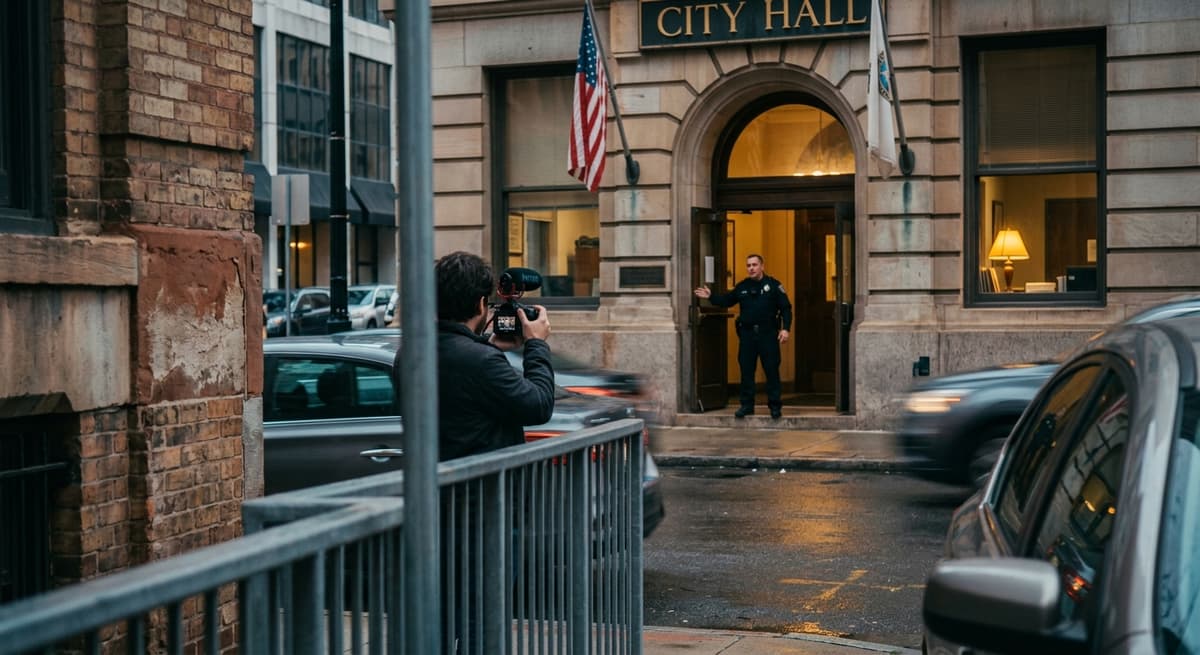
Officers CANNOT:
- Order you to stop recording. An officer cannot tell you to put your phone away or stop filming unless you are physically interfering with police operations.
- Seize your recording device without a warrant. The Fourth Amendment protects your phone and camera from warrantless seizure. The U.S. Supreme Court held in Riley v. California (2014) that police generally need a warrant to search a cell phone.
- Delete your recordings. Destroying evidence on your device is a violation of your constitutional rights and may constitute destruction of evidence.
- Arrest you solely for recording. An arrest based solely on the act of recording in public would violate the First and Fourth Amendments.
- Retaliate against you for recording. Filing false charges, issuing bogus citations, or taking other retaliatory action against someone who records police is unconstitutional.
Officers CAN:
- Order you to step back to a reasonable distance from an active scene for officer safety
- Restrict access to areas that are active crime scenes or present genuine safety hazards
- Ask you to move if you are blocking traffic or pedestrian access
- Arrest you if you are committing a separate offense (trespassing, obstruction, disorderly conduct) while recording
- Obtain your recording with a warrant through proper legal process
How to Safely Record Police in New Mexico
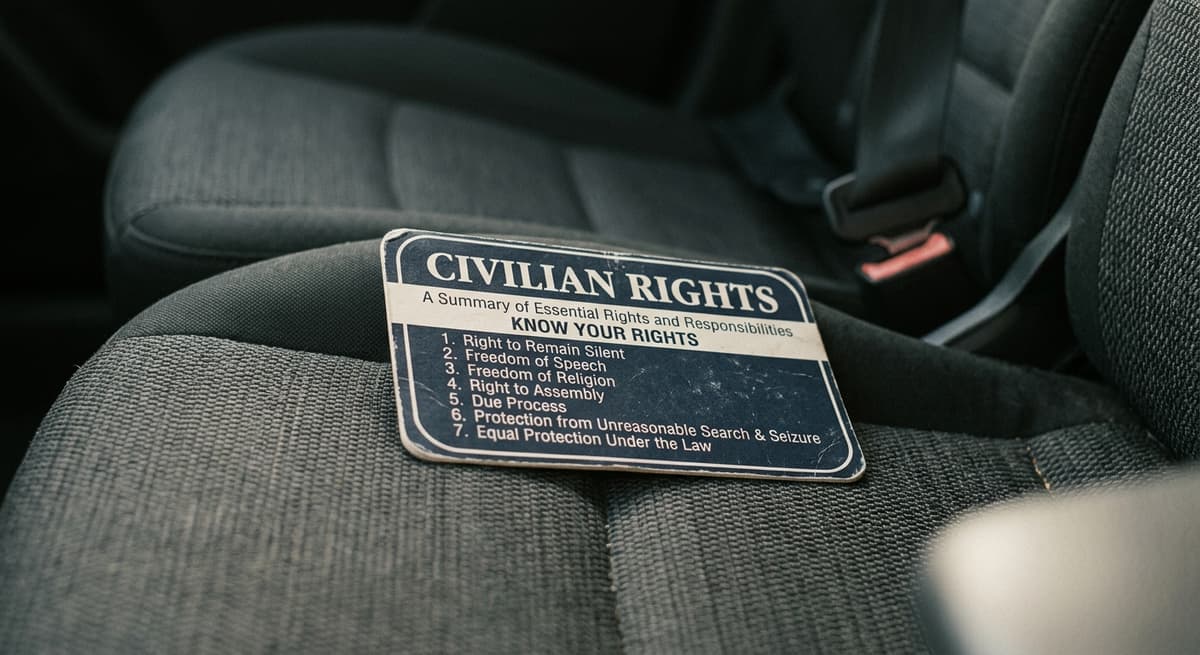
Best Practices
- Stay on public property. Record from public sidewalks, parks, and streets where you have a right to be.
- Keep a safe distance. Stay far enough away that officers cannot claim you are interfering with their duties.
- Do not physically intervene. Your right is to observe and record, not to physically insert yourself into a police action.
- Remain calm and respectful. Avoid yelling, making sudden movements, or engaging in behavior that could be perceived as threatening.
- Identify yourself as a recorder. While not legally required, stating "I am recording" can help establish your intent.
- Use cloud backup. Enable automatic upload to cloud storage so your footage is preserved even if your device is seized.
- Know the ACLU contact information. The ACLU of New Mexico provides legal support for recording rights cases.
What to Do If an Officer Tells You to Stop Recording
- Calmly state that you have a right to record. You can say: "I am exercising my First Amendment right to record. I am not interfering with your duties."
- Do not physically resist if an officer attempts to take your device. Comply physically while verbally asserting your rights.
- Note the officer's name, badge number, and patrol car number.
- Document the encounter as soon as possible after it ends.
- File a complaint with the officer's department and contact the ACLU of New Mexico or a civil rights attorney.
What to Do If Your Device Is Seized
- Do not physically resist the seizure.
- State clearly that you do not consent to the seizure or search of your device.
- Note the time, location, and officers involved.
- Contact an attorney immediately.
- File a complaint with the law enforcement agency.
- Request the return of your property in writing.
Body Cameras and Police Recording
New Mexico's Body Camera Landscape
New Mexico requires body-worn cameras for peace officers who routinely interact with the public under N.M. Stat. Ann. § 29-1-18 (enacted as SB 8 of the 2020 First Special Session), with exceptions for officers on undercover assignments or explosive recovery and disposal operations, and a minimum 120-day footage retention requirement. Body camera footage is subject to the New Mexico Inspection of Public Records Act (IPRA), though certain exemptions may apply to footage involving ongoing investigations, undercover officers, or victims.
Requesting Body Camera Footage
You can request body camera footage through an IPRA request to the relevant law enforcement agency. The New Mexico Attorney General's office provides guidance on public records requests. Key points:
- Requests should identify the specific incident, date, and officers involved
- Agencies have 15 days to respond to IPRA requests
- Agencies may redact portions of footage to protect ongoing investigations or victim privacy
- Denied requests can be appealed
Legal Remedies for Violations
Section 1983 Lawsuits
If a New Mexico law enforcement officer violates your right to record, you may file a lawsuit under 42 U.S.C. § 1983, which allows individuals to sue government officials who violate constitutional rights while acting under color of law. Potential remedies include:
- Compensatory damages for any harm suffered
- Nominal damages even without provable monetary harm
- Punitive damages for particularly egregious conduct
- Attorney fees under 42 U.S.C. § 1988
- Injunctive relief ordering the department to change its policies
Qualified Immunity Considerations
Officers may raise qualified immunity as a defense, arguing that the right was not "clearly established" at the time of the violation. However, since the Tenth Circuit's Irizarry v. Yehia decision in 2022, the right to record police in public is clearly established in New Mexico. This makes qualified immunity defenses significantly harder for officers to sustain in recording rights cases.
Filing Complaints
Before or in addition to a lawsuit, you can file complaints with:
- The officer's department internal affairs division
- The ACLU of New Mexico
- The U.S. Department of Justice Civil Rights Division
- The New Mexico Law Offices of the Public Defender if criminal charges were filed against you
Recording at Protests and Public Events
Your Rights at Protests
The First Amendment protects both the right to protest and the right to record protests. In New Mexico, you can:
- Film protests from any public location
- Record police interactions with protesters
- Livestream events in real time
- Document crowd control tactics and use of force
Journalist and Media Rights
Journalists and media professionals have the same recording rights as any member of the public. New Mexico does not require press credentials to exercise First Amendment recording rights. However, media professionals should carry identification and clearly identify themselves as press if asked.
More New Mexico Recording Laws
Audio Recording | Video Recording | Voyeurism & Hidden Cameras | Workplace Recording | Recording Police | Phone Call Recording | Security Cameras | Recording in Public | Landlord-Tenant | Dashcam Laws | Schools | Medical Recording
Back to New Mexico Recording Laws
More New Mexico Recording Topics
More New Mexico Laws
Frequently Asked Questions
Can I record police officers in New Mexico?
Yes. The Tenth Circuit Court of Appeals has recognized a First Amendment right to record police officers performing their duties in public. You can film from any public location where you have a right to be, without needing any officer's consent.
Can a police officer tell me to stop recording in New Mexico?
No. An officer cannot order you to stop recording unless you are physically interfering with police operations. Calmly state that you are exercising your First Amendment right. If an officer persists, comply physically but note the details for a later complaint.
Can police seize my phone for recording them in New Mexico?
Not without a warrant. The Fourth Amendment protects your device from warrantless seizure. The Supreme Court ruled in Riley v. California (2014) that police generally need a warrant to search a cell phone. If your phone is seized, state that you do not consent and contact an attorney.
What should I do if police violate my recording rights in New Mexico?
Document the encounter, note the officer's name and badge number, and file a complaint with the department's internal affairs division. Contact the ACLU of New Mexico for legal support. You may also file a Section 1983 lawsuit for civil rights violations.
Can I request police body camera footage in New Mexico?
Yes. Body camera footage is subject to the New Mexico Inspection of Public Records Act (IPRA). Submit a written request to the law enforcement agency identifying the specific incident. Agencies have 15 days to respond, though some exemptions may apply.
Updates
Corrected an overstated claim that New Mexico requires body cameras for all peace officers (the law covers officers who routinely interact with the public, with stated exceptions), fixed a citation mislabeled as the Irizarry v. Yehia opinion that actually linked to unrelated U.S. Code text, and replaced a dead New Mexico public-records citation with the current live page.
Independently fact-checked against the cited primary sources; governing law re-checked for recent changes
Governing law re-checked for recent changes
Governing law re-checked for recent changes
Reviewed and approved by an editor
The Law Behind This Article
This article rests on the statutory provisions below, held in our own legal record and retrieved from the official source. Tap a section to read the operative text.
New Mexico Statutes Annotated 1978, Chapter 30
§ 30-12-1Interference with communications; exceptionIn forcecited in 37 of our articles
Interference with communications consists of knowingly and without lawful authority: A. displacing, removing, injuring or destroying any radio station, television tower, antenna or cable, telegraph or telephone line, wire, cable, pole or conduit belonging to another, or the material or property appurtenant thereto; B. cutting, breaking, tapping or making any connection with any telegraph or telephone line, wire, cable or instrument belonging to or in the lawful possession or control of another, without the consent of such person owning, possessing or controlling such property; C. reading, interrupting, taking or copying any message, communication or report intended for another by telegraph or telephone without the consent of a sender or intended recipient thereof; D. preventing, obstructing or delaying the sending, transmitting, conveying or delivering in this state of any message, communication or report by or through telegraph or telephone; or E. using any apparatus to do or cause to be done any of the acts hereinbefore mentioned or to aid, agree with, comply or conspire with any person to do or permit or cause to be done any of the acts hereinbefore mentioned.
Official text (excerpt) · last checked 2026-08-28 · Read the full text in our law library · Verify at nmonesource.com
Cited in 19 court opinions in our collectionLatest citing opinion in our collection: 2025
In the courts (editorial summary, independently checked):State v. Johnson (2010) held the consent exception in 30-12-1(E)(3) applies to jail calls where the caller impliedly consents by calling with knowledge the call is recorded. State v. Templeton (2007) found a call from the booking area, recorded with no notice, violated the Act, while a call placed after a recorded notice did not.
Opinions citing this section in our collection:
- State v. Johnson (New Mexico Supreme Court 2010, 148 N.M. 50)✓A jail inmate awaiting a murder retrial made recorded calls asking others to appear at trial and influence testimony; the court held the statute was not violated because an automated message warned both sides, so its prior consent exception applied.
- State v. Ocon (New Mexico Court of Appeals 2021, 493 P.3d 448)“…63); and interference with communications, in violation of NMSA 1978, Section 30-12-1 (1979). On those charges, the jury only…”
- State v. Templeton (New Mexico Court of Appeals 2007, 142 N.M. 369)✓Two of a jailed defendant's phone calls were recorded; the court held the statute was violated as to the booking-area call, where no notice was given and guarded speech did not imply consent, but not as to a later call from a phone that announced monitoring.
Identified automatically from the court opinions citing this section — not a ranking of which case controls.
Also relied on in: New Mexico Recording Laws (2026): One-Party Consent Rules, New Mexico Smart Glasses Recording Laws (2026), New Mexico Audio Recording Laws: One-Party Consent Rules and Penalties (2026)
New Mexico Statutes Annotated 1978, Chapter 29
§ 29-1-18Requiring certain law enforcement agencies to use body- worn cameras while on duty; exceptions; adoption of policies and procedures governing use.In forcecited in 8 of our articles
A. A law enforcement agency shall require peace officers the agency employs and who routinely interact with the public to wear a body-worn camera while on duty, except as provided in Subsection B of this section. Each law enforcement agency subject to the provisions of this section shall adopt policies and procedures governing the use of body-worn cameras, including: (1) requiring activation of a body-worn camera whenever a peace officer is responding to a call for service or at the initiation of any other law enforcement or investigative encounter between a peace officer and a member of the public; (2) prohibiting deactivation of a body-worn camera until the conclusion of a law enforcement or investigative encounter; (3) requiring that any video recorded by a body-worn camera shall be retained by the law enforcement agency for not less than one hundred twenty days; and (4) establishing disciplinary rules for peace officers who: (a) fail to operate a body-worn camera in accordance with law enforcement agency policies; (b) intentionally manipulate a body-worn camera recording; or (c) prematurely erase a body-worn camera recording in violation of law enforcement…
Official text (excerpt) · last checked 2026-08-31 · Read the full text in our law library · Verify at nmonesource.com
Cited in 3 court opinions in our collectionLatest citing opinion in our collection: 2026
Opinions citing this section in our collection:
- State v. Hubbard (New Mexico Supreme Court 2026)“…tnesses as Defendant asserts they were required to do under NMSA 1978, Section 29-1-18 (2020, amended 2023). Defendant raises…”
- State v. Sanchez (New Mexico Court of Appeals 2025)“…ed on the failure to wear a body-worn camera as required by NMSA 1978, Section 29-1-18 (2020, amended 2023)1 during the execut…”
- Taylor v. City of Carlsbad (District Court, D. New Mexico 2024)“…iring officers to use body- worn cameras while on duty. See N.M. Stat. Ann. § 29-1-18 (2020).…”
Identified automatically from the court opinions citing this section — not a ranking of which case controls.
Also relied on in: New Mexico Police Body Camera Laws: Mandate & Liability, New Mexico Police Reports: How to Get a Crash Report, Incident Report, or Bodycam Video, New Mexico IPRA: Inspection of Public Records Act Guide (2026)
United States Code Title 42
§ 1983Civil action for deprivation of rightsIn forcecited in 50 of our articles
Every person who, under color of any statute, ordinance, regulation, custom, or usage, of any State or Territory or the District of Columbia, subjects, or causes to be subjected, any citizen of the United States or other person within the jurisdiction thereof to the deprivation of any rights, privileges, or immunities secured by the Constitution and laws, shall be liable to the party injured in an action at law, suit in equity, or other proper proceeding for redress, except that in any action brought against a judicial officer for an act or omission taken in such officer’s judicial capacity, injunctive relief shall not be granted unless a declaratory decree was violated or declaratory relief was unavailable. For the purposes of this section, any Act of Congress applicable exclusively to the District of Columbia shall be considered to be a statute of the District of Columbia.
Official text (excerpt) · last checked 2026-07-28 · Read the full text in our law library · Verify at uscode.house.gov
Cited in 282,365 court opinions in our collectionLatest citing opinion in our collection: 2026
Opinions citing this section in our collection:
- Ashcroft v. Iqbal (Supreme Court of the United States 2009, 556 U.S. 662)“…its brought against state officials under Rev. Stat. §1979, 42 U. S. C. §1983.” Hartman, 547 U. S., at 254, n. 2. Cf.…”
- Celotex Corp. v. Catrett, Administratrix of the Estate of Catrett (Supreme Court of the United States 1986, 477 U.S. 317)“…policeman as she left. Petitioner brought an action under 42 U. S. C. § 1983 claiming that the refusal of service a…”
- Monell v. New York City Dept. of Social Servs. (Supreme Court of the United States 1978, 436 U.S. 658)“…decided less than two decades ago. Focusing new light on 42 U. S. C. § 1983 , that decision widened access to the f…”
Identified automatically from the court opinions citing this section — not a ranking of which case controls.
Also relied on in: Alabama Laws on Recording Police: Your Rights and Limits, Alaska Laws on Recording Police: Your Rights and Limits (2026), Arkansas Laws on Recording Police: Your Rights and Limits (2026)
§ 1988Proceedings in vindication of civil rightsIn forcecited in 6 of our articles
The jurisdiction in civil and criminal matters conferred on the district courts by the provisions of titles 13, 24, and 70 of the Revised Statutes for the protection of all persons in the United States in their civil rights, and for their vindication, shall be exercised and enforced in conformity with the laws of the United States, so far as such laws are suitable to carry the same into effect; but in all cases where they are not adapted to the object, or are deficient in the provisions necessary to furnish suitable remedies and punish offenses against law, the common law, as modified and changed by the constitution and statutes of the State wherein the court having jurisdiction of such civil or criminal cause is held, so far as the same is not inconsistent with the Constitution and laws of the United States, shall be extended to and govern the said courts in the trial and disposition of the cause, and, if it is of a criminal nature, in the infliction of punishment on the party found guilty. In any action or proceeding to enforce a provision of sections 1981, 1981a, 1982, 1983, 1985, and 1986 of this title, title IX of Public Law 92–318 [20 U.S.C.
Official text (excerpt) · last checked 2026-07-28 · Read the full text in our law library · Verify at uscode.house.gov
Cited in 17,943 court opinions in our collectionLatest citing opinion in our collection: 2026
Opinions citing this section in our collection:
- Monell v. New York City Dept. of Social Servs. (Supreme Court of the United States 1978, 436 U.S. 658)“…cts of its deputies and sheriff,” id., at 696 , under 42 U. S. C. § 1988 . In rejecting this vicarious-liability…”
- Gall v. United States (Supreme Court of the United States 2007, 552 U.S. 38)“…ssing the Civil Rights Attorney’s Fees Awards Act of 1976, 42 U. S. C. § 1988 ). See also United States v. Oakland…”
- Hensley v. Eckerhart (Supreme Court of the United States 1983, 461 U.S. 424)“…ing the proper amount of an award of attorney’s fees under 42 U. S. C. § 1988 .” Ante, at 440. I agree with the Cou…”
Identified automatically from the court opinions citing this section — not a ranking of which case controls.
Also relied on in: Georgia Laws on Recording Police: Your First Amendment Rights (2026), Kansas Laws on Recording Police, Virginia Laws on Recording Police: Your Rights and Limitations
Explore the law
The laws cited above reference these related sections in their own text:
- New Mexico Statutes Annotated 1978, Chapter 30 § 30-12-11 — Right of privacy; damages view in our statute record · read at the official source
- New Mexico Statutes Annotated 1978, Chapter 30 § 30-12-2 — Grounds for order of interception view in our statute record · read at the official source
Related law for further reading — not part of this article’s citations.
Search our full record of US law — 2.1 million sections, every state + federal →
Sources and References
- N.M. Stat. Ann. § 30-12-1(nmonesource.com).gov
- NM AG Open Government(nmdoj.gov).gov
- DOJ Civil Rights(justice.gov).gov
- NM Legislature(nmlegis.gov).gov
- Irizarry v. Yehia, 38 F.4th 1282 (10th Cir. 2022)(courtlistener.com)
- N.M. Stat. Ann. § 29-1-18 Body-Worn Cameras(nmonesource.com).gov
- ACLU of New Mexico(aclu-nm.org)