
Kansas
Kansas Police Body Camera Laws: Access & K.S.A. 45-254
Independently fact-checked against primary sources (last audited August 20, 2026). · Reviewed by the RecordingLaw editorial team. · Law checked current as of August 20, 2026. · 4 primary sources cited on this page. How we verify our legal content
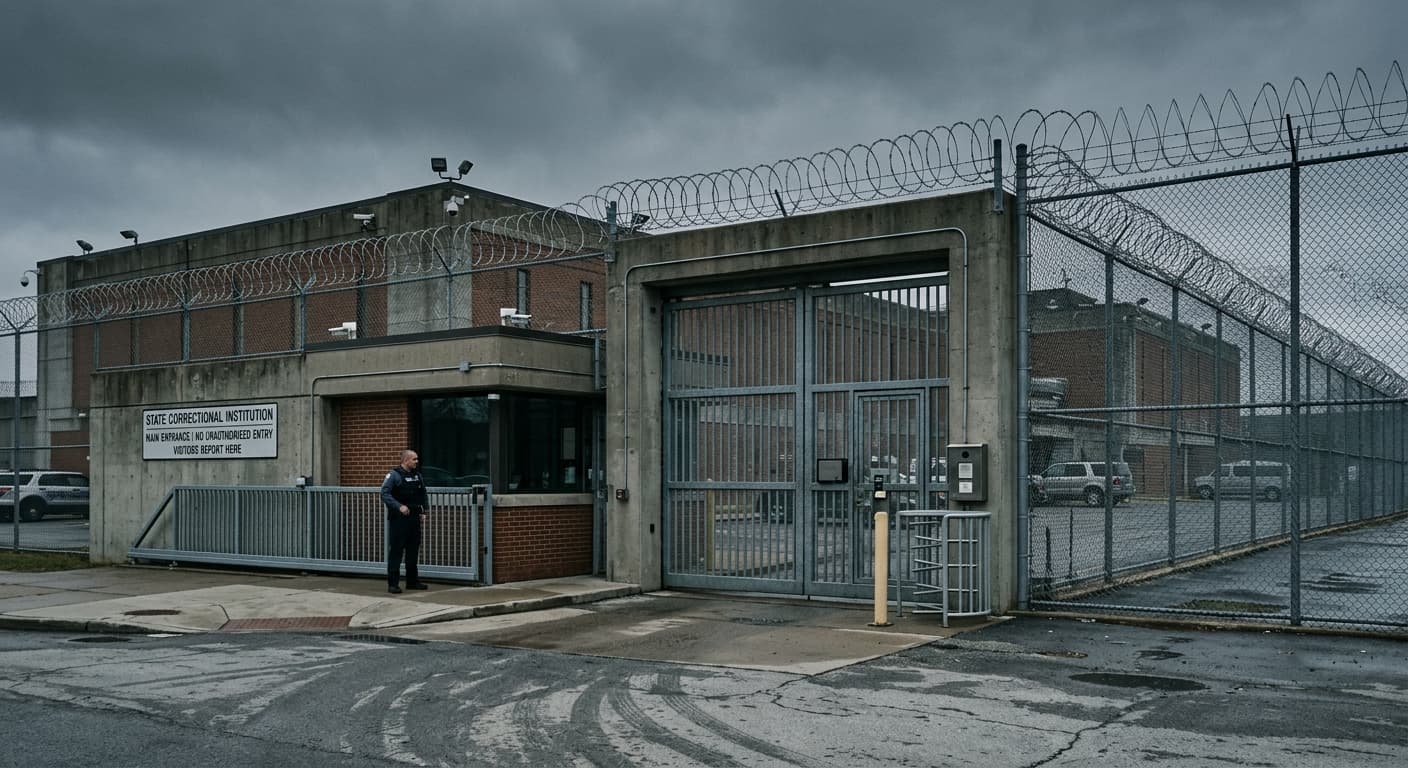
Kansas classifies police body camera and dash camera footage as a criminal investigation record under K.S.A. 45-254, closed to the public by default. A narrow group of eligible people, mainly the person shown in the recording, can request to view or listen to it within 20 days.
This guide is part of our Police Bodycam Laws by State series.
Jurisdiction scope: This article addresses Kansas law governing police body cameras: the absence of a statewide equipment mandate, the K.S.A. 45-254 disclosure framework, and the eligible-person and court-order paths to obtaining footage. It does not address a civilian's right to record law enforcement, which is covered separately in our guide to recording laws.
Does Kansas require police to wear body cameras?
No. Kansas has no statute requiring any state, county, or municipal law enforcement agency to equip officers with body cameras. A 2021 proposal, Senate Bill 198, would have created a "police and citizen protection act" requiring every officer primarily assigned to patrol duty to carry a body camera starting July 1, 2023, and would have set statewide activation rules. The bill died in committee on May 23, 2022, and was never enacted.
Because no mandate exists, whether an agency has body cameras at all, when officers must turn them on, and how long footage is kept are matters of local department policy rather than state law. Kansas City, Kansas and other larger departments publish their own body-worn camera policies, but a smaller agency is free to use cameras only in limited circumstances or not use them at all.
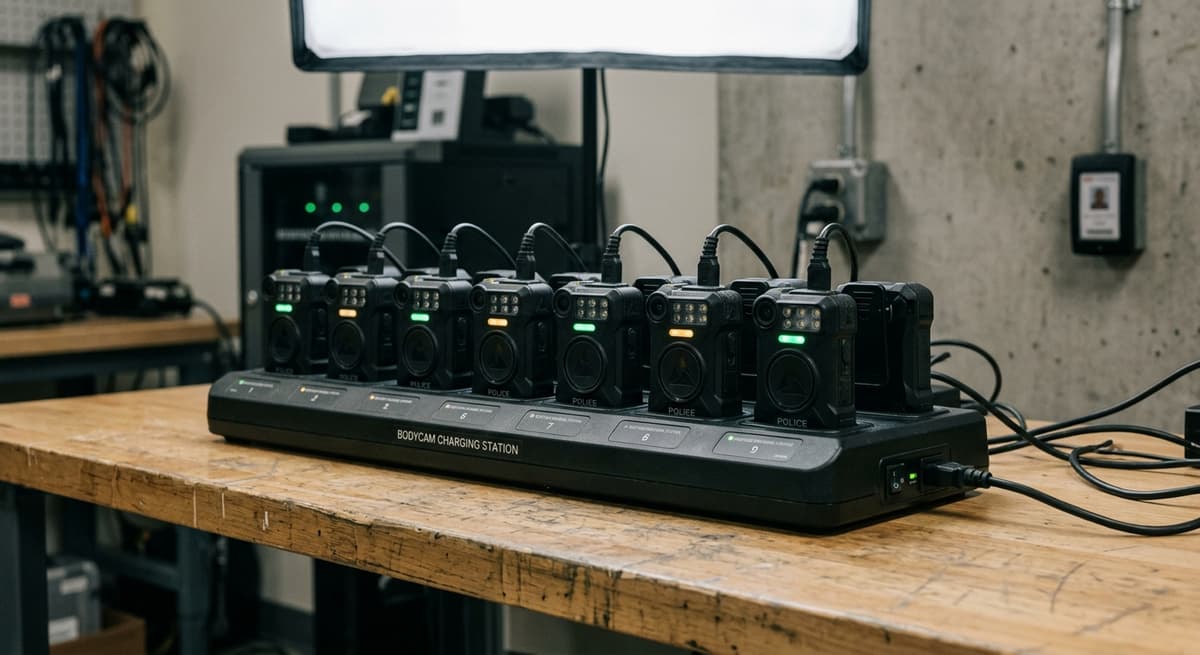
Is Kansas bodycam footage a public record?
No, not by default. K.S.A. 45-254(a) provides that every audio or video recording made and retained by a law enforcement body camera or vehicle camera "shall be considered a criminal investigation record as defined in K.S.A. 45-217." Under the Kansas Open Records Act, K.S.A. 45-221(a)(10) allows a custodian to close criminal investigation records to the public, so a bodycam recording starts out presumptively unavailable, not presumptively open.
That closure is not absolute. K.S.A. 45-221(a)(10) lets a district court, in an action under K.S.A. 45-222, order disclosure of a closed criminal investigation record if it finds disclosure is in the public interest, would not interfere with a prospective law enforcement action, would not reveal a confidential source or investigative technique, would not endanger anyone's life or safety, and would not unreasonably invade a victim's privacy. That court process is available to anyone, not only the categories of people described below.
Who can view or listen to Kansas bodycam footage, and how fast?
K.S.A. 45-254(c) gives a defined group of people a specific, faster path than a general KORA request or a court fight. Eligible requesters are the person who is the subject of the recording, a parent or legal guardian of a minor who is a subject, an "heir at law" of a deceased subject (in order of priority: executor or administrator, surviving spouse, adult child, or parent), and an attorney representing any of those people.
Once an eligible person makes a request under the procedures an agency adopts under K.S.A. 45-220, the agency must allow the person to listen to the audio or view the video within 20 days, and may charge a reasonable fee for that service. The statute's language grants a right to listen or view the recording, which is narrower than a guaranteed right to a copy of the file itself.
| Question | Kansas rule (K.S.A. 45-254) |
|---|---|
| Default status | Closed; classified as a criminal investigation record under K.S.A. 45-217 |
| Who can request access | Recording subject; parent/guardian of a minor subject; heir at law of a deceased subject; their attorneys |
| Response deadline | 20 days after the request |
| Fee | Reasonable fee permitted, amount not fixed by statute |
| What is guaranteed | The ability to view or listen; not necessarily a copy |
| Route for other requesters | District court action under K.S.A. 45-221(a)(10) and 45-222 |
Can anyone else get Kansas bodycam footage released?
Yes, but not through K.S.A. 45-254 itself. A person who is not an eligible requester can bring an action under K.S.A. 45-222 asking a district court to order disclosure of a closed criminal investigation record. The court applies the multi-factor balancing test built into K.S.A. 45-221(a)(10), and an agency that closes a record must, on request, give the requester a brief written statement citing the specific KORA provision it relied on.
In practice, the most common way bodycam footage becomes public in a contested case is not a KORA lawsuit at all, but civil litigation discovery: a family that files a wrongful-death or civil-rights suit can obtain footage through the federal or state civil rules governing evidence, sometimes even where a direct open-records request would have been denied.
A real example: the Taylor Lowery shooting in Topeka
On October 13, 2022, five Topeka police officers fired 34 shots at 33-year-old Taylor Lowery in the parking lot of a Kwik Shop gas station, killing him. Police initially described Lowery as having a knife, and the city resisted releasing the bodycam recordings of the shooting, consistent with K.S.A. 45-254's default closure of the footage.
Lowery's family filed a federal wrongful-death lawsuit, and in the course of that litigation a federal magistrate judge, Angel Mitchell, rejected the city's request for a protective order and ordered the video produced. The family released the footage, which showed Lowery holding a wrench rather than a knife at the moment officers opened fire. The wrench itself was not a new detail: the district attorney's February 2023 findings had already described Lowery grabbing a socket wrench after the initial shots. What the video contradicted was the account that he was charging at officers with a knife when they fired. The case is a concrete illustration of how Kansas's default closure operates, and how a federal civil suit can be the path that ultimately gets footage into public view.
Is it illegal to record police in Kansas?
That is a separate question from the one this page addresses. Kansas generally recognizes a person's right to record an on-duty officer performing public duties in a public place. For a full explanation of that right and how it differs from the rules on police-generated bodycam footage discussed here, see Is It Illegal to Record Someone?
More Kansas Laws
Frequently Asked Questions
Does Kansas require police departments to use body cameras?
No. Kansas has no statewide statute requiring agencies to equip officers with body cameras. A 2021 proposal to require it for all patrol officers by July 1, 2023, Senate Bill 198, died in committee in 2022.
Is police bodycam footage a public record in Kansas?
No, not by default. K.S.A. 45-254 classifies bodycam and dash camera footage as a criminal investigation record, which the Kansas Open Records Act allows agencies to keep closed to the general public.
Who can view Kansas bodycam footage under K.S.A. 45-254?
The person shown in the recording, a parent or guardian of a minor subject, an heir at law of a deceased subject, or an attorney representing any of them. The agency must allow viewing or listening within 20 days of a request.
Can I get a copy of Kansas bodycam footage, or only view it?
K.S.A. 45-254 guarantees eligible people the ability to view or listen to the recording. It does not guarantee a copy of the file, and agencies may charge a reasonable fee for the viewing or listening session.
How long does a Kansas agency have to respond to an eligible bodycam request?
20 days from the date of the request, under K.S.A. 45-254(b). The agency may charge a reasonable fee for allowing the viewing or listening session.
Can someone who is not the subject of the recording get Kansas bodycam footage?
They can ask a district court to order disclosure under K.S.A. 45-221(a)(10) and 45-222, but the court must weigh public interest, harm to a pending case, and privacy factors first. Civil litigation discovery is often the more direct path in a contested case.
Is it illegal to record on-duty police in Kansas?
No, recording an on-duty officer performing public duties in a public place is generally protected. That is a separate question from public access to police-recorded bodycam footage covered on this page.
Updates
Corrected the date of the Taylor Lowery shooting to October 13, 2022, removed a link that pointed a civil-discovery protective order at our restraining-order guide, and clarified that the socket wrench was already described in the district attorney’s February 2023 findings.
Independently fact-checked against the cited primary sources; governing law re-checked for recent changes
Governing law re-checked for recent changes
Governing law re-checked for recent changes
Reviewed and approved by an editor
The Law Behind This Article
This article rests on the statutory provisions below, held in our own legal record and retrieved from the official source. Tap a section to read the operative text.
Kansas Statutes Annotated, Chapter 45: PUBLIC RECORDS, DOCUMENTS AND INFORMATION
§ 45-254Law enforcement recordings using body camera or vehicle camera; criminal investigation records; disclosure.In forcecited in 9 of our articles
(a) Every audio or video recording made and retained by law enforcement using a body camera or a vehicle camera shall be considered a criminal investigation record as defined in K.S.A. 45-217, and amendments thereto. (b) In addition to any disclosure authorized pursuant to the open records act, K.S.A. 45-215 et seq., and amendments thereto, a person described in subsection (c) may make a request in accordance with procedures adopted under K.S.A. 45-220, and amendments thereto, to listen to an audio recording or to view a video recording made by a body camera or a vehicle camera. The law enforcement agency shall allow the person to listen to the requested audio recording or to view the requested video recording within 20 days after making the request, and may charge a reasonable fee for such services provided by the law enforcement agency.
Official text (excerpt) · last checked 2026-08-31 · Read the full text in our law library · Verify at ksrevisor.gov
Cited in 1 court opinions in our collectionLatest citing opinion in our collection: 2022
Opinions citing this section in our collection:
- McRoberts v. Overland Park, Kansas, City of (District Court, D. Kansas 2022)“…aintiff he would respond further by March 4, 2022.12 Under Kan. Stat. Ann. § 45-254(b), however, the custodian has twenty d…”
Identified automatically from the court opinions citing this section — not a ranking of which case controls.
Also relied on in: Kansas Public Records Laws: The Kansas Open Records Act (KORA) Explained, Kansas Recording Laws (2026): One-Party Consent Rules, Kansas Laws on Recording Police
§ 45-217Definitions.In forcecited in 3 of our articles
As used in the open records act, unless the context otherwise requires: (a) "Automated license plate recognition system" means one or more high-speed cameras combined with computer algorithms used to convert images of license plates into computer readable data. (b) "Business day" means any day other than a Saturday, Sunday or day designated as a holiday by the congress of the United States, by the legislature or governor of this state or by the respective political subdivision of this state. (c) "Captured license plate data" means the global positioning device coordinates, date and time, photograph, license plate number and any other data captured by or derived from an automated license plate recognition system. (d) "Clearly unwarranted invasion of personal privacy" means revealing information that would be highly offensive to a reasonable person, including information that may pose a risk to a person or property and is not of legitimate concern to the public. (e) "Criminal investigation records" means: (1) Every audio or video recording made and retained by law enforcement using a body camera or vehicle camera as defined by K.S.A.
Official text (excerpt) · last checked 2026-07-29 · Read the full text in our law library · Verify at ksrevisor.gov
Cited in 31 court opinions in our collectionLatest citing opinion in our collection: 2017
Opinions citing this section in our collection:
- Wichita Eagle & Beacon Publishing Co. v. Simmons (Supreme Court of Kansas 2002, 274 Kan. 194)“…2. The DOC is a ‘public agency’ within tire meaning of K.S.A. 45-217(e)(l). “3. On September 7 and 13…”
- Data Tree, LLC v. Meek (Supreme Court of Kansas 2005, 279 Kan. 445)“…ormation involve a public record as that term is defined by K.S.A. 45-217(f)(1) and, if so, does K.S.A. 19-1204 p…”
- Willis v. Kansas Highway Patrol (Supreme Court of Kansas 2002, 273 Kan. 123)“…requested was a criminal investigation record as defined by K.S.A. 45-217(b) and not subject to disclosure except…”
Identified automatically from the court opinions citing this section — not a ranking of which case controls.
Also relied on in: License Plate Reader Laws by State: 2026 Comparison
§ 45-221Certain records not required to be disclosed; separation of open and closed information required; disclosure of statistical information; records over 70 years old open, exceptions.In forcecited in 9 of our articles
(a) Except to the extent disclosure is otherwise required by law, a public agency shall not be required to disclose: (1) Records the disclosure of which is specifically prohibited or restricted by federal law, state statute or rule of the Kansas supreme court or rule of the senate committee on confirmation oversight relating to information submitted to the committee pursuant to K.S.A. 75-4315d, and amendments thereto, or the disclosure of which is prohibited or restricted pursuant to specific authorization of federal law, state statute or rule of the Kansas supreme court or rule of the senate committee on confirmation oversight relating to information submitted to the committee pursuant to K.S.A. 75-4315d, and amendments thereto, to restrict or prohibit disclosure. (2) Records that are privileged under the rules of evidence, unless the holder of the privilege consents to the disclosure. (3) Medical, psychiatric, psychological or alcoholism or drug dependency treatment records that pertain to identifiable patients.
Official text (excerpt) · last checked 2026-09-02 · Read the full text in our law library · Verify at ksrevisor.gov
Cited in 46 court opinions in our collectionLatest citing opinion in our collection: 2025
In the courts (editorial summary, independently checked):Kansas courts construe the K.S.A. 45-221 exceptions narrowly, and the exceptions permit withholding rather than require it. In Telegram Publishing Co. v. Kansas Department of Transportation (2003) the agency carried the burden and lost an (a)(1) claim. Harris Enterprises, Inc. v. Moore (1987) affirmed a denial under (a)(10).
Opinions citing this section in our collection:
- State, Department of Social & Rehabilitation Services v. Public Employee Relations Board of the Kansas Department of Human Resources (Supreme Court of Kansas 1991, 249 Kan. 163)✓A state hospital gave a certified union its employees' names but withheld home addresses; the Kansas Supreme Court held K.S.A. 45-221 does not prohibit disclosure but leaves it discretionary with the records custodian, so the agency could not refuse the disclosure order.
- Wichita Eagle & Beacon Publishing Co. v. Simmons (Supreme Court of Kansas 2002, 274 Kan. 194)✓A newspaper sought corrections records on parolees charged with murder; the Kansas Supreme Court held the K.S.A. 45-221(a)(20) exemption covers proposed policies, not actions already taken, and that subsection (d) required the agency to furnish redacted records.
- Harris Enterprises, Inc. v. Moore (Supreme Court of Kansas 1987, 241 Kan. 59)✓A newspaper sued for the Duffield murder investigation files; applying K.S.A. 45-221(a)(10), the Kansas Supreme Court put the public-interest burden on the requester and the other four findings on the agency, and affirmed the discretionary denial after in camera review.
Identified automatically from the court opinions citing this section — not a ranking of which case controls.
Also relied on in: Are Autopsy Reports Public in Kansas? (2026 Guide), Vital Records Explained: Are birth certificates public records?, Kansas Police Reports: Crash Reports, Records Requests, and Bodycam Footage
§ 45-222Civil remedies to enforce act; attorney fees.In forcecited in 3 of our articles
(a) The district court of any county in which public records are located shall have jurisdiction to enforce the purposes of this act with respect to such records, by injunction, mandamus, declaratory judgment or other appropriate order, in an action brought by any person, the attorney general or a county or district attorney. The district court may require a defendant to complete training approved by the attorney general concerning the requirements of the open records act. (b) In any action hereunder, the court shall determine the matter de novo. The court on its own motion, or on motion of either party, may view the records in controversy in camera before reaching a decision. (c) In any action hereunder, or under K.S.A. 45-251, and amendments thereto, the burden of proof shall be on the public agency to sustain its action.
Official text (excerpt) · last checked 2026-07-29 · Read the full text in our law library · Verify at ksrevisor.gov
Cited in 19 court opinions in our collectionLatest citing opinion in our collection: 2025
Opinions citing this section in our collection:
- Wichita Eagle & Beacon Publishing Co. v. Simmons (Supreme Court of Kansas 2002, 274 Kan. 194)“…an in-camera inspection of five sample records pursuant to K.S.A. 45-222(b). After reviewing a sample of…”
- Telegram Publishing Co. v. Kansas Department of Transportation (Supreme Court of Kansas 2003, 275 Kan. 779)“…e district court in holding that a “denial of access” under K.S.A. 45-222(c) refers only to the agency’s prelitig…”
- Data Tree, LLC v. Meek (Supreme Court of Kansas 2005, 279 Kan. 445)“…Data Tree contends it was entitled to attorney fees under K.S.A. 45-222(c) because the denial of access by the…”
Identified automatically from the court opinions citing this section — not a ranking of which case controls.
§ 45-220Procedures for obtaining access to or copies of records; request for records; establishing office hours for inspection; custodian of records, duties; provision of information on procedures.In forcecited in 3 of our articles
(a) Each public agency shall adopt procedures to be followed in requesting access to and obtaining copies of public records, which procedures shall provide full access to public records, protect public records from damage and disorganization, prevent excessive disruption of the agency's essential functions, provide assistance and information upon request and ensure efficient and timely action in response to applications for inspection of public records. (b) A public agency may require a written request for inspection of public records but shall not otherwise require a request to be made in any particular form. Except as otherwise provided by subsection (c), a public agency shall not require that a request contain more information than the requester's name and address and the information necessary to ascertain the records to which the requester desires access and the requester's right of access to the records. A public agency may require proof of identity of any person requesting access to a public record. No request shall be returned, delayed or denied because of any technicality unless it is impossible to determine the records to which the requester desires access.
Official text (excerpt) · last checked 2026-07-29 · Read the full text in our law library · Verify at ksrevisor.gov
Cited in 19 court opinions in our collectionLatest citing opinion in our collection: 2016
Opinions citing this section in our collection:
- State v. Stevens (Court of Appeals of Kansas 1999, 26 Kan. App. 2d 606)“…cedures for making the information available to the public, K.S.A. 45-220. The Open Records Act also establishes…”
- Attorney General Opinion No. (Kansas Attorney General Reports 1996)“…tion of this statute is a class C misdemeanor. Furthermore, K.S.A. 45-220 (c) allows the agency to require the re…”
- State, Department of Social & Rehabilitation Services v. Public Employee Relations Board of the Kansas Department of Human Resources (Supreme Court of Kansas 1991, 249 Kan. 163)“…aining unit to the Union within 30 days. In accordance with K.S.A. 45-220(c), PERB’s order conditioned release of…”
Identified automatically from the court opinions citing this section — not a ranking of which case controls.
§ 45-215Title of act.In forcecited in 6 of our articles
K.S.A. 45-215 through 45-223 shall be known and may be cited as the open records act.
Official text (excerpt) · last checked 2026-07-29 · Read the full text in our law library · Verify at ksrevisor.gov
Cited in 69 court opinions in our collectionLatest citing opinion in our collection: 2024
Opinions citing this section in our collection:
- State v. Myers (Supreme Court of Kansas 1996, 260 Kan. 669)“…e subject to the provisions of the Kansas Open Records Act, K.S.A. 45-215 et seq. Myers asserts,…”
- Wichita Eagle & Beacon Publishing Co. v. Simmons (Supreme Court of Kansas 2002, 274 Kan. 194)“…996 through 1999, under the Kansas Open Records Act (KORA), K.S.A. 45-215 et seq. The district court…”
- Harris Enterprises, Inc. v. Moore (Supreme Court of Kansas 1987, 241 Kan. 59)“…e exempt from disclosure under the Kansas Open Records Act, K.S.A. 45-215 et seq. This case aros…”
Identified automatically from the court opinions citing this section — not a ranking of which case controls.
Also relied on in: Public Records Laws by State: FOIA Guide for All 50 States (2026), Kansas Court Records: How to Search the District Court Public Access Portal
Search our full record of US law — 2.1 million sections, every state + federal →
Sources and References
- K.S.A. 45-254, law enforcement recordings using body camera or vehicle camera; criminal investigation records; disclosure(ksrevisor.gov).gov
- K.S.A. 45-221, records which may be closed, including the criminal investigation records provision and court-order disclosure route(ksrevisor.gov).gov
- K.S.A. 45-217, definitions, including "criminal investigation record"(ksrevisor.gov).gov
- Kansas Legislature, Senate Bill 198 (2021-2022), proposed statewide body camera mandate that died in committee(kslegislature.gov).gov
- Kansas Reflector, videos show Topeka police killed Black man holding wrench, not knife, contradicting narrative (Taylor Lowery case)(kansasreflector.com)
- NBC News, family releases bodycam video of Kansas man's fatal shooting by police(nbcnews.com)
- KCTV5, five Topeka police officers cleared in the October 13, 2022 fatal shooting of Taylor Lowery (district attorney's February 2023 findings)(kctv5.com)