
Kansas
Kansas Voyeurism Laws
Independently fact-checked against primary sources (last audited August 15, 2026). · Reviewed by the RecordingLaw editorial team. · Law checked current as of August 9, 2026. · 6 primary sources cited on this page. How we verify our legal content

Kansas criminalizes voyeurism as a felony under its breach of privacy statute, K.S.A. 21-6101. A first conviction for secretly recording someone in a private place or under their clothing is a severity level 8 person felony carrying 7 to 23 months in prison.
Kansas treats voyeurism as a serious felony offense under its breach of privacy statute. Unlike many states that classify voyeurism as a misdemeanor, Kansas imposes felony-level penalties from the first offense. The primary law governing voyeurism is K.S.A. 21-6101, which covers hidden camera recording, upskirting, nonconsensual intimate image sharing, and AI-generated deepfakes.
This guide explains what constitutes voyeurism under Kansas law, the criminal penalties and sentencing guidelines, sex offender registration requirements, civil remedies for victims, and how the 2025 legislative update expanded protections against AI-generated intimate content.
What Constitutes Voyeurism in Kansas
K.S.A. 21-6101(a)(6): The Core Voyeurism Provision
Under K.S.A. 21-6101(a)(6), it is a crime to knowingly and without lawful authority use any device to photograph, record, or live stream another person in any of the following circumstances:
Under or through clothing. Using a camera or recording device to capture images under or through another person's clothing without their knowledge or consent. This covers what is commonly known as "upskirting" and "downblousing," regardless of whether the victim is in a public or private place.
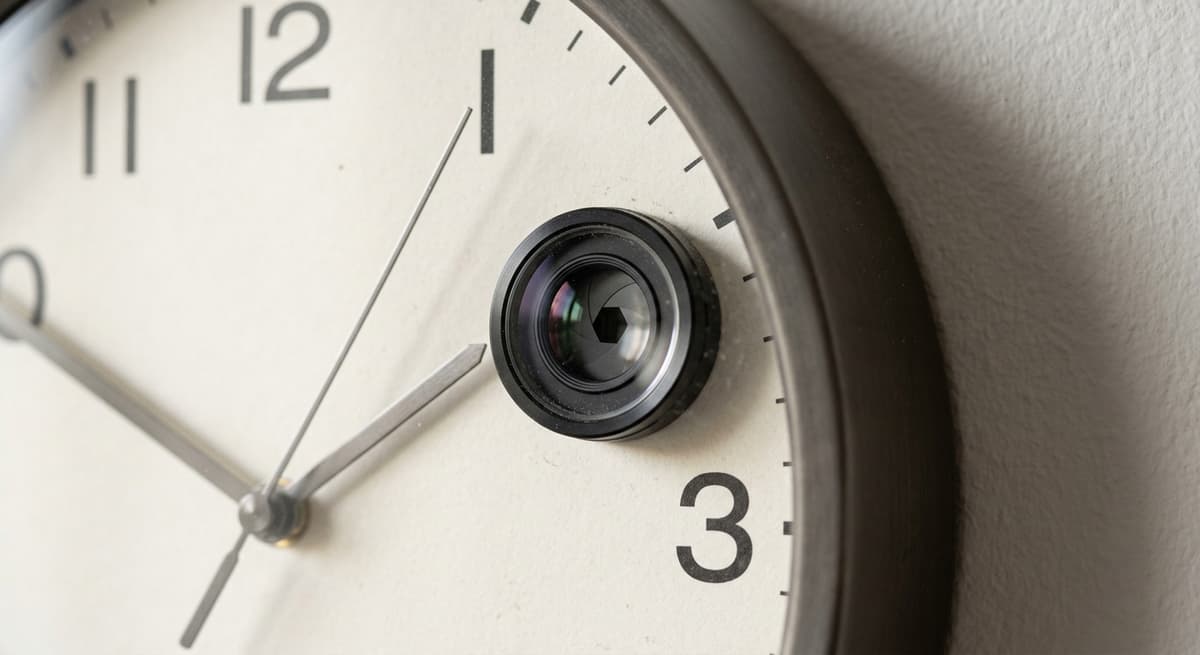
Nude or in a state of undress in a private place. Secretly recording someone who is nude or in a state of undress when they are in a location where they have a reasonable expectation of privacy and have not consented to being recorded. This covers hidden cameras in bathrooms, locker rooms, changing rooms, bedrooms, hotel rooms, and similar private spaces.
Key Elements the Prosecution Must Prove
To secure a conviction under subsection (a)(6), the state must prove:
- Knowledge. The defendant acted knowingly, not accidentally. An accidental or incidental capture of an image does not meet this element.
- Lack of lawful authority. The defendant had no legal right to record in the manner they did.
- Use of a device. The defendant used a camera, phone, video device, or other recording or image-capturing technology.
- Secret recording. The recording was done without the knowledge or consent of the person being recorded.
- Protected circumstance. The recording captured images under or through clothing, or of a nude/undressed person in a private place.
How Kansas Defines "Private Place"
K.S.A. 21-6101(f) defines a "private place" as a place where one may reasonably expect to be safe from uninvited intrusion or surveillance.
Locations that qualify as private places under this definition:
- Private residences and apartments
- Hotel and motel rooms
- Bathrooms and restrooms (including public restrooms)
- Locker rooms and changing areas
- Dressing rooms in retail stores
- Hospital rooms and medical examination rooms
- Private offices when the door is closed
Locations generally not considered private:
- Public streets, sidewalks, and parks
- Retail stores open to the public
- Restaurant dining areas
- Common areas of office buildings
Dissemination of Voyeuristic Images

K.S.A. 21-6101(a)(7): Sharing Voyeuristic Content
Subsection (a)(7) creates a separate and more serious offense for distributing images obtained through voyeurism. It is illegal to knowingly disseminate or permit the dissemination of any photograph, film, or video recording obtained in violation of subsection (a)(6).
This covers:
- Sharing voyeuristic images via text message, email, or social media
- Posting voyeuristic content on websites or forums
- Selling or distributing voyeuristic content
- Showing voyeuristic images or video to other people
- Uploading content to cloud storage accessible by others
The dissemination offense is classified more severely than the voyeurism offense itself, reflecting the additional harm caused by spreading intimate images beyond the initial violation.
Nonconsensual Intimate Images (Revenge Porn)
K.S.A. 21-6101(a)(8): Image-Based Sexual Abuse
Kansas also criminalizes the dissemination of intimate images of an identifiable person without their consent, when done with intent to harass, threaten, or intimidate. This provision covers what is commonly called "revenge porn" and applies regardless of how the images were originally obtained.
Key elements of subsection (a)(8):
- The images must depict an identifiable person in a state of nudity or engaged in sexual activity
- Dissemination must be without the consent of the person depicted
- The defendant must have acted with intent to harass, threaten, or intimidate
- It does not matter if the images were originally taken consensually
2025 Update: AI Deepfakes Covered Under SB 186
In 2025, Governor Laura Kelly signed Senate Bill 186 into law, expanding K.S.A. 21-6101(a)(8) to cover images "created, in whole or in part, altered or modified by artificial intelligence or any digital means."
This means Kansas law now criminalizes:
- AI-generated deepfake pornography depicting an identifiable person
- Digitally altered images that make someone appear nude or engaged in sexual activity
- Face-swapped content using someone's likeness without consent
- Any computer-generated intimate imagery targeting an identifiable person
The law applies regardless of whether the identifiable person was involved in creating the original source material. A completely fabricated AI image that realistically depicts someone in an intimate situation is now treated the same as sharing real intimate images without consent.
Public Interest Exception
Subsection (a)(8) includes an exception for materials used for bona fide scientific, educational, governmental, news reporting, or similar public purpose activities. This protects legitimate journalism, academic research, and law enforcement investigations from criminal liability.
Criminal Penalties
Sentencing Guidelines
Kansas uses a structured sentencing grid for felonies. The severity level of the offense and the offender's criminal history score determine the presumptive sentence. The following table summarizes the penalties for voyeurism-related offenses:
| Offense | Subsection | Severity Level | Presumptive Sentence Range |
|---|---|---|---|
| Voyeurism (first offense) | (a)(6) | Level 8 person felony | 7-23 months prison |
| Voyeurism (second offense within 5 years) | (a)(6) | Level 5 person felony | 31-136 months prison |
| Disseminating voyeuristic images (any offense) | (a)(7) | Level 5 person felony | 31-136 months prison |
| Nonconsensual intimate images/AI deepfakes (first offense) | (a)(8) | Level 8 person felony | 7-23 months prison |
| Nonconsensual intimate images/AI deepfakes (second offense within 5 years) | (a)(8) | Level 5 person felony | 31-136 months prison |
Understanding Kansas Sentencing Grids
Kansas sentencing guidelines use a grid system established under K.S.A. 21-6804. The vertical axis lists the severity level of the offense (1 being the most serious, 10 the least). The horizontal axis reflects the offender's criminal history score (I being the most extensive, A being minimal). Where these two values intersect on the grid determines the presumptive sentence range.
For a severity level 8 person felony with minimal criminal history (category I), the presumptive sentence is 7 months. For someone with extensive criminal history (category A), it increases to 23 months. The judge has discretion to depart from the presumptive sentence under certain circumstances.
Probation vs. Prison
For first-time offenders convicted of a severity level 8 person felony, the court may grant probation instead of prison time in some cases. However, Kansas law places restrictions on probation for person felonies, and the court must consider factors such as the severity of the offense, the impact on the victim, and the offender's likelihood of reoffending.
For severity level 5 person felonies (dissemination or repeat offenses), prison time is the presumptive sentence for most criminal history categories.
Sex Offender Registration
Kansas Offender Registration Act
Voyeurism convictions under K.S.A. 21-6101(a)(6) require registration under the Kansas Offender Registration Act (KORA). Offenders convicted of voyeurism must register as sex offenders with local law enforcement, and K.S.A. 22-4906 sets the length of that obligation.
Registration Requirements
Registered sex offenders in Kansas must:
- Provide their name, address, date of birth, and photograph to the Kansas Bureau of Investigation (KBI)
- Report to local law enforcement within three business days of establishing residence
- Update registration when changing address, employment, or school enrollment
- Comply with a flat 15-year registration period under K.S.A. 22-4906, which applies to every breach-of-privacy conviction under K.S.A. 21-6101(a)(6), (a)(7), or (a)(8), regardless of severity level or whether it is a first or subsequent offense
- Report in person four times a year under K.S.A. 22-4905: once during the offender's birth month and every third, sixth, and ninth month around it
Consequences of Registration
Being placed on the Kansas sex offender registry has lasting consequences beyond the criminal sentence itself:
- Public notification through the KBI's online offender registry
- Restrictions on where the offender can live
- Limitations on employment opportunities
- Travel restrictions and reporting requirements
- Social stigma affecting personal relationships
Failure to comply with registration requirements is a separate criminal offense under K.S.A. 22-4903.
Civil Remedies for Voyeurism Victims
K.S.A. 22-2518: Civil Damages
Victims of voyeurism may be able to pursue civil damages under K.S.A. 22-2518, which provides:
- Actual damages with a statutory minimum of $100 per day of violation or $1,000, whichever is greater
- Punitive damages at the court's discretion
- Reasonable attorney fees and litigation costs
That statute's civil action is limited by its own text to a wire, oral or electronic communication intercepted in violation of Kansas's separate interception-authorization scheme at K.S.A. 22-2514 et seq. K.S.A. 21-6101 does not cross-reference it, so it does not clearly extend to the camera-placement and image-dissemination voyeurism offenses under (a)(6), (a)(7), and (a)(8). A common-law claim for invasion of privacy (intrusion upon seclusion), covered next, is the more clearly available civil remedy for a hidden-camera or image-based voyeurism case.
Additional Civil Claims
Voyeurism victims in Kansas may also pursue claims under common law theories:
- Invasion of privacy (intrusion upon seclusion). A person who intentionally intrudes upon the solitude or private affairs of another in a manner highly offensive to a reasonable person may be liable for damages.
- Intentional infliction of emotional distress. When voyeuristic conduct is so outrageous that it goes beyond all bounds of decency, the victim may recover for severe emotional distress.
- Negligent infliction of emotional distress. In some cases, a negligence-based claim may be available.
- Civil harassment. Victims may seek restraining orders or protection from abuse orders.
Protection From Abuse Orders
Kansas allows victims to seek protection from abuse orders under K.S.A. 60-3104 when voyeurism occurs in a domestic or dating relationship context. These orders can require the offender to stay away from the victim and can include other protective provisions.
Law Enforcement Investigation of Voyeurism
How Cases Are Investigated
Kansas law enforcement agencies investigate voyeurism cases using a range of tools:
- Digital forensics. Examining phones, computers, cameras, and cloud storage for voyeuristic content
- Search warrants. Obtaining warrants to seize electronic devices and search digital accounts
- Network analysis. Tracing the distribution of images through social media, messaging apps, and websites
- Victim interviews. Gathering testimony about the circumstances of the recording and its discovery
Reporting Voyeurism
If you are a victim of voyeurism in Kansas, you can report it to:
- Local police department or county sheriff's office
- The Kansas Bureau of Investigation (KBI) for cases involving online distribution
- The National Center for Missing and Exploited Children (NCMEC) if the victim is a minor
- School administrators if the incident occurred on school property
Evidence Preservation
Victims should take steps to preserve evidence:
- Do not delete messages, images, or communications related to the offense
- Take screenshots of any distributed content with timestamps and URLs
- Document the timeline of events, including when you discovered the recording
- Preserve the recording device if accessible (do not attempt to access it yourself if it belongs to the suspect)
Federal Laws That May Apply
Federal Video Voyeurism Prevention Act
The federal Video Voyeurism Prevention Act (18 U.S.C. 1801) prohibits capturing images of a person's private areas without consent on federal property or in the special maritime and territorial jurisdiction of the United States. This applies at federal buildings, military installations, and national parks in Kansas.
Child Exploitation Laws
When voyeurism involves minors, federal child exploitation laws under 18 U.S.C. 2251-2260 may apply in addition to state charges. Production, distribution, and possession of child sexual abuse material carry severe federal penalties of 15 to 30 years in prison for production offenses.
TAKE IT DOWN Act (2025)
Congress enacted the TAKE IT DOWN Act (Pub. L. 119-12), signed May 19, 2025, with platform notice-and-takedown obligations effective May 19, 2026. The Act requires online platforms to remove nonconsensual intimate visual depictions, including AI-generated deepfakes, within 48 hours of a victim's takedown request. This federal law works alongside K.S.A. 21-6101(a)(8) (as amended by SB 186) to give Kansas victims both state criminal remedies and a federal platform-removal mechanism.
Common Voyeurism Scenarios in Kansas
Hidden Cameras in Rental Properties
Landlords and property owners who install hidden cameras in rental units to record tenants in private spaces (bathrooms, bedrooms) commit voyeurism under K.S.A. 21-6101(a)(6). Tenants who discover hidden cameras should contact law enforcement immediately and preserve the evidence.
Upskirting in Public Places
Photographing or recording under a person's clothing without consent is voyeurism under subsection (a)(6) regardless of whether it occurs in a public or private place. The victim does not need to be in a "private place" for this provision to apply.
Locker Room and Gym Recording
Recording in locker rooms, showers, and changing areas at gyms, pools, and fitness facilities violates subsection (a)(6) because these are locations where people have a reasonable expectation of privacy and are likely to be in a state of undress.
Sharing Ex-Partner Intimate Images
Sharing intimate images of a former partner without consent, with intent to harass, threaten, or intimidate, violates K.S.A. 21-6101(a)(8). This applies whether the images were originally taken consensually during the relationship or not.
AI-Generated Deepfake Intimate Content
Creating and sharing AI-generated intimate images of an identifiable person without their consent now violates K.S.A. 21-6101(a)(8) as amended by SB 186 (2025). This includes deepfake videos, face-swapped content, and any digitally fabricated intimate imagery.
More Kansas Recording Laws
Audio Recording | Video Recording | Voyeurism Laws | Workplace Recording | Recording Police | Phone Call Recording | Security Cameras | Recording in Public | Landlord-Tenant Recording | Dashcam Laws | School Recording | Medical Recording
More Kansas Recording Topics
More Kansas Laws
Frequently Asked Questions
What is the penalty for voyeurism in Kansas?
A first voyeurism offense under K.S.A. 21-6101(a)(6) is a severity level 8 person felony carrying 7 to 23 months in prison depending on criminal history. A second conviction within five years escalates to a severity level 5 person felony carrying 31 to 136 months. Disseminating voyeuristic images is a severity level 5 person felony even on a first offense.
Do you have to register as a sex offender for voyeurism in Kansas?
Yes. Voyeurism convictions under K.S.A. 21-6101(a)(6), (a)(7), or (a)(8) require registration under the Kansas Offender Registration Act. K.S.A. 22-4906 sets a flat 15-year registration period for all of these breach-of-privacy convictions, regardless of severity level, with in-person reporting to local law enforcement four times a year under K.S.A. 22-4905.
Is upskirting illegal in Kansas?
Yes. K.S.A. 21-6101(a)(6) specifically criminalizes using any device to photograph or record under or through another person's clothing without their knowledge or consent. This applies in both public and private places and is classified as a severity level 8 person felony on a first offense.
Is sharing AI-generated deepfake pornography illegal in Kansas?
Yes. In 2025, Kansas passed Senate Bill 186, which amended K.S.A. 21-6101(a)(8) to criminalize dissemination of AI-generated or digitally altered intimate images depicting an identifiable person without their consent. A first offense is a severity level 8 person felony carrying 7 to 23 months in prison.
Can I sue someone for voyeurism in Kansas?
Possibly. K.S.A. 22-2518 provides actual damages with a statutory minimum of $1,000, punitive damages, and attorney fees, but that statute is written for wire, oral, or electronic communication interception and may not clearly cover camera-placement voyeurism. The more clearly available civil remedy is a common law claim for invasion of privacy (intrusion upon seclusion) or intentional infliction of emotional distress.
Updates
Corrected the sex offender registration period for Kansas voyeurism convictions from a claimed 15/25-year split to the statute's actual flat 15-year term (K.S.A. 22-4906), fixed the reporting-frequency citation, and added a caveat that the K.S.A. 22-2518 civil damages statute is written for communication interception and may not clearly cover camera-placement voyeurism.
Independently fact-checked against the cited primary sources
Governing law re-checked for recent changes
Removed a fabricated public-access exclusion from the K.S.A. 21-6101(f) "private place" definition; the statute's actual text is a single sentence with no such carve-out.
Governing law re-checked for recent changes
Confirmed SB 186 (L. 2025 ch. 120 sec. 3) coverage of AI deepfakes under K.S.A. 21-6101(a)(8). Added [TAKE IT DOWN Act](/us-laws/take-it-down-act) (Pub. L. 119-12, signed May 19, 2025; platform notice-and-takedown effective May 19, 2026) as a federal overlay for nonconsensual intimate image takedowns from online platforms. K.S.A. 22-4906 KORA sex offender registration requirement confirmed. Added UpdatesLog.
Reviewed and approved by an editor
The Law Behind This Article
This article rests on the statutory provisions below, held in our own legal record and retrieved from the official source. Tap a section to read the operative text.
Kansas Statutes Annotated, Chapter 21: CRIMES AND PUNISHMENTS
§ 21-6101Breach of privacy.In forcecited in 26 of our articles
(a) Breach of privacy is knowingly and without lawful authority: (1) Intercepting, without the consent of the sender or receiver, a message by telephone, telegraph, letter or other means of private communication; (2) divulging, without the consent of the sender or receiver, the existence or contents of such message if such person knows that the message was illegally intercepted, or if such person illegally learned of the message in the course of employment with an agency in transmitting such message; (3) entering with intent to listen surreptitiously to private conversations in a private place or to observe the personal conduct of any other person or persons entitled to privacy therein; (4) installing or using outside or inside a private place any device for hearing, recording, amplifying or broadcasting sounds originating in such place, which sounds would not ordinarily be audible or comprehensible without the use of such device, without the consent of the person or persons entitled to privacy therein; (5) installing or using any device or equipment for the interception of any telephone, telegraph or other wire or wireless communication without the consent of the person in…
Official text (excerpt) · last checked 2026-08-31 · Read the full text in our law library · Verify at ksrevisor.gov
Cited in 8 court opinions in our collectionLatest citing opinion in our collection: 2026
In the courts (editorial summary, independently checked):Recent Kansas decisions construe the image-dissemination subsection, K.S.A. 21-6101(a)(8), not the interception subsections. State v. Ivy (2025) held a reasonable expectation of privacy under that subsection has a subjective and an objective component. State v. Jamil (2026), unpublished, found disseminating needs no jury definition.
Opinions citing this section in our collection:
- State v. Ivy (Court of Appeals of Kansas 2025)✓Ivy posted on Snapchat a sexual video his ex-girlfriend had recorded and texted him during their relationship; the court applied a subjective and objective two-part test and held a jury could find she kept a reasonable expectation of privacy, affirming the conviction.
- In re Belcher (Supreme Court of Kansas 2024, 552 P.3d 1213)“…deotape, photograph, film or image obtained in violation of K.S.A. 21-6101(a)(6) or (a)(8), and amendments…”
- State v. Jamil (Court of Appeals of Kansas 2026)✓Jamil secretly filmed a woman undressed and unconscious at his home, then sent the videos to her boyfriend; the court held that sharing with a single recipient can be disseminating under K.S.A. 21-6101(a)(8) and that intent to harass could be inferred from his conduct.
Identified automatically from the court opinions citing this section — not a ranking of which case controls.
Also relied on in: Kansas Audio Recording Laws, Kansas Dashcam Laws: Mounting Rules, Audio Recording, and Evidence (2026), Kansas Phone Call Recording Laws
§ 21-6804Sentencing grid for nondrug crimes; authority and responsibility of sentencing court; presumptive disposition.In forcecited in 4 of our articles
(a) The provisions of this section shall be applicable to the sentencing guidelines grid for nondrug crimes. The following sentencing guidelines grid shall be applicable to nondrug felony crimes: (b) Sentences expressed in the sentencing guidelines grid for nondrug crimes represent months of imprisonment. (c) The sentencing guidelines grid is a two-dimensional crime severity and criminal history classification tool. The grid's vertical axis is the crime severity scale which classifies current crimes of conviction. The grid's horizontal axis is the criminal history scale which classifies criminal histories. (d) The sentencing guidelines grid for nondrug crimes as provided in this section defines presumptive punishments for felony convictions, subject to the sentencing court's discretion to enter a departure sentence. The appropriate punishment for a felony conviction should depend on the severity of the crime of conviction when compared to all other crimes and the offender's criminal history. (e) (1) The sentencing court has discretion to sentence at any place within the sentencing range.
Official text (excerpt) · last checked 2026-07-29 · Read the full text in our law library · Verify at ksrevisor.gov
Cited in 70 court opinions in our collectionLatest citing opinion in our collection: 2026
Opinions citing this section in our collection:
- State v. Lamia-Beck (Supreme Court of Kansas 2024, 549 P.3d 1103)“…grid block for an offender classified in that grid block;" K.S.A. 21-6804(a), which holds Lamia-Beck's grid block…”
- State v. Smith (Court of Appeals of Kansas 2024)“…ts to the components of a "complete sentence" identified in K.S.A. 21-6804(e)(2): "the complete sentence . . . sha…”
- State v. Fleming (Supreme Court of Kansas 2018, 423 P.3d 506)“…rity level 3 person felony, in violation of K.S.A. 21-5420, K.S.A. 21-6804 and K.S.A. 21-6807 (aggravated r…”
Identified automatically from the court opinions citing this section — not a ranking of which case controls.
Also relied on in: Kansas Security Camera Laws, Kansas Workplace Recording Laws, Kansas Recording Laws (2026): One-Party Consent Rules
Kansas Statutes Annotated, Chapter 22: CRIMINAL PROCEDURE
§ 22-2514Authorized interception of wire, oral or electronic communications; definitions.In forcecited in 3 of our articles
This act shall be a part of and supplemental to the code of criminal procedure. As used in this act: (1) "Wire communication" means any aural transfer made in whole or in part through the use of facilities for the transmission of communications by the aid of wire, cable or other like connection between the point of origin and the point of reception, including the use of such connection in a switching station, furnished or operated by any person engaged in providing or operating such facilities for the transmission of intrastate, interstate or foreign communications.
Official text (excerpt) · last checked 2026-07-29 · Read the full text in our law library · Verify at ksrevisor.gov
Cited in 22 court opinions in our collectionLatest citing opinion in our collection: 2021
Opinions citing this section in our collection:
- State v. Farha (Supreme Court of Kansas 1975, 218 Kan. 394)“…ne obtained in Sedgwick county pursuant to our present law (K. S. A. 22-2514 to 22-2519 [Weeks 1974]). 1. Shawnee…”
- State v. Roudybush (Supreme Court of Kansas 1984, 235 Kan. 834)“…nlawful and in violation of K.S.A. 21-4001 and K.S.A. 22-2514 et seq., “in that no warra…”
- State v. Brooks (Court of Appeals of Kansas 2011, 46 Kan. App. 2d 601)“…nition. Brooks notes a broad definition of "intercept" in K.S.A. 22-2514(3) but says it does not apply. The Stat…”
Identified automatically from the court opinions citing this section — not a ranking of which case controls.
Also relied on in: Kansas Landlord-Tenant Recording Laws
§ 22-2518Same; civil action for damages; defense available in civil and criminal actions.In forcecited in 11 of our articles
(1) Any person whose wire, oral or electronic communication is intercepted, disclosed or used in violation of this act shall have a civil cause of action against any person who intercepts, discloses or uses, or procures any other person to intercept, disclose or use, such communications, and shall be entitled to recover from any such person: (a) Actual damages, but not less than liquidated damages computed at the rate of $100 a day for each day of violation or $1,000, whichever is greater; (b) punitive damages; and (c) reasonable attorneys' fees and other litigation costs reasonably incurred. (2) A good faith reliance by any person on a court order authorizing the interception of any wire, oral or electronic communication shall constitute a complete defense in any civil or criminal action brought against such person based upon such interception.
Official text (excerpt) · last checked 2026-07-29 · Read the full text in our law library · Verify at ksrevisor.gov
Cited in 6 court opinions in our collectionLatest citing opinion in our collection: 2024
Opinions citing this section in our collection:
- State v. Gibson (Supreme Court of Kansas 1994, 255 Kan. 474)“…f unlawfully intercepted *481 wire or oral communications. K.S.A. 22-2518 establishes a civil cause of action for…”
- Fields v. Atchison, Topeka, & Santa Fe Railway Co. (District Court, D. Kansas 1997, 985 F. Supp. 1308)“…18 U.S.C. § 2510 et seq., and the Kansas Wiretap Act, K.S.A. 22-2518, and invaded their privacy by intercept…”
- Banks v. Opat (District Court, D. Kansas 2021)“…ete defense against any civil action. 18 U.S.C. § 2520(d); K.S.A. § 22-2518(2). “To be in good faith, the officers’…”
Identified automatically from the court opinions citing this section — not a ranking of which case controls.
Also relied on in: Kansas Video Recording Laws, Kansas Surveillance Camera Laws (2026 Guide), Kansas Data Privacy Laws: Breach Notification & Consumer Rights (2026)
§ 22-4902Definitions.In forcecited in 2 of our articles
As used in the Kansas offender registration act, unless the context otherwise requires: (a) "Offender" means: (1) A sex offender; (2) a violent offender; (3) a drug offender; (4) any person who has been required to register under out-of-state law or is otherwise required to be registered; and (5) any person required by court order to register for an offense not otherwise required as provided in the Kansas offender registration act. (b) "Sex offender" includes any person who: (1) On or after April 14, 1994, is convicted of any sexually violent crime; (2) on or after July 1, 2002, is adjudicated as a juvenile offender for an act which, if committed by an adult, would constitute the commission of a sexually violent crime, unless the court, on the record, finds that the act involved non-forcible sexual conduct, the victim was at least 14 years of age and the offender was not more than four years older than the victim; (3) has been determined to be a sexually violent predator; (4) on or after July 1, 1997, is convicted of any of the following crimes when one of the parties involved is less than 18 years of age: (A) Adultery, as defined in K.S.A.
Official text (excerpt) · last checked 2026-07-29 · Read the full text in our law library · Verify at ksrevisor.gov
Cited in 83 court opinions in our collectionLatest citing opinion in our collection: 2026
Opinions citing this section in our collection:
- State v. Thomas (Supreme Court of Kansas 2018, 307 Kan. 733)“…cation for an offense requiring registration as provided in K.S.A. 22-4902, and amendments thereto, the court sha…”
- State v. Myers (Supreme Court of Kansas 1996, 260 Kan. 669)“…July 1, 1993. Aggravated sexual battery is a named offense. K.S.A. 22-4902(a), (b)(9), and K.S.A. 22-4910. We note…”
- State v. Coman (Supreme Court of Kansas 2012, 294 Kan. 84)“…ommit sexually violent crimes. KORA’s definition provision, K.S.A. 22-4902, includes a list of crimes that are per…”
Identified automatically from the court opinions citing this section — not a ranking of which case controls.
Also relied on in: Kansas Sexting Laws: Legal Consequences and Penalties
§ 22-4903Violation of act; aggravated violation; penalties; new and separate offense; prosecution, venue.In force
(a) Violation of the Kansas offender registration act is the failure by an offender, as defined in K.S.A. 22-4902, and amendments thereto, to comply with any and all provisions of such act, including any and all duties set forth in K.S.A. 22-4905 through 22-4907, and amendments thereto. Any violation of the Kansas offender registration act which continues for more than 30 consecutive days shall, upon the 31st consecutive day, constitute a new and separate offense, and shall continue to constitute a new and separate offense every 30 days thereafter for as long as the violation continues. (b) Aggravated violation of the Kansas offender registration act is violation of the Kansas offender registration act which continues for more than 180 consecutive days.
Official text (excerpt) · last checked 2026-07-29 · Read the full text in our law library · Verify at ksrevisor.gov
Cited in 22 court opinions in our collectionLatest citing opinion in our collection: 2026
Opinions citing this section in our collection:
- In re C.P.W. (Supreme Court of Kansas 2009, 289 Kan. 448)“…istration Act (KORA), K.S.A. 22-4901 et seq. We hold that K.S.A. 22-4903, which subjects to criminal liability “…”
- State v. LeClair (Supreme Court of Kansas 2012, 295 Kan. 909)“…ing to register as an offender as required by the KORA. See K.S.A. 22-4903. Count 1 charged that he failed to info…”
- In Re CPW (Supreme Court of Kansas 2009, 213 P.3d 413)“…istration Act (KORA), K.S.A. 22-4901 et seq. We hold that K.S.A. 22-4903, which subjects to criminal liability "…”
Identified automatically from the court opinions citing this section — not a ranking of which case controls.
§ 22-4905Duties of offender required to register; reporting; updated photograph; fee; driver's license; identification card.In force
Any offender required to register as provided in the Kansas offender registration act shall: (a) Except as otherwise provided in this subsection, register in person with the registering law enforcement agency within three business days of coming into any county or location of jurisdiction in which the offender resides or intends to reside, maintains employment or intends to maintain employment, or attends school or intends to attend school. Any such offender who cannot physically register in person with the registering law enforcement agency for such reasons including, but not limited to, incapacitation or hospitalization, as determined by a person licensed to practice medicine or surgery, or involuntarily committed pursuant to the Kansas sexually violent predator act, shall be subject to verification requirements other than in-person registration, as determined by the registering law enforcement agency having jurisdiction; (b) except as provided further, for any: (1) Sex offender, including a violent offender or drug offender who is also a sex offender, report in person four times each year to the registering law enforcement agency in the county or location of jurisdiction in…
Official text (excerpt) · last checked 2026-07-29 · Read the full text in our law library · Verify at ksrevisor.gov
Cited in 26 court opinions in our collectionLatest citing opinion in our collection: 2026
Opinions citing this section in our collection:
- State v. Thomas (Supreme Court of Kansas 2018, 307 Kan. 733)“…ecord, of the procedure to register and the requirements of K.S.A. 22-4905 . . .". Prior to July 1, 2012, courts w…”
- State v. Ballard (Supreme Court of Kansas 2025, 566 P.3d 1092)“…SYLLABUS BY THE COURT 1. K.S.A. 22-4905(f), a provision of the Kansas Offender…”
- State v. Sayler (Supreme Court of Kansas 2017)“…provisions of [KORA], including all duties set forth in K.S.A. 22-4905 throught [sic]…”
Identified automatically from the court opinions citing this section — not a ranking of which case controls.
§ 22-4906Duration and termination of registration requirement.In force
(a) (1) Except as provided in subsection (c), if convicted of any of the following offenses, an offender's duration of registration shall be, if confined, 15 years after the date of parole, discharge or release, whichever date is most recent, or, if not confined, 15 years from the date of conviction: (A) Sexual battery, as defined in K.S.A. 21-3517, prior to its repeal, or K.S.A. 21-5505(a), and amendments thereto; (B) adultery, as defined in K.S.A. 21-3507, prior to its repeal, or K.S.A. 21-5511, and amendments thereto, when one of the parties involved is less than 18 years of age; (C) promoting the sale of sexual relations, as defined in K.S.A. 21-6420, and amendments thereto; (D) patronizing a prostitute, as defined in K.S.A. 21-3515, prior to its repeal, or K.S.A. 21-6421, prior to its amendment by section 18 of chapter 120 of the 2013 Session Laws of Kansas on July 1, 2013, when one of the parties involved is less than 18 years of age; (E) lewd and lascivious behavior, as defined in K.S.A. 21-3508, prior to its repeal, or K.S.A. 21-5513, and amendments thereto, when one of the parties involved is less than 18 years of age; (F) capital murder, as defined in K.S.A.
Official text (excerpt) · last checked 2026-07-29 · Read the full text in our law library · Verify at ksrevisor.gov
Cited in 28 court opinions in our collectionLatest citing opinion in our collection: 2026
Opinions citing this section in our collection:
- State v. Myers (Supreme Court of Kansas 1996, 260 Kan. 669)“…on. The registration requirements of KSORA (K.S.A. 22-4904, K.S.A. 22-4906, and K.S.A. 22-4907) are remedial and t…”
- State v. Fredrick (Supreme Court of Kansas 2011, 292 Kan. 169)“…h that Fredrick was required to register in Kansas, because K.S.A. 22-4906(i) did not apply to the defendant. The…”
- State v. Denmark-Wagner (Supreme Court of Kansas 2011, 292 Kan. 870)“…has merit. At the most, under K.S.A. 2008 Supp. 22-4902 and K.S.A. 22-4906, he was eligible for a 10-year registra…”
Identified automatically from the court opinions citing this section — not a ranking of which case controls.
Kansas Statutes Annotated, Chapter 60: PROCEDURE, CIVIL
§ 60-3104Commencement of proceedings; persons seeking relief on behalf of minor child; forms; no docket fee; confidentiality of certain matters, exceptions.In force
(a) An intimate partner or household member may seek relief under the protection from abuse act by filing a verified petition with any judge of the district court or with the clerk of the court alleging abuse by another intimate partner or household member. (b) The following persons may seek relief under the protection from abuse act on behalf of a minor child by filing a verified petition with any judge of the district court or with the clerk of the court alleging abuse by another intimate partner or household member: (1) A parent of the minor child; (2) an adult residing with the minor child; or (3) the child's court-appointed legal custodian or court-appointed legal guardian. (c) The clerk of the court shall supply the forms for the petition and orders, which shall be prescribed by the judicial council. (d) Service of process served under this section shall be by personal service and not by certified mail return receipt requested. No docket fee shall be required for proceedings under the protection from abuse act.
Official text (excerpt) · last checked 2026-07-29 · Read the full text in our law library · Verify at ksrevisor.gov
Cited in 5 court opinions in our collectionLatest citing opinion in our collection: 2026
Opinions citing this section in our collection:
- Paida v. Leach (Supreme Court of Kansas 1996, 260 Kan. 292)“…hich alleges abuse by a person with whom the child resides. K.S.A. 60-3104(a). Abuse is defined in part as…”
- Barnett v. Barnett (Court of Appeals of Kansas 1997, 24 Kan. App. 2d 342)“…250 Kan. 123, 129 , 823 P.2d 782 (1991). K.S.A. 60-3104 of the Protection from Abuse Act, K.S.A…”
- Crim v. Crim (Court of Appeals of Kansas 2008, 40 Kan. App. 2d 367)“…ging abuse by another intimate partner or household member. K.S.A. 60-3104(a). In part, abuse is defined as…”
Identified automatically from the court opinions citing this section — not a ranking of which case controls.
United States Code Title 18
§ 1801Video voyeurismIn forcecited in 79 of our articles
Whoever, in the special maritime and territorial jurisdiction of the United States, has the intent to capture an image of a private area of an individual without their consent, and knowingly does so under circumstances in which the individual has a reasonable expectation of privacy, shall be fined under this title or imprisoned not more than one year, or both. In this section— the term “capture”, with respect to an image, means to videotape, photograph, film, record by any means, or broadcast; the term “broadcast” means to electronically transmit a visual image with the intent that it be viewed by a person or persons; the term “a private area of the individual” means the naked or undergarment clad genitals, pubic area, buttocks, or female breast of that individual; the term “female breast” means any portion of the female breast below the top of the areola; and the term “under circumstances in which that individual has a reasonable expectation of privacy” means— circumstances in which a reasonable person would believe that he or she could disrobe in privacy, without being concerned that an image of a private area of the individual was being captured; or circumstances in which a…
Official text (excerpt) · last checked 2026-07-28 · Read the full text in our law library · Verify at uscode.house.gov
Cited in 53 court opinions in our collectionLatest citing opinion in our collection: 2026
In the courts (editorial summary, independently checked):Courts have applied 18 U.S.C. 1801 mainly at its edges. United States v. Johnson (2010) read it as Congress's answer to secretly filming nudity on federal property, acquitting on a child exploitation charge instead. EPIC v. Department of Homeland Security (2011) applied the Section 1801(c) law enforcement exception to a TSA scanner claim.
Opinions citing this section in our collection:
- United States v. Anthony Helton (Court of Appeals for the Fourth Circuit 2019, 944 F.3d 198)“…from this list of federal offenses is video voyeurism under 18 U.S.C. § 1801. Rather than list this statute as an enu…”
- United States v. Johnson (District Court, W.D. Missouri 2010, 719 F. Supp. 2d 1059)✓A weightlifting coach hid a camera to film minors weighing in nude; acquitting him under the child exploitation statute, the court called that conduct plain video voyeurism under section 1801, but noted the section reaches only federal maritime and territorial jurisdiction.
- Electronic Privacy Information Center v. United States Department of Homeland Security (Court of Appeals for the D.C. Circuit 2011, 653 F.3d 1)✓Privacy groups challenged TSA body scanners under the Video Voyeurism Prevention Act; the D.C. Circuit held the statute's exception for lawful law enforcement, correctional, or intelligence activity applied to airport screening, so the section 1801 claim failed.
Identified automatically from the court opinions citing this section — not a ranking of which case controls.
Also relied on in: Alaska Voyeurism and Hidden Camera Laws: AS 11.61.123 Explained (2026), Arizona Surreptitious Recording & Voyeurism Laws: ARS 13-3019 Penalties (2026), Arkansas Voyeurism Laws: Hidden Cameras, Penalties, and Defenses (2026)
Search our full record of US law — 2.1 million sections, every state + federal →
Sources and References
- K.S.A. 21-6101 - Breach of Privacy (Kansas Revisor of Statutes)(ksrevisor.org).gov
- K.S.A. 22-2518 - Civil Action for Damages (Kansas Revisor of Statutes)(ksrevisor.gov).gov
- K.S.A. 22-4906 - Registration Duration, Kansas Offender Registration Act (Kansas Revisor of Statutes)(ksrevisor.gov).gov
- K.S.A. 21-6804 - Sentencing Guidelines Grid (Kansas Revisor of Statutes)(ksrevisor.org).gov
- Senate Bill 186 - 2025 Session Laws (Kansas Secretary of State)(sos.ks.gov).gov
- 18 U.S.C. 1801 - Video Voyeurism Prevention Act(law.cornell.edu)
- K.S.A. 60-3104 - Protection From Abuse Orders (Kansas Revisor of Statutes)(ksrevisor.org).gov