
Kansas
Kansas Security Camera Laws
Independently fact-checked against primary sources (last audited August 15, 2026). · Reviewed by the RecordingLaw editorial team. · Law checked current as of August 9, 2026. · 5 primary sources cited on this page. How we verify our legal content
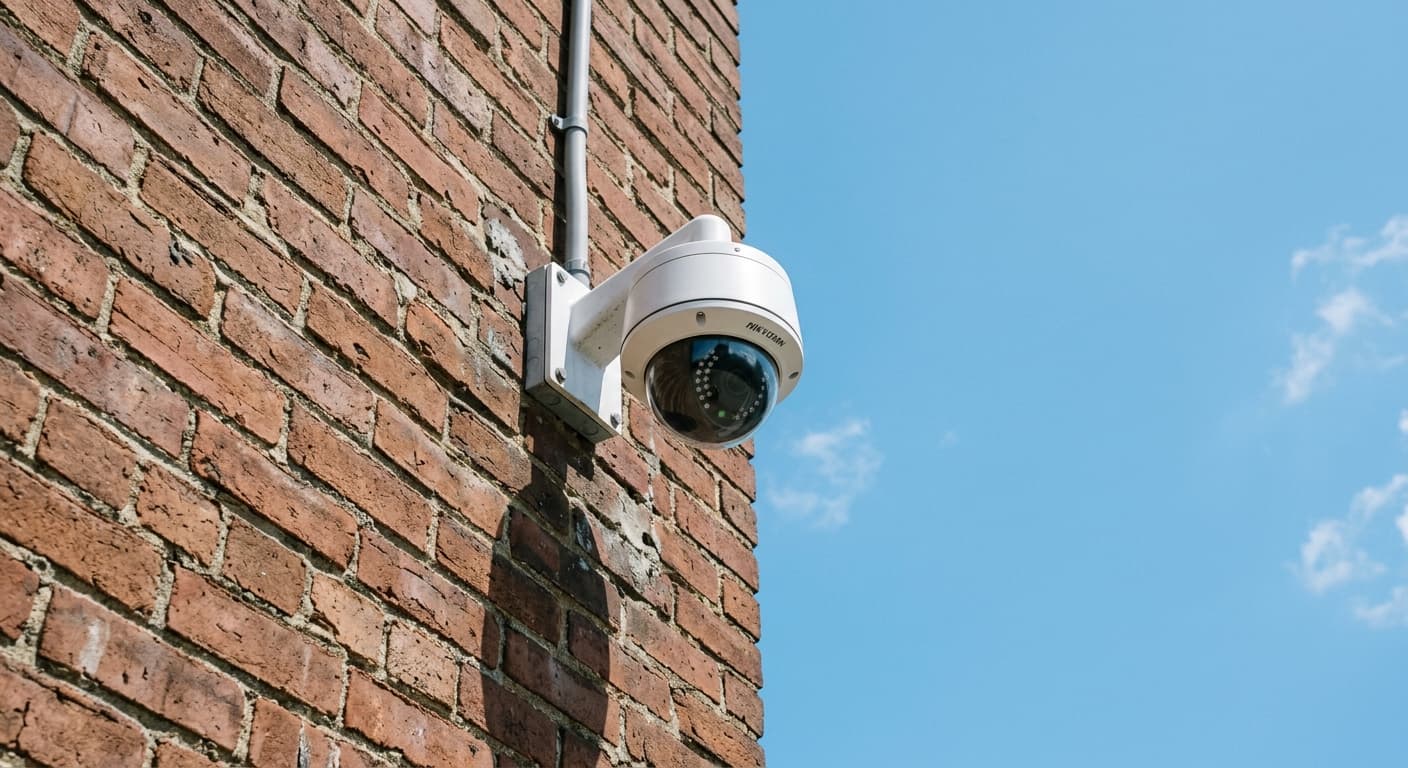
Kansas permits residential and commercial security cameras on your own property without a permit. Video-only cameras are legal anywhere people lack a reasonable expectation of privacy. Audio recording requires one-party consent under K.S.A. 21-6101, and cameras in bathrooms or changing areas are a felony under that same statute.
Kansas does not have a dedicated statute specifically governing security cameras. Instead, the legality of security camera use is determined by applying the state's breach of privacy law (K.S.A. 21-6101), voyeurism provisions, and general privacy principles. Security cameras are legal in Kansas when they are installed in areas where people do not have a reasonable expectation of privacy, but they become illegal when they invade protected private spaces.
This guide covers the rules for residential and commercial security cameras in Kansas, audio recording considerations, neighbor disputes, HOA regulations, and the legal boundaries that determine when security camera use crosses from lawful surveillance into criminal conduct.
Residential Security Cameras
Your Right to Install Home Security Cameras
Kansas homeowners have broad rights to install security cameras on their own property. There is no state permit or registration requirement for residential security camera systems. Common residential installations include:
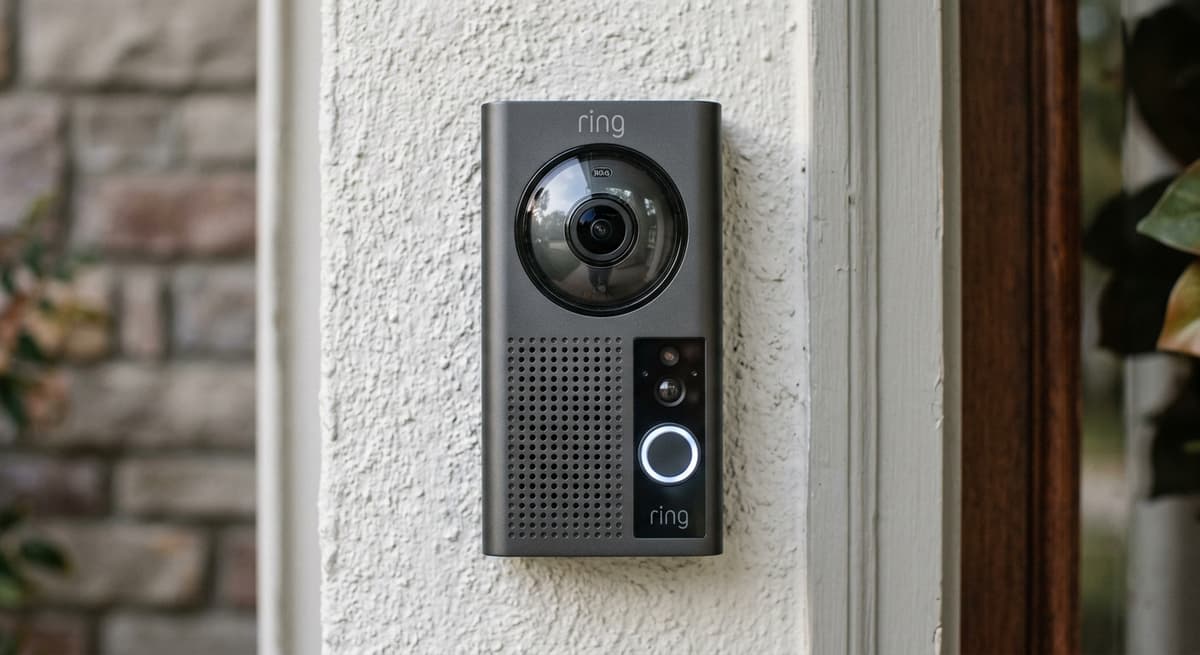
- Doorbell cameras (Ring, Nest Hello, Arlo, etc.)
- Outdoor cameras covering driveways, yards, and entry points
- Indoor cameras in common living areas
- Garage and outbuilding cameras
- Driveway and parking area cameras
Where You Can Point Residential Cameras
You can aim your security cameras at:
- Your own property, including yard, driveway, garage, and walkways
- Public areas visible from your property (streets, sidewalks, public alleys)
- Your front door and porch area
- Common areas of your own home (living room, kitchen, hallways)
Where You Cannot Point Residential Cameras
Under K.S.A. 21-6101 and general privacy principles, you should not aim cameras at:
- Neighbor's windows, especially bedrooms and bathrooms
- Neighbor's fenced backyards where they have a reasonable expectation of privacy
- Any area where people are likely to be in a state of undress
- Guest bathrooms or bedrooms in your own home (when guests are present)
- Rental unit interiors (if you are a landlord)
Cameras Inside Your Own Home
You can install cameras in common areas of your own home, such as living rooms, kitchens, and hallways. However, cameras in bathrooms, bedrooms, or guest rooms where people expect privacy can create legal liability under the voyeurism provisions of K.S.A. 21-6101(a)(6).
If you share your home with a spouse, roommate, or partner, placing hidden cameras in areas where they expect privacy (bedrooms, bathrooms) can constitute voyeurism. This is true even though you own the property.
Nanny Cams and Babysitter Monitoring
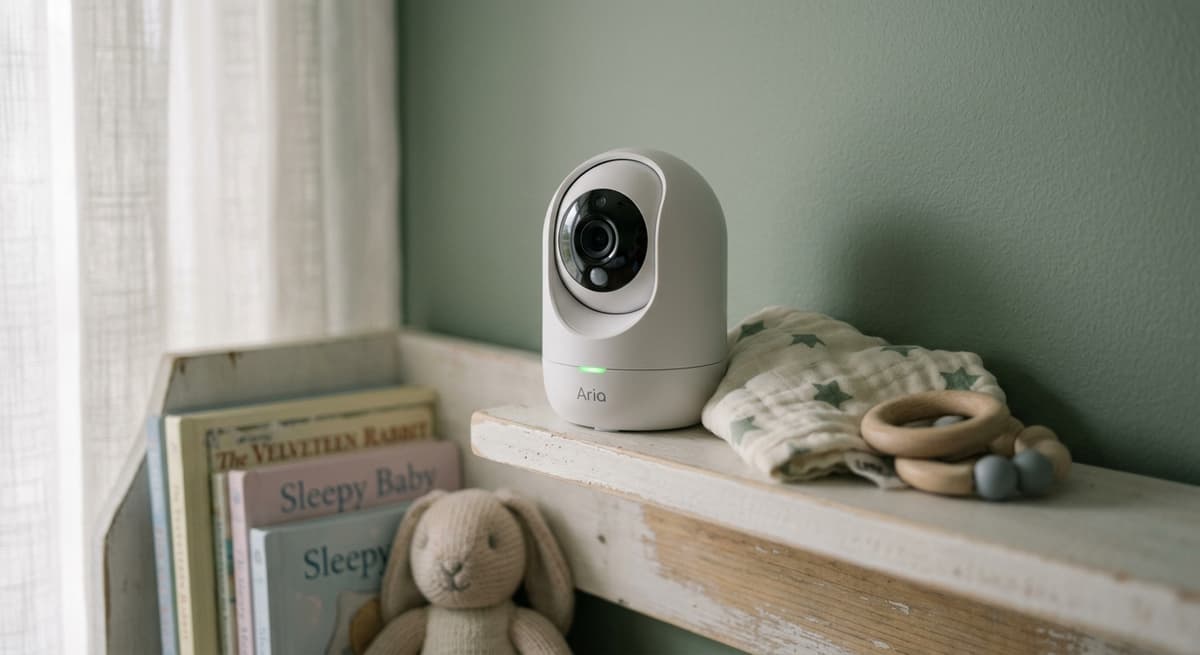
Kansas law permits nanny cams in common areas of your home to monitor childcare providers. Video-only nanny cams in living rooms, kitchens, and playrooms are legal. When adding audio recording, remember that Kansas one-party consent law requires at least one party to the recorded conversation to consent. If you are not present during the recording, and no one in the recorded conversation has consented, the audio portion may violate K.S.A. 21-6101(a)(4).
Best practices for nanny cams:
- Place cameras in common areas only (living room, kitchen, playroom)
- Do not place cameras in bathrooms or rooms where the caregiver changes clothes
- Consider informing the caregiver about the cameras as a best practice
- If capturing audio, understand the one-party consent implications
Commercial Security Cameras
Business Surveillance Rights
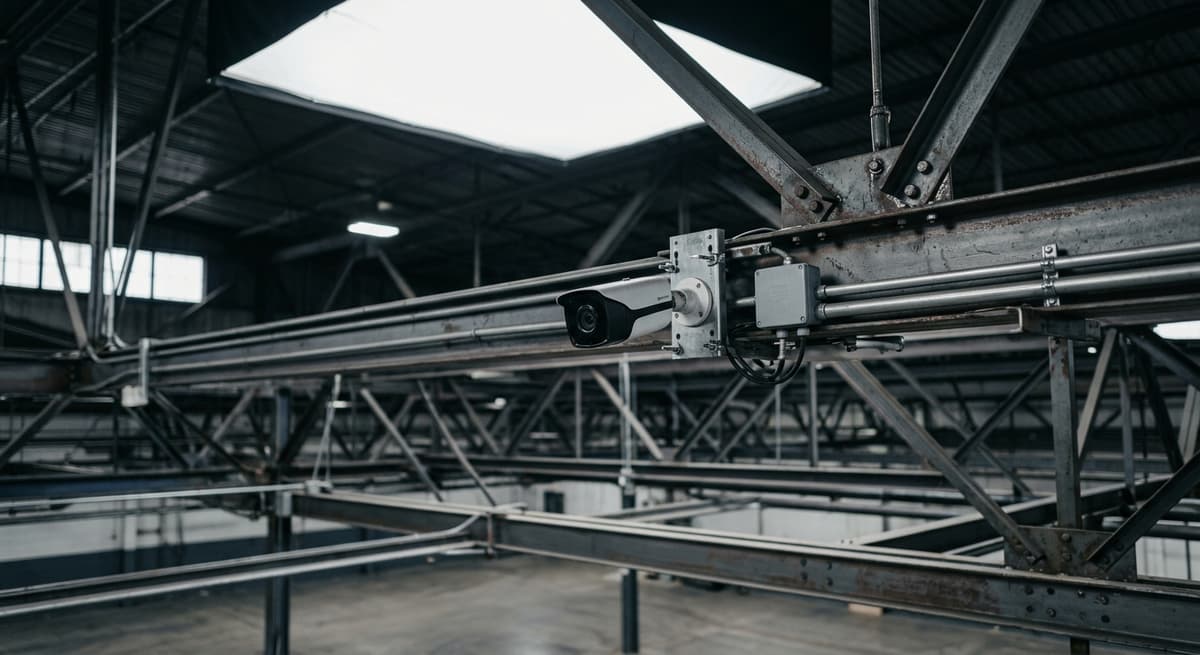
Kansas businesses can install security cameras for loss prevention, employee safety, and general security. Common commercial installations include:
- Retail floor and point-of-sale cameras
- Warehouse and storage area cameras
- Office common area cameras
- Parking lot and exterior cameras
- Loading dock cameras
- Lobby and entrance cameras
Prohibited Locations for Business Cameras
Businesses face criminal liability for installing cameras in areas where employees or customers have a reasonable expectation of privacy. Under K.S.A. 21-6101(a)(6), cameras are prohibited in:
- Restrooms and bathrooms (employee and customer)
- Locker rooms and shower areas
- Changing rooms and dressing rooms (retail fitting rooms)
- Private break rooms with closed doors
- Lactation rooms
- Medical examination areas
A business owner or manager who installs cameras in these areas commits a severity level 8 person felony, carrying 7 to 23 months in prison on a first offense.
Notice and Signage
Kansas does not have a specific statute requiring businesses to post signs about security cameras. However, posting visible signage provides important legal benefits:
- Eliminates any reasonable expectation of privacy in monitored areas
- Deters criminal activity and theft
- Reduces the risk of employee lawsuits claiming privacy violations
- Satisfies potential requirements from insurance carriers
- Demonstrates good faith in the event of a legal challenge
Common signage reads: "Premises under video surveillance" or "Security cameras in use."
Audio Recording With Security Cameras
The One-Party Consent Requirement
Many modern security cameras include microphones for audio recording. When a security camera captures audio, Kansas's one-party consent law under K.S.A. 21-6101 applies.
For audio recording to be legal, at least one party to any captured conversation must consent. This creates practical challenges for security cameras because:
- Cameras in unattended areas may record conversations where no participant has consented
- Audio from outdoor cameras may capture neighbor conversations
- Business cameras may record customer conversations that no employee is part of
Best Practices for Audio on Security Cameras
To minimize legal risk when using security cameras with audio:
- Disable audio recording on cameras in areas where you will not be present during conversations
- If audio is enabled, post clear notice that audio recording is in progress
- Limit audio-enabled cameras to areas where you or your employees regularly participate in conversations
- Review your camera system settings to understand which cameras have microphones enabled
Video-Only Recording
Video-only security cameras avoid the one-party consent issue entirely. Kansas has no general prohibition on video-only surveillance in areas where people do not have a reasonable expectation of privacy. For most security applications, video without audio provides adequate coverage while minimizing legal complications.
Neighbor Disputes Over Security Cameras
Common Conflict Scenarios
Security camera disputes between neighbors are increasingly common. Typical conflicts include:
- A neighbor's camera appears to be aimed directly at your windows
- A doorbell camera captures your front yard and daily activities
- Multiple cameras create a feeling of constant surveillance
- Camera lights or notifications are disruptive
- Concerns about audio recording of private conversations
Legal Analysis of Neighbor Camera Disputes
Under Kansas law, the key question is whether the camera captures areas where you have a reasonable expectation of privacy. The analysis depends on the specific circumstances:
Generally permissible: A neighbor's camera that captures their own property and incidentally records portions of your property visible from public view (front yard, unfenced areas, driveway) is generally legal.
Potentially problematic: A camera deliberately aimed at your bedroom window, bathroom window, or fenced backyard where you have a privacy expectation may violate K.S.A. 21-6101(a)(6) if it captures you in a state of undress.
Clearly illegal: A camera positioned to look through your windows or into private enclosed areas constitutes voyeurism if it records someone who is nude or undressed without consent.
Resolving Neighbor Camera Disputes
If you believe a neighbor's camera violates your privacy:
- Talk to your neighbor. Many disputes arise from camera placement that the neighbor did not realize was problematic. A direct conversation may resolve the issue.
- Document the camera's field of view. Take photographs showing where the camera is aimed and what it captures.
- Install privacy measures. Fences, privacy screens, window treatments, and landscaping can block the camera's view of your private areas.
- Contact local authorities. If the camera clearly captures private areas and constitutes voyeurism, report it to local law enforcement.
- Consult an attorney. A lawyer can advise whether the specific camera placement violates Kansas law and what legal remedies are available.
HOA and Landlord Restrictions
Homeowners Association Rules
Kansas HOAs may have rules governing security cameras, including:
- Restrictions on camera placement on building exteriors
- Requirements for camera approval before installation
- Limits on the size, style, or visibility of cameras
- Rules about where cameras can be aimed
- Restrictions on shared-wall mounting in condominiums
HOA rules are enforced through the community's covenants, conditions, and restrictions (CC&Rs). Violating HOA camera rules can result in fines, forced removal of cameras, or legal action by the HOA.
Landlord and Tenant Cameras
Kansas landlords and tenants have different rights regarding security cameras:
Landlord rights: Landlords can install cameras in common areas of multi-unit buildings (lobbies, hallways, parking lots, building exteriors). Landlords cannot install cameras inside rental units or in areas where tenants have a reasonable expectation of privacy.
Tenant rights: Tenants can install security cameras inside their rental unit (doorbell cameras, indoor cameras) and may install exterior cameras with the landlord's permission. Lease agreements may restrict camera installation. For more information, see our guide on Kansas landlord-tenant recording laws.
Security Camera Footage as Evidence
Admissibility in Court
Security camera footage is regularly admitted as evidence in Kansas courts. Under K.S.A. 60-464, the offering party must authenticate the footage by showing it is genuine and unaltered. Authentication can be established through:
- Testimony from the person who installed and maintained the camera system
- Testimony from someone who reviewed the footage and can identify what it shows
- Chain of custody documentation from the storage system
- Metadata from the recording file showing date, time, and camera identification
Common Uses in Legal Proceedings
Security camera footage serves as evidence in numerous types of Kansas cases:
- Criminal cases. Burglary, theft, assault, vandalism, trespassing, and other crimes captured on camera.
- Personal injury claims. Slip-and-fall accidents, car accidents in parking lots, and other incidents.
- Insurance claims. Property damage, theft, and liability incidents.
- Employment disputes. Workplace incidents, safety violations, and time and attendance issues.
- Domestic disputes. Evidence of protective order violations, property destruction, or custody-related incidents.
Data Retention
Kansas does not mandate a specific retention period for security camera footage. However, if you anticipate that footage may be needed as evidence, you should preserve it immediately. Most security systems overwrite old footage automatically, and waiting too long may result in the footage being permanently lost.
Penalties for Illegal Security Camera Use
| Offense | Classification | Maximum Penalty |
|---|---|---|
| Audio recording without consent (camera with mic) | Class A nonperson misdemeanor | 1 year jail, $2,500 fine |
| Camera in bathroom/locker room/changing area (first offense) | Severity level 8 person felony | 7-23 months prison |
| Camera in bathroom/locker room/changing area (second offense within 5 years) | Severity level 5 person felony | 31-136 months prison |
| Sharing footage from illegally placed camera | Severity level 5 person felony | 31-136 months prison |
Victims of illegal audio interception can pursue civil damages under K.S.A. 22-2518, including actual damages (minimum $1,000), punitive damages, and attorney fees. That statute's civil action is limited by its own text to a "wire, oral or electronic communication" intercepted "in violation of this act," referring to Kansas's separate interception-authorization scheme at K.S.A. 22-2514 et seq.; K.S.A. 21-6101 does not cross-reference it, so it does not clearly extend to the camera-placement voyeurism offenses above. Victims of illegal camera placement may instead have common-law claims such as invasion of privacy (intrusion upon seclusion).
Smart Home and Connected Camera Considerations
Cloud Storage and Data Privacy
Modern security cameras often store footage on cloud servers. Kansas residents should consider:
- Who has access to cloud-stored footage (the camera manufacturer, law enforcement via subpoena)
- How long footage is retained on the cloud
- Whether the service encrypts footage in transit and at rest
- The provider's policy on sharing footage with third parties
Law Enforcement Access to Security Camera Footage
Law enforcement agencies in Kansas can obtain security camera footage through:
- Voluntary cooperation. The camera owner can voluntarily share footage with police.
- Subpoena. A subpoena can compel production of footage in connection with a legal proceeding.
- Search warrant. A warrant based on probable cause can authorize seizure of camera equipment or footage.
- Community camera programs. Some Kansas police departments run voluntary camera registration programs where residents agree to share footage upon request.
You are not required to share security camera footage with police unless they present a valid warrant or subpoena.
More Kansas Recording Laws
Audio Recording | Video Recording | Voyeurism Laws | Workplace Recording | Recording Police | Phone Call Recording | Security Cameras | Recording in Public | Landlord-Tenant Recording | Dashcam Laws | School Recording | Medical Recording
More Kansas Recording Topics
See Also
- Kansas Surveillance Camera Laws covers home, HOA, neighbor, workplace, and landlord camera rules in Kansas.
More Kansas Laws
Frequently Asked Questions
Do I need a permit to install security cameras in Kansas?
No. Kansas does not require permits or registration for residential or commercial security cameras. You can install cameras on your own property without government approval. However, HOA rules, lease agreements, or local building codes may impose separate requirements.
Can my security camera record my neighbor's property in Kansas?
Your camera can incidentally capture portions of a neighbor's property that are visible from public view, such as unfenced front yards and driveways. However, you should not aim cameras directly at a neighbor's windows, fenced backyards, or other areas where they have a reasonable expectation of privacy.
Is it legal to have security cameras with audio in Kansas?
Video-only cameras have fewer legal restrictions. When a camera includes audio recording, Kansas one-party consent law under K.S.A. 21-6101 applies. At least one party to any captured conversation must consent. For unattended cameras, the safest approach is to disable audio or post clear notice that audio recording is in progress.
Can a business put cameras in fitting rooms in Kansas?
No. Placing cameras in fitting rooms, dressing rooms, or any area where customers change clothes violates K.S.A. 21-6101(a)(6) and is a severity level 8 person felony. This also applies to bathrooms, locker rooms, and similar private areas in business establishments.
Can police access my home security camera footage without a warrant in Kansas?
Police can ask for your voluntary cooperation, and you can choose to share footage or not. To compel access, police generally need a search warrant based on probable cause or a valid subpoena. You are not required to share footage without a warrant or subpoena.
Updates
Corrected the mislabeled authentication statute for security camera footage from K.S.A. 60-456 (opinion testimony) to K.S.A. 60-464 (Kansas's actual authentication-of-evidence statute).
Independently fact-checked against the cited primary sources
Governing law re-checked for recent changes
Narrowed the K.S.A. 22-2518 civil-damages claim: that statute's text limits its civil action to communications intercepted under Kansas's separate wiretap-authorization scheme (K.S.A. 22-2514 et seq.), and K.S.A. 21-6101 (the voyeurism/camera-placement statute) does not cross-reference it, so it does not clearly cover the camera-placement offenses discussed on this page.
Governing law re-checked for recent changes
Confirmed K.S.A. 21-6101 framework for security cameras. No statewide permit requirement. Voyeurism provisions at (a)(6) correctly stated as severity level 8 person felony. Civil remedy under K.S.A. 22-2518 confirmed. Added UpdatesLog.
Reviewed and approved by an editor
The Law Behind This Article
This article rests on the statutory provisions below, held in our own legal record and retrieved from the official source. Tap a section to read the operative text.
Kansas Statutes Annotated, Chapter 21: CRIMES AND PUNISHMENTS
§ 21-6101Breach of privacy.In forcecited in 26 of our articles
(a) Breach of privacy is knowingly and without lawful authority: (1) Intercepting, without the consent of the sender or receiver, a message by telephone, telegraph, letter or other means of private communication; (2) divulging, without the consent of the sender or receiver, the existence or contents of such message if such person knows that the message was illegally intercepted, or if such person illegally learned of the message in the course of employment with an agency in transmitting such message; (3) entering with intent to listen surreptitiously to private conversations in a private place or to observe the personal conduct of any other person or persons entitled to privacy therein; (4) installing or using outside or inside a private place any device for hearing, recording, amplifying or broadcasting sounds originating in such place, which sounds would not ordinarily be audible or comprehensible without the use of such device, without the consent of the person or persons entitled to privacy therein; (5) installing or using any device or equipment for the interception of any telephone, telegraph or other wire or wireless communication without the consent of the person in…
Official text (excerpt) · last checked 2026-08-31 · Read the full text in our law library · Verify at ksrevisor.gov
Cited in 8 court opinions in our collectionLatest citing opinion in our collection: 2026
In the courts (editorial summary, independently checked):Recent Kansas decisions construe the image-dissemination subsection, K.S.A. 21-6101(a)(8), not the interception subsections. State v. Ivy (2025) held a reasonable expectation of privacy under that subsection has a subjective and an objective component. State v. Jamil (2026), unpublished, found disseminating needs no jury definition.
Opinions citing this section in our collection:
- State v. Ivy (Court of Appeals of Kansas 2025)✓Ivy posted on Snapchat a sexual video his ex-girlfriend had recorded and texted him during their relationship; the court applied a subjective and objective two-part test and held a jury could find she kept a reasonable expectation of privacy, affirming the conviction.
- In re Belcher (Supreme Court of Kansas 2024, 552 P.3d 1213)“…deotape, photograph, film or image obtained in violation of K.S.A. 21-6101(a)(6) or (a)(8), and amendments…”
- State v. Jamil (Court of Appeals of Kansas 2026)✓Jamil secretly filmed a woman undressed and unconscious at his home, then sent the videos to her boyfriend; the court held that sharing with a single recipient can be disseminating under K.S.A. 21-6101(a)(8) and that intent to harass could be inferred from his conduct.
Identified automatically from the court opinions citing this section — not a ranking of which case controls.
Also relied on in: Kansas Audio Recording Laws, Kansas Dashcam Laws: Mounting Rules, Audio Recording, and Evidence (2026), Kansas Phone Call Recording Laws
§ 21-5808Criminal trespass.In forcecited in 4 of our articles
(a) Criminal trespass is entering or remaining upon or in any: (1) Land, nonnavigable body of water, structure, vehicle, aircraft or watercraft by a person who knows such person is not authorized or privileged to do so, and: (A) Such person enters or remains therein in defiance of an order not to enter or to leave such premises or property personally communicated to such person by the owner thereof or other authorized person; (B) such premises or property are posted as provided in K.S.A. 32-1013, and amendments thereto, or in any other manner reasonably likely to come to the attention of intruders, or are locked or fenced or otherwise enclosed, or shut or secured against passage or entry; or (C) such person enters or remains therein in defiance of a restraining order issued pursuant to K.S.A. 60-3105, 60-3106, 60-3107, 60-31a05 or 60-31a06 or K.S.A.
Official text (excerpt) · last checked 2026-07-29 · Read the full text in our law library · Verify at ksrevisor.gov
Cited in 6 court opinions in our collectionLatest citing opinion in our collection: 2026
Opinions citing this section in our collection:
- State v. Lyon (Court of Appeals of Kansas 2020, 58 Kan. App. 2d 474)“…ger of such premises not to enter such premises pursuant to K.S.A. 21-5808, and amendments thereto, except…”
- State v. Vano – Per Curiam – Affirmed – Johnson (Court of Appeals of Kansas 2023)“…raining order must have prevented him from being there. See K.S.A. 21-5808 (defining criminal trespassing). Yet no…”
- State v. Swopes (Court of Appeals of Kansas 2017)“…801(a)(1) and (b)(3); (4) criminal trespass in violation of K.S.A. 21-5808(a)(1)(B); and (5) theft—less than $1,00…”
Identified automatically from the court opinions citing this section — not a ranking of which case controls.
Also relied on in: Kansas Laws on Recording in Public, Kansas Video Recording Laws, Kansas Laws on Recording Police
§ 21-6804Sentencing grid for nondrug crimes; authority and responsibility of sentencing court; presumptive disposition.In forcecited in 4 of our articles
(a) The provisions of this section shall be applicable to the sentencing guidelines grid for nondrug crimes. The following sentencing guidelines grid shall be applicable to nondrug felony crimes: (b) Sentences expressed in the sentencing guidelines grid for nondrug crimes represent months of imprisonment. (c) The sentencing guidelines grid is a two-dimensional crime severity and criminal history classification tool. The grid's vertical axis is the crime severity scale which classifies current crimes of conviction. The grid's horizontal axis is the criminal history scale which classifies criminal histories. (d) The sentencing guidelines grid for nondrug crimes as provided in this section defines presumptive punishments for felony convictions, subject to the sentencing court's discretion to enter a departure sentence. The appropriate punishment for a felony conviction should depend on the severity of the crime of conviction when compared to all other crimes and the offender's criminal history. (e) (1) The sentencing court has discretion to sentence at any place within the sentencing range.
Official text (excerpt) · last checked 2026-07-29 · Read the full text in our law library · Verify at ksrevisor.gov
Cited in 70 court opinions in our collectionLatest citing opinion in our collection: 2026
Opinions citing this section in our collection:
- State v. Lamia-Beck (Supreme Court of Kansas 2024, 549 P.3d 1103)“…grid block for an offender classified in that grid block;" K.S.A. 21-6804(a), which holds Lamia-Beck's grid block…”
- State v. Smith (Court of Appeals of Kansas 2024)“…ts to the components of a "complete sentence" identified in K.S.A. 21-6804(e)(2): "the complete sentence . . . sha…”
- State v. Fleming (Supreme Court of Kansas 2018, 423 P.3d 506)“…rity level 3 person felony, in violation of K.S.A. 21-5420, K.S.A. 21-6804 and K.S.A. 21-6807 (aggravated r…”
Identified automatically from the court opinions citing this section — not a ranking of which case controls.
Also relied on in: Kansas Voyeurism Laws, Kansas Workplace Recording Laws, Kansas Recording Laws (2026): One-Party Consent Rules
Kansas Statutes Annotated, Chapter 22: CRIMINAL PROCEDURE
§ 22-2514Authorized interception of wire, oral or electronic communications; definitions.In forcecited in 3 of our articles
This act shall be a part of and supplemental to the code of criminal procedure. As used in this act: (1) "Wire communication" means any aural transfer made in whole or in part through the use of facilities for the transmission of communications by the aid of wire, cable or other like connection between the point of origin and the point of reception, including the use of such connection in a switching station, furnished or operated by any person engaged in providing or operating such facilities for the transmission of intrastate, interstate or foreign communications.
Official text (excerpt) · last checked 2026-07-29 · Read the full text in our law library · Verify at ksrevisor.gov
Cited in 22 court opinions in our collectionLatest citing opinion in our collection: 2021
Opinions citing this section in our collection:
- State v. Farha (Supreme Court of Kansas 1975, 218 Kan. 394)“…ne obtained in Sedgwick county pursuant to our present law (K. S. A. 22-2514 to 22-2519 [Weeks 1974]). 1. Shawnee…”
- State v. Roudybush (Supreme Court of Kansas 1984, 235 Kan. 834)“…nlawful and in violation of K.S.A. 21-4001 and K.S.A. 22-2514 et seq., “in that no warra…”
- State v. Brooks (Court of Appeals of Kansas 2011, 46 Kan. App. 2d 601)“…nition. Brooks notes a broad definition of "intercept" in K.S.A. 22-2514(3) but says it does not apply. The Stat…”
Identified automatically from the court opinions citing this section — not a ranking of which case controls.
Also relied on in: Kansas Landlord-Tenant Recording Laws
§ 22-2518Same; civil action for damages; defense available in civil and criminal actions.In forcecited in 11 of our articles
(1) Any person whose wire, oral or electronic communication is intercepted, disclosed or used in violation of this act shall have a civil cause of action against any person who intercepts, discloses or uses, or procures any other person to intercept, disclose or use, such communications, and shall be entitled to recover from any such person: (a) Actual damages, but not less than liquidated damages computed at the rate of $100 a day for each day of violation or $1,000, whichever is greater; (b) punitive damages; and (c) reasonable attorneys' fees and other litigation costs reasonably incurred. (2) A good faith reliance by any person on a court order authorizing the interception of any wire, oral or electronic communication shall constitute a complete defense in any civil or criminal action brought against such person based upon such interception.
Official text (excerpt) · last checked 2026-07-29 · Read the full text in our law library · Verify at ksrevisor.gov
Cited in 6 court opinions in our collectionLatest citing opinion in our collection: 2024
Opinions citing this section in our collection:
- State v. Gibson (Supreme Court of Kansas 1994, 255 Kan. 474)“…f unlawfully intercepted *481 wire or oral communications. K.S.A. 22-2518 establishes a civil cause of action for…”
- Fields v. Atchison, Topeka, & Santa Fe Railway Co. (District Court, D. Kansas 1997, 985 F. Supp. 1308)“…18 U.S.C. § 2510 et seq., and the Kansas Wiretap Act, K.S.A. 22-2518, and invaded their privacy by intercept…”
- Banks v. Opat (District Court, D. Kansas 2021)“…ete defense against any civil action. 18 U.S.C. § 2520(d); K.S.A. § 22-2518(2). “To be in good faith, the officers’…”
Identified automatically from the court opinions citing this section — not a ranking of which case controls.
Also relied on in: Kansas Surveillance Camera Laws (2026 Guide), Kansas Data Privacy Laws: Breach Notification & Consumer Rights (2026)
Kansas Statutes Annotated, Chapter 60: PROCEDURE, CIVIL
§ 60-456Testimony in form of opinion or inferences.In forcecited in 2 of our articles
(a) If the witness is not testifying as an expert, the testimony in the form of opinions or inferences is limited to such opinions or inferences as the judge finds: (1) Are rationally based on the perception of the witness; (2) are helpful to a clearer understanding of the testimony of the witness; and (3) are not based on scientific, technical or other specialized knowledge within the scope of subsection (b). (b) If scientific, technical or other specialized knowledge will help the trier of fact to understand the evidence or to determine a fact in issue, a witness who is qualified as an expert by knowledge, skill, experience, training or education may testify thereto in the form of an opinion or otherwise if: (1) The testimony is based on sufficient facts or data; (2) the testimony is the product of reliable principles and methods; and (3) the witness has reliably applied the principles and methods to the facts of the case. (c) Unless the judge excludes the testimony, the judge shall be deemed to have made the finding requisite to its admission.
Official text (excerpt) · last checked 2026-07-29 · Read the full text in our law library · Verify at ksrevisor.gov
Cited in 257 court opinions in our collectionLatest citing opinion in our collection: 2026
Opinions citing this section in our collection:
- Bledsoe v. State (Supreme Court of Kansas 2007, 283 Kan. 81)“…tionable, because it was admissible opinion testimony under K.S.A. 60-456. This statement also helped to explain…”
- State v. Aguirre (Supreme Court of Kansas 2021, 485 P.3d 576)“…ity of expert testimony, the 2014 legislative amendments to K.S.A. 60-456(b) embraced the analytical framework se…”
- State v. Shadden (Supreme Court of Kansas 2010, 290 Kan. 803)“…y analysis, the parties agree that the applicable rules are K.S.A. 60-456 and the foundation rule that is known a…”
Identified automatically from the court opinions citing this section — not a ranking of which case controls.
§ 60-464Authentication or identification of evidence; examples.In forcecited in 2 of our articles
(a) In general. To satisfy the requirement of authenticating or identifying an item of evidence, the proponent must produce evidence sufficient to support a finding that the item is what the proponent claims it is. (b) Examples. The following are examples only, not a complete list, of evidence that satisfies the requirement: (1) Testimony of a witness with knowledge. Testimony that an item is what it is claimed to be. (2) Nonexpert opinion about handwriting. A nonexpert's opinion that handwriting is genuine, based on a familiarity with it that was not acquired for the current litigation. (3) Comparison by an expert witness or the trier of fact. A comparison with an authenticated specimen by an expert witness or the trier of fact. (4) Distinctive characteristics and the like. The appearance, contents, substance, internal patterns or other distinctive characteristics of the item, taken together with all the circumstances. (5) Opinion about a voice. An opinion identifying a person's voice, whether heard firsthand or through mechanical or electronic transmission or recording, based on hearing the voice at any time under circumstances that connect it with the alleged speaker.
Official text (excerpt) · last checked 2026-07-29 · Read the full text in our law library · Verify at ksrevisor.gov
Cited in 28 court opinions in our collectionLatest citing opinion in our collection: 2026
Opinions citing this section in our collection:
- State v. Robinson (Supreme Court of Kansas 2015, 303 Kan. 11)“…dence because the State did not offer it into evidence. See K.S.A. 60-464 (proper foundation required prior to re…”
- State v. Hill (Supreme Court of Kansas 2010, 290 Kan. 339)“…v. Milum, 202 Kan. at 198 . *365 K.S.A. 60-464 provides: “Authentication of a writing…”
- Watco Companies, Inc. v. Campbell (Court of Appeals of Kansas 2016, 52 Kan. App. 2d 602)“…the document was not properly authenticated as required by K.S.A. 60-464 and was therefore inadmissible as evide…”
Identified automatically from the court opinions citing this section — not a ranking of which case controls.
Search our full record of US law — 2.1 million sections, every state + federal →
Sources and References
- K.S.A. 21-6101 - Breach of Privacy (Kansas Revisor of Statutes)(ksrevisor.org).gov
- K.S.A. 22-2518 - Civil Action for Damages (Kansas Revisor of Statutes)(ksrevisor.gov).gov
- K.S.A. 60-464 - Authentication or Identification of Evidence (Kansas Revisor of Statutes)(ksrevisor.gov).gov
- K.S.A. 21-6804 - Sentencing Guidelines Grid (Kansas Revisor of Statutes)(ksrevisor.org).gov
- K.S.A. 21-5808 - Criminal Trespass (Kansas Revisor of Statutes)(ksrevisor.org).gov