
North Carolina
North Carolina Laws on Recording Police: Rights, Body Cameras, and HB 972
Independently fact-checked against primary sources (last audited August 15, 2026). · Reviewed by the RecordingLaw editorial team. · Law checked current as of August 8, 2026. · 9 primary sources cited on this page. How we verify our legal content
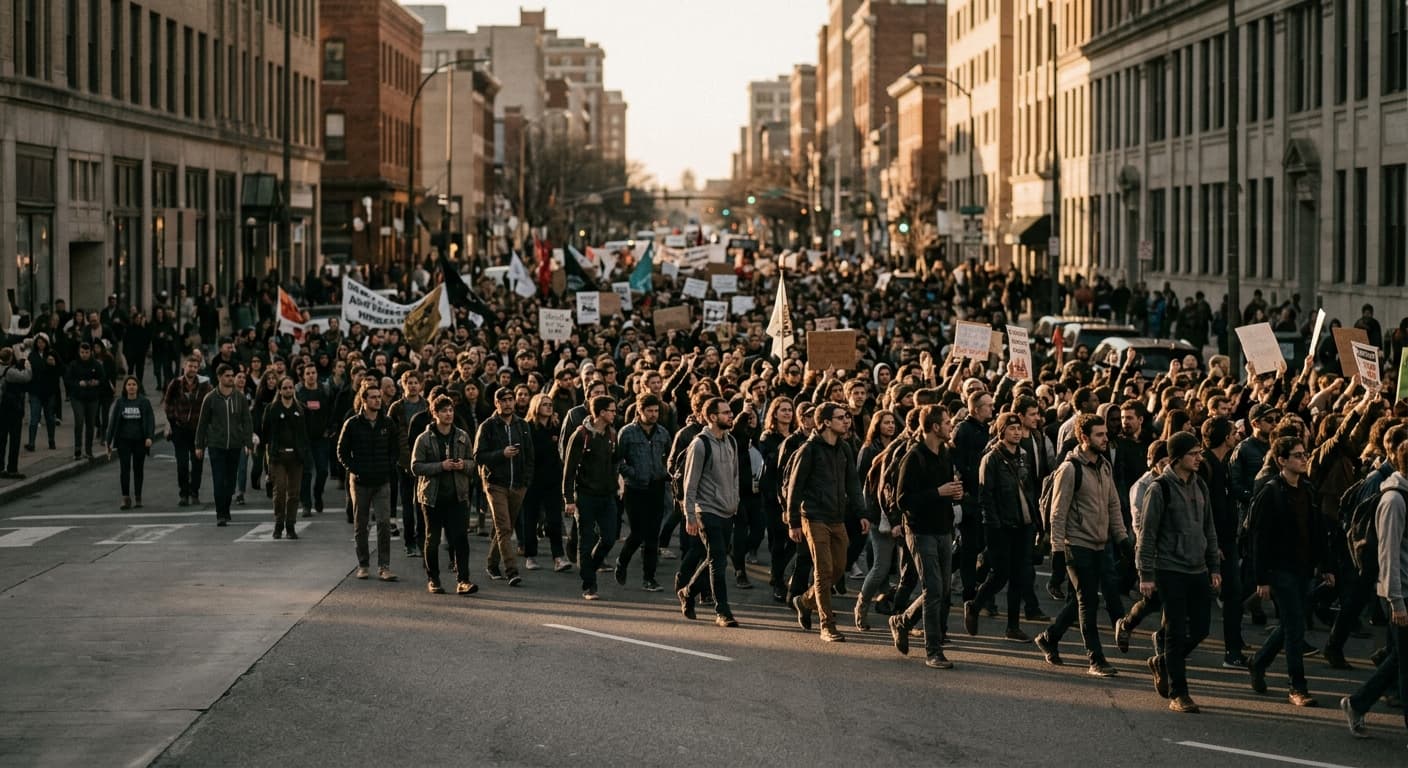
Recording police in North Carolina is legal and constitutionally protected. The Fourth Circuit recognized filming and livestreaming police as First Amendment-protected activity in Sharpe v. Winterville Police Dep't, 59 F.4th 674 (4th Cir. 2023), though the court found that right was not yet clearly established for qualified-immunity purposes as of the 2018 traffic stop at issue in that case. Under N.C. Gen. Stat. 15A-287, you may record your own encounters without notice; body camera access requires a court petition.
Recording police officers in North Carolina is legal, and this right is protected by the First Amendment to the United States Constitution. Whether you are filming a traffic stop, recording an arrest in a public park, or livestreaming your own encounter with law enforcement, North Carolina law supports your ability to create a record of police activity. At the same time, the state has enacted specific rules about access to police body camera footage that are among the most restrictive in the country.
This guide covers your right to record police in North Carolina, the limitations on that right, how body camera and dashboard camera footage works under state law, and what you should know about your practical rights during encounters with law enforcement.
Your Right to Record Police in Public
First Amendment Protection
The right to record law enforcement officers performing their official duties in public is grounded in the First Amendment. Federal courts, including the Fourth Circuit Court of Appeals (which covers North Carolina), have recognized that recording police activity serves important First Amendment interests in free speech and government accountability.
The controlling Fourth Circuit precedent is Sharpe v. Winterville Police Department, 59 F.4th 674 (4th Cir. 2023), cert. denied (Jun. 24, 2024). This case arose from an October 9, 2018 traffic stop in Pitt County, North Carolina, in which Dijon Sharpe was a passenger, not from a protest -- making it the most directly NC-relevant record-the-police ruling in the country. The Fourth Circuit held that livestreaming a police traffic stop is speech protected by the First Amendment, and it vacated and remanded Sharpe's claim against the Town of Winterville over its alleged no-livestreaming policy for further proceedings. But the court also held that this right was not clearly established at the time of the 2018 stop, so it affirmed qualified immunity for the individual officer who tried to stop Sharpe from livestreaming. Sharpe confirms that the First Amendment protects livestreaming as well as passive recording of police encounters going forward, but it did not create a right an officer could be held individually liable for violating back in 2018, and the Town's policy has not yet been resolved on the merits.
This right applies to anyone, not just journalists or members of the media. Private citizens, bystanders, activists, and anyone else present in a public space can record police officers without restriction, subject to reasonable limitations on interference.
What You Can Record
In North Carolina, you can legally record:
- Traffic stops, including your own and those of other people visible from public spaces
- Arrests happening in public view
- Police interactions with members of the public on streets, sidewalks, and other public areas
- Your own encounters with police officers during stops, investigations, or questioning
- Public protests and demonstrations where police are present
- Police activity visible from your own property
- Checkpoints and other law enforcement operations conducted in public
North Carolina's One-Party Consent Framework
Beyond the First Amendment, North Carolina's one-party consent law (N.C. Gen. Stat. 15A-287) provides additional protection for recording your own interactions with police. Because you are a party to the conversation, your consent alone is sufficient to make the recording legal. You do not need to tell the officer you are recording.
For bystander recordings where you are not a party to the conversation between the officer and another person, the analysis shifts to the reasonable expectation of privacy standard. Officers performing duties in public generally do not have a reasonable expectation of privacy in their official actions and statements, making bystander recordings generally permissible.
Limitations on Recording Police
Do Not Interfere With Police Operations
Your right to record ends where interference begins. You cannot:
- Physically block officers from performing their duties
- Stand so close to an arrest or investigation that you impede the officers' ability to work safely
- Enter a crime scene or restricted area to get a better recording angle
- Trespass on private property to record police activity
- Refuse to comply with a lawful order to move back to a safe distance
Interference with police activity can result in charges such as resisting, delaying, or obstructing a public officer under N.C. Gen. Stat. 14-223, which is a Class 2 misdemeanor.
Following Lawful Orders
Officers may instruct you to step back from a scene for safety reasons. These orders must be lawful and reasonable. A general order to "stop recording" is not a lawful order, because recording in public is a constitutionally protected right. However, an order to "move back to the sidewalk" or "step behind the yellow tape" is typically lawful if it relates to safety or scene security.
If an officer orders you to stop recording, you should:
- Calmly state that you are exercising your right to record in a public space
- Comply with any reasonable order to move to a different location
- Continue recording from the new location if possible
- Note the officer's name and badge number
- File a complaint with the department if you believe your rights were violated
Recording Inside Police Stations
Recording inside police stations is more restricted than recording in public. Police stations are government buildings, but they often have secured areas where recording is not permitted. Public areas like lobbies may allow recording, but booking areas, interview rooms, and secure offices typically do not. Follow posted policies and instructions from officers.
Body Camera Laws in North Carolina: HB 972
Overview of the Law
North Carolina enacted HB 972 (Session Law 2016-88) in 2016, codified at N.C. Gen. Stat. § 132-1.4A, establishing rules for law enforcement recordings from body-worn cameras and dashboard cameras. The law took a controversial approach by declaring that these recordings are not public records under North Carolina's public records law.
This means that unlike many other states where body camera footage can be obtained through standard public records requests, North Carolina requires a different process for accessing police recordings.
Who Can Request Footage
Under HB 972, the following people can request disclosure of body camera or dashboard camera footage:
- A person whose image or voice is in the recording (or their authorized representative)
- A personal representative of a deceased person whose image or voice appears in the recording
- The parent or guardian of a minor whose image or voice appears in the recording
The request must be made in writing to the head of the law enforcement agency that made the recording. The agency head has discretion to grant or deny the request.
What the Agency Can Release
When a request is granted, the law enforcement agency may release only those portions of the recording that are relevant to the person's request. The agency is not required to release the entire recording. It can redact or withhold portions that:
- Reveal the identity of a confidential informant
- Compromise an active investigation
- Endanger the life or safety of any person
- Contain information about a minor
- Include footage from inside a private residence
Public Access: The Court Petition Process
Members of the general public who do not appear in a recording must file a civil lawsuit in Superior Court to obtain access. The court will conduct an in-camera review (private viewing) of the recording and weigh the public interest in disclosure against the law enforcement interest in withholding it.
This process can be time-consuming and expensive, which critics argue undermines police accountability. The North Carolina Attorney General's Office has supported broader access to body camera footage as part of its open government initiatives.
Agency Retention Requirements
N.C.G.S. § 132-1.4A does not set its own retention period; it defers to a records retention and disposition schedule issued by the North Carolina Department of Natural and Cultural Resources (DNCR). Under that schedule:
- 30 days for recordings not made part of a case file (routine interactions that did not result in arrest, citation, or complaint)
- Recordings made part of a case file are retained far longer than "until disposition": 20 years after a felony case is solved, 3 years after a misdemeanor case is solved, or indefinitely while the case remains unsolved
Agencies must also adopt written policies governing the use, maintenance, and storage of body-worn cameras and dashboard cameras.
Dashboard Camera Footage
Access Rules
Dashboard camera recordings follow the same access rules as body camera footage under HB 972. They are not public records, and the same request and court petition processes apply.
Civilian Dashcam Recordings of Police
Your personal dashcam recordings of police encounters are your own property and are not subject to HB 972. If your dashcam captures a traffic stop, an accident scene, or another police encounter, you have the right to keep, share, and publish that footage. Police cannot seize your dashcam or delete your recordings without a court order.
What to Do If Police Try to Stop You From Recording
Know Your Rights
Police officers in North Carolina cannot legally:
- Order you to stop recording in a public space (as long as you are not interfering)
- Seize your phone or camera without a warrant or court order
- Delete your recordings
- Demand that you unlock your phone to review your recordings
- Arrest you solely for recording them
If Your Phone Is Seized
If an officer takes your phone or camera, the U.S. Supreme Court's decision in Riley v. California, 573 U.S. 373 (2014) established that police generally need a warrant to search the contents of a cell phone. This includes any recordings stored on the device.
If your device is seized:
- Do not physically resist the seizure
- Clearly state that you do not consent to any search of your device
- Note the officer's name, badge number, and department
- File a formal complaint with the law enforcement agency
- Consult with an attorney about your rights and potential remedies
Filing Complaints
If you believe your recording rights were violated, you can:
- File a complaint with the law enforcement agency's internal affairs division
- Contact the ACLU of North Carolina
- File a Section 1983 civil rights lawsuit in federal court if your constitutional rights were violated
- Report the incident to the NC Department of Justice
Recording Police During Protests and Demonstrations
North Carolina has a history of significant protests and demonstrations. Your right to record police during these events is the same as in any other public setting. You can:
- Record police presence, tactics, and interactions with demonstrators
- Livestream police activity on social media platforms
- Use multiple cameras or recording devices simultaneously
- Share recordings with media organizations, attorneys, and advocacy groups
During large-scale demonstrations, police may establish restricted zones or issue dispersal orders. You must comply with lawful dispersal orders, but you can continue recording as you move to comply.
Using Police Encounter Recordings as Evidence
Admissibility in Court
Recordings of police encounters that are made legally under North Carolina's one-party consent law and First Amendment protections are generally admissible in court. They can serve as evidence in:
- Criminal defense cases (to challenge police testimony or establish what happened during an encounter)
- Civil rights lawsuits (Section 1983 claims against officers or departments)
- Complaints to police oversight bodies
- Police disciplinary proceedings
Preserving Your Recording
If your recording may become evidence:
- Save the original file immediately and do not edit it
- Create backup copies stored in a separate location (cloud storage, a different device)
- Note the date, time, location, and circumstances of the recording
- Do not post the recording on social media until you have consulted with an attorney
- Be prepared to testify about the circumstances under which the recording was made
Ongoing Debate: Transparency vs. Privacy
Criticism of HB 972
Since its enactment in 2016, HB 972 has faced sustained criticism from civil rights organizations, journalists, and transparency advocates who argue that the law makes it too difficult for the public to access police recordings. Critics point out that:
- The court petition process creates a financial barrier that disproportionately affects lower-income communities
- Agencies have broad discretion to deny requests, with limited accountability
- The law was enacted in the wake of national protests over police use of force, at a time when other states were moving toward greater transparency
Calls for Reform
Multiple legislative efforts have sought to amend or repeal HB 972 to make body camera footage more accessible. The NC Department of Justice has supported reforms that would treat body camera recordings as public records with appropriate exceptions for privacy and ongoing investigations.
As of 2026, the core provisions of HB 972 remain in effect, and North Carolina continues to have one of the most restrictive body camera footage access frameworks in the country.
North Carolina Recording Laws by Topic
Phone Call Recording | Audio Recording | Video Recording | Workplace Recording | Recording Police | Security Cameras | Recording in Public | Landlord-Tenant | Dashcam Laws | Schools | Medical Recording | Voyeurism & Hidden Cameras
Back to North Carolina Recording Laws
More North Carolina Recording Topics
More North Carolina Laws
Frequently Asked Questions
Can I record police officers in North Carolina?
Yes. The First Amendment protects your right to record law enforcement officers performing their duties in public. North Carolina's one-party consent law also allows you to record your own interactions with police without notifying them. You must not interfere with police operations, trespass, or obstruct officers while recording.
Can police order me to stop recording in North Carolina?
No. A general order to stop recording in a public space is not a lawful order because recording police in public is a constitutionally protected right. Officers can give lawful orders to step back for safety reasons, but they cannot order you to stop recording entirely. If this happens, calmly assert your rights and file a complaint afterward.
How do I get police body camera footage in North Carolina?
If your image or voice appears in the recording, you can request disclosure in writing from the head of the law enforcement agency. If you do not appear in the footage, you must file a civil lawsuit in Superior Court. Body camera recordings are not public records under HB 972 (Session Law 2016-88).
Can police confiscate my phone for recording them in North Carolina?
Police generally cannot seize your phone without a warrant. Under the Supreme Court's ruling in Riley v. California (2014), police need a warrant to search cell phone contents. If an officer takes your phone, clearly state that you do not consent to any search, note the officer's information, and consult an attorney.
Can I livestream police encounters in North Carolina?
Yes. Livestreaming police activity on social media platforms is protected under the First Amendment, just like any other form of recording in a public space. You can livestream traffic stops, arrests, protests, and other police activity as long as you are not interfering with police operations or trespassing.
Updates
Corrected our description of Sharpe v. Winterville Police Dep't (4th Cir. 2023): the court recognized recording and livestreaming police as First Amendment-protected activity, but held that right was not clearly established in 2018 and granted the individual officer qualified immunity, while sending the town's no-livestreaming policy back to the lower court unresolved. Also corrected the underlying incident from a protest to a traffic stop in which the plaintiff was a passenger, and fixed a source link that pointed to an unrelated 4th Circuit opinion.
Independently fact-checked against the cited primary sources
Corrected the body/dashcam retention period the article attributed directly to N.C.G.S. 132-1.4A. The statute sets no fixed period itself and defers to the DNCR records retention schedule, which specifies 30 days (not 45) for non-evidentiary recordings, and up to 20 years (felony) / 3 years (misdemeanor) after a case is solved -- not merely 'until final disposition' -- for recordings made part of a case file.
Governing law re-checked for recent changes
Added Sharpe v. Winterville Police Dep't, 59 F.4th 674 (4th Cir. 2023) as controlling 4th Circuit precedent (Pitt County, NC facts); cert denied Jun 24 2024. Added N.C. Gen. Stat. § 132-1.4A citation for body-cam statute. Updated KeyTakeaways to surface Sharpe. Fixed ncleg.net URLs to ncleg.gov. Added Sharpe and § 132-1.4A to SourcesList.
Reviewed and approved by an editor
The Law Behind This Article
This article rests on the statutory provisions below, held in our own legal record and retrieved from the official source. Tap a section to read the operative text.
North Carolina General Statutes, Chapter 15A: Criminal Procedure Act.
§ 15A-287Interception and disclosure of wire, oral, or electronic communications prohibitedIn forcecited in 18 of our articles
(a) Except as otherwise specifically provided in this Article, a person is guilty of a Class H felony if, without the consent of at least one party to the communication, the person: (1) Willfully intercepts, endeavors to intercept, or procures any other person to intercept or endeavor to intercept, any wire, oral, or electronic communication. (2) Willfully uses, endeavors to use, or procures any other person to use or endeavor to use any electronic, mechanical, or other device to intercept any oral communication when: a. The device is affixed to, or otherwise transmits a signal through, a wire, cable, or other like connection used in wire communications; or b. The device transmits communications by radio, or interferes with the transmission of such communications.
Official text (excerpt) · last checked 2026-07-29 · Read the full text in our law library · Verify at ncleg.gov
Cited in 12 court opinions in our collectionLatest citing opinion in our collection: 2026
In the courts (editorial summary, independently checked):North Carolina courts apply Section 15A-287 to private recording. Kroh v. Kroh (2002) held it reaches one spouse's nonconsensual audio recording of the other in the family home, not video without sound, and adopted vicarious consent by a custodial parent. State v. McGriff (2002) held interception is not willful absent a bad purpose.
Opinions citing this section in our collection:
- State v. McGriff (Court of Appeals of North Carolina 2002, 151 N.C. App. 631)✓A neighbor's cordless phone picked up a call in which a girl said McGriff had tried to force oral sex on her, and she listened about an hour; the court held listening out of concern for a minor was not willful interception under Section 15A-287(a)(1), so the evidence came in.
- Wright v. TOWN OF ZEBULON (Court of Appeals of North Carolina 2010, 202 N.C. App. 540)✓A police chief hid a transmitter under a sergeant's patrol car seat to test whether he tipped off drug dealers; the court affirmed summary judgment on his Section 15A-287(a)(1) claim, finding the public safety purpose meant the interception was not willful.
- Kroh v. Kroh (Court of Appeals of North Carolina 2002, 152 N.C. App. 347)“…rs to intercept, . . . any . . . oral . . . communication.” G.S. § 15A-287(a)(l). An “oral communication” includes…”
Identified automatically from the court opinions citing this section — not a ranking of which case controls.
Also relied on in: North Carolina Smart Glasses Recording Laws 2026, North Carolina Video Recording Laws: Public, Private, and Voyeurism Rules, North Carolina Recording Laws (2026): One-Party Consent Rules
North Carolina General Statutes, Chapter 132: Public Records.
§ 132-1.4ALaw enforcement agency recordingsIn forcecited in 5 of our articles
(a) Definitions. - The following definitions apply in this section: (1) Body-worn camera. - An operational video or digital camera or other electronic device, including a microphone or other mechanism for allowing audio capture, affixed to the uniform or person of law enforcement agency personnel and positioned in a way that allows the camera or device to capture interactions the law enforcement agency personnel has with others. (2) Custodial law enforcement agency. - The law enforcement agency that owns or leases or whose personnel operates the equipment that created the recording at the time the recording was made. (3) Dashboard camera. - A device or system installed or used in a law enforcement agency vehicle that electronically records images or audio depicting interaction with others by law enforcement agency personnel. This term does not include body-worn cameras. (4) Disclose or disclosure. - To make a recording available for viewing or listening to by the person requesting disclosure, at a time and location chosen by the custodial law enforcement agency. This term does not include the release of a recording. (5) Personal representative.
Official text (excerpt) · last checked 2026-08-31 · Read the full text in our law library · Verify at ncleg.gov
Also relied on in: North Carolina Police Body Camera Laws: Access & Court Petitions, North Carolina Public Records Law and Body-Camera Access (2026), North Carolina Police Reports: How to Get a Crash or Incident Report
North Carolina General Statutes, Chapter 14: Criminal Law.
§ 14-223Resisting officersIn force
(a) If any person shall willfully and unlawfully resist, delay or obstruct a public officer in discharging or attempting to discharge an official duty, the person is guilty of a Class 2 misdemeanor. (b) If any person shall willfully and unlawfully resist, delay, or obstruct a public officer in discharging or attempting to discharge an official duty, and the resistance, delay, or obstruction is the proximate cause of a public officer's serious injury, the person is guilty of a Class I felony. (c) If any person shall willfully and unlawfully resist, delay, or obstruct a public officer in discharging or attempting to discharge an official duty, and the resistance, delay, or obstruction is the proximate cause of a public officer's serious bodily injury, the person is guilty of a Class F felony. (d) "Serious bodily injury" is defined as bodily injury that creates a substantial risk of death, or that causes serious permanent disfigurement, coma, a permanent or protracted condition that causes extreme pain, or permanent or protracted loss or impairment of the function of any bodily member or organ, or that results in prolonged hospitalization. (1889, c. 51, s. 1; Rev., s.
Official text (excerpt) · last checked 2026-07-29 · Read the full text in our law library · Verify at ncleg.gov
Cited in 159 court opinions in our collectionLatest citing opinion in our collection: 2026
Opinions citing this section in our collection:
- State v. Sparrow (Supreme Court of North Carolina 1970, 276 N.C. 499)“…their duty, and in *512 terference would be a violation of G.S. 14-223. Marvin’s and Katherine’s right to inte…”
- State v. Leigh (Supreme Court of North Carolina 1971, 278 N.C. 243)“…verdict as being against the weight of the evidence. G.S. 14-223 provides: “If any person shall w…”
- State v. Fenner (Supreme Court of North Carolina 1965, 263 N.C. 694)“…as properly overruled. *699 — II — G.S. 14-223 provides: “If any person shall wilfully…”
Identified automatically from the court opinions citing this section — not a ranking of which case controls.
Explore the law
This article also draws on these acts and chapters (opening at their first section): North Carolina General Statutes, Chapter 15A: Criminal Procedure Act. § 15A-101 (Definitions)
Related law for further reading — not part of this article’s citations.
Search our full record of US law — 2.1 million sections, every state + federal →
Sources and References
- N.C. Gen. Stat. Chapter 15A, Article 16 - Electronic Surveillance(ncleg.gov).gov
- HB 972 (Session Law 2016-88) - Law Enforcement Recordings(ncleg.gov).gov
- N.C. Gen. Stat. 14-223 - Resisting Officers(ncleg.net).gov
- NC DOJ - Open Government(ncdoj.gov).gov
- Riley v. California, 573 U.S. 373 (2014)(supremecourt.gov).gov
- NC Courts Structured Sentencing Punishment Grids(nccourts.gov).gov
- N.C. Gen. Stat. 14-223 - Resisting, Delaying, or Obstructing Officers(ncleg.gov).gov
- Sharpe v. Winterville Police Dep't, 59 F.4th 674 (4th Cir. 2023)(ca4.uscourts.gov).gov
- N.C. Gen. Stat. § 132-1.4A - Recordings of Law-Enforcement Agency(ncleg.gov).gov