
Indiana
Indiana Laws on Recording Police: Your Rights and the 25-Foot Buffer Law
Independently fact-checked against primary sources (last audited August 15, 2026). · Reviewed by the RecordingLaw editorial team. · Law checked current as of August 7, 2026. · 4 primary sources cited on this page. How we verify our legal content
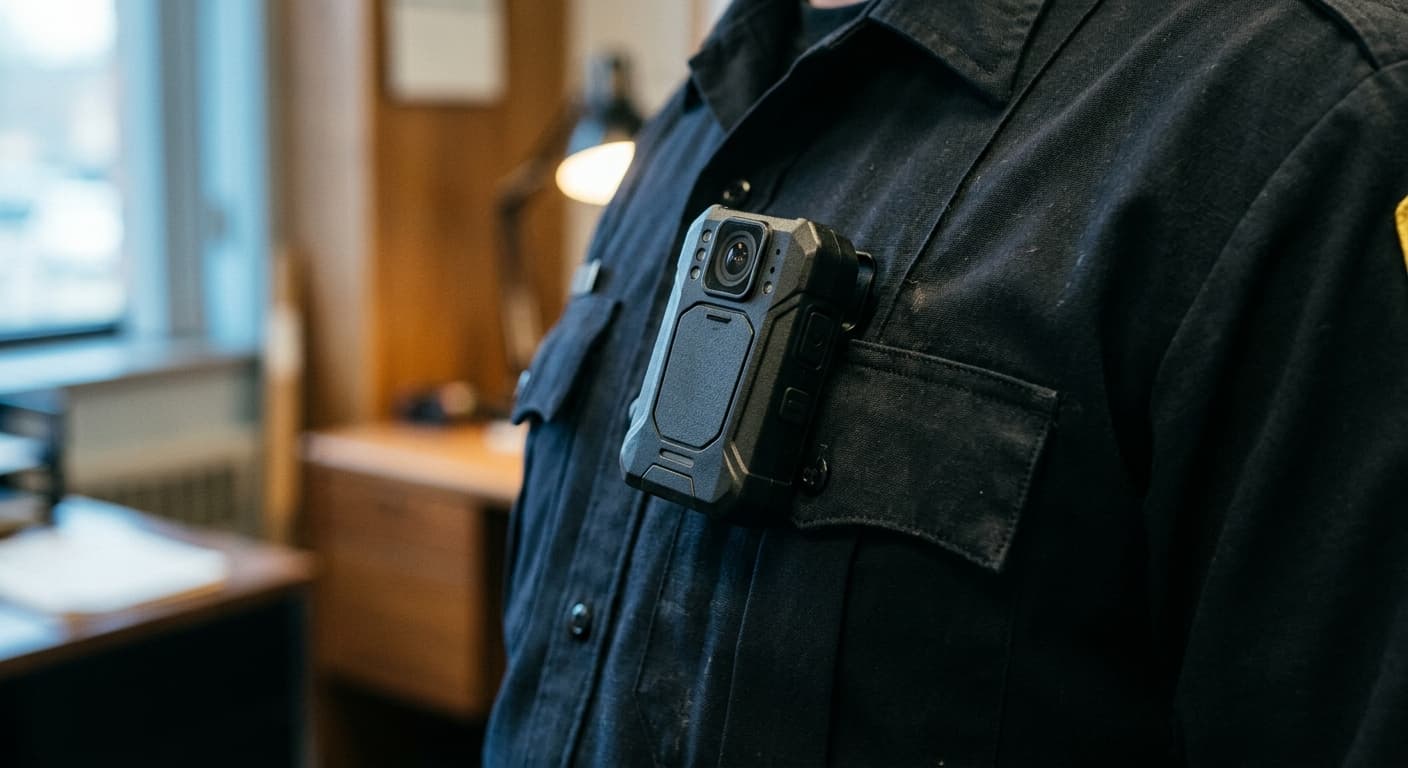
Indiana residents have a First Amendment right to record police officers in public. Under IC 35-33.5-5, you may also record your own police interactions without consent. Indiana's 25-foot buffer zone law (IC 35-44.1-2-14) remains valid, enforceable law: the Seventh Circuit affirmed it as constitutional in Nicodemus v. City of South Bend, 137 F.4th 654 (7th Cir. May 15, 2025).
Recording police officers in Indiana is protected by the First Amendment and by Indiana's one-party consent wiretapping law. You have the right to film law enforcement activity in public spaces, record your own interactions with officers, and livestream police encounters. This guide covers the constitutional basis for recording police, Indiana's enforceable 25-foot buffer zone law, practical guidelines for safely filming officers, and what to do if police tell you to stop recording.
Your Constitutional Right to Record Police
The First Amendment Foundation
The First Amendment to the United States Constitution protects the right to record law enforcement officers performing their public duties. Multiple federal circuit courts have recognized this right, and the Seventh Circuit Court of Appeals, which has jurisdiction over Indiana, Illinois, and Wisconsin, is among them.
In ACLU v. Alvarez (7th Cir. 2012), the Seventh Circuit held that the act of making an audio or audiovisual recording is protected by the First Amendment as a corollary of the right to disseminate the resulting recording. This means your right to record police is not just a practical privilege but a constitutionally protected activity.
What You Can Record
You can legally record police officers in Indiana when:
- Officers are in public spaces. Any police activity occurring on public streets, sidewalks, parks, or other public areas is subject to recording.
- You are witnessing a traffic stop. You can film traffic stops from the sidewalk, your vehicle, or any public vantage point.
- An arrest is taking place in public. Arrests occurring in public view can be filmed.
- Officers are interacting with you directly. You can record your own conversations with police under Indiana's one-party consent law (IC 35-33.5-5).
- You are at a public protest or demonstration. Recording police activity at protests is protected.
- Officers are entering or exiting a public building. You can film from public areas outside police stations, courthouses, and government buildings.
What You Cannot Do While Recording
Your right to record does not override other laws:
- Do not physically interfere with police operations. Standing in the way of an arrest, blocking a patrol car, or reaching toward officers constitutes obstruction.
- Do not trespass. You must stay in areas where you have a legal right to be. Entering private property, crossing police tape, or entering restricted areas to get a better angle is illegal.
- Do not resist lawful orders. If police are conducting a lawful operation and order you to move for safety reasons, you should comply while continuing to record from a farther distance.
- Do not tamper with a crime scene. Entering or disturbing a crime scene to film evidence is illegal.
The 25-Foot Buffer Zone Law and Its Current Status
House Bill 1186: What It Said
In April 2023, Governor Eric Holcomb signed House Bill 1186 into law. Effective July 1, 2023, the law made it a Class C misdemeanor (up to 60 days in jail and a $500 fine) to knowingly or intentionally approach within 25 feet of a law enforcement officer who is lawfully engaged in the execution of duties, after the officer has ordered the person to stop approaching.
Critics, including the ACLU of Indiana, argued that the law was designed to prevent citizens from recording police and undermined First Amendment accountability protections.
Nicodemus v. City of South Bend
Donald Nicodemus, a citizen journalist from South Bend who regularly films and livestreams police activity, challenged the law after officers used it against him while he was recording a police response to reports of gunfire in July 2023. Nicodemus argued he was already more than 25 feet away when officers ordered him to move back, and then a second officer ordered him to retreat an additional 25 feet.
The case progressed through the courts:
- District Court (2024). The Northern District of Indiana held a full bench trial, found the buffer law facially constitutional (only an incidental burden on First Amendment rights), denied Nicodemus's request for an injunction, and entered final judgment for the city.
- Seventh Circuit (May 15, 2025). The U.S. Court of Appeals for the Seventh Circuit affirmed. The panel held that IC 35-44.1-2-14 is a content-neutral time, place, and manner restriction that leaves open ample alternative channels for recording police, and it did not reach a vagueness challenge because Nicodemus had disavowed that theory before the district court and did not raise it on appeal.
The Seventh Circuit clarified that the buffer law is not a "force field": it does not let an officer order someone who is already standing still, or who is not currently approaching, to retreat, and it does not restrict continued recording from a fixed position after a lawful stop-approaching order.
Current Status
As of 2026, Indiana's 25-foot buffer zone law is valid and enforceable. The Seventh Circuit's affirmance in Nicodemus is final; the case was not remanded. Knowingly or intentionally continuing to approach within 25 feet of an officer after being told to stop is a Class C misdemeanor.
You can still record from where you already are, from farther than 25 feet, or from a stationary position after an officer's stop-approaching order, since the law restricts approaching, not recording. If an officer orders you to stop approaching, comply and keep recording from that spot.
Recording Your Own Interactions With Police

Traffic Stops
You can record your own traffic stop in Indiana. Under one-party consent:
- You can use your phone to record audio and video of the interaction
- You can use a dashcam that captures the encounter
- You do not need to inform the officer that you are recording
- Passengers can also record the interaction
If an officer asks you to stop recording during a traffic stop, you are not legally required to comply. However, you should remain calm, keep your hands visible, and avoid making sudden movements. The recording itself is your best protection.
Arrests and Detentions
If you are being arrested or detained, you can continue recording as long as it is physically possible. Officers cannot legally seize your phone or delete recordings without a warrant. The Supreme Court ruled in Riley v. California (2014) that police generally need a warrant to search a cell phone.
DCS and Government Agency Encounters
You can record interactions with Department of Child Services (DCS) workers, code enforcement officers, building inspectors, and other government officials who visit your home or interact with you. These officials are performing government duties, and your one-party consent provides the legal basis for recording.
Recording Public Meetings and Government Proceedings

Indiana's Open Door Law
Indiana's Open Door Law (IC 5-14-1.5) requires public meetings to be open to the public. Recording of public meetings is generally permitted. You can record:
- City and town council meetings
- County commission meetings
- School board meetings
- State legislative proceedings
- Public hearings
Livestreaming Requirements (Effective July 1, 2025)
HEA 1306-2024 amended Indiana's Open Door Law to require local government bodies to livestream and archive all public meetings. Key provisions include:
- Governing bodies must post live video transmissions on a publicly accessible platform
- Recordings must be archived along with the agenda and minutes
- Archives must remain available for at least 90 days
- The public can inspect and download recordings without charge
- Technological failures do not invalidate actions taken during the meeting
This law applies to counties, cities, towns, townships, school boards with elected members, and state agencies. Noncompliance can be reported to Indiana's Public Access Counselor.
What to Do If Police Tell You to Stop Recording
Stay Calm and Assert Your Rights
If a police officer tells you to stop recording:
- Remain calm and polite. Confrontational behavior can escalate the situation.
- State that you are exercising your First Amendment right. You can say: "I am recording from a public area and I am not interfering with your duties."
- Do not physically resist. If police attempt to take your phone, do not fight over it. Note the officers' names and badge numbers.
- Continue recording if possible. If you can safely keep recording, do so. The recording itself may become evidence of any rights violation.
- File a complaint afterward. Contact the department's internal affairs division, the ACLU of Indiana, or a civil rights attorney.
Your Phone Cannot Be Searched Without a Warrant
Under Riley v. California (2014), police generally need a warrant to search a cell phone, even during a lawful arrest. An officer cannot demand you unlock your phone, show them your recordings, or delete footage without a court order.
If police seize your phone, note:
- The officer's name and badge number
- The time and location of the seizure
- Whether any reason was given
- Names and contact information of any witnesses
Body Cameras and Dash Cameras on Police Vehicles
Indiana Law Enforcement Recording Policies
The Indiana State Police and many local departments use body-worn cameras and dash cameras. Indiana does not have a statewide mandate requiring all officers to wear body cameras, but many departments have adopted them voluntarily.
Body camera footage is generally subject to Indiana's public records law (IC 5-14-3), though certain exemptions apply for recordings that:
- Capture images of crime victims
- Contain information about ongoing investigations
- Show the interior of a private residence
- Include recordings made in healthcare facilities
Requesting Police Recordings
You can request body camera or dash camera footage through Indiana's Access to Public Records Act. Departments may charge reasonable fees for copies. If your request is denied, you can appeal to the Public Access Counselor.
Practical Tips for Recording Police
Equipment and Setup
- Use your smartphone. Modern phones produce high-quality video and audio.
- Enable cloud backup. Apps like ACLU's Mobile Justice automatically upload footage to a remote server, protecting it from deletion.
- Hold your phone steady. Landscape orientation provides a wider view.
- Maintain a safe distance. Stay far enough away to avoid claims of interference, but close enough to capture clear audio and video.
What to Capture
- Officers' faces, badge numbers, and patrol car numbers
- The location and time of the encounter
- Any use of force
- Statements made by officers and civilians
- The general scene and surrounding area
- Witness names and contact information when possible
More Indiana Recording Laws
Audio Recording | Video Recording | Voyeurism & Hidden Cameras | Workplace Recording | Recording Police | Phone Call Recording | Security Cameras | Recording in Public | Landlord-Tenant | Dashcam Laws | Schools | Medical Recording
Back to Indiana Recording Laws
More Indiana Recording Topics
More Indiana Laws
Frequently Asked Questions
Can I record police officers in Indiana?
Yes. The First Amendment protects your right to record police performing their duties in public. Indiana's one-party consent law also allows you to record your own direct interactions with officers without informing them.
Is Indiana's 25-foot buffer zone law still in effect?
Yes. The Seventh Circuit Court of Appeals affirmed the law as constitutional in Nicodemus v. City of South Bend, 137 F.4th 654 (7th Cir. May 15, 2025). IC 35-44.1-2-14 remains valid and enforceable: continuing to approach within 25 feet of an officer after being ordered to stop is a Class C misdemeanor. The law does not stop you from recording from where you are or from farther away.
Can police tell me to stop recording in Indiana?
Police can ask you to move for legitimate safety reasons, but they cannot order you to stop recording. If asked to move, comply with the distance request while continuing to record. If police seize your phone or delete footage, contact a civil rights attorney.
Can police search my phone or delete recordings?
No. Under Riley v. California (2014), police generally need a warrant to search a cell phone. Officers cannot demand you unlock your phone, show them your recordings, or delete footage without a court order.
Can I livestream police encounters in Indiana?
Yes. Livestreaming police activity is protected by the First Amendment. Platforms like Facebook Live, Instagram Live, and YouTube Live allow real-time broadcasting. Livestreaming also creates a remote copy of the footage that cannot be deleted by seizing your phone.
Can I record at a public government meeting in Indiana?
Yes. Indiana's Open Door Law requires public meetings to be open, and recording is generally permitted. As of July 2025, HEA 1306-2024 also requires local government bodies to livestream and archive public meetings for at least 90 days.
Updates
Corrected this page's account of Nicodemus v. City of South Bend: the Seventh Circuit affirmed Indiana's 25-foot police buffer law (IC 35-44.1-2-14) as constitutional on May 15, 2025, rather than striking it down, so the buffer law remains in force. Also fixed a Public Access Counselor link that had been pointing to Indiana's emergency-communications office.
Independently fact-checked against the cited primary sources
Governing law re-checked for recent changes
Reviewed and approved by an editor
The Law Behind This Article
This article rests on the statutory provisions below, held in our own legal record and retrieved from the official source. Tap a section to read the operative text.
Indiana Code, TITLE 35. CRIMINAL LAW AND PROCEDURE
§ 35-33.5-5-5Nonapplicability to interceptions authorized under federal law; classification of offensesIn forcecited in 13 of our articles
Sec. 5. (a) This section does not apply to a person who makes an interception authorized under federal law. (b) A person who knowingly or intentionally intercepts a communication in violation of this article commits unlawful interception, a Level 5 felony. (c) A person who, by virtue of the person's employment or official capacity in the criminal justice system, knowingly or intentionally uses or discloses the contents of an interception in violation of this article commits unlawful use or disclosure of an interception, a Level 5 felony.
Official text (excerpt) · last checked 2026-08-28 · Read the full text in our law library · Verify at iga.in.gov
Cited in 2 court opinions in our collectionLatest citing opinion in our collection: 2007
Opinions citing this section in our collection:
- Edwards v. State (Indiana Court of Appeals 2007, 862 N.E.2d 1254)“…or disclosure of an interception, a Class C felony. I.C. § 35-33.5-5-5. The Indiana Wiretap Act defines interc…”
- State of Indiana v. John Lombardo (Indiana Supreme Court 2000)“…disclosure of an interception, a Class C felony. Ind. Code § 35-33.5-5-5 (1993) (emphases added). The statute…”
Identified automatically from the court opinions citing this section — not a ranking of which case controls.
United States Code Title 18
§ 2511Interception and disclosure of wire, oral, or electronic communications prohibitedIn forcecited in 418 of our articles
Except as otherwise specifically provided in this chapter any person who— intentionally intercepts, endeavors to intercept, or procures any other person to intercept or endeavor to intercept, any wire, oral, or electronic communication; intentionally uses, endeavors to use, or procures any other person to use or endeavor to use any electronic, mechanical, or other device to intercept any oral communication when— such device is affixed to, or otherwise transmits a signal through, a wire, cable, or other like connection used in wire communication; or such device transmits communications by radio, or interferes with the transmission of such communication; or such person knows, or has reason to know, that such device or any component thereof has been sent through the mail or transported in interstate or foreign commerce; or such use or endeavor to use (A) takes place on the premises of any business or other commercial establishment the operations of which affect interstate or foreign commerce; or (B) obtains or is for the purpose of obtaining information relating to the operations of any business or other commercial establishment the operations of which affect interstate or foreign…
Official text (excerpt) · last checked 2026-08-28 · Read the full text in our law library · Verify at uscode.house.gov
Cited in 2,045 court opinions in our collectionLatest citing opinion in our collection: 2026
In the courts (editorial summary, independently checked):Griggs-Ryan v. Smith (1990) applied the Section 2511(2)(d) prior-consent exception, treating a tenant repeatedly told that all incoming calls were taped as having impliedly consented. United States v. United States District Court (1972) read the then-current Section 2511(3) as conferring no presidential surveillance power.
Opinions citing this section in our collection:
- Mitchell v. Forsyth (Supreme Court of the United States 1985, 472 U.S. 511)✓The Attorney General authorized a warrantless 1970 national security wiretap that caught the plaintiff's calls; the Court held the since-repealed Section 2511(3) disclaimer left the tap lawful under Title III, and that Mitchell had qualified immunity.
- United States v. United States District Court for the Eastern District of Michigan (Supreme Court of the United States 1972, 407 U.S. 297)✓The Attorney General approved warrantless wiretaps on members of a domestic group accused of bombing a CIA office; the Court read Section 2511(3) as a congressional disclaimer conferring no surveillance power, then held the Fourth Amendment required prior judicial approval.
- Forsyth v. Barr (Court of Appeals for the Fifth Circuit 1994, 19 F.3d 1527)✓Dallas police used, in an internal affairs probe of an officer, calls private parties allegedly intercepted illegally; assuming that was unlawful, the Fifth Circuit held Section 2517(1) and (2) allowed the disclosure and use, defeating the Section 2511(1)(c) and (d) claims.
Identified automatically from the court opinions citing this section — not a ranking of which case controls.
Search our full record of US law — 2.1 million sections, every state + federal →
Sources and References
- Indiana Code IC 35-33.5-5(iga.in.gov).gov
- Nicodemus v. City of South Bend (7th Cir. 2025)(law.justia.com)
- Indiana Open Door Law(in.gov).gov
- Indiana State Police Recording Devices(in.gov).gov
- ACLU of Indiana - Recording Police(aclu-in.org)
- Indiana Public Access Counselor(in.gov).gov
- 18 U.S.C. 2511 - Federal Wiretap Act(law.cornell.edu)