How to Charge Someone With Trespassing
Independently fact-checked against primary sources (last audited August 5, 2026). · 14 primary sources cited on this page. How we verify our legal content

To charge someone with trespassing, first make clear your property is off-limits with a sign, fence, or locked door, then report the trespasser to local police or the sheriff's department. Officers can issue a no-trespass citation or make an arrest; criminal charges are then filed by the prosecutor.
If someone enters your property without permission, you may ask them to leave and call the police. If the person poses an immediate threat of death or serious bodily harm to you or your family, self-defense law in every state lets you protect yourself, and in some "stand your ground" and castle doctrine states you have no duty to retreat first. Using deadly force to protect property alone, without a threat to a person, is a much narrower and more state-specific question, so do not assume it is allowed where you live without checking your own state's law.
Quick take: What is trespassing?
- To prove criminal trespassing, you must generally show that the accused entered your land or property, that the property belongs to you, and that you did not consent to the entry.
- Some states also require proof that the trespasser caused damages.
- The accused must generally have shown 'intent to enter.'
- Under the castle doctrine, some states allow you to use a "reasonable response," which can include force, to protect yourself or your property.
- Most states do not authorize deadly force to defend property alone, separate from a threat to a person; the rules vary significantly by state, so check your own state's law.
- Adverse possession may allow trespassers to gain legal ownership of your land or property over time.
- A no trespassing sign is one of the best protections against adverse possession claims.
- Only government officials may restrict access to public property.
- On private land, it is up to the property owner to decide who gets in and who does not.
How to charge someone with trespassing
When you enter private property without permission from the owner, you violate your state's criminal trespass laws. Consequently, the property owner has the right to ask you to leave, call the police if you refuse to leave, and if you pose an immediate danger to the land or property owner, "stand your ground laws" allow property owners to defend themselves in some states.
Note: 'Stand your ground' should be a last resort, as confronting a trespasser may put you in additional danger.
Ideally, if you are in a position to do so, the first steps you should take would be to report the trespasser to the police or sheriff's department. When reporting someone, you should take specific notes of anything law enforcement may be able to use to identify the trespasser.
This includes notes such as:
- Height
- Gender
- Race
- Weight
- Clothing
- Car (make, model, and license plate)
- Personal information you may have about the trespasser (name or address)
After you have created a police report, if you are the property owner, you should receive some ongoing information from the police, such as a no-trespass citation and additional information about the case. The trespasser may appeal, get fined, receive a trespass warning, or even receive a jail sentence in more extreme cases.
For example, in Florida, Florida Statute 776.013 allows a person in their dwelling, residence, or occupied vehicle to use nondeadly or deadly force against someone who unlawfully and forcibly enters, under the specific conditions the statute lays out.
The statute reads in part:
"A person who is in a dwelling or residence in which the person has a right to be has no duty to retreat and has the right to stand his or her ground and use or threaten to use: (a) Nondeadly force against another when and to the extent that the person reasonably believes that such conduct is necessary to defend himself or herself or another against the other's imminent use of unlawful force; or (b) Deadly force if he or she reasonably believes that using or threatening to use such force is necessary to prevent imminent death or great bodily harm to himself or herself or another or to prevent the imminent commission of a forcible felony."
What if the police or the prosecutor will not act?
In most states, the decision to file criminal charges belongs to the prosecutor, and a private citizen cannot file them directly. A small number of states give citizens a formal route to ask for review of that decision.
Pennsylvania is one. Under Pennsylvania Rule of Criminal Procedure 506, when the person swearing out the complaint is not a law enforcement officer, the complaint goes to the attorney for the Commonwealth, who must approve or disapprove it without unreasonable delay.
If the prosecutor disapproves it, Rule 506 requires the attorney to state the reasons on the complaint form and return it to the affiant, and the affiant may then petition the court of common pleas to review that decision.
Note what the rule does not do. It does not let you bypass the prosecutor; it entitles you to a written reason and a path to judicial review. Whether your own state offers anything comparable is a question for your county's court clerk or district attorney's office, since this procedure is the exception rather than the norm.
What is legally considered trespass?
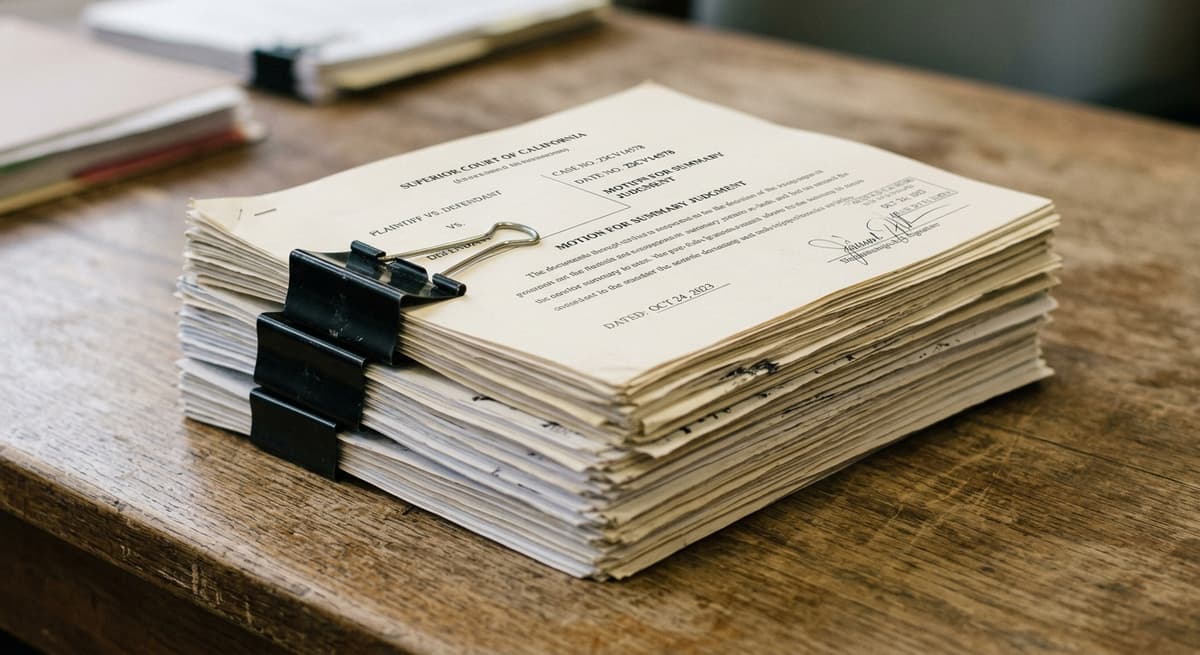
The definition of trespass varies depending on state law; however, the elements of the crime are similar. That means you are guilty of criminal trespass if you intentionally enter another person's property without permission and remain there.
What is the difference between criminal and non-criminal trespass?
Non-criminal trespass happens when you enter someone else's land or property accidentally. On the other hand, you are guilty of criminal trespass if you had intent or knew that you do not have permission to be on the land. For example, walking past a posted No Trespassing sign is strong evidence that you knew entry was forbidden.
What is the point of no trespass signs?
A posted sign is one recognized way of putting people on notice that entry is forbidden, but in most states it is not the only way, and for some forms of trespass it is not required at all. State statutes typically accept notice in several alternative forms, and the required form can change with the type of property and the grade of the offense.
Texas Penal Code Section 30.05, for example, defines notice as any of the following: oral or written communication by the owner or someone with apparent authority to act for the owner, fencing or another enclosure obviously designed to exclude intruders, posted signs reasonably likely to come to the attention of intruders, purple paint marks on trees or posts that meet the statute's size and spacing rules, or the visible presence of a crop grown for human consumption. Florida Statute 810.09 similarly accepts notice "either by actual communication to the offender or by posting, fencing, or cultivation."
Other states skip the notice element entirely for some forms of trespass. Under New York Penal Law 140.05, a person who knowingly enters or remains unlawfully on premises commits trespass, a violation, with no posting requirement; the offense becomes criminal trespass in the third degree, a class B misdemeanor, under New York Penal Law 140.10 when, among other situations, the property is fenced or otherwise enclosed in a manner designed to exclude intruders. And as the Alabama statute quoted later in this article shows, knowingly entering or remaining unlawfully in a dwelling can be first-degree criminal trespass with no sign, fence, or verbal warning required.
Signs still matter in practice. A conspicuous No Trespassing sign is often the easiest form of notice for a prosecutor to prove, and telling someone to leave, in person or in writing, gives notice in every state.
It is also worth noting that entering someone else's vehicle without permission constitutes trespassing.
In short, if you intend to pursue criminal charges against someone for trespass, you must make sure that:
- The accused entered your property or land of their own free will or on purpose. If the trespass was accidental, ask the individual to leave instead of pursuing criminal charges.
- You reasonably informed the trespasser that they were on private property, such as by posting a sign, building a fence, or locking the doors.
- The individual had intent, such as to commit a crime, damage property, or spy.
Can you be guilty of trespass in public spaces?
Yes. You may face trespass charges if you enter a restricted area, or if someone with the authority to ask you to leave does so and you ignore the request.
Public ownership does not mean open to everyone for every purpose. The First Amendment protects expressive activity in traditional public forums such as streets, sidewalks, and parks, but government property that is not a public forum, such as a military base or the secure areas of a courthouse, can be closed to the public entirely.
In short, what you need to remember is:
- You do not have the legal right to enter private property without the owner's permission.
- Consent to enter private property must come from the property owner, the lessee of a leased property, a business entity, or a group of owners, depending on who controls the property.
- Consent to enter could be verbal or in writing.
- Implied consent can be hard to prove or defend. Written or clearly stated verbal consent is safer for both sides.
That raises the question:
What are the three types of trespass?
There are three types of trespass, as explained below.
1. What is meant by a 'Trespass to the Person'?
If you intentionally interfere with someone else's body or liberty, you are guilty of trespass to the person. Examples of 'trespass to person' in the US include:
- Assault
- Battery
- False imprisonment
If you are a victim of false imprisonment, battery, or assault, you have the right to take civil action, and at the time of the crime, you have the right to protect yourself.
2. What is meant by trespass to chattels?
Trespass to chattels refers to the unauthorized use of property without consent from the property owner. To prove it, you must show that the accused dispossessed you of your property, the property/chattel's condition, quality, or the value was impaired, the accused possessed or used the item for a substantial time, and that harm to person or item occurred.
In other words, if someone uses your property without permission and damages it, you have the right to file a claim.
What to remember:
- 'Mistake of ownership' is not a valid defense in a chattel claim.
- The term 'chattel' refers to personal, movable property, such as an ATV, motorcycle, or laptop.
- In a chattel claim, you generally do not need to show 'intention of harm' to a person.
- The use of the item must have been unauthorized or unlawful.
3. What is meant by Trespass of land?
As mentioned, trespass to land occurs when you enter someone else's real property, such as land, a building, or a structure, without permission. For example, Alabama Code Section 13A-7-2, criminal trespass in the first degree, opens with a dwelling clause:
"A person is guilty of criminal trespass in the first degree if he knowingly enters or remains unlawfully in a dwelling ..."
That is an excerpt, not the full provision. Alabama amended the section in 2021 to reach beyond dwellings, extending first-degree criminal trespass to the premises of a licensed cannabis cultivator or processor, and to cultivation or processing operations that are part of an integrated facility, as those terms are defined in Alabama Code Section 20-2A-3. Read the section in full on the Alabama Legislature's Code of Alabama portal before relying on it.
In Alabama, criminal trespass in the first degree is a Class A misdemeanor. What counts as a "dwelling," the degrees of the offense, and the penalties involved all vary by state, so check your own state's statute for the rule that applies to you.
How do I remove a trespasser from my property?
If you fear for your safety, the first thing you should do is contact the police. To make it easier for the police to find the trespasser, you should describe the clothes the individual is wearing to the police, and the person's height, weight, race, or other identifying information.
Do you have the authority to restrict access to property?
Before you ask someone to leave, it is vital to ensure that you have the authority. For example, in a private building, only the property owner has the authority to restrict access, whereas, in public spaces, only government officials may restrict access to certain areas.
Can you defend yourself against a trespasser?
Yes. If the trespasser is an immediate threat to your person or someone else on your property, the law allows you to protect yourself. However, in most states, the law allows you to use a reasonable response when defending yourself or your property.
For example, Florida Statute 776.013 gives a person a presumption of reasonable fear of imminent death or great bodily harm when someone unlawfully and forcibly enters their dwelling, residence, or occupied vehicle. That presumption does not extend to a trespasser who is simply elsewhere on the property, though Florida Statute 776.012 can still justify deadly force anywhere a person is lawfully present, and not engaged in criminal activity, if the person reasonably believes it necessary to prevent imminent death or great bodily harm or the imminent commission of a forcible felony.
Can I forcibly remove a trespasser?
"Reasonable force" under state law means that you may use force that is objectively reasonable under the circumstances you find yourself in.
Therefore, if the situation makes it necessary to remove the trespasser using force, then you may use force to remove the trespasser.
It is best to consult your state's self-defense and castle doctrine laws to see whether your state recognizes a castle doctrine, and what penalties may apply if you use force to defend your land, since these rules vary significantly from state to state.
If you find yourself in legal trouble after defending your property, especially if someone was seriously hurt, it is best to consult with an experienced criminal defense attorney, since the encounter could raise questions about the difference between murder, homicide, and manslaughter.
What are your rights against trespassers?
In the US:
- You have the right to privacy on your own property.
- You may do what is reasonably necessary to protect yourself and your family.
- When acting in self-defense, your response should be proportional to the threat you face.
- If you attack a non-criminal trespasser without provocation, you risk a civil lawsuit and criminal assault charges yourself.
Can property owners sue trespassers?
Yes. If someone enters your property without consent and causes damage, you have the legal right to take civil action.
What is adverse possession of land or property?
In some states, a trespasser may occupy your land and gain ownership of it over time. The reason for that is the Adverse Possession Doctrine or Squatter's Rights.
How does it work?
- Someone may come onto your land intentionally or unintentionally and start living on it.
- The trespasser makes improvements to the land, such as planting a garden or building a structure.
- The trespasser possesses the property openly and continuously for a set statutory period. Those periods vary widely, running from 5 years in California, Montana, and Nevada, each of which also requires the occupant to have paid the property taxes for those years, to 30 years in Louisiana, and up to 60 years in New Jersey for woodlands or uncultivated tracts (New Jersey applies 30 years to other real estate), so the window depends entirely on which state the land sits in.
How do you prevent adverse possession?
If someone illegally occupies your land or property, what you should do is call the police. You may also use reasonable force to remove the individual.
What if the person has built a structure or made an improvement to your land?
If you allow the trespasser to stay on your land for too long, or if the individual develops the property, you may need a court order to have the trespasser removed.
That said, the best protection you have against adverse possession is installing trespass warnings in the form of trespassing signs on your land or giving written permission to anyone who frequently uses it. For example, if a neighbour frequently parks his vehicle on your property, make sure that the individual has written consent from you to do that.
What are the penalties for trespassing?
Penalties for trespassing vary significantly by state and by the facts of the case. Many states treat a first-time, non-violent trespass as a low-level misdemeanor, punishable by a warning, a fine, or a short jail sentence. As shown above, Alabama classifies first-degree criminal trespass into a dwelling as a Class A misdemeanor, for example.
Trespassing can be charged as a more serious offense, sometimes a felony, when aggravating factors are present, such as trespassing while armed, trespassing on certain critical infrastructure or agricultural facilities, repeat offenses, or conduct that overlaps with burglary, meaning entering with intent to commit another crime.
Critical infrastructure is the clearest example of that escalation, and several states have written separate statutes for it. Florida Statute 812.141 makes unauthorized entry onto a critical infrastructure facility, where notice against entry has been given, a felony of the third degree. That statute defines those facilities to include power generation and electrical sites, pipelines, chemical and manufacturing plants, water and wastewater treatment facilities, communications towers, railroads, seaports, and dams.
West Virginia's Critical Infrastructure Protection Act, W. Va. Code 61-10-34, starts lower and climbs with the harm caused. Trespass on a critical infrastructure facility there is a misdemeanor carrying a fine of $250 to $1,000, 30 days to one year in jail, or both. Damage exceeding $2,500 becomes a felony punishable by a fine of $3,000 to $10,000, one to five years in a state correctional facility, or both.
Because the classification and range of penalties differ so much from state to state, check your own state's criminal code or talk to a local attorney for the penalties that could apply in your case.
What are the defenses to trespass to land?
If the property owner brings charges against you, some defenses you may use include:
- Consent. Written consent is easiest to prove, though verbal consent can also be a defense.
- Public or private necessity, such as entering to escape a dangerous situation or to assist someone in an emergency.
- A legal right or license to be on the property, such as a utility easement, a court order, or a landlord's or law enforcement officer's lawful authority to enter.
The best defense depends on the facts of the case, so we recommend consulting with a criminal defense attorney immediately.
Frequently Asked Questions
Can I file criminal trespassing charges myself?
In most states, no. You report the trespass to police, and the prosecutor decides whether to file charges. Pennsylvania is one state with a formal route for citizens: under Pennsylvania Rule of Criminal Procedure 506, a person who is not a law enforcement officer may submit a criminal complaint to the attorney for the Commonwealth, who must approve or disapprove it without unreasonable delay, and the citizen may petition the court of common pleas to review a disapproval.
What is the difference between criminal and non-criminal trespass?
Non-criminal trespass happens when someone enters your property by accident, with no intent to be there unlawfully. Criminal trespass generally requires that the person knowingly or intentionally entered or remained on your property without permission, for example after ignoring a posted no-trespassing sign.
What are the three legal types of trespass?
Trespass to the person, which is unlawful interference with someone's body or liberty such as assault, battery, or false imprisonment; trespass to chattels, which is unauthorized use of someone's personal property that damages it or deprives the owner of its use; and trespass to land, which is unauthorized entry onto someone else's real property.
Can you be charged with trespassing in a public place?
Yes. Public property is not open to everyone for every purpose. You can face trespass charges if you enter a restricted area of public property, or if you ignore a lawful order from someone with authority to ask you to leave.
When is trespassing a felony?
It depends on the state and the aggravating facts, such as being armed, repeat offenses, or entering with intent to commit another crime. Critical infrastructure is a common trigger: Florida Statute 812.141 makes trespass onto a posted critical infrastructure facility a felony of the third degree, and under West Virginia Code 61-10-34 the offense becomes a felony once damage exceeds $2,500.
Can a property owner use deadly force against a trespasser?
It depends heavily on the state and the circumstances. Most states only allow deadly force when the trespasser poses an imminent threat of death or serious bodily harm to a person, not simply to protect property. A minority of castle doctrine and stand your ground states remove the duty to retreat inside the home in narrow circumstances, but the rules vary significantly, so check your own state's self-defense laws.
What is adverse possession, and how does a no-trespassing sign help?
Adverse possession, also called squatters rights, lets someone who openly and continuously occupies your land for a set statutory period potentially gain legal ownership of it. Those periods range from 5 years in California, Montana, and Nevada, all of which also require the occupant to have paid the property taxes during that time, to 30 years in Louisiana, while New Jersey requires 30 years for most real estate and 60 years for woodlands or uncultivated tracts. Posting and enforcing a no-trespassing sign helps show that any occupation was never authorized.
Can a property owner sue a trespasser?
Yes. If someone enters your property without consent and causes damage, you generally have the right to bring a civil claim against them for the resulting harm, separate from any criminal trespass charges law enforcement may pursue.
Updates
Corrected the claim that most states require a posted No Trespassing sign before someone can be accused of trespass: state laws also accept notice by fencing, personal communication, and other means, and some offenses, such as trespass in a dwelling, require no notice at all, as shown by newly cited Texas, New York, and Florida statutes. Corrected the adverse possession timeline, which now reflects that California, Montana, and Nevada pair their 5-year periods with a property tax payment requirement and that New Jersey requires 30 years for most real estate and 60 years for woodlands or uncultivated tracts. Clarified the scope of Florida's castle doctrine presumption alongside its general self-defense statute, replaced the Alabama trespass citation with the official state legislature source, added a section on Pennsylvania's private criminal complaint procedure, and expanded the source list to fifteen citations, nearly all official legislative sources.
Independently fact-checked against the cited primary sources
Refreshed for accuracy and readability. Repaired formatting bugs left over from the original WordPress migration, including three bare links restored to proper citations and several run-together bullet lists reformatted. Corrected a direct quote of Florida Statute 776.013 that had an inserted stray character, verified and cited Alabama Code Section 13A-7-2, and corrected an overgeneralized claim about using deadly force to defend property under a castle doctrine. Added hedging throughout on how much trespass and self-defense law varies by state, and added a Frequently Asked Questions section.
The Law Behind This Article
This article rests on the statutory provisions below, held in our own legal record and retrieved from the official source. Tap a section to read the operative text.
California Code of Civil Procedure
§ 325In forcecited in 3 of our articles
(a) For the purpose of constituting an adverse possession by a person claiming title, not founded upon a written instrument, judgment, or decree, land is deemed to have been possessed and occupied in the following cases only: (1) Where it has been protected by a substantial enclosure. (2) Where it has been usually cultivated or improved. (b) In no case shall adverse possession be considered established under the provision of any section of this code, unless it shall be shown that the land has been occupied and claimed for the period of five years continuously, and the party or persons, their predecessors and grantors, have timely paid all state, county, or municipal taxes that have been levied and assessed upon the land for the period of five years during which the land has been occupied and claimed. Payment of those taxes by the party or persons, their predecessors and grantors shall be established by certified records of the county tax collector.
Official text (excerpt) · last checked 2026-09-08 · Read the full text in our law library · Verify at leginfo.legislature.ca.gov
Cited in 72 court opinions in our collectionLatest citing opinion in our collection: 2024
In the courts (editorial summary, independently checked):Hagman held no tax payment was due under § 325 where none was levied or assessed, and the mosquito assessment was not a tax for that purpose. Abar upheld the private fee beneath a fenced street. West held taxes and a recorded deed alone did not establish possession.
Opinions citing this section in our collection:
- Alcaraz v. Vece (California Supreme Court 1997, 14 Cal. 4th 1149)“…ust have paid all taxes levied or assessed on the property (Code Civ. Proc., § 325; 4 Witkin, supra, Real Property, § 11…”
- Hagman v. Meher Mount Corp. (California Court of Appeal 2013, 215 Cal. App. 4th 82)✓Hagman fenced and improved 0.44 acres owned by a tax-exempt religious nonprofit. The court held § 325 required no property-tax payment because none was levied or assessed, and the mosquito assessment was not a tax; it affirmed title.
- Abar v. Rogers (California Court of Appeal 1972, 23 Cal. App. 3d 506)✓The Rogers fenced an unused street and used it for wrecked cars and supplies for more than five years. The court found substantial evidence met § 325 and held they acquired the private underlying fee, subject to any public easement.
Identified automatically from the court opinions citing this section — not a ranking of which case controls.
Also relied on in: Squatters Rights by State: Adverse Possession Laws (2026), California Squatters Rights and Adverse Possession Laws (2026)
Montana Code Annotated, Title 70
§ 70-19-411Occupancy And Payment Of Taxes Necessary To Prove Adverse PossessionIn forcecited in 2 of our articles
70-19-411. Occupancy and payment of taxes necessary to prove adverse possession. In no case shall adverse possessions be considered established under this code unless it shall be shown that the land has been occupied and claimed for a period of 5 years continuously and the party or persons, their predecessors, and grantors have during such period paid all the taxes, state, county, or municipal, which have been legally levied and assessed upon said land.
Official text (excerpt) · last checked 2026-09-08 · Read the full text in our law library · Verify at mca.legmt.gov
Cited in 28 court opinions in our collectionLatest citing opinion in our collection: 2018
In the courts (editorial summary, independently checked):Tester rejected adverse possession because the claimants did not prove they paid taxes on the disputed parcel. Tungsten held § 70-19-411 does not require taxes not yet due when the five-year period ends and that redeeming back taxes can count; Parker satisfied the section and acquired title.
Opinions citing this section in our collection:
- Lindey's, Inc. v. Goodover (Montana Supreme Court 1994, 264 Mont. 489)✓A company claimed a surveyed strip as "no man’s land" and intended to pay taxes. The court rejected that theory: it had never possessed the strip or paid its taxes as § 70-19-411 required, so summary judgment against its title claim was proper.
- Tester v. Tester (Montana Supreme Court 2000, 300 Mont. 5)✓Claimants sought a strip between a county road and a state highway, but the tax records did not show which road defined the assessed land. The court held they failed to prove taxes on the disputed parcel and reversed their adverse-possession judgment.
- Slauson v. BERTELSEN FAMILY TRUST NEIL BERTELSEN (Montana Supreme Court 2006, 335 Mont. 43)“…n had paid taxes on the pie-shaped property as required by § 70-19-411, MCA, Bertelsen did not acquire the property…”
Identified automatically from the court opinions citing this section — not a ranking of which case controls.
Also relied on in: Montana Squatters Rights and Adverse Possession Laws (2026)
New York Penal Law
§ 140.05TrespassIn force
Trespass. A person is guilty of trespass when he knowingly enters or remains unlawfully in or upon premises. Trespass is a violation.
Official text (excerpt) · last checked 2026-07-29 · Read the full text in our law library · Verify at legislation.nysenate.gov
Cited in 159 court opinions in our collectionLatest citing opinion in our collection: 2026
Opinions citing this section in our collection:
- People v. Moore (New York Court of Appeals 2005, 5 N.Y.3d 725)“…se the level of culpability from trespass (see Penal Law § 140.05) to criminal trespass *727…”
- People v. Nunez (Criminal Court of the City of New York 2012, 36 Misc. 3d 172)“…cupy Wall Street Movement” (OWS), is charged with trespass (Penal Law § 140.05), disorderly conduct (Penal Law § 240.2…”
- People v. Mackey (Criminal Court of the City of New York 2007, 16 Misc. 3d 398)“…in the third degree (Penal Law § 140.10 [e]) and trespass (Penal Law § 140.05). As part of its case-in-chief, the P…”
Identified automatically from the court opinions citing this section — not a ranking of which case controls.
§ 140.10Criminal trespass in the third degreeIn force
Criminal trespass in the third degree. A person is guilty of criminal trespass in the third degree when he knowingly enters or remains unlawfully in a building or upon real property (a) which is fenced or otherwise enclosed in a manner designed to exclude intruders; or (b) where the building is utilized as an elementary or secondary school or a children's overnight camp as defined in section one thousand three hundred ninety-two of the public health law or a summer day camp as defined in section one thousand three hundred ninety-two of the public health law in violation of conspicuously posted rules or regulations governing entry and use thereof; or (c) located within a city with a population in excess of one million and where the building or real property is utilized as an elementary or secondary school in violation of a personally communicated request to leave the premises from a principal, custodian or other person in charge thereof; or (d) located outside of a city with a population in excess of one million and where the building or real property is utilized as an elementary or secondary school in violation of a personally communicated request to leave the premises from a…
Official text (excerpt) · last checked 2026-07-29 · Read the full text in our law library · Verify at legislation.nysenate.gov
Cited in 181 court opinions in our collectionLatest citing opinion in our collection: 2026
Opinions citing this section in our collection:
- People v. Finch (New York Court of Appeals 2014, 23 N.Y.3d 408)“…defendant with criminal trespass in the third degree (see Penal Law § 140.10 [a]), and they attached a supporting de…”
- People v. Moore (New York Court of Appeals 2005, 5 N.Y.3d 725)“…was charged with criminal trespass in the third degree (see Penal Law § 140.10 [a]). According to the information, def…”
- People v. Mackey (Criminal Court of the City of New York 2007, 16 Misc. 3d 398)“…trial on charges of criminal trespass in the third degree (Penal Law § 140.10 [e]) and trespass (Penal Law § 140.05).…”
Identified automatically from the court opinions citing this section — not a ranking of which case controls.
Texas Penal Code
§ 30.05CRIMINAL TRESPASSIn force
(a) A person commits an offense if the person enters or remains on or in property of another, including residential land, agricultural land, a recreational vehicle park, a building, a general residential operation operating as a residential treatment center, or an aircraft or other vehicle, without effective consent and the person: (1) had notice that the entry was forbidden; or (2) received notice to depart but failed to do so. (b) For purposes of this section: (1) "Entry" means the intrusion of the entire body.
Official text (excerpt) · last checked 2026-07-28 · Read the full text in our law library · Verify at statutes.capitol.texas.gov
Cited in 248 court opinions in our collectionLatest citing opinion in our collection: 2026
Opinions citing this section in our collection:
- Miller, Christina Jean (Court of Criminal Appeals of Texas 2012, 393 S.W.3d 255)“…statute contains an exception for law-enforcement officers. Tex. Penal Code § 30.05(e)(3). However, that portion of section…”
- State of Texas v. Meru, Mark (Court of Criminal Appeals of Texas 2013)“…it from being a lesser-included offense of burglary. Under Texas Penal Code Section 30.05(b)(1), the State asserts, criminal tres…”
- Bader v. State (Texas Court of Appeals, 3rd District (Austin) 2000, 15 S.W.3d 599)“…nt, Michael Bad-er, of criminal trespass. See Tex. Penal Code Ann. § 30.05 (West Supp.2000) 1 (“crim…”
Identified automatically from the court opinions citing this section — not a ranking of which case controls.
West Virginia Code
§ 61-10-34Critical Infrastructure Protection Act; prohibiting certain acts, including trespass and conspiracy to trespass against property designated a critical infrastructure facility; criminal penalties; and civil action.In forcecited in 2 of our articles
(a) This section may be referred to as the "West Virginia Critical Infrastructure Protection Act". (b) For purposes of this section: "Critical Infrastructure" means systems and assets, whether physical or virtual, so vital to the United States of America or the State of West Virginia that the incapacity or destruction of such systems and assets would have a debilitating impact on security, national economic security, state economic security, national public health or safety, state public health or safety, or any combination of those matters, whether such systems or assets are in operation or are under any state of construction.
Official text (excerpt) · last checked 2026-07-30 · Read the full text in our law library · Verify at code.wvlegislature.gov
Cited in 1 court opinions in our collectionLatest citing opinion in our collection: 2025
Opinions citing this section in our collection:
- Mountain Valley Pipeline, LLC v. Wagner (District Court, N.D. West Virginia 2025)“…ction; (3) Tortious Interference; (4) Violation of W.Va. Code § 61-10-34; (5) Civil Conspiracy; and (…”
Identified automatically from the court opinions citing this section — not a ranking of which case controls.
Also relied on in: West Virginia Drone Laws (2026): Privacy & Penalties
Search our full record of US law — 2.1 million sections, every state + federal →
Sources and References
- Florida Statute 776.013 - Home Protection; Use or Threatened Use of Deadly Force; Presumption of Fear of Death or Great Bodily Harm(flsenate.gov).gov
- Alabama Code Section 13A-7-2 - Criminal Trespass in the First Degree (Alabama Legislature, Code of Alabama)(alison.legislature.state.al.us).gov
- Florida Statute 812.141 - Offenses Involving Critical Infrastructure; Trespass on Critical Infrastructure(flsenate.gov).gov
- West Virginia Code 61-10-34 - Critical Infrastructure Protection Act; Trespass and Conspiracy to Trespass; Criminal Penalties(code.wvlegislature.gov).gov
- 234 Pa. Code Rule 506 - Approval of Private Complaints (Pennsylvania Code)(pacodeandbulletin.gov).gov
- Texas Penal Code Section 30.05 - Criminal Trespass (Texas Legislature, Penal Code Chapter 30)(statutes.capitol.texas.gov).gov
- New York Penal Law Section 140.05 - Trespass (New York State Senate)(nysenate.gov).gov
- New York Penal Law Section 140.10 - Criminal Trespass in the Third Degree (New York State Senate)(nysenate.gov).gov
- Florida Statute 810.09 - Trespass on Property Other Than Structure or Conveyance(flsenate.gov).gov
- Florida Statute 776.012 - Use or Threatened Use of Force in Defense of Person(flsenate.gov).gov
- California Code of Civil Procedure Section 325 - Adverse Possession; Payment of Taxes (California Legislative Information)(leginfo.legislature.ca.gov).gov
- Montana Code Annotated 70-19-411 - Adverse Possession Under Claim of Title Not Founded on Written Instrument (Montana Legislature)(mca.legmt.gov).gov
- Nevada Revised Statutes 11.150 - Adverse Possession Established; Payment of Taxes (Nevada Legislature)(leg.state.nv.us).gov
- Louisiana Civil Code Article 3486 - Immovables; Prescription of Thirty Years (Louisiana State Legislature)(legis.la.gov).gov
- J & M Land Co. v. First Union National Bank, 766 A.2d 1110 (N.J. 2001), quoting N.J.S.A. 2A:14-30 (30 and 60 year adverse possession periods)(courtlistener.com)