
New York
New York Laws on Recording Police: Your Rights and Limits
Independently fact-checked against primary sources (last audited August 15, 2026). · Reviewed by the RecordingLaw editorial team. · Law checked current as of August 15, 2026. · 7 primary sources cited on this page. How we verify our legal content
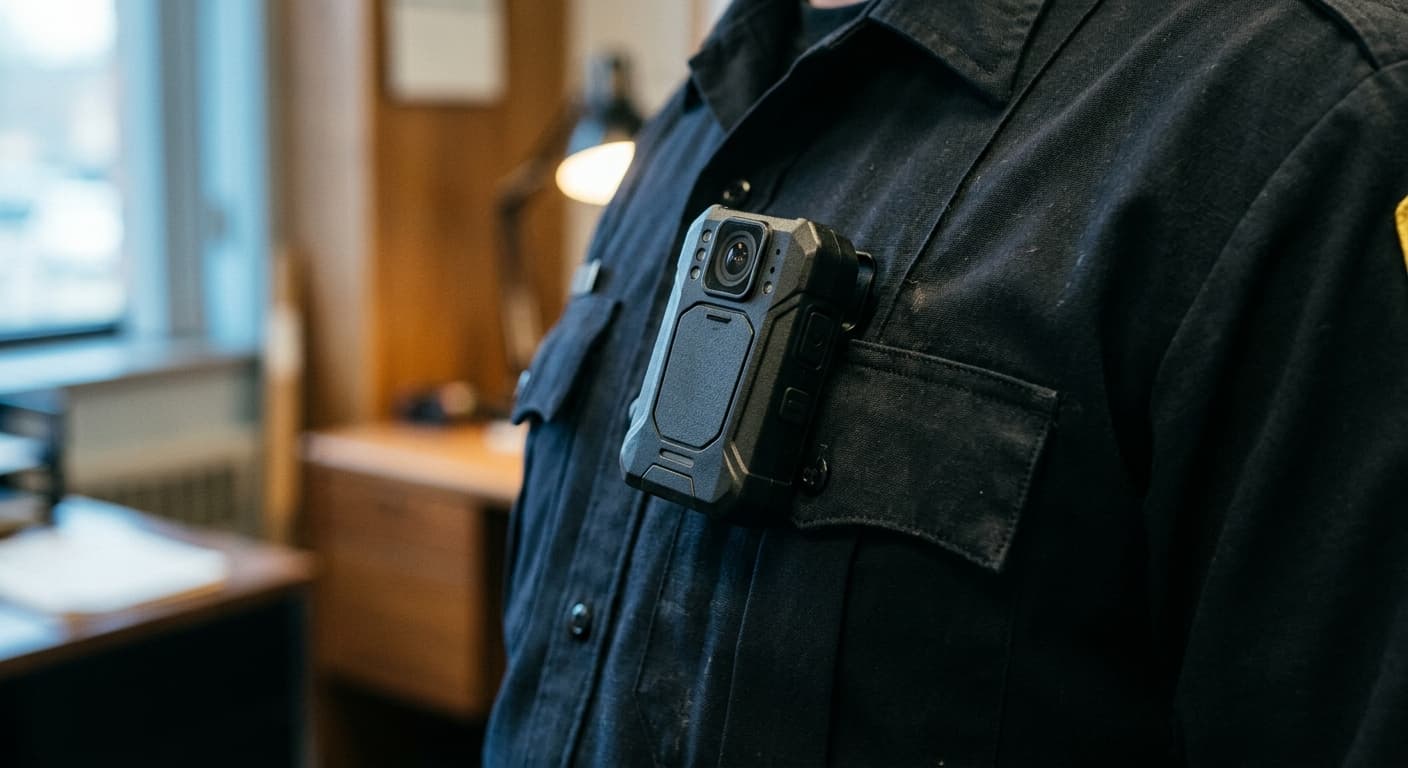
New York law gives you the right to record police officers on duty in public. N.Y. Civil Rights Law section 79-p, the Right to Record Act, creates a private right of action against any officer who interferes with that recording. The First Amendment provides additional federal protection.
You have both a statutory and a constitutional basis to record police officers performing their duties in New York. The strongest NY-specific protection is N.Y. Civil Rights Law section 79-p, the Right to Record Act, which creates a direct private right of action against any law-enforcement official who interferes with recording. The First Amendment provides parallel protection, though the Second Circuit has not issued a published constitutional holding establishing a civilian right to record police.
This guide covers the legal foundation for your right to record police, the practical rules you must follow, New York's body-worn camera program, how to access police body camera footage, and what to do if an officer tries to stop you from recording.
Your Constitutional Right to Record Police
First Amendment Protection
The right to record police officers in the course of their public duties is grounded in the First Amendment to the United States Constitution. Multiple federal circuit courts have ruled that audio and video recording of government officials, including law enforcement, is a form of protected speech and press activity.
The First, Third, Fifth, Seventh, Ninth, and Eleventh Circuits have all explicitly recognized a First Amendment right to record police. The Second Circuit (which includes New York, Connecticut, and Vermont) has not issued a published constitutional holding specifically recognizing a civilian right to record police, making this an area of unsettled 2nd Cir. doctrine. New Yorkers should rely primarily on Civil Rights Law section 79-p rather than unresolved federal circuit precedent.
New York State Protections
New York enacted Civil Rights Law section 79-p, the Right to Record Act, signed June 14, 2020 and effective approximately November 14, 2020. This is the cornerstone NY-specific statute:
- Creates a private right of action against any law-enforcement official who interferes with a person's right to record
- Protects anyone who is not under arrest and is not in police custody
- Covers audio and video recording of law enforcement performing their duties in public
- Allows the aggrieved person to sue for damages and injunctive relief without needing to prove a federal constitutional violation
Claims under 42 U.S.C. 1983 for First or Fourth Amendment violations remain available alongside the state remedy.
Rules for Recording Police in New York
What You Can Do
When recording police in New York, you can:
- Film police officers making arrests, conducting traffic stops, or engaging in other public duties
- Record from any public space (sidewalks, streets, parks, plazas)
- Record from any private property where you have a right to be (your home, a business that permits you to be there)
- Use any device (smartphone, camera, body camera, dashcam)
- Livestream police encounters in real time
- Record both audio and video of police activity
- Record your own interactions with officers during traffic stops, questioning, or other encounters
What You Cannot Do
Recording rights have important boundaries:
- Do not physically interfere with police operations. Stay a reasonable distance away and do not insert yourself into the situation.
- Do not obstruct officers in the performance of their duties. Blocking an officer's path, reaching into a patrol car, or entering an active crime scene are all prohibited.
- Do not trespass to get a better angle. Your right to record does not override property rights or allow you to enter restricted areas.
- Follow lawful orders to move back. Officers can direct you to step back a reasonable distance for safety reasons. Refusing a lawful order to move can result in arrest for obstruction or disorderly conduct.
- Do not tamper with a crime scene or disturb evidence while recording.
The "Reasonable Distance" Standard
There is no specific number of feet that defines a "reasonable distance" for recording police. Courts evaluate the circumstances case by case. Factors that affect what is reasonable include:
- Whether the officer is dealing with a potentially dangerous situation
- Whether your presence creates a safety risk for officers, bystanders, or yourself
- Whether you are impeding the flow of traffic or blocking access
- Whether the officer has given you a specific instruction to move to a particular location
A general guideline is to stay far enough away that you are not interfering with the police action, but close enough that your recording device can capture meaningful footage.
What to Do If Police Tell You to Stop Recording
Know Your Rights
If a police officer tells you to stop recording:
- Stay calm and respectful. Assert your rights without escalating the situation.
- Clearly state that you are exercising your rights under N.Y. Civil Rights Law section 79-p and the First Amendment to record police activity in a public place.
- Do not physically resist if an officer attempts to seize your device, but verbally state that you do not consent to the seizure.
- Remember the officer's badge number, name, and patrol car number if possible.
- File a complaint with the Civilian Complaint Review Board (CCRB) in New York City, or the relevant oversight body in other jurisdictions, if you believe your rights were violated.
Police Cannot Seize Your Device Without a Warrant
The United States Supreme Court ruled in Riley v. California, 573 U.S. 373 (2014) that police generally cannot search a cell phone without a warrant. This protection extends to the contents of your phone, including photos and videos. An officer who seizes your phone or camera to delete footage may be violating your Fourth Amendment rights.
Police Cannot Order You to Delete Footage
Ordering a citizen to delete recorded footage is not a lawful police action. If an officer instructs you to delete video or photos:
- Verbally decline and state that you do not consent
- Do not physically resist
- Document the demand and report it afterward
- The footage may be recoverable through forensic methods even if deleted
Civil Remedies If Your Rights Are Violated
If police illegally prevent you from recording, seize your device, or delete your footage, you may have legal recourse:
- A Section 1983 lawsuit against the officer and potentially the department for violating your constitutional rights
- A claim for unlawful seizure under the Fourth Amendment
- A complaint with the Civilian Complaint Review Board (in NYC) or other oversight bodies
- Filing a complaint with the New York Attorney General's Office for pattern-of-practice violations
Recording During Traffic Stops
As the Driver or Passenger
You can record your own traffic stop in New York. Keep these guidelines in mind:
- You do not need to ask permission to record
- Keep your hands visible and inform the officer before reaching for your phone
- Mount your phone on the dashboard or hold it in plain view rather than making movements that could be misinterpreted
- Audio recording of the stop is legal under one-party consent since you are a participant
- Do not hold your phone in a way that looks like you could be concealing a weapon
As a Bystander
If you witness a traffic stop from outside the vehicle, you can record from a public sidewalk or other public space. Maintain a reasonable distance and do not approach the vehicle or interfere with the officer.
New York Body-Worn Camera Program
Executive Law Section 234
Executive Law Section 234 established the New York State Police Body-Worn Cameras Program. Key provisions include:
- All state police officers must wear body-worn cameras while on patrol
- Cameras must record interactions immediately before an officer exits a patrol vehicle
- Cameras must record all uses of force, all arrests and summonses, and all interactions with people suspected of criminal activity
- Officers may, at their discretion, decline to record certain sensitive encounters (speaking with confidential informants, conducting strip searches, or when a member of the public requests the camera be turned off)
- Even when a public member requests the camera be turned off, the officer may continue recording if they believe a record should be generated
NYPD Body Camera Policy
The New York City Police Department operates its own body-worn camera program, separate from the state police program. NYPD officers are required to activate their cameras during law enforcement encounters, including arrests, uses of force, searches, and vehicle stops. The NYPD program was developed in response to federal court orders and covers one of the largest police forces in the country.
Pending Legislation on Body Camera Footage
Several bills in the 2025-2026 legislative session address body camera footage access:
- S5289 would require police agencies to release body camera recordings of instances where a police officer fires a gun and hits someone, uses a stun gun, or uses force that causes harm
- S3926 proposes additional requirements for body camera footage retention and disclosure
- A7202 addresses search warrant execution recording requirements
Accessing Police Body Camera Footage
Freedom of Information Law (FOIL)
New York's Freedom of Information Law (FOIL) gives the public the right to access government records, including body camera footage, subject to certain exemptions. To request body camera footage:
- Submit a written FOIL request to the relevant police agency's records access officer
- Identify the incident as specifically as possible (date, time, location, officers involved)
- The agency has five business days to acknowledge your request
- The agency must provide a response within a reasonable time (typically 20 business days, though extensions are common)
Challenges in Accessing Footage
Obtaining body camera footage in New York can be difficult. Agencies may deny requests based on several FOIL exemptions:
- Law enforcement investigation exemption: Footage related to ongoing investigations may be withheld
- Privacy concerns: Footage that reveals the identity of victims, witnesses, or confidential informants may be redacted or withheld
- Interagency materials: Internal communications about the footage may be exempt
If your FOIL request is denied, you can appeal to the head of the agency and, if necessary, file a challenge in court under Article 78 of the Civil Practice Law and Rules.
Recording Police in New York City
Civilian Complaint Review Board
The Civilian Complaint Review Board (CCRB) is an independent agency in New York City that investigates complaints about NYPD officers. If you believe your right to record was violated, you can file a complaint with the CCRB. The CCRB has jurisdiction over complaints alleging force, abuse of authority, discourtesy, and offensive language by NYPD officers.
Right to Know Act
New York City's Right to Know Act requires NYPD officers to identify themselves during certain encounters and to inform people of their right to refuse a search when the search is not legally required. While not directly related to recording, this legislation reflects the city's approach to transparency and accountability in policing.
Using Recordings of Police as Evidence
Admissibility in Court
Recordings of police activity are generally admissible as evidence in New York courts if they are:
- Authenticated as genuine and unaltered
- Relevant to the matter at issue
- Not overly prejudicial compared to their probative value
Both your own recordings and police body camera footage can be used as evidence in criminal defense, civil rights lawsuits, and civil proceedings.
Recordings in Civil Rights Lawsuits
Video and audio recordings of police misconduct can be powerful evidence in Section 1983 lawsuits. Courts have recognized that citizen recordings provide critical documentation of law enforcement encounters and serve a vital role in police accountability.
More New York Recording Laws
Audio Recording | Video Recording | Voyeurism and Hidden Cameras | Workplace Recording | Recording Police | Phone Call Recording | Security Cameras | Recording in Public | Landlord-Tenant Recording | Dashcam Laws | School Recording | Medical Recording
Back to New York Recording Laws
More New York Recording Topics
More New York Laws
Frequently Asked Questions
Can I record police officers in New York?
Yes. N.Y. Civil Rights Law section 79-p, the Right to Record Act (eff. 2020), creates a state private right of action against any law-enforcement official who interferes with your right to record. The First Amendment also provides protection. You can film arrests, traffic stops, and other law enforcement activity from any public location where you have a right to be. You do not need permission from the officer to record.
Can a police officer in New York tell me to stop recording?
An officer cannot lawfully order you to stop recording simply because they do not want to be filmed. N.Y. Civil Rights Law section 79-p gives you a private right of action if a law-enforcement official interferes with your recording. Officers can give lawful orders related to safety, such as directing you to move back from an active scene, but an order to stop recording alone is not a lawful directive.
Can police seize my phone or delete my footage in New York?
No. Under Riley v. California (2014), police generally cannot search or seize your phone without a warrant. Ordering you to delete footage is not a lawful police action. If an officer seizes your device or deletes your footage, you may have a civil rights claim under 42 U.S.C. 1983.
Can I record my own traffic stop in New York?
Yes. You can record your own traffic stop using a phone, dashcam, or any recording device. Keep your hands visible and avoid sudden movements that could be misinterpreted. You do not need to ask the officer for permission. Audio recording is legal under New York one-party consent since you are a participant in the interaction.
How do I get police body camera footage in New York?
Submit a written Freedom of Information Law (FOIL) request to the relevant police agency. Provide as much detail about the incident as possible (date, time, location, officers involved). The agency has five business days to acknowledge your request and must respond within a reasonable time. If your request is denied, you can appeal or challenge the denial in court.
Updates
Independently fact-checked against the cited primary sources; governing law re-checked for recent changes
Governing law re-checked for recent changes
Reviewed and approved by an editor
The Law Behind This Article
This article rests on the statutory provisions below, held in our own legal record and retrieved from the official source. Tap a section to read the operative text.
New York Civil Rights Law
§ 79-pRecording certain activitiesIn force
* § 79-p. Recording certain activities. 1. Definitions. For purposes of this section, the following terms shall have the following meanings: (a) "Officer" means any peace officer, police officer, security officer, security guard or similar official who is engaged in a law enforcement activity; (b) "Law enforcement activity" means any activity by an officer acting under the color of law; and (c) "Record" means to capture or attempt to capture any moving or still image, sound, or impression through the use of any recording device, camera, or any other device capable of capturing audio, moving or still images, or by way of written notes or observations. 2. Right to record law enforcement related activities. A person not under arrest or in the custody of a law enforcement official has the right to record law enforcement activity and to maintain custody and control of that recording and of any property or instruments used by that person to record law enforcement activities, provided, however, that a person in custody or under arrest does not, by that status alone, forfeit the right to have any such recordings, property and equipment maintained and returned to him or her.
Official text (excerpt) · last checked 2026-07-29 · Read the full text in our law library · Verify at legislation.nysenate.gov
New York Executive Law
§ 234New York state police body-worn cameras programIn forcecited in 4 of our articles
New York state police body-worn cameras program. 1. There is hereby created within the division of state police a New York state police body-worn cameras program. The purpose of the program is to increase accountability and evidence for law enforcement and the residents of the state by providing body-worn cameras to all state police officers while on patrol. 2. The division of state police shall provide body-worn cameras, to be worn by officers at all times, while on patrol. Such cameras shall record: (a) immediately before an officer exits a patrol vehicle to interact with a person or situation, even if there is a dash camera inside such vehicle which might also be recording the interaction; (b) all uses of force, including any physical aggression and use of a non-lethal or lethal weapon; (c) all arrests and summonses; (d) all interactions with people suspected of criminal activity; (e) all searches of persons and property; (f) any call to a crime in progress; (g) investigative actions where there are interactions with members of the public; (h) any interaction with an emotionally disturbed person; and (i) any instances where officers feel any imminent danger or the…
Official text (excerpt) · last checked 2026-08-31 · Read the full text in our law library · Verify at legislation.nysenate.gov
Cited in 1 court opinions in our collectionLatest citing opinion in our collection: 2024
Opinions citing this section in our collection:
- Matter of N.J. (S.H) (New York Family Court, Kings County 2024, 2024 NY Slip Op 24318)“…ways related to criminal investigation and arrest. See 22 NY Executive Law §234. [FN3] In Matter of Patrolmen's…”
Identified automatically from the court opinions citing this section — not a ranking of which case controls.
Also relied on in: New York Recording Laws (2026): One-Party Consent Rules, New York Police Reports: How to Get a Crash Report, Incident Report, or Bodycam Video, New York Police Body Camera Laws: State Police & NYPD
New York Penal Law
§ 250.00Eavesdropping; definitions of termsIn forcecited in 19 of our articles
Eavesdropping; definitions of terms. The following definitions are applicable to this article: 1. "Wiretapping" means the intentional overhearing or recording of a telephonic or telegraphic communication by a person other than a sender or receiver thereof, without the consent of either the sender or receiver, by means of any instrument, device or equipment. The normal operation of a telephone or telegraph corporation and the normal use of the services and facilities furnished by such corporation pursuant to its tariffs or necessary to protect the rights or property of said corporation shall not be deemed "wiretapping." 2. "Mechanical overhearing of a conversation" means the intentional overhearing or recording of a conversation or discussion, without the consent of at least one party thereto, by a person not present thereat, by means of any instrument, device or equipment. 3.
Official text (excerpt) · last checked 2026-07-29 · Read the full text in our law library · Verify at legislation.nysenate.gov
Cited in 56 court opinions in our collectionLatest citing opinion in our collection: 2023
Opinions citing this section in our collection:
- People v. Fata (New York County Courts 1988, 139 Misc. 2d 979)“…Fata had a justifiable expectation of privacy; and (c) that Penal Law § 250.00 et seq. prohibit the mechanical overh…”
- The People v. Anthony Badalamenti (New York Court of Appeals 2016, 27 N.Y.3d 423)“…t of “mechanical overhearing of a conversation” pursuant to Penal Law § 250.00 (2), includes vicarious consent, on beh…”
- Gurevich v. Gurevich (New York Supreme Court 2009, 24 Misc. 3d 808)“…11 ing” as they relate to Penal Law § 250.05 are defined in Penal Law § 250.00 (6) as: “the intentional acquiring, r…”
Identified automatically from the court opinions citing this section — not a ranking of which case controls.
Also relied on in: New York Audio Recording Laws: One-Party Consent Rules and Penalties, New York Dashcam Laws: Legality, Mounting Rules, and Evidence Use, New York Landlord-Tenant Recording Laws: Rights for Renters and Property Owners
United States Code Title 42
§ 1983Civil action for deprivation of rightsIn forcecited in 50 of our articles
Every person who, under color of any statute, ordinance, regulation, custom, or usage, of any State or Territory or the District of Columbia, subjects, or causes to be subjected, any citizen of the United States or other person within the jurisdiction thereof to the deprivation of any rights, privileges, or immunities secured by the Constitution and laws, shall be liable to the party injured in an action at law, suit in equity, or other proper proceeding for redress, except that in any action brought against a judicial officer for an act or omission taken in such officer’s judicial capacity, injunctive relief shall not be granted unless a declaratory decree was violated or declaratory relief was unavailable. For the purposes of this section, any Act of Congress applicable exclusively to the District of Columbia shall be considered to be a statute of the District of Columbia.
Official text (excerpt) · last checked 2026-07-28 · Read the full text in our law library · Verify at uscode.house.gov
Cited in 282,365 court opinions in our collectionLatest citing opinion in our collection: 2026
Opinions citing this section in our collection:
- Ashcroft v. Iqbal (Supreme Court of the United States 2009, 556 U.S. 662)“…its brought against state officials under Rev. Stat. §1979, 42 U. S. C. §1983.” Hartman, 547 U. S., at 254, n. 2. Cf.…”
- Celotex Corp. v. Catrett, Administratrix of the Estate of Catrett (Supreme Court of the United States 1986, 477 U.S. 317)“…policeman as she left. Petitioner brought an action under 42 U. S. C. § 1983 claiming that the refusal of service a…”
- Monell v. New York City Dept. of Social Servs. (Supreme Court of the United States 1978, 436 U.S. 658)“…decided less than two decades ago. Focusing new light on 42 U. S. C. § 1983 , that decision widened access to the f…”
Identified automatically from the court opinions citing this section — not a ranking of which case controls.
Also relied on in: Alabama Laws on Recording Police: Your Rights and Limits, Alaska Laws on Recording Police: Your Rights and Limits (2026), Arkansas Laws on Recording Police: Your Rights and Limits (2026)
Search our full record of US law — 2.1 million sections, every state + federal →
Sources and References
- N.Y. Executive Law 234 - Body-Worn Cameras Program(nysenate.gov).gov
- 42 U.S.C. 1983 - Civil Rights Claims(law.cornell.edu)
- S5289 - Body Camera Footage Release(nysenate.gov).gov
- S3926 - Body Camera Retention(nysenate.gov).gov
- A7202 - Search Warrant Recording(nysenate.gov).gov
- New York Open Meetings Law(dos.ny.gov).gov
- N.Y. Penal Law 250.00 - Eavesdropping Definitions(nysenate.gov).gov
- Riley v. California (2014)(law.cornell.edu)
- N.Y. Civil Rights Law 79-p - Right to Record Act (eff. 2020)(nysenate.gov).gov