
Georgia
Georgia Laws on Recording Police: Your First Amendment Rights (2026)
Independently fact-checked against primary sources (last audited August 15, 2026). · Reviewed by the RecordingLaw editorial team. · Law checked current as of August 15, 2026. · 4 primary sources cited on this page. How we verify our legal content
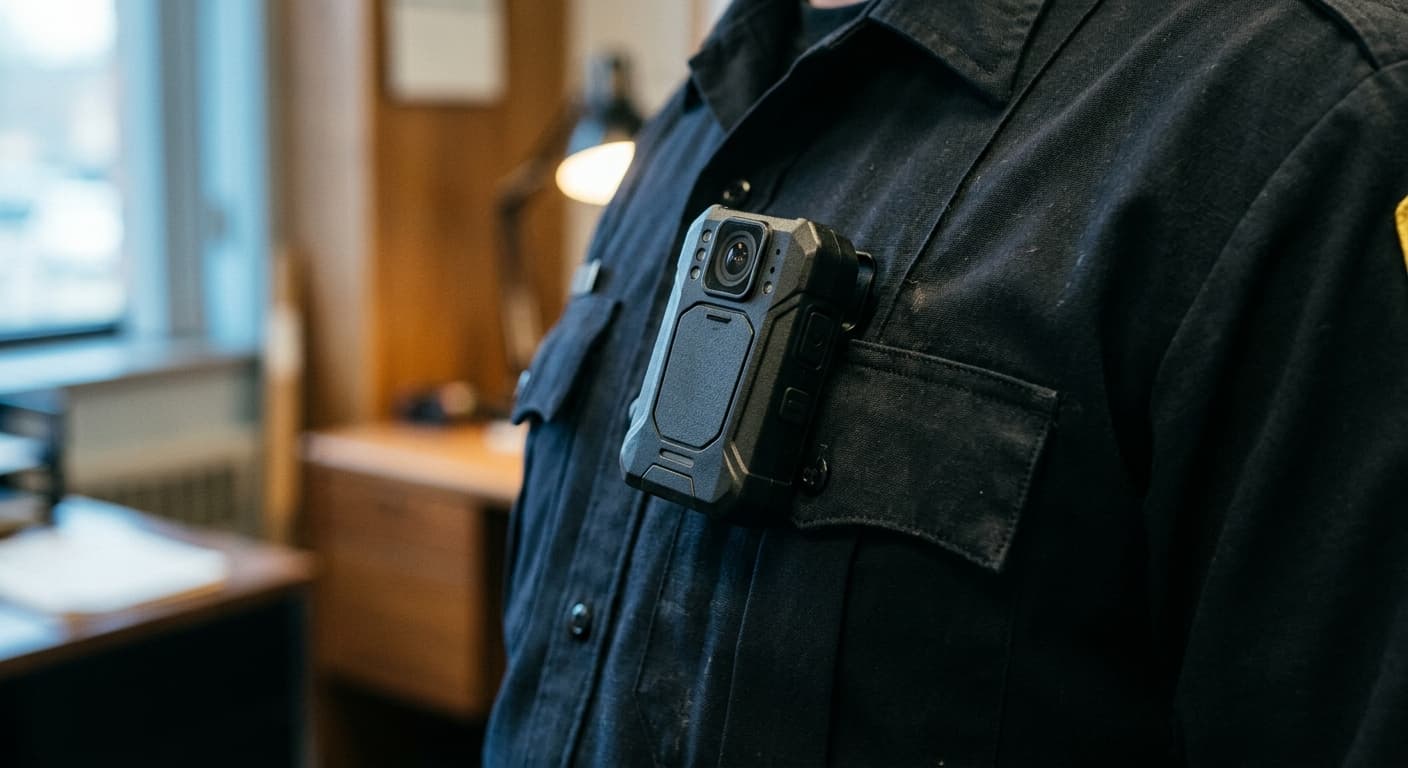
In Georgia, you have a First Amendment right to record police officers on duty in public spaces, as the Eleventh Circuit established in Smith v. City of Cumming (2000). Georgia's one-party consent law under O.C.G.A. § 16-11-66 also permits audio recording of any police encounter you participate in.
You have the legal right to record police officers in Georgia. The First Amendment protects your ability to film, photograph, and audio record law enforcement performing their duties in public spaces. Georgia's one-party consent law provides an additional layer of protection for audio recording during police encounters you are involved in.
This guide explains the constitutional basis for recording police in Georgia, practical rules for filming traffic stops and arrests, what officers can and cannot do regarding your recordings, Georgia body camera laws, and how to protect your footage.
The Constitutional Right to Record Police
Smith v. City of Cumming: The Eleventh Circuit Ruling
The foundational case for recording police in Georgia is Smith v. City of Cumming, 212 F.3d 1332 (11th Cir. 2000). James and Barbara Smith filed a federal lawsuit under 42 U.S.C. § 1983 after City of Cumming police officers allegedly harassed them for videotaping police activities.
The United States Court of Appeals for the Eleventh Circuit, which has jurisdiction over Georgia, Alabama, and Florida, held that the Smiths had a First Amendment right, subject to reasonable time, manner, and place restrictions, to photograph or videotape police conduct. The court recognized that the First Amendment protects the right to gather information about what public officials do on public property, including a right to record matters of public interest.
While the court ultimately ruled that the Smiths had not shown their specific rights were violated in that case, the legal principle was firmly established: citizens have a constitutional right to record law enforcement.
How This Right Applies in Georgia
Based on Smith v. City of Cumming and subsequent federal case law, you can:
- Film police officers conducting traffic stops on public roads
- Record arrests happening on public sidewalks, streets, or parks
- Photograph police activity visible from any public space
- Livestream police encounters in real time
- Audio record your own interactions with police under Georgia's one-party consent law
- Record from your own private property (your yard, doorstep, or window)
The First Amendment Framework
The right to record police falls under the First Amendment's protection of free speech and freedom of the press. Courts have recognized that in the modern era, every citizen with a smartphone functions as a potential journalist. The ability to document government officials' conduct serves the public interest by promoting transparency and accountability.
The Supreme Court of the United States has not yet ruled directly on the right to record police, but every federal circuit court that has addressed the issue has recognized some form of this right. The Eleventh Circuit's 2000 ruling in Smith v. City of Cumming was among the earliest circuit-level recognitions.
Practical Rules for Recording Police in Georgia

What You Can Do
When recording police in Georgia, you are generally permitted to:
- Stand at a reasonable distance and film. You do not need to be directly next to an officer to record. Using your phone camera from across the street or from a parked car is lawful.
- Record both audio and video. Georgia's one-party consent law covers the audio portion if you are interacting with the officer. The First Amendment covers the visual recording in public.
- Refuse to stop recording. Officers cannot order you to stop filming unless you are actively interfering with their operations.
- Refuse to hand over your device. Without a warrant, officers generally cannot seize your phone or camera.
- Record from your own property. If police activity is visible from your home, yard, or business, you can film it.
What You Cannot Do
The right to record police is not absolute. Restrictions include:
- Do not physically interfere with police operations. Standing in the way of an arrest, blocking a police vehicle, or entering an active crime scene to get a better angle can result in obstruction charges under O.C.G.A. § 16-10-24 (obstruction of an officer).
- Do not trespass. You cannot enter private property without permission to record police activity.
- Follow lawful orders to move back. If an officer tells you to step back for safety reasons, comply as long as you can still record from the new position. An order to move a reasonable distance is lawful; an order to stop recording entirely is not.
- Do not escalate the situation. Shouting, taunting, or physically approaching officers while recording can be construed as interference.
Recording Your Own Traffic Stop
When you are pulled over by police in Georgia:
- You can record the encounter using your phone or a dashcam.
- Place your phone on the dashboard or in a mount where it can record without you holding it. This keeps your hands visible and reduces tension.
- You do not need to inform the officer that you are recording. Georgia's one-party consent law covers the audio, and the First Amendment covers the video in this public setting.
- If the officer asks you to stop recording, you can politely decline. You may say: "I understand your concern, but I am exercising my legal right to record this interaction."
- Do not reach suddenly for your phone or make movements that could be interpreted as threatening.
Recording Someone Else's Traffic Stop or Arrest
You have the right to record police interactions you witness in public, even when you are not involved. Bystander recording of police activity has been recognized as protected First Amendment activity by multiple federal courts.
When recording as a bystander:
- Maintain a safe distance that does not interfere with the police operation
- Do not insert yourself into the interaction
- Follow any reasonable orders to move back, but you do not have to leave the area entirely
- You do not need the consent of the people being stopped or arrested to record in a public place
What Police Officers Cannot Do

Confiscating Your Device
Police officers in Georgia cannot seize your phone, camera, or recording device simply because you are recording them. The U.S. Supreme Court ruled in Riley v. California, 573 U.S. 373 (2014) that police generally need a warrant to search the contents of a cell phone. This protection extends to recording devices.
An officer who takes your phone, deletes your footage, or forces you to unlock your device without a warrant may be violating your Fourth Amendment rights against unreasonable search and seizure, in addition to your First Amendment right to record.
Retaliating Against You
Officers cannot arrest, cite, or threaten you in retaliation for lawfully recording them. Retaliatory arrest for exercising First Amendment rights can give rise to a federal civil rights lawsuit under 42 U.S.C. § 1983. If an officer arrests you solely because you were recording, you may be entitled to damages for violation of your constitutional rights.
Ordering You to Delete Footage
An officer who orders you to delete footage from your device is potentially violating both your First Amendment rights and committing destruction of evidence. Do not delete footage at an officer's request. If pressed, you can state that you would like to preserve the footage and will comply with a lawful court order.
Georgia Body Camera Laws
State-Level Framework
Georgia does not have a comprehensive statewide body camera mandate for all law enforcement agencies. Body camera footage retention is governed by O.C.G.A. § 50-18-96, which sets minimum retention periods and access requirements distinct from the general Open Records Act. The decision to equip officers with body cameras is generally left to individual departments and municipalities. However, several significant Georgia law enforcement agencies have adopted body camera programs.
Atlanta Police Department
The Atlanta Police Department (APD) has implemented body-worn cameras for its officers. APD policy requires officers to activate cameras during law enforcement encounters, including traffic stops, arrests, searches, and use-of-force incidents. The footage is subject to Georgia's Open Records Act (O.C.G.A. § 50-18-70) with certain exemptions for ongoing investigations and privacy concerns.
Requesting Body Camera Footage
Georgia's Open Records Act provides the public with a right to access government records, including body camera footage. To request footage:
- Submit a written Open Records request to the law enforcement agency
- Identify the specific incident, officers involved, and date/time as precisely as possible
- The agency must respond within three business days, though providing the actual records may take longer
- Agencies can charge reasonable fees for search and retrieval
Some exemptions may apply. Footage related to ongoing criminal investigations, footage containing sensitive personal information of crime victims, or footage recorded inside private residences may be withheld or redacted.
Recording in Police Stations and Courthouses
Police Stations
Recording inside a police station is more restricted than recording in public. While Georgia's one-party consent law allows you to audio record conversations you participate in (including at a police station), the police department can establish rules about video recording within its facility. If you are being interviewed or questioned, you can record the audio of your own interview.
Courthouses and Courtrooms
Georgia courts have their own rules about recording. Most Georgia courtrooms prohibit recording without the judge's express permission. The Uniform Rules for the Superior Courts of Georgia establish protocols for media coverage of court proceedings, which typically require advance approval.
Recording in courthouse hallways and public areas outside the courtroom may be permitted, but each courthouse may have its own policies. Check with the court clerk before recording in any courthouse.
Internal Police Policies on Being Recorded
Agencies That Affirm Recording Rights
Several Georgia law enforcement agencies have adopted internal policies that specifically affirm the public's right to record officers. The Atlanta Police Department's standard operating procedures include provisions acknowledging that citizens may lawfully record police activity in public.
These policies typically instruct officers to:
- Allow citizens to record as long as they are not interfering with operations
- Not threaten or retaliate against citizens who are recording
- Not demand that citizens stop recording or surrender their devices
- Request that citizens move to a safe distance if they are too close to an active scene
Filing Complaints Against Officers
If a Georgia police officer violates your right to record, you can:
- File an internal affairs complaint with the officer's department
- File a complaint with the Georgia Peace Officer Standards and Training (POST) Council
- Contact the ACLU of Georgia for legal assistance
- Pursue a federal civil rights lawsuit under 42 U.S.C. § 1983 with the help of an attorney
Penalties and Remedies
If Your Rights Are Violated
If a police officer unlawfully prevents you from recording, confiscates your device, deletes your footage, or arrests you for recording, you may be entitled to:
- Compensatory damages for emotional distress, lost wages, and other harm
- Punitive damages if the officer's conduct was willful or malicious
- Attorney fees under 42 U.S.C. § 1988
- Injunctive relief ordering the department to change its policies
- Return of your device and footage
If You Interfere With Police
Conversely, if you cross the line from lawful recording into interference, you may face charges including:
- Obstruction of an officer under O.C.G.A. § 16-10-24, a misdemeanor carrying up to 12 months in jail and a $1,000 fine
- Criminal trespass under O.C.G.A. § 16-7-21 if you enter private property to record
- Disorderly conduct under O.C.G.A. § 16-11-39 if your behavior creates a public disturbance
Tips for Safely Recording Police in Georgia
- Keep your hands visible at all times. Use a phone mount or hold your device where the officer can see it.
- Stay calm and polite. Assert your rights respectfully without being confrontational.
- Maintain a safe distance. Give officers room to work while staying close enough to capture meaningful footage.
- Enable cloud backup. Use your phone's automatic cloud backup to preserve footage even if your device is taken.
- Know your rights, but stay flexible. Comply with reasonable safety-related orders while maintaining your right to record.
- Do not delete anything. Keep all footage, even if it seems uneventful.
- Note badge numbers and names. If possible, verbally state the officer's name and badge number during the recording.
More Georgia Recording Laws
Audio Recording | Video Recording | Voyeurism & Hidden Cameras | Workplace Recording | Recording Police | Phone Call Recording | Security Cameras | Recording in Public | Landlord-Tenant | Dashcam Laws | Schools | Medical Recording
Back to Georgia Recording Laws
More Georgia Recording Topics
More Georgia Laws
Frequently Asked Questions
Can I record police officers in Georgia?
Yes. The First Amendment protects your right to record police officers performing their duties in public spaces. The Eleventh Circuit Court of Appeals affirmed this right in Smith v. City of Cumming (2000). Georgia's one-party consent law also allows you to audio record any interaction with police that you participate in.
Can a police officer take my phone for recording them in Georgia?
No. Officers generally cannot seize your phone or recording device without a warrant. The U.S. Supreme Court ruled in Riley v. California (2014) that police need a warrant to search a cell phone. An officer who takes your phone or deletes footage may be violating your First and Fourth Amendment rights.
Do I have to tell a police officer I am recording in Georgia?
No. Georgia's one-party consent law does not require you to announce that you are recording. For audio, your participation in the conversation satisfies the consent requirement. For video in public, no consent is needed at all. You are free to record openly or discreetly.
Can I record my own traffic stop in Georgia?
Yes. You can use your phone or a dashcam to record your traffic stop. Place your phone on the dashboard or in a mount to keep your hands visible. You do not need to inform the officer. Both the audio and video portions of the recording are protected under Georgia law and the First Amendment.
What should I do if a police officer tells me to stop recording in Georgia?
You can politely decline. State calmly that you are exercising your legal right to record. Do not physically resist or escalate the situation. If the officer insists, comply to avoid arrest but do not delete any footage. You can file a complaint afterward and potentially pursue a civil rights claim.
Updates
Fixed a mischaracterization of Crocker v. Beatty, which the page cited as confirming an unconditional right to record police; the Eleventh Circuit actually granted the officer qualified immunity in that case because the right was not clearly established on its specific facts. Also repointed three dead or overly generic case-law citation links.
Independently fact-checked against the cited primary sources; governing law re-checked for recent changes
Governing law re-checked for recent changes
Governing law re-checked for recent changes
Reviewed and approved by an editor
The Law Behind This Article
This article rests on the statutory provisions below, held in our own legal record and retrieved from the official source. Tap a section to read the operative text.
Official Code of Georgia Annotated
§ 16-11-66Interception of wire, oral, or electronic communication by party thereto; consent requirements for recording and divulging conversations to which child under 18 years is a party; parental exception.In forcecited in 18 of our articles
(a) Nothing in Code Section 16-11-62 shall prohibit a person from intercepting a wire, oral, or electronic communication where such person is a party to the communication or one of the parties to the communication has given prior consent to such interception. (b) After obtaining the consent…
Official text (excerpt) · last checked 2026-08-31 · Read the full text in our law library · Verify at advance.lexis.com
Cited in 43 court opinions in our collectionLatest citing opinion in our collection: 2020
In the courts (editorial summary, independently checked):State v. Cohen (2017) held OCGA 16-11-66(a) reaches only intercepted wire, oral, or electronic communications, so one party's consent does not authorize secretly video recording others in a private place. Bishop v. State (1999) barred vicarious parental consent under the text in force before the 2000 amendment.
Opinions citing this section in our collection:
- Dobbins v. State (Supreme Court of Georgia 1992, 262 Ga. 161)✓An investigator recorded a child's call to the defendant using only her father's consent and no warrant; the Supreme Court held the state had neither an investigation warrant nor valid consent of a party to the call, so the recording and its fruits were inadmissible.
- State v. Cohen (Supreme Court of Georgia 2017, 302 Ga. 616)✓A housekeeper secretly videoed her employer naked at home; the Supreme Court held the one-party-consent rule of OCGA 16-11-66(a) covers only intercepted wire, oral or electronic communications and does not permit video recording without the consent of all observed.
- State v. Madison (Court of Appeals of Georgia 2011, 311 Ga. App. 31)✓A molestation complainant secretly videoed the defendant in his law office; the court read the 16-11-66(a) participant exception to reach section 16-11-62, but found no wire, oral or electronic communication captured, so it affirmed suppression. Cohen overruled that reading.
Identified automatically from the court opinions citing this section — not a ranking of which case controls.
Also relied on in: Georgia Recording Laws (2026): One-Party Audio, All-Party Video, Georgia AI Meeting Recording Laws (2026), Georgia Ring Doorbell Laws: What You Need to Know in 2026
§ 16-10-24Obstructing or hindering law enforcement officers.In force
(a) Except as otherwise provided in subsection (b) of this Code section, a person who knowingly and willfully obstructs or hinders any law enforcement officer, prison guard, jailer, correctional officer, community supervision officer, county or Department of Juvenile Justice juvenile probation…
Official text (excerpt) · last checked 2021-08-17 · Read the full text in our law library
Cited in 609 court opinions in our collectionLatest citing opinion in our collection: 2026
Opinions citing this section in our collection:
- Banta v. State (Supreme Court of Georgia 2007, 281 Ga. 615)“…definition of misdemeanor obstruction of a police officer, OCGA § 16-10-24 (a), regardless of whether they also me…”
- EWUMI v. State (Court of Appeals of Georgia 2012, 315 Ga. App. 656)“…is near the small of the back.” 4 See OCGA § 16-10-24 (b) (“Whoever knowingly and willfully r…”
- Duke v. State (Court of Appeals of Georgia 1992, 205 Ga. App. 689)“…ty of misdemeanor obstruction of an officer in violation of OCGA § 16-10-24 (a). She appeals from the judgment of c…”
Identified automatically from the court opinions citing this section — not a ranking of which case controls.
§ 16-11-39Disorderly conduct.In force
(a) A person commits the offense of disorderly conduct when such person commits any of the following: (1) Acts in a violent or tumultuous manner toward another person whereby such person is placed in reasonable fear of the safety of such person's life, limb, or health; (2) Acts in a violent or…
Official text (excerpt) · last checked 2021-08-17 · Read the full text in our law library
Cited in 122 court opinions in our collectionLatest citing opinion in our collection: 2026
Opinions citing this section in our collection:
- Vines v. State (Supreme Court of Georgia 1998, 269 Ga. 438)“…ine as criminal the specific act attributed to Vines. Under OCGA § 16-11-39(a)(4), Vines' alleged act constitutes t…”
- Crolley v. State (Court of Appeals of Georgia 1987, 182 Ga. App. 2)“…was found guilty of using “fighting words” in violation of OCGA § 16-11-39 (1). Appellant appeals from the judgmen…”
- Anderson v. State (Court of Appeals of Georgia 1998, 231 Ga. App. 807)“…sorderly conduct by uttering fighting words in violation of OCGA § 16-11-39 (a) (3). After her son was arrested for…”
Identified automatically from the court opinions citing this section — not a ranking of which case controls.
§ 16-11-62Eavesdropping, surveillance, or intercepting communication which invades privacy of another; divulging private message.In forcecited in 25 of our articles
It shall be unlawful for: (1) Any person in a clandestine manner intentionally to overhear, transmit, or record or attempt to overhear, transmit, or record the private conversation of another which shall originate in any private place; (2) Any person, through the use of any device, without the
Official text (excerpt) · last checked 2026-08-31 · Read the full text in our law library · Verify at legis.ga.gov
Cited in 94 court opinions in our collectionLatest citing opinion in our collection: 2026
In the courts (editorial summary, independently checked):Kelley v. State (1998) held OCGA 16-11-62(2) reached a guardian who photographed a nude 16-year-old in the family bathroom, with no exception for family members. Burgeson v. State (1996) held a conversation recorded in a patrol car was not covered, because no reasonable expectation of privacy existed there.
Opinions citing this section in our collection:
- Burgeson v. State (Supreme Court of Georgia 1996, 267 Ga. 102)✓Police secretly recorded two arrestees talking in the back of a patrol car. The court held a police car is much like a jail cell, with no reasonable expectation of privacy, so intercepting that conversation did not offend OCGA 16-11-62 and the tape was admissible.
- Kelley v. State (Court of Appeals of Georgia 1998, 233 Ga. App. 244)✓A guardian photographed her 16-year-old niece nude and passed out in the family bathtub. The court held OCGA 16-11-62(2) reaches any person with no family exception, that the film need not be developed, and that a jury could find the bathroom a private place.
- Dobbins v. State (Supreme Court of Georgia 1992, 262 Ga. 161)“…th the consent of one of the parties to the conversation. OCGA § 16-11-62 (1) provides that: It shall be unlawf…”
Identified automatically from the court opinions citing this section — not a ranking of which case controls.
Also relied on in: Georgia Data Privacy Laws: Breach Notification & Consumer Rights (2026), Georgia Surveillance Camera Laws (2026 Guide), Georgia Windshield Mounting Laws (2026 Guide)
§ 16-7-21Criminal trespass.In forcecited in 4 of our articles
(a) A person commits the offense of criminal trespass when he or she intentionally damages any property of another without consent of that other person and the damage thereto is $500.00 or less or knowingly and maliciously interferes with the possession or use of the property of another person…
Official text (excerpt) · last checked 2021-08-17 · Read the full text in our law library
Cited in 314 court opinions in our collectionLatest citing opinion in our collection: 2026
Opinions citing this section in our collection:
- Williams v. State (Court of Appeals of Georgia 1986, 180 Ga. App. 854)“…nsent and the damage thereto exceeds $500.00 . . . .” Under OCGA § 16-7-21 (a), “[a] person commits the offense of…”
- Waugh v. State (Supreme Court of Georgia 1993, 263 Ga. 692)“…lesser included offense is also enumerated as error. OCGA § 16-7-21 (a) provides, in relevant part, that th…”
- Achor Center, Inc. v. Holmes (Court of Appeals of Georgia 1995, 219 Ga. App. 399)“…or the arrest of Reverend Holmes for criminal trespass. See OCGA § 16-7-21 (b) (2) and (3). Although there is proo…”
Identified automatically from the court opinions citing this section — not a ranking of which case controls.
Also relied on in: Georgia Laws on Recording in Public: What Is Legal (2026), Squatters Rights by State: Adverse Possession Laws (2026), Georgia Squatters Rights and Adverse Possession Laws (2026)
§ 50-18-70Legislative intent; definitions.In forcecited in 6 of our articles
(a) The General Assembly finds and declares that the strong public policy of this state is in favor of open government; that open government is essential to a free, open, and democratic society; and that public access to public records should be encouraged to foster confidence in government and so t
Official text (excerpt) · last checked 2026-08-04 · Read the full text in our law library · Verify at legis.ga.gov
Cited in 173 court opinions in our collectionLatest citing opinion in our collection: 2026
Opinions citing this section in our collection:
- Deal v. Coleman (Supreme Court of Georgia 2013, 294 Ga. 170)“…reference to their membership in the People. 18 See, e.g., OCGA §§ 50-18-70 (b) (2012) (public records “shall be op…”
- Smith v. Northside Hospital, Inc. (Supreme Court of Georgia 2017, 302 Ga. 517)“…92, pp. 1061, 1064, § 5 (codified at prior *521 version of OCGA § 50-18-70 (a)). In 1999, the legislature amended…”
- Dortch v. Atlanta Journal & Atlanta Constitution (Supreme Court of Georgia 1991, 261 Ga. 350)“…"city"). In May of 1990, pursuant to the Open Records Act, OCGA § 50-18-70 et seq. (the "act"), appellees, The Atl…”
Identified automatically from the court opinions citing this section — not a ranking of which case controls.
Also relied on in: Are Autopsy Reports Public in Georgia? (2026 Guide), Georgia Police Bodycam Laws: Retention & Open Records Rules, Georgia Public Records Laws: The Georgia Open Records Act Explained
§ 50-18-96Retention of video recordings from law enforcement sources; destruction; presumption from destruction; fee for duplication.In forcecited in 3 of our articles
(a) As used in this Code section, the term "governing body" shall have the same meaning as set forth in Code Section 50-18-99. (b) Video recordings from law enforcement body-worn devices or devices located on or inside of law enforcement vehicles shall be retained for 180 days from the date of…
Official text (excerpt) · last checked 2026-08-31 · Read the full text in our law library · Verify at georgiaarchives.org
United States Code Title 42
§ 1983Civil action for deprivation of rightsIn forcecited in 50 of our articles
Every person who, under color of any statute, ordinance, regulation, custom, or usage, of any State or Territory or the District of Columbia, subjects, or causes to be subjected, any citizen of the United States or other person within the jurisdiction thereof to the deprivation of any rights, privileges, or immunities secured by the Constitution and laws, shall be liable to the party injured in an action at law, suit in equity, or other proper proceeding for redress, except that in any action brought against a judicial officer for an act or omission taken in such officer’s judicial capacity, injunctive relief shall not be granted unless a declaratory decree was violated or declaratory relief was unavailable. For the purposes of this section, any Act of Congress applicable exclusively to the District of Columbia shall be considered to be a statute of the District of Columbia.
Official text (excerpt) · last checked 2026-07-28 · Read the full text in our law library · Verify at uscode.house.gov
Cited in 282,365 court opinions in our collectionLatest citing opinion in our collection: 2026
Opinions citing this section in our collection:
- Ashcroft v. Iqbal (Supreme Court of the United States 2009, 556 U.S. 662)“…its brought against state officials under Rev. Stat. §1979, 42 U. S. C. §1983.” Hartman, 547 U. S., at 254, n. 2. Cf.…”
- Celotex Corp. v. Catrett, Administratrix of the Estate of Catrett (Supreme Court of the United States 1986, 477 U.S. 317)“…policeman as she left. Petitioner brought an action under 42 U. S. C. § 1983 claiming that the refusal of service a…”
- Monell v. New York City Dept. of Social Servs. (Supreme Court of the United States 1978, 436 U.S. 658)“…decided less than two decades ago. Focusing new light on 42 U. S. C. § 1983 , that decision widened access to the f…”
Identified automatically from the court opinions citing this section — not a ranking of which case controls.
Also relied on in: Alabama Laws on Recording Police: Your Rights and Limits, Alaska Laws on Recording Police: Your Rights and Limits (2026), Arkansas Laws on Recording Police: Your Rights and Limits (2026)
§ 1988Proceedings in vindication of civil rightsIn forcecited in 6 of our articles
The jurisdiction in civil and criminal matters conferred on the district courts by the provisions of titles 13, 24, and 70 of the Revised Statutes for the protection of all persons in the United States in their civil rights, and for their vindication, shall be exercised and enforced in conformity with the laws of the United States, so far as such laws are suitable to carry the same into effect; but in all cases where they are not adapted to the object, or are deficient in the provisions necessary to furnish suitable remedies and punish offenses against law, the common law, as modified and changed by the constitution and statutes of the State wherein the court having jurisdiction of such civil or criminal cause is held, so far as the same is not inconsistent with the Constitution and laws of the United States, shall be extended to and govern the said courts in the trial and disposition of the cause, and, if it is of a criminal nature, in the infliction of punishment on the party found guilty. In any action or proceeding to enforce a provision of sections 1981, 1981a, 1982, 1983, 1985, and 1986 of this title, title IX of Public Law 92–318 [20 U.S.C.
Official text (excerpt) · last checked 2026-07-28 · Read the full text in our law library · Verify at uscode.house.gov
Cited in 17,943 court opinions in our collectionLatest citing opinion in our collection: 2026
Opinions citing this section in our collection:
- Monell v. New York City Dept. of Social Servs. (Supreme Court of the United States 1978, 436 U.S. 658)“…cts of its deputies and sheriff,” id., at 696 , under 42 U. S. C. § 1988 . In rejecting this vicarious-liability…”
- Gall v. United States (Supreme Court of the United States 2007, 552 U.S. 38)“…ssing the Civil Rights Attorney’s Fees Awards Act of 1976, 42 U. S. C. § 1988 ). See also United States v. Oakland…”
- Hensley v. Eckerhart (Supreme Court of the United States 1983, 461 U.S. 424)“…ing the proper amount of an award of attorney’s fees under 42 U. S. C. § 1988 .” Ante, at 440. I agree with the Cou…”
Identified automatically from the court opinions citing this section — not a ranking of which case controls.
Also relied on in: New Mexico Laws on Recording Police: Your First Amendment Rights (2026), Kansas Laws on Recording Police, Virginia Laws on Recording Police: Your Rights and Limitations
Search our full record of US law — 2.1 million sections, every state + federal →
Sources and References
- Smith v. City of Cumming, 212 F.3d 1332 (11th Cir. 2000) - First Amendment right to record police(courtlistener.com)
- Crocker v. Beatty, 995 F.3d 1232 (11th Cir. 2021) - officer granted qualified immunity; right to record not clearly established on the specific facts (highway-median photography during an active crash scene)(courtlistener.com)
- Riley v. California, 573 U.S. 373 (2014) - warrant required for cell phone search(supremecourt.gov).gov
- O.C.G.A. § 16-11-62 - Eavesdropping and Surveillance(law.justia.com)
- O.C.G.A. § 50-18-96 - Body Camera Footage Retention(law.justia.com)
- O.C.G.A. § 50-18-70 et seq. - Georgia Open Records Act(law.justia.com)
- Georgia Open Meetings Act(law.georgia.gov).gov
- Georgia AG FAQ on Open Government(law.georgia.gov).gov
- Georgia Peace Officer Standards and Training (POST) Council(gapost.org).gov
- 42 U.S.C. § 1983 - Civil Rights Remedies(law.cornell.edu)