
Oklahoma
Oklahoma Laws on Recording Police: Your Rights and Limitations
Independently fact-checked against primary sources (last audited August 15, 2026). · Reviewed by the RecordingLaw editorial team. · 5 primary sources cited on this page. How we verify our legal content
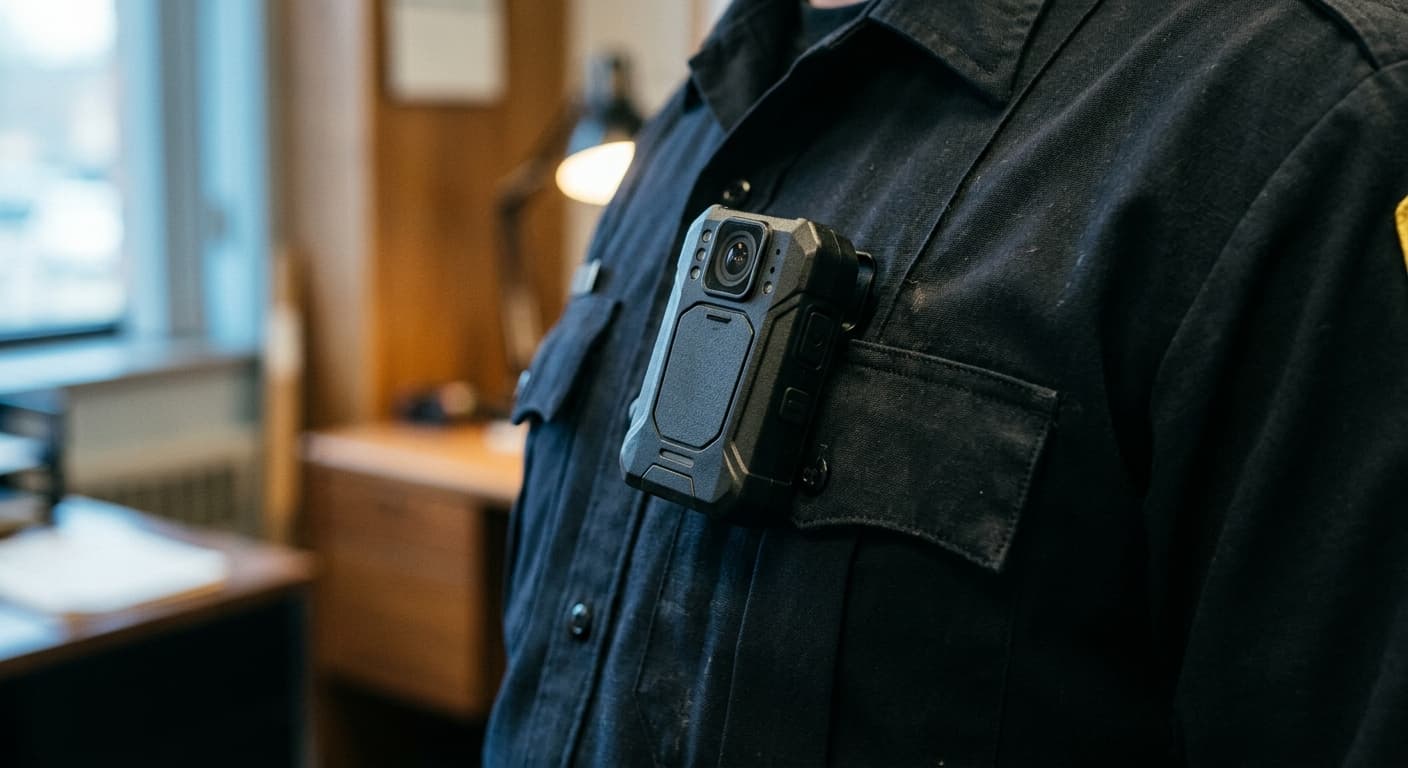
In Oklahoma, you have a First Amendment right to record police officers performing their duties in public. Oklahoma's one-party consent law (13 O.S. 176.4) also protects recordings of encounters you participate in. The Tenth Circuit confirmed this right in Irizarry v. Yehia (2022), the controlling precedent for Oklahoma.
Overview of Recording Police in Oklahoma
Oklahoma residents have a well-established right to record law enforcement officers performing their duties in public. This right derives from the First Amendment to the United States Constitution and has been reinforced by federal court decisions, including rulings from the Tenth Circuit Court of Appeals, which has jurisdiction over Oklahoma.
Oklahoma's one-party consent law (Okla. Stat. tit. 13, Section 176.4) further supports recording police, since you can record any interaction you are a participant in. But even when you are not directly interacting with officers, your right to observe and record public law enforcement activity is constitutionally protected.
The Constitutional Right to Record Police
First Amendment Protection
The First Amendment's protections for free speech and free press include the right to gather information about government activities. Recording police officers carrying out their official duties in public spaces is a form of information gathering that courts have consistently protected.
The U.S. Department of Justice has affirmed this principle in guidance to law enforcement agencies, stating that individuals have a First Amendment right to record officers in the public discharge of their duties. The DOJ has intervened in cases where police departments adopted policies or practices that interfered with this right.
Tenth Circuit Court of Appeals
The Tenth Circuit, which covers Oklahoma, Kansas, Colorado, New Mexico, Utah, and Wyoming, has directly addressed the right to record police. In Frasier v. Evans, 992 F.3d 1003 (10th Cir. 2021), the court acknowledged the right to film police but declined to find a clearly established right under qualified immunity on the facts presented. The Tenth Circuit resolved the question in Irizarry v. Yehia, 38 F.4th 1282 (10th Cir. 2022), holding that the First Amendment right to film police in the performance of their duties in a public place was clearly established as of May 26, 2019. Irizarry is the controlling Tenth Circuit precedent for Oklahoma.
Oklahoma residents can rely on this established federal precedent when exercising their right to film police encounters.
What You Can Record
In Oklahoma, you can legally record:
- Traffic stops, including your own
- Arrests and detentions happening in public view
- Police interactions with other people in public spaces
- Your own interactions with officers during traffic stops, interviews, or other encounters
- Police responses to emergencies and crime scenes (from a safe distance)
- DUI checkpoints and sobriety tests
- Officer conduct during protests, demonstrations, and public events
- Any law enforcement activity visible from a public place or from a location where you have a legal right to be
Recording Methods
You can use any recording method available to you:
- Smartphone video and audio recording
- Dedicated video cameras
- Dashcam footage from your vehicle
- Body-worn cameras or wearable recording devices
- Livestreaming to social media platforms
- Audio-only recording devices
Oklahoma law does not restrict the type of device used for recording, and the choice to livestream rather than simply save a local recording is also protected.
Limitations on Recording Police
Do Not Interfere with Police Operations
The most important limitation is that your recording cannot physically interfere with law enforcement operations. Actions that cross the line from recording to interference include:
- Physically blocking an officer's path or preventing them from performing their duties
- Getting dangerously close to an active scene in a way that creates a safety hazard
- Refusing lawful orders to step back to a safe distance
- Entering a secured perimeter or crime scene without authorization
- Handling evidence or interfering with an investigation
Oklahoma law criminalizes obstructing an officer in the performance of their duties under Okla. Stat. tit. 21, Section 540. This statute makes it a misdemeanor to willfully delay or obstruct any public officer in the discharge of their duties. Section 540 states directly that nothing in it precludes a person from recording the activity of law enforcement in a public area, as long as the recording does not delay or obstruct the officer. Recording alone does not constitute obstruction, but actions taken while recording can.
Private Property Restrictions
Your right to record does not give you permission to enter private property. You cannot:
- Trespass on private land to get a better angle of police activity
- Enter a private building without permission to film what is happening inside
- Cross police barricades onto private property
- Follow officers onto private property during an investigation
However, if you are on public property or on your own private property, you can record anything visible from that location, including police activity on nearby private property.
Secure Government Facilities
Certain government facilities may have specific restrictions on recording:
- Military installations
- Certain areas of courthouses during proceedings
- Jails and prisons (interior areas)
- Classified government facilities
These restrictions are based on specific regulations governing those facilities rather than general recording law.
What to Do If Police Tell You to Stop Recording
Know Your Rights
If a police officer tells you to stop recording, remember:
- You have the right to record. Politely state that you are exercising your First Amendment right to record.
- Stay calm and respectful. Do not argue or become confrontational.
- Comply with other lawful orders. If an officer tells you to step back, move to a safe distance but continue recording.
- Do not physically resist. If an officer attempts to take your device, do not engage in a physical struggle.
- Remember the officer's name and badge number if possible.
- File a complaint afterward if you believe your rights were violated.
Your Device Cannot Be Confiscated Without a Warrant
Under the Fourth Amendment, police officers generally need a warrant to seize and search your recording device. The U.S. Supreme Court's decision in Riley v. California (2014) established that police need a warrant to search the contents of a cell phone seized during an arrest. This principle extends to recording devices.
If an officer confiscates your device or deletes your footage without a warrant, this may constitute:
- A Fourth Amendment violation (unreasonable seizure)
- A First Amendment violation (suppression of protected activity)
- Potential civil rights liability under 42 U.S.C. Section 1983
Filing a Complaint
If your recording rights are violated by an Oklahoma law enforcement officer, you can:
- File an internal affairs complaint with the officer's department
- Contact the Oklahoma Attorney General's Office for guidance
- File a complaint with the U.S. Department of Justice Civil Rights Division
- Consult a civil rights attorney about a Section 1983 lawsuit for damages
Recording Your Own Police Encounters
Traffic Stops
You have the right to record your own traffic stop in Oklahoma. Best practices include:
- Start recording before or as the officer approaches your vehicle
- Keep your hands visible while holding or positioning your recording device
- Mount your phone on the dashboard or windshield rather than holding it, to keep your hands free
- Inform the officer that you are recording if asked, but you are not legally required to do so
- Follow all lawful instructions from the officer regarding documentation, license and registration, and field sobriety requests
- Do not reach for your device suddenly in a way that might alarm the officer
Arrests and Detentions
If you are being arrested or detained, you may continue to record. However:
- Officers may take your phone during the booking process as part of an inventory of personal property
- Your phone cannot be searched without a warrant, but it can be temporarily seized
- Request that your recording be preserved and not deleted
- Ask for your attorney and assert your rights clearly
DHS, Child Welfare, and Government Agency Interactions
You can record your interactions with Oklahoma Department of Human Services (DHS) workers and other government agency employees. These are government officials performing their duties, and your right to record conversations you participate in is protected under both the First Amendment and Oklahoma's one-party consent law.
Recording Public Government Meetings
The Oklahoma Open Meeting Act
Oklahoma's Open Meeting Act (Okla. Stat. tit. 25, Section 301 et seq.) requires that meetings of public bodies be open to the public. Section 312 of the act specifically provides that any person attending a public meeting may record the proceedings by videotape, audiotape, or by any other method, as long as the recording does not interfere with the conduct of the meeting.
You can record:
- City council meetings
- County commissioner meetings
- School board meetings
- State legislative proceedings
- Public hearings and forums
- Planning and zoning commission meetings
- Any other meeting of a public body subject to the Open Meeting Act
The Oklahoma Attorney General's Office has published guidance explaining the Open Meeting Act and the public's right to record these proceedings.
Limitations at Public Meetings
While you can record public meetings, the presiding officer may:
- Require that recording equipment be set up in a designated area
- Ask that you avoid blocking the view of other attendees
- Prohibit the use of flash photography that disrupts proceedings
- Set reasonable rules about the placement of tripods or other equipment
These limitations must be reasonable and cannot be used to effectively prohibit recording altogether.
Police Body Cameras in Oklahoma
Current Body Camera Usage
Many Oklahoma law enforcement agencies have adopted body-worn camera programs. These cameras record both audio and video during officer interactions with the public. Major departments in Oklahoma City, Tulsa, and other jurisdictions have implemented body camera policies.
Access to Body Camera Footage
Body camera footage from Oklahoma law enforcement agencies is governed by the Oklahoma Open Records Act (Okla. Stat. tit. 51, sections 24A.1 through 24A.30). 51 O.S. section 24A.8 requires law enforcement agencies to make dash-camera and body-camera recordings available for public inspection and copying, including footage showing the use of physical force, pursuits, traffic stops, and arrests or citations. The statute allows only narrow redactions, not a broad exemption. An agency may redact footage that:
- Depicts the death of a person or a dead body, unless the death was caused by a law enforcement officer
- Depicts nudity
- Would identify a minor under 16 years old
- Would identify a law enforcement officer who is the subject of a pending internal investigation
To request body camera footage, submit an Open Records Act request to the relevant law enforcement agency. Most withheld recordings must be made available within 10 days of arraignment, or within 120 days if no charges are filed, subject to limited extensions.
Penalties for Interfering with Police While Recording
Obstruction of an Officer
Under Okla. Stat. tit. 21, Section 540, willfully delaying or obstructing a public officer in the discharge of their duties is a misdemeanor. Conviction can result in county jail time and fines.
Recording itself is never obstruction. However, actions taken during recording can be:
| Action | Legal? |
|---|---|
| Standing on a public sidewalk filming a traffic stop | Yes |
| Holding a phone through a car window during your own stop | Yes |
| Livestreaming a police encounter | Yes |
| Stepping into the street to film, blocking traffic | Potentially obstruction |
| Entering a crime scene to get closer footage | Potentially obstruction |
| Refusing to move back when ordered to a safe distance | Potentially obstruction |
| Physically grabbing an officer's arm while filming | Obstruction and/or assault |
Resisting Arrest
Okla. Stat. tit. 21, Section 268 makes it a misdemeanor to knowingly resist, by force or violence, an executive officer in the performance of their duty. Simply continuing to record, or not immediately complying while being handcuffed, does not by itself meet the statute's force-or-violence element, but physically resisting an officer's instructions during an arrest can. Comply with physical instructions during the arrest process. Your legal remedies for rights violations come after the encounter, not during it.
Civil Rights Remedies
Section 1983 Claims
If a law enforcement officer violates your right to record in Oklahoma, you may have a civil rights claim under 42 U.S.C. Section 1983. This federal statute allows individuals to sue state and local government officials who violate their constitutional rights while acting under color of law.
Potential damages in a Section 1983 case include:
- Compensatory damages for actual harm suffered
- Nominal damages recognizing the rights violation even without monetary harm
- Punitive damages for egregious or intentional misconduct
- Attorney fees and court costs
Qualified Immunity
Officers may assert qualified immunity as a defense in Section 1983 cases. This defense protects officers from liability when they did not violate "clearly established" constitutional rights. Given the well-established nature of the right to record police, qualified immunity defenses in filming cases face increasing skepticism from courts.
More Oklahoma Recording Laws
Audio Recording | Video Recording | Voyeurism & Hidden Cameras | Workplace Recording | Recording Police | Phone Call Recording | Security Cameras | Recording in Public | Landlord-Tenant | Dashcam Laws | Schools | Medical Recording
Back to Oklahoma Recording Laws
More Oklahoma Recording Topics
More Oklahoma Laws
Frequently Asked Questions
Can I legally record police officers in Oklahoma?
Yes. The First Amendment protects your right to record law enforcement officers performing their duties in public spaces. The Tenth Circuit Court of Appeals, which covers Oklahoma, recognizes this right. You can film traffic stops, arrests, and other police activity from any public location or place where you have a legal right to be.
Can a police officer in Oklahoma take my phone or delete my recording?
No, not without a warrant. Under the Fourth Amendment and the U.S. Supreme Court's ruling in Riley v. California, police generally need a warrant to seize and search your cell phone. An officer who confiscates your device or deletes footage without a warrant may face civil rights liability under 42 U.S.C. Section 1983.
Can I be arrested for recording police in Oklahoma?
Recording police is not a crime. However, you can be arrested if your actions while recording constitute obstruction of an officer under Okla. Stat. tit. 21, Section 540. This includes physically blocking officers, entering secured areas, or refusing to move to a safe distance when ordered. The recording itself is always legal.
Do I have to tell the police I am recording in Oklahoma?
No. Oklahoma is a one-party consent state, and you are not required to announce that you are recording. You may choose to inform officers as a courtesy, but there is no legal obligation to do so. Your right to record exists independently of whether the officers are aware of it.
Can I record public government meetings in Oklahoma?
Yes. Oklahoma's Open Meeting Act (Okla. Stat. tit. 25, Section 312) specifically allows any person attending a public meeting to record the proceedings by videotape, audiotape, or any other method, as long as the recording does not interfere with the conduct of the meeting.
Updates
Fixed broken citation links for Oklahoma's obstruction statute (21 O.S. 540), resisting-arrest statute (21 O.S. 268), one-party consent statute (13 O.S. 176.4), and the Irizarry v. Yehia case; clarified that resisting arrest requires force or violence, not mere non-compliance; and corrected the body-camera-footage section, which had described Oklahoma's public-records law backward. Oklahoma law requires agencies to release dash-cam and body-cam footage, subject only to narrow redactions, not the broad exemption list the page previously listed.
Independently fact-checked against the cited primary sources
Added UpdatesLog. Added Tenth Circuit Frasier-then-Irizarry progression: Frasier v. Evans, 992 F.3d 1003 (10th Cir. 2021), declined under qualified immunity; Irizarry v. Yehia, 38 F.4th 1282 (10th Cir. 2022), clearly established First Amendment right to film police as of May 26, 2019. Irizarry is the controlling 10th Circuit precedent for Oklahoma. Added 51 O.S. section 24A.8(A)(10) as the specific Open Records Act exemption governing body camera footage.
Reviewed and approved by an editor
The Law Behind This Article
This article rests on the statutory provisions below, held in our own legal record and retrieved from the official source. Tap a section to read the operative text.
Oklahoma Statutes, Title 13: COMMON CARRIERS
§ 176.3Prohibited acts - Felonies – Penalties - VenueIn forcecited in 13 of our articles
Except as otherwise specifically provided in this act, any person is guilty of a Class D1 felony offense and upon conviction shall be punished by a fine of not less than Five Thousand Dollars ($5,000.00), or by imprisonment as provided for in subsections B through F of Section 20N of Title 21 of the Oklahoma Statutes, or by both who: 1. Willfully intercepts, endeavors to intercept or procures any other person to intercept or endeavor to intercept any wire, oral or electronic communication; 2. Willfully uses, endeavors to use or procures any other person to use or endeavor to use any electronic, mechanical or other device to intercept any oral communication; 3. Willfully discloses or endeavors to disclose to any other person the contents of any wire, oral or electronic communication, knowing or having reason to know that the information was obtained in violation of the provisions of the Security of Communications Act; 4. Willfully uses or endeavors to use the contents of any wire, oral or electronic communication, knowing or having reason to know that the information was obtained in violation of the provisions of the Security of Communications Act; 5.
Official text (excerpt) · last checked 2026-08-31 · Read the full text in our law library · Verify at oklegislature.gov
Also relied on in: Oklahoma Recording Laws (2026): One-Party Consent Rules, Oklahoma AI Meeting Recording Laws: One-Party Consent Rules (2026), Oklahoma Audio Recording Laws: One-Party Consent Rules and Penalties
Oklahoma Statutes, Title 21: CRIMES AND PUNISHMENTS
§ 540Obstructing officerIn force
Any person who willfully delays or obstructs any public officer in the discharge or attempt to discharge any duty of his or her office, is guilty of a misdemeanor. Nothing in this section shall preclude a person from recording the activity of law enforcement in a public area, as long as the recording activity does not delay or obstruct the law enforcement agent in his or her duties. R.L. 1910, § 2252. Amended by Laws 2015, c. 286, § 1, eff. Nov. 1, 2015.
Official text (excerpt) · last checked 2026-07-31 · Read the full text in our law library · Verify at oklegislature.gov
Cited in 36 court opinions in our collectionLatest citing opinion in our collection: 2026
Opinions citing this section in our collection:
- STATE ex rel. OKLAHOMA BAR ASSOCIATION v. DEMOPOLOS (Supreme Court of Oklahoma 2015, 2015 OK 50)“…unt was dismissed 2 and he pled guilty to violating: (1) 21 O.S. § 540, obstructing a public officer; 3 (2) 2…”
- STATE ex rel. OKLAHOMA BAR ASSOCIATION v. TRENARY (Supreme Court of Oklahoma 2016, 2016 OK 8)“…ficer and one count of Disturbing the Peace, a violation of 21 O.S. §§ 540 and 1362, respectively. Respondent was…”
- IN THE MATTER OF THE REINSTATEMENT OF KERR (Supreme Court of Oklahoma 2015, 2015 OK 9)“…el 21 O.S. 381, Bribing Officers Cited 21 O.S. 540, Obstruction of Public Officer Cited…”
Identified automatically from the court opinions citing this section — not a ranking of which case controls.
Search our full record of US law — 2.1 million sections, every state + federal →
Sources and References
- Okla. Stat. tit. 13, Section 176.4 - One-Party Consent(law.justia.com)
- Oklahoma Open Meeting Act(oklegislature.gov).gov
- Oklahoma Attorney General - Open Meeting Act Guide(oag.ok.gov).gov
- 42 U.S.C. Section 1983(govinfo.gov).gov
- DOJ Civil Rights Division(justice.gov).gov
- Okla. Stat. tit. 21, Section 540 - Obstruction(law.justia.com)
- Oklahoma Legislature - Oklahoma Statutes(oklegislature.gov).gov
- Irizarry v. Yehia, 38 F.4th 1282 (10th Cir. 2022)(courtlistener.com)
- 51 O.S. Section 24A.8 - Law Enforcement Recording Disclosure(law.justia.com)