
Arkansas
Arkansas Laws on Recording Police: Your Rights and Limits (2026)
Independently fact-checked against primary sources (last audited August 15, 2026). · Reviewed by the RecordingLaw editorial team. · Law checked current as of August 9, 2026. · 4 primary sources cited on this page. How we verify our legal content
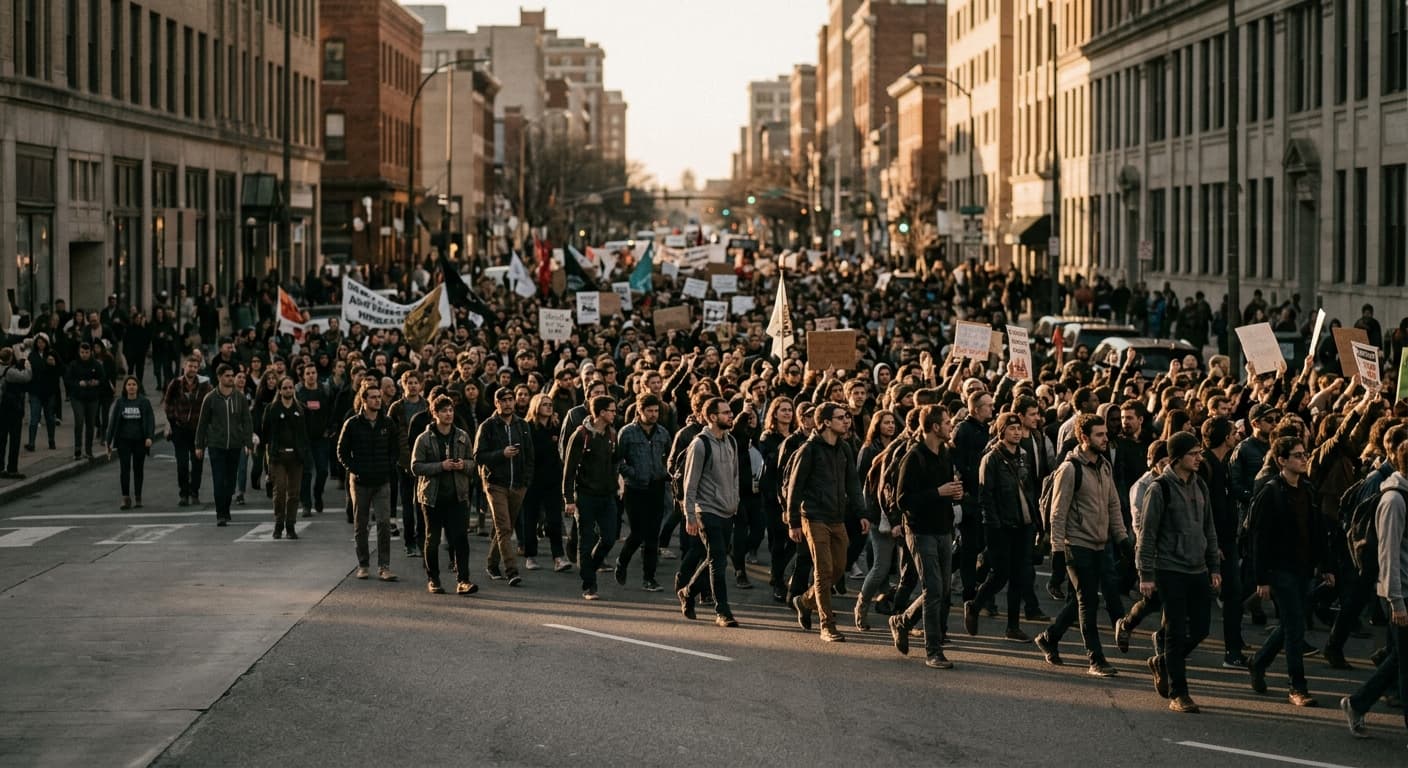
In Arkansas, you have a First Amendment right to record police officers performing their official duties in public. Arkansas also follows one-party consent under Ark. Code Ann. 5-60-120, so you may record any encounter you are part of. You must not interfere with officers while recording.
Recording police officers in Arkansas is legal and constitutionally protected. Multiple federal courts have recognized a First Amendment right to film law enforcement personnel performing their official duties in public. The ACLU of Arkansas actively defends this right and provides guidance to citizens on how to exercise it safely.
This guide covers the legal basis for recording police in Arkansas, the practical rules you should follow, body camera policies, FOIA requests for police records, and what to do if your right to record is challenged.
The Legal Basis for Recording Police
First Amendment Protection
The right to record police officers performing their duties in public derives from the First Amendment to the U.S. Constitution. While the Supreme Court has not issued a definitive ruling specifically on recording police, multiple federal circuit courts of appeal have recognized this right, and the principle is well established in federal law.
Multiple federal circuits have recognized a First Amendment right to record law enforcement in public. Arkansas is in the Eighth Circuit, where the right's status for qualified-immunity purposes remains contested rather than settled either way. Chestnut v. Wallace, 947 F.3d 1085 (8th Cir. 2020) recognized a right to passively observe police at a distance without interfering. Robbins v. City of Des Moines, 984 F.3d 673 (8th Cir. 2021) granted qualified immunity on First Amendment recording claims while reversing on Fourth Amendment grounds. And in Molina v. Book, 59 F.4th 334 (8th Cir. 2023), a divided 2-1 panel held that, as of a 2015 incident, the right to observe and record police was not yet clearly established for qualified-immunity purposes. That holding was limited to the facts and timing of that case: Judge Benton's dissent argued Chestnut and Walker v. City of Pine Bluff, 414 F.3d 989 (8th Cir. 2005), already bound the panel to the opposite conclusion under the circuit's prior-panel rule, and one of the three plaintiffs, Peter Groce, won his First Amendment retaliation claim outright. Citizens in Arkansas still have the constitutional right to record officers in public, but how a retaliation lawsuit fares if officers interfere depends on facts the Eighth Circuit has not resolved cleanly in one direction.
Arkansas State Law
Arkansas state law does not have a specific statute addressing the right to record police. However, the state's one-party consent framework under Ark. Code 5-60-120 supports the right to record any interaction you are part of. If an officer is speaking with you, you can record the conversation under one-party consent.
For situations where you are a bystander recording an encounter that does not involve you, the First Amendment provides the primary legal protection. The lack of a reasonable expectation of privacy in public spaces further supports your right to record.
Department of Justice Position
The U.S. Department of Justice has taken the position that recording police activity in public is constitutionally protected. In a 2012 letter to the Baltimore Police Department and in subsequent guidance, the DOJ's Civil Rights Division stated that the First Amendment protects individuals who record police officers performing their duties in public.
Rules for Recording Police in Arkansas
While the right to record is well established, it is not unlimited. You must follow certain rules to exercise your right lawfully.
Do Not Interfere with Police Operations
The most important rule is that your recording activity must not interfere with officers performing their duties. Interference can include:
- Physically blocking an officer's path or movement
- Crossing a police barrier or crime scene tape
- Standing so close that you impede an officer's ability to carry out their work
- Touching officers, their equipment, or their vehicles
- Shouting at officers in a manner designed to provoke or distract them during an active enforcement action
Maintain a Safe Distance
There is no fixed distance requirement in Arkansas law, but a general guideline is to stay far enough away that you are not interfering with the officers' work. Ten to fifteen feet is often cited as a reasonable distance for most encounters, though the appropriate distance varies with the situation.
If an officer asks you to move back, and the request is reasonable and related to safety or operational needs, you should comply. You can continue recording from the new position.
Do Not Trespass
Your right to record does not give you the right to trespass on private property to get a better angle. If you are on public property (a sidewalk, a public road, a park), you have every right to remain and record. If you enter private property without permission, you can be charged with trespassing under Ark. Code 5-39-203.
You May Livestream
You have the right to livestream police encounters in real time using your phone or other device. Livestreaming adds an extra layer of protection because even if your device is confiscated, the footage has already been transmitted to a remote server or viewed by others in real time.
You Do Not Need to Identify Yourself (in Most Cases)
Arkansas does not have a "stop and identify" statute that requires you to provide identification to police upon demand. However, if you are detained during a traffic stop or arrested, you may be required to identify yourself. Simply recording from a public sidewalk does not create an obligation to show identification.
What Police Cannot Do
Officers Cannot Order You to Stop Recording
An officer cannot lawfully order you to stop recording solely because you are recording. The act of recording is protected activity, and an order to stop recording is a prior restraint on First Amendment rights.
If an officer orders you to stop recording:
- Politely state that you are exercising your constitutional right to record
- Do not physically resist if the officer escalates
- Continue recording if possible
- Note the officer's name and badge number
- File a formal complaint with the department and consult an attorney
Officers Cannot Seize Your Device Without a Warrant
The Supreme Court's decision in Riley v. California, 573 U.S. 373 (2014), established that police generally need a warrant to search the contents of a cell phone. This protection extends to recordings on your device. An officer cannot take your phone, camera, or recording device and review or delete your footage without a warrant, except in exigent circumstances (such as an imminent threat to life).
Officers Cannot Delete Your Footage
Deleting or ordering the deletion of recordings is a form of evidence destruction that can violate your constitutional rights. If an officer deletes footage from your device, this may constitute:
- A violation of your First and Fourth Amendment rights
- Destruction of evidence
- Grounds for a civil rights lawsuit under 42 U.S.C. 1983
Body Cameras in Arkansas
No Statewide Mandate
Arkansas does not have a statewide body-worn camera mandate or a statute that specifically authorizes or requires camera adoption. HB 1219 of the 2025 Regular Session, which would have created a statewide body-worn camera mandate, was withdrawn by its author on February 6, 2025 and never enacted. Camera adoption remains agency-by-agency, at each department's discretion.
Department Policies
Departments that do use body cameras typically have written policies governing:
- When cameras must be activated (usually during all enforcement encounters)
- Storage and retention of footage
- Access to footage by officers, supervisors, and the public
- Restrictions on editing or deleting footage
Public Access to Body Camera Footage
Body camera footage held by Arkansas law enforcement agencies is generally subject to the Arkansas Freedom of Information Act. However, agencies may withhold footage under several FOIA exemptions, including:
- Ongoing criminal investigations
- Footage showing the interior of private residences
- Recordings involving minors
- Material that could compromise officer safety
FOIA and Access to Police Records
The Arkansas Freedom of Information Act
The Arkansas Freedom of Information Act (Ark. Code 25-19-101 et seq.) provides broad public access to government records, including police records. The 2025 FOIA Handbook published by the state provides detailed guidance on making requests.
How to Request Police Records
To request police records in Arkansas:
- Submit a written FOIA request to the relevant law enforcement agency
- Identify the records you are seeking as specifically as possible
- The agency must respond within three business days
- The agency may charge reasonable fees for copying records
Records That Are Available
FOIA generally covers:
- Incident reports and police reports
- Arrest records
- Booking photographs
- Body camera footage (subject to exemptions)
- Dispatch logs and 911 recordings
- Internal affairs investigation reports (in some circumstances)
FOIA Exemptions
Certain records are exempt from disclosure, including:
- Records that would interfere with an ongoing law enforcement investigation
- Records containing confidential informant information
- Personnel records containing personal contact information of officers
- Records specifically exempted by other statutes
Recording at Traffic Stops
As the Driver
If you are pulled over during a traffic stop, you have the right to record the encounter. You should:
- Keep your hands visible and avoid sudden movements
- Inform the officer that you are recording if asked, but you are not required to volunteer this information
- Keep your phone or camera in a stable position (dashboard mount recommended)
- Comply with the officer's lawful instructions regarding the traffic stop itself
As a Passenger
Passengers in a vehicle during a traffic stop also have the right to record the encounter. The same rules apply: do not interfere with the officer's duties, and comply with lawful instructions.
As a Bystander
If you witness a traffic stop and want to record from outside the vehicle, you may do so from a public space at a safe distance. Do not approach the vehicles or officers, and do not cross into the roadway.
Recording at Protests and Demonstrations
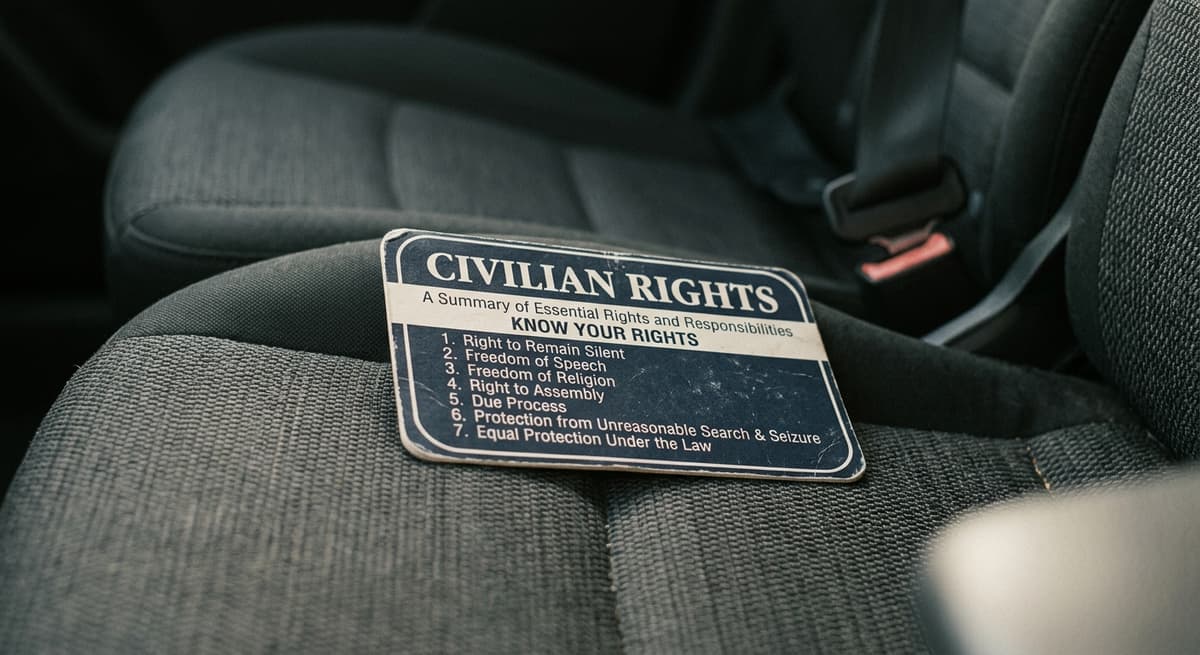
Arkansas has seen its share of public protests and demonstrations. Recording these events, including police activity during protests, is a protected First Amendment activity.
Your Rights During Protests
- You can record police officers, other demonstrators, and the general scene
- You can record from any public space
- Police cannot order you to stop recording or confiscate your device solely because you are at a protest
- If police declare an unlawful assembly, you must follow dispersal orders, but you can continue recording while complying
Protecting Your Footage
To protect your footage during a protest:
- Use a secure messaging app or cloud backup to automatically upload recordings
- Livestream when possible
- If you use a passcode or biometric lock on your phone, enable the passcode lock (courts are split on whether police can compel biometric unlock)
- Consider using a dedicated camera rather than your phone
What to Do If Your Rights Are Violated
If a police officer violates your right to record in Arkansas, you have several options for recourse.
File a Complaint
File a formal complaint with the officer's department. Most Arkansas police departments and sheriff's offices have internal affairs divisions or complaint processes. Document the date, time, location, officer's name or badge number, and a detailed description of what happened.
Consult an Attorney
A civil rights attorney can advise you on whether you have grounds for a lawsuit. Common legal claims include:
- First Amendment violations (interference with protected recording activity)
- Fourth Amendment violations (unlawful seizure of your recording device)
- Section 1983 civil rights claims under 42 U.S.C. 1983
Contact the ACLU
The ACLU of Arkansas handles cases involving violations of the right to record police. They can provide legal assistance and advocacy.
Recording Government Meetings in Arkansas
The Arkansas FOIA (Ark. Code 25-19-106) requires that public meetings be open to the public and requires the public entity itself to record and retain each open meeting for at least one year. Act 310 of 2021 amended a different FOIA provision, Ark. Code 25-19-105 (the public-records copying section), to specifically authorize "copying through image capture, including still and moving photography and video and digital recording" of public records.
Public bodies subject to this requirement include:
- City councils and municipal governing bodies
- County quorum courts
- School boards
- State boards, bureaus, commissions, and committees
- Any organization supported by public funds
Public entities must maintain their own recording of each open public meeting for at least one year from the date of the meeting.
2025 Legislative Update
2025 Arkansas Legislative Update
No new statutes addressing the right to record police were enacted in the 2025 session. HB 1219, which would have created a statewide body-worn camera mandate, was withdrawn by its author on February 6, 2025. Act 600 (HB 1641) amended the harassment statute (Ark. Code Ann. § 5-71-208) to criminalize non-consensual electronic tracking -- tangentially related to electronic surveillance but not to recording police.
At the federal level, Molina v. Book, 59 F.4th 334 (8th Cir. 2023), cert. denied 144 S. Ct. 558 (2024), remains the leading Eighth Circuit statement on the right to record police, though it was a divided 2-1 decision with a dissent arguing that binding circuit precedent already required the opposite result. Citizens have the constitutional right to record; the open question in this circuit is whether that right is clearly established enough to overcome qualified immunity when officers retaliate.
Explore More Arkansas Recording Law Topics
Audio Recording | Video Recording | Voyeurism Laws | Workplace Recording | Recording Police | Phone Call Recording | Security Cameras | Recording in Public | Landlord-Tenant | Dashcam Laws | School Recording | Medical Recording
Back to Arkansas Recording Laws
More Arkansas Recording Topics
More Arkansas Laws
Frequently Asked Questions
Can I legally record police officers in Arkansas?
Yes. You have a First Amendment right to record police officers performing their duties in public. This right is supported by multiple federal circuit courts and recognized by the ACLU of Arkansas. You must not interfere with police operations or obstruct officers while recording.
Can a police officer tell me to stop recording in Arkansas?
An officer cannot lawfully order you to stop recording solely because you are recording. The act of recording in public is constitutionally protected. If ordered to stop, politely assert your right and continue recording. If the officer persists, comply to avoid escalation but file a complaint afterward.
Can police delete recordings from my phone in Arkansas?
No. Police generally cannot search or delete content from your phone without a warrant, as established by the Supreme Court in Riley v. California (2014). If an officer deletes your footage, it may constitute a violation of your First and Fourth Amendment rights and could support a civil rights lawsuit.
Do Arkansas police officers have to wear body cameras?
Arkansas does not have a statewide body-worn camera mandate. HB 1219 of the 2025 session, which would have created such a mandate, was withdrawn by its author on February 6, 2025. Body camera adoption is left to individual department policies, with no state statute compelling or specifically authorizing it. Footage from agencies that do use cameras is generally subject to FOIA disclosure with standard exemptions.
Can I record a traffic stop in Arkansas?
Yes. Whether you are the driver, a passenger, or a bystander, you can record a traffic stop in Arkansas. Keep your hands visible, do not interfere with the officer's duties, and comply with lawful instructions related to the stop itself. You are not required to stop recording.
Updates
Corrected our description of the leading Eighth Circuit case on recording police, Molina v. Book (previously miscited as Molina v. City of St. Louis): it was a divided ruling limited to a 2015 incident, not a clean, settled rejection of the right to record, and one of the three plaintiffs in that case won his claim. Also repaired dead government citation links.
Independently fact-checked against the cited primary sources
Corrected the body-camera section: Ark. Code Ann. 12-6-701 is the officer-death-records-confidentiality statute, not a body-camera-policy authorization, so the false pinpoint citation was removed from the KeyTakeaways, body text, and FAQ (Arkansas has no statute specifically authorizing or requiring body-cam adoption).
Removed a raw ASCII double-quote pair around 'image capture' inside the KeyTakeaways items array, which was breaking the array's JS syntax and silently preventing the entire KeyTakeaways section from rendering on this page.
Governing law re-checked for recent changes
Corrected the FOIA claim: Act 310 of 2021 amended Ark. Code 25-19-105 (public-records copying), not the open-meetings section 25-19-106, which requires the public entity itself to record and retain meetings but contains no express citizen 'image capture' recording-rights language.
Governing law re-checked for recent changes
Spoke propagation: Swapped all Justia Arkansas statute links to primary arkleg.state.ar.us sources. Corrected circuit: Arkansas is in the Eighth Circuit (not Fifth). Replaced stale Turner v. Driver 5th Cir. framing with accurate 8th Circuit analysis: Molina v. Book, 59 F.4th 334 (8th Cir. 2023), cert. denied 144 S. Ct. 558 (2024) (divided 2-1 panel: right to record not clearly established as of a 2015 incident, but one of three plaintiffs prevailed and the dissent read binding circuit precedent the opposite way); Robbins v. City of Des Moines, 984 F.3d 673 (8th Cir. 2021); Chestnut v. Wallace, 947 F.3d 1085 (8th Cir. 2020) (passive observation only). Corrected body-camera statute to Ark. Code Ann. § 12-6-701 (prior cites used unrelated statute). Documented HB 1219 (2025) statewide body-cam mandate withdrawn by author February 6, 2025.
Reviewed and approved by an editor
The Law Behind This Article
This article rests on the statutory provisions below, held in our own legal record and retrieved from the official source. Tap a section to read the operative text.
Arkansas Code of 1987 Annotated
§ 5-60-120Interception and recording.In forcecited in 17 of our articles
(a) It is unlawful for a person to intercept a wire, landline, oral, telephonic communication, or wireless communication, and to record or possess a recording of the communication unless the person is a party to the communication or one (1) of the parties to the communication has given prior…
Official text (excerpt) · last checked 2026-08-31 · Read the full text in our law library · Verify at arkleg.state.ar.us
Cited in 10 court opinions in our collectionLatest citing opinion in our collection: 2022
In the courts (editorial summary, independently checked):Lewis v. State (1999) applied Section 5-60-120(a) to a man who taped his ex-wife's calls without being a party or having consent, affirming revocation. Elliott v. State (1998) held that while such recording by a private citizen is unlawful, the statute does not bar the tape from evidence.
Opinions citing this section in our collection:
- Lewis v. State (Supreme Court of Arkansas 1999, 336 Ark. 469)✓A man on probation admitted attaching a recorder to the telephone box outside his ex-wife's house and taping her calls; the court found that violated Section 5-60-120(a) because he was not a party and no party consented, and affirmed the revocation.
- Opinion No. (Arkansas Attorney General Reports 1998)“…consented to the recording. This provision is set forth in A.C.A. § 5-60-120 , as follows: 5-60-120 . Interceptio…”
- King v. State (Supreme Court of Arkansas 2019, 571 S.W.3d 476)✓A friend's phone app secretly recorded a murder suspect's call with a detective; the court held that although Section 5-60-120 makes such a recording by a non-party unlawful, it does not bar admissibility, and affirmed the refusal to exclude the tape.
Identified automatically from the court opinions citing this section — not a ranking of which case controls.
Also relied on in: Arkansas Recording Laws (2026): One-Party Consent Rules, Arkansas Audio Recording Laws: One-Party Consent Rules and Penalties (2026), Arkansas Dashcam Laws: Mounting, Audio, and Legal Uses (2026)
§ 25-19-105Examination and copying of public records.In forcecited in 4 of our articles
(a)(1)(A) Except as otherwise specifically provided by this section or by laws specifically enacted to provide otherwise, all public records shall be open to inspection and copying, including without limitation copying through image capture, including still and moving photography and video and digit
Official text (excerpt) · last checked 2026-09-02 · Read the full text in our law library · Verify at arkleg.state.ar.us
Cited in 727 court opinions in our collectionLatest citing opinion in our collection: 2025
In the courts (editorial summary, independently checked):Arkansas courts read section 25-19-105 to open records broadly and construe its exemptions narrowly. McCambridge v. City of Little Rock (1989) ordered a closed police file released, reading the law enforcement exemption to protect only ongoing investigations, and released crime scene photographs over a privacy objection.
Opinions citing this section in our collection:
- McCambridge v. City of Little Rock (Supreme Court of Arkansas 1989, 298 Ark. 219)✓The killer's mother and his attorney sued to block release of crime scene photos, a diary and letters after police closed a murder-suicide case; the court held the 25-19-105(b)(6) exemption only protects ongoing investigations and privilege adds none, so the records went out.
- Jegley v. Picado (Supreme Court of Arkansas 2002, 349 Ark. 600)“…scussed an individual's privacy interests in the context of Ark.Code Ann. § 25-19-105(b)(12) (Repl.2002), noting that it exem…”
- Sebastian County Chapter of the American Red Cross v. Weatherford (Supreme Court of Arkansas 1993, 311 Ark. 656)✓A requester sought a local Red Cross chapter's records after the city leased it a lot for one dollar a year; the court held an indirect subsidy is not support by public funds, so the chapter's records were not open to inspection under the FOIA.
Identified automatically from the court opinions citing this section — not a ranking of which case controls.
Also relied on in: How to Get a Police Report in Arkansas (2026): Crash & Incident Reports, Arkansas Police Body Camera Laws: Public Records Access, Arkansas Freedom of Information Act: Deadlines, Fees, and Appeals
§ 25-19-106Open public meetings. [Effective when emergency ends or on December 31, 2020.]In forcecited in 4 of our articles
(a) Except as otherwise specifically provided by law, all meetings, formal or informal, special or regular, of the governing bodies of all municipalities, counties, townships, and school districts and all boards, bureaus, commissions, or organizations of the State of Arkansas, except grand juries,…
Official text (excerpt) · last checked 2020-11-06 · Read the full text in our law library
Cited in 112 court opinions in our collectionLatest citing opinion in our collection: 2025
Opinions citing this section in our collection:
- Bryant v. Weiss (Supreme Court of Arkansas 1998, 335 Ark. 534)“…all be furnished to anyone who requests the information." Ark.Code Ann. § 25-19-106(b)(1)(Repl.1996)(emphasis added). That…”
- City of Fort Smith v. Wade (Supreme Court of Arkansas 2019, 578 S.W.3d 276)“…ning bodies of municipalities, are required to be public. Ark. Code Ann. § 25-19-106 (a) (Repl. 2014). We have held that FO…”
- City of Greenwood v. Shadow Lake Ass'n (Supreme Court of Arkansas 2015, 459 S.W.3d 291)“…tings provision of the Arkansas Freedom of Information Act (A.C.A. § 25-19-106) and whether or not there was a violati…”
Identified automatically from the court opinions citing this section — not a ranking of which case controls.
Also relied on in: Arkansas Laws on Recording in Public: Your Complete Guide (2026), Arkansas Video Recording Laws: Public Filming, Private Property, and Consent (2026), Arkansas School Recording Laws: Student Privacy, FERPA, and Classroom Rules (2026)
United States Code Title 42
§ 1983Civil action for deprivation of rightsIn forcecited in 50 of our articles
Every person who, under color of any statute, ordinance, regulation, custom, or usage, of any State or Territory or the District of Columbia, subjects, or causes to be subjected, any citizen of the United States or other person within the jurisdiction thereof to the deprivation of any rights, privileges, or immunities secured by the Constitution and laws, shall be liable to the party injured in an action at law, suit in equity, or other proper proceeding for redress, except that in any action brought against a judicial officer for an act or omission taken in such officer’s judicial capacity, injunctive relief shall not be granted unless a declaratory decree was violated or declaratory relief was unavailable. For the purposes of this section, any Act of Congress applicable exclusively to the District of Columbia shall be considered to be a statute of the District of Columbia.
Official text (excerpt) · last checked 2026-07-28 · Read the full text in our law library · Verify at uscode.house.gov
Cited in 282,365 court opinions in our collectionLatest citing opinion in our collection: 2026
Opinions citing this section in our collection:
- Ashcroft v. Iqbal (Supreme Court of the United States 2009, 556 U.S. 662)“…its brought against state officials under Rev. Stat. §1979, 42 U. S. C. §1983.” Hartman, 547 U. S., at 254, n. 2. Cf.…”
- Celotex Corp. v. Catrett, Administratrix of the Estate of Catrett (Supreme Court of the United States 1986, 477 U.S. 317)“…policeman as she left. Petitioner brought an action under 42 U. S. C. § 1983 claiming that the refusal of service a…”
- Monell v. New York City Dept. of Social Servs. (Supreme Court of the United States 1978, 436 U.S. 658)“…decided less than two decades ago. Focusing new light on 42 U. S. C. § 1983 , that decision widened access to the f…”
Identified automatically from the court opinions citing this section — not a ranking of which case controls.
Also relied on in: Alabama Laws on Recording Police: Your Rights and Limits, Alaska Laws on Recording Police: Your Rights and Limits (2026), District of Columbia Laws on Recording Police: Your Rights and Limits
Search our full record of US law — 2.1 million sections, every state + federal →
Sources and References
- ACLU of Arkansas - Know Your Rights: Recording Police(acluarkansas.org)
- Ark. Code 5-60-120 - Interception and Recording(law.justia.com)
- Ark. Code 25-19-106 - FOIA Open Public Meetings(law.justia.com)
- Arkansas Freedom of Information Act - Attorney General(arkansasag.gov).gov
- 2025 FOIA Handbook (21st Edition)(healthy.arkansas.gov).gov
- DOJ Civil Rights Division(justice.gov).gov
- 42 U.S.C. 1983 - Civil Rights Actions(law.cornell.edu)
- Act 600 of 2025 - Tracking Device Harassment Amendment(arkleg.state.ar.us).gov
- Ark. Code 25-19-105 - Examination and Copying of Public Records(law.justia.com)