
Arkansas
Arkansas Security Camera Laws: Home, Business, and HOA Rules (2026)
Independently fact-checked against primary sources (last audited August 15, 2026). · Reviewed by the RecordingLaw editorial team. · Law checked current as of August 7, 2026. · 3 primary sources cited on this page. How we verify our legal content
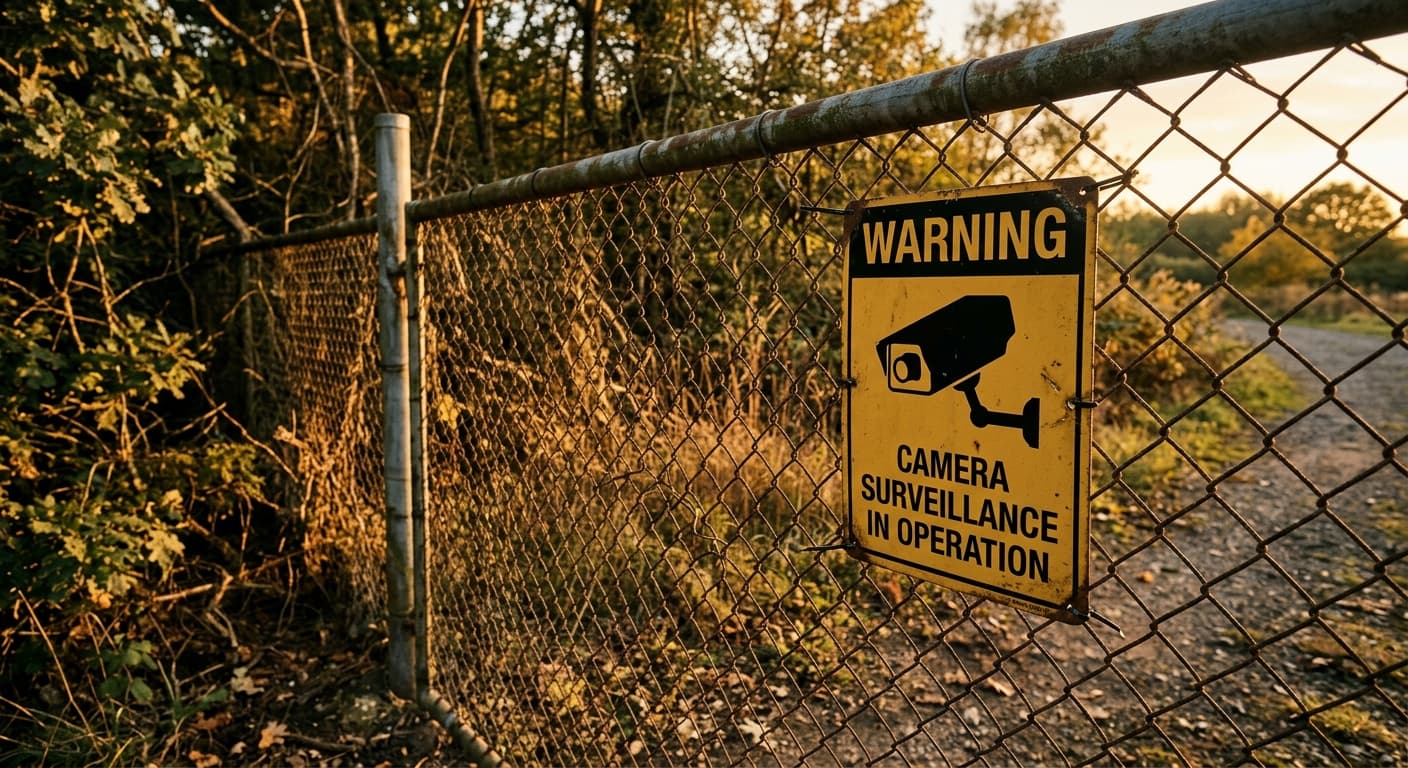
Arkansas allows homeowners and businesses to install security cameras on their own property. Audio recording follows one-party consent under Ark. Code Ann. 5-60-120. Placing cameras in bathrooms, bedrooms, or changing areas violates the video voyeurism statute, Ark. Code Ann. 5-16-101, and carries felony penalties.
Security cameras are legal in Arkansas for both residential and commercial use, but their placement and audio capabilities are subject to state privacy laws. Arkansas does not have a single dedicated "security camera statute," so the rules come from a combination of the video voyeurism law (Ark. Code 5-16-101), the wiretapping statute (Ark. Code 5-60-120), general privacy principles, and local regulations.
This guide covers everything you need to know about security camera laws in Arkansas, from home installation to business surveillance to neighbor disputes.
Home Security Camera Laws in Arkansas
Where You Can Place Cameras
Arkansas homeowners have broad rights to install security cameras on their own property. You can place cameras to monitor:
- Front door and entryways. Doorbell cameras (Ring, Nest, Arlo, etc.) are legal and widely used.
- Driveways and garages. Monitoring vehicle activity and access points is permitted.
- Backyards and patios. You can record your own outdoor living spaces.
- Side yards and property perimeters. Cameras aimed along your property line are legal.
- Interior common areas. Living rooms, kitchens, hallways, and similar shared spaces can be monitored.
Where You Cannot Place Cameras
Certain areas are off-limits for security cameras, even in your own home. Under Ark. Code 5-16-101, you cannot place cameras in areas where any person has a reasonable expectation of privacy:
- Bathrooms and restrooms
- Bedrooms used by guests or tenants
- Changing areas and dressing rooms
- Private nursing or lactation rooms
Violating this rule is a Class D felony for a first or second offense (up to 6 years in prison) and a Class C felony for a third or subsequent offense (3 to 10 years in prison). Note that Ark. Code 5-16-101(d)(2) exempts "security monitoring operated by or at the direction of an occupant of a residence" from the entire section, and the statute does not expressly limit that exemption to non-private areas -- Arkansas courts have not clarified how far it reaches, so camera placement in bathrooms or similarly private spaces still carries real legal risk and is not recommended.
Audio Recording on Security Cameras
Many modern security cameras include microphones that record audio along with video. This creates an additional legal consideration under Arkansas law.
Under Ark. Code 5-60-120, audio recording follows one-party consent rules. If your security camera captures audio of conversations:
- Conversations you are part of can be recorded legally
- Conversations between other people that you are not participating in may violate the wiretapping statute if captured in a private setting
- Ambient sounds in public areas are generally not a concern because there is no expectation of privacy
If your outdoor security cameras have audio capability and might capture your neighbors' private conversations (for example, a camera near a shared property line pointing toward their patio), consider disabling the audio function to avoid potential issues.
Business Security Camera Laws
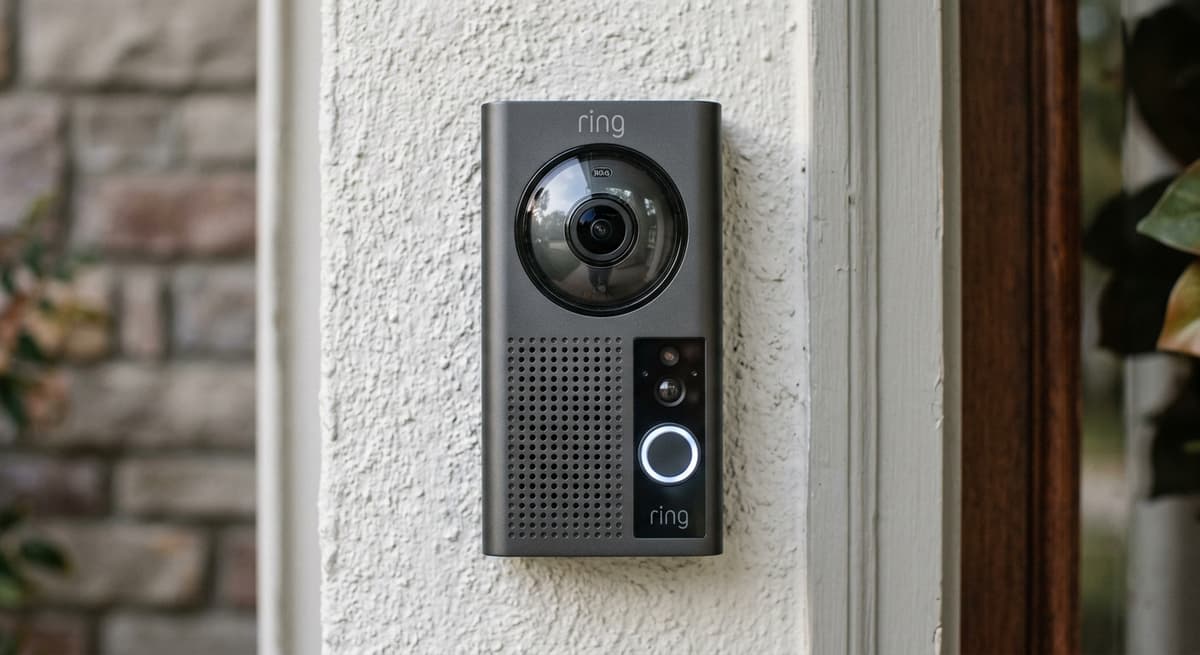
Employer Surveillance Rights
Arkansas businesses can install security cameras in common areas for legitimate business purposes including theft prevention, safety monitoring, and operational oversight. Cameras are commonly placed in:
- Retail floors and customer areas
- Cash registers and point-of-sale areas
- Warehouses and storage areas
- Parking lots and building exteriors
- Loading docks and delivery areas
- Lobbies, hallways, and reception areas
- Break rooms and common areas
Prohibited Areas in the Workplace
The same restrictions that apply to home cameras apply to business cameras. Employers cannot install cameras in:
- Employee bathrooms and restrooms
- Locker rooms and changing areas
- Private nursing or lactation rooms
- Shower facilities
An employer who places a camera in any of these areas faces criminal charges under Ark. Code 5-16-101 as well as potential civil liability for invasion of privacy. The statute's subsection (d)(3) exempts "security monitoring operated by or at the direction of the owner or administrator of a place of business... or other structure" from the section entirely, and Arkansas courts have not clarified whether that exemption reaches cameras placed in bathrooms or locker rooms specifically -- employers should not rely on it and should treat these areas as off-limits regardless.
Signage and Notice Requirements
Arkansas does not have a specific statute requiring businesses to post signs notifying customers or employees about video surveillance. However, posting visible signage is strongly recommended for several reasons:
- Deterrence: Signs warning of video surveillance deter theft and misconduct.
- Reduced privacy expectations: When people see camera notices, their expectation of privacy in that area diminishes, strengthening the business's legal position.
- Employee relations: Informing employees about monitoring reduces the risk of morale issues and claims of secret surveillance.
- Legal protection: In litigation, the ability to show that surveillance was disclosed can be a significant defense.
Industry-Specific Requirements
Certain industries have additional regulations about surveillance:
- Healthcare facilities: Must comply with HIPAA requirements and ensure that cameras do not capture protected health information inappropriately.
- Financial institutions: Subject to federal and state banking regulations that may address surveillance.
- Child care facilities: The Arkansas Department of Human Services may have specific rules about camera use in licensed child care settings.
Neighbor Disputes Over Security Cameras
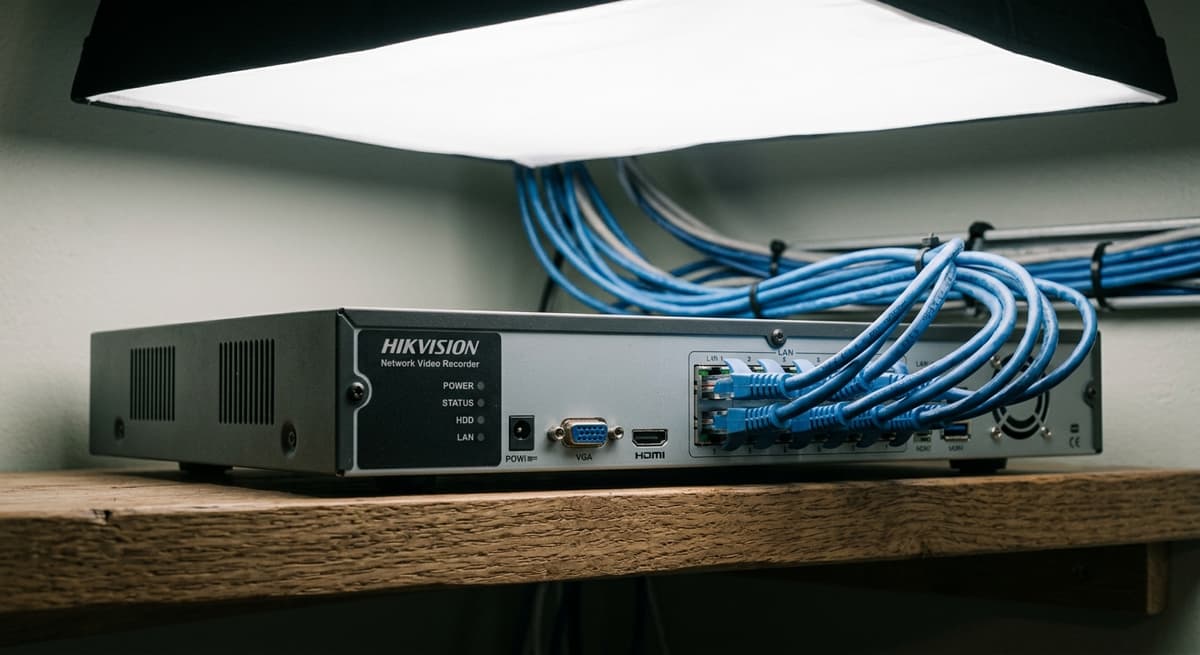
Can Your Neighbor Point a Camera at Your Property?
This is one of the most common security camera questions in Arkansas. The general rule is that your neighbor can point cameras at their own property, and if those cameras happen to capture portions of your property that are visible from your neighbor's vantage point, that is generally legal. Your neighbor is recording what they can see from their own property.
However, certain situations may cross the line:
- Cameras aimed directly at your windows: If a neighbor positions a camera to look into your windows or other private areas of your home, this could constitute an invasion of privacy.
- Cameras with zoom capability focused on private areas: Using telephoto lenses or digital zoom to capture activity inside your home goes beyond casual observation.
- Cameras combined with audio recording: If a neighbor's camera records your private conversations, this could violate Ark. Code 5-60-120.
Resolving Neighbor Camera Disputes
If you have a dispute with a neighbor over their security cameras:
- Talk to your neighbor first. Many disputes can be resolved through a polite conversation about camera angles and privacy concerns.
- Review any HOA rules. If you live in a community with an HOA, check the covenants for camera restrictions.
- Document the situation. Photograph the camera positions and note any specific privacy concerns.
- Consult local ordinances. Some Arkansas municipalities may have additional rules about cameras and privacy.
- Seek legal advice. If direct resolution fails, an attorney experienced in property law or privacy law can advise you on your options.
Privacy Fences and Countermeasures
If you are concerned about a neighbor's camera capturing your private activities, practical steps include:
- Installing a privacy fence along the property line
- Planting hedges or trees to block camera views
- Using window treatments, blinds, or tinted film
- Adjusting your outdoor activities to areas not visible to the camera
These measures address the practical privacy concern without requiring legal action.
HOA and Community Rules
Can an HOA Restrict Security Cameras?
Yes. Homeowners' associations in Arkansas can establish rules about security cameras in their covenants, conditions, and restrictions (CC&Rs). Common HOA camera restrictions include:
- Limits on the number of exterior cameras
- Requirements for camera appearance and visibility
- Restrictions on camera placement (e.g., no cameras pointing at common areas or other units)
- Approval requirements before installation
- Prohibitions on certain types of cameras or mounting methods
HOA Enforcement
If you violate your HOA's camera rules, the HOA can:
- Issue a warning or notice of violation
- Impose fines per the CC&R provisions
- Require removal or repositioning of cameras
- In extreme cases, pursue legal action to enforce compliance
Balancing Security and HOA Rules
If your HOA restricts cameras, you may still have options:
- Request a variance: Some HOAs will grant exceptions for security concerns.
- Use compliant camera types: Doorbell cameras and discreet indoor cameras may comply with aesthetic restrictions.
- Propose rule changes: Attend HOA meetings and propose updated camera policies that balance security and community aesthetics.
Doorbell Cameras in Arkansas
Legal Status
Doorbell cameras (Ring, Nest, Arlo, Blink, etc.) are legal in Arkansas. They are among the most common home security devices, and their use is widespread.
Audio Considerations
Most doorbell cameras include two-way audio capability. Under one-party consent, you can record conversations you participate in through your doorbell camera. If the camera is recording audio of people who ring your bell or walk past, the legal analysis depends on whether those individuals are in a public-facing area with no expectation of privacy.
Front porches and doorsteps are generally considered areas where visitors have a reduced expectation of privacy, so recording audio in these locations typically does not violate Arkansas law.
Package Delivery and Porch Pirates
Doorbell cameras are frequently used to document package theft ("porch piracy"). Footage from these cameras is commonly accepted by law enforcement and courts as evidence of theft or trespassing.
Smart Home Security Systems
Integrated Systems
Modern smart home security systems (ADT, Vivint, SimpliSafe, Ring Alarm, etc.) often combine cameras with motion sensors, door/window sensors, and monitoring services. All camera components of these systems are subject to the same Arkansas laws discussed in this guide.
Cloud Storage and Data Privacy
Security camera footage stored in the cloud raises additional considerations:
- Law enforcement access: Police may request footage from cloud providers through subpoenas or warrants.
- Data breaches: Cloud-stored footage can be exposed through security breaches. Choose providers with strong encryption.
- Retention policies: Understand how long your provider stores footage and whether it is automatically deleted.
Local Storage
Cameras that store footage locally (on an SD card, NAS drive, or DVR) give you more control over your data. Local storage eliminates concerns about third-party access but requires you to manage storage capacity and backups.
Using Security Camera Footage as Evidence
Admissibility in Arkansas Courts
Security camera footage is routinely admitted as evidence in both criminal and civil cases in Arkansas. To be admissible, the footage must be:
- Authenticated: Someone must testify that the footage is genuine and unaltered.
- Relevant: The footage must relate to a matter at issue in the case.
- Properly preserved: The original or a verified copy must be maintained with a chain of custody.
Common Uses
Security camera footage is commonly used as evidence for:
- Burglary and theft cases
- Vandalism and property damage
- Personal injury claims (slip and fall incidents)
- Automobile accidents captured by exterior cameras
- Domestic disputes and restraining order violations
- Insurance claims
Providing Footage to Law Enforcement
If law enforcement requests your security camera footage, you can voluntarily share it. However, police generally need a warrant or subpoena to compel you to turn over footage. Some doorbell camera companies have partnerships with local police departments that facilitate voluntary sharing of footage, though participation is entirely optional.
Explore More Arkansas Recording Law Topics
Audio Recording | Video Recording | Voyeurism Laws | Workplace Recording | Recording Police | Phone Call Recording | Security Cameras | Recording in Public | Landlord-Tenant | Dashcam Laws | School Recording | Medical Recording
Back to Arkansas Recording Laws
More Arkansas Recording Topics
See Also
- Arkansas Surveillance Camera Laws covers home, HOA, neighbor, workplace, and landlord camera rules in Arkansas.
More Arkansas Laws
Frequently Asked Questions
Do I need a permit to install security cameras at my home in Arkansas?
No. Arkansas does not require a permit to install security cameras on your own residential property. However, if you live in an HOA community, you may need to comply with the HOA's rules about camera placement and appearance.
Can I record audio with my security cameras in Arkansas?
Audio recording follows one-party consent under Ark. Code 5-60-120. You can record audio of conversations you participate in. If your camera captures private conversations between other people that you are not part of, the audio may violate the wiretapping statute. Consider disabling audio on outdoor cameras that might pick up neighbors' conversations.
Can my neighbor point a security camera at my house in Arkansas?
A neighbor can generally point cameras at their own property, and if those cameras capture portions of your property that are visible from their vantage point, it is typically legal. However, cameras specifically aimed at your windows or private areas may constitute an invasion of privacy.
Does my business need to post signs about security cameras in Arkansas?
Arkansas does not have a specific law requiring camera signage for businesses. However, posting visible signs is strongly recommended as it deters criminal activity, reduces privacy expectations, and provides legal protection in potential disputes.
Can police access my doorbell camera footage without my consent?
Police generally need a warrant or subpoena to compel you to provide security camera footage. You can voluntarily share footage if you choose. Some doorbell camera companies have voluntary sharing programs with police departments, but participation is always optional.
Updates
Fixed four broken Arkansas statute citation links (Ark. Code 5-16-101 and 5-60-120) that were returning server errors; they now point to live, verified statute text.
Independently fact-checked against the cited primary sources
Added a caveat noting Ark. Code 5-16-101(d)(2)-(3) exempts residence- and business-operated 'security monitoring' from the video voyeurism statute entirely, without an express carve-out for private areas -- an unresolved statutory ambiguity the article's blanket felony-liability claims for homeowners and employers did not address.
Governing law re-checked for recent changes
Spoke propagation: Swapped all Justia Arkansas statute links (§ 5-16-101, § 5-60-120, § 5-60-103) to primary arkleg.state.ar.us sources. No substantive law changes needed.
Reviewed and approved by an editor
The Law Behind This Article
This article rests on the statutory provisions below, held in our own legal record and retrieved from the official source. Tap a section to read the operative text.
Arkansas Code of 1987 Annotated
§ 5-16-101Crime of video voyeurism.In forcecited in 9 of our articles
(a) It is unlawful for a person to use a camera, videotape, photo- optical, photoelectric, or other image recording device for the purpose of secretly observing, viewing, photographing, filming, or videotaping another person who is present in a residence, place of business, school, or other structu
Official text (excerpt) · last checked 2026-08-31 · Read the full text in our law library · Verify at arkleg.state.ar.us
Cited in 5 court opinions in our collectionLatest citing opinion in our collection: 2023
In the courts (editorial summary, independently checked):Courts have applied the video voyeurism statute in Devries (2019), where children had a reasonable expectation of privacy behind closed bedroom and bathroom doors in a parent's home, and in Powell (2020), holding the crime is complete on using a camera for the prohibited purpose even if the images are never viewed.
Opinions citing this section in our collection:
- Opinion No. (Arkansas Attorney General Reports 2001)“…tice of the surveillance would also negate any violation of A.C.A. § 5-16-101 , which criminalizes "video voyeurism."…”
- Bruce Wayne Devries v. State of Arkansas (Court of Appeals of Arkansas 2019, 2019 Ark. App. 478)✓One adopted daughter testified she caught Devries watching her through the bathroom window and found a baby monitor in her bathroom and bedroom; another caught him filming under her door. The court affirmed the video voyeurism convictions, rejecting his no-privacy-at-home claim.
- Robert Powell v. State of Arkansas (Court of Appeals of Arkansas 2020, 605 S.W.3d 532)✓Powell hid a camera in a fake outlet in a cabin he rented to a family and argued he could not be guilty because police took the SD card before he viewed the footage; the court held the statute punishes using a camera for that secret purpose, so never watching is no defense.
Identified automatically from the court opinions citing this section — not a ranking of which case controls.
§ 5-4-401Sentence.In forcecited in 6 of our articles
(a) A defendant convicted of a felony shall receive a determinate sentence according to the following limitations: (1) For a Class Y felony, the sentence shall be not less than ten (10) years and not more than forty (40) years, or life; (2) For a Class A felony, the sentence shall be not less…
Official text (excerpt) · last checked 2020-11-06 · Read the full text in our law library
Cited in 248 court opinions in our collectionLatest citing opinion in our collection: 2026
Opinions citing this section in our collection:
- Radford v. State (Court of Appeals of Arkansas 2018, 538 S.W.3d 894)“…r a Class B felony is five to twenty years' imprisonment. Ark. Code Ann. § 5-4-401 (a)(3). The final sentencing order tha…”
- Romario Waller v. State of Arkansas (Supreme Court of Arkansas 2020, 2020 Ark. 381)“…onment for first-degree murder is not illegal on its face. Ark. Code Ann. § 5-4-401(a)(1) (Repl. 1993). Moreover, this cour…”
- James Sherwood Edwards v. State of Arkansas (Court of Appeals of Arkansas 2024, 2024 Ark. App. 431)“…nge for Class D felony at not more than fifteen years) with Ark. Code Ann. § 5-4-401(a)(2) (Repl. 2013) (setting sentencing…”
Identified automatically from the court opinions citing this section — not a ranking of which case controls.
§ 5-60-120Interception and recording.In forcecited in 17 of our articles
(a) It is unlawful for a person to intercept a wire, landline, oral, telephonic communication, or wireless communication, and to record or possess a recording of the communication unless the person is a party to the communication or one (1) of the parties to the communication has given prior…
Official text (excerpt) · last checked 2026-08-31 · Read the full text in our law library · Verify at arkleg.state.ar.us
Cited in 10 court opinions in our collectionLatest citing opinion in our collection: 2022
In the courts (editorial summary, independently checked):Lewis v. State (1999) applied Section 5-60-120(a) to a man who taped his ex-wife's calls without being a party or having consent, affirming revocation. Elliott v. State (1998) held that while such recording by a private citizen is unlawful, the statute does not bar the tape from evidence.
Opinions citing this section in our collection:
- Lewis v. State (Supreme Court of Arkansas 1999, 336 Ark. 469)✓A man on probation admitted attaching a recorder to the telephone box outside his ex-wife's house and taping her calls; the court found that violated Section 5-60-120(a) because he was not a party and no party consented, and affirmed the revocation.
- Opinion No. (Arkansas Attorney General Reports 1998)“…consented to the recording. This provision is set forth in A.C.A. § 5-60-120 , as follows: 5-60-120 . Interceptio…”
- King v. State (Supreme Court of Arkansas 2019, 571 S.W.3d 476)✓A friend's phone app secretly recorded a murder suspect's call with a detective; the court held that although Section 5-60-120 makes such a recording by a non-party unlawful, it does not bar admissibility, and affirmed the refusal to exclude the tape.
Identified automatically from the court opinions citing this section — not a ranking of which case controls.
United States Code Title 18
§ 2511Interception and disclosure of wire, oral, or electronic communications prohibitedIn forcecited in 418 of our articles
Except as otherwise specifically provided in this chapter any person who— intentionally intercepts, endeavors to intercept, or procures any other person to intercept or endeavor to intercept, any wire, oral, or electronic communication; intentionally uses, endeavors to use, or procures any other person to use or endeavor to use any electronic, mechanical, or other device to intercept any oral communication when— such device is affixed to, or otherwise transmits a signal through, a wire, cable, or other like connection used in wire communication; or such device transmits communications by radio, or interferes with the transmission of such communication; or such person knows, or has reason to know, that such device or any component thereof has been sent through the mail or transported in interstate or foreign commerce; or such use or endeavor to use (A) takes place on the premises of any business or other commercial establishment the operations of which affect interstate or foreign commerce; or (B) obtains or is for the purpose of obtaining information relating to the operations of any business or other commercial establishment the operations of which affect interstate or foreign…
Official text (excerpt) · last checked 2026-08-28 · Read the full text in our law library · Verify at uscode.house.gov
Cited in 2,045 court opinions in our collectionLatest citing opinion in our collection: 2026
In the courts (editorial summary, independently checked):Griggs-Ryan v. Smith (1990) applied the Section 2511(2)(d) prior-consent exception, treating a tenant repeatedly told that all incoming calls were taped as having impliedly consented. United States v. United States District Court (1972) read the then-current Section 2511(3) as conferring no presidential surveillance power.
Opinions citing this section in our collection:
- Mitchell v. Forsyth (Supreme Court of the United States 1985, 472 U.S. 511)✓The Attorney General authorized a warrantless 1970 national security wiretap that caught the plaintiff's calls; the Court held the since-repealed Section 2511(3) disclaimer left the tap lawful under Title III, and that Mitchell had qualified immunity.
- United States v. United States District Court for the Eastern District of Michigan (Supreme Court of the United States 1972, 407 U.S. 297)✓The Attorney General approved warrantless wiretaps on members of a domestic group accused of bombing a CIA office; the Court read Section 2511(3) as a congressional disclaimer conferring no surveillance power, then held the Fourth Amendment required prior judicial approval.
- Forsyth v. Barr (Court of Appeals for the Fifth Circuit 1994, 19 F.3d 1527)✓Dallas police used, in an internal affairs probe of an officer, calls private parties allegedly intercepted illegally; assuming that was unlawful, the Fifth Circuit held Section 2517(1) and (2) allowed the disclosure and use, defeating the Section 2511(1)(c) and (d) claims.
Identified automatically from the court opinions citing this section — not a ranking of which case controls.
Search our full record of US law — 2.1 million sections, every state + federal →
Sources and References
- Ark. Code 5-16-101 - Crime of Video Voyeurism(law.justia.com)
- Ark. Code 5-60-120 - Interception and Recording(law.justia.com)
- Ark. Code 5-4-401 - Sentencing for Misdemeanors and Felonies(law.justia.com)
- Arkansas Department of Human Services(humanservices.arkansas.gov).gov
- Arkansas Attorney General - FOIA Guidance(arkansasag.gov).gov
- Arkansas General Assembly(arkleg.state.ar.us).gov
- 18 U.S.C. 2511 - Federal Wiretap Act(law.cornell.edu)