
District of Columbia
District of Columbia Laws on Recording Police: Your Rights and Limits
Independently fact-checked against primary sources (last audited August 15, 2026). · Reviewed by the RecordingLaw editorial team. · Law checked current as of August 7, 2026. · 20 primary sources cited on this page. How we verify our legal content
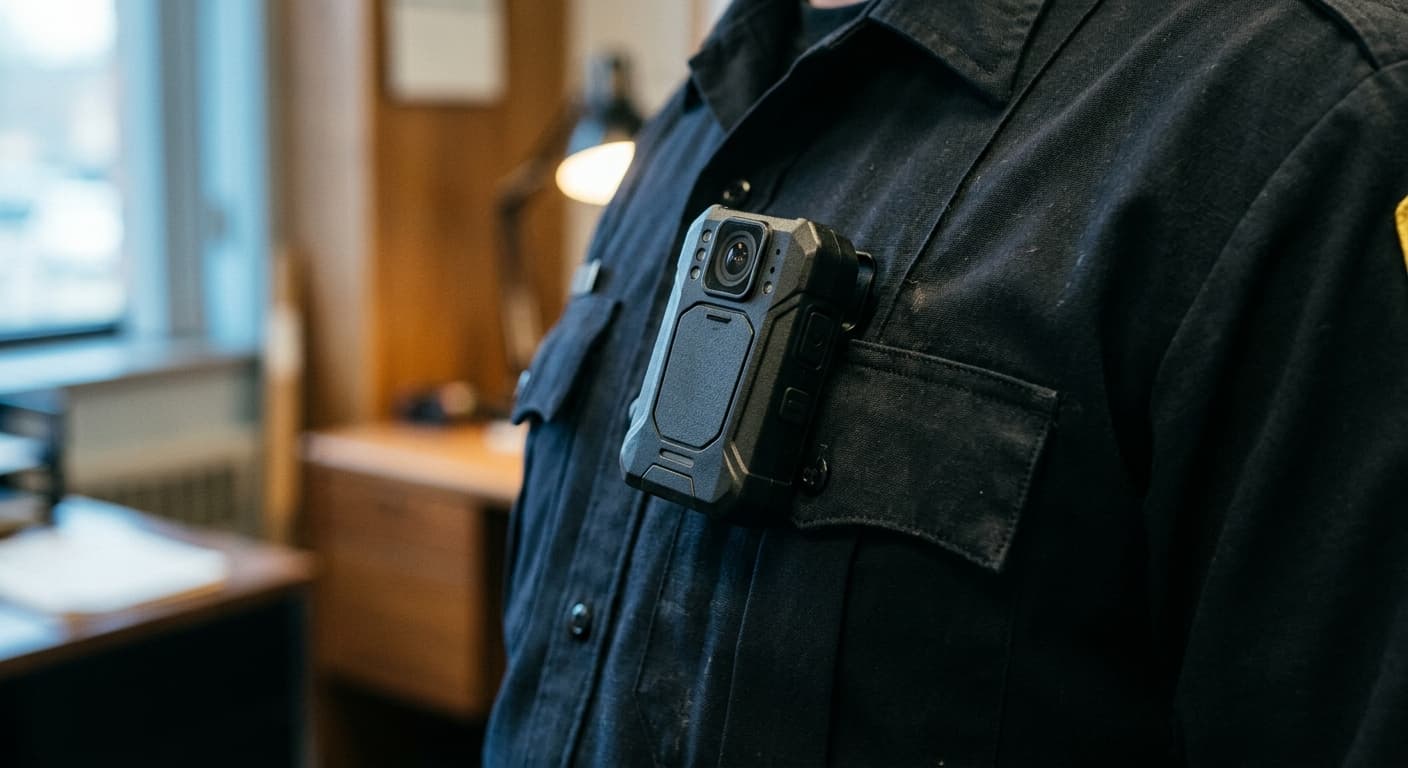
In the District of Columbia, the First Amendment protects your right to record police officers performing their duties in public. Officers cannot order you to stop recording or confiscate your device without a warrant.
The right to record police officers in public is one of the most significant civil liberties issues in the District of Columbia. As the seat of the federal government and a city with a large and visible police presence, D.C. sees frequent encounters between citizens and law enforcement. Understanding your legal right to record these encounters is essential for every D.C. resident, visitor, journalist, and activist.
The District of Columbia's one-party consent law, the First Amendment, and federal court decisions all support the right to record police in public. At the same time, the District's unique status as a federal enclave means that recording near federal law enforcement facilities involves additional rules.
The Constitutional Right to Record Police
First Amendment Protections
The First Amendment to the U.S. Constitution protects the right to record law enforcement officers performing their official duties in public spaces in most federal circuits to address the question. The U.S. Supreme Court has not issued a definitive ruling, and the right is not uniformly recognized.
Sister circuits that have published holdings recognizing the right include the First (Glik v. Cunniffe, 655 F.3d 78 (1st Cir. 2011)), Third (Fields v. City of Philadelphia, 862 F.3d 353 (3d Cir. 2017)), Fourth (Sharpe v. Winterville Police Dep't, 59 F.4th 674 (4th Cir. 2023)), Fifth (Turner v. Driver, 848 F.3d 678 (5th Cir. 2017)), Seventh (ACLU v. Alvarez, 679 F.3d 583 (7th Cir. 2012)), Ninth (Fordyce v. City of Seattle, 55 F.3d 436 (9th Cir. 1995); Askins v. DHS, 899 F.3d 1035 (9th Cir. 2018)), Tenth (Irizarry v. Yehia, 38 F.4th 1282 (10th Cir. 2022)), and Eleventh (Smith v. City of Cumming, 212 F.3d 1332 (11th Cir. 2000)).
The U.S. Court of Appeals for the D.C. Circuit has not published a civilian right-to-record-police holding. The closest in-circuit authority is Price v. Garland, 45 F.4th 1059 (D.C. Cir. 2022), cert. denied, 143 S. Ct. 1797 (May 1, 2023). Price arose from National Park Service commercial-filming permit rules rather than a police-recording confrontation. The 2-1 panel (Senior Judge Ginsburg and Judge Henderson, with Judge Tatel dissenting) upheld the permit framework using a more government-deferential analytic mode than the sister-circuit consensus. Price is therefore not a direct civilian-recording holding but its analytic gravity makes the in-circuit law on civilian police recording unsettled.
What this means in practice: a person recording MPD officers in public can point to the First Amendment and the sister-circuit consensus, and federal district courts in D.C. have allowed Section 1983 claims to proceed on right-to-record theories, but no D.C. Circuit panel has squarely adopted the rule.
What You Can Record
In D.C., you can legally record:
- Police traffic stops, including your own
- Arrests occurring in public view
- Police interactions with other citizens on streets and sidewalks
- Police responses to emergencies and incidents in public areas
- Protests and demonstrations where police are present
- Police press conferences and public statements
- Your own interactions with officers during stops, detentions, or questioning
How the Right to Record Works in Practice
Your right to record police is subject to reasonable time, place, and manner restrictions. You may exercise this right as long as you:
- Stand at a reasonable distance from the officer and the scene
- Do not physically insert yourself into the encounter
- Do not interfere with the officer's ability to perform their duties
- Do not trespass on private or restricted property to get a better angle
- Comply with lawful orders to move back to a safe distance
You do not need to:
- Ask permission before recording
- Identify yourself as recording
- Stop recording when asked by an officer (unless you are interfering)
- Show or hand over your recording device
- Delete footage at an officer's request
MPD Body-Worn Camera Program
Legal Framework
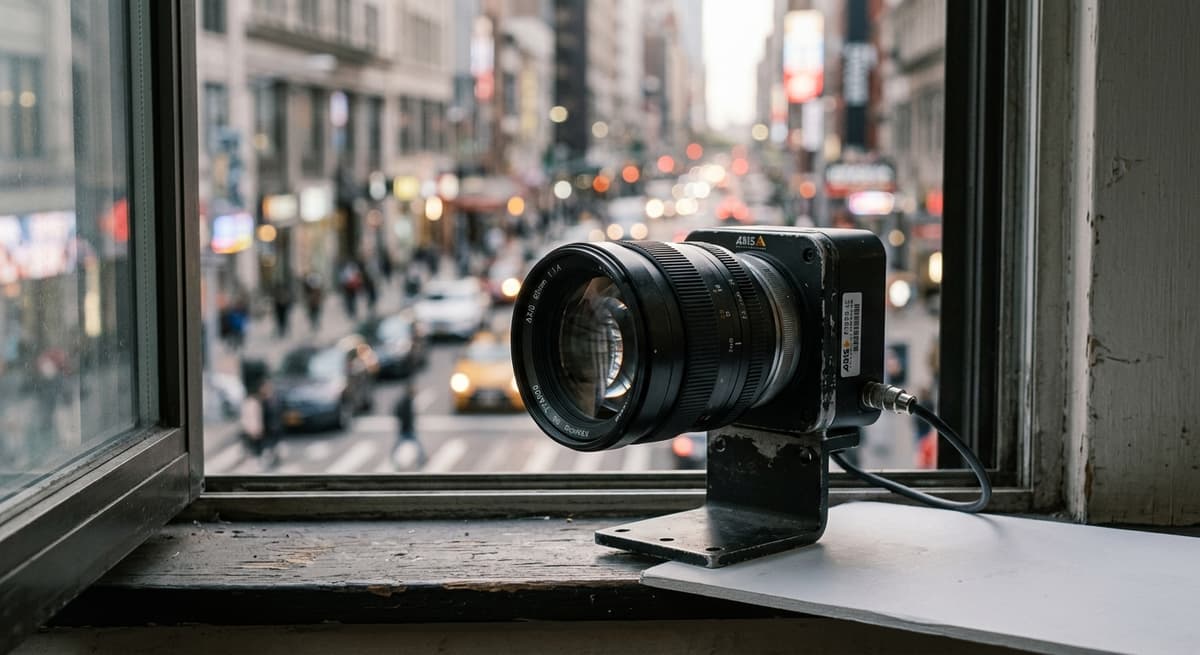
The Metropolitan Police Department (MPD) operates one of the largest body-worn camera programs in the country. The program is governed by the Body-Worn Camera Act (BWCA) at D.C. Code Section 5-116.31 et seq., with the public-release rule at D.C. Code Section 5-116.33. Section 5-116.33 requires MPD to release body-worn camera footage and the names of officers involved in officer-involved deaths and serious uses of force within 5 business days of the incident.
The BWCA was amended by D.C. Law 25-175 (the "Secure DC Omnibus Amendment Act of 2024," signed by Mayor Bowser on March 11, 2024 and sponsored by Councilmember Pinto). Secure DC added (i) an officer-likeness no-redaction rule for the 5-business-day release, (ii) a statutory definition of "serious bodily injury" tied to the release trigger, and (iii) a prohibition on officers reviewing their own body-worn camera footage before writing their initial incident report in covered cases. Secure DC did not add the 5-business-day release itself, which was already in the original 2015 statute.
MPD General Order BWC-001 sets implementing policy under the BWCA framework.
Under the program, MPD officers are required to wear and activate body cameras during specific law enforcement activities, including:
- Arrests and detentions
- Traffic stops
- Pedestrian stops
- Use of force incidents
- Searches of persons or property
- Calls for service where there is interaction with the public
- Serving warrants
- Encounters that become adversarial
Accessing Body Camera Footage
Citizens have the right to request body camera footage related to their own interactions with police. The process for obtaining footage involves:
- Filing a request with the MPD through the Freedom of Information Act (FOIA) process or directly through MPD's records division
- Identifying the interaction by providing the date, time, location, and officers involved
- Waiting for review: MPD reviews footage requests and may redact portions to protect privacy, ongoing investigations, or safety concerns
- Receiving the footage: If approved, you will receive copies of the relevant video
Under D.C. Code Section 2-532, the D.C. Freedom of Information Act establishes the public's right to access government records, including body camera footage, subject to certain exemptions.
Retention and Deletion
MPD retains body camera footage for specific periods depending on the nature of the interaction:
- Flagged footage (use of force, complaints, arrests): Retained for extended periods
- Routine footage: Retained for a minimum period before deletion
- Evidence in ongoing cases: Retained until the case is fully resolved
The specific retention periods are set by MPD policy and may change over time.
What to Do When Police Tell You to Stop Recording
Know Your Rights
If a police officer orders you to stop recording, you should understand that:
- You have a constitutional right to record police in public
- An officer cannot lawfully order you to stop recording unless your recording is genuinely interfering with their operations
- An officer cannot confiscate your device or delete your footage without a warrant
- An officer cannot arrest you solely for recording
Practical Steps During an Encounter
If you encounter resistance from officers while recording:
- Stay calm and respectful. Do not argue or become confrontational.
- State clearly: "I am exercising my First Amendment right to record. I am not interfering with your duties."
- Maintain a safe distance. Step back if asked, but continue recording.
- Do not physically resist if an officer attempts to take your device. Comply physically but state your objection verbally.
- Note the officer's badge number, name, and patrol car number for later reference.
- Preserve your recording by backing it up to cloud storage as soon as possible.
Filing a Complaint
If you believe your right to record was violated, you can file a complaint with:
- The Office of Police Complaints (OPC): D.C.'s independent civilian oversight body that investigates complaints against MPD officers. The OPC can investigate, mediate, and adjudicate complaints.
- MPD Internal Affairs Division: For complaints about specific officer conduct
- The American Civil Liberties Union (ACLU) of the District of Columbia: For guidance on civil rights violations
- A civil rights attorney: To explore potential Section 1983 claims for constitutional violations
Legal Remedies for Violations
If a police officer violates your right to record, you may have legal remedies:
- 42 U.S.C. Section 1983: This federal statute allows individuals to sue state and local government officials (including police officers) for violating their constitutional rights. A successful claim can result in compensatory damages, punitive damages, and attorney fees. (Note: where the misconduct also includes an illegal interception under D.C. Code Section 23-542, criminal exposure for the officer is up to 5 years in prison and a $12,500 fine under D.C. Code Section 22-3571.01.)
- D.C. Code Section 23-554(c): If an officer illegally intercepts your communications under D.C. Code Section 23-542, you may have a civil claim under the sovereign-immunity-waiving subsection (c), which lets the victim recover the greater of actual damages or $100/day or a $1,000 floor, plus punitive damages and attorney fees, against both the officer and the District. A good-faith reliance on a court order is a defense for the officer.
- First Amendment retaliation claims: If you are arrested or cited in retaliation for recording, you may have a separate constitutional claim
Recording Near Federal Law Enforcement
Concurrent Federal Jurisdiction in D.C.
The District is unique in that several federal law enforcement agencies exercise law-enforcement authority within specific areas of the city. D.C. Code Section 5-133.17, enacted as part of the 1997 Police Coordination Act (Pub. L. 105-33, part of the National Capital Revitalization and Self-Government Improvement Act of 1997), lets the U.S. Capitol Police, U.S. Park Police, U.S. Secret Service, FBI, and other listed federal agencies enter cooperative agreements with MPD authorizing patrol and arrest powers in areas immediately surrounding each agency's own jurisdiction. D.C. Code Section 10-503.19 is a separate, older statute (originally enacted in 1946, unrelated to the 1997 Police Coordination Act) that governs Capitol Police jurisdiction over the Capitol Buildings and Grounds specifically. The right to record applies to all of these agencies in public spaces, but the surrounding regulatory overlay differs.
A related quirk: D.C. felony prosecutions are handled by the U.S. Attorney for the District of Columbia (USAO-DC), not the D.C. Attorney General, under D.C. Code Section 23-101. If a recording-related encounter leads to a felony charge, the prosecutor will be USAO-DC.
U.S. Capitol Police
The U.S. Capitol Police (USCP) maintains jurisdiction over the U.S. Capitol grounds. Recording rules near the Capitol include:
- Recording from public areas outside the Capitol building is generally permitted
- Recording inside the Capitol building is subject to specific restrictions
- During protests or demonstrations near the Capitol, officers may establish security perimeters
- Congressional hearings that are open to the public may have their own recording rules
U.S. Park Police and the National Mall
The U.S. Park Police (USPP) has jurisdiction over National Park Service properties in D.C., including the National Mall, Lafayette Square, and Rock Creek Park. Commercial filming on NPS property is governed by 36 CFR Section 5.5; 36 CFR Section 7.96 (the National Capital Region's special rules) does not itself address filming or photography, but its demonstration and special-event permit requirements shape where and how recording of protests can occur in park areas like Lafayette Park and the Ellipse. Personal recording of officers performing their duties on the Mall is protected; commercial filming and recording activities that require permits are subject to the regulatory framework upheld in Price v. Garland.
U.S. Secret Service
The U.S. Secret Service maintains security zones around the White House and other protected locations. While you can generally photograph and record from public sidewalks near the White House, officers may restrict recording in certain situations involving active security operations.
Pentagon Force Protection
The Pentagon Force Protection Agency enforces 32 CFR Section 234.15, the Pentagon-specific photographic regulations on the Pentagon Reservation. (Note: 32 CFR Section 228.8 governs the NSA Security Protective Force, not the Pentagon, and should not be conflated.)
Federal Protective Service
The Federal Protective Service (FPS), part of the Department of Homeland Security, protects GSA-managed federal buildings throughout D.C. under 41 CFR Section 102-74.420. Recording outside federal buildings from public sidewalks is generally legal; recording inside is restricted by facility rules.
Recording Police During Protests and Demonstrations
D.C.'s History of Protest Recording
The District of Columbia has a long history of public protests and demonstrations. First Amendment protections are particularly strong in this context, as recording protests serves the core constitutional purpose of documenting government conduct and public discourse.
Key principles for recording during D.C. protests:
- You can record police interactions with protesters from any public location
- You can record police use of force, crowd control tactics, and arrests
- You can livestream police activity during protests
- Media credentials are not required to exercise the right to record
- Police cannot create "media-only" zones that exclude citizen journalists
Mass Arrest Scenarios
During mass arrests at protests, recording rights become especially important. If you are caught in a mass arrest:
- Continue recording if you can safely do so
- Your recording device and its contents are protected from warrantless seizure
- If your device is confiscated during arrest, it cannot be searched without a warrant (under the Supreme Court's decision in Riley v. California, 573 U.S. 373 (2014))
- Request the return of your device and recording as soon as possible after release
Recording Traffic Stops in D.C.
Your Rights During a Traffic Stop
If you are pulled over by MPD or any other law enforcement agency in D.C., you have the right to record the entire encounter. Practical guidance for recording traffic stops:
- You may use your phone or a dashcam to record
- Inform the officer that you are recording if asked, but you are not required to announce it
- Keep your hands visible and move slowly when reaching for your phone
- Do not hold your phone in a way that could be mistaken for a weapon
- Passengers in the vehicle also have the right to record
Dashcam Recordings of Police
Dashcam recordings of traffic stops and police encounters are legal in D.C. and can serve as valuable evidence. If your dashcam captures audio, D.C.'s one-party consent rule applies to conversations inside your vehicle. The dashcam's recording of events outside the vehicle (where there is no expectation of privacy) is not subject to wiretapping restrictions.
Using Recordings of Police as Evidence
Admissibility in Court
Recordings of police encounters made legally in D.C. are generally admissible as evidence in:
- Criminal defense cases (to challenge police testimony or demonstrate rights violations)
- Civil rights lawsuits under 42 U.S.C. Section 1983
- Complaints before the Office of Police Complaints
- Internal affairs investigations
- Civil litigation related to police encounters
Preservation of Evidence
If you record a police encounter that you believe involves misconduct or a rights violation:
- Back up the recording immediately to cloud storage or a separate device
- Do not edit, crop, or alter the original file
- Note the date, time, and location of the encounter
- Write down the names and badge numbers of officers involved while the details are fresh
- Contact an attorney if you plan to use the recording in a legal proceeding
Explore More D.C. Recording Laws
Audio Recording | Video Recording | Voyeurism & Hidden Cameras | Workplace Recording | Recording Police | Phone Call Recording | Security Cameras | Recording in Public | Landlord-Tenant | Dashcam Laws | Schools | Medical Recording
Back to District of Columbia Recording Laws
More District of Columbia Recording Topics
More District of Columbia Laws
Frequently Asked Questions
Can I legally record police officers in Washington, D.C.?
In most circuits, yes. Eight federal circuits (1st, 3d, 4th, 5th, 7th, 9th, 10th, 11th) have recognized a First Amendment right to record police in public. The D.C. Circuit has not issued a published civilian-recording holding; its closest in-circuit authority is Price v. Garland (D.C. Cir. 2022), which addressed NPS commercial-filming permits and applied a more restrictive analytic mode. In practice, you can record MPD and federal officers in public spaces in D.C. and federal district courts have allowed Section 1983 claims to proceed, but the D.C. Circuit law remains unsettled. As always, do not physically interfere with the officer's operations.
Can a police officer in D.C. order me to stop recording?
No. An officer cannot lawfully order you to stop recording unless your recording activity is genuinely interfering with police operations. Officers also cannot confiscate your device or delete your footage without a warrant. If an officer asks you to stop, calmly state that you are exercising your First Amendment right.
Can I get MPD body camera footage of my encounter with police?
Yes. You can request body camera footage related to your own interactions with MPD officers through the D.C. Freedom of Information Act (FOIA) process. Provide the date, time, location, and officer information. MPD will review the request and may redact portions before releasing the footage.
What should I do if a police officer confiscates my phone for recording in D.C.?
Do not physically resist, but clearly state that you object and that you have a constitutional right to record. Note the officer's badge number and name. File a complaint with the Office of Police Complaints and consult a civil rights attorney. Under Riley v. California, your device cannot be searched without a warrant.
Can I record police during protests in Washington, D.C.?
Yes. First Amendment protections are particularly strong during protests and demonstrations. D.C.'s First Amendment Assemblies Act (D.C. Code Section 5-331.07) sets rules for how MPD must handle and disperse assemblies, though the right to record police at protests comes from the First Amendment itself rather than from that statute. You can record police interactions with protesters, use of force, crowd control, and arrests from any public location. Media credentials are not required, and police cannot create media-only zones that exclude citizen journalists. Note that in-circuit civilian-recording law is technically unsettled (Price v. Garland), so plan to assert your right calmly and back away if ordered, then file a complaint after.
Updates
Independently fact-checked against the cited primary sources
Corrected three misattributed D.C. statutes: the civilian right to record police comes from the First Amendment, not the Body-Worn Camera Act; the D.C. Police Coordination Act authorizes cooperative-agreement patrol powers in areas immediately surrounding a federal agency's own jurisdiction rather than blanket citywide concurrent jurisdiction; and the First Amendment Assemblies Act governs MPD's handling of assemblies rather than being the source of the civilian recording right at protests.
Fixed three sourcing errors found by web verification: (1) Secure DC's body-worn camera change was mischaracterized as a "witness or victim review" prohibition; it actually bars officers from reviewing their own BWC footage before writing initial incident reports. (2) D.C. Code Section 10-503.19 was misattributed to the 1997 Police Coordination Act; that 1946-enacted section is unrelated to the 1997 act, which only covers Section 5-133.17. (3) 36 CFR Section 7.96 does not contain any filming/photography provisions -- commercial filming on NPS property is governed by 36 CFR Section 5.5 alone; corrected the claim accordingly.
Governing law re-checked for recent changes
Reviewed and approved by an editor
The Law Behind This Article
This article rests on the statutory provisions below, held in our own legal record and retrieved from the official source. Tap a section to read the operative text.
Code of the District of Columbia, Title 23: Criminal Procedure. - Chapter 5: Warrants and Arrests. - Subchapter III: Wire Interception and Interception of Oral Communications.
§ 23-542Interception, disclosure, and use of wire or oral communications prohibited.In forcecited in 22 of our articles
(a) Except as otherwise specifically provided in this subchapter, any person who in the District of Columbia — (1) willfully intercepts, endeavors to intercept, or procures any other person to intercept or endeavor to intercept any wire or oral communication; (2) willfully discloses or endeavors to disclose to any other person the contents of any wire or oral communication, or evidence derived therefrom, knowing or having reason to know that the information was obtained through the interception of a wire or oral communication; or (3) willfully uses or endeavors to use the contents of any wire or oral communication, or evidence derived therefrom, knowing or having reason to know, that the information was obtained through the interception of a wire or oral communication; shall be fined not more than the amount set forth in [§ 22-3571.01] or imprisoned not more than five years, or both; except that paragraphs (2) and (3) of this subsection shall not apply to the contents of any wire or oral communication, or evidence derived therefrom, that has become common knowledge or public information.
Official text (excerpt) · last checked 2026-08-31 · Read the full text in our law library · Verify at github.com
Cited in 16 court opinions in our collectionLatest citing opinion in our collection: 2024
In the courts (editorial summary, independently checked):District of Columbia courts have construed the one-party consent provision of D.C. Code 23-542(b)(2). United States v. Sell (1985) held the consent must be voluntary, the government meeting its burden by showing the party cooperated knowing what officers were doing. Thomas v. United States (2017) applied it to an interstate call.
Opinions citing this section in our collection:
- United States v. Sell (District of Columbia Court of Appeals 1985, 487 A.2d 225)✓Police recorded a woman's calls with an officer she accused of coercing sex acts. Construing the one-party consent provision for the first time, the court held the government need only show she cooperated knowing what police were doing, and reversed the suppression order.
- David Thomas v. United States (District of Columbia Court of Appeals 2017)“…s. & .lud. Proc. § 10- 402 [c)(.'£)(ii) (West 2015). Under D.C. Code § 23-542." the legislature has clearly defined w…”
- Thomas v. United States (District of Columbia Court of Appeals 2017, 171 A.3d 151)✓Police in the District recorded a call between a voyeurism victim and the defendant, who was in Maryland and did not consent. The court held this section governs admissibility in District courts and does not incorporate Maryland's two-party rule, so suppression was denied.
Identified automatically from the court opinions citing this section — not a ranking of which case controls.
Also relied on in: District of Columbia Recording Laws (2026): One-Party Consent Rules, One-Party Consent States: Complete 2026 Guide, DC Dashcam Laws: Recording Rules, Windshield Mounting, and Legal Limits (2026)
§ 23-554Authorization for recovery of civil damages.In forcecited in 14 of our articles
(a) Any person whose wire or oral communication is intercepted, disclosed, or used in violation of this subchapter shall — (1) have a civil cause of action against any person who intercepts, discloses, or uses, or procures any other person to intercept, disclose, or use, such communications; and (2) be entitled to recover from any such person — (A) actual damages, but not less than liquidated damages computed at the rate of $100 a day for each day of violation, or $1,000 whichever is higher; (B) punitive damages; and (C) a reasonable attorney’s fee and other litigation costs reasonably incurred. (b) Good faith reliance on a court order or legislative authorization shall constitute a complete defense to an action brought under this section or any other law. (c) As used in this section, the term “person” includes the District of Columbia. The District of Columbia shall not assert any governmental immunity to avoid liability under this section. Judgment against the District of Columbia shall not constitute a bar to action against any other person.
Official text (excerpt) · last checked 2026-07-30 · Read the full text in our law library · Verify at github.com
Cited in 3 court opinions in our collectionLatest citing opinion in our collection: 2022
Opinions citing this section in our collection:
- Democracy Partners, LLC v. Project Veritas Action Fund (District Court, District of Columbia 2020)“…each day of violation, or $1,000, whichever is higher. See D.C. Code § 23-554(a)(2)(A). Both statutes also allow for…”
- Council on American-Islamic Relations Action Network, Inc. v. Gaubatz (District Court, District of Columbia 2022)“…oral or wire communication.” D.C. Code § 23-542(a)(2)-(3); D.C. Code § 23-554(a)(1) (authorizing civil action for re…”
Identified automatically from the court opinions citing this section — not a ranking of which case controls.
Also relied on in: District of Columbia Audio Recording Laws: Complete Legal Guide, DC Landlord-Tenant Recording Laws: Cameras, Privacy Rights, and Disputes (2026), DC Medical Recording Laws: Patient Rights, HIPAA, and One-Party Consent (2026)
Code of the District of Columbia, Title 10: Parks, Public Buildings, Grounds, and Space. - Chapter 5: Regulatory Provisions. - Subchapter II: Capitol Grounds. - Part B: General.
§ 10-503.19Policing.In forcecited in 3 of our articles
The Capitol Police shall police the United States Capitol Buildings and Grounds under the direction of the Capitol Police Board, consisting of the Sergeant at Arms of the United States Senate, the Sergeant at Arms of the House of Representatives, and the Architect of the Capitol, and shall have the power to enforce the provisions of this part, and regulations promulgated under § 10-503.25 and to make arrests within the United States Capitol Buildings and Grounds for any violations of any law of the United States, of the District of Columbia, or of any State, or any regulation promulgated pursuant thereto; provided, that for the fiscal year for which appropriations are made by this Act, the Capitol Police shall have the additional authority to make arrests within the District of Columbia for crimes of violence, as defined in 18 U.S.C. § 16 , committed within the Capitol Buildings and Grounds and shall have the additional authority to make arrests, without a warrant, for crimes of violence, as defined in 18 U.S.C.
Official text (excerpt) · last checked 2026-07-30 · Read the full text in our law library · Verify at github.com
Cited in 2 court opinions in our collectionLatest citing opinion in our collection: 2024
Opinions citing this section in our collection:
- Glosser & Malimon v. United States (District of Columbia Court of Appeals 2024)“…l Grounds “with the consent or upon the request of” USCP); D.C. Code § 10-503.19 (same). There also was evidence that th…”
- Christmann v. District of Columbia (District Court, District of Columbia 2024)“…property secured by the USCP, see 40 U.S.C. §§ 5101-5102; D.C. Code § 10-503.19, and not on “streets, sidewalks, and ot…”
Identified automatically from the court opinions citing this section — not a ranking of which case controls.
Also relied on in: District of Columbia Laws on Recording in Public: Complete Legal Guide
Code of the District of Columbia, Title 2: Government Administration. - Chapter 5: Administrative Procedure. - Subchapter II: Freedom of Information.
§ 2-532Right of access to public records; allowable costs; time limits.In forcecited in 5 of our articles
(a) Any person has a right to inspect, and at his or her discretion, to copy any public record of a public body, except as otherwise expressly provided by § 2-534, in accordance with reasonable rules that shall be issued by a public body after notice and comment, concerning the time and place of access. (a-1) In making any record available to a person pursuant to this section, a public body shall provide the record in any form or format requested by the person, provided that the person shall pay the costs of reproducing the record in that form or format. (a-2) In responding to a request for records pursuant to this section, a public body shall make reasonable efforts to search for the records in electronic form or format, except when the efforts would significantly interfere with the operation of the public body’s automated information system.
Official text (excerpt) · last checked 2026-09-02 · Read the full text in our law library · Verify at github.com
Cited in 14 court opinions in our collectionLatest citing opinion in our collection: 2025
In the courts (editorial summary, independently checked):The D.C. Court of Appeals has construed section 2-532(c) in Fraternal Order of Police litigation: its 2013 decision held a good-faith production plus Vaughn index within 15 business days is timely even if more records follow, and its 2016 decision rejected reading "reasonably describing" as a specificity screen that voids a request.
Opinions citing this section in our collection:
- Fraternal Order of Police, Metropolitan Police Labor Committee v. The District of Columbia (District of Columbia Court of Appeals 2013, 79 A.3d 347)✓The police union argued the District's later document productions were untimely; the court held section 2-532(c) is met when a public body responds in good faith within the fifteen business days, and that releasing more responsive records afterward does not breach the deadline.
- Dubose, DDS v. District of Columbia (District of Columbia Court of Appeals 2023)“…ic record of a public body,” except as expressly provided. D.C. Code § 2-532(a). Agencies may charge a reasonable f…”
- FRATERNAL ORDER OF POLICE, METROPOLITAN POLICE LABOR COMMITTEE v. DISTRICT OF COLUMBIA (District of Columbia Court of Appeals 2016, 139 A.3d 853)“…1 Ms. Cenatus appears to have been referring to D.C. Code § 2-532 (c) (2006 Repl.), which provides that ―…”
Identified automatically from the court opinions citing this section — not a ranking of which case controls.
Also relied on in: How to Get a Police Report in DC (2026): PD-10 & PD-251 Reports, DC Police Body Camera Laws: Rules & Public Access (2026), Public Records Laws by State: FOIA Guide for All 50 States (2026)
Code of the District of Columbia, Title 23: Criminal Procedure. - Chapter 1: General Provisions.
§ 23-101Conduct of prosecutions.In forcecited in 2 of our articles
(a) Prosecutions for violations of all police or municipal ordinances or regulations and for violations of all penal statutes in the nature of police or municipal regulations, where the maximum punishment is a fine only, or imprisonment not exceeding one year, shall be conducted in the name of the District of Columbia by the Corporation Counsel for the District of Columbia [Attorney General for the District of Columbia] or his assistants, except as otherwise provided in such ordinance, regulation, or statute, or in this section. (b) Prosecutions for violations of section 6 of the Act of July 29, 1892 (D.C. Official Code, sec. 22-1307), relating to disorderly conduct, and for violations of section 9 of that Act (D.C. Official Code, sec. 22-1312), relating to lewd, indecent, or obscene acts, shall be conducted in the name of the District of Columbia by the Corporation Counsel [Attorney General for the District of Columbia] or his assistants. (c) All other criminal prosecutions shall be conducted in the name of the United States by the United States attorney for the District of Columbia or his assistants, except as otherwise provided by law.
Official text (excerpt) · last checked 2026-07-30 · Read the full text in our law library · Verify at github.com
Cited in 32 court opinions in our collectionLatest citing opinion in our collection: 2025
Opinions citing this section in our collection:
- In re Prosecution of Clinton Perrow (District of Columbia Court of Appeals 2017, 172 A.3d 894)“…s making up the crime of voyeurism. 2 Under D.C. Code § 23-101 (f): If in any case any…”
- In Re Prosecution of Nicco Settles (District of Columbia Court of Appeals 2019)“…e trial court properly certified that issue to this court. D.C. Code § 23-101(f) (2012 Repl.). This court must “hear…”
- United States v. Bailey (District of Columbia Court of Appeals 1985, 495 A.2d 756)“…mbia by the Corporation Counsel or his assistants. D.C.Code § 23-101(a), (b) (1981). The U.S. Attorney for t…”
Identified automatically from the court opinions citing this section — not a ranking of which case controls.
Code of the District of Columbia, Title 5: Police, Firefighters, Medical Examiner, and Forensic Sciences. - Chapter 1: Metropolitan Police. - Subchapter VIII-B: Body-Worn Cameras. - Part A: Regulation and Reporting Requirements.
§ 5-116.31Body-Worn Camera Program; generally.In force
The Body-Worn Camera Program in the Metropolitan Police Department in Fiscal Year 2016 shall not be implemented until certification by the Chief Financial Officer that the cost of public access to body-worn camera recordings, if any, is funded in the Fiscal Year 2016 budget and 4-year financial plan.
Official text (excerpt) · last checked 2026-07-30 · Read the full text in our law library · Verify at github.com
Cited in 1 court opinions in our collectionLatest citing opinion in our collection: 2019
Opinions citing this section in our collection:
- Dozier v. United States (District of Columbia Court of Appeals 2019)“…r, the Council endorsed the MPD’s Body-Worn Camera Program. D.C. Code §§ 5-116.31-.33, 5-116.51. The Committee Report set…”
Identified automatically from the court opinions citing this section — not a ranking of which case controls.
§ 5-116.33Body-Worn Camera Program; reporting requirements; access.In forcecited in 5 of our articles
*NOTE: This section includes amendments by temporary legislation that will expire on January 22, 2027. To view the text of this section after the expiration of all emergency and temporary legislation, click this link: Past Permanent Version.* (a) By October 1, 2015, and every 6 months thereafter, the Mayor shall collect, and make available in a publicly accessible format, data on the Metropolitan Police Department’s Body-Worn Camera Program, including: (1) How many hours of body-worn camera recordings were collected; (2) How many times body-worn cameras failed while officers were on shift and the reasons for the failures; (3) How many times internal investigations were opened for a failure to turn on body-worn cameras during interactions, and the results of those internal investigations, including any discipline imposed; (4) How many times body-worn camera recordings were used by the Metropolitan Police Department in internal affairs investigations; (5) How many times body-worn camera recordings were used by the Metropolitan Police Department to investigate complaints made by an individual or group; (6) How many body-worn cameras are assigned to each police district and…
Official text (excerpt) · last checked 2026-08-31 · Read the full text in our law library · Verify at github.com
Cited in 1 court opinions in our collectionLatest citing opinion in our collection: 2023
Opinions citing this section in our collection:
- Fraternal Order of Police-Metropolitan Police Department Labor Committee v. District of Columbia (District of Columbia Court of Appeals 2023)“…e B of the Emergency Act amended 24 D.C.M.R. § 3900.10 and D.C. Code § 5-116.33 and required the Mayor to “publicly re…”
Identified automatically from the court opinions citing this section — not a ranking of which case controls.
Also relied on in: District of Columbia Video Recording Laws: What You Need to Know
Code of the District of Columbia, Title 5: Police, Firefighters, Medical Examiner, and Forensic Sciences. - Chapter 1: Metropolitan Police. - Subchapter XVII: Miscellaneous.
§ 5-133.17Cooperative agreements between federal agencies and Metropolitan Police Department.In force
(a) Each covered Federal law enforcement agency may enter into a cooperative agreement with the Metropolitan Police Department of the District of Columbia to assist the Department in carrying out crime prevention and law enforcement activities in the District of Columbia, including taking appropriate action to enforce subsection (e) of this section [§ 22-1323; see Editor’s note] (except that nothing in such an agreement may be construed to grant authority to the United States to prosecute violations of subsection (e) of this section).
Official text (excerpt) · last checked 2026-07-30 · Read the full text in our law library · Verify at github.com
Code of the District of Columbia, Title 5: Police, Firefighters, Medical Examiner, and Forensic Sciences. - Chapter 3A: First Amendment Rights and Police Standards. - Subchapter I: First Amendment Assemblies.
§ 5-331.07Police handling and response to First Amendment assemblies.In forcecited in 2 of our articles
(a) The MPD’s handling of, and response to, all First Amendment assemblies shall be designed and implemented to carry out the District policy on First Amendment assemblies established in § 5-331.03. (1) Where participants in a First Amendment assembly fail to comply with reasonable time, place, and manner restrictions, the MPD shall, to the extent reasonably possible, first seek to enforce the restrictions through voluntary compliance and then seek, as appropriate, to enforce the restrictions by issuing citations to, or by arresting, the specific non-compliant persons, where probable cause to issue a citation or to arrest is present. (2) Nothing in this subsection is intended to restrict the authority of the MPD to arrest persons who engage in unlawful disorderly conduct, or violence directed at persons or property; provided, that there is individualized probable cause for arrest.
Official text (excerpt) · last checked 2026-07-30 · Read the full text in our law library · Verify at github.com
Cited in 6 court opinions in our collectionLatest citing opinion in our collection: 2025
Opinions citing this section in our collection:
- Ochs v. District of Columbia (District of Columbia Court of Appeals 2021)“…isions at issue by their terms are directed solely to MPD. D.C. Code § 5-331.07(b)(1), (d)(1). Mr. Ochs and Mr. Schultz…”
- Christmann v. District of Columbia (District Court, District of Columbia 2024)“…ligence under the First Amendment Assemblies Act (“FAAA”), D.C. Code § 5-331.07(e)(1), and common law claims of “malice…”
- Goodwin v. District of Columbia (District Court, District of Columbia 2022)“…negligence per se under the First Amendment Assemblies Act, D.C. Code §§ 5-331.07(e)(1)-(2), 5-331.16(b), id. ¶¶ 125-31 (…”
Identified automatically from the court opinions citing this section — not a ranking of which case controls.
Code of Federal Regulations Title 32
§ 234.15Use of visual recording devices.In forcecited in 4 of our articles
(a) The use of cameras or other visual recording devices on the Pentagon Reservation is prohibited, unless the use of such items are approved by the Pentagon Force Protection Agency, the Installation Commander, or the Office of the Assistant to the Secretary of Defense for Public Affairs. (b) It shall be unlawful to make any photograph, sketch, picture, drawing, map or graphical representation of the Pentagon Reservation without first obtaining permission of the Pentagon Force Protection Agency, Installation Commander, or the Office of the Assistant to the Secretary of Defense for Public Affairs.
Official text (excerpt) · last checked 2026-07-28 · Read the full text in our law library · Verify at ecfr.gov
Cited in 1 court opinions in our collectionLatest citing opinion in our collection: 2013
Opinions citing this section in our collection:
- Davis v. ICI Services Corp. (District Court, District of Columbia 2013, 952 F. Supp. 2d 156)“…on the Pentagon Reservation without special authorization. 32 C.F.R. § 234.15. On July 7, 2011, ICI reported t…”
Identified automatically from the court opinions citing this section — not a ranking of which case controls.
Code of Federal Regulations Title 36
§ 5.5Commercial filming, still photography, and audio recording.In forcecited in 4 of our articles
(a) Commercial filming and still photography activities are subject to the provisions of 43 CFR part 5, subpart A. Failure to comply with any provision of 43 CFR part 5 is a violation of this section. (b) Audio recording does not require a permit unless: (1) It takes place at location(s) where or when members of the public are generally not allowed; (2) It uses equipment that requires mechanical transport; (3) It uses equipment that requires an external power source other than a battery pack; or (4) The agency would incur additional administrative costs to provide management and oversight of the permitted activity to: (i) Avoid unacceptable impacts and impairment to resources or values; or (ii) Minimize health or safety risks to the visiting public. (c) Cost recovery charges associated with processing the permit request and monitoring the permitted activity will be collected. (d) The location fee schedule for still photography conducted under a permit issued under 43 CFR part 5 applies to audio recording permits issued under this part. (e) Information collection.
Official text (excerpt) · last checked 2026-07-28 · Read the full text in our law library · Verify at ecfr.gov
Cited in 2 court opinions in our collectionLatest citing opinion in our collection: 2021
Opinions citing this section in our collection:
- United States v. Baca (District Court, E.D. California 2009, 610 F. Supp. 2d 1203)“…R. § 2.1 (a) (5), trespassing on a cultural resource, (2) 36 C.F.R. § 5.5 (a), filming a motion picture in a nati…”
- Price v. Barr (District Court, District of Columbia 2021)“…905 and its implementing regulations, 43 C.F.R. Part 5 and 36 C.F.R. § 5.5. Mr. Price brings this action against th…”
Identified automatically from the court opinions citing this section — not a ranking of which case controls.
§ 7.96National Capital Region.In forcecited in 4 of our articles
(a) Applicability of regulations. This section applies to all park areas administered by National Capital Region in the District of Columbia and in Arlington, Fairfax, Loudoun, Prince William, and Stafford Counties and the City of Alexandria in Virginia and Prince Georges, Charles, Anne Arundel, and Montgomery Counties in Maryland and to other federal reservations in the environs of the District of Columbia, policed with the approval or concurrence of the head of the agency having jurisdiction or control over such reservations, pursuant to the provisions of the act of March 17, 1948 (62 Stat. 81). (b) Athletics —(1) Permits for organized games. Playing baseball, football, croquet, tennis, and other organized games or sports except pursuant to a permit and upon the grounds provided for such purposes, is prohibited. (2) Wet grounds. Persons holding a permit to engage in athletics at certain times and at places authorized for this use are prohibited from exercising the privilege of play accorded by the permit if the grounds are wet or otherwise unsuitable for play without damage to the turf. (3) Golf and tennis; fees.
Official text (excerpt) · last checked 2026-07-28 · Read the full text in our law library · Verify at ecfr.gov
Cited in 60 court opinions in our collectionLatest citing opinion in our collection: 2026
Opinions citing this section in our collection:
- International Society for Krishna Consciousness, Inc. v. Lee (Supreme Court of the United States 1992, 505 U.S. 672)“…y in the parks of the Nation's capital within its control. 36 CFR § 7.96 (h) (1991); see also United States v.…”
- Rita Warren v. Fairfax County (Court of Appeals for the Fourth Circuit 1999, 196 F.3d 186)“…arks and monuments have similar restrictions. See, e.g., 36 C.F.R. § 7.96 (g)(3)(ii)(A) (prohibiting demonstratio…”
- Oberwetter v. Hilliard (Court of Appeals for the D.C. Circuit 2011, 639 F.3d 545)“…in violation of the National Park Service Regulations. See 36 C.F.R. § 7.96(g)(3)(ii)(C). On May 21, 2008, Oberwett…”
Identified automatically from the court opinions citing this section — not a ranking of which case controls.
United States Code Title 42
§ 1983Civil action for deprivation of rightsIn forcecited in 50 of our articles
Every person who, under color of any statute, ordinance, regulation, custom, or usage, of any State or Territory or the District of Columbia, subjects, or causes to be subjected, any citizen of the United States or other person within the jurisdiction thereof to the deprivation of any rights, privileges, or immunities secured by the Constitution and laws, shall be liable to the party injured in an action at law, suit in equity, or other proper proceeding for redress, except that in any action brought against a judicial officer for an act or omission taken in such officer’s judicial capacity, injunctive relief shall not be granted unless a declaratory decree was violated or declaratory relief was unavailable. For the purposes of this section, any Act of Congress applicable exclusively to the District of Columbia shall be considered to be a statute of the District of Columbia.
Official text (excerpt) · last checked 2026-07-28 · Read the full text in our law library · Verify at uscode.house.gov
Cited in 282,365 court opinions in our collectionLatest citing opinion in our collection: 2026
Opinions citing this section in our collection:
- Ashcroft v. Iqbal (Supreme Court of the United States 2009, 556 U.S. 662)“…its brought against state officials under Rev. Stat. §1979, 42 U. S. C. §1983.” Hartman, 547 U. S., at 254, n. 2. Cf.…”
- Celotex Corp. v. Catrett, Administratrix of the Estate of Catrett (Supreme Court of the United States 1986, 477 U.S. 317)“…policeman as she left. Petitioner brought an action under 42 U. S. C. § 1983 claiming that the refusal of service a…”
- Monell v. New York City Dept. of Social Servs. (Supreme Court of the United States 1978, 436 U.S. 658)“…decided less than two decades ago. Focusing new light on 42 U. S. C. § 1983 , that decision widened access to the f…”
Identified automatically from the court opinions citing this section — not a ranking of which case controls.
Also relied on in: Alabama Laws on Recording Police: Your Rights and Limits, Alaska Laws on Recording Police: Your Rights and Limits (2026), Arkansas Laws on Recording Police: Your Rights and Limits (2026)
Search our full record of US law — 2.1 million sections, every state + federal →
Sources and References
- D.C. Code Section 5-116.33 - Body-Worn Camera Program(code.dccouncil.gov).gov
- D.C. Code Section 23-542 - Interception of Wire or Oral Communications(code.dccouncil.gov).gov
- D.C. Code Section 2-532 - Freedom of Information Act(code.dccouncil.gov).gov
- D.C. Office of Police Complaints(policecomplaints.dc.gov).gov
- D.C. Freedom of Information Act Portal(foia-dc.gov).gov
- Metropolitan Police Department(mpdc.dc.gov).gov
- U.S. Capitol Police(uscp.gov).gov
- U.S. Park Police(nps.gov).gov
- DHS Federal Protective Service(dhs.gov).gov
- 42 U.S.C. Section 1983 - Civil Action for Deprivation of Rights(law.cornell.edu)
- D.C. Code Section 23-554(c) - Civil Damages (sovereign-immunity waiver)(code.dccouncil.gov).gov
- D.C. Code Section 5-116.31 - Body-Worn Camera Act(code.dccouncil.gov).gov
- D.C. Code Section 10-503.19 - Police Coordination Act of 1997(code.dccouncil.gov).gov
- D.C. Code Section 5-133.17 - Police Coordination Act(code.dccouncil.gov).gov
- D.C. Code Section 23-101 - Prosecution of Offenses (USAO-DC felony jurisdiction)(code.dccouncil.gov).gov
- D.C. Code Section 5-331.07 - First Amendment Assemblies Act(code.dccouncil.gov).gov
- D.C. Law 25-175 - Secure DC Omnibus Amendment Act of 2024(lims.dccouncil.gov).gov
- Price v. Garland, 45 F.4th 1059 (D.C. Cir. 2022), cert. denied, 143 S. Ct. 1797 (2023)(law.justia.com)
- 36 C.F.R. Section 7.96 - National Capital Region Filming(ecfr.gov).gov
- 36 C.F.R. Section 5.5 - Commercial Filming on NPS Property(ecfr.gov).gov
- 32 C.F.R. Section 234.15 - Pentagon Photographic Regulations(ecfr.gov).gov
- 41 C.F.R. Section 102-74.420 - GSA Federal Property Photographs(ecfr.gov).gov