
Arkansas
Arkansas Video Recording Laws: Public Filming, Private Property, and Consent (2026)
Independently fact-checked against primary sources (last audited August 15, 2026). · Reviewed by the RecordingLaw editorial team. · Law checked current as of August 7, 2026. · 9 primary sources cited on this page. How we verify our legal content
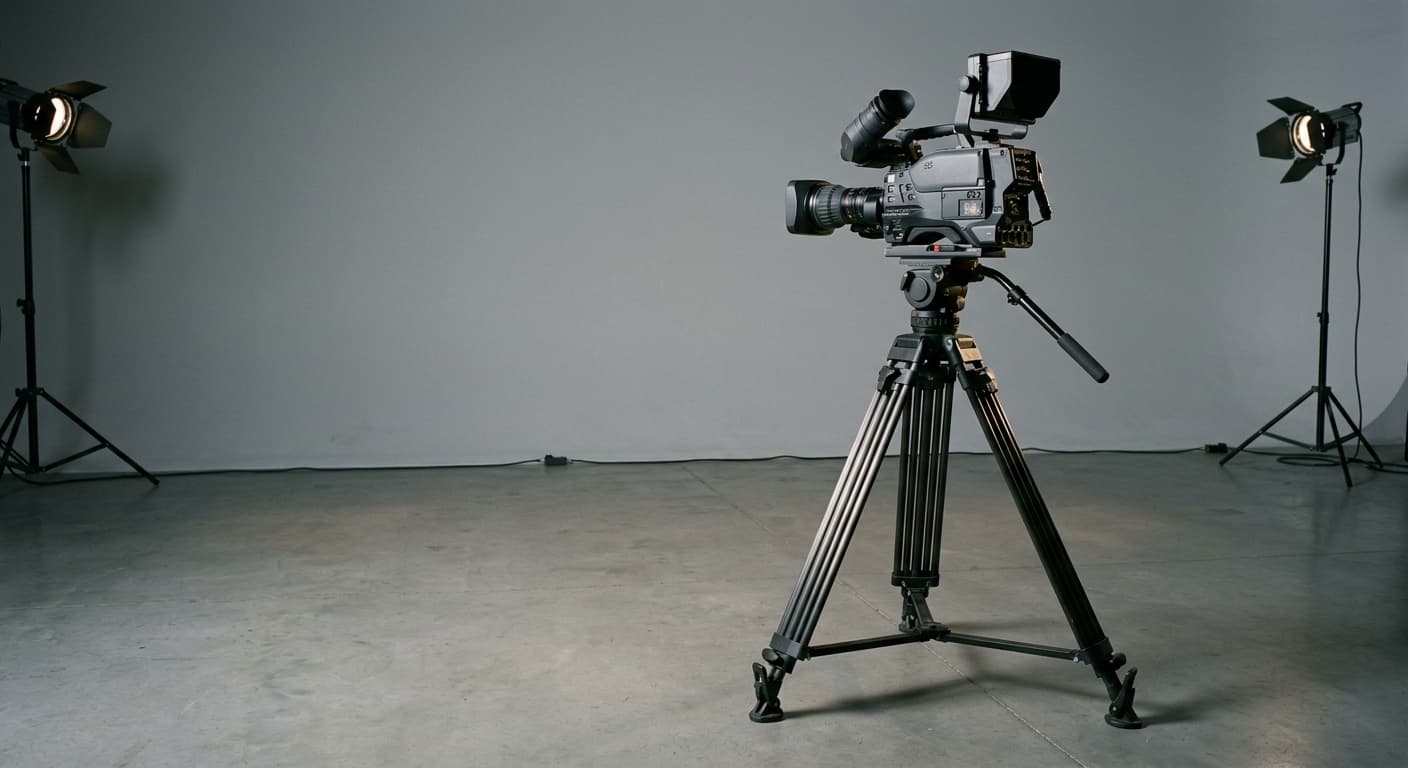
Arkansas allows video recording in public spaces without consent, as no state law restricts filming where there is no reasonable expectation of privacy. Audio captured alongside video follows one-party consent under Ark. Code Ann. 5-60-120, and secret recording in private places is a felony under Ark. Code Ann. 5-16-101.
Arkansas does not have a single comprehensive statute that governs all video recording activity. Instead, video recording is regulated through a combination of general privacy principles, the video voyeurism statute (Ark. Code 5-16-101), the wiretapping statute that governs accompanying audio (Ark. Code 5-60-120), and the Arkansas Freedom of Information Act.
This guide covers every major scenario for video recording in Arkansas, from filming in public to using cameras on private property.
Video Recording in Public Spaces
General Rule: No Consent Required
Arkansas imposes no general restriction on video recording in public spaces. You can film on public streets, sidewalks, in parks, at outdoor events, and in any area that is open to the general public. No one's consent is needed because there is no reasonable expectation of privacy in these settings.
This principle is supported by longstanding constitutional law. The First Amendment protects the right to record matters of public interest, and courts have consistently held that what is plainly visible in a public place can be photographed or filmed.
What Counts as a Public Space?
Public spaces in Arkansas include but are not limited to:
- Streets, sidewalks, and public rights-of-way
- City and state parks
- Public transportation systems and stations
- Government buildings open to the public
- Public plazas and town squares
- Outdoor markets, festivals, and public gatherings
Some spaces may appear public but are actually private property. Shopping malls, for example, are privately owned even though the public is invited in. The property owner or manager can set rules about filming on their premises.
Recording Public Officials and Government Proceedings
The Arkansas Freedom of Information Act (Ark. Code 25-19-106) requires that meetings of public bodies be open to the public. Act 310 of 2021 amended the FOIA to expressly permit "copying through image capture, including still and moving photography and video and digital recording."
You can record the following types of government proceedings in Arkansas:
- City council meetings
- County quorum court meetings
- School board meetings
- Public hearings and commission meetings
- Meetings of any board, bureau, commission, or organization supported by public funds
Public entities must maintain a recording of each open public meeting for at least one year from the date of the meeting. The Arkansas Attorney General's office provides guidance on FOIA compliance, and the 2025 FOIA Handbook details the recording rights of the public.
Video Recording on Private Property
Property Owner Rights
On private property, the property owner or occupant has the authority to decide whether video recording is permitted. A homeowner can prohibit guests from filming inside their home. A business owner can require that customers refrain from recording on the premises.
If a property owner asks you to stop recording and you refuse, you may be asked to leave. Remaining on the property after being told to leave can result in trespassing charges under Ark. Code 5-39-203.
Tenant Rights
Tenants generally have the right to record video inside their own rental units. However, recording in common areas of an apartment building may be subject to rules set by the landlord or property management company. For more detail, see our page on Arkansas landlord-tenant recording laws.
Recording on Business Premises
Businesses in Arkansas can establish policies regarding video recording. Retailers, restaurants, hospitals, and other businesses regularly restrict or prohibit filming. These policies are enforceable through the business's right to control its own premises and to refuse service to individuals who violate its rules.
However, there are limits. A business open to the public generally cannot prohibit recording in a manner that violates other laws, such as prohibiting customers from recording discriminatory treatment that may serve as evidence in a civil rights claim.
Arkansas Video Voyeurism Law: Ark. Code 5-16-101
The most serious video recording offense in Arkansas is video voyeurism, codified at Ark. Code 5-16-101. This statute imposes felony-level penalties for using cameras or recording devices to secretly observe or record people in private settings.
Section 5-16-101(a): Secret Observation or Recording in Private Areas
Under this subsection, it is unlawful to use any camera, videotape, photo-optical, photo-electric, or image recording device to secretly observe, photograph, film, or videotape a person in a private area where they have a reasonable expectation of privacy and have not consented to the recording.
Penalties:
- First or second offense: Class D felony (up to 6 years in prison under Ark. Code 5-4-401)
- Third or subsequent offense: Class C felony (3 to 10 years in prison)
Section 5-16-101(b): Recording of the Body Without Consent
This subsection addresses using concealed equipment to secretly record another person's body where they have a reasonable expectation of privacy. This covers situations such as hidden cameras in bathrooms, locker rooms, changing areas, or upskirt recordings.
Penalty: Class B misdemeanor (up to 90 days in jail) for a first offense, escalating to a Class A misdemeanor (up to 1 year in jail) if the recording is distributed or transmitted to another person, posted online in a format accessible to others, or the offender has a prior conviction under § 5-16-101 or § 5-16-102.
Areas Where People Have a Reasonable Expectation of Privacy
The statute focuses on locations where a reasonable person would expect privacy in their physical person. These include:
- Bathrooms and restrooms
- Locker rooms and changing areas
- Bedrooms and private living quarters
- Dressing rooms in retail stores
- Medical examination rooms
- Any enclosed space where a person is undressing or engaged in private activity
Recording in any of these areas without the subject's consent violates Ark. Code 5-16-101 regardless of whether the recorder owns the property. One caveat: subsection (d) of the statute exempts "security monitoring operated by or at the direction of" a residence occupant or a business owner/administrator from the entire section, and Arkansas courts have not clarified how that exemption interacts with recording in private areas like bathrooms -- it is not a safe assumption that owning the property or calling equipment "security monitoring" authorizes recording in these spaces.
Audio Captured During Video Recording
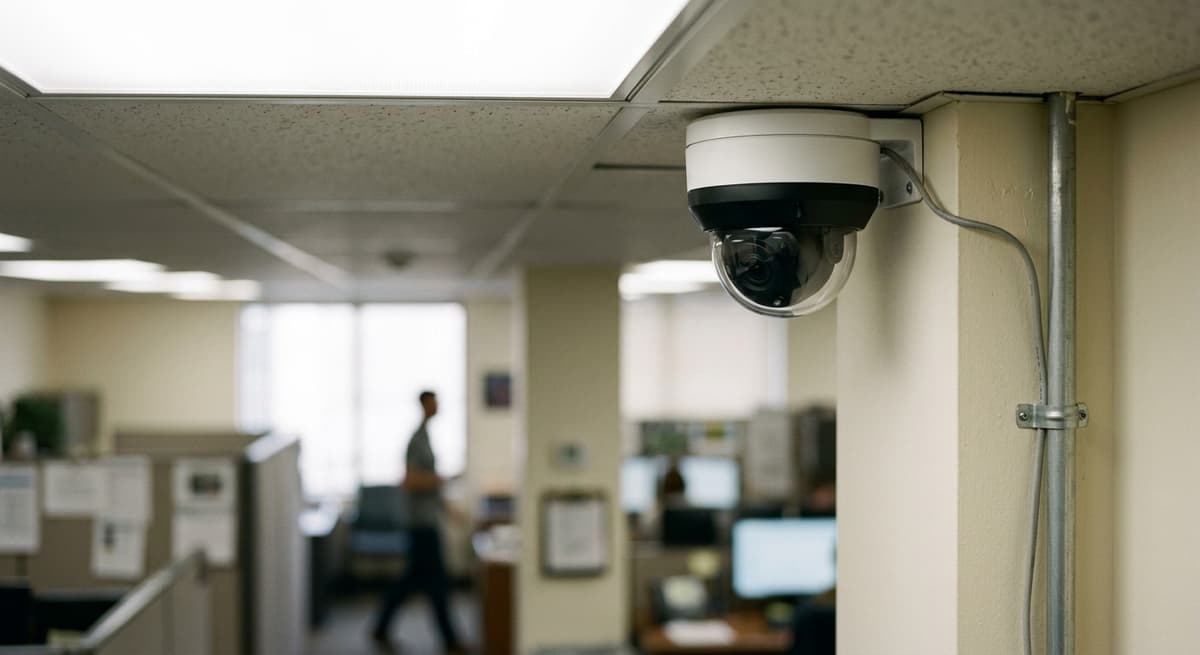
A critical point that many people overlook is that video recording with audio implicates two separate areas of law in Arkansas.
The One-Party Consent Rule for Audio
When your video camera also captures audio, the audio portion of the recording is governed by Ark. Code 5-60-120. This means:
- If you are part of the conversation being recorded, you can capture both video and audio legally.
- If you are recording video of a scene where you are not participating in any conversation, but your camera picks up other people's private conversations, the audio capture could violate the wiretapping statute.
- In public places with no expectation of privacy, ambient audio capture is generally not a concern.
Practical Tips
If you are recording video in a setting where you might inadvertently capture private conversations you are not part of, consider:
- Turning off audio recording and capturing video only
- Maintaining distance from private conversations
- Being mindful that directional microphones can capture audio from a distance
Security Cameras and Surveillance Systems
Residential Security Cameras
Arkansas homeowners can install video security cameras on their own property. Cameras can be pointed at your own yard, driveway, front door, and other areas of your property. You should avoid pointing cameras directly into a neighbor's windows or private areas, as this could be considered an invasion of privacy.
For comprehensive information on security camera placement rules, see our page on Arkansas security camera laws.
Business Security Cameras
Businesses in Arkansas routinely use video surveillance for security purposes. Cameras in retail areas, lobbies, parking lots, and other common areas are standard practice. The same restrictions apply regarding private areas: cameras may never be placed in bathrooms, changing rooms, or other areas where employees or customers have a reasonable expectation of privacy.
Signage and Notice
Arkansas does not have a specific statute requiring businesses to post signs notifying people of video surveillance. However, posting visible notices about camera presence is a widely recommended practice. It serves as a deterrent, helps establish that recorded individuals had reduced privacy expectations, and demonstrates good faith.
Recording with Drones in Arkansas
Drones equipped with cameras are subject to both federal aviation regulations and Arkansas state law.
Federal Regulations
The Federal Aviation Administration (FAA) regulates all drone operations in the United States. Commercial drone operators must obtain a Remote Pilot Certificate under 14 CFR Part 107. Recreational operators must follow the rules established under the Exception for Limited Recreational Operations.
Arkansas Drone Laws
Arkansas has enacted specific drone legislation, but it is narrower than a general privacy statute. Ark. Code Ann. § 5-60-103 (unlawful use of an unmanned aircraft system) makes it unlawful to knowingly use a drone to conduct surveillance of, gather evidence or collect information about, or photographically or electronically record critical infrastructure, such as power plants, refineries, chemical facilities, communication towers, and correctional facilities, without the prior written consent of the owner. It does not create a general ban on using a drone to photograph an individual or an ordinary private residence.
Exceptions apply for a property owner surveying their own land, third parties retained by the property owner for that purpose, insurance companies investigating damage or underwriting risk, authorized federal or state government operations, and law enforcement or emergency management agencies conducting incident response. A first offense is a Class B misdemeanor; a subsequent offense is a Class A misdemeanor.
Flying a drone over an ordinary residential backyard is not itself a § 5-60-103 violation, because the statute does not reach non-critical-infrastructure property. That kind of drone surveillance is more likely to be addressed, if at all, through the general video voyeurism statute at § 5-16-101 (where the drone captures a private area with a reasonable expectation of privacy) or a trespass or nuisance claim, not through § 5-60-103.
Dashcams and Vehicle Cameras
Dashcams are legal in Arkansas for both personal and commercial vehicles. There is no state law prohibiting the use of dashboard-mounted cameras. Video captured by a dashcam on public roads is generally legal because there is no expectation of privacy on public roadways.
The audio component of dashcam recordings follows one-party consent rules. If you have passengers in your vehicle and the dashcam captures their conversations, your presence in the vehicle satisfies the one-party consent requirement.
For detailed information, see our page on Arkansas dashcam laws.
Using Video Recordings as Evidence
Admissibility in Arkansas Courts
Video recordings that are lawfully obtained are generally admissible as evidence in Arkansas courts. The same standards that apply to audio recordings also apply to video:
- Authentication: The proponent must demonstrate the recording is genuine and unaltered.
- Relevance: The recording must relate to a matter at issue in the case.
- Prejudice vs. probative value: The court weighs whether the recording's evidentiary value outweighs any risk of unfair prejudice.
Security Camera Footage
Security camera footage is routinely admitted as evidence in criminal and civil cases. Courts accept footage from surveillance systems when the recording can be authenticated and the system's reliability is established.
Social Media and Body Camera Footage
Video posted to social media platforms or captured by body cameras may also be admissible. The key requirement is proper authentication, which may include testimony from the person who recorded the video, metadata analysis, or chain-of-custody documentation.
Penalties Summary
| Offense | Statute | Classification | Maximum Penalty |
|---|---|---|---|
| Video voyeurism (1st/2nd offense) | Ark. Code Ann. § 5-16-101(a) | Class D felony | Up to 6 years in prison |
| Video voyeurism (3rd+ offense) | Ark. Code Ann. § 5-16-101(a) | Class C felony | 3 to 10 years in prison |
| Secret body recording | Ark. Code Ann. § 5-16-101(b) | Class B misdemeanor (Class A if distributed or repeat offense) | Up to 90 days in jail (up to 1 year if escalated) |
| Illegal audio interception | Ark. Code Ann. § 5-60-120 | Class A misdemeanor | Up to 1 year in jail, $2,500 fine |
| Unlawful drone surveillance of critical infrastructure | Ark. Code Ann. § 5-60-103 | Class B misdemeanor (1st offense), Class A misdemeanor (2nd+) | Up to 90 days (Class B); up to 1 year (Class A) |
| Deepfake intimate images (1st offense) | Ark. Code Ann. § 5-14-139 (Act 827 of 2025) | Class A misdemeanor | Up to 1 year in jail, $2,500 fine |
| Deepfake intimate images (subsequent) | Ark. Code Ann. § 5-14-139 (Act 827 of 2025) | Class D felony | Up to 6 years in prison |
Deepfake and NCII Law
Arkansas's first comprehensive deepfake statute, Ark. Code Ann. § 5-14-139 (HB 1529 / Act 827 of 2025, signed April 17, 2025), targets synthetic or manipulated intimate images. It includes a private civil right of action for actual damages and attorney fees -- unlike the criminal-only Chapter 60 framework.
The TAKE IT DOWN Act (Pub. L. No. 119-12, signed May 19, 2025) adds a federal overlay: platforms must remove NCII and AI deepfake intimate content within 48 hours of notice (effective May 19, 2026).
Explore More Arkansas Recording Law Topics
Audio Recording | Video Recording | Voyeurism Laws | Workplace Recording | Recording Police | Phone Call Recording | Security Cameras | Recording in Public | Landlord-Tenant | Dashcam Laws | School Recording | Medical Recording
Back to Arkansas Recording Laws
More Arkansas Recording Topics
More Arkansas Laws
Frequently Asked Questions
Can I record video in public in Arkansas without anyone's consent?
Yes. Arkansas has no law prohibiting video recording in public spaces. You can film on public streets, sidewalks, parks, and other public areas without obtaining consent from anyone, as there is no reasonable expectation of privacy in these settings.
What is the penalty for video voyeurism in Arkansas?
Video voyeurism under Ark. Code 5-16-101(a) is a Class D felony for a first or second offense, carrying up to six years in prison. A third or subsequent offense is a Class C felony with three to ten years in prison. Secret body recording under Section 5-16-101(b) is a Class B misdemeanor with up to 90 days in jail, rising to a Class A misdemeanor (up to 1 year) if the recording is distributed or the offender has a prior conviction.
Can I record video on private property in Arkansas?
The property owner or occupant controls whether video recording is allowed on private property. You can record inside your own home or rental unit. If you are on someone else's property, they can ask you to stop recording and to leave. Recording in private areas where someone has a reasonable expectation of privacy without consent is illegal.
Do I need to post signs if I have security cameras in Arkansas?
Arkansas does not have a specific statute requiring security camera signage. However, posting visible notices is recommended as it deters criminal activity, reduces privacy expectations for those on camera, and demonstrates that you are acting in good faith.
Does the audio on my video recording matter legally in Arkansas?
Yes. Audio captured alongside video is governed by Ark. Code 5-60-120, the one-party consent wiretapping statute. If you are part of the conversation being recorded, the audio is legal. If your camera captures private conversations you are not part of, the audio portion could violate the law even if the video itself is fine.
Updates
Narrowed an overstated description of Arkansas's drone-surveillance statute (it applies only to critical infrastructure like power plants and communication towers, not to filming an individual's backyard), added the misdemeanor escalation that applies to secretly recording a person's body under section 5-16-101(b), and corrected the deepfake-statute citation from an incorrect section number (5-41-211) to the actual enacted section, 5-14-139.
Independently fact-checked against the cited primary sources
Corrected the Ark. Code 5-60-103 drone-surveillance description: the statute bars purposely capturing an image of a person or private property to conduct surveillance (not a 'highly offensive to a reasonable person' standard), and its actual exceptions don't include a warrant requirement.
Added a caveat noting Ark. Code 5-16-101(d) exempts residence- and business-operated 'security monitoring' from the video voyeurism statute entirely, without an express carve-out for private areas -- an unresolved statutory ambiguity the article's blanket 'regardless of whether the recorder owns the property' claim did not address.
Governing law re-checked for recent changes
Spoke propagation: Swapped Justia AR statute links to arkleg.state.ar.us. Added § 5-14-139 deepfake law and TAKE IT DOWN Act to Penalties Summary. Added criminal-only note distinguishing video/audio law frameworks.
Reviewed and approved by an editor
The Law Behind This Article
This article rests on the statutory provisions below, held in our own legal record and retrieved from the official source. Tap a section to read the operative text.
Arkansas Code of 1987 Annotated
§ 5-16-101Crime of video voyeurism.In forcecited in 9 of our articles
(a) It is unlawful for a person to use a camera, videotape, photo- optical, photoelectric, or other image recording device for the purpose of secretly observing, viewing, photographing, filming, or videotaping another person who is present in a residence, place of business, school, or other structu
Official text (excerpt) · last checked 2026-08-31 · Read the full text in our law library · Verify at arkleg.state.ar.us
Cited in 5 court opinions in our collectionLatest citing opinion in our collection: 2023
In the courts (editorial summary, independently checked):Courts have applied the video voyeurism statute in Devries (2019), where children had a reasonable expectation of privacy behind closed bedroom and bathroom doors in a parent's home, and in Powell (2020), holding the crime is complete on using a camera for the prohibited purpose even if the images are never viewed.
Opinions citing this section in our collection:
- Opinion No. (Arkansas Attorney General Reports 2001)“…tice of the surveillance would also negate any violation of A.C.A. § 5-16-101 , which criminalizes "video voyeurism."…”
- Bruce Wayne Devries v. State of Arkansas (Court of Appeals of Arkansas 2019, 2019 Ark. App. 478)✓One adopted daughter testified she caught Devries watching her through the bathroom window and found a baby monitor in her bathroom and bedroom; another caught him filming under her door. The court affirmed the video voyeurism convictions, rejecting his no-privacy-at-home claim.
- Robert Powell v. State of Arkansas (Court of Appeals of Arkansas 2020, 605 S.W.3d 532)✓Powell hid a camera in a fake outlet in a cabin he rented to a family and argued he could not be guilty because police took the SD card before he viewed the footage; the court held the statute punishes using a camera for that secret purpose, so never watching is no defense.
Identified automatically from the court opinions citing this section — not a ranking of which case controls.
Also relied on in: Arkansas Landlord-Tenant Recording Laws: Cameras, Audio, and Privacy Rights (2026), Arkansas Workplace Recording Laws: Employee and Employer Rights (2026), Arkansas Voyeurism Laws: Hidden Cameras, Penalties, and Defenses (2026)
§ 25-19-106Open public meetings. [Effective when emergency ends or on December 31, 2020.]In forcecited in 4 of our articles
(a) Except as otherwise specifically provided by law, all meetings, formal or informal, special or regular, of the governing bodies of all municipalities, counties, townships, and school districts and all boards, bureaus, commissions, or organizations of the State of Arkansas, except grand juries,…
Official text (excerpt) · last checked 2020-11-06 · Read the full text in our law library
Cited in 112 court opinions in our collectionLatest citing opinion in our collection: 2025
Opinions citing this section in our collection:
- Bryant v. Weiss (Supreme Court of Arkansas 1998, 335 Ark. 534)“…all be furnished to anyone who requests the information." Ark.Code Ann. § 25-19-106(b)(1)(Repl.1996)(emphasis added). That…”
- City of Fort Smith v. Wade (Supreme Court of Arkansas 2019, 578 S.W.3d 276)“…ning bodies of municipalities, are required to be public. Ark. Code Ann. § 25-19-106 (a) (Repl. 2014). We have held that FO…”
- City of Greenwood v. Shadow Lake Ass'n (Supreme Court of Arkansas 2015, 459 S.W.3d 291)“…tings provision of the Arkansas Freedom of Information Act (A.C.A. § 25-19-106) and whether or not there was a violati…”
Identified automatically from the court opinions citing this section — not a ranking of which case controls.
Also relied on in: Arkansas Laws on Recording Police: Your Rights and Limits (2026), Arkansas Laws on Recording in Public: Your Complete Guide (2026), Arkansas School Recording Laws: Student Privacy, FERPA, and Classroom Rules (2026)
§ 5-14-139Unlawful creation or distribution of deepfake visual material.In forcecited in 3 of our articles
(a) As used in this section: (1) "Deepfake visual material" means a photograph, image, video, or other visual depiction that: (A) Appears to an ordinary person to be an authentic depiction of an identifiable person; and (B) Is generated, modified, or adapted using technology to falsely depict
Official text (excerpt) · last checked 2026-08-30 · Read the full text in our law library · Verify at arkleg.state.ar.us
Also relied on in: Arkansas Deepfake Laws: AI Images, Voice Cloning & Penalties (2026)
§ 5-60-103Unlawful use of an unmanned aircraft system related to infrastructure — Unlawful use of an unmanned aircraft system related to images.In forcecited in 3 of our articles
(a) As used in this section: (1) “Critical infrastructure” means: (A) An electrical power generation or delivery system; (B) A petroleum refinery; (C) A chemical or rubber manufacturing facility; (D) A petroleum or chemical storage facility; (E) A railroad operating facility; (F) A co
Official text (excerpt) · last checked 2026-08-31 · Read the full text in our law library · Verify at arkleg.state.ar.us
Also relied on in: Arkansas Surveillance Camera Laws (2026 Guide), Arkansas Drone Laws (2026): Privacy, Hunting & Shoot-Down Rules
§ 5-60-120Interception and recording.In forcecited in 17 of our articles
(a) It is unlawful for a person to intercept a wire, landline, oral, telephonic communication, or wireless communication, and to record or possess a recording of the communication unless the person is a party to the communication or one (1) of the parties to the communication has given prior…
Official text (excerpt) · last checked 2026-08-31 · Read the full text in our law library · Verify at arkleg.state.ar.us
Cited in 10 court opinions in our collectionLatest citing opinion in our collection: 2022
In the courts (editorial summary, independently checked):Lewis v. State (1999) applied Section 5-60-120(a) to a man who taped his ex-wife's calls without being a party or having consent, affirming revocation. Elliott v. State (1998) held that while such recording by a private citizen is unlawful, the statute does not bar the tape from evidence.
Opinions citing this section in our collection:
- Lewis v. State (Supreme Court of Arkansas 1999, 336 Ark. 469)✓A man on probation admitted attaching a recorder to the telephone box outside his ex-wife's house and taping her calls; the court found that violated Section 5-60-120(a) because he was not a party and no party consented, and affirmed the revocation.
- Opinion No. (Arkansas Attorney General Reports 1998)“…consented to the recording. This provision is set forth in A.C.A. § 5-60-120 , as follows: 5-60-120 . Interceptio…”
- King v. State (Supreme Court of Arkansas 2019, 571 S.W.3d 476)✓A friend's phone app secretly recorded a murder suspect's call with a detective; the court held that although Section 5-60-120 makes such a recording by a non-party unlawful, it does not bar admissibility, and affirmed the refusal to exclude the tape.
Identified automatically from the court opinions citing this section — not a ranking of which case controls.
Also relied on in: Arkansas Recording Laws (2026): One-Party Consent Rules, Arkansas Audio Recording Laws: One-Party Consent Rules and Penalties (2026), Arkansas Dashcam Laws: Mounting, Audio, and Legal Uses (2026)
Search our full record of US law — 2.1 million sections, every state + federal →
Sources and References
- Ark. Code 5-16-101 - Crime of Video Voyeurism(law.justia.com)
- Ark. Code 5-60-120 - Interception and Recording(law.justia.com)
- Ark. Code 25-19-106 - FOIA Open Public Meetings(law.justia.com)
- Ark. Code 5-60-103 - Drone Surveillance(law.justia.com)
- Arkansas Freedom of Information Act - Attorney General(arkansasag.gov).gov
- 2025 FOIA Handbook (21st Edition)(healthy.arkansas.gov).gov
- FAA Unmanned Aircraft Systems (UAS)(faa.gov).gov
- Act 600 of 2025 - Tracking Device Harassment Amendment(arkleg.state.ar.us).gov
- Ark. Code 5-16-101 - Crime of Video Voyeurism(arkleg.state.ar.us).gov
- Ark. Code 5-60-120 - Interception and Recording(arkleg.state.ar.us).gov
- Ark. Code 25-19-106 - FOIA Open Public Meetings(arkleg.state.ar.us).gov
- Ark. Code Ann. 5-60-103 - Unlawful Use of an Unmanned Aircraft System (Critical Infrastructure)(law.justia.com)
- Ark. Code Ann. 5-14-139 - Deepfake Intimate Images (HB 1529 / Act 827 of 2025)(arkleg.state.ar.us).gov
- TAKE IT DOWN Act, Pub. L. No. 119-12 (May 19, 2025)(congress.gov).gov