
Arkansas
Arkansas School Recording Laws: Student Privacy, FERPA, and Classroom Rules (2026)
Independently fact-checked against primary sources (last audited August 15, 2026). · Reviewed by the RecordingLaw editorial team. · Law checked current as of August 9, 2026. · 2 primary sources cited on this page. How we verify our legal content

Arkansas is a one-party consent state under Ark. Code Ann. 5-60-120, so any participant in a school conversation, including a student, parent, or teacher, may record without notifying others. FERPA (20 U.S.C. Section 1232g) separately governs how schools store and disclose recordings that identify students.
Recording in Arkansas schools involves the intersection of the state's one-party consent recording law, federal student privacy protections under FERPA, and individual school district policies. Arkansas's one-party consent framework gives students, parents, and staff broad recording rights, but school policies and federal privacy requirements create additional boundaries.
Under Ark. Code 5-60-120, any party to a conversation can record it without notifying the other participants. This means a student in a classroom discussion, a parent at a conference, or a teacher delivering a lesson can record the interaction without asking anyone's permission.
Student Recording Rights in Arkansas Schools
Can Students Record in Class?
Under Arkansas state law, yes. A student participating in a classroom discussion or listening to a lecture is a party to the conversation and can record under one-party consent. However, school district policies often impose additional restrictions:
- Many Arkansas districts require phones and electronic devices to be stored during class
- Student handbooks may prohibit unauthorized recording
- The Arkansas Department of Education allows districts to set their own device policies
- Violating a school recording policy can lead to device confiscation, detention, or suspension
Before recording in an Arkansas classroom:
- Review the school's student handbook and technology policy
- Understand that legal recording rights do not prevent school discipline for policy violations
- Avoid recording in private settings (counseling offices, restrooms) regardless of consent rules
- Consider asking the teacher for permission as a courtesy
Student Device Policies
The Arkansas Division of Elementary and Secondary Education provides guidance to districts on technology in schools, but each district sets its own rules. Common provisions include:
- Devices must be silenced during instructional time
- Recording is permitted only with teacher authorization
- Devices used for educational purposes require teacher approval
- Progressive discipline for policy violations
Social Media and Sharing Recorded Content
Students who record at school and post content online face risks:
- Disciplinary action under anti-bullying or acceptable use policies
- Civil liability if recordings are used to embarrass or harass others
- Potential criminal exposure under video voyeurism laws (Ark. Code 5-16-101) if recordings involve intimate or private content
- FERPA implications if school staff improperly share recordings identifying students
FERPA and Student Privacy
What FERPA Requires
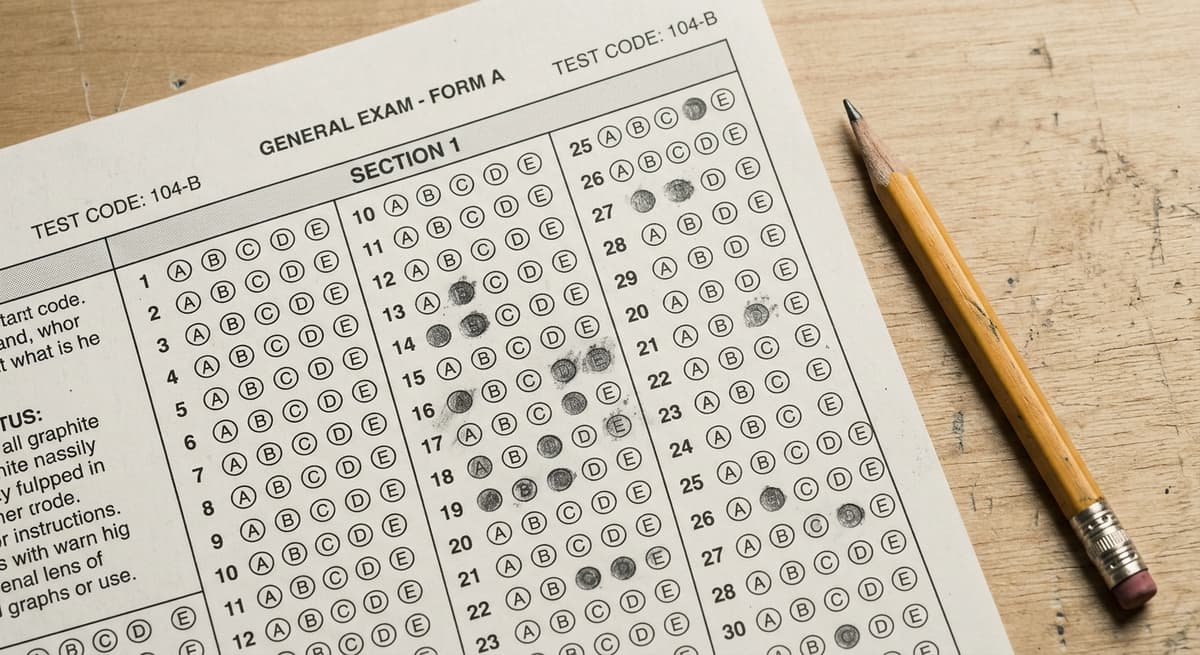
The Family Educational Rights and Privacy Act (20 U.S.C. Section 1232g) protects student education records at schools receiving U.S. Department of Education funding, including virtually all Arkansas public schools.
Under FERPA:
- Education records include records directly related to a student and maintained by the school. Recordings identifying students may qualify.
- Schools must obtain written parent consent before disclosing personally identifiable information. For students 18 and over, this right transfers to the student.
- Parents and eligible students can inspect and review education records, including school-maintained recordings.
School Recordings and FERPA
When an Arkansas school records classroom activities, disciplinary proceedings, or other interactions identifying students:
- The school cannot share recordings with outside parties without parent consent
- Parents can request access to recordings identifying their child
- Schools must protect recordings from unauthorized access
- Multi-student recordings may require each family's consent before disclosure
Security Camera Footage and FERPA
Security footage may qualify as an education record if it is directly related to a specific student and maintained by the school. General security footage not linked to a particular student may not qualify, but schools should handle all student-identifiable footage carefully.
Teacher and Staff Recording Rights
Can Teachers Record Students?
Arkansas teachers participating in classroom interactions can record under one-party consent. A teacher recording a lesson, student presentation, or conference is legally within their rights under Ark. Code 5-60-120.
Teachers should:
- Follow their district's recording policy
- Notify parents if classroom recording will be regular (best practice, not legally required)
- Obtain separate consent for recordings shared outside the classroom or on social media
- Avoid recording students in private settings without clear justification
Staff Monitoring and Surveillance
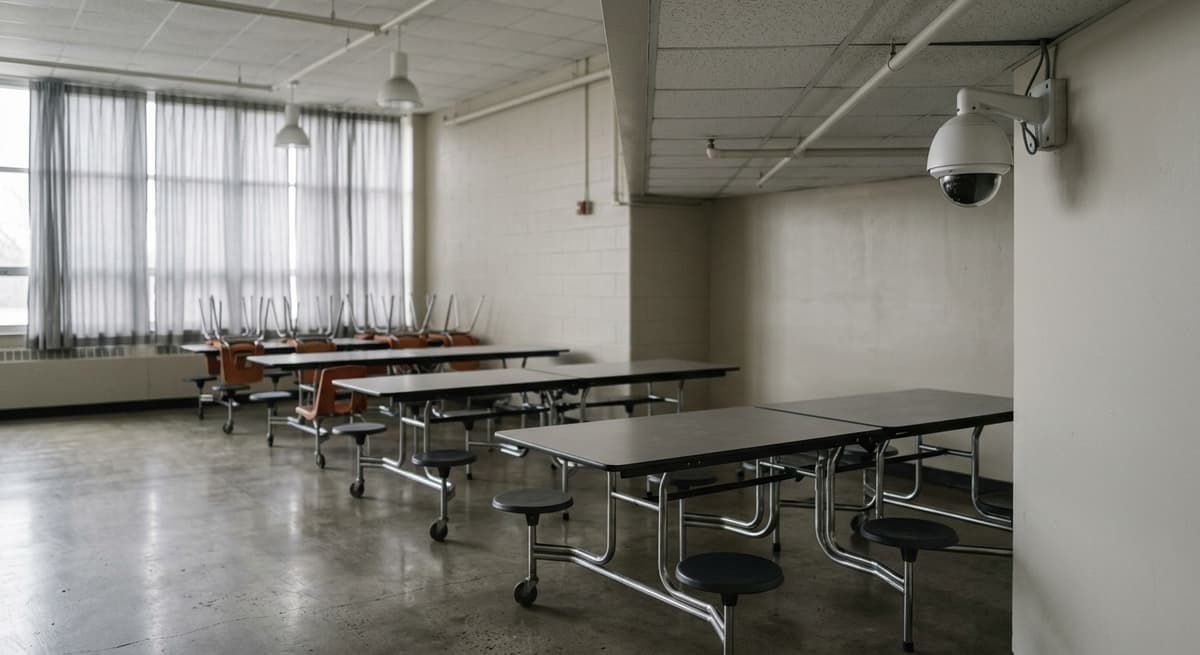
Arkansas schools conduct video surveillance of common areas for safety. Key guidelines:
- Video-only cameras in hallways, cafeterias, and entrances are standard
- Audio recording through security systems raises questions if no party to the captured conversation consents
- Post visible notices where surveillance cameras operate
- Never place cameras in restrooms, locker rooms, or changing areas
Security Cameras in Arkansas Schools

Legal Framework
Arkansas schools use security cameras widely. The Arkansas Department of Education supports school safety initiatives that include surveillance systems.
| Location | Video Recording | Audio Recording |
|---|---|---|
| Hallways and entrances | Permitted with notice | Raises eavesdropping issues |
| Classrooms | Permitted with notice | Raises eavesdropping issues |
| Parking lots | Permitted | Generally legal (exterior area) |
| Restrooms and locker rooms | Prohibited | Prohibited |
| Counseling offices | Permitted with notice | One-party consent required |
| School buses | Permitted with notice | Raises eavesdropping issues |
School Bus Cameras
Arkansas school districts install cameras on school buses. Video-only cameras are standard practice. Audio recording on buses raises one-party consent questions when the bus driver or an aide is not participating in the conversations being captured. Districts should provide notice to parents about any audio recording on buses.
Special Education Recording Rules
Recording IEP Meetings in Arkansas
Parents attending IEP meetings in Arkansas are parties to the conversation and can record under one-party consent. This is one of the most common reasons parents ask about school recording laws.
Key points:
- You do not need to announce that you are recording
- School staff cannot require you to stop recording
- The recording can be used to review decisions, goals, and services discussed
- Keep the recording for personal reference and share only as needed for advocacy
The Individuals with Disabilities Education Act (IDEA, 20 U.S.C. Section 1400 et seq.) does not specifically address recording of IEP meetings, leaving the issue to state law. Arkansas's one-party consent rule makes this straightforward.
Section 504 Meetings
Parents participating in Section 504 meetings can record under the same one-party consent framework.
Recording as an Educational Accommodation
Recording classroom instruction may be part of a student's IEP or 504 plan. When recording is a formal accommodation:
- The school must allow it as part of the educational program
- Teachers should be informed of the accommodation
- The recording is for educational benefit
- Even without the accommodation, the student could record under one-party consent, but having it in the plan provides extra protection
Parent Recording Rights
Parent-Teacher Conferences
Arkansas parents can record parent-teacher conferences under one-party consent without informing the teacher. This covers:
- Scheduled and impromptu meetings with teachers
- Phone calls about student progress or behavior
- Meetings about disciplinary issues involving the parent's child
- Conversations with school administrators
Recording School Board Meetings
Arkansas has one of the strongest public meeting recording protections in the country. The Arkansas Freedom of Information Act (Ark. Code 25-19-106), as amended by Act 310 of 2021, expressly permits the public to record open government meetings, including school board meetings, using video, audio, and digital capture devices. Executive sessions remain closed to the public.
Recording Disciplinary Hearings
Parents can record disciplinary hearings involving their child under one-party consent. If the hearing involves multiple students, FERPA concerns may limit what recordings can be shared.
Penalties for Illegal Recording in Arkansas Schools
Criminal Penalties
| Statute | Offense | Classification | Max Jail | Max Fine |
|---|---|---|---|---|
| Ark. Code 5-60-120 | Illegal interception (eavesdropping) | Class A Misdemeanor | 1 year | $2,500 |
| Ark. Code 5-16-101 | Video voyeurism | Class D Felony (1st/2nd) | 6 years | $10,000 |
School Disciplinary Consequences
Students who violate school recording policies may face:
- Device confiscation
- Detention, suspension, or expulsion
- Referral to law enforcement if the recording involves voyeurism or harassment
FERPA Violations
Schools that improperly disclose recordings containing student information face FERPA enforcement by the U.S. Department of Education, which can result in loss of federal funding.
Best Practices for Arkansas Schools
For Administrators
- Develop a recording and surveillance policy and communicate it to students, staff, and parents
- Post visible notices where security cameras operate
- Train staff on one-party consent rules and how they interact with school policies
- Use video-only security systems to avoid eavesdropping issues
- Handle all student-identifiable recordings in compliance with FERPA
For Teachers
- Include recording expectations in the classroom syllabus
- Understand that students and parents have a legal right to record
- Work with administrators if classroom recording creates management concerns
- Follow district policy for school-initiated recording of students
For Parents
- You can record school meetings without asking permission under one-party consent
- Review your district's recording policy to understand school-level rules
- Use Arkansas FOIA rights to record open school board meetings
- If recording is needed as an accommodation, include it in the IEP or 504 plan
Explore More Arkansas Recording Laws
Audio Recording | Video Recording | Voyeurism Laws | Workplace Recording | Recording Police | Phone Call Recording | Security Cameras | Recording in Public | Landlord-Tenant Recording | Dashcam Laws | School Recording | Medical Recording
Back to Arkansas Recording Laws
More Arkansas Recording Topics
More Arkansas Laws
Frequently Asked Questions
Can students record teachers in Arkansas?
Under state law, yes. Students participating in classroom conversations are parties to the conversation and can record under one-party consent (Ark. Code 5-60-120). However, school policies may restrict recording, and violating those policies can result in disciplinary action.
Can parents record IEP meetings in Arkansas?
Yes. Arkansas parents can record IEP meetings under one-party consent without informing other participants. The parent is a party to the conversation and needs no additional consent.
Can I record an Arkansas school board meeting?
Yes. Arkansas FOIA (Ark. Code 25-19-106, as amended by Act 310 of 2021) expressly permits the public to record open government meetings, including school board meetings, using video, audio, and digital devices. Executive sessions are closed to the public.
Does FERPA apply to school recordings in Arkansas?
Yes. Recordings identifying students that are maintained by the school qualify as education records under FERPA. Schools must obtain written parent consent before disclosing them. Parents can request to review recordings that identify their child.
What are the penalties for illegal recording in Arkansas schools?
Illegally intercepting a conversation you are not part of is a Class A misdemeanor under Ark. Code 5-60-120, carrying up to 1 year in jail and a $2,500 fine. Video voyeurism under Ark. Code 5-16-101 is a Class D felony with up to 6 years in prison.
Updates
Corrected the statute citation for school board meeting recording rights from Ark. Code 25-19-105 (a records-request statute) to the correct 25-19-106 (the public-meetings statute), and fixed two broken Arkansas statute citation links.
Independently fact-checked against the cited primary sources
Corrected the citizen right-to-record-meetings citation from Ark. Code 25-19-106 (the public entity's own record-and-retain duty) to the correct Ark. Code 25-19-105 (as amended by Act 310 of 2021), matching the sibling police page.
Governing law re-checked for recent changes
Governing law re-checked for recent changes
Spoke propagation: Swapped all Justia Arkansas statute links to primary arkleg.state.ar.us sources. Updated SourcesList domain and is_gov fields. FERPA, IDEA, and one-party consent frameworks unchanged.
Reviewed and approved by an editor
The Law Behind This Article
This article rests on the statutory provisions below, held in our own legal record and retrieved from the official source. Tap a section to read the operative text.
Arkansas Code of 1987 Annotated
§ 5-60-120Interception and recording.In forcecited in 17 of our articles
(a) It is unlawful for a person to intercept a wire, landline, oral, telephonic communication, or wireless communication, and to record or possess a recording of the communication unless the person is a party to the communication or one (1) of the parties to the communication has given prior…
Official text (excerpt) · last checked 2026-08-31 · Read the full text in our law library · Verify at arkleg.state.ar.us
Cited in 10 court opinions in our collectionLatest citing opinion in our collection: 2022
In the courts (editorial summary, independently checked):Lewis v. State (1999) applied Section 5-60-120(a) to a man who taped his ex-wife's calls without being a party or having consent, affirming revocation. Elliott v. State (1998) held that while such recording by a private citizen is unlawful, the statute does not bar the tape from evidence.
Opinions citing this section in our collection:
- Lewis v. State (Supreme Court of Arkansas 1999, 336 Ark. 469)✓A man on probation admitted attaching a recorder to the telephone box outside his ex-wife's house and taping her calls; the court found that violated Section 5-60-120(a) because he was not a party and no party consented, and affirmed the revocation.
- Opinion No. (Arkansas Attorney General Reports 1998)“…consented to the recording. This provision is set forth in A.C.A. § 5-60-120 , as follows: 5-60-120 . Interceptio…”
- King v. State (Supreme Court of Arkansas 2019, 571 S.W.3d 476)✓A friend's phone app secretly recorded a murder suspect's call with a detective; the court held that although Section 5-60-120 makes such a recording by a non-party unlawful, it does not bar admissibility, and affirmed the refusal to exclude the tape.
Identified automatically from the court opinions citing this section — not a ranking of which case controls.
Also relied on in: Arkansas Recording Laws (2026): One-Party Consent Rules, Arkansas Audio Recording Laws: One-Party Consent Rules and Penalties (2026), Arkansas Dashcam Laws: Mounting, Audio, and Legal Uses (2026)
§ 25-19-106Open public meetings. [Effective when emergency ends or on December 31, 2020.]In forcecited in 4 of our articles
(a) Except as otherwise specifically provided by law, all meetings, formal or informal, special or regular, of the governing bodies of all municipalities, counties, townships, and school districts and all boards, bureaus, commissions, or organizations of the State of Arkansas, except grand juries,…
Official text (excerpt) · last checked 2020-11-06 · Read the full text in our law library
Cited in 112 court opinions in our collectionLatest citing opinion in our collection: 2025
Opinions citing this section in our collection:
- Bryant v. Weiss (Supreme Court of Arkansas 1998, 335 Ark. 534)“…all be furnished to anyone who requests the information." Ark.Code Ann. § 25-19-106(b)(1)(Repl.1996)(emphasis added). That…”
- City of Fort Smith v. Wade (Supreme Court of Arkansas 2019, 578 S.W.3d 276)“…ning bodies of municipalities, are required to be public. Ark. Code Ann. § 25-19-106 (a) (Repl. 2014). We have held that FO…”
- City of Greenwood v. Shadow Lake Ass'n (Supreme Court of Arkansas 2015, 459 S.W.3d 291)“…tings provision of the Arkansas Freedom of Information Act (A.C.A. § 25-19-106) and whether or not there was a violati…”
Identified automatically from the court opinions citing this section — not a ranking of which case controls.
Also relied on in: Arkansas Laws on Recording Police: Your Rights and Limits (2026), Arkansas Laws on Recording in Public: Your Complete Guide (2026), Arkansas Video Recording Laws: Public Filming, Private Property, and Consent (2026)
United States Code Title 20
§ 1232gFamily educational and privacy rightsIn forcecited in 29 of our articles
No funds shall be made available under any applicable program to any educational agency or institution which has a policy of denying, or which effectively prevents, the parents of students who are or have been in attendance at a school of such agency or at such institution, as the case may be, the right to inspect and review the education records of their children. If any material or document in the education record of a student includes information on more than one student, the parents of one of such students shall have the right to inspect and review only such part of such material or document as relates to such student or to be informed of the specific information contained in such part of such material. Each educational agency or institution shall establish appropriate procedures for the granting of a request by parents for access to the education records of their children within a reasonable period of time, but in no case more than forty-five days after the request has been made.
Official text (excerpt) · last checked 2026-09-03 · Read the full text in our law library · Verify at uscode.house.gov
Cited in 981 court opinions in our collectionLatest citing opinion in our collection: 2026
In the courts (editorial summary, independently checked):Courts have held Section 1232g is enforced by the Secretary of Education, not by suit. Gonzaga University v. Doe (2002) held FERPA's nondisclosure provisions create no personal rights enforceable under 42 U.S.C. 1983. Kate Frazier v. Fairhaven School Committee (2002) held FERPA confers no private right of action, express or implied.
Opinions citing this section in our collection:
- Goss v. Lopez (Supreme Court of the United States 1975, 419 U.S. 565)“…ucation Amendments of 1974, Pub. L. 93-380, 88 Stat. 571, 20 U. S. C. § 1232g (1970 ed., Supp. IV), adding § 438 to t…”
- Gonzaga University v. Doe (Supreme Court of the United States 2002, 536 U.S. 273)✓A university official told the state teacher-licensing agency about sexual misconduct allegations against a student, who then lost the affidavit he needed to teach; the Supreme Court held FERPA's nondisclosure provisions create no personal rights enforceable under section 1983.
- Foster Children v. Jeb Bush, Kathleen Kearney, Chuck Bates, Robert Williams, Ester Tibbs (Court of Appeals for the Eleventh Circuit 2003, 329 F.3d 1255)“…Family Educational Rights and Privacy Act of 1974 (FERPA), 20 U.S.C. § 1232g. In FERPA Congress directed the Secreta…”
Identified automatically from the court opinions citing this section — not a ranking of which case controls.
Also relied on in: Alaska School Recording Laws: Student Privacy, FERPA, and Classroom Rules (2026), DC School Recording Laws: Student Privacy, FERPA, and Classroom Rules (2026), Idaho School Recording Laws: Student Privacy, FERPA, and Classroom Rules (2026)
Search our full record of US law — 2.1 million sections, every state + federal →
Sources and References
- Arkansas Code 5-60-120 - Interception and Recording(law.justia.com)
- Arkansas FOIA - Ark. Code 25-19-106 (Open Public Meetings)(law.justia.com)
- Arkansas Division of Elementary and Secondary Education(dese.ade.arkansas.gov).gov
- FERPA - 20 U.S.C. Section 1232g(law.cornell.edu)
- U.S. Department of Education(ed.gov).gov
- IDEA - 20 U.S.C. Section 1400(law.cornell.edu)