
Arkansas
Arkansas Phone Call Recording Laws: Landline, Cell, and VoIP Rules (2026)
Independently fact-checked against primary sources (last audited August 15, 2026). · Reviewed by the RecordingLaw editorial team. · Law checked current as of August 9, 2026. · 7 primary sources cited on this page. How we verify our legal content
Arkansas follows one-party consent for phone call recording under Ark. Code Ann. 5-60-120, which means any participant in a call may record it without notifying or obtaining permission from the other parties. This rule covers landline, cell phone, and VoIP calls. Recording by a non-participant without consent remains a Class A misdemeanor.
Arkansas phone call recording laws are straightforward compared to many other states. Under Ark. Code 5-60-120, Arkansas follows a one-party consent model, which means you can record any phone call you participate in without telling the other person. The statute covers wire, landline, oral, telephonic, and wireless communications, encompassing every modern form of phone communication.
This guide covers the specific rules for different types of phone calls, interstate call recording, business call recording, and the penalties for violating Arkansas phone recording law.
The Legal Framework for Phone Call Recording
Ark. Code 5-60-120
The primary statute governing phone call recording in Arkansas is Ark. Code 5-60-120. The statute makes it unlawful to intercept, record, or possess a recording of any wire, landline, oral, telephonic, or wireless communication without the consent of at least one party.
Since you are a party to your own phone calls, your decision to record satisfies the one-party consent requirement. You do not need to announce that the call is being recorded, ask for the other person's permission, or provide any form of advance notice.
Federal Wiretap Act
The federal Wiretap Act (18 U.S.C. 2511) also governs phone call recording at the national level. Federal law follows a one-party consent model that aligns with Arkansas state law. Both legal systems permit recording when at least one party to the call consents.
Because both Arkansas and federal law follow one-party consent, there is no conflict between the two systems for calls made entirely within Arkansas.
Types of Phone Calls Covered
Landline Calls
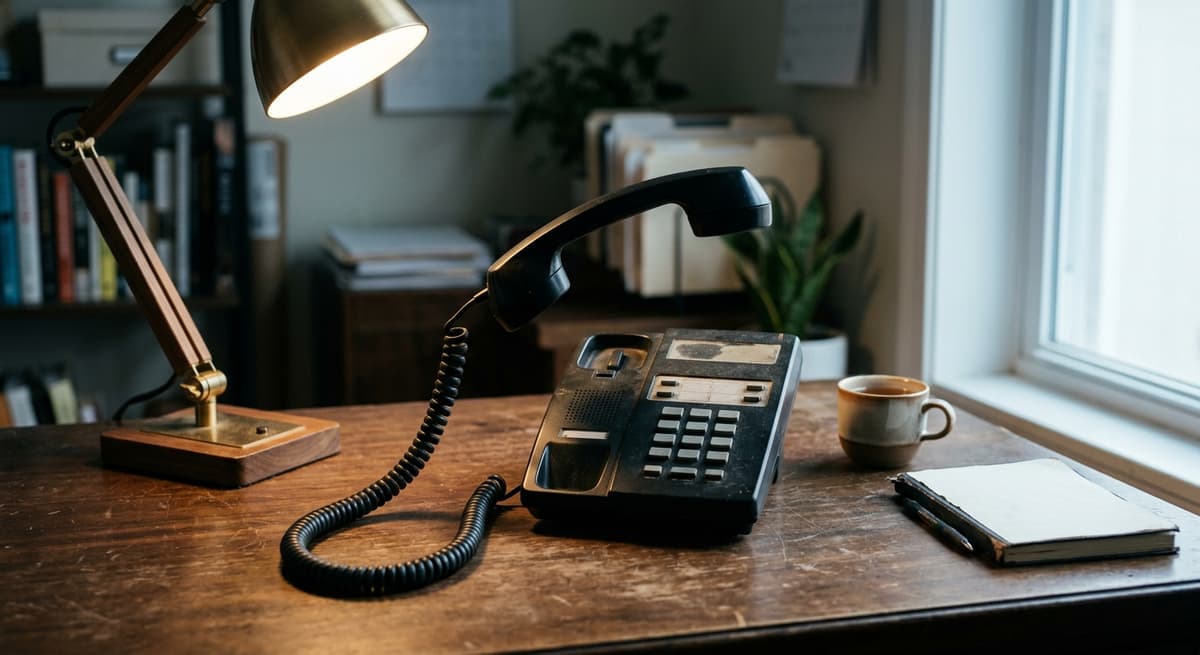
Traditional landline telephone calls are explicitly covered by Ark. Code 5-60-120. The statute specifically references "wire" and "landline" communications. You can record any landline call you are on without informing the other party.
Cell Phone Calls
Cellular phone calls fall under the statute's coverage of "telephonic" and "wireless" communications. Whether you are using a smartphone, a basic cell phone, or any other mobile device, the one-party consent rule applies.
VoIP and Internet Calls
Voice over Internet Protocol (VoIP) calls are covered under the same framework. This includes calls made through:
- Zoom audio and video calls
- Microsoft Teams calls and meetings
- Google Meet conferences
- FaceTime audio and video calls
- WhatsApp voice calls
- Skype calls
- Discord voice channels
- Slack huddles and calls
While the original statute was drafted before these platforms existed, Arkansas courts and legal practitioners apply the law to all forms of voice communication regardless of the technology used.
Satellite Phone Calls
Satellite phone communications are also covered. Any voice transmission, regardless of the infrastructure carrying it, falls within the statute's broad language.
How to Record Phone Calls in Arkansas
Built-In Phone Features
Many smartphones have built-in call recording features or support third-party recording apps. On Android devices, Google's Phone app includes a call recording option in many regions. iPhone users may need to use a third-party app or service.
Third-Party Recording Apps
Numerous apps are available for recording phone calls on both Android and iOS platforms. When selecting an app, consider:
- Audio quality and file format
- Storage location (local vs. cloud)
- Automatic vs. manual recording triggers
- Encryption and security features
- Compliance with app store policies
External Recording Devices
You can also use an external recording device, such as a digital voice recorder with a phone adapter, to capture phone calls. These devices connect to your phone's audio output and record the conversation directly.
VoIP Platform Recording Features
Many VoIP platforms have built-in recording features:
- Zoom: The host can record meetings, and participants may see a notification
- Microsoft Teams: Meeting organizers can start recording
- Google Meet: Recording is available for certain Google Workspace plans
Note that while these platforms may notify other participants that recording has started, Arkansas law does not require this notification. The platform's notification is a feature of the software, not a legal requirement under Arkansas law.
Interstate Phone Call Recording
The Challenge of Cross-Border Calls
One of the most common questions about phone recording involves calls between people in different states. When you are in Arkansas (one-party consent) and the other party is in a state with stricter recording laws, the legal analysis becomes more complex.
The Stricter-Law Principle
As a general rule, when parties to a phone call are in different states, the stricter consent law may apply. This means that if you are in Arkansas calling someone in an all-party consent state, the other state's law could govern the recording.
Two-Party Consent States to Watch
If you regularly record calls with people in the following states, you should obtain consent from all parties:
| State | Consent Type | Key Statute |
|---|---|---|
| California | All-party | Penal Code 632 |
| Connecticut | All-party | Gen. Stat. 52-570d |
| Delaware | Contested: the wiretap statute is one-party consent, but a separate privacy statute requires all-party consent; treat as all-party to be safe | 11 Del. C. 2402(c)(4); 11 Del. C. 1335(a)(4) |
| Florida | All-party | Stat. 934.03 |
| Illinois | All-party (with exceptions) | 720 ILCS 5/14-2 |
| Maryland | All-party | Cts. & Jud. Proc. 10-402 |
| Massachusetts | All-party | Gen. Laws ch. 272, 99 |
| Montana | All-party | MCA 45-8-213 |
| New Hampshire | All-party | RSA 570-A:2 |
| Oregon | All-party for in-person conversations; a participant may record phone and other electronic communications with one-party consent | ORS 165.540 |
| Pennsylvania | All-party | 18 Pa.C.S. 5703 |
| Washington | All-party | RCW 9.73.030 |
Best Practice for Interstate Calls
The safest approach when recording interstate phone calls is to inform all parties and obtain consent. A simple statement like "I would like to record this call for my records. Is that okay with you?" eliminates any risk of violating another state's recording law.
Business Phone Call Recording in Arkansas
Legal Requirements
Arkansas businesses can record phone calls under the same one-party consent framework that applies to individuals. If a business employee is participating in a call, the employee's consent (on behalf of the business) satisfies the legal requirement.
Industry Best Practices
Despite the permissive legal framework, most businesses choose to notify callers before recording. Common notification methods include:
- Pre-recorded announcements: "This call may be recorded for quality assurance and training purposes."
- Verbal disclosure: The employee informs the caller that the conversation is being recorded.
- IVR menu notifications: Automated phone systems include a recording disclosure in the menu options.
- Written consent: Terms of service or customer agreements include a clause about call recording.
Why Businesses Notify Despite One-Party Consent
Even in a one-party consent state, businesses notify callers about recording for several reasons:
- Interstate compliance: Businesses serving customers nationwide need to comply with the strictest applicable state law.
- Federal regulations: Certain industries (financial services, healthcare, telecommunications) have federal regulations that may require disclosure.
- Customer trust: Transparency about recording builds trust and reduces the risk of complaints.
- Litigation protection: Pre-recorded announcements create a clear record that the caller was aware of the recording.
FCC One-to-One Consent Rule (Current Status)
FCC 23-107 (the one-to-one consent rule for robocalls, adopted December 13, 2023) was vacated by the Eleventh Circuit in Insurance Marketing Coalition Ltd. v. FCC, 127 F.4th 303 (11th Cir. 2025) (mandate April 30, 2025). The current applicable federal robocall consent framework is the baseline TCPA (47 U.S.C. § 227) as implemented.
Call Center Compliance
Businesses operating call centers in Arkansas should establish clear policies including:
- When and how callers are notified about recording
- How recordings are stored and for how long
- Who can access recorded calls
- Procedures for handling requests to not be recorded
- Compliance with industry-specific regulations (PCI-DSS for payment card data, HIPAA for health information)
Recording Calls with Government Agencies
Calls with State Agencies
You can record your phone calls with Arkansas state agencies under one-party consent. This includes calls to:
- The Arkansas Department of Human Services
- The Arkansas Department of Finance and Administration
- State licensing boards
- Unemployment insurance offices
- Tax offices
Calls with Federal Agencies
Federal agencies are subject to federal recording law, which also follows one-party consent. You can record your calls with agencies such as the IRS, Social Security Administration, and Veterans Affairs without notifying the agent on the line.
Calls with Law Enforcement
You can record phone calls with police officers, sheriff's deputies, and other law enforcement personnel. One-party consent applies to these calls just as it does to any other phone conversation.
Penalties for Illegal Phone Call Recording
State Penalties
Illegally recording phone calls in Arkansas is a Class A misdemeanor under Ark. Code 5-60-120. The penalties are set by the state's sentencing guidelines:
| Penalty | Maximum |
|---|---|
| Jail time | Up to 1 year |
| Fine | Up to $2,500 |
The offense of illegal recording requires that the recording be made without the consent of any party. If you are a participant in the call, your own consent makes the recording legal, and there is no violation.
Federal Penalties
The federal Wiretap Act (18 U.S.C. 2511) imposes more severe penalties for unauthorized interception of communications:
- Up to 5 years in federal prison
- Fines as prescribed by federal sentencing guidelines
- Both state and federal charges can arise from the same conduct
Civil Liability
Note: Arkansas Chapter 60 (§ 5-60-120) is criminal-only. There is no separate Arkansas statutory civil cause of action for illegal phone recording. Civil plaintiffs route through:
- Federal ECPA (18 U.S.C. § 2520): Not less than $10,000 (or $100 per day, whichever is greater) in statutory damages, plus actual damages, punitive damages, and attorney fees.
- Arkansas common-law invasion of privacy: Dunlap v. McCarty, 284 Ark. 5, 678 S.W.2d 361 (1984) (intrusion upon seclusion).
- Intentional infliction of emotional distress: For extreme and outrageous conduct.
Using Phone Recordings as Evidence
Admissibility in Court
Phone recordings made legally under one-party consent are generally admissible in Arkansas courts. The proponent of the recording must establish:
- Authentication: That the recording is genuine and has not been altered
- Identification: That the voices on the recording can be identified
- Relevance: That the recording relates to a matter at issue in the case
- Completeness: Courts may require that the entire relevant portion be presented, not just selected excerpts
Common Uses of Phone Recordings
Phone recordings serve as evidence in many types of legal proceedings:
- Family law: Custody disputes, child support discussions, co-parenting conflicts
- Employment law: Wrongful termination, harassment claims, wage disputes
- Contract disputes: Verbal agreements, negotiations, representations
- Criminal cases: Threats, harassment, fraud, extortion
- Personal injury: Statements by at-fault parties, insurance adjuster conversations
Preserving Recordings for Legal Use
If you plan to use a phone recording as evidence:
- Preserve the original file in its original format
- Create backup copies and store them securely
- Note the date, time, and parties to the call
- Do not edit, crop, or alter the recording in any way
- Consult an attorney about how to properly introduce the recording as evidence
Specific Phone Recording Scenarios
Recording Calls with Your Ex-Spouse
You can record phone calls with your ex-spouse or co-parent in Arkansas. These recordings are commonly used in custody disputes and divorce proceedings. Be aware that family court judges may evaluate how recordings were used and whether they reflect a pattern of bad faith.
Recording Customer Service Calls
You can record any customer service call you make, whether to a utility company, insurance provider, bank, or other service provider. These recordings can be valuable for documenting promises, agreements, or misrepresentations.
Recording Telemarketing and Spam Calls
You can record telemarketing calls and spam calls. These recordings may be useful as evidence if you choose to report violations of the Telephone Consumer Protection Act (TCPA) or the Do Not Call registry rules.
Recording Calls with Attorneys
While you can legally record calls with your own attorney, doing so may raise questions about the attorney-client privilege. Consult your attorney about whether recording could affect the privileged nature of your communications.
Explore More Arkansas Recording Law Topics
Audio Recording | Video Recording | Voyeurism Laws | Workplace Recording | Recording Police | Phone Call Recording | Security Cameras | Recording in Public | Landlord-Tenant | Dashcam Laws | School Recording | Medical Recording
Back to Arkansas Recording Laws
More Arkansas Recording Topics
More Arkansas Laws
Frequently Asked Questions
Can I record a phone call in Arkansas without telling the other person?
Yes. Arkansas is a one-party consent state under Ark. Code 5-60-120. As a participant in the call, you can record it without informing or obtaining permission from the other party. This applies to landline, cell phone, and VoIP calls.
Is it legal to record a Zoom or Teams call in Arkansas?
Yes. VoIP calls including Zoom, Microsoft Teams, Google Meet, and similar platforms are covered by Arkansas one-party consent law. If you are a participant in the call, you can record it. The platforms may have their own notification features, but Arkansas law does not require notification.
What if I record a call with someone in California from Arkansas?
The stricter law typically applies. California requires all-party consent, so recording a call with a California resident without their knowledge could violate California law even though it is legal in Arkansas. The safest approach is to inform the other party and obtain consent for interstate calls.
Can an Arkansas business record customer calls without notice?
Legally, yes. One-party consent means the business employee participating in the call provides sufficient consent. However, most businesses provide notice as a best practice for interstate compliance, federal regulatory requirements, and customer trust.
What are the penalties for illegally recording a phone call in Arkansas?
Illegal phone recording under Ark. Code 5-60-120 is a Class A misdemeanor with up to one year in jail and a $2,500 fine. Federal violations under 18 U.S.C. 2511 can result in up to five years in prison. Victims can also sue for civil damages including $10,000 minimum statutory damages under federal law.
Updates
Corrected the FCC order number for the vacated one-to-one robocall consent rule (it is FCC 23-107, not 'FCC Order 24-24'), removed an unrelated and outdated CFR citation that did not belong in the discussion, and added Delaware and Oregon to the all-party-consent-states table with precise, sourced phrasing reflecting each state's actual nuance.
Independently fact-checked against the cited primary sources
Governing law re-checked for recent changes
Governing law re-checked for recent changes
Spoke propagation: Swapped Justia AR statute links to arkleg.state.ar.us. Added civil route clarification: Chapter 60 is criminal-only; civil plaintiffs use federal ECPA § 2520 and Dunlap v. McCarty. Added FCC 23-107 vacated notice (11th Cir. 2025). Added [TAKE IT DOWN Act](/us-laws/take-it-down-act) federal overlay.
Reviewed and approved by an editor
The Law Behind This Article
This article rests on the statutory provisions below, held in our own legal record and retrieved from the official source. Tap a section to read the operative text.
Arkansas Code of 1987 Annotated
§ 5-60-120Interception and recording.In forcecited in 17 of our articles
(a) It is unlawful for a person to intercept a wire, landline, oral, telephonic communication, or wireless communication, and to record or possess a recording of the communication unless the person is a party to the communication or one (1) of the parties to the communication has given prior…
Official text (excerpt) · last checked 2026-08-31 · Read the full text in our law library · Verify at arkleg.state.ar.us
Cited in 10 court opinions in our collectionLatest citing opinion in our collection: 2022
In the courts (editorial summary, independently checked):Lewis v. State (1999) applied Section 5-60-120(a) to a man who taped his ex-wife's calls without being a party or having consent, affirming revocation. Elliott v. State (1998) held that while such recording by a private citizen is unlawful, the statute does not bar the tape from evidence.
Opinions citing this section in our collection:
- Lewis v. State (Supreme Court of Arkansas 1999, 336 Ark. 469)✓A man on probation admitted attaching a recorder to the telephone box outside his ex-wife's house and taping her calls; the court found that violated Section 5-60-120(a) because he was not a party and no party consented, and affirmed the revocation.
- Opinion No. (Arkansas Attorney General Reports 1998)“…consented to the recording. This provision is set forth in A.C.A. § 5-60-120 , as follows: 5-60-120 . Interceptio…”
- King v. State (Supreme Court of Arkansas 2019, 571 S.W.3d 476)✓A friend's phone app secretly recorded a murder suspect's call with a detective; the court held that although Section 5-60-120 makes such a recording by a non-party unlawful, it does not bar admissibility, and affirmed the refusal to exclude the tape.
Identified automatically from the court opinions citing this section — not a ranking of which case controls.
Revised Code of Washington
§ 9.73.030Intercepting, recording, or divulging private communication—Consent required—Exceptions.In forcecited in 41 of our articles
(1) Except as otherwise provided in this chapter, it shall be unlawful for any individual, partnership, corporation, association, or the state of Washington, its agencies, and political subdivisions to intercept, or record any: (a) Private communication transmitted by telephone, telegraph, radio, or other device between two or more individuals between points within or without the state by any device electronic or otherwise designed to record and/or transmit said communication regardless how such device is powered or actuated, without first obtaining the consent of all the participants in the communication; (b) Private conversation, by any device electronic or otherwise designed to record or transmit such conversation regardless how the device is powered or actuated without first obtaining the consent of all the persons engaged in the conversation.
Official text (excerpt) · last checked 2026-08-31 · Read the full text in our law library · Verify at app.leg.wa.gov
Cited in 221 court opinions in our collectionLatest citing opinion in our collection: 2026
In the courts (editorial summary, independently checked):Washington courts have policed what counts as a private communication under Sec. 9.73.030: State v. Gunwall (1986) concluded a pen register intercept comes within a private communication transmitted by telephone, while State v. Riley (1993) held a line trap that reveals only the calling number does not record one.
Opinions citing this section in our collection:
- State v. Salinas (Washington Supreme Court 1992, 119 Wash. 2d 192)“…alties for divulging a telegram or opening a sealed letter. RCW 9.73.030-.070, making it unlawful to intercept,…”
- State v. Gunwall (Washington Supreme Court 1986, 106 Wash. 2d 54)✓Everett police pulled a suspected cocaine dealer's toll records and put a pen register on her line without valid legal process; the court held a pen register intercept is a private communication transmitted by telephone, installable only under the eavesdropping statutes.
- State v. Brown (Washington Supreme Court 1997, 132 Wash. 2d 529)✓Palm Springs officers secretly recorded a Washington murder suspect's statements after his arrest; the court treated RCW 9.73.090, not 9.73.030, as the provision reaching recordings of arrested persons, and held the Privacy Act did not require suppressing that recording.
Identified automatically from the court opinions citing this section — not a ranking of which case controls.
United States Code Title 18
§ 2511Interception and disclosure of wire, oral, or electronic communications prohibitedIn forcecited in 418 of our articles
Except as otherwise specifically provided in this chapter any person who— intentionally intercepts, endeavors to intercept, or procures any other person to intercept or endeavor to intercept, any wire, oral, or electronic communication; intentionally uses, endeavors to use, or procures any other person to use or endeavor to use any electronic, mechanical, or other device to intercept any oral communication when— such device is affixed to, or otherwise transmits a signal through, a wire, cable, or other like connection used in wire communication; or such device transmits communications by radio, or interferes with the transmission of such communication; or such person knows, or has reason to know, that such device or any component thereof has been sent through the mail or transported in interstate or foreign commerce; or such use or endeavor to use (A) takes place on the premises of any business or other commercial establishment the operations of which affect interstate or foreign commerce; or (B) obtains or is for the purpose of obtaining information relating to the operations of any business or other commercial establishment the operations of which affect interstate or foreign…
Official text (excerpt) · last checked 2026-08-28 · Read the full text in our law library · Verify at uscode.house.gov
Cited in 2,045 court opinions in our collectionLatest citing opinion in our collection: 2026
In the courts (editorial summary, independently checked):Griggs-Ryan v. Smith (1990) applied the Section 2511(2)(d) prior-consent exception, treating a tenant repeatedly told that all incoming calls were taped as having impliedly consented. United States v. United States District Court (1972) read the then-current Section 2511(3) as conferring no presidential surveillance power.
Opinions citing this section in our collection:
- Mitchell v. Forsyth (Supreme Court of the United States 1985, 472 U.S. 511)✓The Attorney General authorized a warrantless 1970 national security wiretap that caught the plaintiff's calls; the Court held the since-repealed Section 2511(3) disclaimer left the tap lawful under Title III, and that Mitchell had qualified immunity.
- United States v. United States District Court for the Eastern District of Michigan (Supreme Court of the United States 1972, 407 U.S. 297)✓The Attorney General approved warrantless wiretaps on members of a domestic group accused of bombing a CIA office; the Court read Section 2511(3) as a congressional disclaimer conferring no surveillance power, then held the Fourth Amendment required prior judicial approval.
- Forsyth v. Barr (Court of Appeals for the Fifth Circuit 1994, 19 F.3d 1527)✓Dallas police used, in an internal affairs probe of an officer, calls private parties allegedly intercepted illegally; assuming that was unlawful, the Fifth Circuit held Section 2517(1) and (2) allowed the disclosure and use, defeating the Section 2511(1)(c) and (d) claims.
Identified automatically from the court opinions citing this section — not a ranking of which case controls.
§ 2520Recovery of civil damages authorizedIn forcecited in 115 of our articles
Except as provided in section 2511(2)(a)(ii), any person whose wire, oral, or electronic communication is intercepted, disclosed, or intentionally used in violation of this chapter may in a civil action recover from the person or entity, other than the United States, which engaged in that violation such relief as may be appropriate. In an action under this section, appropriate relief includes— such preliminary and other equitable or declaratory relief as may be appropriate; damages under subsection (c) and punitive damages in appropriate cases; and a reasonable attorney’s fee and other litigation costs reasonably incurred.
Official text (excerpt) · last checked 2026-07-28 · Read the full text in our law library · Verify at uscode.house.gov
Cited in 860 court opinions in our collectionLatest citing opinion in our collection: 2026
In the courts (editorial summary, independently checked):Walker v. Darby (1990) held a 2520 plaintiff need not prove the contents of intercepted conversations, only interception and a justified expectation against it. Bartnicki v. Vopper (2001) barred 2520 damages against defendants who took no part in the interception, obtained the tape lawfully, and disclosed a matter of public concern.
Opinions citing this section in our collection:
- Jessie Walker v. Thomas E. Darby, Hugh L. Robinson, Jr., and Kenneth Day (Court of Appeals for the Eleventh Circuit 1990, 911 F.2d 1573)✓A postal letter carrier said three supervisors wired an intercom near his workstation to listen in. Reversing summary judgment, the Eleventh Circuit held a section 2520 plaintiff can show interception without proving the contents of specific conversations.
- Gelbard v. United States (Supreme Court of the United States 1972, 408 U.S. 41)“…disclosure, or use is entitled to recover civil damages, 18 U. S. C. § 2520 . Title III also bars the use as eviden…”
- DirecTV, Inc. v. Hoa Huynh (Court of Appeals for the Ninth Circuit 2007, 503 F.3d 847)“…7 U.S.C. § 605 (e)(4), or alternatively, for violations of 18 U.S.C. § 2520 (a), or alternatively, for violations o…”
Identified automatically from the court opinions citing this section — not a ranking of which case controls.
United States Code Title 47
§ 227Restrictions on use of telephone equipmentIn forcecited in 37 of our articles
As used in this section— The term “automatic telephone dialing system” means equipment which has the capacity— to store or produce telephone numbers to be called, using a random or sequential number generator; and to dial such numbers. The term “established business relationship”, for purposes only of subsection (b)(1)(C)(i), shall have the meaning given the term in section 64.1200 of title 47, Code of Federal Regulations, as in effect on January 1, 2003, except that— such term shall include a relationship between a person or entity and a business subscriber subject to the same terms applicable under such section to a relationship between a person or entity and a residential subscriber; and an established business relationship shall be subject to any time limitation established pursuant to paragraph (2)(G)).1 So in original. Second closing parenthesis probably should not appear.
Official text (excerpt) · last checked 2026-07-28 · Read the full text in our law library · Verify at uscode.house.gov
Cited in 3,209 court opinions in our collectionLatest citing opinion in our collection: 2026
In the courts (editorial summary, independently checked):Facebook, Inc. v. Duguid (2021) held that to qualify as an automatic telephone dialing system under Section 227(a)(1), equipment must have the capacity to use a random or sequential number generator to store or produce the numbers it dials. Nicole Blow v. Bijora, Inc. (2017) applied the prior express consent defense to promotional texts.
Opinions citing this section in our collection:
- Campbell-Ewald Co. v. Gomez (Supreme Court of the United States 2016, 577 U.S. 153)✓A marketing firm hired by the Navy had a subcontractor text a recruiting message to 100,000 phones, reaching a man who never consented; the Supreme Court held a contractor gets no derivative sovereign immunity from TCPA suit when it violates the Act and the Navy's orders.
- Auto-Owners Insurance Company v. Stevens & Ricci Inc (Court of Appeals for the Third Circuit 2016, 835 F.3d 388)✓An insured let an advertiser send 18,879 unsolicited fax ads, drawing a $2 million TCPA class judgment; the Third Circuit read the TCPA as protecting seclusion, not secrecy, so the faxes were no covered 'advertising injury' and the insurer need not pay the judgment.
- Facebook, Inc. v. Duguid (Supreme Court of the United States 2021, 592 U.S. 395)✓Facebook texted login alerts to a man who had no account and never gave it his number; the Supreme Court held a device is an autodialer under 227(a)(1) only if it uses a random or sequential number generator to store or produce numbers, excluding Facebook's system.
Identified automatically from the court opinions citing this section — not a ranking of which case controls.
Search our full record of US law — 2.1 million sections, every state + federal →
Sources and References
- Ark. Code 5-60-120 - Interception and Recording(law.justia.com)
- 18 U.S.C. 2511 - Federal Wiretap Act(law.cornell.edu)
- 18 U.S.C. 2520 - Civil Remedies for Wiretap Violations(law.cornell.edu)
- FCC - Telemarketing and Robocalls(fcc.gov).gov
- Arkansas Department of Human Services(humanservices.arkansas.gov).gov
- Arkansas General Assembly(arkleg.state.ar.us).gov
- Act 600 of 2025 - Tracking Device Harassment Amendment(arkleg.state.ar.us).gov
- Ark. Code 5-60-120 - Interception and Recording(arkleg.state.ar.us).gov
- TAKE IT DOWN Act, Pub. L. No. 119-12 (May 19, 2025) - NCII and deepfake platform takedown duty(congress.gov).gov
- Insurance Marketing Coalition Ltd. v. FCC, 127 F.4th 303 (11th Cir. 2025) - FCC 23-107 vacated(docs.fcc.gov).gov