
Arkansas
Arkansas Police Body Camera Laws: Public Records Access
Independently fact-checked against primary sources (last audited August 20, 2026). · Reviewed by the RecordingLaw editorial team. · Law checked current as of August 20, 2026. · 7 primary sources cited on this page. How we verify our legal content
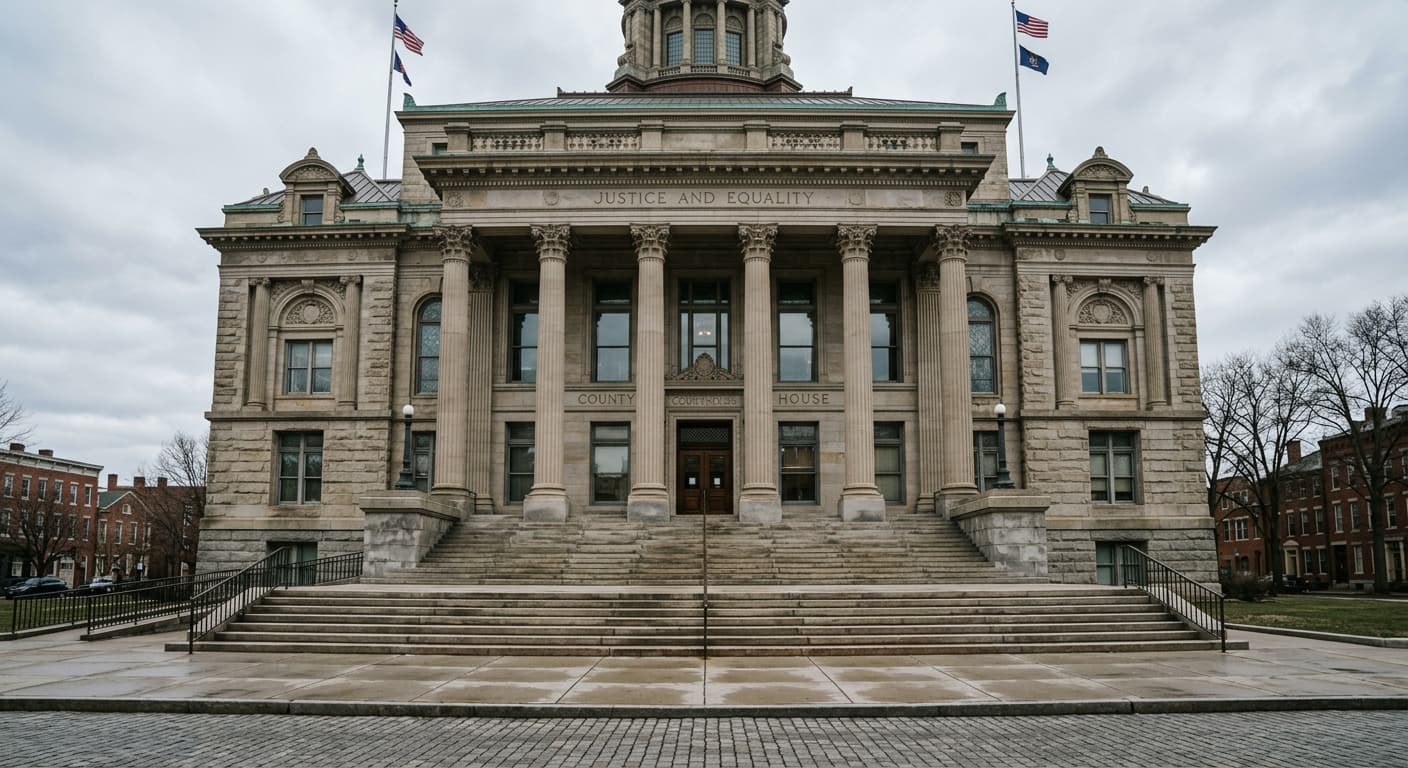
Arkansas has no statewide law requiring police departments to use body cameras, and no bodycam-specific access statute. Requests for footage run through the general Arkansas Freedom of Information Act (FOIA), Ark. Code Ann. § 25-19-105, with one narrow exception for recordings depicting an officer's death.
This guide is part of our Police Bodycam Laws by State series.
Jurisdiction scope: This article addresses Arkansas state law on police body-worn cameras: the absence of a statewide mandate, public-records access under the Arkansas FOIA, and the one camera-specific confidentiality statute on the books. It does not address individual department policies, which vary by city and county, or a civilian's right to record police, which is covered separately in our guide to recording laws.
Does Arkansas require police departments to use body cameras?
No. Arkansas has no statute requiring any law enforcement agency, state or local, to purchase or deploy body-worn cameras. Whether the Arkansas State Police, a county sheriff's office, or a city police department uses cameras, and what its activation policy says, is a decision made by that agency alone. The closest Arkansas has come to a statewide mandate was House Bill 1219, filed in January 2025, which would have required every law enforcement agency and public entity employing officers to provide body-worn cameras and record all official interactions with the public by December 31, 2026. Representative Scott Richardson withdrew the bill on February 6, 2025, before it reached a committee vote, according to the Arkansas State Legislature's bill tracker. Arkansas is not among the handful of states (Colorado, Connecticut, Illinois, Maryland, New Jersey, New Mexico, and South Carolina) that require statewide bodycam use. Many individual Arkansas departments have equipped officers with cameras on their own initiative, but coverage and activation rules differ from one jurisdiction to the next.

How the Arkansas FOIA treats bodycam footage
Arkansas's Freedom of Information Act starts from a presumption of openness. Ark. Code Ann. § 25-19-105(a)(1)(A) makes "all public records" open to inspection and copying, and copying "through image capture, including still and moving photography and video and digital recording" is expressly permitted once a record is available, according to the Arkansas Attorney General's Freedom of Information Handbook, 21st edition, which reprints the statute in full. Body camera and dashcam video qualify as records because they document law enforcement's performance of an official function. In practice, though, most footage tied to an arrest, a use-of-force incident, or any other active matter is withheld under § 25-19-105(b)(6), which exempts "undisclosed investigations by law enforcement agencies of suspected criminal activity." That exemption applies only while the investigation is open; once a case is closed, the same footage generally becomes available on request, subject to redaction for exempt material such as the identity of an undercover officer or a confidential informant. Agencies may also charge a reasonable per-copy fee for producing the video.
The one Arkansas statute written specifically for camera footage
Arkansas does have a single camera-specific statute, but it addresses a narrow situation: the death of a law enforcement officer. Ark. Code Ann. § 12-6-701 defines "record" to include "a photograph, video recording, or audio recording, including any audio or video footage captured on a body-worn camera or a dashboard camera," and then declares that a record depicting or recording the death of a law enforcement officer is confidential and exempt from FOIA disclosure, according to Act 531 of 2017, the act that created the section. Automatic access, without a court petition, is limited to a defined set of people: a family member of the deceased officer (including a minor child of at least 14 with a parent's written consent and supervision), the employing agency or another agency conducting the official death investigation, the Division of Arkansas State Police, the FBI, prosecuting attorneys and their staff, and defense counsel or civil litigation attorneys through the discovery process. Access is not limited to that list, though: the statute separately lets any other person or entity petition the circuit court in the county where the record is located for access on a showing of good cause, weighing factors such as the public's interest in evaluating the officer's conduct, whether a compelling public interest favors disclosure, the severity of any privacy intrusion, and whether the information is available elsewhere. Outside of this specific scenario, Arkansas has no statute that singles out bodycam footage for special confidentiality or special openness; general FOIA law governs everything else.
How long does Arkansas keep bodycam footage?
The Arkansas FOIA sets no retention period of its own. The leading case is Daugherty v. Jacksonville Police Department, 2012 Ark. 264, in which a driver who requested dashcam recordings of her traffic stop was told the Jacksonville Police Department had already purged them on its routine 45-day cycle. The Arkansas Supreme Court agreed with her "that there is no specific retention period for public records set forth in the Act," and it affirmed the trial court's finding that the purge, which the department explained as a way to keep space free on its server, was not a negligent FOIA violation on the record she had made, according to the court's opinion.
That is narrower than "there is no retention law in Arkansas." A separate statute, Ark. Code Ann. § 14-2-204, requires municipalities to keep closed municipal police case files for felony and Class A misdemeanor offenses for seven years after the case closes, or permanently, with records related to crimes of violence as defined by § 5-42-203 kept permanently; incident, offense, and accident reports must be kept for three years. The requester in Daugherty argued that this statute covered the purged recordings, and the Supreme Court did not reject that argument on the merits. It refused to reach it because she raised it for the first time on appeal, saying it was "precluded from addressing the question of whether a violation of a statute, such as section 14-2-204, necessarily implicates a violation of the FOIA." Whether a city department may purge case-file video on a 45-day schedule is therefore an open question in Arkansas rather than settled law. The same opinion notes in a footnote that the state's information-systems director sets retention standards for the electronic records of state agencies under Ark. Code Ann. § 25-18-702.
Timing matters more than motive. Quoting an Attorney General opinion with approval, the Daugherty court noted that destroying police department documents "would violate the FOIA only if the documents were destroyed after a request for access to the documents had been presented to the Department," and that a negligent violation of the FOIA is a Class C misdemeanor under Ark. Code Ann. § 25-19-104. A routine purge that happens after your request has been presented is a potential violation regardless of whether the agency was trying to defeat the request. The same Attorney General opinion adds that destroying a public record with the requisite intent is tampering with a public record under Ark. Code Ann. § 5-54-121, a felony. Destruction can also implicate spoliation-of-evidence rules in related litigation.
Watch out: If you want Arkansas bodycam footage preserved, don't wait. The FOIA sets no retention period, and the department in Daugherty purged its recordings automatically every 45 days. Submit a written FOIA request, or ask the agency in writing to preserve the specific recording, as soon as possible after an incident. Under the Attorney General opinion the Supreme Court quoted in Daugherty, it is destruction after a request has been presented that turns a routine purge into a potential FOIA violation.
Officer accountability: activation and tampering
Because Arkansas has no statewide bodycam statute, it also has no state law addressing what happens when an officer fails to turn on a camera or tampers with footage. That stands in contrast to states like Colorado, which impose mandatory discipline and evidentiary consequences for a failure to activate. In Arkansas, activation requirements and the consequences for violating them are set by each department's use-of-force and equipment policies, enforced through internal affairs and ordinary personnel discipline rather than a statute. A pattern of destroyed or missing footage can still be raised in civil litigation or a criminal case through general spoliation-of-evidence doctrine, as the requester attempted in the Daugherty case, but Arkansas law does not create a bodycam-specific presumption against an officer the way some other states do. Her destruction claim failed, but the same appeal produced two rulings that help the next requester. The Supreme Court held that an agency may not refuse a request as too broad or burdensome when the request is specific enough for the custodian to locate the records with reasonable effort, and that a copying charge may not include agency personnel time, which struck down the $2,475.90 deposit the department had demanded.
Is a civilian allowed to record the police in Arkansas?
Arkansas is a one-party consent state for recording conversations, so a bystander generally does not need an officer's permission to record an encounter in public. This is a separate legal question from what this page covers. For a full explanation of the right to record law enforcement, see Is It Illegal to Record Someone?
More Arkansas Laws
Frequently Asked Questions
Does Arkansas require police officers to wear body cameras?
No. Arkansas has no state law requiring any law enforcement agency to equip officers with body cameras. A 2025 bill that would have created a statewide requirement, HB1219, was withdrawn by its sponsor in February 2025. Adoption is a local, agency-by-agency decision.
How do I request police bodycam footage in Arkansas?
Submit a written request to the specific law enforcement agency under the Arkansas Freedom of Information Act, Ark. Code Ann. § 25-19-105, identifying the incident, date, and location as specifically as possible. The agency can charge a reasonable copying fee and may withhold footage tied to an open investigation.
Can an Arkansas police department deny a request for bodycam footage?
Yes, in some circumstances. Ark. Code Ann. § 25-19-105(b)(6) exempts undisclosed investigations of suspected criminal activity, so footage connected to an active case is commonly withheld until the investigation closes. Footage depicting an officer's death is separately confidential under § 12-6-701.
Is footage of a law enforcement officer's death available to the public in Arkansas?
Not automatically, but the public is not entirely shut out. Ark. Code Ann. § 12-6-701 makes such recordings confidential and exempt from FOIA disclosure, with automatic access limited mainly to the officer's family, the investigating agencies, and attorneys involved in related criminal or civil proceedings. Any other person can petition the circuit court in the county where the record is located for access on a showing of good cause.
How long do Arkansas police departments keep body camera footage?
The FOIA sets no retention period, so day-to-day practice is governed by each department's own policy. In Daugherty v. Jacksonville Police Department, 2012 Ark. 264, the Arkansas Supreme Court agreed the FOIA sets no retention period and left a 45-day automatic purge in place on the record before it. It expressly declined to decide whether Ark. Code Ann. § 14-2-204, which requires municipalities to keep closed felony and Class A misdemeanor police case files for seven years, reaches recordings, so that question is open. Because destruction after a request has been presented can itself violate the FOIA, ask in writing for preservation as early as possible.
Did Arkansas pass a body camera law in 2025?
Not a mandate. House Bill 1219 would have required all Arkansas law enforcement agencies to provide body cameras by December 31, 2026, but Representative Scott Richardson withdrew it on February 6, 2025, before it advanced out of committee.
What happens if an Arkansas officer doesn't turn on the body camera?
State law does not address it. Because Arkansas has no bodycam statute, the consequences for a non-activation depend entirely on the individual department's policy and internal discipline process, not on a statewide rule.
Updates
Corrected the retention section: the no-retention-period holding is now attributed to the Daugherty opinion rather than the Attorney General's FOIA Handbook, the page now notes the seven-year municipal police records statute the court expressly declined to reach, states the case's actual outcome including the two rulings for the requester, and replaces two dead statute links.
Independently fact-checked against the cited primary sources; governing law re-checked for recent changes
Corrected an overstated "limited to a defined list" framing for Ark. Code Ann. 12-6-701 (officer-death footage). The statute is unchanged since its 2017 enactment, but its subsection (d), confirmed via a direct fetch of the current code text, lets any person petition the circuit court where the record is located for access on a showing of good cause -- a general access route the article omitted, which had made it read as though the public has no path to this footage at all.
Governing law re-checked for recent changes
Reviewed and approved by an editor
The Law Behind This Article
This article rests on the statutory provisions below, held in our own legal record and retrieved from the official source. Tap a section to read the operative text.
Arkansas Code of 1987 Annotated
§ 25-19-105Examination and copying of public records.In forcecited in 4 of our articles
(a)(1)(A) Except as otherwise specifically provided by this section or by laws specifically enacted to provide otherwise, all public records shall be open to inspection and copying, including without limitation copying through image capture, including still and moving photography and video and digit
Official text (excerpt) · last checked 2026-09-02 · Read the full text in our law library · Verify at arkleg.state.ar.us
Cited in 727 court opinions in our collectionLatest citing opinion in our collection: 2025
In the courts (editorial summary, independently checked):Arkansas courts read section 25-19-105 to open records broadly and construe its exemptions narrowly. McCambridge v. City of Little Rock (1989) ordered a closed police file released, reading the law enforcement exemption to protect only ongoing investigations, and released crime scene photographs over a privacy objection.
Opinions citing this section in our collection:
- McCambridge v. City of Little Rock (Supreme Court of Arkansas 1989, 298 Ark. 219)✓The killer's mother and his attorney sued to block release of crime scene photos, a diary and letters after police closed a murder-suicide case; the court held the 25-19-105(b)(6) exemption only protects ongoing investigations and privilege adds none, so the records went out.
- Jegley v. Picado (Supreme Court of Arkansas 2002, 349 Ark. 600)“…scussed an individual's privacy interests in the context of Ark.Code Ann. § 25-19-105(b)(12) (Repl.2002), noting that it exem…”
- Sebastian County Chapter of the American Red Cross v. Weatherford (Supreme Court of Arkansas 1993, 311 Ark. 656)✓A requester sought a local Red Cross chapter's records after the city leased it a lot for one dollar a year; the court held an indirect subsidy is not support by public funds, so the chapter's records were not open to inspection under the FOIA.
Identified automatically from the court opinions citing this section — not a ranking of which case controls.
Also relied on in: How to Get a Police Report in Arkansas (2026): Crash & Incident Reports, Arkansas Laws on Recording Police: Your Rights and Limits (2026), Arkansas Freedom of Information Act: Deadlines, Fees, and Appeals
§ 12-6-701Confidentiality of certain law enforcement records — Definitions.In forcecited in 2 of our articles
(a) As used in this section: (1) “Access a record” means to view a photograph or video recording or to listen to an audio recording; (2) “Custodian of the record” means a person identified by the governmental entity that possesses the record and is responsible for safeguarding and providing…
Official text (excerpt) · last checked 2020-11-06 · Read the full text in our law library
Search our full record of US law — 2.1 million sections, every state + federal →
Sources and References
- Ark. Code Ann. § 25-19-105, examination and copying of public records, including the undisclosed-investigation exemption(arkleg.state.ar.us).gov
- Ark. Code Ann. § 12-6-701, confidentiality of law enforcement recordings depicting an officer's death, including body-worn and dashboard camera footage(arkleg.state.ar.us).gov
- Arkansas House Bill 1219 (2025), statewide body-worn camera mandate, withdrawn by the sponsor on February 6, 2025(arkleg.state.ar.us).gov
- Arkansas Attorney General, 2025 Arkansas Freedom of Information Handbook (21st Edition), discussing Daugherty v. Jacksonville Police Dept., 2012 Ark. 264, and records retention(healthy.arkansas.gov).gov
- Arkansas Attorney General, overview of the Arkansas Freedom of Information Act(arkansasag.gov).gov
- Daugherty v. Jacksonville Police Department, 2012 Ark. 264, 411 S.W.3d 196, full opinion: no specific FOIA retention period, the Sec. 14-2-204 argument not reached, and reversal on burdensomeness and on the copying fee(courtlistener.com)
- Arkansas Attorney General, Arkansas Freedom of Information Handbook (21st Edition, 2025), reprinting the full text of Ark. Code Ann. Sec. 25-19-105(media.ark.org).gov
- Act 531 of 2017 (Arkansas 91st General Assembly), enacting Ark. Code Ann. Sec. 12-6-701, confidentiality of records depicting the death of a law enforcement officer, including body-worn and dashboard camera footage(arkleg.state.ar.us).gov