Minnesota Laws on Recording Police: Your Rights and Body Camera Rules
Independently fact-checked against primary sources (last audited August 15, 2026). · Reviewed by the RecordingLaw editorial team. · Law checked current as of August 15, 2026. · 7 primary sources cited on this page. How we verify our legal content
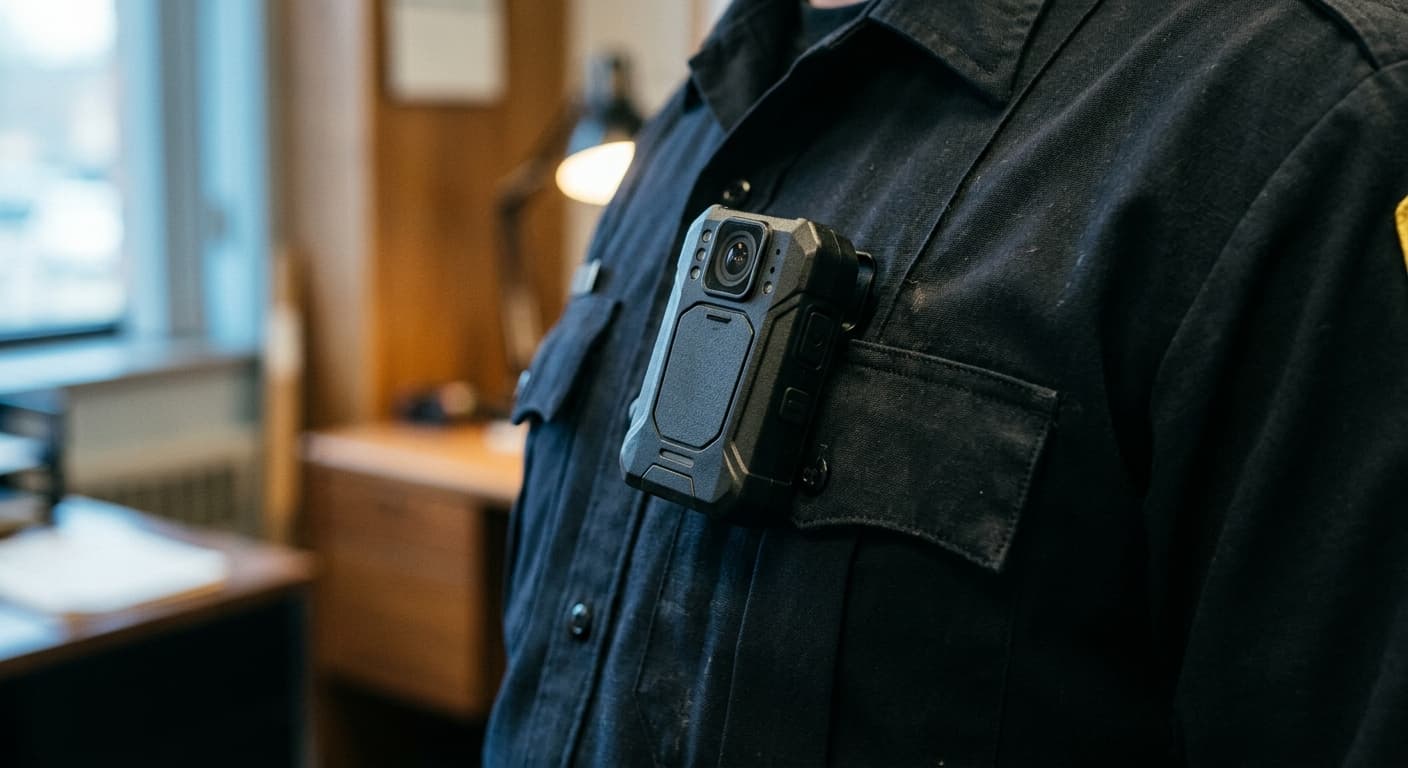
In Minnesota, the First Amendment protects your right to record police officers performing their duties in public. Minnesota's one-party consent rule under Minn. Stat. Section 626A.02 also lets you record interactions with officers without notice, though in the Eighth Circuit this right is not yet clearly established for qualified-immunity purposes.
Your Right to Record Police in Minnesota
Minnesota residents have a constitutionally protected right to record law enforcement officers performing their duties in public. This right is grounded in the First Amendment to the U.S. Constitution, which protects the freedom of speech and the press. Most federal circuits recognize a First Amendment right to record police in public. However, in the Eighth Circuit (which covers Minnesota), the right is not yet clearly established for qualified-immunity purposes. In Molina v. Book, 59 F.4th 334 (8th Cir. 2023), a divided panel held that observing and recording police was not clearly established as a First Amendment right as of 2015, narrowing earlier language in Chestnut v. Wallace, 947 F.3d 1085 (8th Cir. 2020), which had recognized a clearly established right to watch police-citizen interactions at a distance without interfering. This means officers who stop recording may defeat a Section 1983 qualified-immunity claim even if a First Amendment right ultimately exists.
In practice, this means you can film, photograph, and audio record police officers during traffic stops, arrests, searches, and other law enforcement activities happening in public spaces. You can record your own interactions with police, and you can record interactions between police and other people that occur in areas open to the public.
Minnesota's one-party consent rule under Minn. Stat. Section 626A.02 further supports this right. As a participant in a conversation with a police officer, you can record the interaction without informing the officer. When recording police activity you are not directly involved in, the audio capture is protected as long as the recording takes place in a public setting where there is no reasonable expectation of privacy.
What You Can Record
Traffic Stops
You have the right to record your own traffic stop. This includes:
- Video and audio of your interaction with the officer
- The officer's approach to your vehicle
- Conversations about the reason for the stop
- Field sobriety tests or vehicle searches
- The issuance of a citation or arrest
You can use your phone, a dashcam, or any other recording device. There is no requirement to inform the officer that you are recording, though some people choose to do so as a courtesy.
If you are a passenger in a vehicle, you also have the right to record the traffic stop. Bystanders who witness a traffic stop from a public area can record as well.
Arrests and Detentions
Recording an arrest in progress is protected First Amendment activity. You can record:
- The arrest itself, including the use of force
- Statements made by officers and the person being arrested
- The surrounding circumstances and witness reactions
- Booking procedures in public areas of a police station
The key limitation is that your recording must not interfere with the arrest or endanger the safety of officers, the person being arrested, or bystanders.
Public Protests and Demonstrations
Minnesota has been at the center of national attention regarding police interactions with protesters, particularly following events in Minneapolis in 2020. Recording protests and police response to protests is protected activity. You can:
- Film police interactions with protesters
- Livestream events to social media platforms
- Document the use of crowd control tactics
- Record from your own property overlooking public events
Government Buildings and Public Spaces
You can generally record in government buildings that are open to the public, including:
- Police station lobbies and public areas
- Courthouses (subject to specific court rules)
- City halls and government offices
- Legislative buildings during public proceedings
Some government facilities may have specific rules about recording in certain areas. For example, individual courtrooms may have restrictions set by the presiding judge.
Limitations on Recording Police
Do Not Interfere with Police Operations
While your right to record is protected, it is not unlimited. You must not:
- Physically obstruct an officer performing their duties
- Cross police lines or barricades to get closer
- Trespass on private property to record
- Refuse to comply with lawful orders to move back
- Touch or grab an officer or their equipment
- Create a safety hazard for yourself or others
Minnesota law prohibits obstructing legal process or the duties of a peace officer under Minn. Stat. Section 609.50. Interfering with an officer while recording could result in arrest for obstruction, which is a gross misdemeanor carrying up to one year in jail and a $3,000 fine.
Lawful Orders to Step Back
Police officers can order you to move to a safe distance if your presence creates a safety risk. These orders must be reasonable and cannot be used as a pretext to prevent recording. If an officer tells you to step back:
- Comply with the order while continuing to record if possible
- Move to a safe distance that still allows recording
- Verbally state that you are recording and believe you have the right to do so
- Do not argue or resist; you can challenge the legality of the order later
Private Spaces and Sensitive Operations
Your right to record does not extend to:
- The interior of private homes during police operations (unless you are the occupant)
- Secure areas of police stations and jails
- Active crime scenes where public access is restricted
- Undercover operations where recording could endanger officers
Police Body Cameras in Minnesota
The Statutory Framework
Minnesota has specific legislation governing police body cameras. Minn. Stat. Section 626.8473 requires every law enforcement agency in Minnesota that uses portable recording systems (body cameras) to:
- Establish a written policy governing the use, maintenance, storage, and release of data collected by the recording systems
- Provide for public comment and input before adopting or materially changing the policy
- Post the policy on the agency's website or make it available to the public upon request
This statute ensures transparency and community involvement in how body cameras are deployed and how footage is managed.
Policy Requirements
Under Section 626.8473, body camera policies must address:
- When officers must activate their cameras
- When officers may deactivate their cameras
- Procedures for documenting the reason cameras were not activated during specific incidents
- Data retention schedules
- Access controls for who can view footage
- Procedures for handling footage that captures sensitive situations
The requirement for public input before policy adoption is a significant feature of Minnesota's law. It gives community members a voice in determining how their interactions with police are recorded and how that footage is handled.
Body Camera Data Classification
Body camera footage in Minnesota is classified under Minn. Stat. Section 13.825, which was added to the Minnesota Government Data Practices Act specifically to address portable recording system data. This section establishes a classification system for body camera footage:
- The default classification is private or nonpublic data. Body camera footage is presumed private unless it falls into one of the statute's public exceptions.
- Data become public when they document a peace officer's discharge of a firearm in the course of duty (where notice is required) or a use of force resulting in substantial bodily harm, when the subject of the recording requests it be made public (with non-consenting subjects redacted where practicable), or when they qualify as public personnel data.
- Active criminal investigative data captured by a body camera are governed by Minnesota's criminal investigative data provisions rather than this default classification, and data that are not public under other Data Practices Act provisions keep that classification.
Members of the public can submit data requests for body camera footage through the law enforcement agency that created the recording. Agencies must respond within a reasonable time and may charge reasonable fees for the cost of providing copies.
Data Retention Requirements
Body camera data must be retained according to schedules established in each agency's policy. At minimum, recordings of critical incidents, use of force, and officer-involved deaths must be preserved for longer periods. Routine recordings that do not document significant events may be retained for shorter periods as specified by the agency's policy.
What to Do If Police Try to Stop Your Recording
Know Your Rights
If a police officer tells you to stop recording, you should know that:
- You have a constitutional right to record in public
- Officers cannot legally order you to stop recording simply because they do not want to be recorded
- Officers cannot confiscate your phone or camera without a warrant
- Officers cannot demand that you delete recordings
Practical Steps
If confronted by an officer about your recording:
- Stay calm and polite. Do not escalate the situation.
- Clearly state that you are exercising your First Amendment right to record.
- Do not physically resist if an officer attempts to take your device. Verbal objection is sufficient to preserve your legal rights.
- Comply with lawful orders to step back while continuing to record from a distance.
- Do not delete recordings even if ordered to do so. Courts have found that officers do not have the authority to order deletion without a warrant.
- Note the officer's name and badge number for any future complaint or legal action.
- File a complaint with the department's internal affairs division if you believe your rights were violated.
Legal Remedies
If police unlawfully interfere with your right to record, you may have several legal remedies:
- Section 1983 civil rights lawsuit against the officer or department for violating your First Amendment rights under 42 U.S.C. Section 1983 (note: in the Eighth Circuit, qualified immunity may shield individual officers because the right to record has not been clearly established -- Molina v. Book, 59 F.4th 334 (8th Cir. 2023))
- State tort claims for conversion (if equipment was seized), assault, or false imprisonment
- Internal affairs complaints with the police department
- Complaints to the Minnesota Board of Peace Officer Standards and Training (POST)
Law Enforcement Wiretapping Authority
Court-Ordered Interception
Minn. Stat. Chapter 626A provides the framework for law enforcement interception of wire, oral, and electronic communications. Law enforcement must obtain a court order before conducting wiretapping or electronic surveillance. The application for an interception order must demonstrate:
- Probable cause that a specified crime has been, is being, or will be committed
- Normal investigative techniques have been tried and failed, or reasonably appear unlikely to succeed
- The communications to be intercepted are related to the criminal activity
- The surveillance will be conducted to minimize the interception of unrelated communications
Emergency Exceptions
In emergency situations involving immediate danger of death or serious physical injury, or conspiratorial activities characteristic of organized crime, designated law enforcement officials may authorize interception without a prior court order. A court order must be obtained within 48 hours, and the emergency interception must otherwise comply with all statutory requirements.
Pen Registers and Trap Devices
Law enforcement can also use pen registers and trap and trace devices under Minn. Stat. Section 626A.35 with a court order. These devices capture the phone numbers of incoming and outgoing calls but do not record the content of communications.
Recording Government Meetings
Minnesota's Open Meeting Law, Minn. Stat. Chapter 13D, requires most government meetings to be open to the public. This includes the right to record those meetings. You can record:
- City council meetings
- County board meetings
- School board meetings
- State legislative proceedings
- Public hearings and comment sessions
- Town hall meetings
Government bodies cannot prohibit recording of open meetings, though they may establish reasonable rules about where recording equipment can be placed to avoid disruption.
More Minnesota Recording Laws
Audio Recording | Video Recording | Voyeurism & Hidden Cameras | Workplace Recording | Recording Police | Phone Call Recording | Security Cameras | Recording in Public | Landlord-Tenant | Dashcam Laws | Schools | Medical Recording
Back to Minnesota Recording Laws
More Minnesota Recording Topics
More Minnesota Laws
Frequently Asked Questions
Can I record police officers in Minnesota?
Yes. The First Amendment protects your right to record law enforcement officers performing their duties in public. You can film traffic stops, arrests, and other police activity. Minnesota's one-party consent law also allows you to record your own conversations with officers without informing them.
Can police confiscate my phone or camera in Minnesota?
No, not without a warrant. Police cannot seize your recording device simply because you are filming them. They also cannot order you to delete recordings. If an officer takes your device without a warrant, you may have a civil rights claim under 42 U.S.C. Section 1983.
Are Minnesota police required to wear body cameras?
Minnesota does not mandate body cameras statewide, but Minn. Stat. Section 626.8473 requires any agency that uses body cameras to adopt a written policy with public input and post the policy on its website. Many Minnesota law enforcement agencies have adopted body camera programs.
Can I get body camera footage in Minnesota?
Yes. Body camera footage is classified under Minn. Stat. Section 13.825, the Government Data Practices Act. The default classification is private or nonpublic data; footage becomes public if it documents a use-of-force incident or firearm discharge requiring notice, if the subject of the recording requests it be made public, or if it qualifies as public personnel data. You can submit a data request to the law enforcement agency for footage that is public.
What happens if I interfere with police while recording in Minnesota?
Interfering with police operations can result in charges under Minn. Stat. Section 609.50 for obstructing legal process, which is a gross misdemeanor carrying up to one year in jail and a $3,000 fine. You must maintain a safe distance and follow lawful orders while recording.
Updates
Corrected the case-law citations supporting the Eighth Circuit qualified-immunity caveat: the controlling case was misnamed (now correctly cited as Molina v. Book, 59 F.4th 334 (8th Cir. 2023)), and two unrelated or mischaracterized cases (Robbins v. Becker, a towing-business dispute, and Ness v. City of Bloomington, a case about photographing children in a park) were removed and replaced with an accurate description of Chestnut v. Wallace.
Independently fact-checked against the cited primary sources; governing law re-checked for recent changes
Corrected the body camera footage classification section: Minn. Stat. 13.825's default is private/nonpublic data with specific public exceptions (use-of-force/firearm-discharge with required notice, subject-requested release, public personnel data), not the article's invented three-tier public/private/confidential taxonomy naming private homes, minors, and undercover officers.
Governing law re-checked for recent changes
Corrected First Amendment right-to-record analysis for the Eighth Circuit: right is NOT clearly established for qualified-immunity purposes per Molina v. Book, 59 F.4th 334 (8th Cir. 2023); updated KeyTakeaways and Section 1983 remedies accordingly. (2026-08-15 correction: the prior version of this note misnamed Molina, and cited Robbins v. Becker and Ness v. City of Bloomington, neither of which addresses the right to record police, and mischaracterized Chestnut v. Wallace, 947 F.3d 1085 (8th Cir. 2020), which recognized a right to observe police at a distance that the 2023 Molina panel later narrowed.)
Reviewed and approved by an editor
The Law Behind This Article
This article rests on the statutory provisions below, held in our own legal record and retrieved from the official source. Tap a section to read the operative text.
Minnesota Statutes, Chapter 626A: WIRE, ELECTRONIC, OR ORAL COMMUNICATIONS; INTERCEPTION
§ 626A.02INTERCEPTION AND DISCLOSURE OF WIRE, ELECTRONIC, OR ORAL COMMUNICATIONS PROHIBITEDIn forcecited in 18 of our articles
Subdivision 1. Offenses. Except as otherwise specifically provided in this chapter any person who: (1) intentionally intercepts, endeavors to intercept, or procures any other person to intercept or endeavor to intercept, any wire, electronic, or oral communication; (2) intentionally uses, endeavors to use, or procures any other person to use or endeavor to use any electronic, mechanical, or other device to intercept any oral communication when: (i) such device is affixed to, or otherwise transmits a signal through, a wire, cable, or other like connection used in wire communication; or (ii) such device transmits communications by radio, or interferes with the transmission of such communication; (3) intentionally discloses, or endeavors to disclose, to any other person the contents of any wire, electronic, or oral communication, knowing or having reason to know that the information was obtained through the interception of a wire, electronic, or oral communication in violation of this subdivision; or (4) intentionally uses, or endeavors to use, the contents of any wire, electronic, or oral communication, knowing or having reason to know that the information was obtained through the…
Official text (excerpt) · last checked 2026-08-31 · Read the full text in our law library · Verify at revisor.mn.gov
Cited in 20 court opinions in our collectionLatest citing opinion in our collection: 2025
In the courts (editorial summary, independently checked):Copeland v. Hubbard Broadcasting, Inc. (1995) applied the 626A.02 party exemption, finding a secret recording made for commercial newsgathering was not intercepted for the purpose of a tortious act. State v. Page (1986) held an officer's use of a regular telephone extension in the ordinary course of duty was not an interception.
Opinions citing this section in our collection:
- Copeland v. Hubbard Broadcasting, Inc. (Court of Appeals of Minnesota 1995, 526 N.W.2d 402)“…l to the federal wiretapping statutes. Compare Minn.Stat. § 626A.02, subd. 1 (1992), with 18…”
- State v. Page (Court of Appeals of Minnesota 1986, 386 N.W.2d 330)“…g rule applies. See 18 U.S.C. § 2511 (1982); Minn.Stat. § 626A.02 (1984). The federal rule makes it unlaw…”
- State v. Olkon (Supreme Court of Minnesota 1980, 299 N.W.2d 89)✓An undercover deputy posing as an injury client taped his calls and office meetings with a lawyer later convicted of attempted theft by swindle; the court rejected suppression, holding one party's consent meant no warrant was needed, citing the statute's consent exception.
Identified automatically from the court opinions citing this section — not a ranking of which case controls.
Also relied on in: Minnesota Smart Glasses Recording Laws 2025, Minnesota AI Meeting Recording Laws (2026), Minnesota Surveillance Camera Laws (2026 Guide)
Minnesota Statutes, Chapter 13: GOVERNMENT DATA PRACTICES
§ 13.825PORTABLE RECORDING SYSTEMSIn forcecited in 9 of our articles
Subdivision 1. Application; definition. (a) This section applies to law enforcement agencies that maintain a portable recording system for use in investigations, or in response to emergencies, incidents, and requests for service. (b) As used in this section: (1) "portable recording system" means a device worn by a peace officer that is capable of both video and audio recording of the officer's activities and interactions with others or collecting digital multimedia evidence as part of an investigation; (2) "portable recording system data" means audio or video data collected by a portable recording system; and (3) "redact" means to blur video or distort audio so that the identity of the subject in a recording is obscured sufficiently to render the subject unidentifiable. Subd. 2. Data classification; court-authorized disclosure.
Official text (excerpt) · last checked 2026-08-31 · Read the full text in our law library · Verify at revisor.mn.gov
Cited in 2 court opinions in our collectionLatest citing opinion in our collection: 2024
Opinions citing this section in our collection:
- Troy K. Scheffler v. City of Anoka, City of Coon Rapids, Hicken, Scott, Howard & Anderson, P. A. (Court of Appeals of Minnesota 2017, 890 N.W.2d 437)“…of government data under specific circumstances. See, e.g., Minn. Stat. § 13.825, subd. 3 (2016) (mandating the retentio…”
- West v. City of Minneapolis (District Court, D. Minnesota 2024)“…c data under the Minnesota Government Data Protection Act, Minn. Stat. 13.825, subd. 2(a); and (5) Defendants’ Exhibi…”
Identified automatically from the court opinions citing this section — not a ranking of which case controls.
Also relied on in: Minnesota Audio Recording Laws: One-Party Consent Rules and Penalties, Minnesota Dashcam Laws: Legality, Mounting Rules, and Evidence Use, Minnesota Police Bodycam Laws: Private Data by Default
Minnesota Statutes, Chapter 609: CRIMINAL CODE
§ 609.50OBSTRUCTING LEGAL PROCESS, ARREST, OR FIREFIGHTINGIn force
Subdivision 1. Crime. Whoever intentionally does any of the following may be sentenced as provided in subdivision 2: (1) obstructs, hinders, or prevents the lawful execution of any legal process, civil or criminal, or apprehension of another on a charge or conviction of a criminal offense; (2) obstructs, resists, or interferes with a peace officer while the officer is engaged in the performance of official duties; (3) interferes with or obstructs a firefighter while the firefighter is engaged in the performance of official duties; (4) interferes with or obstructs a member of an ambulance service personnel crew, as defined in section 144E.001, subdivision 3a, who is providing, or attempting to provide, emergency care; or (5) by force or threat of force endeavors to obstruct any employee of the Department of Revenue, Department of Public Safety Driver and Vehicle Services Division, a driver's license agent appointed under section 171.061, or a deputy registrar appointed under section 168.33 while the employee is lawfully engaged in the performance of official duties for the purpose of deterring or interfering with the performance of those duties. Subd. 2. Penalty.
Official text (excerpt) · last checked 2026-07-29 · Read the full text in our law library · Verify at revisor.mn.gov
Cited in 86 court opinions in our collectionLatest citing opinion in our collection: 2026
Opinions citing this section in our collection:
- State v. Ihle (Supreme Court of Minnesota 2002, 640 N.W.2d 910)“…th force or violence, a gross misdemeanor, in violation of Minn. Stat. § 609.50 , subd. 2(2) (2000); and disorderly con…”
- State v. Engholm (Supreme Court of Minnesota 1980, 290 N.W.2d 780)“…convictions of obstructing legal process? (2) Does Minn.Stat. § 609.50 (1978) violate defendants’ constitution…”
- State of Minnesota v. Thomas Raymond Struzyk (Supreme Court of Minnesota 2015, 869 N.W.2d 280)“…d gross-misdemeanor obstruction of legal process or arrest, Minn.Stat. § 609.50, subd. 1(2) (2014). At issue is whether…”
Identified automatically from the court opinions citing this section — not a ranking of which case controls.
Minnesota Statutes, Chapter 626: PEACE OFFICERS; SEARCHES; PURSUIT; MANDATORY REPORTING
§ 626.8473PORTABLE RECORDING SYSTEMS ADOPTION; WRITTEN POLICY REQUIREDIn forcecited in 5 of our articles
Subdivision 1. Definition. As used in this section, "portable recording system" has the meaning provided in section 13.825, subdivision 1. Subd. 2. Public comment. A local law enforcement agency must provide an opportunity for public comment before it purchases or implements a portable recording system. At a minimum, the agency must accept public comments submitted electronically or by mail, and the governing body with jurisdiction over the budget of the law enforcement agency must provide an opportunity for public comment at a regularly scheduled meeting. Subd. 3. Written policies and procedures required. (a) The chief officer of every state and local law enforcement agency that uses or proposes to use a portable recording system must establish and enforce a written policy governing its use. In developing and adopting the policy, the law enforcement agency must provide for public comment and input as provided in subdivision 2. Use of a portable recording system without adoption of a written policy meeting the requirements of this section is prohibited. The written policy must be posted on the agency's website, if the agency has a website.
Official text (excerpt) · last checked 2026-07-29 · Read the full text in our law library · Verify at revisor.mn.gov
Also relied on in: Minnesota Recording Laws (2026): One-Party Consent Rules
United States Code Title 42
§ 1983Civil action for deprivation of rightsIn forcecited in 50 of our articles
Every person who, under color of any statute, ordinance, regulation, custom, or usage, of any State or Territory or the District of Columbia, subjects, or causes to be subjected, any citizen of the United States or other person within the jurisdiction thereof to the deprivation of any rights, privileges, or immunities secured by the Constitution and laws, shall be liable to the party injured in an action at law, suit in equity, or other proper proceeding for redress, except that in any action brought against a judicial officer for an act or omission taken in such officer’s judicial capacity, injunctive relief shall not be granted unless a declaratory decree was violated or declaratory relief was unavailable. For the purposes of this section, any Act of Congress applicable exclusively to the District of Columbia shall be considered to be a statute of the District of Columbia.
Official text (excerpt) · last checked 2026-07-28 · Read the full text in our law library · Verify at uscode.house.gov
Cited in 282,365 court opinions in our collectionLatest citing opinion in our collection: 2026
Opinions citing this section in our collection:
- Ashcroft v. Iqbal (Supreme Court of the United States 2009, 556 U.S. 662)“…its brought against state officials under Rev. Stat. §1979, 42 U. S. C. §1983.” Hartman, 547 U. S., at 254, n. 2. Cf.…”
- Celotex Corp. v. Catrett, Administratrix of the Estate of Catrett (Supreme Court of the United States 1986, 477 U.S. 317)“…policeman as she left. Petitioner brought an action under 42 U. S. C. § 1983 claiming that the refusal of service a…”
- Monell v. New York City Dept. of Social Servs. (Supreme Court of the United States 1978, 436 U.S. 658)“…decided less than two decades ago. Focusing new light on 42 U. S. C. § 1983 , that decision widened access to the f…”
Identified automatically from the court opinions citing this section — not a ranking of which case controls.
Also relied on in: Alabama Laws on Recording Police: Your Rights and Limits, Alaska Laws on Recording Police: Your Rights and Limits (2026), Arkansas Laws on Recording Police: Your Rights and Limits (2026)
Explore the law
This article also draws on these acts and chapters (opening at their first section): Minnesota Statutes, Chapter 13D: OPEN MEETING LAW § 13D.001 (DEFINITION) · Minnesota Statutes, Chapter 626A: WIRE, ELECTRONIC, OR ORAL COMMUNICATIONS; INTERCEPTION § 626A.01 (DEFINITIONS)
Related law for further reading — not part of this article’s citations.
Search our full record of US law — 2.1 million sections, every state + federal →
Sources and References
- Minn. Stat. Section 626.8473 - Body Cameras(revisor.mn.gov).gov
- Minn. Stat. Section 13.825 - Recording System Data(revisor.mn.gov).gov
- Minn. Stat. Section 626A.02(revisor.mn.gov).gov
- Minn. Stat. Chapter 626A(revisor.mn.gov).gov
- Minn. Stat. Section 609.50 - Obstructing Legal Process(revisor.mn.gov).gov
- Minn. Stat. Chapter 13D - Open Meeting Law(revisor.mn.gov).gov
- 42 U.S.C. Section 1983 - Civil Rights(law.cornell.edu)
- Molina v. Book, 59 F.4th 334 (8th Cir. 2023) - Right to Record Police(ecf.ca8.uscourts.gov).gov