Minnesota Security Camera Laws: Residential, Commercial, and Privacy Rules
Independently fact-checked against primary sources (last audited August 15, 2026). · Reviewed by the RecordingLaw editorial team. · Law checked current as of August 15, 2026. · 6 primary sources cited on this page. How we verify our legal content
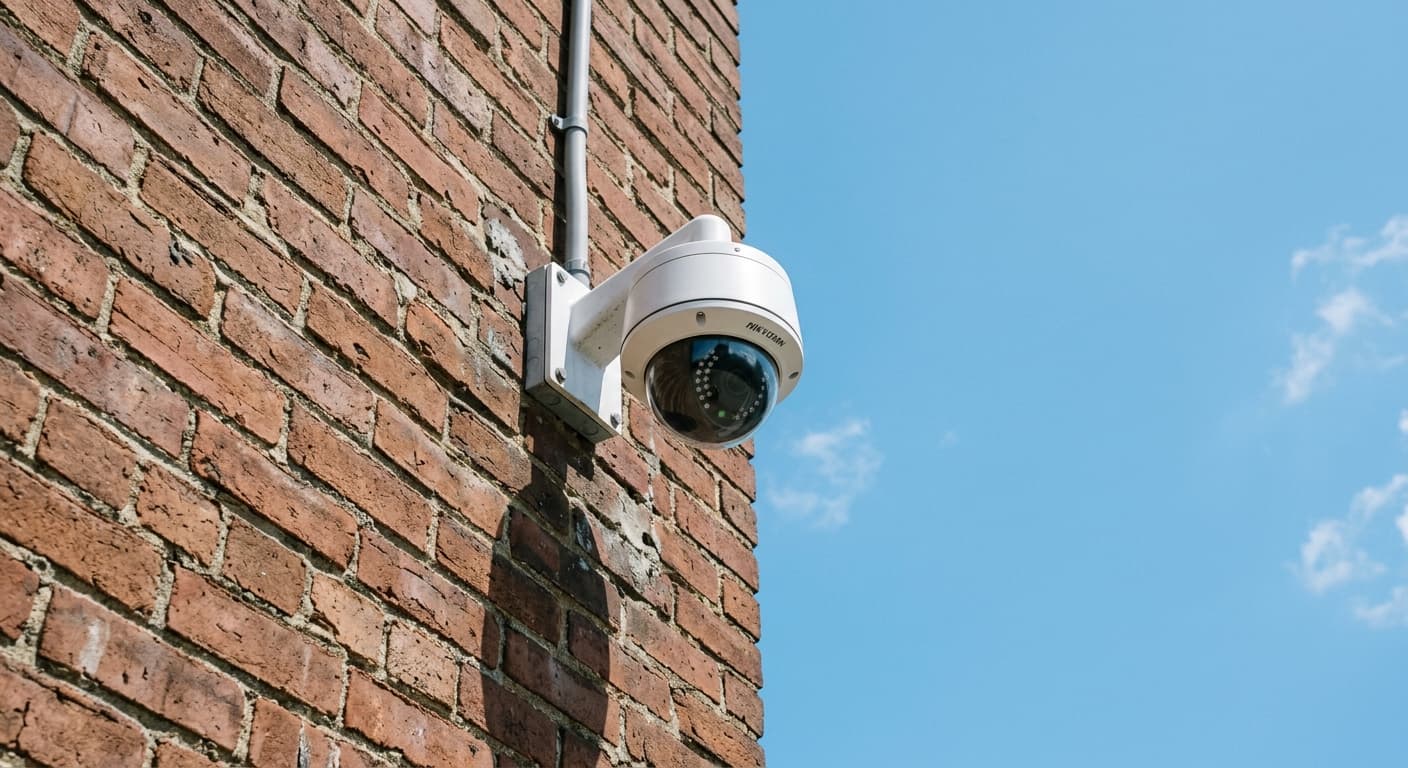
Minnesota homeowners may install security cameras on their own property without a permit. Cameras are prohibited in bathrooms, locker rooms, and other private spaces under Minn. Stat. 609.746, though a commercial establishment that posts conspicuous surveillance-warning signage is exempt from that prohibition under Section 609.746, subdivision 1(k). Audio-enabled cameras must meet the one-party consent standard under Minn. Stat. 626A.02, requiring at least one person captured to consent.
Overview of Minnesota Security Camera Laws
Minnesota does not have a single, comprehensive security camera statute. Instead, security camera use is governed by a combination of state laws that address privacy, wiretapping, data protection, and property rights. The key statutes that affect security camera installations include:
- Minn. Stat. Section 609.746 (interference with privacy)
- Minn. Stat. Section 626A.02 (wiretapping and electronic surveillance)
- Minn. Stat. Section 604.31 (civil action for nonconsensual dissemination)
- The Minnesota Consumer Data Privacy Act (MCDPA)
Understanding these laws helps homeowners, business owners, landlords, and tenants install and use security cameras within legal boundaries.
Residential Security Camera Laws
Installing Cameras on Your Own Property
Minnesota homeowners have broad rights to install security cameras on their own property. You can place cameras to monitor:
- Your front door, back door, and other entry points
- Your driveway and garage
- Your yard, garden, and outdoor living areas
- Interior common areas like living rooms, kitchens, and hallways
- Detached structures like sheds, garages, and workshops
No permit is required to install residential security cameras in Minnesota. You do not need to register your camera system with any government agency.
Cameras Facing Public Areas
Security cameras that face public areas, such as the street in front of your home or a public sidewalk, are generally legal. People in public spaces have no reasonable expectation of privacy regarding their physical presence and activities. Your cameras can capture:
- Vehicles and pedestrians on the public street
- Activity on the sidewalk in front of your home
- Your own property boundaries
- General neighborhood activity visible from your property
Cameras and Neighbor Privacy
While you can install cameras on your own property, you should avoid positioning them in ways that intrude on your neighbors' reasonable expectation of privacy. Cameras should not be aimed to capture:
- The interior of a neighbor's home through windows
- A neighbor's bathroom, bedroom, or other private areas
- A neighbor's fenced backyard where they have a privacy expectation
- Areas where neighbors may be in a state of undress
If a neighbor believes your camera is conducting surreptitious surveillance of their private activities, they could potentially bring a complaint under Minn. Stat. Section 609.746. The key question would be whether the camera captures areas where the neighbor has a reasonable expectation of privacy.
Indoor Camera Restrictions
Even in your own home, there are limits on camera placement. You cannot place cameras in areas where guests, family members, or other occupants have a reasonable expectation of privacy:
- Bathrooms are always off-limits for camera placement
- Guest bedrooms should not have hidden cameras
- Areas where people change clothes should be camera-free
Nanny cameras and similar monitoring devices are legal in common areas of your home (living room, kitchen, playroom) in Minnesota. However, they should not be placed in bedrooms, bathrooms, or other private areas.
Commercial Security Camera Laws
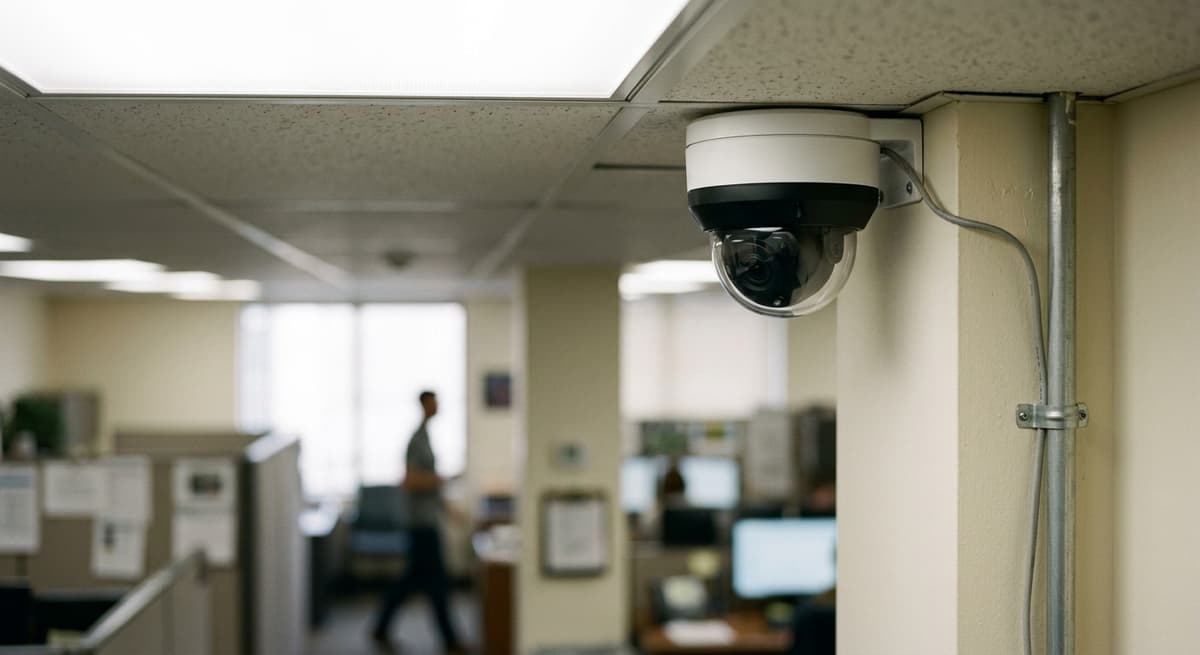
Business Surveillance Systems
Minnesota businesses can install security cameras throughout their commercial premises for loss prevention, employee safety, liability protection, and operational monitoring. Common camera locations in commercial settings include:
- Retail sales floors and checkout areas
- Warehouses and storage facilities
- Parking lots and loading docks
- Lobbies and reception areas
- Office common areas and hallways
- Building exteriors and perimeters
Businesses should have written policies about their camera systems and inform employees about camera locations and purposes.
Employee Monitoring
Security cameras that monitor employees in the workplace are legal in common areas where employees do not have a reasonable expectation of privacy. Cameras must not be placed in:
- Employee bathrooms and restrooms
- Changing rooms and locker areas
- Break rooms designated as private (though cameras in general break rooms may be permitted with notice)
- Nursing or lactation rooms
For a detailed discussion of workplace surveillance, see our page on Minnesota workplace recording laws.
Customer-Facing Cameras
Security cameras in customer areas are legal and common. Retail stores, banks, restaurants, and other customer-facing businesses routinely use surveillance cameras. Minnesota law does not require businesses to post signs notifying customers of camera presence, though many businesses do so as a deterrent and as a best practice.
Cameras in customer-facing areas must still respect privacy. Cameras in fitting rooms and customer restrooms are prohibited under Section 609.746, unless the business has posted conspicuous signs warning that the premises are under surveillance by the owner or employees, which exempts the business under Section 609.746, subdivision 1(k).
Audio Recording on Security Cameras
The One-Party Consent Rule
Many modern security cameras include audio recording capabilities. When a security camera records audio, it must comply with Minnesota's one-party consent rule under Minn. Stat. Section 626A.02.
This creates a legal issue for unattended security cameras. The one-party consent exception requires that at least one party to a conversation consent to the recording. A security camera recording conversations in an empty room, hallway, or outdoor area where the camera operator is not present may not satisfy this requirement.
Practical Approaches
To avoid potential wiretapping liability, many Minnesota security camera installations take one of these approaches:
- Disable audio recording entirely, using video-only surveillance
- Post prominent notices that audio recording is occurring, so that people who enter the area and continue speaking provide implied consent
- Limit audio recording to areas where an employee or owner is always present to serve as the consenting party
- Use audio recording only on cameras where the owner regularly monitors live feeds and can serve as a party to overheard conversations
The safest approach for most residential and commercial installations is to disable audio recording or post clear notices about audio surveillance.
Doorbell Cameras and Smart Home Devices
Ring, Nest, and Similar Devices
Smart doorbell cameras like Ring, Nest, and similar devices are popular in Minnesota. These devices typically record video and audio of the area near your front door. Key legal considerations:
- Video recording of your front porch, walkway, and the public street is legal
- Audio recording captures conversations at your doorstep. If you are speaking with someone at your door, one-party consent is satisfied. However, the camera may also capture conversations between people passing by who do not know they are being recorded
- Cloud storage of recordings may implicate the MCDPA if biometric features are analyzed
Smart Home Interior Cameras
Devices like Nest Cam, Ring Indoor Cam, and Amazon Echo Show cameras can be used inside your home. The same rules apply: cameras in common areas are legal, cameras in private areas (bathrooms, guest bedrooms) are not. If these devices record audio, one-party consent rules apply.
Sharing Security Camera Footage
Minnesota homeowners can share their security camera footage with law enforcement, neighbors, and on social media. However:
- Footage showing people in private activities should not be shared publicly
- Footage used to harass or intimidate a specific person could raise civil liability issues
- Neighborhood security groups (like Ring's Neighbors feature) are legal but should be used responsibly
- Law enforcement requests for footage are voluntary; you are not required to share unless a warrant or court order is presented
The Minnesota Consumer Data Privacy Act and Security Cameras
Biometric Data from Surveillance
The Minnesota Consumer Data Privacy Act (MCDPA), effective July 31, 2025, has significant implications for security cameras that incorporate biometric technology. The MCDPA classifies biometric data as sensitive personal data requiring consumer consent before processing.
Security cameras with the following capabilities trigger MCDPA requirements:
- Facial recognition systems that identify or verify individuals
- Gait analysis technology that identifies people by their walking patterns
- Behavioral analytics that track individual movement patterns over time
Businesses using security cameras with these advanced features must:
- Provide clear notice about biometric data collection
- Obtain consent before processing biometric data
- Limit the use and retention of biometric data
- Implement security measures to protect stored biometric data
Basic Video Surveillance
Standard video surveillance that simply records footage without biometric analysis is not subject to the MCDPA's biometric data provisions. The law targets the processing and analysis of biometric identifiers, not the simple capture of video footage.
HOA and Community Rules

Homeowner Association Restrictions
Many Minnesota homeowner associations (HOAs) have rules about security camera installations. Common HOA restrictions include:
- Limits on the visibility of cameras from the street
- Requirements for specific camera styles or colors that match the exterior
- Restrictions on camera placement that affects shared common areas
- Prohibitions on cameras aimed at neighbors' properties
- Requirements for approval before installation
HOA rules are contractual obligations that exist alongside state law. A camera installation that is legal under Minnesota state law may still violate HOA covenants, resulting in fines or required removal.
Condominium and Townhome Associations
Condominium associations may have additional authority over camera installations in shared spaces. Individual unit owners can generally install cameras inside their units and on their exclusive-use areas (balconies, patios), but cameras in common areas typically require association approval.
Landlord and Tenant Security Camera Issues
For a detailed discussion of security camera issues in rental properties, including landlord surveillance, tenant camera rights, and lease restrictions, see our page on Minnesota landlord-tenant recording laws.
Criminal Penalties for Illegal Security Camera Use
| Statute | Offense | Classification | Maximum Penalty |
|---|---|---|---|
| Section 609.746 | Surreptitious surveillance (first offense) | Gross misdemeanor | 1 year / $3,000 |
| Section 609.746 | Repeat offense or minor victim | Felony | 2 years / $5,000 |
| Section 626A.02 | Illegal audio interception | Felony | 5 years / $20,000 |
| Section 617.261 | Nonconsensual image dissemination | Gross misdemeanor / Felony | 1-3 years / $3,000-$5,000 |
Civil liability under Minn. Stat. Section 626A.13 for audio violations provides a two-prong damages choice under subd. 3(b): treble actual damages plus violator profits, OR statutory damages of the greater of $100 per day or $10,000 -- whichever prong is greater -- plus punitive damages and attorney fees.
Best Practices for Security Camera Installation
For Homeowners
- Point cameras at your own property and public areas
- Avoid capturing the interior of neighbors' homes
- Consider disabling audio recording or posting notices about audio
- Secure your camera system with strong passwords to prevent unauthorized access
- Regularly update firmware to patch security vulnerabilities
- Check HOA rules before installing exterior cameras
- Store footage securely and establish a reasonable retention schedule
For Businesses
- Post signs notifying customers and employees of camera presence
- Maintain written policies about camera use, footage retention, and access
- Never place cameras in bathrooms, locker rooms, or changing areas without posting conspicuous surveillance-warning signage, which is required for the Section 609.746(k) commercial exemption to apply
- Consider disabling audio or posting audio recording notices
- If using facial recognition, comply with MCDPA consent requirements
- Train employees on camera policies and footage handling
- Retain footage according to a documented schedule
More Minnesota Recording Laws
Audio Recording | Video Recording | Voyeurism & Hidden Cameras | Workplace Recording | Recording Police | Phone Call Recording | Security Cameras | Recording in Public | Landlord-Tenant | Dashcam Laws | Schools | Medical Recording
Back to Minnesota Recording Laws
More Minnesota Recording Topics
See Also
- Minnesota Surveillance Camera Laws covers home, HOA, neighbor, workplace, and landlord camera rules in Minnesota.
More Minnesota Laws
Frequently Asked Questions
Can I install security cameras on my property in Minnesota?
Yes. Minnesota homeowners can install security cameras on their own property without a permit or registration. Cameras can cover your entrances, yard, driveway, and common interior areas. Avoid aiming cameras into neighbors' private spaces and do not place cameras in bathrooms or guest bedrooms.
Can my security camera record audio in Minnesota?
Audio recording on security cameras must comply with the one-party consent rule under Minn. Stat. Section 626A.02. At least one person captured in the conversation must consent to the audio recording. The safest approach is to disable audio or post clear notices that audio recording is occurring.
Can I put a camera in my business bathroom in Minnesota?
It depends. Cameras in bathrooms, locker rooms, changing areas, and other spaces where people have a reasonable expectation of privacy are illegal under Minn. Stat. Section 609.746 in most cases. A commercial establishment is exempt if the owner posts conspicuous signs warning that the premises are under surveillance by the owner or employees, under Section 609.746, subdivision 1(k). Without that signage, violating the statute is a gross misdemeanor for a first offense and a felony for repeat offenses or offenses involving minors.
Does Minnesota require signs for security cameras?
Minnesota does not have a general statutory requirement to post signs notifying people of video surveillance. However, posting signs is recommended as a best practice, especially if cameras record audio. If cameras use facial recognition or other biometric technology, the MCDPA requires notice and consent.
Can my HOA restrict where I place security cameras?
Yes. HOAs can impose rules about security camera placement through their covenants, conditions, and restrictions (CC&Rs). Common HOA rules include restrictions on camera visibility, requirements for specific camera styles, and prohibitions on cameras aimed at neighbors' properties. HOA rules apply in addition to state law.
Updates
Added the Minn. Stat. Section 609.746(k) exemption: a commercial establishment that posts conspicuous surveillance-warning signage may install cameras in areas like restrooms and fitting rooms, which the page previously described as an absolute prohibition.
Independently fact-checked against the cited primary sources; governing law re-checked for recent changes
Governing law re-checked for recent changes
Governing law re-checked for recent changes
Corrected § 626A.13 subd. 3(b) damages to two-prong structure.
Reviewed and approved by an editor
The Law Behind This Article
This article rests on the statutory provisions below, held in our own legal record and retrieved from the official source. Tap a section to read the operative text.
Minnesota Statutes, Chapter 609: CRIMINAL CODE
§ 609.746INTERFERENCE WITH PRIVACYIn forcecited in 15 of our articles
Subdivision 1. Surreptitious intrusion; observation device. (a) A person is guilty of a gross misdemeanor who: (1) enters upon another's property; (2) surreptitiously gazes, stares, or peeps in the window or any other aperture of a house or place of dwelling of another; and (3) does so with intent to intrude upon or interfere with the privacy of a member of the household. (b) A person is guilty of a gross misdemeanor who: (1) enters upon another's property; (2) surreptitiously installs or uses any device for observing, photographing, recording, amplifying, or broadcasting sounds or events through the window or any other aperture of a house or place of dwelling of another; and (3) does so with intent to intrude upon or interfere with the privacy of a member of the household.
Official text (excerpt) · last checked 2026-08-31 · Read the full text in our law library · Verify at revisor.mn.gov
Cited in 15 court opinions in our collectionLatest citing opinion in our collection: 2026
In the courts (editorial summary, independently checked):State v. Pakhnyuk (2019) held the intent to intrude on privacy in section 609.746, subd. 1(a) attaches only to the peeping, not to entering the property. State v. Ulmer (2006) applied subd. 1(c) to a public restroom, holding the space above a urinal partition is an aperture and the shielded space is private.
Opinions citing this section in our collection:
- State v. Pakhnyuk (Supreme Court of Minnesota 2019, 926 N.W.2d 914)✓A houseguest sat on the roof and watched a 14-year-old undressing through a bedroom window; the Minnesota Supreme Court held the intent to intrude element attaches only to the peeping clause, not to entering the property, and affirmed the conviction.
- State v. Ulmer (Court of Appeals of Minnesota 2006, 719 N.W.2d 213)✓A man leaned over a urinal partition in a store restroom to watch a seven-year-old boy urinate; the court of appeals held a user has an expectation of privacy in that partitioned space and that the gap above the partition is an aperture under the statute.
- State v. Morris (Court of Appeals of Minnesota 2002, 644 N.W.2d 114)✓A man carried a camera concealed in a bag and filmed up a store clerk's skirt; the court of appeals held the area under a skirt is a place with an expectation of privacy and the camera itself an aperture, and rejected the commercial-establishment exemption.
Identified automatically from the court opinions citing this section — not a ranking of which case controls.
Also relied on in: Minnesota Landlord-Tenant Recording Laws: Cameras, Privacy, and Rights, Minnesota Medical Recording Laws: Patient Rights, HIPAA, and Provider Rules, Minnesota Laws on Recording in Public: Rights, Limits, and Privacy Rules
Minnesota Statutes, Chapter 604: CIVIL LIABILITY
§ 604.31CAUSE OF ACTION FOR NONCONSENSUAL DISSEMINATION OF PRIVATE SEXUAL IMAGES; SEXUAL SOLICITATIONIn forcecited in 3 of our articles
Subdivision 1. Nonconsensual dissemination of private sexual images. (a) A cause of action against a person for the nonconsensual dissemination of private sexual images exists when: (1) a person disseminated an image without the consent of the person depicted in the image; (2) the image is of an individual depicted in a sexual act or whose intimate parts are exposed in whole or in part; (3) the person is identifiable: (i) from the image itself, by the person depicted in the image or by another person; or (ii) from the personal information displayed in connection with the image; and (4) the image was obtained or created under circumstances in which the person depicted had a reasonable expectation of privacy. (b) The fact that the individual depicted in the image consented to the creation of the image or to the voluntary private transmission of the image is not a defense to liability for a person who has disseminated the image without consent. Subd. 2. Nonconsensual sexual solicitation.
Official text (excerpt) · last checked 2026-07-29 · Read the full text in our law library · Verify at revisor.mn.gov
Cited in 2 court opinions in our collectionLatest citing opinion in our collection: 2020
Opinions citing this section in our collection:
- Fredin v. Miller (District Court, D. Minnesota 2020)“…nts used his personal information to solicit sexual acts. Minn. Stat. § 604.31, subd. 2 (2016). Accordingly, t…”
- Fredin v. Middlecamp (District Court, D. Minnesota 2020)“…nts used his personal information to solicit sexual acts. Minn. Stat. § 604.31, subd. 2 (2016). Accordingly, t…”
Identified automatically from the court opinions citing this section — not a ranking of which case controls.
Also relied on in: Minnesota Video Recording Laws: Public Filming, Privacy, and Penalties, Minnesota Voyeurism and Hidden Camera Laws: Offenses, Penalties, and Protections
Minnesota Statutes, Chapter 617: ABORTION; OBSCENITY; NUISANCE
§ 617.261NONCONSENSUAL DISSEMINATION OF PRIVATE SEXUAL IMAGESIn forcecited in 6 of our articles
Subdivision 1. Crime. It is a crime to intentionally disseminate an image of another person who is depicted in a sexual act or whose intimate parts are exposed, in whole or in part, when: (1) the person is identifiable: (i) from the image itself, by the person depicted in the image or by another person; or (ii) from personal information displayed in connection with the image; (2) the actor knows or reasonably should know that the person depicted in the image does not consent to the dissemination; and (3) the image was obtained or created under circumstances in which the actor knew or reasonably should have known the person depicted had a reasonable expectation of privacy. Subd. 2. Penalties. (a) Except as provided in paragraph (b), whoever violates subdivision 1 is guilty of a gross misdemeanor.
Official text (excerpt) · last checked 2026-07-29 · Read the full text in our law library · Verify at revisor.mn.gov
Cited in 1 court opinions in our collectionLatest citing opinion in our collection: 2025
Opinions citing this section in our collection:
- State of Minnesota, Respondent, vs. Eloisa Rubi Plancarte, Appellant (Supreme Court of Minnesota 2025)“…individual is female, a partially or fully exposed nipple.” Minn. Stat. § 617.261, subd. 7(e) (2024); see also Minn. Sta…”
Identified automatically from the court opinions citing this section — not a ranking of which case controls.
Also relied on in: Revenge Porn Laws by State: All 50 States and DC (2026), Minnesota Surveillance Camera Laws (2026 Guide), Minnesota Pornography Laws (2026): Age-Verification Bill Fell One Vote Short
Minnesota Statutes, Chapter 626A: WIRE, ELECTRONIC, OR ORAL COMMUNICATIONS; INTERCEPTION
§ 626A.02INTERCEPTION AND DISCLOSURE OF WIRE, ELECTRONIC, OR ORAL COMMUNICATIONS PROHIBITEDIn forcecited in 18 of our articles
Subdivision 1. Offenses. Except as otherwise specifically provided in this chapter any person who: (1) intentionally intercepts, endeavors to intercept, or procures any other person to intercept or endeavor to intercept, any wire, electronic, or oral communication; (2) intentionally uses, endeavors to use, or procures any other person to use or endeavor to use any electronic, mechanical, or other device to intercept any oral communication when: (i) such device is affixed to, or otherwise transmits a signal through, a wire, cable, or other like connection used in wire communication; or (ii) such device transmits communications by radio, or interferes with the transmission of such communication; (3) intentionally discloses, or endeavors to disclose, to any other person the contents of any wire, electronic, or oral communication, knowing or having reason to know that the information was obtained through the interception of a wire, electronic, or oral communication in violation of this subdivision; or (4) intentionally uses, or endeavors to use, the contents of any wire, electronic, or oral communication, knowing or having reason to know that the information was obtained through the…
Official text (excerpt) · last checked 2026-08-31 · Read the full text in our law library · Verify at revisor.mn.gov
Cited in 20 court opinions in our collectionLatest citing opinion in our collection: 2025
In the courts (editorial summary, independently checked):Copeland v. Hubbard Broadcasting, Inc. (1995) applied the 626A.02 party exemption, finding a secret recording made for commercial newsgathering was not intercepted for the purpose of a tortious act. State v. Page (1986) held an officer's use of a regular telephone extension in the ordinary course of duty was not an interception.
Opinions citing this section in our collection:
- Copeland v. Hubbard Broadcasting, Inc. (Court of Appeals of Minnesota 1995, 526 N.W.2d 402)“…l to the federal wiretapping statutes. Compare Minn.Stat. § 626A.02, subd. 1 (1992), with 18…”
- State v. Page (Court of Appeals of Minnesota 1986, 386 N.W.2d 330)“…g rule applies. See 18 U.S.C. § 2511 (1982); Minn.Stat. § 626A.02 (1984). The federal rule makes it unlaw…”
- State v. Olkon (Supreme Court of Minnesota 1980, 299 N.W.2d 89)✓An undercover deputy posing as an injury client taped his calls and office meetings with a lawyer later convicted of attempted theft by swindle; the court rejected suppression, holding one party's consent meant no warrant was needed, citing the statute's consent exception.
Identified automatically from the court opinions citing this section — not a ranking of which case controls.
Also relied on in: Minnesota Smart Glasses Recording Laws 2025, Minnesota AI Meeting Recording Laws (2026), Minnesota Recording Laws (2026): One-Party Consent Rules
§ 626A.13CIVIL REMEDIESIn forcecited in 8 of our articles
Subdivision 1. In general. Except as provided in section 2511 (2)(a)(ii) of title 18 of the United States Code, a person whose wire, oral, or electronic communication is intercepted, disclosed, or intentionally used in violation of this chapter may in a civil action recover from the person or entity that engaged in that violation relief as may be appropriate. Subd. 2. Relief. In an action under this section, appropriate relief includes: (1) temporary and other equitable or declaratory relief as may be appropriate; (2) damages under subdivision 3 and punitive damages in appropriate cases; and (3) a reasonable attorney's fee and other litigation costs reasonably incurred. Subd. 3. Computation of damages.
Official text (excerpt) · last checked 2026-07-29 · Read the full text in our law library · Verify at revisor.mn.gov
Cited in 3 court opinions in our collectionLatest citing opinion in our collection: 1996
Opinions citing this section in our collection:
- Molenaar v. United Cattle Co. (Court of Appeals of Minnesota 1996, 553 N.W.2d 424)“…upp.) (false reports of maltreatment of vulnerable adults); Minn.Stat. § 626A.13, subd. 2(2) (1994) (wiretapping). [2]…”
- State v. Monsrud (Supreme Court of Minnesota 1983, 337 N.W.2d 652)“…338 A.2d 284 (1975). We decline to follow it. [4] Minn.Stat. § 626A.13 (1982), provides: Any person whose w…”
- American Computer Trust Leasing v. Jack Farrell Implement Co. (District Court, D. Minnesota 1991, 763 F. Supp. 1473)“…In Count VII, defendants seek treble damages pursuant to Minn.Stat. § 626A.13 for the alleged violation of Minn.Stat.…”
Identified automatically from the court opinions citing this section — not a ranking of which case controls.
Also relied on in: Minnesota Audio Recording Laws: One-Party Consent Rules and Penalties, Minnesota Phone Call Recording Laws: One-Party Consent and Interstate Rules, Minnesota Workplace Recording Laws: Employee and Employer Rights
Search our full record of US law — 2.1 million sections, every state + federal →
Sources and References
- Minn. Stat. Section 609.746 - Interference with Privacy(revisor.mn.gov).gov
- Minn. Stat. Section 626A.02(revisor.mn.gov).gov
- Minn. Stat. Section 626A.13 - Civil Liability(revisor.mn.gov).gov
- Minn. Stat. Section 604.31 - Nonconsensual Dissemination Civil Action(revisor.mn.gov).gov
- Minnesota Attorney General(ag.state.mn.us).gov
- Minn. Stat. Section 617.261(revisor.mn.gov).gov