Minnesota Medical Recording Laws: Patient Rights, HIPAA, and Provider Rules
Independently fact-checked against primary sources (last audited August 15, 2026). · Reviewed by the RecordingLaw editorial team. · Law checked current as of August 15, 2026. · 7 primary sources cited on this page. How we verify our legal content
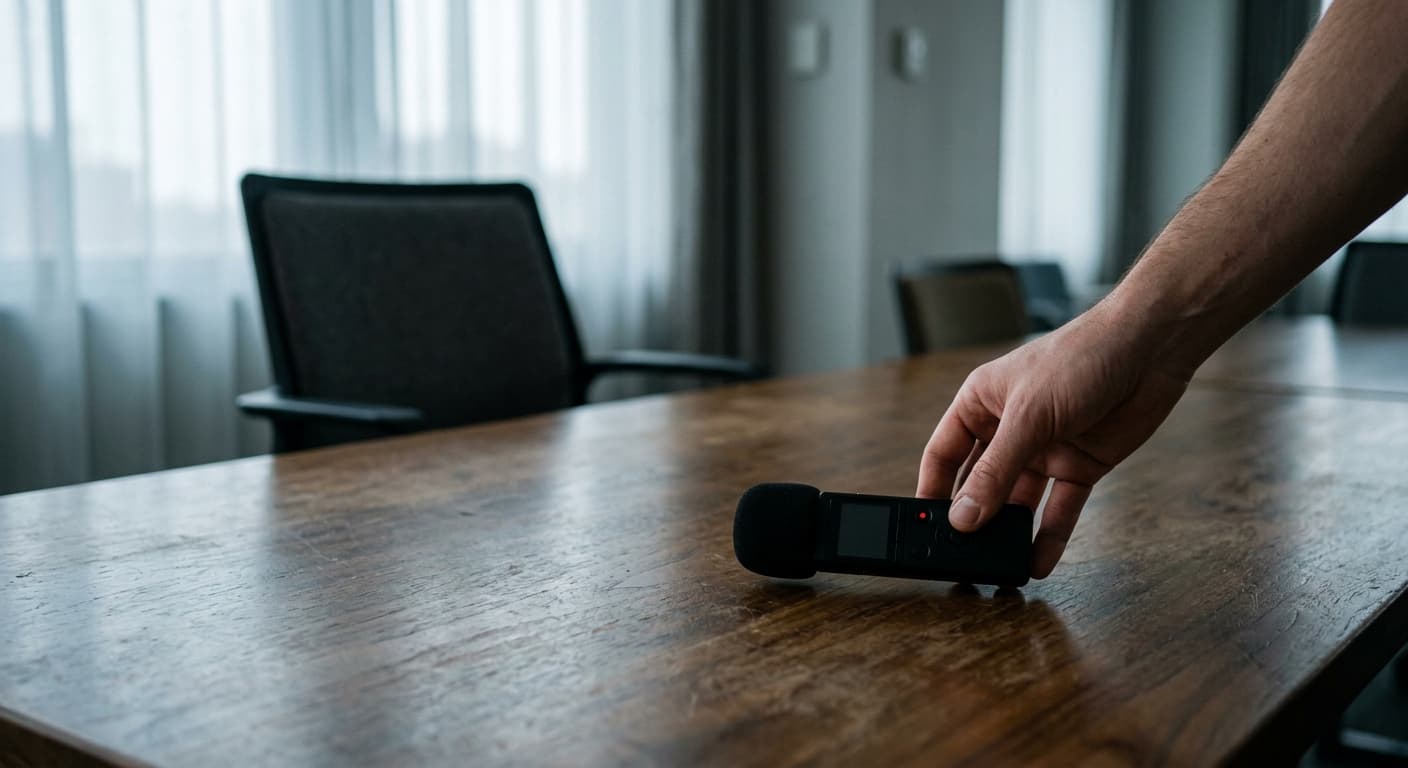
In Minnesota, a patient may legally record their own medical appointment without telling the provider. Under Minn. Stat. Section 626A.02, patients are parties to the conversation and satisfy the one-party consent rule. HIPAA governs how providers handle recordings but does not restrict patients from recording their own visits.
Overview of Minnesota Medical Recording Laws
Recording medical appointments and healthcare interactions in Minnesota sits at the intersection of the state's one-party consent law, federal HIPAA regulations, the Minnesota Health Records Act, healthcare facility policies, and professional ethics rules. While Minnesota's wiretapping law permits patients to record their own medical visits, other legal and practical considerations affect how recording works in healthcare settings.
Patient Rights to Record Medical Appointments
One-Party Consent in Healthcare Settings
Under Minn. Stat. Section 626A.02, a patient who participates in a conversation with a healthcare provider can record that conversation without informing the provider. The patient is a party to the communication, which satisfies the one-party consent requirement.
This means patients can legally record:
- Doctor's office visits and consultations
- Discussions about diagnosis and treatment options
- Informed consent conversations before procedures
- Discharge instructions and follow-up care plans
- Conversations with nurses, physician assistants, and other clinical staff
- Pharmacy consultations about medications
- Mental health therapy sessions (subject to additional considerations discussed below)
- Physical therapy and rehabilitation sessions
Why Patients Record Medical Visits
Research consistently shows that patients forget a significant portion of what their doctor tells them shortly after leaving the office. Recording medical visits helps patients:
- Remember complex medical information including diagnoses, treatment plans, and medication instructions
- Share information with family members who could not attend the appointment
- Review instructions at home to ensure proper compliance with treatment plans
- Document informed consent discussions for surgical and invasive procedures
- Create a personal medical record supplementing official provider records
- Preserve evidence if the patient later has concerns about the quality of care received
Several major medical organizations have acknowledged the benefits of patients recording their visits, noting that recorded instructions improve patient compliance and reduce medical errors.
Provider Policies on Recording
While Minnesota's one-party consent law permits patient recording, many healthcare providers and facilities have policies about recording during appointments. These policies may:
- Prohibit recording without advance notice to the provider
- Require written consent from the provider before recording
- Restrict recording in certain areas of the facility
- Limit recording during group therapy sessions
These policies are facility rules rather than state law requirements. A patient who violates a provider's no-recording policy may be asked to leave the facility or may have their patient relationship terminated, but they cannot face criminal charges for recording a conversation they participated in.
Some providers, recognizing the benefits of recorded visits, actively encourage patients to record. Practices that support recording often find that patients have better outcomes and fewer complaints.
HIPAA and Patient Recording
What HIPAA Does and Does Not Regulate
The Health Insurance Portability and Accountability Act (HIPAA) is a federal law that regulates how healthcare providers, health plans, and their business associates handle protected health information (PHI). A common misconception is that HIPAA prevents patients from recording their medical appointments.
HIPAA does not prohibit patients from recording their own medical visits. HIPAA regulates covered entities (providers, insurers, clearinghouses) and their business associates. Patients are not covered entities under HIPAA, and HIPAA does not restrict what patients do with information obtained during their own healthcare interactions.
Key points about HIPAA and recording:
- HIPAA does not apply to patients. You are not subject to HIPAA when recording your own appointment.
- Providers cannot invoke HIPAA to prohibit a patient from recording their own visit.
- HIPAA does regulate what providers do with their own recordings of patients, including storage, access controls, and disclosure limitations.
- Patient recordings are not subject to HIPAA because the patient made them outside of the covered entity's operations.
Provider Recordings of Patients
When healthcare providers record patient interactions (for telemedicine, quality assurance, or educational purposes), those recordings are subject to HIPAA's privacy and security rules. Providers must:
- Obtain patient consent before recording for most purposes
- Store recordings securely with appropriate access controls
- Include recordings in the patient's designated record set if they are used for treatment decisions
- Retain and dispose of recordings according to their HIPAA-compliant retention policies
Minnesota Health Records Act

Patient Access Rights
The Minnesota Health Records Act, Minn. Stat. Section 144.291-144.298, gives patients extensive rights regarding their health records. Under Minn. Stat. Section 144.292, patients have the right to access and obtain copies of their health records. Under Minn. Stat. Section 144.293, a provider generally needs the patient's signed, dated consent before disclosing those records to a third party, which functions as the patient's right to authorize or refuse third-party disclosure.
If a healthcare provider makes audio or video recordings of patient interactions and those recordings become part of the patient's health record, the patient has the right to access them under the Minnesota Health Records Act.
Confidentiality Requirements
The Minnesota Health Records Act imposes strict confidentiality requirements on healthcare providers. Patient health information cannot be disclosed without the patient's authorization except in specifically enumerated circumstances (treatment, payment, healthcare operations, court orders, public health reporting, etc.).
These confidentiality rules apply to any recordings made by the provider, not to recordings made by the patient.
Recording in Specific Medical Settings
Hospital Visits
Patients can record their own interactions with hospital staff, including conversations with attending physicians, nurses, and specialists. However, hospitals are complex environments with additional considerations:
- Shared rooms. Recording in a shared hospital room may capture conversations with or about other patients. Patients should be mindful of other patients' privacy and avoid recording in ways that capture others' protected health information.
- Surgical areas. Patients are typically not permitted to bring recording devices into operating rooms or sterile areas due to infection control and safety concerns.
- Emergency departments. Recording your own emergency department visit is legal, but emergency staff may be focused on life-saving measures and should not be distracted by recording concerns.
- Visitor policies. Some hospitals restrict visitor recording as part of their general visitor policies.
Mental Health Settings
Recording in mental health settings involves unique considerations:
- Individual therapy. A patient can record their own therapy session under one-party consent. However, therapists may have strong clinical reasons for discouraging recording, as it can affect the therapeutic relationship and the patient's willingness to be open.
- Group therapy. Recording a group therapy session is more complex because the recording would capture other patients' private health information. Most group therapy programs prohibit recording as a condition of participation, and recording without consent can still violate facility policy even though Minnesota's recording privacy statute (Minn. Stat. Section 609.746) exempts conduct inside a medical facility.
- Psychiatric facilities. Inpatient psychiatric facilities may restrict personal electronic devices, including recording equipment, for safety and therapeutic reasons.
Minnesota's Health Records Act third-party disclosure-consent requirement, Minn. Stat. Section 144.293, requires a signed, dated patient consent before a provider discloses health records to a third party, with limited exceptions. That general consent requirement applies to mental health records the same as any other health record.
Telehealth Appointments
Telehealth visits have become common in Minnesota, and recording rules apply to them just as they do to in-person visits:
- Patient recording. You can record your own telehealth visit under one-party consent. Most video call platforms (Zoom, Teams, etc.) have built-in recording features, or you can use screen recording software.
- Provider recording. Providers who record telehealth sessions must comply with HIPAA and state privacy laws. Most telehealth platforms require provider consent before recording, and many notify all participants.
- Platform policies. Telehealth platforms may have their own terms of service regarding recording. These are contractual requirements that exist alongside state recording law.
- Interstate telehealth. If a Minnesota patient has a telehealth visit with a provider in a two-party consent state, the recording laws of both states may apply. Minnesota patients should be aware that some providers may be subject to stricter recording rules in their own states.
Nursing Homes and Long-Term Care
Families of nursing home residents often want to monitor their loved one's care. In Minnesota:
- Residents (or their legal representatives) can install cameras in their own rooms
- Recording conversations between the resident and staff is covered by one-party consent (the resident or their representative can be the consenting party)
- Cameras in common areas of nursing homes are generally under the facility's control
- Minn. Stat. Section 144A.44 establishes a Home Care Bill of Rights covering clients who receive home care services or live in an assisted living facility, including the right to have personal, financial, and medical information kept private and to have their property treated with respect. Traditional licensed nursing home residents have separate statutory protections outside this section.
Families considering recording in nursing home settings should discuss their plans with the facility administration and review the resident's rights under state law.
Recording Medical Evidence
Malpractice Cases
Recordings of medical appointments can be important evidence in medical malpractice cases. Under Minnesota law, a patient who sues a healthcare provider for malpractice must generally prove that the provider deviated from the standard of care and that this deviation caused injury. Recordings can help establish:
- What information the provider communicated about risks and alternatives
- Whether informed consent was properly obtained
- What symptoms the patient reported and how the provider responded
- Whether the provider's statements were consistent with the medical record
Recordings made under one-party consent are admissible in Minnesota courts when authenticated under Minnesota Rules of Evidence, Rule 901.
Disability and Accommodation Disputes
Recordings of medical appointments can also support disability claims and accommodation requests. Patients may use recordings to document:
- A provider's diagnosis and functional limitations assessment
- Recommendations for workplace or educational accommodations
- Treatment plans supporting disability applications
- Medical opinions about the patient's capabilities
Insurance Disputes
Recordings can be useful when disputing insurance claim denials. If a provider recommended a specific treatment and insurance later denies coverage, a recording of the provider's recommendation can support an appeal.
Penalties for Illegal Recording in Medical Settings
Illegal recording in medical settings carries the same penalties as illegal recording in other contexts:
| Statute | Offense | Classification | Maximum Penalty |
|---|---|---|---|
| Section 626A.02 | Illegal audio interception | Felony | 5 years / $20,000 |
| Section 609.746 | Surreptitious surveillance in private area | Gross misdemeanor | 1 year / $3,000 |
| Section 609.746 | Surveillance of a minor | Felony | 2 years / $5,000 |
Civil liability under Minn. Stat. Section 626A.13 subd. 3(b) provides a two-prong damages choice: treble actual damages plus violator profits, OR statutory damages of the greater of $100 per day or $10,000 -- whichever prong is greater -- plus punitive damages and attorney fees.
More Minnesota Recording Laws
Audio Recording | Video Recording | Voyeurism & Hidden Cameras | Workplace Recording | Recording Police | Phone Call Recording | Security Cameras | Recording in Public | Landlord-Tenant | Dashcam Laws | Schools | Medical Recording
Back to Minnesota Recording Laws
More Minnesota Recording Topics
More Minnesota Laws
Frequently Asked Questions
Can I record my doctor's appointment in Minnesota?
Yes. Under Minnesota's one-party consent law (Minn. Stat. Section 626A.02), you can record any medical appointment you participate in without informing your doctor. You are a party to the conversation, which satisfies the consent requirement. Your provider may have a policy about recording, but the recording itself is legal under state law.
Does HIPAA prevent me from recording my doctor?
No. HIPAA regulates healthcare providers and their handling of patient information. It does not regulate patients. You are not a covered entity under HIPAA, and your doctor cannot invoke HIPAA to prevent you from recording your own appointment.
Can I record a telehealth appointment in Minnesota?
Yes. Telehealth visits are subject to the same one-party consent rules as in-person visits. You can record using screen recording software, an external recorder, or the platform's built-in features. Be aware that platform recording features may notify the other party.
Can I install a camera in my parent's nursing home room in Minnesota?
Nursing home residents and their legal representatives can generally install cameras in their own rooms. Home care and assisted living clients have rights under Minn. Stat. Section 144A.44, including the right to keep personal, financial, and medical information private and the right to have their property treated with respect. Discuss camera installation with the facility administration and review the resident's rights.
Can a recorded doctor visit be used as evidence in a malpractice case in Minnesota?
Yes. Recordings made lawfully under one-party consent are admissible in Minnesota courts when properly authenticated. They can help establish what information was communicated, whether informed consent was obtained, and whether the provider's statements match the medical record.
Updates
Corrected a citation that mischaracterized a general health-records disclosure-consent statute as a mental-health-specific confidentiality law, and reattributed the right to authorize or refuse third-party disclosure of health records to its correct statute section.
Independently fact-checked against the cited primary sources; governing law re-checked for recent changes
Corrected Minn. Stat. Section 144A.44 (Home Care Bill of Rights, not a nursing-home-specific bill of rights) and clarified that Section 609.746's privacy protections against secret recording exempt conduct inside a medical facility.
Governing law re-checked for recent changes
Corrected § 626A.13 subd. 3(b) damages to two-prong structure.
Reviewed and approved by an editor
The Law Behind This Article
This article rests on the statutory provisions below, held in our own legal record and retrieved from the official source. Tap a section to read the operative text.
Minnesota Statutes, Chapter 626A: WIRE, ELECTRONIC, OR ORAL COMMUNICATIONS; INTERCEPTION
§ 626A.02INTERCEPTION AND DISCLOSURE OF WIRE, ELECTRONIC, OR ORAL COMMUNICATIONS PROHIBITEDIn forcecited in 18 of our articles
Subdivision 1. Offenses. Except as otherwise specifically provided in this chapter any person who: (1) intentionally intercepts, endeavors to intercept, or procures any other person to intercept or endeavor to intercept, any wire, electronic, or oral communication; (2) intentionally uses, endeavors to use, or procures any other person to use or endeavor to use any electronic, mechanical, or other device to intercept any oral communication when: (i) such device is affixed to, or otherwise transmits a signal through, a wire, cable, or other like connection used in wire communication; or (ii) such device transmits communications by radio, or interferes with the transmission of such communication; (3) intentionally discloses, or endeavors to disclose, to any other person the contents of any wire, electronic, or oral communication, knowing or having reason to know that the information was obtained through the interception of a wire, electronic, or oral communication in violation of this subdivision; or (4) intentionally uses, or endeavors to use, the contents of any wire, electronic, or oral communication, knowing or having reason to know that the information was obtained through the…
Official text (excerpt) · last checked 2026-08-31 · Read the full text in our law library · Verify at revisor.mn.gov
Cited in 20 court opinions in our collectionLatest citing opinion in our collection: 2025
In the courts (editorial summary, independently checked):Copeland v. Hubbard Broadcasting, Inc. (1995) applied the 626A.02 party exemption, finding a secret recording made for commercial newsgathering was not intercepted for the purpose of a tortious act. State v. Page (1986) held an officer's use of a regular telephone extension in the ordinary course of duty was not an interception.
Opinions citing this section in our collection:
- Copeland v. Hubbard Broadcasting, Inc. (Court of Appeals of Minnesota 1995, 526 N.W.2d 402)“…l to the federal wiretapping statutes. Compare Minn.Stat. § 626A.02, subd. 1 (1992), with 18…”
- State v. Page (Court of Appeals of Minnesota 1986, 386 N.W.2d 330)“…g rule applies. See 18 U.S.C. § 2511 (1982); Minn.Stat. § 626A.02 (1984). The federal rule makes it unlaw…”
- State v. Olkon (Supreme Court of Minnesota 1980, 299 N.W.2d 89)✓An undercover deputy posing as an injury client taped his calls and office meetings with a lawyer later convicted of attempted theft by swindle; the court rejected suppression, holding one party's consent meant no warrant was needed, citing the statute's consent exception.
Identified automatically from the court opinions citing this section — not a ranking of which case controls.
Also relied on in: Minnesota Smart Glasses Recording Laws 2025, Minnesota AI Meeting Recording Laws (2026), Minnesota Surveillance Camera Laws (2026 Guide)
Minnesota Statutes, Chapter 144: DEPARTMENT OF HEALTH
§ 144.292PATIENT RIGHTSIn forcecited in 2 of our articles
Subdivision 1. Scope. Patients have the rights specified in this section regarding the treatment the patient receives and the patient's health record. Subd. 2. Patient access. Upon request, a provider shall supply to a patient within 30 calendar days of receiving a written request for medical records complete and current information possessed by that provider concerning any diagnosis, treatment, and prognosis of the patient in terms and language the patient can reasonably be expected to understand. Subd. 3. Additional patient rights. A patient's right specified in this section and sections 144.293 to 144.298 are in addition to the rights specified in sections 144.651 and 144.652 and any other provision of law relating to the access of a patient to the patient's health records. Subd. 4. Notice of rights; information on release. A provider shall provide to patients, in a clear and conspicuous manner, a written notice concerning practices and rights with respect to access to health records.
Official text (excerpt) · last checked 2026-07-29 · Read the full text in our law library · Verify at revisor.mn.gov
Cited in 3 court opinions in our collectionLatest citing opinion in our collection: 2023
Opinions citing this section in our collection:
- William Findling v. Group Health Plan, Inc., d/b/a Health Partners and Regions Hospital, ... (Supreme Court of Minnesota 2023)“…ords as required by the Minnesota Health Records Act under Minn. Stat. § 144.292, subd. 5 (2022). 2. An indiv…”
- Jerry Expose, Jr. v. Thad Wilderson & Associates, P. A., Nina Mattson (Court of Appeals of Minnesota 2015, 863 N.W.2d 95)“…tices and rights with respect to access to health records,” Minn. Stat. § 144.292, subd. 4 (2014), and the notice “must i…”
- Hills, Mary v. Essentia Health (District Court, W.D. Wisconsin 2021)“…arge a “retrieval” fee for these health records requests. Minn. Stat. § 144.292.7…”
Identified automatically from the court opinions citing this section — not a ranking of which case controls.
Also relied on in: Minnesota Medical Records Retention Laws (2026 Guide)
Minnesota Statutes, Chapter 144A: NURSING HOMES AND HOME CARE
§ 144A.44HOME CARE BILL OF RIGHTSIn force
Subdivision 1. Statement of rights. (a) A client who receives home care services in the community or in an assisted living facility licensed under chapter 144G has these rights: (1) receive written information, in plain language, about rights before receiving services, including what to do if rights are violated; (2) receive care and services according to a suitable and up-to-date plan, and subject to accepted health care, medical or nursing standards and person-centered care, to take an active part in developing, modifying, and evaluating the plan and services; (3) be told before receiving services the type and disciplines of staff who will be providing the services, the frequency of visits proposed to be furnished, other choices that are available for addressing home care needs, and the potential consequences of refusing these services; (4) be told in advance of any recommended changes by the provider in the service plan and to take an active part in any decisions about changes to the service plan; (5) refuse services or treatment; (6) know, before receiving services or during the initial visit, any limits to the services available from a home care provider; (7) be told before…
Official text (excerpt) · last checked 2026-07-29 · Read the full text in our law library · Verify at revisor.mn.gov
Cited in 1 court opinions in our collectionLatest citing opinion in our collection: 2017
Opinions citing this section in our collection:
- In the Matter of Unity Health Care, Class F Home License No. 352187 and Unity Home Care, Inc., Class A Professional Home Care License No. 353694. (Court of Appeals of Minnesota 2017)“…d an immediate correction order for failure to comply with Minn. Stat. § 144A.44, subd. 1(2) (2010), which requires that…”
Identified automatically from the court opinions citing this section — not a ranking of which case controls.
Minnesota Statutes, Chapter 609: CRIMINAL CODE
§ 609.746INTERFERENCE WITH PRIVACYIn forcecited in 17 of our articles
Subdivision 1. Surreptitious intrusion; observation device. (a) A person is guilty of a gross misdemeanor who: (1) enters upon another's property; (2) surreptitiously gazes, stares, or peeps in the window or any other aperture of a house or place of dwelling of another; and (3) does so with intent to intrude upon or interfere with the privacy of a member of the household. (b) A person is guilty of a gross misdemeanor who: (1) enters upon another's property; (2) surreptitiously installs or uses any device for observing, photographing, recording, amplifying, or broadcasting sounds or events through the window or any other aperture of a house or place of dwelling of another; and (3) does so with intent to intrude upon or interfere with the privacy of a member of the household.
Official text (excerpt) · last checked 2026-08-31 · Read the full text in our law library · Verify at revisor.mn.gov
Cited in 15 court opinions in our collectionLatest citing opinion in our collection: 2026
In the courts (editorial summary, independently checked):State v. Pakhnyuk (2019) held the intent to intrude on privacy in section 609.746, subd. 1(a) attaches only to the peeping, not to entering the property. State v. Ulmer (2006) applied subd. 1(c) to a public restroom, holding the space above a urinal partition is an aperture and the shielded space is private.
Opinions citing this section in our collection:
- State v. Pakhnyuk (Supreme Court of Minnesota 2019, 926 N.W.2d 914)✓A houseguest sat on the roof and watched a 14-year-old undressing through a bedroom window; the Minnesota Supreme Court held the intent to intrude element attaches only to the peeping clause, not to entering the property, and affirmed the conviction.
- State v. Ulmer (Court of Appeals of Minnesota 2006, 719 N.W.2d 213)✓A man leaned over a urinal partition in a store restroom to watch a seven-year-old boy urinate; the court of appeals held a user has an expectation of privacy in that partitioned space and that the gap above the partition is an aperture under the statute.
- State v. Morris (Court of Appeals of Minnesota 2002, 644 N.W.2d 114)✓A man carried a camera concealed in a bag and filmed up a store clerk's skirt; the court of appeals held the area under a skirt is a place with an expectation of privacy and the camera itself an aperture, and rejected the commercial-establishment exemption.
Identified automatically from the court opinions citing this section — not a ranking of which case controls.
Also relied on in: Minnesota Landlord-Tenant Recording Laws: Cameras, Privacy, and Rights, Minnesota Laws on Recording in Public: Rights, Limits, and Privacy Rules, Minnesota School Recording Laws: Classrooms, IEP Meetings, and Campus Surveillance
Search our full record of US law — 2.1 million sections, every state + federal →
Sources and References
- Minn. Stat. Section 626A.02(revisor.mn.gov).gov
- Minn. Stat. Section 144.292 - Health Records(revisor.mn.gov).gov
- Minn. Stat. Section 144A.44 - Home Care Bill of Rights(revisor.mn.gov).gov
- Minn. Stat. Section 609.746 - Privacy(revisor.mn.gov).gov
- HHS HIPAA Overview(hhs.gov).gov
- HHS HIPAA Privacy Rule(hhs.gov).gov
- Minnesota Rules of Evidence Rule 901(revisor.mn.gov).gov