
Minnesota
Minnesota Police Bodycam Laws: Private Data by Default
Independently fact-checked against primary sources (last audited August 20, 2026). · Reviewed by the RecordingLaw editorial team. · Law checked current as of August 20, 2026. · 4 primary sources cited on this page. How we verify our legal content
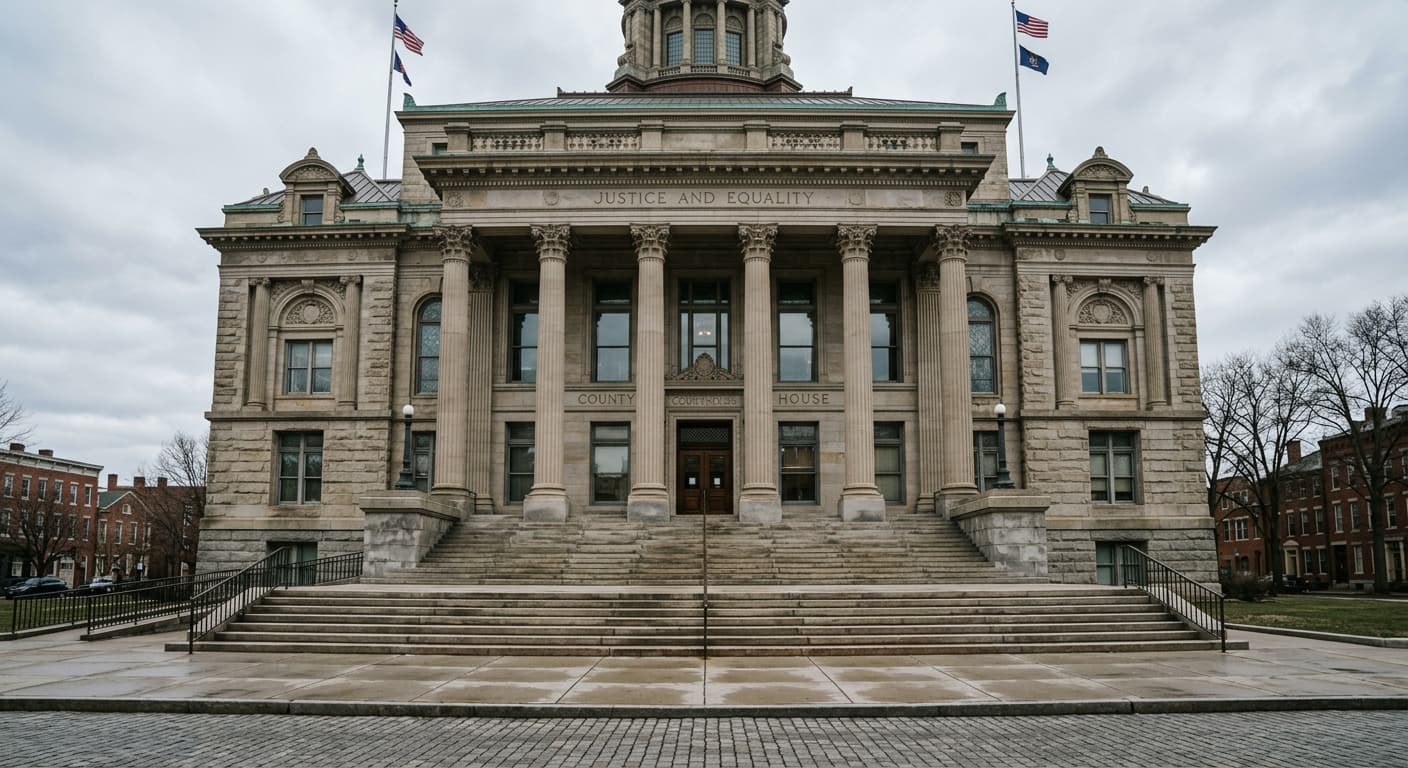
Minnesota is an outlier among states with a dedicated bodycam statute: under Minn. Stat. section 13.825, police body camera footage is classified as private, not public, data by default. Most footage stays out of public reach unless it falls into a specific statutory exception, and footage documenting an officer's use of deadly force must be retained indefinitely.
This guide is part of our Police Bodycam Laws by State series. It explains why Minnesota footage starts out private, when it becomes public, and how a 2022 Minneapolis shooting tested that framework in real time.
Jurisdiction scope: This article addresses Minnesota law governing police-worn body cameras under the Minnesota Government Data Practices Act, principally Minn. Stat. sections 13.825, 13.82, and 626.8473. It does not address whether a civilian may record an on-duty officer, which is a separate question covered in our guide on recording someone without consent.
Minnesota's Default Rule: Bodycam Footage Is Private, Not Public
Minnesota takes a different starting position than most states with a dedicated bodycam statute. Under Minn. Stat. section 13.825, subdivision 2, body-worn camera data is classified as private data on individuals when it identifies a specific person, or nonpublic data when it does not, rather than presumptively public. In practical terms, that means a member of the public generally cannot walk in and demand a copy of ordinary bodycam footage the way they could demand many other Minnesota government records, or the way residents of states like Colorado or Nevada can demand bodycam footage under those states' public-records-first frameworks.
The statute carves out specific, narrow categories that flip to public automatically. Footage is public if it documents an officer discharging a firearm in the course of duty in a way that requires notice under Minn. Stat. section 626.553, subdivision 2, or a use of force that results in substantial bodily harm. Footage is also public if the person who is the subject of the recording requests its release, or if it qualifies as public personnel data under Minn. Stat. section 13.43. Outside those categories, the recording stays private, accessible mainly to the person depicted and to law enforcement personnel who have a legitimate, work-related reason to view it. Certain aggregate and administrative information about an agency's bodycam program, such as how many cameras it owns, how much footage it holds, and its written policy, is separately made public regardless of the content classification.

What Happens When Someone Dies From Police Use of Force
This is the most consequential exception to Minnesota's private-by-default rule, and it operates on a clock. Under section 13.825, subdivision 2, when a person dies as a result of a peace officer's use of force, the agency must allow the deceased person's next of kin, the legal representative of the next of kin, and the other parent of the deceased person's child to inspect all of the recordings documenting the incident within five days of a request. An agency may deny or delay that inspection only if there is a compelling reason that inspection would interfere with an active investigation.
The same subdivision imposes a hard public-release deadline. The agency must release all portable recording system data documenting the incident, redacted no more than the law requires, no later than 14 days after the incident. The one exception is that the chief law enforcement officer may assert in writing that release would interfere with an ongoing investigation. Families and reporters dealing with a death caused by police force in Minnesota should start from these two deadlines rather than from the general assumption that bodycam footage is private.
How Long Must Minnesota Agencies Keep Bodycam Footage?
Retention scales with the seriousness of what the footage shows. Under Minn. Stat. section 13.825, subdivision 3, ordinary footage must be kept for a minimum of 90 days before an agency may destroy it under its records retention schedule. Footage documenting an officer's discharge of a firearm in the course of duty, or a use of force causing substantial bodily harm, must be retained for at least 1 year. The same one-year floor applies whenever a formal complaint is made against a peace officer related to the incident, which is the provision a person filing a misconduct complaint relies on to keep footage from being destroyed once the ordinary 90-day period runs out. The subject of a recording can also request that an agency preserve a copy for up to 180 days for evidentiary purposes.
The strictest rule applies to the most serious incidents: footage documenting an officer's use of deadly force must be retained indefinitely. Minnesota does not allow that category of recording to age out or be routinely deleted, regardless of how the underlying case resolves.
| Minnesota bodycam fact | Rule |
|---|---|
| Default public-records status | Private data on individuals / nonpublic data (not public by default) |
| Standard retention | 90 days minimum |
| Firearm discharge, substantial bodily harm, or a formal complaint against an officer | 1 year minimum |
| Deadly force incidents | Retained indefinitely |
| Death from an officer's use of force | Next of kin may inspect within 5 days of request; agency must release all footage within 14 days unless the chief asserts in writing that release would interfere with an ongoing investigation |
| Statewide use mandate | None; agency-discretionary under Minn. Stat. section 626.8473 |
| Independent biennial audit | Required by Minn. Stat. section 13.825, subdivision 9 |
| Early discretionary release | Possible as "public benefit data" under Minn. Stat. section 13.82 |
Does Minnesota Require Police to Wear Body Cameras?
No. Minnesota has no statute compelling every law enforcement agency to deploy body cameras. Minn. Stat. section 626.8473 instead regulates agencies that decide to use a "portable recording system," Minnesota's statutory term for body and squad-car cameras. Before purchasing or deploying one, an agency must allow for public comment and adopt a written policy addressing use, data classification, and retention, and must post that policy on its website. That policy must itself provide for supervisory or internal audits and reviews.
The independent audit sits in a different statute. Minn. Stat. section 13.825, subdivision 9, requires every agency that uses a portable recording system to arrange for an independent biennial audit confirming that data is classified correctly, used appropriately, and destroyed on schedule. The audit results are public and go to the agency's governing body, a pattern of substantial noncompliance can support an order suspending the agency's use of the system, and results are reported to legislative committees within 60 days.
Because adoption is a local decision layered on top of a data-privacy statute rather than a mandate, coverage across Minnesota is uneven. Large departments such as the Minneapolis Police Department and St. Paul Police Department have well-developed bodycam programs with published policies, while smaller and rural agencies have adopted the technology at their own pace and expense.
How Does Footage Ever Become Public Before the Statutory Trigger?
Minnesota law gives agencies a discretionary escape valve even when a recording would otherwise stay private. Minn. Stat. section 13.82 classifies certain data as "public benefit data," data an agency may choose to release, even from an active investigative file, when doing so will help the law enforcement process, promote public safety, or dispel rumor and unrest. This provision does not compel disclosure. It authorizes it, which means two similar incidents can be treated very differently depending on how a given department's leadership decides to exercise its discretion, a tension Minnesota press-freedom advocates have flagged as a weak point in an otherwise unusual privacy-first framework.
The February 2, 2022, killing of Amir Locke by a Minneapolis SWAT officer during a no-knock warrant is the clearest real-world illustration. Locke, who was not the subject of the warrant, was shot roughly 10 seconds after officers entered the apartment where he was sleeping on a couch. Under the law as it stood in February 2022, footage of a shooting under active investigation could be withheld while the Bureau of Criminal Apprehension's file stayed open, because section 13.825, subdivision 2, routes otherwise-public shooting footage that is part of an active investigation to section 13.82, subdivision 7. Instead, facing public pressure from community members, city council members, and state lawmakers, Minneapolis released an edited bodycam clip roughly 36 hours after the shooting, relying on the public benefit data provision rather than waiting for the investigation to close. Minnesota's Bureau of Criminal Apprehension released additional footage in the following weeks as its investigation progressed.
Minnesota law has since changed in a way that makes a release like that less dependent on a department's goodwill. The five-day inspection right for next of kin and the 14-day release deadline in section 13.825, subdivision 2, were added by a 2023 amendment, after the Locke shooting. A death caused by a peace officer's use of force today triggers those mandatory timelines rather than resting solely on a department's willingness to invoke the public benefit data provision.
Recording Police Versus Police Recording You
This guide covers the reverse of most recording-law content on this site: what happens to footage police create of you, not whether you may record police. Minnesota is a one-party consent state for recording conversations, and that rule governs civilians recording each other, not an agency's decision to classify its own bodycam data as private under the Data Practices Act. For the separate question of whether it's legal to record someone, including an officer performing public duties, see our guide on whether it's illegal to record someone without their consent.
More Minnesota Laws
Frequently Asked Questions
Is Minnesota police bodycam footage a public record?
Not by default. Minn. Stat. section 13.825 classifies bodycam footage as private data on individuals or nonpublic data, the opposite of the general public-records presumption used in most states. It becomes public in specific situations, such as a firearm discharge, a use of force causing substantial bodily harm, or at the request of the person depicted. Separately, when a person dies as a result of a peace officer's use of force, the agency must release all of the footage within 14 days unless the chief law enforcement officer asserts in writing that release would interfere with an ongoing investigation.
Are Minnesota police required to wear body cameras?
No. Minnesota has no statewide mandate. Minn. Stat. section 626.8473 regulates agencies that choose to use a portable recording system, requiring a public comment period and a written policy, but it does not force any agency to adopt the technology. The independent biennial audit of bodycam data is required by a different provision, Minn. Stat. section 13.825, subdivision 9.
How long does Minnesota law require bodycam footage to be kept?
Ordinary footage must be kept at least 90 days. Footage must be kept at least 1 year if it shows a firearm discharge or a use of force causing substantial bodily harm, or if a formal complaint is made against a peace officer related to the incident. Footage documenting an officer's use of deadly force must be retained indefinitely under Minn. Stat. section 13.825.
What are the rules when someone dies from a Minnesota officer's use of force?
Minn. Stat. section 13.825, subdivision 2, requires the agency to let the deceased person's next of kin, the legal representative of the next of kin, and the other parent of the deceased person's child inspect all footage of the incident within five days of a request, subject to a compelling-reason exception for an active investigation. The agency must also release all of the footage, redacted no more than the law requires, no later than 14 days after the incident, unless the chief law enforcement officer asserts in writing that release would interfere with an ongoing investigation.
How was bodycam footage released after the Amir Locke shooting if Minnesota footage is private?
Minneapolis used the discretionary 'public benefit data' provision in Minn. Stat. section 13.82, which lets an agency voluntarily release otherwise-private data when it would aid an investigation or promote public safety. The city released an edited clip about 36 hours after the February 2, 2022, shooting. Minnesota added the mandatory five-day inspection and 14-day release rules for deaths caused by police use of force in 2023, after that shooting, so a similar incident today would come with fixed deadlines rather than depending on the city's discretion.
Can the person recorded on a Minnesota bodycam get a copy?
Yes, and it does not require making the footage public. Minn. Stat. section 13.825, subdivision 4, gives a data subject access to a copy of the recording, with data on other individuals who do not consent redacted, though an on-duty peace officer's identity generally cannot be redacted. That right is separate from subdivision 2, which lets a subject elect to make the data public to everyone. A subject can also request that the agency preserve a copy for up to 180 days for evidentiary purposes.
Why is Minnesota different from other states on bodycam public access?
Most states with a bodycam statute start from a public-records presumption and carve out exemptions for privacy or ongoing investigations. Minnesota inverts that structure: footage starts private under the Data Practices Act, and specific categories make it public, including a firearm discharge, a use of force causing substantial bodily harm, a death caused by an officer's use of force, or the subject's own request.
Updates
Added Minnesota's mandatory disclosure rules for deaths caused by police use of force (five-day family inspection, 14-day public release), corrected the independent biennial audit to Minn. Stat. 13.825, subd. 9, added the formal-complaint trigger for one-year retention, and corrected how a recorded person obtains a copy of their own footage.
Independently fact-checked against the cited primary sources; governing law re-checked for recent changes
Governing law re-checked for recent changes
Reviewed and approved by an editor
The Law Behind This Article
This article rests on the statutory provisions below, held in our own legal record and retrieved from the official source. Tap a section to read the operative text.
Minnesota Statutes, Chapter 13: GOVERNMENT DATA PRACTICES
§ 13.825PORTABLE RECORDING SYSTEMSIn forcecited in 9 of our articles
Subdivision 1. Application; definition. (a) This section applies to law enforcement agencies that maintain a portable recording system for use in investigations, or in response to emergencies, incidents, and requests for service. (b) As used in this section: (1) "portable recording system" means a device worn by a peace officer that is capable of both video and audio recording of the officer's activities and interactions with others or collecting digital multimedia evidence as part of an investigation; (2) "portable recording system data" means audio or video data collected by a portable recording system; and (3) "redact" means to blur video or distort audio so that the identity of the subject in a recording is obscured sufficiently to render the subject unidentifiable. Subd. 2. Data classification; court-authorized disclosure.
Official text (excerpt) · last checked 2026-08-31 · Read the full text in our law library · Verify at revisor.mn.gov
Cited in 2 court opinions in our collectionLatest citing opinion in our collection: 2024
Opinions citing this section in our collection:
- Troy K. Scheffler v. City of Anoka, City of Coon Rapids, Hicken, Scott, Howard & Anderson, P. A. (Court of Appeals of Minnesota 2017, 890 N.W.2d 437)“…of government data under specific circumstances. See, e.g., Minn. Stat. § 13.825, subd. 3 (2016) (mandating the retentio…”
- West v. City of Minneapolis (District Court, D. Minnesota 2024)“…c data under the Minnesota Government Data Protection Act, Minn. Stat. 13.825, subd. 2(a); and (5) Defendants’ Exhibi…”
Identified automatically from the court opinions citing this section — not a ranking of which case controls.
Also relied on in: Minnesota Audio Recording Laws: One-Party Consent Rules and Penalties, Minnesota Dashcam Laws: Legality, Mounting Rules, and Evidence Use, Minnesota Laws on Recording Police: Your Rights and Body Camera Rules
§ 13.82COMPREHENSIVE LAW ENFORCEMENT DATAIn forcecited in 3 of our articles
Subdivision 1. Application. This section shall apply to agencies which carry on a law enforcement function, including but not limited to municipal police departments, county sheriff departments, fire departments, the Bureau of Criminal Apprehension, the Minnesota State Patrol, the Board of Peace Officer Standards and Training, and county human service agency client and provider fraud investigation, prevention, and control units operated or supervised by the Department of Human Services. Subd. 2. Arrest data.
Official text (excerpt) · last checked 2026-09-02 · Read the full text in our law library · Verify at revisor.mn.gov
Cited in 34 court opinions in our collectionLatest citing opinion in our collection: 2024
In the courts (editorial summary, independently checked):Minnesota courts read section 13.82 narrowly. Demers v. City of Minneapolis (1992) held subd. 5 reaches only data gathered to prepare a case for a crime or civil wrong, so internal affairs complaint forms stayed private personnel data. State v. M.D.T. (2013) cited subd. 2 as policy against expunging executive branch records.
Opinions citing this section in our collection:
- Demers v. City of Minneapolis (Court of Appeals of Minnesota 1992, 486 N.W.2d 828)✓A requester sought internal affairs complaint forms about police use of force; the court held section 13.82, subdivision 5 did not apply because the internal investigation was not preparing a case for a crime or civil wrong, so the data remained private personnel data.
- Padilla v. Minnesota State Board of Medical Examiners (Court of Appeals of Minnesota 1986, 382 N.W.2d 876)“…sfer of the records in this case did not violate the Act. Minn.Stat. § 13.82 (1984) governs agencies "which carry on…”
- State v. M.D.T. (Supreme Court of Minnesota 2013, 831 N.W.2d 276)✓M.D.T. asked to expunge her aggravated forgery records; the court pointed to section 13.82's rule that arrest data is public at all times as a legislative policy it would not override, and held the district court lacked authority to expunge executive branch records.
Identified automatically from the court opinions citing this section — not a ranking of which case controls.
Also relied on in: Minnesota Recording Laws (2026): One-Party Consent Rules, How to Get a Police Report in Minnesota (2026 Guide)
Minnesota Statutes, Chapter 626: PEACE OFFICERS; SEARCHES; PURSUIT; MANDATORY REPORTING
§ 626.8473PORTABLE RECORDING SYSTEMS ADOPTION; WRITTEN POLICY REQUIREDIn forcecited in 5 of our articles
Subdivision 1. Definition. As used in this section, "portable recording system" has the meaning provided in section 13.825, subdivision 1. Subd. 2. Public comment. A local law enforcement agency must provide an opportunity for public comment before it purchases or implements a portable recording system. At a minimum, the agency must accept public comments submitted electronically or by mail, and the governing body with jurisdiction over the budget of the law enforcement agency must provide an opportunity for public comment at a regularly scheduled meeting. Subd. 3. Written policies and procedures required. (a) The chief officer of every state and local law enforcement agency that uses or proposes to use a portable recording system must establish and enforce a written policy governing its use. In developing and adopting the policy, the law enforcement agency must provide for public comment and input as provided in subdivision 2. Use of a portable recording system without adoption of a written policy meeting the requirements of this section is prohibited. The written policy must be posted on the agency's website, if the agency has a website.
Official text (excerpt) · last checked 2026-07-29 · Read the full text in our law library · Verify at revisor.mn.gov
Search our full record of US law — 2.1 million sections, every state + federal →
Sources and References
- Minn. Stat. section 13.825 (body worn camera data; classification and retention)(revisor.mn.gov).gov
- Minn. Stat. section 13.82 (comprehensive law enforcement data, incl. public benefit data)(revisor.mn.gov).gov
- Minn. Stat. section 626.8473 (portable recording systems; agency policy and audit requirements)(revisor.mn.gov).gov
- Minnesota Data Practices Office, Body Camera Data(mn.gov).gov
- "What the release of the Amir Locke shooting video reveals about Minnesota public access laws," Reporters Committee for Freedom of the Press(rcfp.org)
- "Minneapolis releases body cam footage of Amir Locke killing," Minnesota Reformer(minnesotareformer.com)