Minnesota Dashcam Laws: Legality, Mounting Rules, and Evidence Use
Independently fact-checked against primary sources (last audited August 15, 2026). · Reviewed by the RecordingLaw editorial team. · Law checked current as of August 15, 2026. · 6 primary sources cited on this page. How we verify our legal content
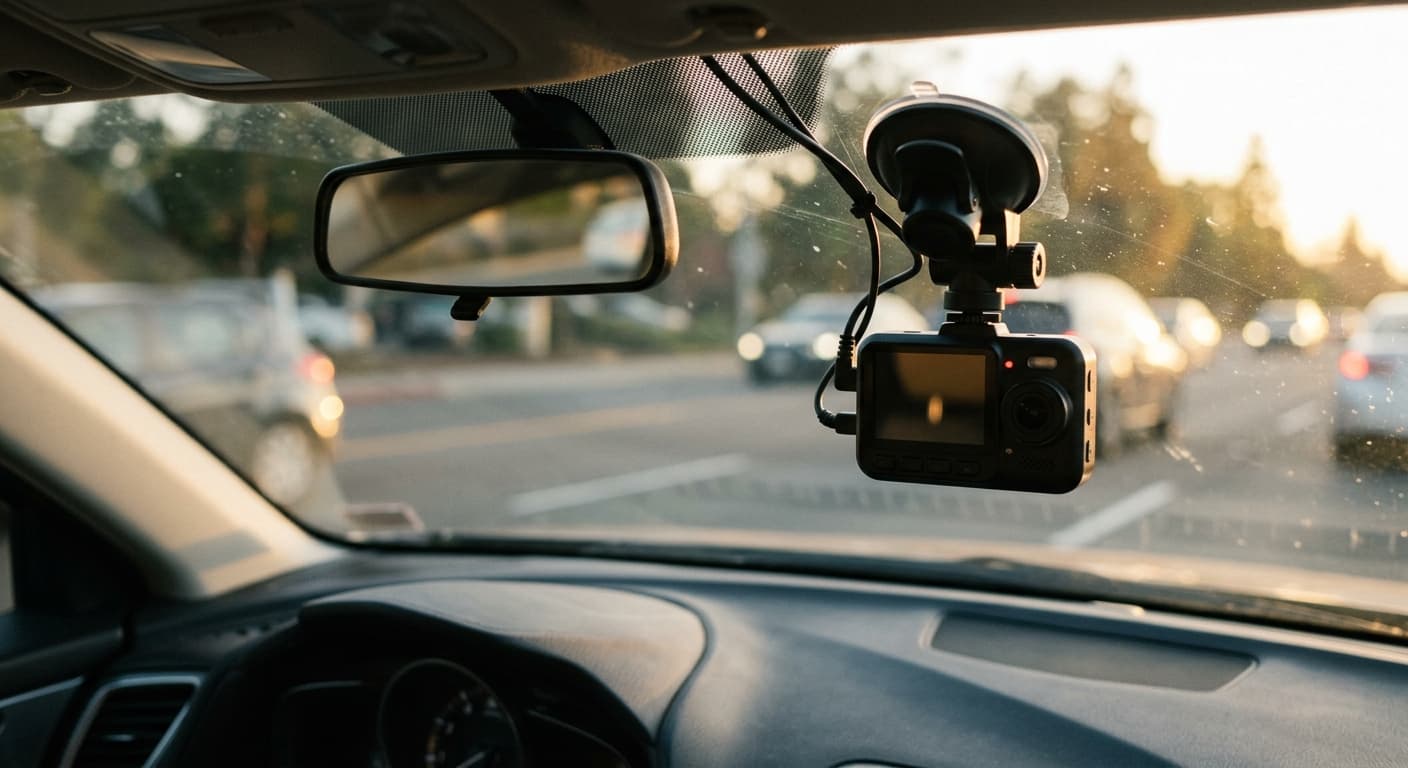
Dashcams are legal in Minnesota. State law permits both video and audio recording in your vehicle; audio falls under the one-party consent rule in Minn. Stat. Section 626A.02, meaning your consent alone is sufficient. Mount the camera at the rearview mirror so it fits within Section 169.71's enumerated exception list.
Overview of Minnesota Dashcam Laws
Minnesota does not have a statute written specifically for dashboard cameras, and dashcams themselves are legal to use in personal or commercial vehicles. However, Minn. Stat. Section 169.71, subdivision 1(a)(2) restricts what can be mounted between the driver and the windshield to a specific enumerated list -- sun visors, rearview mirrors, certain driver-monitoring equipment mounted at the mirror, GPS or navigation devices, electronic toll transponders, and certain identifying devices near the bottom of the windshield. A dashcam is not on that list, so the primary legal consideration is mounting it in a location that fits within one of those exceptions, most practically at the rearview mirror.
Dashcams have become increasingly common in Minnesota, used by everyday drivers for accident documentation, insurance purposes, and personal security. Commercial fleet operators also use dashcams for driver monitoring, training, and liability protection.
Windshield Mounting Rules
Minnesota Windshield Obstruction Law
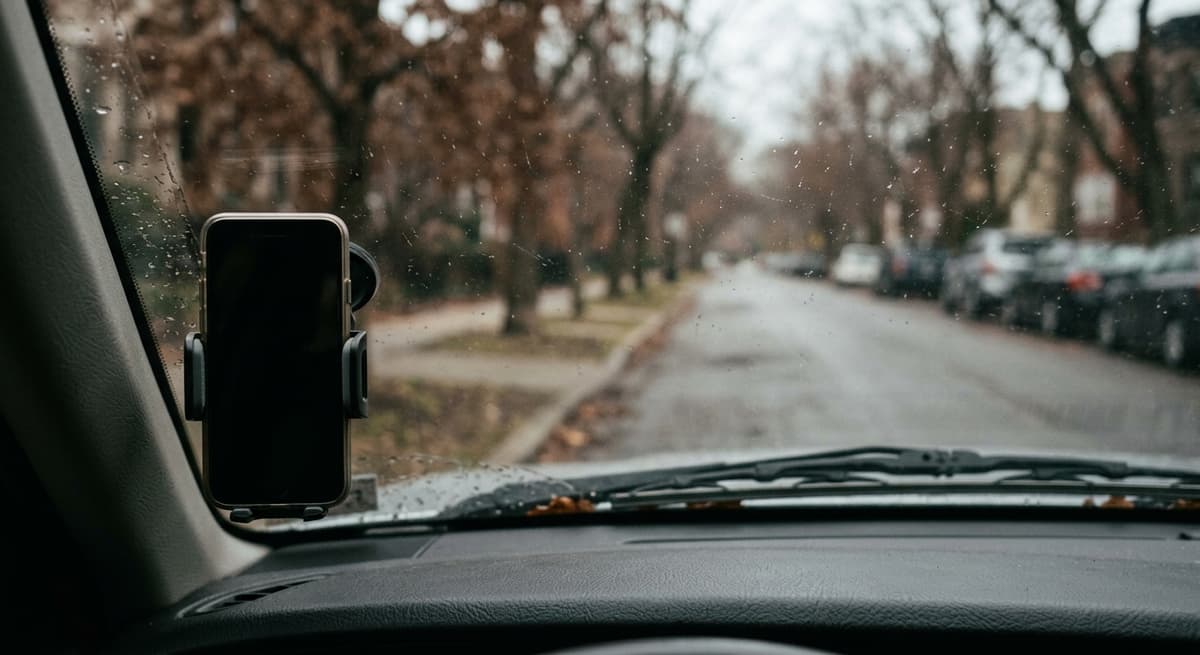
Minn. Stat. Section 169.71, subdivision 1(a)(2) prohibits suspending any object between the driver and the windshield except a specific enumerated list: sun visors, rearview mirrors, driver feedback and safety monitoring equipment mounted immediately behind, slightly above, or slightly below the rearview mirror, GPS or navigation systems mounted near the bottom of the windshield, electronic toll collection devices, and certain identifying devices mounted near the bottom of the windshield. A standard forward-facing dashcam is not named in that list.
This means a dashcam should be mounted so it fits within one of the statute's enumerated exceptions rather than relying on a general obstruction test. Best practices for mounting include:
- Mount the dashcam behind the rearview mirror, where it is outside the driver's primary line of sight
- Keep the camera as small and unobtrusive as possible
- Ensure the camera does not block any portion of the driver's forward field of view
- Route power cables neatly along the windshield trim to avoid creating additional visual obstructions
- Use a mount that holds the camera securely to prevent it from falling during driving
Comparison with Other Permitted Windshield Items
Minnesota law names several specific items it permits on or near the windshield, including GPS navigation devices, electronic toll transponders, and rearview mirrors, but Section 169.71's exception list does not name dashcams generally. Mounting a dashcam at the rearview mirror, in the same location the statute reserves for driver feedback and safety monitoring equipment, keeps it within an enumerated exception rather than relying on a general obstruction test.
Rear Window Dashcams
Minnesota's windshield-obstruction statute focuses on what is suspended between the driver and the front windshield, so it does not clearly address rear window camera placement the same way. Many dual-dashcam systems use a compact rear camera that mounts at the top of the rear window, positioned so it does not obstruct the driver's view through the rearview mirror.
Audio Recording on Dashcams
One-Party Consent for In-Vehicle Audio
Many dashcams record audio along with video. In Minnesota, audio recording inside your vehicle is governed by the one-party consent rule under Minn. Stat. Section 626A.02.
As the driver and owner of the dashcam, you are a party to any conversation occurring inside your vehicle. Your consent satisfies the one-party requirement. This means you can record:
- Conversations with passengers in your vehicle
- Your own verbal notes while driving
- Phone calls made while in the vehicle (on speakerphone or through the car's audio system)
- Interactions with police officers during traffic stops
- Conversations at drive-through windows and toll booths
Audio of External Conversations
Dashcam audio that captures conversations outside the vehicle can raise different legal questions. If your dashcam picks up a conversation between people on the street who have a reasonable expectation of privacy, the wiretapping statute may apply. However, conversations in public spaces generally do not carry a reasonable expectation of privacy, so most incidental audio capture of external sounds is unlikely to create legal issues.
Disabling Audio Recording
If you prefer to avoid audio recording issues entirely, most dashcams have an option to disable audio recording and capture video only. This is a common choice for drivers who want to avoid any potential legal complications, particularly when sharing footage with insurance companies or posting it online.
Using Dashcam Footage as Evidence
Admissibility in Minnesota Courts
Dashcam footage is generally admissible as evidence in Minnesota courts when properly authenticated under Minnesota Rules of Evidence, Rule 901. To authenticate dashcam footage, you typically need to show:
- The dashcam was functioning properly at the time of the recording
- The recording accurately depicts the events it purports to show
- The footage has not been edited, altered, or tampered with
- The date and time stamp on the footage is accurate
- The recording was preserved in its original format
Most modern dashcams embed metadata including date, time, GPS coordinates, and speed information directly into the video file. This metadata supports authentication and can provide independent verification of when and where events occurred.
Traffic Accident Evidence
Dashcam footage is most commonly used as evidence in traffic accident cases. The footage can help establish:
- Which driver had the right of way
- Whether a traffic signal was red, yellow, or green
- The speed of vehicles before impact
- Road conditions and visibility at the time of the accident
- Whether either driver was distracted or impaired
- The sequence of events leading up to the collision
Minnesota courts and insurance companies regularly consider dashcam footage when determining fault in traffic accidents.
Insurance Claims
Dashcam footage can be valuable when filing insurance claims in Minnesota. The footage provides objective evidence of:
- How the accident occurred
- The extent of vehicle damage immediately after impact
- Weather and road conditions
- Whether the other driver was at fault
- Hit-and-run incidents where the other driver fled the scene
Insurance adjusters use dashcam footage to evaluate claims more accurately and resolve disputes between conflicting accounts of an accident.
Criminal Proceedings
Dashcam footage can serve as evidence in criminal cases involving:
- DUI/DWI arrests and traffic stops
- Reckless or dangerous driving
- Hit-and-run incidents
- Road rage incidents
- Vehicle theft and break-ins
- Vandalism to parked vehicles
Law enforcement may request dashcam footage from witnesses to traffic incidents. Providing footage is voluntary unless law enforcement obtains a warrant or court order.
Personal Injury Lawsuits
In personal injury litigation, dashcam footage can support claims for damages by showing the severity of an impact, the conditions that led to the accident, and the immediate aftermath. Both plaintiffs and defendants use dashcam evidence in Minnesota personal injury cases.
Dashcam Use During Traffic Stops
Recording Police Interactions
You have the right to keep your dashcam running during a traffic stop in Minnesota. The First Amendment protects your right to record police officers performing their duties, and Minnesota's one-party consent law allows you to record your own conversation with the officer.
During a traffic stop:
- Leave your dashcam running; there is no legal requirement to turn it off
- You do not need to inform the officer that you have a dashcam
- If the officer asks about the camera, you can honestly explain that you use it for safety and insurance purposes
- The officer cannot order you to turn off the dashcam or delete the footage
- If the officer seizes your camera, they need a warrant to access the footage
Officer Dashcams and Body Cameras
Minnesota law enforcement vehicles are frequently equipped with their own recording systems. Minn. Stat. Section 13.825 governs "portable recording systems," which the statute defines as a device worn by a peace officer -- in practice, body cameras -- under the Government Data Practices Act. Citizens can request body camera footage through a formal data request under 13.825's classification rules.
Minn. Stat. Section 626.8473 uses that same worn-device definition and requires agencies to adopt written policies about body camera use, making those policies publicly available.
Commercial Vehicle Dashcams
Fleet and Trucking Operations
Commercial fleet operators in Minnesota widely use dashcams for driver monitoring, accident documentation, and insurance purposes. Commercial dashcam use is subject to:
- Minnesota state recording laws (same one-party consent rules apply)
- Federal Motor Carrier Safety Administration (FMCSA) regulations for interstate commercial vehicles
- Department of Transportation requirements for certain vehicle classes
Driver-Facing Cameras
Some commercial dashcam systems include driver-facing cameras that monitor the driver for signs of fatigue, distraction, or impairment. In Minnesota, the driver's presence in the vehicle provides one-party consent for audio recording. However, employees should be informed about driver-facing cameras through written policies.
The MCDPA may apply if driver-facing cameras use facial recognition or biometric analysis to identify or monitor drivers. Employers using such technology should obtain employee consent before processing biometric data.
Rideshare and Taxi Dashcams
Rideshare drivers (Uber, Lyft) and taxi operators in Minnesota can use dashcams. The driver serves as the consenting party for audio recording. Key considerations for rideshare drivers:
- Review the rideshare platform's policies on dashcam use
- Some drivers post notices in their vehicles informing passengers of recording
- Footage can be valuable evidence in disputes with passengers
- Both forward-facing and interior cameras are permitted
Dashcam Technology and Features
Types of Dashcams
Common dashcam configurations used in Minnesota include:
- Single forward-facing cameras mounted on the windshield
- Dual-camera systems with forward and rear-facing cameras
- Interior cameras that record the vehicle cabin
- 360-degree cameras that capture all angles simultaneously
- Parking mode cameras that activate when the vehicle detects impact or motion while parked
Minnesota law does not restrict any specific type of dashcam technology.
GPS and Speed Tracking
Many dashcams include GPS functionality that records speed and location data. This data can be valuable evidence in accident cases but can also work against you if it shows you were speeding at the time of an incident. Minnesota courts can admit GPS speed data from dashcams as evidence.
Cloud Storage and Live Streaming
Some dashcam systems upload footage to cloud storage in real time or allow live streaming of the camera feed. This technology raises additional privacy considerations but is not prohibited under Minnesota law. Cloud-stored footage is subject to the same legal rules as locally stored footage.
Parking Mode and Unattended Recording
Many dashcams include a parking mode feature that records when the vehicle is parked and unattended, typically activating on motion or impact detection. In Minnesota:
- Parking mode recording in public spaces (streets, parking lots) is legal
- The camera captures public areas where there is no reasonable expectation of privacy
- Audio captured while the vehicle is unattended may not have a consenting party, so consider disabling audio in parking mode
- Footage of vandalism, hit-and-runs, or break-ins can be valuable evidence
More Minnesota Recording Laws
Audio Recording | Video Recording | Voyeurism & Hidden Cameras | Workplace Recording | Recording Police | Phone Call Recording | Security Cameras | Recording in Public | Landlord-Tenant | Dashcam Laws | Schools | Medical Recording
Back to Minnesota Recording Laws
More Minnesota Recording Topics
More Minnesota Laws
Frequently Asked Questions
Are dashcams legal in Minnesota?
Yes. Minnesota has no law prohibiting dashcams generally, and you can use one in your personal or commercial vehicle. However, Minn. Stat. Section 169.71, subd. 1(a)(2) restricts what can be suspended between the driver and the windshield to an enumerated list of exceptions, so the camera should be mounted immediately behind, slightly above, or slightly below the rearview mirror to fit within that list rather than relying on a general obstruction test.
Where should I mount my dashcam in Minnesota?
The safest location is immediately behind, slightly above, or slightly below the rearview mirror -- the same position Minn. Stat. Section 169.71, subd. 1(a)(2) reserves for rearview mirrors and driver feedback and safety monitoring equipment, one of the statute's few exceptions to its ban on objects suspended between the driver and windshield. Route power cables neatly along the windshield trim to prevent additional obstructions.
Can my dashcam record audio in Minnesota?
Yes. As the driver and owner of the dashcam, you are a party to conversations inside the vehicle. Your consent satisfies the one-party consent requirement under Minn. Stat. Section 626A.02. You can record conversations with passengers and interactions with police officers.
Can dashcam footage be used in court in Minnesota?
Yes. Dashcam footage is admissible as evidence in Minnesota courts when properly authenticated under the Minnesota Rules of Evidence. The footage must be shown to be genuine, unaltered, and accurately represent the events captured. Metadata like timestamps and GPS data support authentication.
Do I have to tell a police officer I have a dashcam in Minnesota?
No. There is no legal requirement to inform a police officer about your dashcam. You can keep the dashcam running during the entire traffic stop. The officer cannot order you to turn it off or delete footage. If asked, you can explain that you use it for safety and insurance purposes.
Updates
Independently fact-checked against the cited primary sources; governing law re-checked for recent changes
Corrected the windshield-mounting rule: Minn. Stat. 169.71 bans objects suspended between the driver and windshield except an enumerated exception list (dashcams aren't named), not a general 'obstruction' test, and clarified that Minn. Stat. 13.825 (like 626.8473) governs officer-worn body cameras, not vehicle-mounted squad car dashcams.
Updated the lede and the rear-window dashcam section so they use the same enumerated-exception mounting standard established elsewhere on the page, instead of a general 'does it obstruct the view' test that Minn. Stat. 169.71 does not actually use for windshield mounts.
Governing law re-checked for recent changes
Confirmed audio recording provisions for dashcams follow § 626A.02 one-party consent; MCDPA biometric overlay noted for driver-facing cameras using facial recognition.
Reviewed and approved by an editor
The Law Behind This Article
This article rests on the statutory provisions below, held in our own legal record and retrieved from the official source. Tap a section to read the operative text.
Minnesota Statutes, Chapter 626A: WIRE, ELECTRONIC, OR ORAL COMMUNICATIONS; INTERCEPTION
§ 626A.02INTERCEPTION AND DISCLOSURE OF WIRE, ELECTRONIC, OR ORAL COMMUNICATIONS PROHIBITEDIn forcecited in 18 of our articles
Subdivision 1. Offenses. Except as otherwise specifically provided in this chapter any person who: (1) intentionally intercepts, endeavors to intercept, or procures any other person to intercept or endeavor to intercept, any wire, electronic, or oral communication; (2) intentionally uses, endeavors to use, or procures any other person to use or endeavor to use any electronic, mechanical, or other device to intercept any oral communication when: (i) such device is affixed to, or otherwise transmits a signal through, a wire, cable, or other like connection used in wire communication; or (ii) such device transmits communications by radio, or interferes with the transmission of such communication; (3) intentionally discloses, or endeavors to disclose, to any other person the contents of any wire, electronic, or oral communication, knowing or having reason to know that the information was obtained through the interception of a wire, electronic, or oral communication in violation of this subdivision; or (4) intentionally uses, or endeavors to use, the contents of any wire, electronic, or oral communication, knowing or having reason to know that the information was obtained through the…
Official text (excerpt) · last checked 2026-08-31 · Read the full text in our law library · Verify at revisor.mn.gov
Cited in 20 court opinions in our collectionLatest citing opinion in our collection: 2025
In the courts (editorial summary, independently checked):Copeland v. Hubbard Broadcasting, Inc. (1995) applied the 626A.02 party exemption, finding a secret recording made for commercial newsgathering was not intercepted for the purpose of a tortious act. State v. Page (1986) held an officer's use of a regular telephone extension in the ordinary course of duty was not an interception.
Opinions citing this section in our collection:
- Copeland v. Hubbard Broadcasting, Inc. (Court of Appeals of Minnesota 1995, 526 N.W.2d 402)“…l to the federal wiretapping statutes. Compare Minn.Stat. § 626A.02, subd. 1 (1992), with 18…”
- State v. Page (Court of Appeals of Minnesota 1986, 386 N.W.2d 330)“…g rule applies. See 18 U.S.C. § 2511 (1982); Minn.Stat. § 626A.02 (1984). The federal rule makes it unlaw…”
- State v. Olkon (Supreme Court of Minnesota 1980, 299 N.W.2d 89)✓An undercover deputy posing as an injury client taped his calls and office meetings with a lawyer later convicted of attempted theft by swindle; the court rejected suppression, holding one party's consent meant no warrant was needed, citing the statute's consent exception.
Identified automatically from the court opinions citing this section — not a ranking of which case controls.
Also relied on in: Minnesota Smart Glasses Recording Laws 2025, Minnesota AI Meeting Recording Laws (2026), Minnesota Surveillance Camera Laws (2026 Guide)
Minnesota Statutes, Chapter 13: GOVERNMENT DATA PRACTICES
§ 13.825PORTABLE RECORDING SYSTEMSIn forcecited in 9 of our articles
Subdivision 1. Application; definition. (a) This section applies to law enforcement agencies that maintain a portable recording system for use in investigations, or in response to emergencies, incidents, and requests for service. (b) As used in this section: (1) "portable recording system" means a device worn by a peace officer that is capable of both video and audio recording of the officer's activities and interactions with others or collecting digital multimedia evidence as part of an investigation; (2) "portable recording system data" means audio or video data collected by a portable recording system; and (3) "redact" means to blur video or distort audio so that the identity of the subject in a recording is obscured sufficiently to render the subject unidentifiable. Subd. 2. Data classification; court-authorized disclosure.
Official text (excerpt) · last checked 2026-08-31 · Read the full text in our law library · Verify at revisor.mn.gov
Cited in 2 court opinions in our collectionLatest citing opinion in our collection: 2024
Opinions citing this section in our collection:
- Troy K. Scheffler v. City of Anoka, City of Coon Rapids, Hicken, Scott, Howard & Anderson, P. A. (Court of Appeals of Minnesota 2017, 890 N.W.2d 437)“…of government data under specific circumstances. See, e.g., Minn. Stat. § 13.825, subd. 3 (2016) (mandating the retentio…”
- West v. City of Minneapolis (District Court, D. Minnesota 2024)“…c data under the Minnesota Government Data Protection Act, Minn. Stat. 13.825, subd. 2(a); and (5) Defendants’ Exhibi…”
Identified automatically from the court opinions citing this section — not a ranking of which case controls.
Also relied on in: Minnesota Audio Recording Laws: One-Party Consent Rules and Penalties, Minnesota Laws on Recording Police: Your Rights and Body Camera Rules, Minnesota Police Bodycam Laws: Private Data by Default
Minnesota Statutes, Chapter 169: TRAFFIC REGULATIONS
§ 169.71WINDSHIELDIn forcecited in 3 of our articles
Subdivision 1. Prohibitions generally; exceptions. (a) A person shall not drive or operate any motor vehicle with: (1) a windshield cracked or discolored to an extent to limit or obstruct proper vision; (2) any objects suspended between the driver and the windshield, other than: (i) sun visors; (ii) rearview mirrors; (iii) driver feedback and safety monitoring equipment when mounted immediately behind, slightly above, or slightly below the rearview mirror; (iv) global positioning systems or navigation systems when mounted or located near the bottommost portion of the windshield; (v) electronic toll collection devices; and (vi) an identifying device as provided in section 169.58, subdivision 5, when the device is mounted or located near the bottommost portion of the windshield; or (3) any sign, poster, or other nontransparent material upon the front windshield, sidewings, or side or rear windows of the vehicle, other than a certificate or other paper required to be so displayed by law or authorized by the state director of the Division of Emergency Management or the commissioner of public safety. (b) Paragraph (a), clauses (2) and (3), do not apply to law enforcement vehicles.
Official text (excerpt) · last checked 2026-09-07 · Read the full text in our law library · Verify at revisor.mn.gov
Cited in 17 court opinions in our collectionLatest citing opinion in our collection: 2026
In the courts (editorial summary, independently checked):State v. Varnado (1998) treated a Minn. Stat. 169.71 windshield violation as probable cause to stop but held it is only a petty misdemeanor that did not justify a frisk. State v. Smith (2002) assumed without deciding that the tinted window subdivision was unconstitutional and held the exclusionary rule still did not bar the evidence.
Opinions citing this section in our collection:
- State v. Smith (Court of Appeals of Minnesota 2002, 652 N.W.2d 546)✓A deputy stopped a car he could not see through for excessive tint under Minn. Stat. 169.71, subd. 4; the court assumed without deciding that the tint statute violated equal protection and held the exclusionary rule did not reach the evidence found after the stop.
- Gerding v. Commissioner of Public Safety (Court of Appeals of Minnesota 2001, 628 N.W.2d 197)✓An officer stopped Gerding after seeing an object hanging from her rear vision mirror; the court read the then-current Minn. Stat. 169.71, subd. 1 to bar any suspended object except sun visors and mirrors, whether or not it obstructed vision, so the stop was justified.
- State v. Varnado (Supreme Court of Minnesota 1998, 582 N.W.2d 886)✓Officers stopped Varnado for a cracked windshield and frisked her before seating her in a squad car; the court called that Minn. Stat. 169.71 violation a petty misdemeanor that justified the stop but not the frisk, and reinstated the suppression order.
Identified automatically from the court opinions citing this section — not a ranking of which case controls.
Also relied on in: Minnesota Window Tint Laws (2026): Legal VLT Limits, Minnesota Windshield Mounting Laws (2026 Guide)
Minnesota Statutes, Chapter 626: PEACE OFFICERS; SEARCHES; PURSUIT; MANDATORY REPORTING
§ 626.8473PORTABLE RECORDING SYSTEMS ADOPTION; WRITTEN POLICY REQUIREDIn forcecited in 5 of our articles
Subdivision 1. Definition. As used in this section, "portable recording system" has the meaning provided in section 13.825, subdivision 1. Subd. 2. Public comment. A local law enforcement agency must provide an opportunity for public comment before it purchases or implements a portable recording system. At a minimum, the agency must accept public comments submitted electronically or by mail, and the governing body with jurisdiction over the budget of the law enforcement agency must provide an opportunity for public comment at a regularly scheduled meeting. Subd. 3. Written policies and procedures required. (a) The chief officer of every state and local law enforcement agency that uses or proposes to use a portable recording system must establish and enforce a written policy governing its use. In developing and adopting the policy, the law enforcement agency must provide for public comment and input as provided in subdivision 2. Use of a portable recording system without adoption of a written policy meeting the requirements of this section is prohibited. The written policy must be posted on the agency's website, if the agency has a website.
Official text (excerpt) · last checked 2026-07-29 · Read the full text in our law library · Verify at revisor.mn.gov
Also relied on in: Minnesota Recording Laws (2026): One-Party Consent Rules
Search our full record of US law — 2.1 million sections, every state + federal →
Sources and References
- Minn. Stat. Section 169.71 - Windshield Restrictions(revisor.mn.gov).gov
- Minn. Stat. Section 626A.02(revisor.mn.gov).gov
- Minn. Stat. Section 13.825 - Recording System Data(revisor.mn.gov).gov
- Minn. Stat. Section 626.8473 - Body Cameras(revisor.mn.gov).gov
- Federal Motor Carrier Safety Administration(fmcsa.dot.gov).gov
- Minnesota Rules of Evidence Rule 901(revisor.mn.gov).gov