
Idaho
Idaho Dashcam Laws: Recording Rules, Windshield Mounting, and Legal Limits (2026)
Independently fact-checked against primary sources (last audited August 15, 2026). · Reviewed by the RecordingLaw editorial team. · Law checked current as of August 7, 2026. · 5 primary sources cited on this page. How we verify our legal content
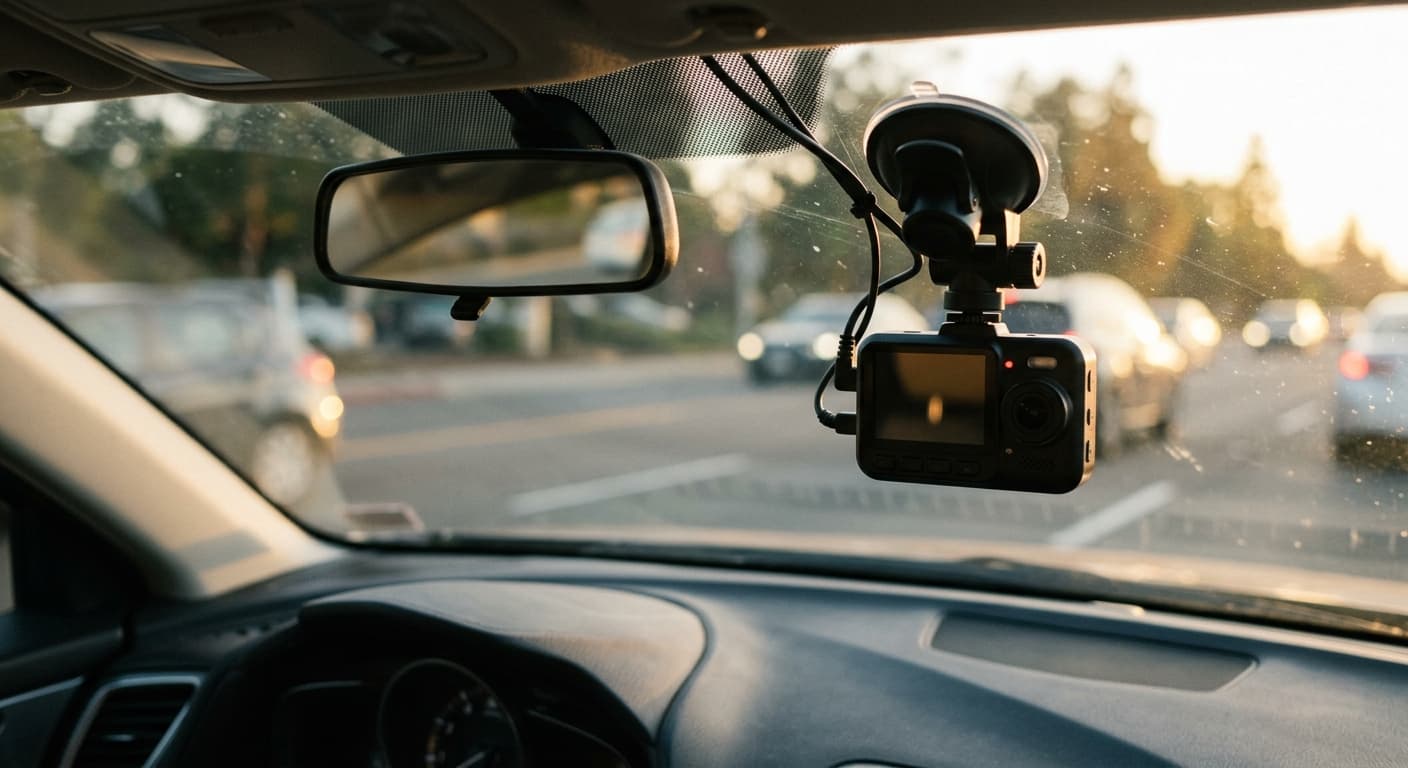
Idaho dashcam use is fully legal. Drivers may run video and audio dashcams under Idaho Code 18-6702, which permits one-party consent recording. Mount the camera behind the rearview mirror or on the dashboard. Idaho Code 49-943 prohibits driving with any nontransparent material on the windshield that obstructs the driver's clear view, so a dashcam or phone mount placed in the driver's sightline can violate that statute even though no law names dashcams specifically.
Idaho does not have a standalone dashcam law. Dashboard cameras are fully legal throughout the state under Idaho's one-party consent framework. Idaho Code Section 18-6702 allows any party to a conversation to record it without informing others. As the driver, you are a party to conversations in your vehicle, and your consent is sufficient to make audio recording legal.
Idaho's rural highways, winter driving conditions, and wildlife encounters make dashcams a practical safety tool for drivers across the state.
Idaho Dashcam Legality Overview
Is It Legal to Use a Dashcam in Idaho?
Yes. Idaho law does not prohibit dashcam use. Both video-only and audio-enabled dashcams are legal.
Video-Only vs. Audio-Enabled Dashcams
| Feature | Legal Status in Idaho |
|---|---|
| Video-only dashcam | Legal on public roads |
| Dashcam with audio (driver present) | Legal under one-party consent |
| Exterior road audio | Legal (no privacy expectation) |
| Interior audio when driver is absent | May raise eavesdropping issues |
Windshield Mounting Rules
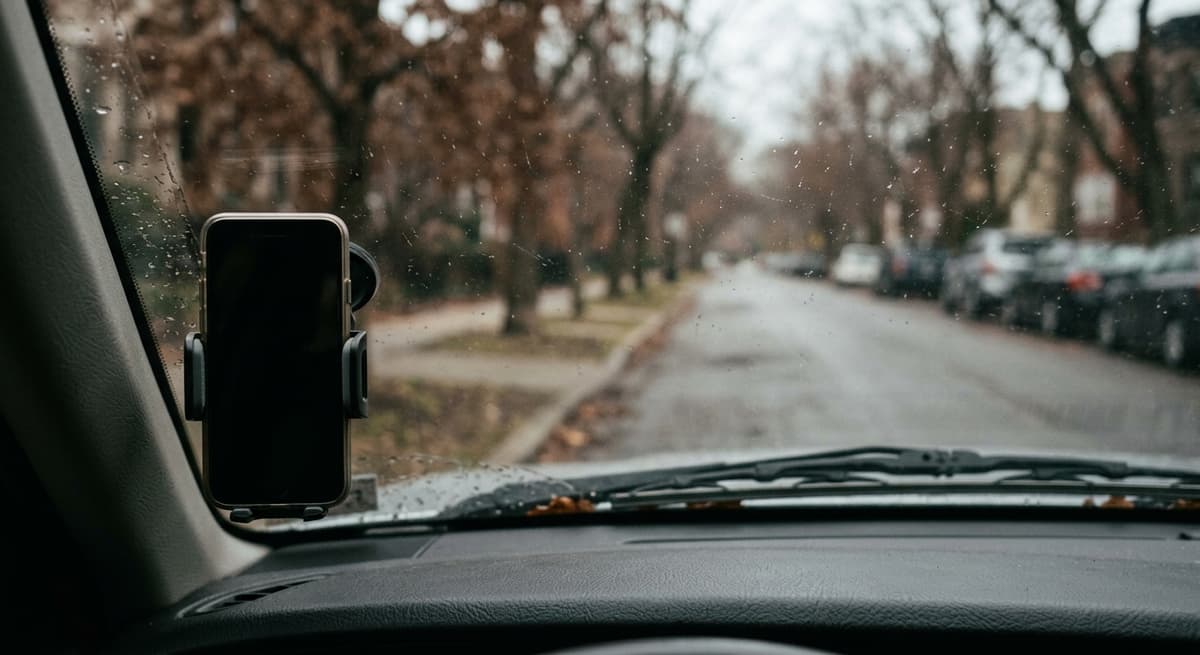
No Specific Mounting Statute
Idaho does not have a statute that names dashcams or phone mounts specifically, but a general windshield-obstruction law still applies to where you place one. Idaho Code Section 49-943 prohibits driving with any sign, poster, or other nontransparent material on the front windshield, side wings, or side or rear windows that obstructs the driver's clear view of the highway. Idaho Code Section 49-944 is a separate statute governing window tinting film and sunscreening devices, not mounted equipment. Avoid placements that materially obstruct your view to stay compliant with both.
Best Practices
- Behind the rearview mirror: Most common and safest placement
- Dashboard mount: Avoids windshield entirely
- Lower passenger-side corner: Out of driver's line of sight
- Choose cold-rated dashcams for Idaho winters (temperatures below -20 F in mountain areas)
- Hardwired installations prevent battery failures in extreme cold
Audio Recording and One-Party Consent
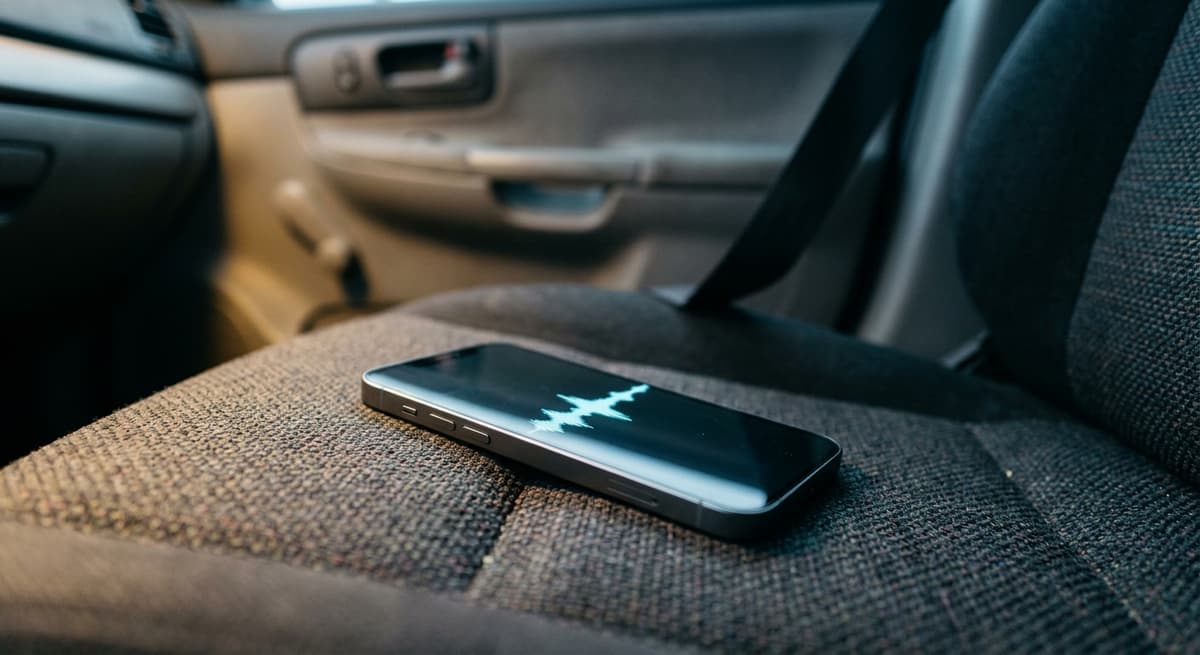
How Idaho Code Section 18-6702 Applies
The statute makes it illegal to intentionally intercept wire, oral, or electronic communications without the consent of at least one party. As the driver, you are a party to vehicle conversations.
- You can record passenger conversations without telling them
- You can record phone calls while driving
- You cannot leave the dashcam recording third-party conversations when absent
- Recording for criminal purposes is prohibited even with one-party consent
Rideshare Drivers
Idaho rideshare drivers can record under one-party consent. The Idaho Transportation Department does not specifically regulate dashcam use. Posting a notice is a best practice.
Using Dashcam Footage as Evidence

Accident Claims
Dashcam footage is valuable in Idaho accident claims. Idaho follows a modified comparative negligence system with a 50% bar. Dashcam evidence establishing fault can be critical.
Best practices:
- Enable date and time stamps
- Use high-resolution cameras
- Preserve original footage without editing
- Back up recordings promptly
Admissibility in Idaho Courts
Footage must be relevant, authentic, unaltered, and properly preserved. Audio recorded under one-party consent is admissible.
Law Enforcement
Idaho State Police and local agencies may request footage during investigations. You are not required to provide it without a warrant.
Criminal Penalties
| Statute | Offense | Classification | Max Prison | Max Fine |
|---|---|---|---|---|
| Idaho Code 18-6702 | Illegal interception | Felony | 5 years | $5,000 |
Civil Liability Under Idaho Code Section 18-6709
Victims can sue under Idaho Code Section 18-6709 for:
- Actual damages (minimum $100 per day or $1,000, whichever is greater)
- Punitive damages
- Attorney fees and costs
Commercial Vehicles
Commercial trucking companies on Idaho highways use dashcams for safety and liability. The FMCSA does not mandate or prohibit them. Video-only and audio dashcams are both legal in commercial vehicles.
Privacy Considerations
Parking Mode
Parking mode recording is generally legal on public streets. Recording on private property without the owner's knowledge may raise concerns.
Sharing Footage
Posting dashcam footage online is legal if lawfully recorded. Avoid using footage to harass or intimidate others, which could violate Idaho's stalking and harassment statutes.
Explore More Idaho Recording Laws
Audio Recording | Video Recording | Voyeurism Laws | Workplace Recording | Recording Police | Phone Call Recording | Security Cameras | Recording in Public | Landlord-Tenant Recording | Dashcam Laws | School Recording | Medical Recording
More Idaho Recording Topics
More Idaho Laws
Frequently Asked Questions
Are dashcams legal in Idaho?
Yes. Idaho does not prohibit dashcams. Both video-only and audio-enabled dashcams are legal. Under one-party consent (Idaho Code 18-6702), the driver can record audio without informing passengers.
Do I need to tell passengers my dashcam records audio in Idaho?
No. Idaho's one-party consent law allows you to record conversations you participate in without notification.
Where should I mount my dashcam in Idaho?
Mount behind the rearview mirror or on the dashboard as a safety best practice. No Idaho statute names dashcam mounting specifically, but Idaho Code 49-943 prohibits any nontransparent material on the windshield that obstructs the driver's clear view, which applies to a poorly placed mount. Idaho Code 49-944 is separate and addresses window tinting, not mounted devices. Avoid center placements that block your view.
Can dashcam footage be used in Idaho courts?
Yes. Dashcam footage is admissible if relevant, authentic, unaltered, and lawfully obtained.
What are the penalties for illegal dashcam recording in Idaho?
Illegal interception is a felony carrying up to 5 years in prison and a $5,000 fine. Victims can sue for at least $100 per day or $1,000, plus punitive damages.
Updates
Added Idaho Code 49-943, the state's windshield-obstruction statute, which applies to a dashcam or phone mount placed where it blocks the driver's view. The page previously said no statute at all governed windshield mounting and cited only the unrelated window-tinting statute.
Independently fact-checked against the cited primary sources
Corrected the article's repeated claim that Idaho Code 49-944 regulates dashcam windshield mounting; the statute only governs window-tinting film and sunscreening devices, so it does not create a citation risk for dashcam placement.
Governing law re-checked for recent changes
Reviewed and approved by an editor
The Law Behind This Article
This article rests on the statutory provisions below, held in our own legal record and retrieved from the official source. Tap a section to read the operative text.
Idaho Code
§ 18-6702Interception and disclosure of wire, electronic or oral communications prohibitedIn forcecited in 21 of our articles
18-6702. Interception and disclosure of wire, electronic or oral communications prohibited. (1) Except as otherwise specifically provided in this chapter, any person shall be guilty of a felony and is punishable by imprisonment in the state prison for a term not to exceed five (5) years or by a…
Official text (excerpt) · last checked 2026-08-31 · Read the full text in our law library · Verify at legislature.idaho.gov
Cited in 6 court opinions in our collectionLatest citing opinion in our collection: 2019
In the courts (editorial summary, independently checked):Idaho courts have applied section 18-6702 to intercepted phone calls. Hoskins v. Howard (1998) held cordless telephone conversations are protected wire communications, so scanning, recording and disclosing one supported a claim. Chapman v. NYK Line North America (2009) noted 18-6702(2)(d) makes one-party-consent recording lawful.
Opinions citing this section in our collection:
- Hoskins v. Howard (Idaho Supreme Court 1998, 132 Idaho 311)✓A sheriff's deputy used a scanner to record a neighbor's cordless call and passed the tape on; the court held such calls are protected wire communications when part of the call crosses the phone network, so Section 18-6702 reached him, and vacated summary judgment in his favor.
- Chapman v. NYK LINE NORTH AMERICA, INC. (Idaho Supreme Court 2009, 147 Idaho 178)“…rsation with the consent of one party to the conversation. Idaho Code § 18-6702 (2)(d). Of course, an employer could im…”
- Bartnicki v. Vopper (Supreme Court of the United States 2001, 532 U.S. 514)“…16-11-66.1 (1996); Haw. Rev. Stat. § 803-42 (1993); Idaho Code § 18-6702 (1997); Ill. Comp. Stat., ch. 720, § 5…”
Identified automatically from the court opinions citing this section — not a ranking of which case controls.
Also relied on in: Idaho Recording Laws (2026): One-Party Consent Rules, Idaho Security Camera Laws: Home, Business, and Surveillance Rules (2026), Idaho Medical Recording Laws: Patient Rights, HIPAA, and One-Party Consent (2026)
§ 18-6709Recovery of civil damages authorized. Any person whose wire, electronic or oral communication is intercepted, disclosed, or used in violation of this chapter shall have a civil cause of action against any person who intercepts, discloses, uses, or procures any other person to intercept, disclose, or use such communications, and shall be entitled to recover from any such person:In forcecited in 14 of our articles
18-6709. Recovery of civil damages authorized. Any person whose wire, electronic or oral communication is intercepted, disclosed, or used in violation of this chapter shall have a civil cause of action against any person who intercepts, discloses, uses, or procures any other person to intercept,…
Official text (excerpt) · last checked 2026-08-01 · Read the full text in our law library · Verify at legislature.idaho.gov
Also relied on in: Idaho Audio Recording Laws: One-Party Consent Rules and Penalties (2026), Idaho Landlord-Tenant Recording Laws: Cameras, Privacy Rights, and Disputes (2026), Idaho Phone Call Recording Laws: Consent Rules for Landline, Cell, and VoIP (2026)
§ 49-943Windshields to be unobstructed and equipped with wipersIn forcecited in 2 of our articles
49-943. Windshields to be unobstructed and equipped with wipers. (1) No person shall drive any motor vehicle with any sign, poster, or other nontransparent material upon the front windshield, side wings, or side or rear windows of the vehicle which obstructs the driver’s clear view of the highway…
Official text (excerpt) · last checked 2026-09-07 · Read the full text in our law library · Verify at legislature.idaho.gov
Cited in 1 court opinions in our collectionLatest citing opinion in our collection: 2013
Opinions citing this section in our collection:
- State v. Christopher Lee Brown (Idaho Court of Appeals 2013)“…ute since his clear view of the highway was not obstructed. Idaho Code § 49-943(1) requires that: “No person shall driv…”
Identified automatically from the court opinions citing this section — not a ranking of which case controls.
Also relied on in: Idaho Windshield Mounting Laws (2026 Guide)
§ 49-944Standards for windshields and windows of motor vehicles — Prohibited acts — PenaltyIn forcecited in 3 of our articles
49-944. Standards for windshields and windows of motor vehicles — Prohibited acts — Penalty. (1) It is unlawful for any person to place, install, affix, or apply any window tinting film or sunscreening device to the windows of any motor vehicle, except as follows: (a) Nonreflective window tinting…
Official text (excerpt) · last checked 2026-09-01 · Read the full text in our law library · Verify at legislature.idaho.gov
Cited in 5 court opinions in our collectionLatest citing opinion in our collection: 2021
In the courts (editorial summary, independently checked):State v. Debra Joan Noeller (2016) held Idaho Code 49-944 governs conduct on Idaho highways and reaches any vehicle driven in the state, not only Idaho-registered ones. State v. Farrell (2019) held the factory-tint exception in subsection (5), proved later, defeats the infraction but does not dispel an officer's reasonable suspicion.
Opinions citing this section in our collection:
- State v. Farrell (Idaho Court of Appeals 2019, 165 Idaho 839)✓An officer stopped a car for a dark rear window, measured 25% light transmittance and cited the driver; the court held the factory-tint exception meant the driver could not be convicted, but did not dispel the officer's suspicion, so the stop was not unlawfully prolonged.
- State v. Debra Joan Noeller (Idaho Court of Appeals 2016)✓An officer stopped an Arizona-plated car for suspected illegal tint; in an unpublished decision the court read the statute as governing conduct on Idaho highways, so it covers out-of-state vehicles too, but affirmed suppression because the stop was unreasonably extended.
- United States v. Billy Howard Stanfield (Court of Appeals for the Fourth Circuit 1997, 109 F.3d 976)“…1 § 4313 (1975-95); Code of Georgia § 40-8-73.1 (1982-96); Idaho Code § 49-944 (1) (Michie 1948-96); West’s Smith-Hurd…”
Identified automatically from the court opinions citing this section — not a ranking of which case controls.
Also relied on in: Idaho Window Tint Laws (2026): Legal VLT Limits
Search our full record of US law — 2.1 million sections, every state + federal →
Sources and References
- Idaho Code Section 18-6702 - Interception of Communications(legislature.idaho.gov).gov
- Idaho Code Section 18-6709 - Civil Liability(legislature.idaho.gov).gov
- Idaho Transportation Department(itd.idaho.gov).gov
- Federal Motor Carrier Safety Administration(fmcsa.dot.gov).gov
- Idaho Code Section 49-943 - Windshields to Be Unobstructed(legislature.idaho.gov).gov