
Michigan
Michigan Dashcam Laws: Windshield Rules, Audio Recording, and Legal Use (2026)
Independently fact-checked against primary sources (last audited August 15, 2026). · Reviewed by the RecordingLaw editorial team. · Law checked current as of August 15, 2026. · 4 primary sources cited on this page. How we verify our legal content
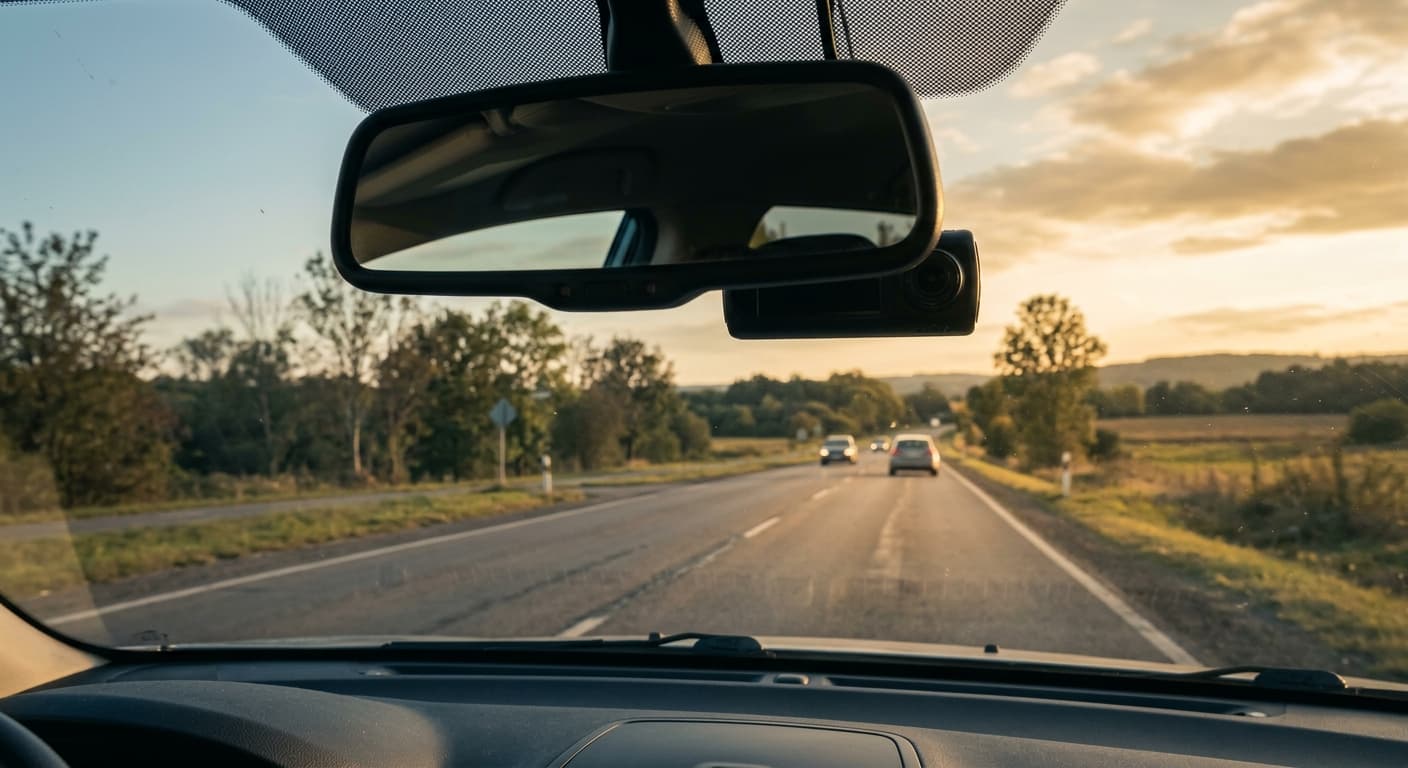
Dashcams are legal in Michigan. MCL 257.709 requires that any windshield-mounted camera not obstruct the driver's vision, so mounting behind the rearview mirror is the standard compliant position. In-car audio falls under MCL 750.539c, but the participant exception permits the driver to record conversations they are part of.
Dashboard cameras are legal in Michigan and have become an essential tool for documenting traffic incidents, protecting against insurance fraud, and providing evidence in accident cases. Michigan does not have a specific dashcam statute, but several existing laws govern how dashcams can be installed and used.
This guide covers windshield mounting rules, audio recording considerations, using dashcam footage as evidence, and the privacy implications of recording other drivers and passengers.
Michigan Windshield Obstruction Law: MCL 257.709
The General Rule
MCL 257.709 is the primary statute affecting dashcam placement in Michigan. The law addresses windshield obstructions in several ways:
Section 257.709(1)(a): Prohibits a "sign, poster, or other nontransparent material" on the front windshield, side windows adjacent to the driver or front passenger, or sidewings adjacent to and forward of the driver or front passenger.
Section 257.709(1)(c): Prohibits "an object that obstructs the vision of the driver of the vehicle, except as authorized in this act."
These provisions do not specifically mention dashcams. However, any device mounted on the windshield that obstructs the driver's vision could violate subsection (1)(c). The key question is whether the dashcam placement actually "obstructs the vision of the driver."
Legal Dashcam Mounting Positions
To comply with MCL 257.709, mount your dashcam in a position that does not obstruct your view of the road:
- Behind the rearview mirror: This is the most popular and safest position. The dashcam sits in an area already partially blocked by the mirror, minimizing additional obstruction.
- On the dashboard: Dashboard-mounted cameras avoid windshield attachment entirely and do not implicate the obstruction statute.
- Low on the windshield near the bottom edge: Some drivers mount cameras low on the passenger side where they do not affect the driver's sightline.
Positions to Avoid
- Center of the windshield where it blocks the driver's direct forward view
- Driver's side of the windshield in the driver's primary field of vision
- Large cameras or mounts that create significant windshield coverage
- Multiple cameras mounted across the windshield that cumulatively obstruct vision
Tinted Windshield Restrictions
MCL 257.709 also restricts window tinting. Tinted film on the front windshield may only extend 4 inches from the top. This is relevant for dashcam users because some aftermarket tinting combined with a dashcam mount in the upper portion of the windshield could create compliance issues.
Video Recording by Dashcams
Recording Public Roads Is Legal
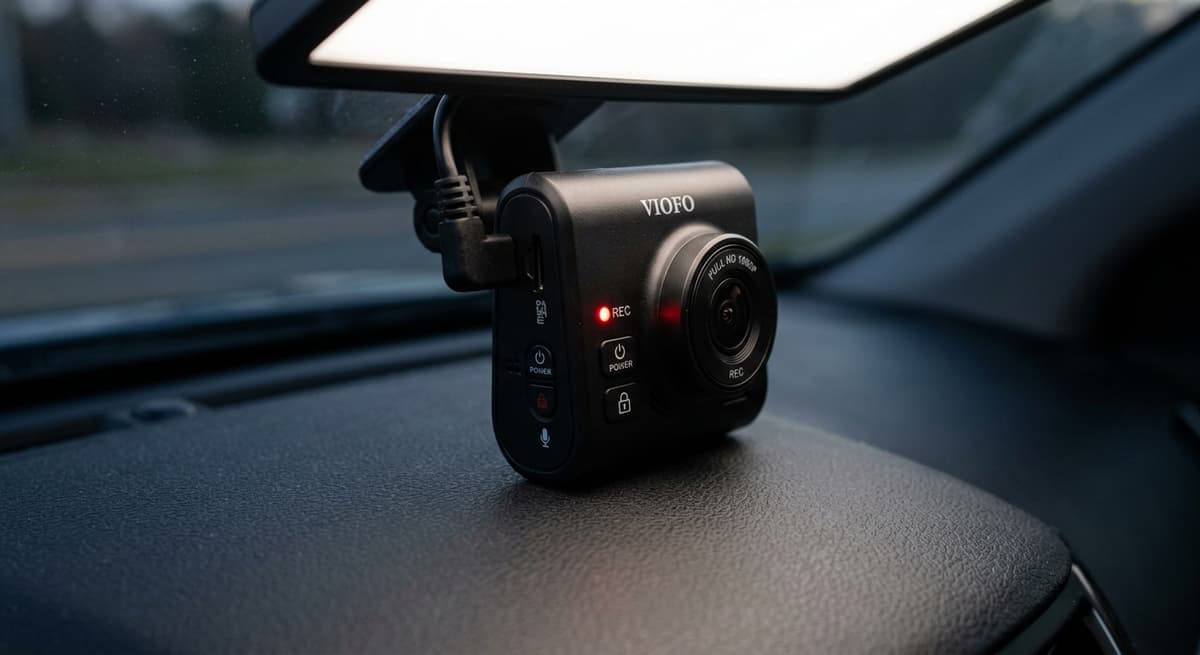
Dashcam video recording of public roads, traffic, and events visible from the roadway is legal in Michigan. Public roads are not "private places" under MCL 750.539a, and people driving on public roads have no reasonable expectation of privacy regarding their vehicles, license plates, or driving behavior.
Your dashcam can legally record:
- Other vehicles on the road, including their license plates
- Traffic conditions and road hazards
- Accidents and near-misses
- Traffic signals and signs
- Pedestrians and cyclists on public roadways
- Police interactions during traffic stops
- Anything visible from the public road
Rear-Facing and Interior Dashcams
Rear-facing cameras that record through the back window capture the same public roadway information as forward-facing cameras and are legal.
Interior-facing cameras (common in rideshare and commercial vehicles) record the vehicle's cabin. Because a vehicle's interior can qualify as a private space depending on the circumstances, interior cameras raise additional privacy considerations, particularly regarding audio recording and passenger consent.
Audio Recording by Dashcams
The Eavesdropping Statute and In-Vehicle Audio
Many dashcams record audio by default. When the dashcam captures conversations inside the vehicle, Michigan's eavesdropping statute (MCL 750.539c) applies to the audio component.
Under the participant exception from Sullivan v. Gray, 117 Mich. App. 476, 324 N.W.2d 58 (1982), if you are in the vehicle and participating in the conversation, you can record the audio without informing your passengers. Your participation satisfies the consent requirement.
However, if you step out of the vehicle and the dashcam continues recording conversations between passengers remaining in the car, you are no longer a participant. The audio recording of their private conversation could violate the eavesdropping statute.
Best Practices for Dashcam Audio
- Keep audio enabled when you are in the vehicle. Your presence as a participant makes the audio recording legal under the participant exception.
- Consider disabling audio when lending your vehicle. If someone else drives your car with passengers, the dashcam audio would record their conversations without any participant's consent.
- Inform rideshare passengers. If you drive for a rideshare service, post a visible sign in the vehicle stating that audio and video recording is in progress. This provides notice and creates implied consent.
Dashcam Footage as Evidence
Admissibility in Michigan Courts
Dashcam footage is admissible as evidence in Michigan courts when properly authenticated. The party introducing the footage must establish:
- The recording is genuine. The footage has not been edited, altered, or manipulated.
- Chain of custody. The recording has been preserved since the event occurred.
- Relevance. The footage relates to an issue in the case.
- Accuracy. The recording accurately depicts what occurred (date, time, and location stamps help establish this).
Using Dashcam Footage in Accident Cases
Dashcam footage has become one of the most powerful forms of evidence in Michigan traffic accident cases. The footage can establish:
- Which driver ran a red light or stop sign
- The speed of vehicles before impact
- Whether a driver was distracted or impaired
- Road conditions at the time of the accident
- The sequence of events leading to the collision
- Whether a hit-and-run driver fled the scene (license plate capture)
Insurance Claims
Michigan insurance companies regularly accept dashcam footage when evaluating claims. Under Michigan's no-fault insurance system, dashcam footage can help establish:
- Fault determination for mini-tort claims (property damage up to $3,000)
- Whether an injury claim is legitimate
- The severity of an impact
- Whether road conditions contributed to the accident
Some Michigan insurance companies offer discounts for vehicles equipped with dashcams, recognizing that the footage deters fraud and speeds claims processing.
Criminal Cases
Dashcam footage can serve as evidence in criminal cases involving:
- Drunk driving and impaired driving offenses
- Reckless driving and road rage incidents
- Hit-and-run offenses
- Traffic violations
- Assault with a vehicle
- Insurance fraud
Law enforcement may request or subpoena dashcam footage from witnesses to traffic crimes. You are not required to provide footage voluntarily, but a valid subpoena or court order compels production.
Commercial Vehicle Dashcams
Trucking and Fleet Vehicles
Commercial fleet operators in Michigan widely use dashcams for driver safety monitoring, accident documentation, and liability protection. Federal Motor Carrier Safety Administration (FMCSA) regulations do not mandate dashcams, but many carriers install them voluntarily.
Commercial dashcam considerations in Michigan:
- Forward-facing cameras are standard for accident documentation
- Interior cameras monitor driver alertness and compliance
- Audio recording in commercial vehicles follows the same eavesdropping rules as personal vehicles
- Fleet operators should have written policies regarding dashcam use, storage, and access
Rideshare and Taxi Dashcams
Rideshare drivers (Uber, Lyft) and taxi operators in Michigan can use dashcams to protect themselves from false accusations, document incidents, and provide evidence for insurance claims.
For audio recording with passengers:
- Post a visible sign stating that audio and video recording is in progress
- The sign provides notice and creates implied consent
- Passengers who see the sign and continue riding have arguably consented to recording
- Both Uber and Lyft allow drivers to use dashcams but require passenger notification in jurisdictions that require it
Parking Mode and Unattended Recording
Many dashcams have a "parking mode" that records when the vehicle is parked and unattended, activated by motion detection or impact sensors. This feature captures:
- Hit-and-run damage to parked vehicles
- Vandalism and theft attempts
- Break-in attempts
Parking mode video recording is legal when the vehicle is in a public parking lot or on a public street, as there is no expectation of privacy in these areas. If the vehicle is parked in a private garage, the recording of events within the garage is governed by the property owner's consent and the private place rules.
Audio recording in parking mode can be problematic. If the dashcam records conversations of people walking past the parked vehicle, and the owner is not present to be a participant, the audio may violate the eavesdropping statute. Consider disabling audio for parking mode.
Related Michigan Recording Laws
Audio Recording | Video Recording | Voyeurism & Hidden Cameras | Workplace Recording | Recording Police | Phone Call Recording | Security Cameras | Recording in Public | Landlord-Tenant | Dashcam Laws | Schools | Medical Recording
← Back to Michigan Recording Laws
More Michigan Recording Topics
More Michigan Laws
Frequently Asked Questions
Are dashcams legal in Michigan?
Yes. Dashcams are legal in Michigan. However, MCL 257.709 prohibits objects on the windshield that obstruct the driver's vision. Mount your dashcam behind the rearview mirror, on the dashboard, or in another position that does not block your view of the road.
Where should I mount a dashcam in Michigan?
The safest position is behind the rearview mirror, where the camera sits in an area already partially blocked. Dashboard mounts avoid windshield attachment entirely. Avoid mounting in the center of the windshield or anywhere that blocks your direct forward view, as this could violate MCL 257.709.
Can I use dashcam footage as evidence in Michigan?
Yes. Dashcam footage is admissible in Michigan courts when properly authenticated. The footage must be genuine, unaltered, and relevant to the case. Dashcam evidence is commonly used in traffic accident cases, insurance claims, hit-and-run investigations, and criminal proceedings.
Should I disable audio recording on my dashcam in Michigan?
If you are in the vehicle, audio recording is legal under the participant exception. If your dashcam records when you are not present (parking mode), consider disabling audio to avoid capturing private conversations of others without consent. Rideshare drivers should post visible signs about audio recording.
Can dashcam footage help with insurance claims in Michigan?
Yes. Michigan insurance companies accept dashcam footage for claim evaluation. Under Michigan's no-fault system, footage helps with fault determination for mini-tort property damage claims, verifying injury claim legitimacy, and documenting accident circumstances. Some insurers offer discounts for dashcam-equipped vehicles.
Updates
Independently fact-checked against the cited primary sources; governing law re-checked for recent changes
Governing law re-checked for recent changes
Reviewed and approved by an editor
The Law Behind This Article
This article rests on the statutory provisions below, held in our own legal record and retrieved from the official source. Tap a section to read the operative text.
Michigan Compiled Laws
§ 750.539cEavesdropping upon private conversationIn forcecited in 42 of our articles
Any person who is present or who is not present during a private conversation and who wilfully uses any device to eavesdrop upon the conversation without the consent of all parties thereto, or who knowingly aids, employs or procures another person to do the same in violation of this section, is guilty of a felony punishable by imprisonment in a state prison for not more than 2 years or by a fine of not more than $2,000.00, or both.
Official text (excerpt) · last checked 2026-08-28 · Read the full text in our law library · Verify at legislature.mi.gov
Cited in 32 court opinions in our collectionLatest citing opinion in our collection: 2025
In the courts (editorial summary, independently checked):Michigan courts read MCL 750.539c to reach third-party eavesdropping only. Sullivan v. Gray (1982) held the statutory phrase "private discourse of others" excludes recording by a participant in the conversation; People v. Lucas (1991) held an officer who answered an arrestee's ringing car phone did not violate the section.
Opinions citing this section in our collection:
- People v. Lucas (Michigan Court of Appeals 1991, 188 Mich. App. 554)✓Police answering the arrested defendant's ringing car phone took drug-purchase calls and testified to them; the court held the officer was not an eavesdropper because there was no private discourse between the sender and some other receiver, so MCL 750.539c was not violated.
- Sullivan v. Gray (Michigan Court of Appeals 1982, 117 Mich. App. 476)✓A party to a phone call about a failed car dealership sale secretly taped it and the transcript was used in later litigation; reading the statute to reach only the private discourse of others, the court held participant recording is not eavesdropping under MCL 750.539c.
- People v. Warner (Michigan Supreme Court 1977, 401 Mich. 186)✓A motel switchboard operator deliberately listened in on a guest's call and reported it to police; the court held her willful eavesdropping violated MCL 750.539c, but the defendant, not shown to be a party to the call, had no standing to suppress the resulting evidence.
Identified automatically from the court opinions citing this section — not a ranking of which case controls.
Also relied on in: Michigan Smart Glasses Recording Laws (2026), Michigan Landlord-Tenant Recording Laws: Surveillance, Privacy, and Tenant Rights (2026), Michigan Security Camera Laws: Rules for Homes, Businesses, and Neighbors (2026)
§ 257.709Windshields and windows; prohibitions; rearview mirrors; exceptions; windshield wipers; exemption; hot air windshield defroster or electrically heated windshield or other device; windshield device; definitionsIn forcecited in 6 of our articles
(1) A person shall not operate a motor vehicle with any of the following: (a) A sign, poster, nontransparent material, window application, reflective film, or nonreflective film upon or in the front windshield, the side windows immediately adjacent to the driver or front passenger, or the sidewings adjacent to and forward of the driver or front passenger, except that a tinted film may be used along the top edge of the windshield and the side windows or sidewings immediately adjacent to the driver or front passenger if the material does not extend more than 4 inches from the top of the windshield, or lower than the shade band, whichever is closer to the top of the windshield. (b) A rear window or side window to the rear of the driver composed of, covered by, or treated with a material that creates a total solar reflectance of 35% or more in the visible light range, including a silver or gold reflective film. (c) An object that obstructs the vision of the driver of the vehicle, except as authorized by law.
Official text (excerpt) · last checked 2026-09-07 · Read the full text in our law library · Verify at legislature.mi.gov
Cited in 19 court opinions in our collectionLatest citing opinion in our collection: 2026
In the courts (editorial summary, independently checked):People v. Pitts (1997) upheld MCL 257.709 against an equal protection challenge, finding the ban on applied tint film rationally related to driver and officer safety, and held a tint violation is an equipment violation carrying no points. People v. Dillon (2012) rejected a vagueness attack, construing the dangling-object subsection.
Opinions citing this section in our collection:
- People v. Davis (Michigan Court of Appeals 2002, 250 Mich. App. 357)✓An officer saw air fresheners dangling from the mirror of the car Davis drove; the court found the record amply supported that this may have violated MCL 257.709 (1)(c) and that, with speeding and lane weaving, the traffic stop was permissible.
- People v. Dillon (Michigan Court of Appeals 2012, 296 Mich. App. 506)✓An air freshener hung two or three inches below Dillon's mirror; the court held MCL 257.709 was not void for vagueness because dangling ornament, suspended object and obstructs are commonly understood terms, and that the officer had reasonable suspicion to stop.
- People v. Pitts (Michigan Court of Appeals 1997, 222 Mich. App. 260)✓Pitts was cited for aftermarket tint film on his front side windows; the court held a MCL 257.709 tint violation is an equipment civil infraction carrying no license points rather than a moving obstructed-vision violation, and rejected his equal protection challenge.
Identified automatically from the court opinions citing this section — not a ranking of which case controls.
Also relied on in: Michigan Windshield Mounting Laws (2026 Guide), Michigan Window Tint Laws (2026): Legal VLT Limits
§ 750.539aDefinitionsIn forcecited in 30 of our articles
As used in sections 539a to 539i: (1) "Private place" means a place where one may reasonably expect to be safe from casual or hostile intrusion or surveillance but does not include a place to which the public or substantial group of the public has access. (2) "Eavesdrop" or "eavesdropping" means to overhear, record, amplify or transmit any part of the private discourse of others without the permission of all persons engaged in the discourse. Neither this definition or any other provision of this act shall modify or affect any law or regulation concerning interception, divulgence or recording of messages transmitted by communications common carriers. (3) "Surveillance" means to secretly observe the activities of another person for the purpose of spying upon and invading the privacy of the person observed. (4) "Person" means any individual, partnership, corporation or association.
Official text (excerpt) · last checked 2026-07-30 · Read the full text in our law library · Verify at legislature.mi.gov
Cited in 26 court opinions in our collectionLatest citing opinion in our collection: 2026
Opinions citing this section in our collection:
- Lewis v. LeGrow (Michigan Court of Appeals 2003, 258 Mich. App. 175)“…such unauthorized installation, is guilty of a felony.... MCL 750.539a provides the definitions of phrases use…”
- People v. Stone (Michigan Supreme Court 2001, 463 Mich. 558)“…permission of all persons engaged in the discourse.” MCL 750.539a(2); MSA 28.807(1)(2). In…”
- People v. Lucas (Michigan Court of Appeals 1991, 188 Mich. App. 554)“…e Commander Turner, in answering the mobile phone, violated MCL 750.539a et seq.; MSA 28.807(1)…”
Identified automatically from the court opinions citing this section — not a ranking of which case controls.
Also relied on in: Michigan Audio Recording Laws: Consent Rules, Statutes, and Penalties (2026), Michigan Phone Call Recording Laws: Rules for Landlines, Cell Phones, and VoIP (2026), Michigan Laws on Recording Police: Your Rights and Legal Limits (2026)
Search our full record of US law — 2.1 million sections, every state + federal →
Sources and References
- Michigan Legislature - MCL 257.709 (Windshield Obstruction)(legislature.mi.gov).gov
- Michigan Legislature - MCL 750.539c (Eavesdropping)(legislature.mi.gov).gov
- Michigan Legislature - MCL 750.539a (Definitions)(legislature.mi.gov).gov
- Michigan State Police - Traffic Laws FAQs(michigan.gov).gov
- Fisher v. Perron (6th Cir. 2022)(law.justia.com)