
Idaho
Idaho Windshield Mounting Laws (2026 Guide)
Independently fact-checked against primary sources (last audited August 17, 2026). · Reviewed by the RecordingLaw editorial team. · Law checked current as of August 7, 2026. · 7 primary sources cited on this page. How we verify our legal content
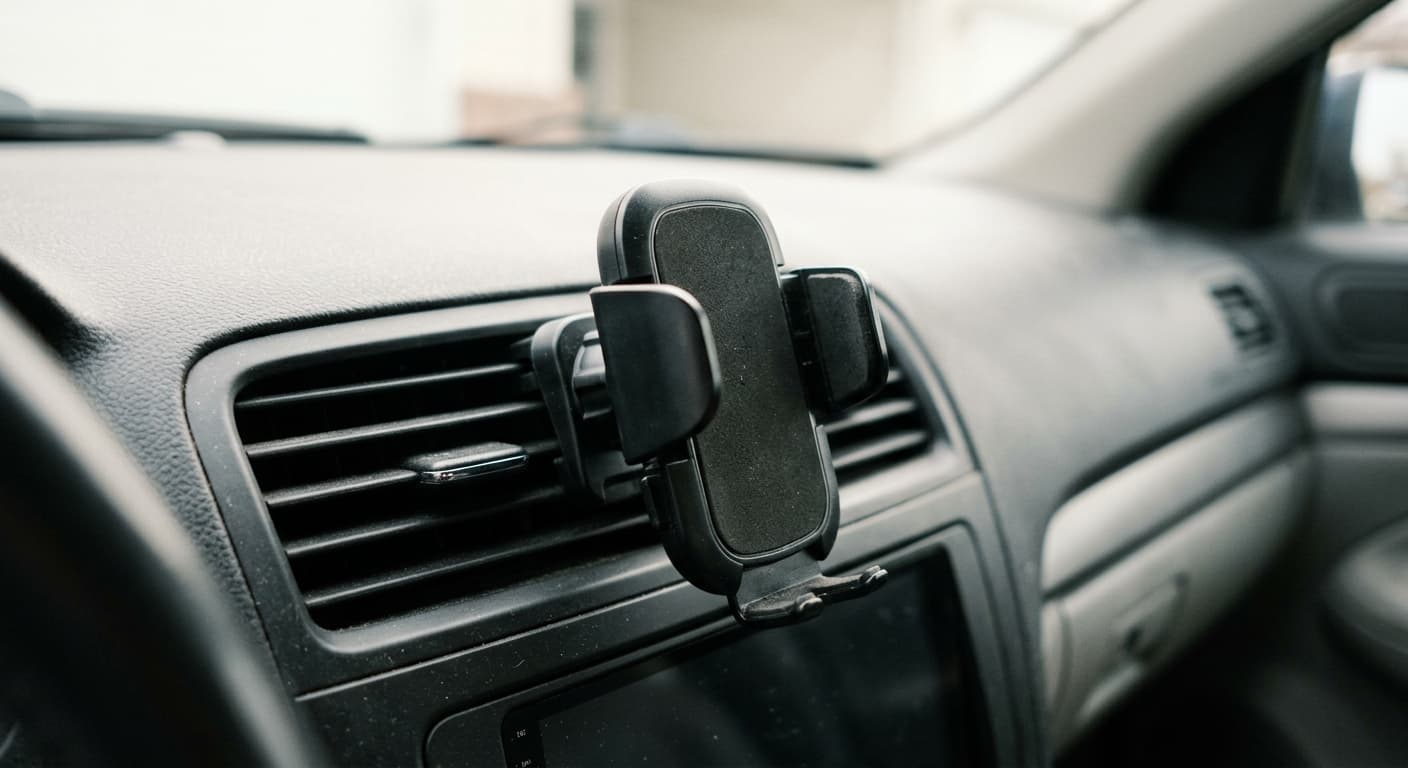
Idaho permits dashcams, GPS units, and phone mounts on the windshield only if they do not obstruct the driver's clear view, the standard set by Idaho Code 49-943. The state designates no specific mounting zones, so every device is evaluated on a case-by-case basis; a dashboard or behind-the-mirror placement carries the least legal risk.
Idaho regulates windshield-mounted devices through Idaho Code 49-943, which prohibits nontransparent materials on the windshield that obstruct the driver's view. Unlike many states that designate specific windshield zones for device mounting, Idaho does not carve out exceptions for GPS units, phone mounts, or dashcams. The law relies on a straightforward obstruction standard.
This guide covers the windshield obstruction rules, tinting restrictions under Idaho Code 49-944, the hands-free driving law, and practical guidance for legally using devices in your vehicle in Idaho.
Idaho Windshield Obstruction Law (Idaho Code 49-943)
Idaho Code 49-943 is the primary statute governing what can be placed on a vehicle's windshield. The law has two main requirements.
The Nontransparent Material Ban
Section 49-943(1) states that no person shall drive any motor vehicle with any sign, poster, or other nontransparent material upon the front windshield, side wings, or side or rear windows of the vehicle which obstructs the driver's clear view of the highway or any intersecting highway.
The key elements of this prohibition are:
- "Nontransparent material" covers any object that is not see-through, including suction cup mounts, dashcams, GPS devices, phone holders, stickers, and decorative items
- "Obstructs the driver's clear view" is the operative standard. The material must actually impair visibility to violate the law
- "Highway or any intersecting highway" extends the protection to views of cross streets and intersections, not just the road directly ahead
No Designated Mounting Zones
Unlike states such as California (which allows GPS mounts in a 7-inch square on the passenger side and 5-inch square on the driver side) or Arizona (which permits safety monitoring equipment behind the rearview mirror), Idaho does not designate any specific windshield zones where mounted devices are automatically permitted.
This means there is no "safe harbor" zone on the windshield in Idaho. Every mounted device is evaluated under the same standard: does it obstruct the driver's clear view?
Windshield Wiper Requirements
Section 49-943(2) requires the windshield on every motor vehicle to be equipped with a device for cleaning rain, snow, or other moisture from the windshield. This device must be controlled by the driver. Every windshield wiper must be maintained in good working order.
GPS and Navigation Device Mounts
Idaho law does not specifically mention GPS devices or navigation systems. A GPS unit mounted on the windshield is treated the same as any other nontransparent material under Idaho Code 49-943.
Is a Windshield GPS Mount Legal in Idaho?
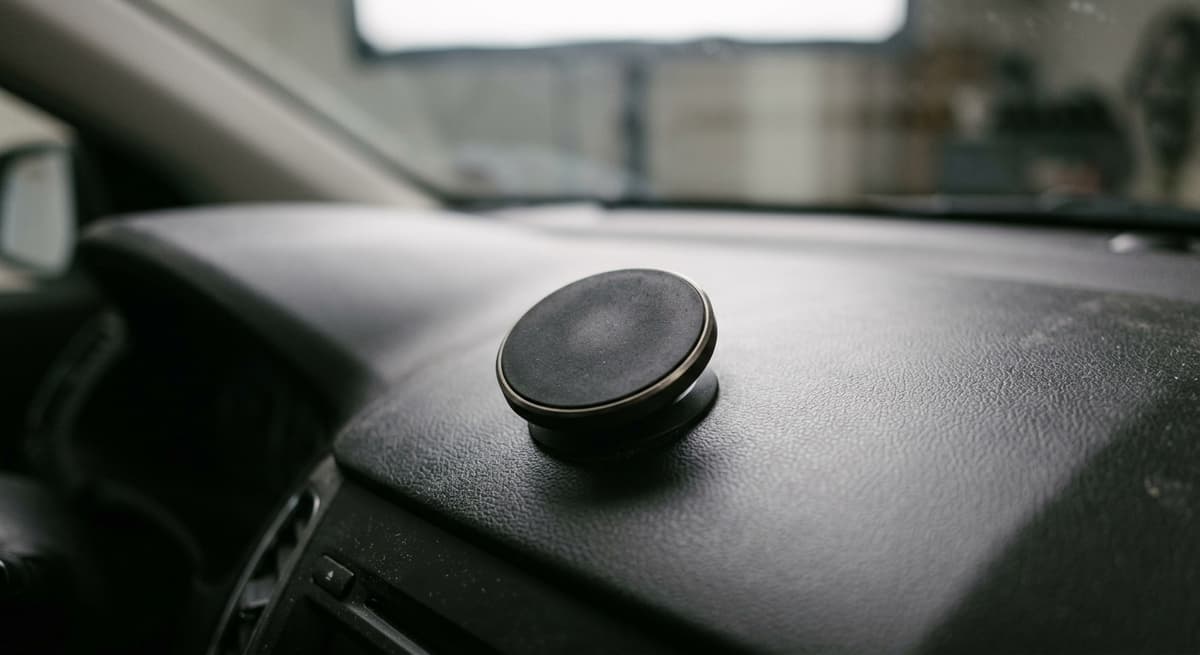
A GPS device mounted on the windshield is legal only if it does not obstruct the driver's clear view of the highway or any intersecting highway. Because Idaho does not define specific permissible zones, the determination is made on a case-by-case basis. An officer who believes the device blocks the driver's sightline can issue a citation.
Recommended GPS Mounting Locations
To minimize legal risk in Idaho, consider these alternatives to windshield mounting:
-
Dashboard mount. An adhesive or weighted mount on the dashboard surface avoids the windshield entirely. This is the safest legal option.
-
Behind the rearview mirror. A small device positioned directly behind the rearview mirror, where it does not extend beyond the mirror's profile, is less likely to be considered an obstruction. The mirror itself already occupies this space in the driver's field of view.
-
Lower corner of the windshield. While Idaho does not designate a specific zone, placing a device as low as possible in the corner of the windshield reduces the chance it will obstruct the driver's forward view. This is the approach most consistent with how other states handle the issue.
-
Vent mount or CD slot mount. These options keep the device at a convenient viewing angle without touching the windshield.
Phone Mounts and Idaho's Hands-Free Law
Idaho enacted a comprehensive hands-free driving law in 2020. Idaho Code 49-1401A prohibits the use of mobile electronic devices while driving unless the device is in hands-free mode.
What the Law Requires
A person may not operate a motor vehicle while using a mobile electronic device, with limited exceptions. The law applies at all times while the vehicle is in operation, including when stopped at a red light or stop sign.
"Using" a mobile electronic device means holding the device in the operator's hand or hands, or operating the device by hand. A phone mount satisfies the hands-free requirement by keeping the device secured and out of the driver's hands.
Permitted Hands-Free Uses
The law allows the following hands-free activities:
- Using a GPS or navigation feature of a mobile device, as long as the operator is not manually entering information into the device while driving
- Making or receiving a phone call through one-touch access or voice command
- Using the device in voice-operated or hands-free mode without using hands to operate it (except one-touch activation or deactivation)
Exceptions to the Hands-Free Law
Idaho Code 49-1401A(2) lists the situations the prohibition does not reach:
- Use of a device for emergency purposes, including contacting 911, calling law enforcement, a health care provider, a fire department, or another emergency agency, and reporting a fire, traffic accident, serious road hazard, medical or hazardous materials emergency, a reckless or apparently impaired driver, or a crime (49-1401A(2)(b))
- Law enforcement officers, firefighters, emergency medical technicians, paramedics, operators of authorized emergency vehicles, and similarly engaged public safety first responders during official duties, plus public or consumer-owned utility employees and contractors responding to a utility emergency (49-1401A(2)(a))
- A governmental or commercial user during the performance of official duties, so long as the device is being used in a manner similar to a commercial two-way radio communication device (49-1401A(2)(f))
- Use in a farming or ranching operation to assist in moving farm tractors, farm equipment, and implements of husbandry from one farm operation to another (49-1401A(2)(g))
- Drivers whose vehicles are lawfully parked, or pulled to the side of or off the road where it is legal to stop, which falls outside the statutory definition of "operate" in 49-1401A(1)(b)
Two-way radios sit outside the law entirely rather than qualifying as an exception. Idaho Code 49-1401A(1)(a) excludes a radio designed for the citizens band radio service or the amateur radio service, and a commercial two-way radio communications device, from the definition of "mobile electronic device" outright, with no emergency condition attached. The same definition also excludes an information or communication system installed within the vehicle, a subscription-based emergency communication device, and a prescribed medical device.
Penalties for Hands-Free Violations
| Offense | Fine |
|---|---|
| First offense | $75 |
| Second offense within a three-year period | $150 |
| Each subsequent offense within a three-year period | $300 |
Idaho Code 49-1401A(4) sets these amounts, and the escalation depends on the lookback. A driver whose only prior hands-free conviction is more than three years old is fined as a first offense again. Court costs and fees are added to the statutory fine.
How a Phone Mount Helps
A phone mount on the dashboard or vent allows Idaho drivers to legally use GPS navigation and take calls through one-touch or voice activation. Without a mount, holding the phone in your hand while driving violates 49-1401A even if you are only glancing at a map.
Because windshield mounting carries risk under 49-943, a dashboard or vent mount is the recommended solution for Idaho drivers who need hands-free phone access.
Dashcam Rules in Idaho
Idaho does not have a specific statute addressing dashcams or video event recorders. A dashcam is treated as nontransparent material under Idaho Code 49-943 and is subject to the same obstruction standard as any other windshield-mounted device.
Legal Dashcam Placement
The safest legal positions for a dashcam in Idaho are:
-
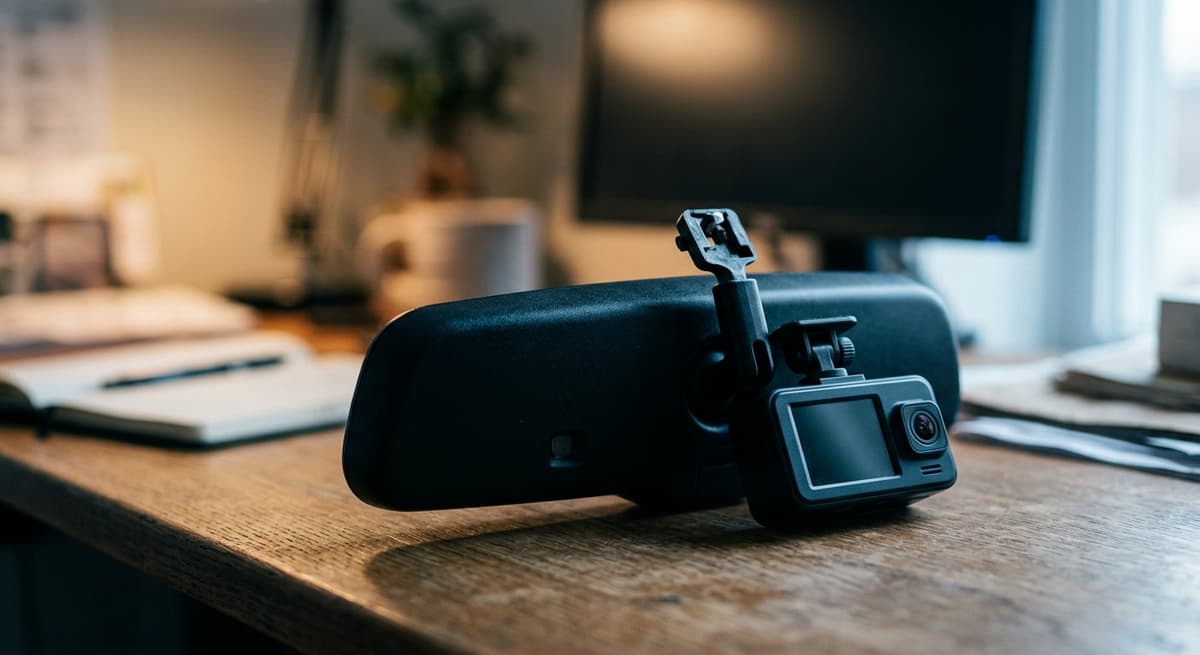
Behind the rearview mirror. A compact dashcam tucked behind the mirror does not extend into the driver's field of view. This is the most common placement and the least likely to be cited as an obstruction.
-
On the dashboard. A dashboard-mounted dashcam avoids the windshield entirely and eliminates any obstruction concern.
-
Lower windshield corner. While not specifically authorized, a small dashcam placed in the far lower corner of the windshield (passenger side) is unlikely to obstruct the driver's view. This placement follows the general approach used in states with designated mounting zones.
Audio Recording Considerations
Idaho is a one-party consent state for audio recording. Under Idaho Code 18-6702, you may record a conversation you are a party to without notifying other participants.
This means a dashcam that records audio inside the vehicle is legal in Idaho as long as the vehicle owner (who is a party to conversations in the vehicle) is present. You do not need to inform passengers that audio is being recorded.
Idaho Windshield Tinting Rules (Idaho Code 49-944)
Idaho Code 49-944 sets standards for windshields and windows of motor vehicles. The statute prohibits certain types of tinting and coatings.
Windshield Tint Requirements
| Rule | Requirement |
|---|---|
| Aftermarket tint on windshield | Not permitted below the AS-1 line |
| Tint strip (top of windshield) | Permitted above the AS-1 line only |
| Reflective or mirrored tint | Not permitted on windshield |
| Factory-installed tinting | Permitted if it meets federal standards |
The AS-1 line is marked on the glass by the manufacturer, typically about five to six inches from the top edge of the windshield. Aftermarket tint film may be applied above this line. Below the AS-1 line, no aftermarket tinting is permitted on the front windshield.
Other Window Tint Limits
| Window | Minimum VLT |
|---|---|
| Front side windows | 35% |
| Rear side windows | 20% |
| Rear window | 35% |
VLT stands for visible light transmittance. A 35% VLT means the window must allow at least 35% of outside light to pass through.
Medical Exemptions
Idaho Code 49-944(4) provides a statutory medical exemption for darker window tinting. A driver or passenger who possesses written verification from a licensed physician that they must be protected from exposure to sunlight or heat for medical reasons associated with past or current treatment may apply nonreflective window tinting film or a sunscreening device with a light transmission of at least 70% (plus or minus 3%) on the front windshield and at least 20% (plus or minus 3%) on the other windows, with luminous reflectance capped at 35% (plus or minus 3%) in each instance. The physician's written verification must be carried in the vehicle.
Windshield Damage and Replacement
Idaho Code 49-943(1) reaches material placed upon the glass, a sign, poster, or other nontransparent object. It does not address damage to the glass itself. The state's only glass-condition rule for drivers is Idaho Code 49-612(3), which prohibits operating a vehicle whose windshield or windows are coated with ice, snow, sleet, or dust to the extent that the driver's view ahead, to the sides, or to the rear is obstructed. Neither provision sets a standard for cracks or chips.
When Damage Requires Repair
No Idaho statute sets crack dimensions or locations for private passenger vehicles. Title 49, chapter 9 covers windshield obstruction (49-943), tinting standards (49-944), and safety glazing material (49-945), and none of them regulates a cracked or chipped windshield.
A numeric standard exists only in the federal rules for commercial motor vehicles. 49 CFR 393.60(c) requires a CMV windshield to be free of discoloration or damage in the critical viewing area, with exceptions for a crack that is not intersected by any other crack and for a damaged area that can be covered by a disc three-quarters of an inch in diameter and sits at least three inches from any similar damage. That standard governs commercial vehicles, not private ones.
Idaho Vehicle Inspections
Idaho does not have a mandatory periodic vehicle safety inspection program for private passenger vehicles. This means there is no routine inspection that would catch windshield damage. Enforcement relies on law enforcement officers observing damaged windshields during traffic stops or patrol.
Insurance Coverage
Idaho does not have a specific statute mandating zero-deductible windshield replacement coverage. Whether windshield repair or replacement is covered depends on the terms of your auto insurance policy. Drivers with comprehensive coverage may have glass repair or replacement included, but a deductible may apply.
Toll Transponders and Stickers
Idaho does not operate toll roads or toll bridges, and the Idaho Transportation Department publishes no transponder program. The question that actually comes up for Idaho drivers is what to do with a transponder issued by another state's tolling authority while driving through Idaho.
A transponder carried on the windshield in Idaho is subject to the same analysis as any other windshield-mounted object under Idaho Code 49-943: it is lawful only if it does not obstruct the driver's clear view. Transponders are small, and mounting one behind the rearview mirror keeps it out of the driver's sightline.
Stickers required by law (such as registration decals or inspection certificates, where applicable) are generally treated as permissible under the statute because they are mandated by government authority.
Commercial Vehicle Rules
Commercial vehicles operating in Idaho must comply with both state law and federal FMCSA regulations under 49 CFR 393.60 for interstate commerce.
Federal Mounting Zone
FMCSA regulations permit certain safety technology devices on commercial vehicle windshields within designated zones. Devices must be mounted no more than 8.5 inches below the upper edge of the windshield wiper sweep area and no more than 7 inches above the lower edge of the wiper sweep area. The device must be outside the driver's sight lines to the road and highway signs.
ELD Requirements
Electronic logging devices (ELDs) are federally mandated for most commercial motor vehicles, and an ELD may be mounted on the windshield within the zones specified in 49 CFR 393.60(e).
That provision is an equipment mounting standard, not an express preemption of state law. It says where a safety technology device may sit on the windshield; it does not exempt the vehicle from Idaho Code 49-943. A commercial vehicle operating in Idaho remains subject to both, so an ELD placed inside the federal zone should still be positioned clear of the driver's view of the highway.
Penalties for Windshield Violations
| Violation | Classification | Fine |
|---|---|---|
| Windshield obstruction (49-943) | Infraction | No amount set by statute |
| Illegal window tint (49-944) | Infraction | No amount set by statute |
| Hands-free violation, first offense (49-1401A) | Moving violation, infraction | $75 |
| Hands-free violation, second offense within three years (49-1401A) | Moving violation, infraction | $150 |
| Hands-free violation, each subsequent offense within three years (49-1401A) | Moving violation, infraction | $300 |
Violations of Title 49, chapter 9 are infractions under Idaho Code 49-236(2) unless a section provides otherwise. Neither 49-943 nor 49-944 names a dollar figure, so the amount on an obstruction or tint citation comes from the penalty schedule the court applies, plus court costs and fees. The citation itself, or the clerk of the court in the county where it was issued, will have the current total.
The hands-free law is treated differently from an equipment violation. Idaho Code 49-1401A(4) makes a violation a moving violation, and 49-1401A(7) exempts only a first offense from the violation point counts prescribed in Idaho Code 49-326, so a second or later conviction does carry points. Under 49-1401A(5), a court may suspend a driver's license for up to ninety days if the driver has three or more convictions within a three-year period. Idaho Code 49-1401A(8) bars an insurer from using a first offense that did not involve an accident to make an adverse eligibility decision or to set motor vehicle insurance rates.
Summary of Idaho Windshield Laws
| Topic | Authority | Key Rule |
|---|---|---|
| Nontransparent material ban | Idaho Code 49-943(1) | No nontransparent material that obstructs driver's clear view |
| Windshield wipers | Idaho Code 49-943(2) | Must be equipped with driver-controlled wipers in working order |
| Windshield tint | Idaho Code 49-944 | No aftermarket tint below AS-1 line on windshield |
| Front side window tint | Idaho Code 49-944 | Minimum 35% VLT |
| Ice, snow, sleet, or dust on the glass | Idaho Code 49-612(3) | May not drive when a coating obstructs the driver's view |
| Cracked or chipped windshield | No Idaho statute | No crack standard for private vehicles; 49 CFR 393.60(c) covers commercial vehicles |
| Hands-free driving | Idaho Code 49-1401A | All mobile devices must be hands-free; applies at red lights |
| GPS mounting | Idaho Code 49-943 | No specific zone; must not obstruct driver's view |
| Dashcams | Idaho Code 49-943 | Permitted if they do not obstruct view; no specific exemption |
| Obstruction fine | Idaho Code 49-236(2) | Infraction; no dollar amount set by statute |
| Hands-free fine | Idaho Code 49-1401A(4) | $75 first offense; $150 second and $300 each subsequent offense within three years |
| Medical tint exemption | Available (Idaho Code 49-944(4)) | Physician-verified medical need permits nonreflective tint down to 70% VLT (front windshield) / 20% VLT (other windows), reflectance capped at 35% |
| Vehicle inspections | Not required | Idaho has no mandatory periodic safety inspection |
More Idaho Laws
Frequently Asked Questions
Can I mount a GPS or phone on my windshield in Idaho?
Idaho does not designate specific windshield zones for GPS or phone mounts. Under Idaho Code 49-943, any nontransparent material on the windshield is prohibited if it obstructs the driver's clear view. A small device in the lower corner of the windshield or behind the rearview mirror is less likely to be cited, but the safest option is a dashboard or vent mount.
Is it legal to use a dashcam in Idaho?
Yes, but placement matters. A dashcam mounted on the windshield must not obstruct the driver's view under Idaho Code 49-943. The safest placements are behind the rearview mirror or on the dashboard. Idaho is a one-party consent state, so audio recording inside your vehicle is legal without notifying passengers.
What is the fine for windshield obstruction in Idaho?
Windshield obstruction under Idaho Code 49-943 is an infraction, classified that way by Idaho Code 49-236(2). Neither section sets a dollar amount, so the fine comes from the penalty schedule the court applies, and court costs and fees are added on top. The citation itself, or the clerk of the court in the county where it was issued, will have the current total.
Does Idaho require hands-free phone use while driving?
Yes. Idaho Code 49-1401A prohibits using a mobile electronic device while driving unless it is in hands-free mode. This applies even when stopped at red lights and stop signs. Idaho Code 49-1401A(4) sets a $75 fine for a first offense, $150 for a second offense within a three-year period, and $300 for each subsequent offense within that same three-year window.
Can I get a citation for a cracked windshield in Idaho?
No Idaho statute sets a crack standard for private passenger vehicles. Idaho Code 49-943(1) prohibits material placed on the glass, such as a sign, poster, or other nontransparent object, rather than damage to the glass itself, and Idaho Code 49-612(3) reaches only windshields coated with ice, snow, sleet, or dust. A numeric damage standard exists in the federal rules at 49 CFR 393.60(c), but it applies to commercial motor vehicles.
Can I get a medical exemption for darker windshield tint in Idaho?
Yes. Idaho Code 49-944(4) provides a statutory medical exemption. A driver or passenger with written verification from a licensed physician of a medical need for sun or heat protection may apply nonreflective tint down to 70% VLT on the front windshield and 20% VLT on other windows, with reflectance capped at 35%. The physician's written verification must be carried in the vehicle.
Updates
Corrected the penalty and hands-free sections against the Idaho Code: removed an unverifiable $50 fine figure and a dead court-schedule link, added the three-year lookback that governs repeat hands-free offenses, fixed the license-point and insurance rules under 49-1401A(5), (7) and (8), restored the full statutory exceptions list, and clarified that Idaho sets no cracked-windshield standard for private vehicles.
Corrected a statement that Idaho has no medical exemption for windshield tint darkness. Idaho Code 49-944(4) allows physician-verified darker tint for documented sun/heat sensitivity, and the article now describes that exemption and its VLT limits.
Independently fact-checked against the cited primary sources
Corrected the rear window minimum tint transmittance from 20% to 35%: Idaho Code 49-944(1)(b) groups the rear window with the front side windows at 35%; the 20% tier in (1)(c) applies only to the side windows to the rear of the driver.
Governing law re-checked for recent changes
Reviewed and approved by an editor
The Law Behind This Article
This article rests on the statutory provisions below, held in our own legal record and retrieved from the official source. Tap a section to read the operative text.
Idaho Code
§ 49-943Windshields to be unobstructed and equipped with wipersIn forcecited in 2 of our articles
49-943. Windshields to be unobstructed and equipped with wipers. (1) No person shall drive any motor vehicle with any sign, poster, or other nontransparent material upon the front windshield, side wings, or side or rear windows of the vehicle which obstructs the driver’s clear view of the highway…
Official text (excerpt) · last checked 2026-09-07 · Read the full text in our law library · Verify at legislature.idaho.gov
Cited in 1 court opinions in our collectionLatest citing opinion in our collection: 2013
Opinions citing this section in our collection:
- State v. Christopher Lee Brown (Idaho Court of Appeals 2013)“…ute since his clear view of the highway was not obstructed. Idaho Code § 49-943(1) requires that: “No person shall driv…”
Identified automatically from the court opinions citing this section — not a ranking of which case controls.
Also relied on in: Idaho Dashcam Laws: Recording Rules, Windshield Mounting, and Legal Limits (2026)
§ 49-944Standards for windshields and windows of motor vehicles — Prohibited acts — PenaltyIn forcecited in 3 of our articles
49-944. Standards for windshields and windows of motor vehicles — Prohibited acts — Penalty. (1) It is unlawful for any person to place, install, affix, or apply any window tinting film or sunscreening device to the windows of any motor vehicle, except as follows: (a) Nonreflective window tinting…
Official text (excerpt) · last checked 2026-09-01 · Read the full text in our law library · Verify at legislature.idaho.gov
Cited in 5 court opinions in our collectionLatest citing opinion in our collection: 2021
In the courts (editorial summary, independently checked):State v. Debra Joan Noeller (2016) held Idaho Code 49-944 governs conduct on Idaho highways and reaches any vehicle driven in the state, not only Idaho-registered ones. State v. Farrell (2019) held the factory-tint exception in subsection (5), proved later, defeats the infraction but does not dispel an officer's reasonable suspicion.
Opinions citing this section in our collection:
- State v. Farrell (Idaho Court of Appeals 2019, 165 Idaho 839)✓An officer stopped a car for a dark rear window, measured 25% light transmittance and cited the driver; the court held the factory-tint exception meant the driver could not be convicted, but did not dispel the officer's suspicion, so the stop was not unlawfully prolonged.
- State v. Debra Joan Noeller (Idaho Court of Appeals 2016)✓An officer stopped an Arizona-plated car for suspected illegal tint; in an unpublished decision the court read the statute as governing conduct on Idaho highways, so it covers out-of-state vehicles too, but affirmed suppression because the stop was unreasonably extended.
- United States v. Billy Howard Stanfield (Court of Appeals for the Fourth Circuit 1997, 109 F.3d 976)“…1 § 4313 (1975-95); Code of Georgia § 40-8-73.1 (1982-96); Idaho Code § 49-944 (1) (Michie 1948-96); West’s Smith-Hurd…”
Identified automatically from the court opinions citing this section — not a ranking of which case controls.
Also relied on in: Idaho Window Tint Laws (2026): Legal VLT Limits
§ 49-1401adistracted drivingIn force
49-1401A. distracted driving. (1) As used in this section: (a) "Mobile electronic device" means a cellular telephone; broadband personal communication device; two-way messaging device; text messaging device; pager; personal digital assistant; laptop computer; computer tablet; stand-alone computer;…
Official text (excerpt) · last checked 2026-08-01 · Read the full text in our law library · Verify at legislature.idaho.gov
Cited in 2 court opinions in our collectionLatest citing opinion in our collection: 2025
Opinions citing this section in our collection:
- State v. Tucker (Idaho Court of Appeals 2025)“…and stopped Tucker for distracted driving, in violation of Idaho Code § 49-1401A(2). Upon contacting Tucker, the…”
- State v. Garitone (Idaho Court of Appeals 2023, 539 P.3d 1007)“…rpretation. Escobar, 134 Idaho at 389, 3 P.3d at 67. Idaho Code Section 49-1401A(2) provides, in pertinent part, that “e…”
Identified automatically from the court opinions citing this section — not a ranking of which case controls.
§ 18-6702Interception and disclosure of wire, electronic or oral communications prohibitedIn forcecited in 21 of our articles
18-6702. Interception and disclosure of wire, electronic or oral communications prohibited. (1) Except as otherwise specifically provided in this chapter, any person shall be guilty of a felony and is punishable by imprisonment in the state prison for a term not to exceed five (5) years or by a…
Official text (excerpt) · last checked 2026-08-31 · Read the full text in our law library · Verify at legislature.idaho.gov
Cited in 6 court opinions in our collectionLatest citing opinion in our collection: 2019
In the courts (editorial summary, independently checked):Idaho courts have applied section 18-6702 to intercepted phone calls. Hoskins v. Howard (1998) held cordless telephone conversations are protected wire communications, so scanning, recording and disclosing one supported a claim. Chapman v. NYK Line North America (2009) noted 18-6702(2)(d) makes one-party-consent recording lawful.
Opinions citing this section in our collection:
- Hoskins v. Howard (Idaho Supreme Court 1998, 132 Idaho 311)✓A sheriff's deputy used a scanner to record a neighbor's cordless call and passed the tape on; the court held such calls are protected wire communications when part of the call crosses the phone network, so Section 18-6702 reached him, and vacated summary judgment in his favor.
- Chapman v. NYK LINE NORTH AMERICA, INC. (Idaho Supreme Court 2009, 147 Idaho 178)“…rsation with the consent of one party to the conversation. Idaho Code § 18-6702 (2)(d). Of course, an employer could im…”
- Bartnicki v. Vopper (Supreme Court of the United States 2001, 532 U.S. 514)“…16-11-66.1 (1996); Haw. Rev. Stat. § 803-42 (1993); Idaho Code § 18-6702 (1997); Ill. Comp. Stat., ch. 720, § 5…”
Identified automatically from the court opinions citing this section — not a ranking of which case controls.
Also relied on in: Idaho Recording Laws (2026): One-Party Consent Rules, Idaho Security Camera Laws: Home, Business, and Surveillance Rules (2026), Idaho Medical Recording Laws: Patient Rights, HIPAA, and One-Party Consent (2026)
Code of Federal Regulations Title 49
§ 393.60Glazing in specified openings.In forcecited in 15 of our articles
(a) Glazing material. Glazing material used in windshields, windows, and doors on a motor vehicle manufactured on or after December 25, 1968, shall at a minimum meet the requirements of Federal Motor Vehicle Safety Standard (FMVSS) No. 205 in effect on the date of manufacture of the motor vehicle. The glazing material shall be marked in accordance with FMVSS No. 205 (49 CFR 571.205, S6). (b) Windshields required. Each bus, truck and truck-tractor shall be equipped with a windshield. Each windshield or portion of a multi-piece windshield shall be mounted using the full periphery of the glazing material. (c) Windshield condition. With the exception of the conditions listed in paragraphs (c)(1), (c)(2), and (c)(3) of this section, each windshield shall be free of discoloration or damage in the area extending upward from the height of the top of the steering wheel (excluding a 51 mm (2 inch) border at the top of the windshield) and extending from a 25 mm (1 inch) border at each side of the windshield or windshield panel.
Official text (excerpt) · last checked 2026-07-28 · Read the full text in our law library · Verify at ecfr.gov
Cited in 3 court opinions in our collectionLatest citing opinion in our collection: 2021
In the courts (editorial summary, independently checked):The 70 percent light transmittance floor of 49 CFR 393.60(d) covers the windshield and the windows immediately right and left of the driver. Grooms Hauling, LLC v. Robinson (2020) applied it through Pennsylvania adoption and rejected racial profiling claims over tint citations; State v. Ford (2021) noted that Kansas adopts it too.
Opinions citing this section in our collection:
- United States of America, Government v. Robert L. Pierre, Defendant (District Court, D. New Hampshire 2015, 2015 DNH 083)“…rallel luminous transmittance of not less than 70 percent.” 49 C.F.R. 393.60(c). Neither the Government nor the defe…”
- GROOMS HAULING, LLC v. ROBINSON (District Court, E.D. Pennsylvania 2020)✓Officers repeatedly cited a Black-owned hauling company whose truck windows passed only 17 to 20 percent of light; treating 49 CFR 393.60's 70 percent transmittance standard as the governing rule, the court granted the officers summary judgment on the profiling claims.
- State v. Ford (Court of Appeals of Kansas 2021)“…Relevant to this appeal are regulations on window tinting (49 C.F.R. § 393.60[d]), medical examiner certificates (49…”
Identified automatically from the court opinions citing this section — not a ranking of which case controls.
Also relied on in: Connecticut Windshield Mounting Laws (2026 Guide), Kansas Windshield Mounting Laws (2026 Guide), Ohio Windshield Mounting Laws (2026 Guide)
Search our full record of US law — 2.1 million sections, every state + federal →
Sources and References
- Idaho Code 49-943 - Windshields to Be Unobstructed and Equipped With Wipers(legislature.idaho.gov).gov
- Idaho Code 49-944 - Standards for Windshields and Windows(legislature.idaho.gov).gov
- Idaho Code 49-1401A - Distracted Driving (Hands-Free Law)(legislature.idaho.gov).gov
- Idaho Code 18-6702 - Interception and Disclosure of Wire, Electronic or Oral Communications(legislature.idaho.gov).gov
- Idaho Supreme Court Infraction Penalty Schedule FY 2026(isc.idaho.gov).gov
- Idaho State Police - Hands-Free Device Law Enforcement Update(isp.idaho.gov).gov
- 49 CFR 393.60 - Federal Glazing and Window Construction Standards(ecfr.gov).gov
- Idaho Code 49-612 - Obstruction to Driver's View or Driving Mechanism(legislature.idaho.gov)
- Idaho Code 49-236 - Penalties(legislature.idaho.gov)