
Idaho
Idaho Landlord-Tenant Recording Laws: Cameras, Privacy Rights, and Disputes (2026)
Independently fact-checked against primary sources (last audited August 15, 2026). · Reviewed by the RecordingLaw editorial team. · Law checked current as of August 7, 2026. · 6 primary sources cited on this page. How we verify our legal content

Under Idaho's one-party consent law, Idaho Code 18-6702, both landlords and tenants may record any conversation they personally participate in without notifying the other party. Landlords may install cameras in common areas and building exteriors but cannot place cameras inside a rental unit.
Idaho's one-party consent law gives both landlords and tenants the right to record conversations they participate in. Under Idaho Code Section 18-6702, either party can record without notifying the other. This right is balanced against privacy expectations in residential settings.
Landlord Security Cameras
Where Cameras Are Permitted
- Building entrances, exits, and hallways
- Parking lots and driveways
- Exterior walls and common areas
- Laundry rooms and shared amenities
Where Cameras Are Prohibited
- Inside tenant units
- Bathrooms and shower areas
- Private balconies or patios
- Any area where tenants reasonably expect privacy
Installing hidden cameras inside a unit could violate Idaho's voyeurism statute (Idaho Code Section 18-6605) in addition to the wiretapping law.
Audio on Security Cameras
Audio recording in common areas where the landlord is not a party to conversations could constitute illegal interception. Use video-only cameras or post clear notice about audio recording.
| Location | Video | Audio |
|---|---|---|
| Building entrance | Permitted | Post notice |
| Hallways | Permitted | Post notice |
| Inside unit | Prohibited | Prohibited |
| Parking lot | Permitted | Generally legal |
| Bathrooms | Prohibited | Prohibited |
Tenant Recording Rights
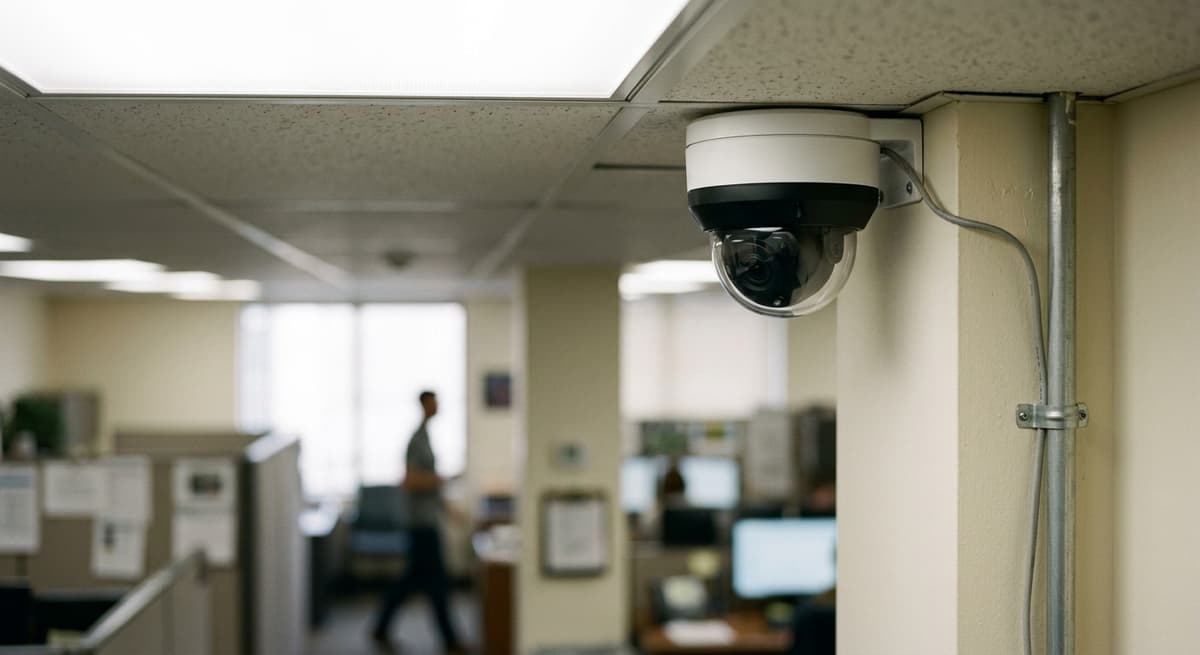
Recording Landlord Conversations
Tenants can record any conversation they participate in with their landlord:
- In-person meetings about rent, repairs, or lease terms
- Phone calls about maintenance
- Walk-through inspections
- Eviction-related discussions
Why Tenants Record
- Maintenance disputes: Document promises to make repairs
- Harassment: Capture threatening behavior as evidence
- Security deposits: Record move-out inspection conditions
- Lease disagreements: Preserve verbal agreements
- Eviction defense: Support your position in court
Tenant Security Cameras
Tenants can install cameras inside their own units. Check the lease for restrictions on modifications. Use wireless cameras if permanent installation is prohibited.
Idaho Landlord-Tenant Act

Idaho Code Title 6, Chapter 3
Idaho's landlord-tenant laws under Idaho Code Section 6-301 et seq. establish rights and obligations:
- Entry notice: Idaho has no statute setting a required notice period before a landlord enters a rental unit. Any notice period comes from the lease itself; unauthorized or harassing entry may still support a common-law claim for invasion of privacy or breach of the covenant of quiet enjoyment
- Emergency entry: Leases commonly allow entry without notice for genuine emergencies, though this is a lease term rather than a statutory requirement
- Quiet enjoyment: Tenants have the right to peaceful use of their unit
- Retaliation: Idaho has no general retaliatory-eviction statute for standard rental housing. The state's one statutory retaliation protection, Idaho Code 55-2015, applies only to manufactured home park residents under the Manufactured Home Residency Act, not typical apartment or house rentals
Unauthorized Entry
If a landlord enters without proper notice, a tenant's recording of the event serves as evidence in court.
Recording During Disputes and Evictions
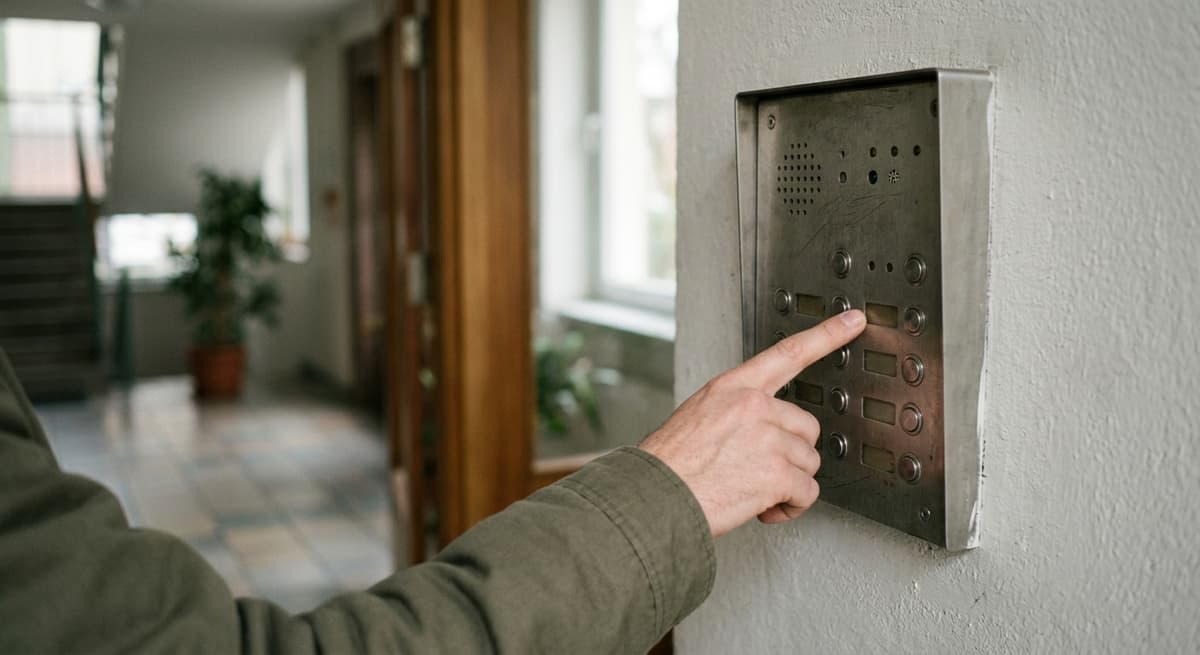
Documenting Disputes
Both parties can use recordings:
- Repair requests and landlord acknowledgments
- Noise complaints and documentation
- Lease violation discussions
- Security deposit inspections
Eviction Proceedings
Recordings are admissible in Idaho eviction proceedings. Preserve originals without editing and maintain chain of custody. The Idaho Courts provide resources for self-represented parties.
Doorbell Cameras and Smart Devices
Tenants can use doorbell cameras at their entrance. Position cameras to capture only your area. Check the lease for mounting restrictions.
Penalties
Criminal
| Statute | Offense | Classification | Max Prison | Max Fine |
|---|---|---|---|---|
| Idaho Code 18-6702 | Illegal interception | Felony | 5 years | $5,000 |
| Idaho Code 18-6605 | Voyeurism | Felony | 5 years | $50,000 |
Civil
Under Idaho Code 18-6709: actual damages ($100/day minimum or $1,000), punitive damages, attorney fees.
Best Practices
For Landlords
- Use video-only cameras in common areas with posted notices
- Never install cameras inside units
- Disclose surveillance in the lease
- Give tenants advance notice of entry per the lease terms, since Idaho sets no statutory minimum
For Tenants
- Document unit conditions at move-in and move-out
- Record landlord conversations when disputes arise
- Install personal cameras inside your unit
- Preserve recordings securely
Explore More Idaho Recording Laws
Audio Recording | Video Recording | Voyeurism Laws | Workplace Recording | Recording Police | Phone Call Recording | Security Cameras | Recording in Public | Landlord-Tenant Recording | Dashcam Laws | School Recording | Medical Recording
More Idaho Recording Topics
More Idaho Laws
Frequently Asked Questions
Can I record my landlord in Idaho without telling them?
Yes. Idaho's one-party consent law (Idaho Code 18-6702) allows you to record conversations you participate in without informing the other party.
Can an Idaho landlord put cameras inside my apartment?
No. Landlords cannot install cameras inside tenant units. This could violate both the wiretapping statute and Idaho's voyeurism law.
Can recordings be used in Idaho eviction cases?
Yes. Recordings made under one-party consent are admissible in Idaho courts, including eviction proceedings.
Can my landlord record audio in common areas?
Audio recording in common areas is questionable unless the landlord is a party to the conversations. Video-only cameras with posted notice are safer.
What if my landlord installed a hidden camera in my Idaho rental?
Contact law enforcement. The landlord may face felony charges under the wiretapping or voyeurism statutes. You can also pursue civil damages.
Updates
Removed a fabricated statutory landlord entry-notice requirement (Idaho has no such statute; notice comes from the lease), fixed a voyeurism citation that used a retired section number and understated the maximum felony fine by a factor of 10 (correct figure is $50,000, not $5,000), and corrected a retaliatory-eviction citation that pointed to an unrelated habitability statute, clarifying that Idaho's only statutory landlord-retaliation protection applies to manufactured home park residents, not standard rentals.
Independently fact-checked against the cited primary sources
Governing law re-checked for recent changes
Reviewed and approved by an editor
The Law Behind This Article
This article rests on the statutory provisions below, held in our own legal record and retrieved from the official source. Tap a section to read the operative text.
Idaho Code
§ 18-6702Interception and disclosure of wire, electronic or oral communications prohibitedIn forcecited in 21 of our articles
18-6702. Interception and disclosure of wire, electronic or oral communications prohibited. (1) Except as otherwise specifically provided in this chapter, any person shall be guilty of a felony and is punishable by imprisonment in the state prison for a term not to exceed five (5) years or by a…
Official text (excerpt) · last checked 2026-08-31 · Read the full text in our law library · Verify at legislature.idaho.gov
Cited in 6 court opinions in our collectionLatest citing opinion in our collection: 2019
In the courts (editorial summary, independently checked):Idaho courts have applied section 18-6702 to intercepted phone calls. Hoskins v. Howard (1998) held cordless telephone conversations are protected wire communications, so scanning, recording and disclosing one supported a claim. Chapman v. NYK Line North America (2009) noted 18-6702(2)(d) makes one-party-consent recording lawful.
Opinions citing this section in our collection:
- Hoskins v. Howard (Idaho Supreme Court 1998, 132 Idaho 311)✓A sheriff's deputy used a scanner to record a neighbor's cordless call and passed the tape on; the court held such calls are protected wire communications when part of the call crosses the phone network, so Section 18-6702 reached him, and vacated summary judgment in his favor.
- Chapman v. NYK LINE NORTH AMERICA, INC. (Idaho Supreme Court 2009, 147 Idaho 178)“…rsation with the consent of one party to the conversation. Idaho Code § 18-6702 (2)(d). Of course, an employer could im…”
- Bartnicki v. Vopper (Supreme Court of the United States 2001, 532 U.S. 514)“…16-11-66.1 (1996); Haw. Rev. Stat. § 803-42 (1993); Idaho Code § 18-6702 (1997); Ill. Comp. Stat., ch. 720, § 5…”
Identified automatically from the court opinions citing this section — not a ranking of which case controls.
Also relied on in: Idaho Recording Laws (2026): One-Party Consent Rules, Idaho Security Camera Laws: Home, Business, and Surveillance Rules (2026), Idaho Medical Recording Laws: Patient Rights, HIPAA, and One-Party Consent (2026)
§ 18-6605video voyeurismIn forcecited in 13 of our articles
18-6605. video voyeurism. (1) As used in this section: (a) "Broadcast" means the electronic transmittal of a visual image with the intent that it be viewed by a person or persons. (b) "Disseminate" means to make available by any means to any person.
Official text (excerpt) · last checked 2026-08-31 · Read the full text in our law library · Verify at legislature.idaho.gov
Cited in 14 court opinions in our collectionLatest citing opinion in our collection: 2026
Opinions citing this section in our collection:
- State v. Gomez-Alas (Idaho Supreme Court 2020, 167 Idaho 857)“…does not constitute an infamous crime against nature under Idaho Code sections 18-6605 and 18-6606; (2) there was…”
- State v. Martinez (Idaho Supreme Court 1986, 111 Idaho 281)“…4 ; Robbery, Idaho Code § 18-6503 ; Crime against nature, Idaho Code § 18-6605 ; Forcible sexual penetration by use of…”
- State v. Cook (Idaho Court of Appeals 2008, 146 Idaho 261)“…is unconstitutional. Id. at 712, 69 P.3d at 132. Idaho Code Section 18-6605, provides: Every pers…”
Identified automatically from the court opinions citing this section — not a ranking of which case controls.
Also relied on in: Idaho Laws on Recording in Public: Photography, Filming, and Audio Rights (2026), Idaho Workplace Recording Laws: Employee and Employer Rights (2026), Idaho Smart Glasses Recording Laws: One-Party Consent
§ 18-6709Recovery of civil damages authorized. Any person whose wire, electronic or oral communication is intercepted, disclosed, or used in violation of this chapter shall have a civil cause of action against any person who intercepts, discloses, uses, or procures any other person to intercept, disclose, or use such communications, and shall be entitled to recover from any such person:In forcecited in 14 of our articles
18-6709. Recovery of civil damages authorized. Any person whose wire, electronic or oral communication is intercepted, disclosed, or used in violation of this chapter shall have a civil cause of action against any person who intercepts, discloses, uses, or procures any other person to intercept,…
Official text (excerpt) · last checked 2026-08-01 · Read the full text in our law library · Verify at legislature.idaho.gov
Also relied on in: Idaho Audio Recording Laws: One-Party Consent Rules and Penalties (2026), Idaho Dashcam Laws: Recording Rules, Windshield Mounting, and Legal Limits (2026), Idaho Phone Call Recording Laws: Consent Rules for Landline, Cell, and VoIP (2026)
§ 55-2015Retaliatory conduct by landlord prohibited. The landlord shall not terminate a tenancy, refuse to renew a tenancy, increase rent or decrease services he normally supplies, or threaten to bring an action for repossession of a lot as retaliation against the resident because the resident has:In force
55-2015. Retaliatory conduct by landlord prohibited. The landlord shall not terminate a tenancy, refuse to renew a tenancy, increase rent or decrease services he normally supplies, or threaten to bring an action for repossession of a lot as retaliation against the resident because the resident…
Official text (excerpt) · last checked 2026-08-01 · Read the full text in our law library · Verify at legislature.idaho.gov
Cited in 1 court opinions in our collectionLatest citing opinion in our collection: 1995
Opinions citing this section in our collection:
- Wright v. Brady (Idaho Court of Appeals 1995, 126 Idaho 671)“…bited retaliatory eviction of tenants of mobile home parks. Idaho Code Section 55-2015 states: Retaliatory conduct by l…”
Identified automatically from the court opinions citing this section — not a ranking of which case controls.
Explore the law
This article also draws on these acts and chapters (opening at their first section): Idaho Code § 6-301 (Forcible entry defined. Every person is guilty of a forcible entry who either:)
Related law for further reading — not part of this article’s citations.
Search our full record of US law — 2.1 million sections, every state + federal →
Sources and References
- Idaho Code Section 18-6702 - Interception of Communications(legislature.idaho.gov).gov
- Idaho Code Section 18-6709 - Civil Liability(legislature.idaho.gov).gov
- Idaho Code Title 6, Chapter 3 - Landlord-Tenant(legislature.idaho.gov).gov
- Idaho Code Section 18-6605 - Video Voyeurism(legislature.idaho.gov).gov
- Idaho Courts(isc.idaho.gov).gov
- Idaho Code 55-2015 - Retaliatory Conduct by Landlord Prohibited (Manufactured Home Residency Act)(legislature.idaho.gov).gov