
Tennessee
Tennessee Dashcam Laws: Legality, Mounting Rules, and Evidence Use
Independently fact-checked against primary sources (last audited August 15, 2026). · Reviewed by the RecordingLaw editorial team. · Law checked current as of August 15, 2026. · 5 primary sources cited on this page. How we verify our legal content
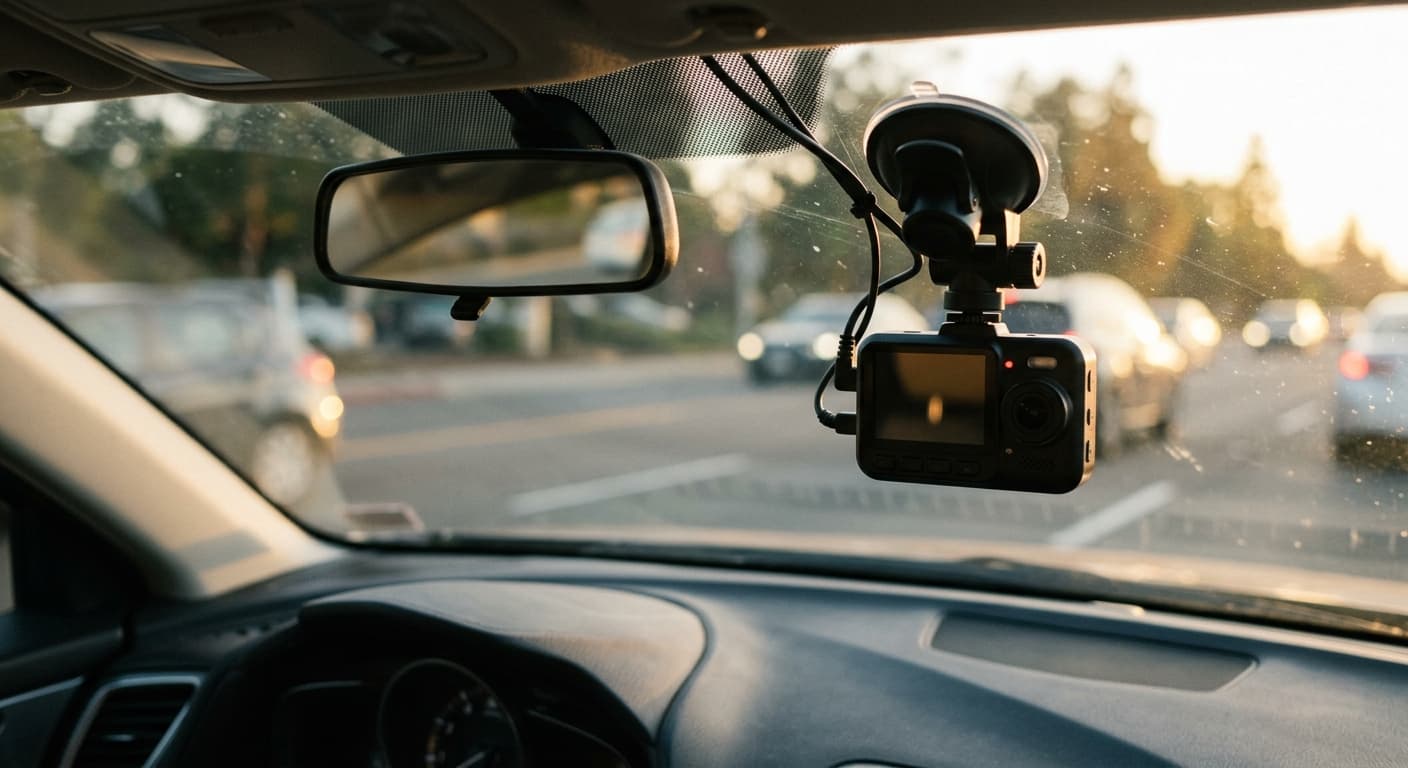
Dashcams are legal in Tennessee. Drivers may record audio inside their vehicle under the one-party consent rule of Tenn. Code Ann. section 39-13-601, meaning only the driver's consent is required. Tennessee's hands-free law also requires that a windshield-mounted device not hinder the driver's view of the road.
Dashcams are legal and widely used in Tennessee. The state has no specific statute that prohibits dashboard cameras in personal or commercial vehicles. However, drivers need to be aware of windshield obstruction rules, audio recording consent requirements, and best practices for using dashcam footage as evidence.
This guide covers everything Tennessee drivers need to know about dashcam legality, mounting regulations, audio recording rules, and the evidentiary value of dashcam footage.
Are Dashcams Legal in Tennessee?
No Prohibition on Dashcams
Tennessee has no law that specifically addresses or prohibits dashcams. The legality of dashboard cameras is determined by general traffic laws about windshield obstructions and the state's wiretapping statute regarding audio recording.
You can use a dashcam in Tennessee to record:
- Your driving and the road ahead
- Traffic conditions and incidents
- Interactions during traffic stops
- Accidents as they happen
- Other drivers' behavior for insurance or legal purposes
- Scenic drives and road trip footage
Windshield Mounting Rules
Tennessee law addresses windshield-mounted devices through the hands-free statute, Tenn. Code Ann. section 55-8-199. That statute recognizes a device "mounted on the vehicle's windshield, dashboard, or center console in a manner that does not hinder the driver's view of the road," and its ban on recording video while driving expressly exempts "electronic devices used for the sole purpose of continuously recording or broadcasting video within or outside of the motor vehicle," which is the category dashcams fall into.
To comply with this requirement when mounting a dashcam:
- Mount the camera behind the rearview mirror so it does not block your forward view
- Choose a compact camera that takes up minimal windshield space
- Position the mount in the upper portion of the windshield near the mirror
- Ensure the camera and its wiring do not obstruct your line of sight
- Avoid placing the camera in the center or lower portions of the windshield
Alternative Mounting Options
If you are concerned about windshield mounting, consider these alternatives:
- Dashboard-mounted cameras that sit on top of the dash
- Rearview mirror cameras that clip onto or replace the existing mirror
- Suction cup mounts placed at the top corner of the windshield, out of the driver's line of sight
- Adhesive mounts that keep the camera profile low against the glass
Audio Recording From Dashcams
One-Party Consent Applies
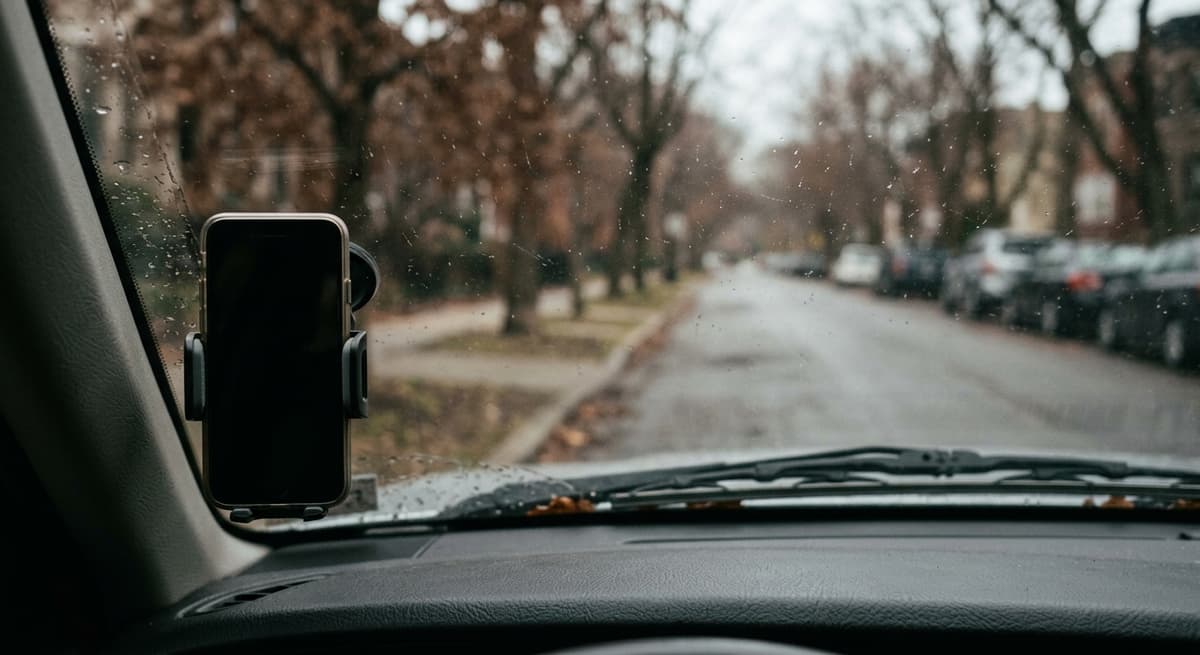
Many dashcams record audio along with video. When audio recording is enabled, Tennessee's one-party consent law under Tenn. Code Ann. section 39-13-601 applies.
As the driver and vehicle owner, your consent satisfies the one-party requirement for any conversation that takes place inside your vehicle. You can record:
- Your own conversations with passengers
- Interactions with police officers during traffic stops
- Discussions with rideshare passengers (if you are a driver)
- Any conversation inside your vehicle where you are a participant
When Audio Becomes Complicated
Audio recording from dashcams creates legal considerations in certain situations:
Rideshare and taxi drivers: If you drive for a rideshare service or taxi company, you are a party to conversations with your passengers, so one-party consent applies. However, if passengers have a private conversation in the back seat that you are not part of, recording that conversation could raise consent issues. The safest approach for rideshare drivers is to post a visible notice inside the vehicle stating that audio and video recording is in progress.
Exterior audio: If your dashcam captures audio from outside your vehicle, such as conversations between people on the sidewalk, the wiretapping statute's reasonable expectation of privacy standard applies. In most public settings, outdoor conversations lack this expectation.
Parked vehicle recording: Some dashcams have a parking mode that records when the vehicle is unoccupied. Audio captured during parking mode may record conversations without any party's consent. Consider disabling audio during parking mode to avoid potential issues.
Dashcam Footage as Evidence
Admissibility in Tennessee Courts
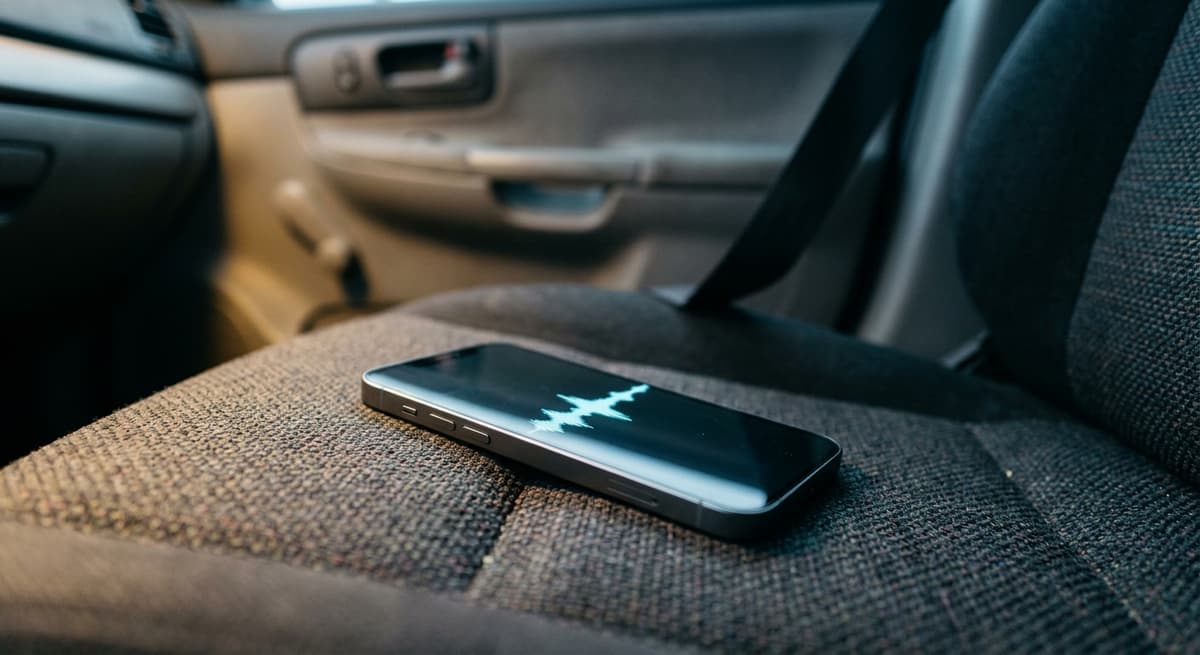
Dashcam footage is regularly admitted as evidence in Tennessee courts. The footage must meet the standards set by the Tennessee Rules of Evidence:
- Authentication: You must testify or provide an affidavit that the footage is from your dashcam, recorded at the time in question, and has not been altered
- Relevance: The footage must relate to the issues in the case
- Best evidence: The original recording or an accurate copy should be provided
- Foundation: A witness must be able to confirm the footage accurately depicts what happened
Types of Cases Where Dashcam Footage Helps
Dashcam footage is valuable in many types of Tennessee legal proceedings:
Car accidents: Footage can establish who was at fault, the speed of vehicles, traffic signal compliance, road conditions, and the sequence of events leading to a collision. This is one of the most common uses of dashcam footage.
Traffic violations: If you are contesting a traffic ticket, dashcam footage can show what actually happened. It can also document other drivers' violations for reporting purposes.
Insurance claims: Dashcam footage provides objective evidence for insurance adjusters evaluating claims. It can speed up claims processing and help resolve disputes about fault.
Hit and run incidents: If another driver hits your vehicle and leaves, dashcam footage may capture their license plate, vehicle description, and the direction they traveled.
Road rage and aggressive driving: Footage documenting dangerous driving behavior can support criminal complaints and civil claims.
Police encounters: Recording traffic stops provides a record of the interaction that can protect both the driver and the officer.
Preserving Dashcam Evidence
To maximize the evidentiary value of your dashcam footage:
- Save the relevant files immediately after an incident, before the dashcam overwrites them with new footage
- Copy files to a separate storage device such as a computer, external hard drive, or cloud storage
- Do not edit the footage or cut out portions before presenting it
- Note the dashcam settings including date, time, resolution, and frame rate
- Keep the memory card as the original source until the legal matter is resolved
- Verify your dashcam's clock is set correctly so timestamps are accurate
Commercial Vehicle Dashcams
Fleet Management
Tennessee businesses that operate vehicle fleets commonly use dashcams for:
- Driver safety monitoring and coaching
- Accident documentation and liability protection
- Compliance with federal regulations for commercial motor vehicles
- Insurance premium reduction through risk management programs
- Cargo security monitoring for delivery vehicles
Department of Transportation Requirements
The Federal Motor Carrier Safety Administration (FMCSA) does not mandate dashcams for commercial vehicles, but many fleet operators install them voluntarily. Some insurance carriers require or incentivize dashcam use for commercial fleet coverage.
Tennessee's commercial vehicle regulations administered by the Tennessee Department of Safety and Homeland Security do not specifically address dashcam requirements but also do not prohibit them.
Driver-Facing Cameras
Some fleet operators use driver-facing cameras in addition to forward-facing dashcams. These interior cameras monitor driver behavior, including:
- Distracted driving (phone use, eating, drowsiness)
- Seatbelt compliance
- Driver alertness and fatigue indicators
Driver-facing cameras are legal in Tennessee, but employers should notify drivers about the cameras and their purpose. Labor law considerations under the NLRA may apply if the cameras are used in a manner that chills protected employee activity.
Insurance Implications
Premium Discounts
Some Tennessee auto insurance carriers offer discounts for vehicles equipped with dashcams. The logic is that dashcams encourage safer driving and provide clear evidence in accident claims, reducing claim costs. Check with your insurance provider about potential discounts.
Claims Processing
When filing an insurance claim in Tennessee, dashcam footage can:
- Speed up fault determination
- Reduce disputes between drivers
- Provide objective evidence that supports or contradicts witness statements
- Help identify hit-and-run drivers
- Document weather and road conditions at the time of an incident
Footage That Hurts Your Case
Be aware that dashcam footage is a neutral record. If the footage shows you were at fault, it can be used against you. Before sharing dashcam footage with anyone, consider reviewing it first or consulting with an attorney, particularly in cases involving serious accidents or potential criminal liability.
Dashcams and Privacy Considerations
Recording Passengers
Under Tennessee's one-party consent law, you can record conversations inside your vehicle because you are a party to them. Interior cameras that capture passengers are legal, but consider informing passengers as a courtesy, especially in rideshare or carpool situations.
Recording in Parking Lots and Driveways
Dashcam parking mode, which records when the vehicle is unoccupied, is legal for video capture. The camera monitors the area around your vehicle for security purposes. Audio recording during parking mode should be considered carefully, as discussed above.
Data Privacy
The Tennessee Information Protection Act (TIPA) may apply to businesses that collect and process dashcam footage containing personal information, particularly for fleet operators and rideshare companies. Businesses should review their dashcam data practices for TIPA compliance.
Tennessee Recording Laws by Topic
Phone Call Recording | Audio Recording | Video Recording | Workplace Recording | Recording Police | Security Cameras | Recording in Public | Landlord-Tenant | Dashcam Laws | Schools | Medical Recording | Voyeurism & Hidden Cameras
Back to Tennessee Recording Laws
More Tennessee Recording Topics
More Tennessee Laws
Frequently Asked Questions
Are dashcams legal in Tennessee?
Yes. Tennessee has no law prohibiting dashcams. You can use a dashboard camera in your personal or commercial vehicle. The hands-free law's ban on recording video while driving expressly exempts devices that continuously record video, and it permits windshield or dashboard mounting that does not hinder your view of the road under Tenn. Code Ann. section 55-8-199.
Where should I mount my dashcam in Tennessee?
Mount your dashcam behind the rearview mirror or in the upper corner of the windshield to avoid obstructing your view. Tennessee's hands-free law requires that a mounted device not hinder the driver's view of the road. Choose a compact camera with a low-profile mount.
Can my dashcam record audio in Tennessee?
Yes. Tennessee's one-party consent law allows you to record audio inside your vehicle because your own consent as the driver satisfies the legal requirement. Conversations you participate in can be recorded without notifying passengers.
Can dashcam footage be used as evidence in Tennessee?
Yes. Dashcam footage is regularly admitted as evidence in Tennessee courts for car accident cases, insurance claims, traffic violations, and hit-and-run incidents. The footage must be authenticated and presented without alterations.
Do Tennessee insurance companies offer dashcam discounts?
Some Tennessee auto insurance carriers offer premium discounts for vehicles equipped with dashcams. Contact your insurance provider to ask about available discounts. Dashcam footage can also help speed up claims processing and fault determination.
Updates
Independently fact-checked against the cited primary sources; governing law re-checked for recent changes
Governing law re-checked for recent changes
Corrected the windshield-mounting statute citation from Tenn. Code Ann. section 55-9-414 (which actually governs blue emergency lights on vehicles, not windshields) to the correct section 55-9-107 (nontransparent material obstructing the windshield), fixed in the KeyTakeaways bullet, the Windshield Mounting Rules section, and the FAQ answer.
Removed the Sources box entry that cited Tenn. Code Ann. section 55-9-414 (Tennessee's blue-emergency-lights statute) as authority for windshield obstruction rules; the body text was already corrected to the applicable windshield provision.
Corrected the windshield-mounting authority: the rules for mounted devices come from the hands-free law, Tenn. Code Ann. section 55-8-199 (which permits windshield or dashboard mounting that does not hinder the driver's view and exempts continuously recording devices such as dashcams), not section 55-9-107, which regulates window tinting.
Governing law re-checked for recent changes
Reviewed and approved by an editor
The Law Behind This Article
This article rests on the statutory provisions below, held in our own legal record and retrieved from the official source. Tap a section to read the operative text.
Tennessee Code Annotated
§ 39-13-601Wiretapping and electronic surveillance — Prohibited acts — Exceptions.In forcecited in 20 of our articles
(a)(1) Except as otherwise specifically provided in §§ 39-13-601 — [former] 39-13-603 [repealed] and title 40, chapter 6, part 3, a person commits an offense who: (A) Intentionally intercepts, endeavors to intercept, or procures any other person to intercept or endeavor to intercept, any wire, oral
Official text (excerpt) · last checked 2026-08-31 · Read the full text in our law library · Verify at publications.tnsosfiles.com
Cited in 25 court opinions in our collectionLatest citing opinion in our collection: 2026
In the courts (editorial summary, independently checked):Lawrence v. Lawrence held a parent may vicariously consent under Section 39-13-601 to recording a 2 1/2-year-old child's phone call with the other parent. State of Tennessee v. Henry Floyd Sanders noted that a body-wire recording made with one party's consent is lawful under the section's exceptions.
Opinions citing this section in our collection:
- Lawrence v. Lawrence (Court of Appeals of Tennessee 2010, 360 S.W.3d 416)“…called upon to construe the term “consent” as it is used in Tenn. Code Ann. § 39-13-601 to determine whether Mother had an “unr…”
- Harold Dean McDaniel v. Kimberly Ruth McDaniel (Court of Appeals of Tennessee 2010)“…ourt: I have had an opportunity to look at T.C.A. 39-13-601(a)(1), (A) and (B), and…”
- State of Tennessee v. Henry Floyd Sanders (Tennessee Supreme Court 2014, 452 S.W.3d 300)✓Police recorded a front yard conversation in which a man admitted touching his ex-partner's daughter; the court upheld admission of the recording as a voluntary statement to a confidante and noted that this type of recording is sanctioned as lawful by 39-13-601(b)(4)-(5).
Identified automatically from the court opinions citing this section — not a ranking of which case controls.
Also relied on in: Tennessee Recording Laws (2026): One-Party Consent Rules, Tennessee Voyeurism and Hidden Camera Laws: Statutes and Penalties, Tennessee Audio Recording Laws: One-Party Consent Rules and Penalties
§ 55-8-199Prohibited uses of wireless telecommunications devices or stand-alone electronic devices.In forcecited in 2 of our articles
(a) As used in this section: (1) “Stand-alone electronic device” means a portable device other than a wireless telecommunications device that stores audio or video data files to be retrieved on demand by a user; (2) “Utility services” means electric, natural gas, water, wastewater, cable,…
Official text (excerpt) · last checked 2021-05-21 · Read the full text in our law library
Cited in 1 court opinions in our collectionLatest citing opinion in our collection: 2025
Opinions citing this section in our collection:
- STATE OF TENNESSEE v. DANIEL JOSEPH WILLIAMS (Court of Criminal Appeals of Tennessee 2025)“…e and release statute and the hands free device law, T.C.A. § 55-8-199, and roadways laned for traffic law, T.…”
Identified automatically from the court opinions citing this section — not a ranking of which case controls.
United States Code Title 18
§ 2511Interception and disclosure of wire, oral, or electronic communications prohibitedIn forcecited in 422 of our articles
Except as otherwise specifically provided in this chapter any person who— intentionally intercepts, endeavors to intercept, or procures any other person to intercept or endeavor to intercept, any wire, oral, or electronic communication; intentionally uses, endeavors to use, or procures any other person to use or endeavor to use any electronic, mechanical, or other device to intercept any oral communication when— such device is affixed to, or otherwise transmits a signal through, a wire, cable, or other like connection used in wire communication; or such device transmits communications by radio, or interferes with the transmission of such communication; or such person knows, or has reason to know, that such device or any component thereof has been sent through the mail or transported in interstate or foreign commerce; or such use or endeavor to use (A) takes place on the premises of any business or other commercial establishment the operations of which affect interstate or foreign commerce; or (B) obtains or is for the purpose of obtaining information relating to the operations of any business or other commercial establishment the operations of which affect interstate or foreign…
Official text (excerpt) · last checked 2026-08-28 · Read the full text in our law library · Verify at uscode.house.gov
Cited in 2,045 court opinions in our collectionLatest citing opinion in our collection: 2026
In the courts (editorial summary, independently checked):Griggs-Ryan v. Smith (1990) applied the Section 2511(2)(d) prior-consent exception, treating a tenant repeatedly told that all incoming calls were taped as having impliedly consented. United States v. United States District Court (1972) read the then-current Section 2511(3) as conferring no presidential surveillance power.
Opinions citing this section in our collection:
- Mitchell v. Forsyth (Supreme Court of the United States 1985, 472 U.S. 511)✓The Attorney General authorized a warrantless 1970 national security wiretap that caught the plaintiff's calls; the Court held the since-repealed Section 2511(3) disclaimer left the tap lawful under Title III, and that Mitchell had qualified immunity.
- United States v. United States District Court for the Eastern District of Michigan (Supreme Court of the United States 1972, 407 U.S. 297)✓The Attorney General approved warrantless wiretaps on members of a domestic group accused of bombing a CIA office; the Court read Section 2511(3) as a congressional disclaimer conferring no surveillance power, then held the Fourth Amendment required prior judicial approval.
- Forsyth v. Barr (Court of Appeals for the Fifth Circuit 1994, 19 F.3d 1527)✓Dallas police used, in an internal affairs probe of an officer, calls private parties allegedly intercepted illegally; assuming that was unlawful, the Fifth Circuit held Section 2517(1) and (2) allowed the disclosure and use, defeating the Section 2511(1)(c) and (d) claims.
Identified automatically from the court opinions citing this section — not a ranking of which case controls.
Also relied on in: Connecticut Recording Laws (2026): Hybrid Consent Rules Explained, Oregon Recording Laws (2026): Hybrid One-Party and All-Party Rules, US Recording Laws by State (2026): All 50 States Explained
Search our full record of US law — 2.1 million sections, every state + federal →
Sources and References
- Tenn. Code Ann. section 39-13-601 - Wiretapping and Electronic Surveillance(law.justia.com)
- Tennessee Department of Safety and Homeland Security(tn.gov).gov
- Tennessee Rules of Evidence(tncourts.gov).gov
- Federal Motor Carrier Safety Administration(fmcsa.dot.gov).gov
- Tennessee Information Protection Act - Attorney General(tn.gov).gov
- Federal Wiretap Act - 18 U.S.C. section 2511(law.cornell.edu)
- Public Chapter 412 (2019) - Tennessee Hands-Free Law, Tenn. Code Ann. section 55-8-199(publications.tnsosfiles.com).gov