
Arizona
Arizona Dashcam Laws: Rules for Dashboard Cameras in Vehicles
Independently fact-checked against primary sources (last audited August 15, 2026). · Reviewed by the RecordingLaw editorial team. · Law checked current as of August 15, 2026. · 6 primary sources cited on this page. How we verify our legal content
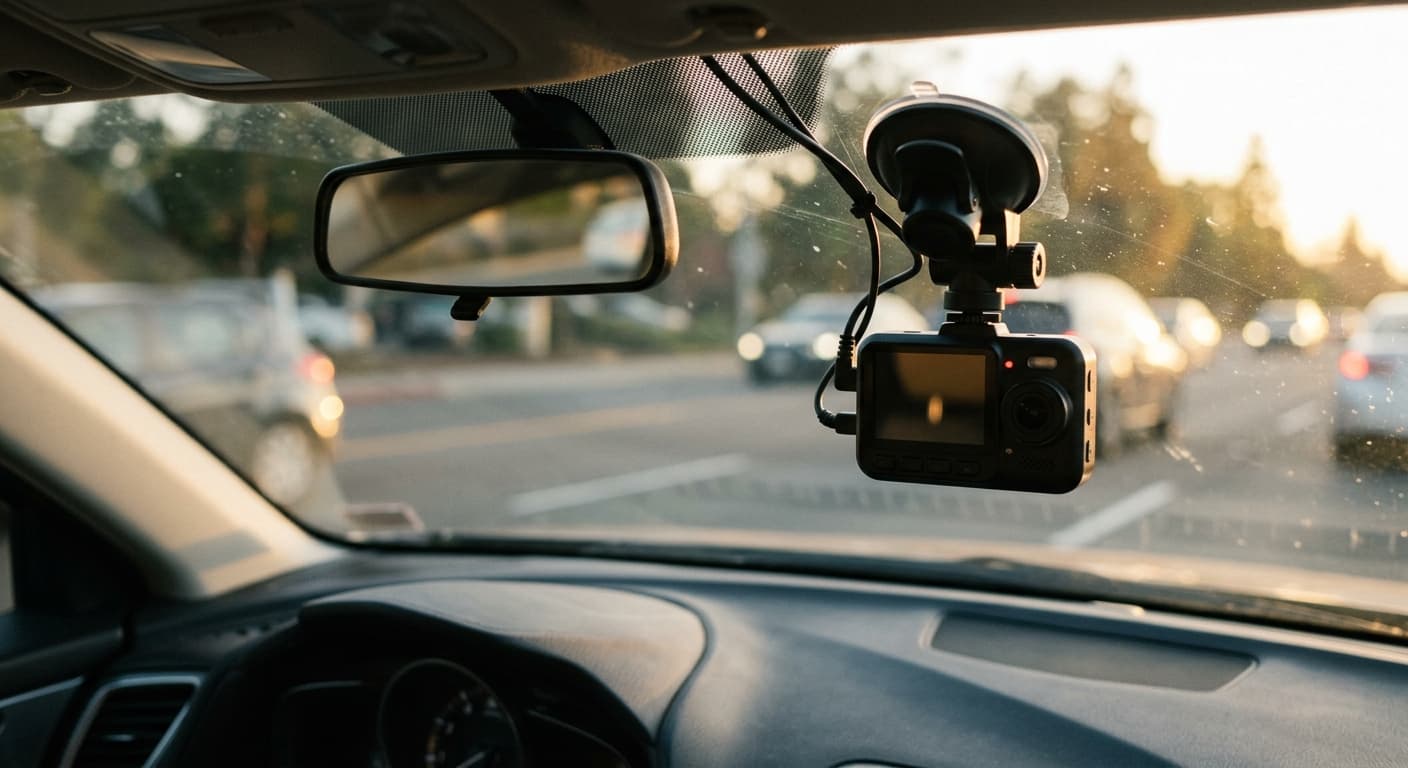
Dashcams are legal in Arizona. The state has no law banning dashboard cameras in personal or commercial vehicles. Audio recorded inside your vehicle follows one-party consent under A.R.S. 13-3005, so your presence satisfies the consent requirement. Mount the camera where it does not obstruct your view.
Dashcams are fully legal in Arizona. The state has no statute that prohibits the use of dashboard cameras in personal or commercial vehicles. Arizona does have a general windshield obstruction law, but it specifically exempts safety monitoring equipment like dashcams when mounted near the rearview mirror, giving drivers a clear, legal placement option.
This guide covers everything you need to know about using a dashcam in Arizona in 2026, including mounting rules, audio recording considerations, how dashcam footage is used as evidence, insurance implications, and rules for commercial vehicles.
Are Dashcams Legal in Arizona?
No Prohibition on Dashboard Cameras
Arizona law does not prohibit the use of dashboard cameras in any type of vehicle. You can use:
- Forward-facing dashcams mounted on the windshield or dashboard
- Rear-facing cameras that record the interior of the vehicle
- Dual-camera systems that capture both the road ahead and the vehicle interior
- Multi-camera setups covering multiple angles
- Continuous recording systems that run whenever the vehicle is on
There is no registration, permit, or notification requirement for dashcam use in Arizona.
Windshield Mounting Rules
Arizona does regulate objects on the windshield. ARS 28-959.01(B) prohibits operating a vehicle with an object or material placed, installed, affixed, or applied on the windshield or side or rear windows in a way that obstructs or reduces the driver's clear view, and a poorly mounted dashcam can run afoul of that rule. Arizona also carves out an exception built for exactly this kind of device: ARS 28-959.01(A)(12) permits safety monitoring equipment mounted immediately behind, slightly above, or slightly below the rearview mirror, or where the mirror would sit on a vehicle without one. General traffic safety principles also apply:
- Mount your dashcam so it does not obstruct your view of the road
- Avoid placing the camera directly in your line of sight
- Common mounting locations include the upper center of the windshield (behind the rearview mirror), the upper right corner, or on top of the dashboard
- Suction cup mounts, adhesive mounts, and clip-on mounts are all acceptable
ARS 28-957.01 is a different statute. It requires most vehicles to be equipped with a windshield at all, and it does not address windshield condition, cracks, damage, or mounted devices. The obstruction rule in ARS 28-959.01(B), not 28-957.01, is what governs where you can mount a dashcam.
Tinted Window Considerations
Arizona's window tinting law under ARS 28-959.01 regulates how dark window tinting can be. If your dashcam is mounted on a rear or side window, ensure the camera does not interfere with the tint or the tint does not prevent the camera from recording clearly. Front side windows are limited to 33 percent (plus or minus 3 percent) light transmission and 35 percent (plus or minus 3 percent) reflectance, and rear side and rear windows are limited to 35 percent (plus or minus 3 percent) reflectance or less. Arizona does not regulate the front windshield by an 'AS-1 line' standard; the statute instead allows a transparent strip at the top of the windshield and lets the Motor Vehicle Division director grant a medical exemption for the side or rear windows on a physician's written statement of need.
Audio Recording in Your Vehicle
One-Party Consent in Your Car
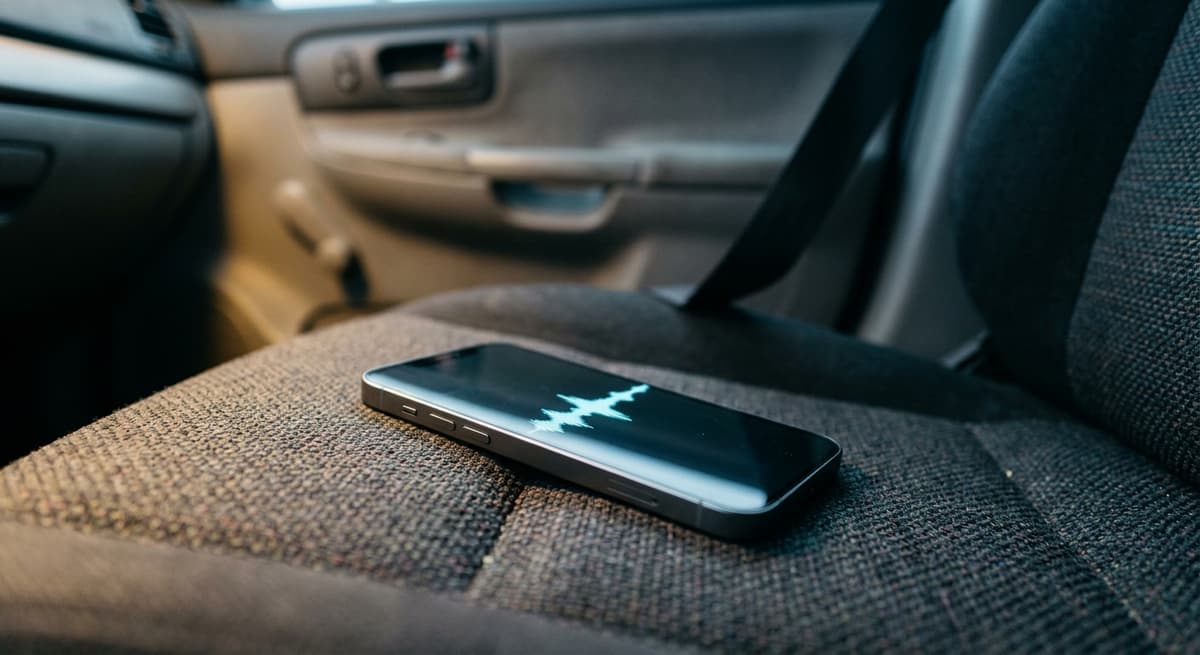
When your dashcam records audio inside your vehicle, Arizona's one-party consent law (ARS 13-3005) applies. As the vehicle owner and operator, your knowledge of and consent to the audio recording satisfies the one-party requirement. You can record:
- Conversations with passengers in your vehicle
- Your side of phone calls while driving (hands-free)
- Interactions with police officers during traffic stops
- Conversations with drive-through employees, toll booth operators, and others
You do not need to inform passengers that your dashcam is recording audio. Your consent as the vehicle operator is sufficient under Arizona law.
When Audio Recording Becomes an Issue
While in-vehicle audio recording is straightforward under one-party consent, there are situations where caution is warranted:
- Rideshare and taxi drivers: If you drive for Uber, Lyft, or another rideshare service, you are a participant in conversations with passengers and can record under one-party consent. However, Uber and Lyft have their own policies about in-vehicle recording that you should review
- Loaned vehicles: If you lend your car to someone and the dashcam continues to record audio, you are no longer a party to conversations in the vehicle. Recording those conversations without consent could violate ARS 13-3005
- Parked vehicles: If your dashcam continues recording while you are away from the vehicle, any audio it captures of nearby conversations may raise consent issues
Disabling Audio Recording
If you want to avoid audio recording issues entirely, most dashcams allow you to disable the microphone while continuing to record video. This eliminates any potential consent concerns since silent video recording in public does not trigger the wiretapping statute.
Using Dashcam Footage as Evidence

Traffic Accidents
Dashcam footage is one of the most valuable types of evidence in Arizona traffic accident cases. It can establish:
- Fault determination: Video showing which driver ran a red light, failed to yield, or crossed the center line
- Speed estimation: Timestamps and GPS data embedded in dashcam footage can help estimate vehicle speeds
- Road conditions: Weather, visibility, and road surface conditions at the time of the accident
- Traffic signals and signs: Whether a signal was red, yellow, or green at the time of the incident
- Witness behavior: Other drivers' and pedestrians' actions before and during the accident
Under Arizona's comparative fault system (ARS 12-2505), dashcam footage can be critical in establishing the percentage of fault assigned to each party.
Insurance Claims
Arizona insurance companies commonly accept dashcam footage to support claims. Benefits include:
- Faster claims processing when fault is clear on video
- Protection against fraudulent claims and staged accidents
- Documentation of hit-and-run incidents where the other driver fled
- Evidence of vehicle damage at the time of the incident
Some Arizona insurance companies offer discounts for vehicles equipped with dashcams, though this varies by insurer. Check with your insurance provider about potential discounts.
Criminal Cases
Dashcam footage can serve as evidence in criminal cases including:
- DUI/DWI prosecutions (recording erratic driving)
- Road rage incidents
- Hit-and-run identification
- Reckless driving charges
- Vandalism and vehicle break-ins (with parking mode cameras)
Admissibility Requirements
For dashcam footage to be admissible in Arizona courts, it must meet standard evidence rules:
- Authentication: Someone must testify that the footage accurately represents what it shows
- Relevance: The footage must relate to the issues in the case
- Reliability: The recording system must be shown to be functioning properly
- Chain of custody: You must demonstrate how the footage has been stored since recording
- Unaltered: The footage must not have been edited or tampered with
Best practices for preserving dashcam evidence:
- Save the original file immediately after an incident (many dashcams use loop recording that overwrites old footage)
- Copy the file to a secure backup location
- Note the date, time, and location of the incident
- Do not edit, crop, or modify the footage
- If your dashcam embeds GPS data and timestamps, preserve that metadata
Dashcams and Law Enforcement Encounters

During Traffic Stops
Your dashcam can continue recording during a traffic stop in Arizona. This is protected under the First Amendment, as confirmed by the federal court ruling striking down HB 2319. Key points:
- Do not turn off your dashcam when pulled over
- The officer cannot order you to turn it off
- Audio recording of your interaction with the officer is legal under one-party consent
- Dashcam footage of traffic stops can be used as evidence if you receive a citation
Police Requests for Dashcam Footage
If law enforcement asks to view or copy your dashcam footage:
- A voluntary request does not require your compliance; you can decline
- A search warrant compels you to provide the footage
- A subpoena in connection with a court proceeding requires compliance
- If your dashcam recorded a crime in progress, providing the footage voluntarily can be helpful but is not legally required
Commercial Vehicle Dashcams
Federal Motor Carrier Safety Administration Rules
Commercial vehicle operators in Arizona are subject to Federal Motor Carrier Safety Administration (FMCSA) regulations. While the FMCSA does not mandate dashcams, many commercial fleets use them for:
- Monitoring driver behavior and compliance with hours-of-service rules
- Documenting accidents and near-miss incidents
- Training and coaching drivers
- Reducing insurance premiums
Arizona Commercial Vehicle Considerations
Arizona-based trucking companies and commercial vehicle operators should be aware that:
- Driver-facing cameras may raise privacy concerns that should be addressed in employment agreements
- Audio recording in commercial vehicles follows the same one-party consent rules as personal vehicles
- Dashcam footage from commercial vehicles is frequently used in litigation involving truck accidents
Parking Mode and Unattended Recording
How Parking Mode Works
Many modern dashcams include a parking mode feature that continues recording when the vehicle is parked and turned off. These cameras typically activate when they detect motion or impact near the vehicle.
Legal Considerations for Parking Mode
When your dashcam records in parking mode while you are away from the vehicle:
- Video recording of public areas (parking lots, streets) is generally legal and does not require consent
- Audio recording may capture conversations of people near your vehicle. Since you are not present, one-party consent may not apply to those conversations. However, in a public parking lot, there is typically no reasonable expectation of privacy
- Private parking areas (underground garages, private driveways) may have different privacy expectations
The safest approach is to disable audio recording in parking mode if you are concerned about capturing third-party conversations.
Arizona Recording Laws by Topic
Phone Call Recording | Audio Recording | Video Recording | Workplace Recording | Recording Police | Security Cameras | Recording in Public | Landlord-Tenant | Dashcam Laws | Schools | Medical Recording | Voyeurism & Hidden Cameras
Back to Arizona Recording Laws
More Arizona Recording Topics
More Arizona Laws
Frequently Asked Questions
Are dashcams legal in Arizona?
Yes. Arizona has no law prohibiting dashboard cameras. You can use forward-facing, rear-facing, and interior-facing dashcams in any personal or commercial vehicle without a permit or registration.
Where should I mount my dashcam in Arizona?
Arizona's windshield obstruction law (ARS 28-959.01(B)) bars objects that block your view, but ARS 28-959.01(A)(12) specifically allows safety monitoring equipment like a dashcam when mounted immediately behind, above, or below the rearview mirror. That is the safest placement. The upper right corner of the windshield or the top of the dashboard also generally work as long as the camera does not obstruct your view of the road.
Does my dashcam audio recording need consent in Arizona?
If you are in the vehicle, your knowledge of the dashcam satisfies Arizona's one-party consent requirement under ARS 13-3005. You do not need to inform passengers. If the vehicle is unattended and the dashcam records audio, consent issues may arise for private conversations.
Can dashcam footage be used as evidence in Arizona?
Yes. Dashcam footage is commonly used in Arizona for traffic accident cases, insurance claims, and criminal proceedings. The footage must be authenticated, relevant, and unaltered to be admissible. Save original files immediately after an incident to prevent overwriting.
Can police take my dashcam footage during a traffic stop in Arizona?
An officer can request your footage voluntarily, and you can decline. To compel production, law enforcement needs a search warrant, subpoena, or court order. You must comply with valid legal process but are not required to hand over footage during a routine traffic stop.
Updates
Corrected the page's windshield-mounting guidance, which had cited the wrong statute (28-957.01, an equipment-presence rule) for windshield condition and had incorrectly claimed Arizona has no windshield-obstruction law; the actual obstruction rule is ARS 28-959.01(B), which also contains a specific carve-out for dashcams and similar safety-monitoring equipment mounted near the rearview mirror. Also removed a fabricated 'AS-1 line' tinting claim not found in the statute and replaced it with the statute's actual light-transmission and reflectance terms.
Independently fact-checked against the cited primary sources; governing law re-checked for recent changes
Governing law re-checked for recent changes
Reviewed and approved by an editor
The Law Behind This Article
This article rests on the statutory provisions below, held in our own legal record and retrieved from the official source. Tap a section to read the operative text.
Arizona Revised Statutes, Title 13 (Criminal Code), Chapter 30 (EAVESDROPPING AND COMMUNICATIONS)
§ 13-3005Interception of wire, electronic and oral communications; installation of pen register or trap and trace device; classification; exceptionsIn forcecited in 19 of our articles
A. Except as provided in this section and section 13-3012, a person is guilty of a class 5 felony who either: 1. Intentionally intercepts a wire or electronic communication to which he is not a party, or aids, authorizes, employs, procures or permits another to so do, without the consent of either a sender or receiver thereof. 2. Intentionally intercepts a conversation or discussion at which he is not present, or aids, authorizes, employs, procures or permits another to so do, without the consent of a party to such conversation or discussion. 3. Intentionally intercepts the deliberations of a jury or aids, authorizes, employs, procures or permits another to so do. B. Except as provided in sections 13-3012 and 13-3017, a person who intentionally and without lawful authority installs or uses a pen register or trap and trace device on the telephone lines or communications facilities of another person which are utilized for wire or electronic communication is guilty of a class 6 felony.
Official text (excerpt) · last checked 2026-08-31 · Read the full text in our law library · Verify at azleg.gov
Cited in 7 court opinions in our collectionLatest citing opinion in our collection: 2025
In the courts (editorial summary, independently checked):State v. Morrison (2002) held that 13-3005 criminalizes unlawful interception but provides no exclusionary remedy, so a recording made in violation of it is not automatically inadmissible. State v. Hauss (1984) held the section inapplicable to a police station interview room talk where no reasonable expectation of privacy existed.
Opinions citing this section in our collection:
- State v. Morrison (Court of Appeals of Arizona 2002, 203 Ariz. 489)“…ause it was made without his or her consent in violation of A.R.S. § 13-3005 and 18 U.S.C. § 2511 and was, therefo…”
- State v. Hauss (Court of Appeals of Arizona 1984, 142 Ariz. 159)✓Police secretly recorded an arrested suspect's talk with his girlfriend in a station interview room, after telling her the room was being monitored; the court held there was no reasonable expectation of privacy in that setting, so section 13-3005 did not apply.
- State v. Allgood (Court of Appeals of Arizona 1992, 171 Ariz. 522)“…communication.” (Emphasis added.) See also A.R.S. § 13-3005. (penalizing as a class 5 felony interc…”
Identified automatically from the court opinions citing this section — not a ranking of which case controls.
Also relied on in: Arizona Recording Laws (2026): One-Party Consent Rules, One-Party Consent States: Complete 2026 Guide, Arizona Audio Recording Laws: Complete Guide to Consent Rules
Arizona Revised Statutes, Title 12 (Courts and Civil Proceedings), Chapter 16 (UNIFORM CONTRIBUTION AMONG TORTFEASORS ACT), Article 1 (General Provisions)
§ 12-2505Comparative negligence; definitionIn forcecited in 8 of our articles
A. The defense of contributory negligence or of assumption of risk is in all cases a question of fact and shall at all times be left to the jury. If the jury applies either defense, the claimant's action is not barred, but the full damages shall be reduced in proportion to the relative degree of the claimant's fault which is a proximate cause of the injury or death, if any. There is no right to comparative negligence in favor of any claimant who has intentionally, wilfully or wantonly caused or contributed to the injury or wrongful death. B. In this section, "claimant's fault" includes the fault imputed or attributed to a claimant by operation of law, if any.
Official text (excerpt) · last checked 2026-09-08 · Read the full text in our law library · Verify at azleg.gov
Cited in 64 court opinions in our collectionLatest citing opinion in our collection: 2024
In the courts (editorial summary, independently checked):Hall v. A.N.R. Freight System, Inc. (1986) held section 12-2505 a constitutional enactment that may apply to cases arising before its effective date but filed after. Williams v. Thude (1997) held an instruction directing a verdict against a wantonly negligent plaintiff went beyond what subsection (A) requires.
Opinions citing this section in our collection:
- Hall v. A.N.R. Freight System, Inc. (Arizona Supreme Court 1986, 149 Ariz. 130)✓A plaintiff hurt in February 1984 sued that September, after Arizona's comparative negligence statute took effect; on a certified question the court held section 12-2505 constitutional and applicable to a claim that arose before but was filed after its effective date.
- Jimenez v. Sears, Roebuck and Co. (Arizona Supreme Court 1995, 183 Ariz. 399)✓A retiree injured when a hand grinder's disc shattered won a strict liability verdict after the judge refused comparative fault instructions; the court held section 12-2505 reaches product misuse rather than limiting damages, so refusing the instruction was error, and remanded.
- Williams v. Thude (Arizona Supreme Court 1997, 188 Ariz. 257)✓A jury was told that if the injured driver acted willfully or wantonly she had no right to any damages and must lose; the court held section 12-2505(A) only withholds comparative fault from such a plaintiff and does not bar all recovery, so the instruction was error.
Identified automatically from the court opinions citing this section — not a ranking of which case controls.
Also relied on in: Arizona Dog Bite Laws: Liability and Victim Rights, Medical Malpractice Laws in Arizona (2026): Deadlines & Caps, Motorcycle Accident Laws in Arizona (2026): Deadlines & Helmets
Arizona Revised Statutes, Title 13 (Criminal Code), Chapter 37 (MISCELLANEOUS OFFENSES)
§ 13-3732Unlawful video recording of law enforcement activity; classification; definitionIn forcecited in 4 of our articles
A. It is unlawful for a person to knowingly make a video recording of law enforcement activity if the person making the video recording is within eight feet of where the person knows or reasonably should know that law enforcement activity is occurring, either receives or has previously received a verbal warning from a law enforcement officer that the person is prohibited from making a video recording of a law enforcement activity within eight feet of the activity and continues to make a video recording of the law enforcement activity within eight feet of the activity. If the law enforcement activity is occurring in an enclosed structure that is on private property, a person who is authorized to be on the private property may make a video recording of the activity from an adjacent room or area that is less than eight feet away from where the activity is occurring, unless a law enforcement officer determines that the person is interfering in the law enforcement activity or that it is not safe to be in the area and orders the person to leave the area. B.
Official text (excerpt) · last checked 2026-08-04 · Read the full text in our law library · Verify at azleg.gov
Cited in 1 court opinions in our collectionLatest citing opinion in our collection: 2022
Opinions citing this section in our collection:
- Arizona Broadcasters Association v. Mayes (District Court, D. Arizona 2022)“…13-3732(A). A violation of HB2319 is a class 3 misdemeanor. A.R.S. § 13-3732(D). 2 HB2319 is set to take effect o…”
Identified automatically from the court opinions citing this section — not a ranking of which case controls.
Also relied on in: Arizona Laws on Recording Police: Your Rights After HB 2319, Arizona Video Recording Laws: Rules for Cameras and Filming
Arizona Revised Statutes, Title 28 (Transportation), Chapter 3 (TRAFFIC AND VEHICLE REGULATION), Article 16 (Equipment)
§ 28-957.01Windshields required; exceptionsIn forcecited in 2 of our articles
A. The following vehicles shall be equipped with an adequate windshield: 1. A passenger vehicle, except a motorcycle, an all-terrain vehicle and a golf cart manufactured or modified before June 17, 1998. 2. A motor truck or truck tractor, except fire trucks, fire engines or other fire apparatus, whether publicly or privately owned. B. This section does not apply to any of the following: 1. An implement of husbandry. 2. An antique, classic or horseless carriage automobile if it was not originally equipped with a windshield. 3. A fully autonomous vehicle that is incapable of operation by a human driver.
Official text (excerpt) · last checked 2026-08-04 · Read the full text in our law library · Verify at azleg.gov
Cited in 2 court opinions in our collectionLatest citing opinion in our collection: 2003
Opinions citing this section in our collection:
- State v. Vera (Court of Appeals of Arizona 1999, 196 Ariz. 342)“…iously cracked "windshield. ¶ 7 Appellee argues that A.R.S. § 28-957.01(A) is unduly vague as to what constitut…”
- United States v. Alfred Garcia-Rivera (Court of Appeals for the Ninth Circuit 2003, 353 F.3d 788)“…ated for driving a motor vehicle with a cracked windshield. A.R.S. § 28-957.01; State v. Vera, 196 Ariz…”
Identified automatically from the court opinions citing this section — not a ranking of which case controls.
Also relied on in: Arizona Windshield Mounting Laws (2026 Guide)
§ 28-959.01Materials on windows or windshield; exceptions; requirements; violation; definitionsIn forcecited in 4 of our articles
A. This section does not apply to: 1. Front side wing vents and windows that have a substance or material in conjunction with glazing material that has a light transmission of thirty-three percent plus or minus three percent and a luminous reflectance of thirty-five percent plus or minus three percent. 2. Front side wing vents and windows that have a substance or material not attached in conjunction with glazing material that is used by a vehicle operator on a moving vehicle during daylight hours as provided in section 28-922. 3. Rearview mirrors. 4. Adjustable nontransparent sun visors that are mounted forward of the side windows and that are not attached to the glass. 5. Signs, stickers or other materials that are either: (a) Displayed in a seven inch square in the lower corner of the windshield farthest removed from the driver. (b) Displayed in a five inch square in the lower corner of the windshield nearest the driver. 6. Side windows that are to the rear of the driver and rear windows that have a substance or material in conjunction with glazing material that has a luminous reflectance of thirty-five percent plus or minus three percent or less. 7.
Official text (excerpt) · last checked 2026-09-07 · Read the full text in our law library · Verify at azleg.gov
Cited in 2 court opinions in our collectionLatest citing opinion in our collection: 2016
Opinions citing this section in our collection:
- State of Arizona v. Jesus Ramiro Moreno (Court of Appeals of Arizona 2014, 236 Ariz. 347)“…vehicle based on mistaken view of the law). 4Under A.R.S. § 28-959.01(A)(1), window tint on the front-side wi…”
- State v. Meza-Contreras (Court of Appeals of Arizona 2016)“…er that obstructs or restricts the driver’s clear view. See A.R.S. § 28-959.01.B; see also A.R.S. § 28- 1594 (An offic…”
Identified automatically from the court opinions citing this section — not a ranking of which case controls.
Also relied on in: Window Tint Laws by State (2026): Legal VLT Limits, Arizona Window Tint Laws (2026): Legal VLT Limits
Search our full record of US law — 2.1 million sections, every state + federal →
Sources and References
- Arizona Revised Statutes 13-3005 - Interception of Communications(azleg.gov).gov
- Arizona Revised Statutes 28-957.01 - Windshield Standards(azleg.gov).gov
- Arizona Revised Statutes 28-959.01 - Window Tinting(azleg.gov).gov
- Arizona Revised Statutes 12-2505 - Comparative Fault(azleg.gov).gov
- Federal Motor Carrier Safety Administration(fmcsa.dot.gov).gov
- Arizona Revised Statutes 13-3732 - Recording of Law Enforcement Activity(azleg.gov).gov