
Idaho
Idaho Voyeurism Laws: Hidden Cameras, Privacy Violations, and Penalties (2026)
Independently fact-checked against primary sources (last audited August 15, 2026). · Reviewed by the RecordingLaw editorial team. · Law checked current as of August 7, 2026. · 8 primary sources cited on this page. How we verify our legal content

Idaho criminalizes video voyeurism under Idaho Code 18-6605, making it illegal to secretly record or observe someone in a private space using any imaging device. Any violation is a felony, with no misdemeanor first-offense tier. The same statute, at subsection (3), also prohibits disseminating, publishing, or selling intimate images without consent, commonly called revenge porn.
Idaho takes privacy violations through hidden cameras and secret recording seriously. The state's voyeurism laws target individuals who use cameras, video recorders, smartphones, or other imaging devices to secretly observe or record people in private settings without their consent. These statutes protect personal privacy in locations like bathrooms, bedrooms, locker rooms, and dressing rooms where people reasonably expect not to be watched or filmed.
This page provides a complete overview of Idaho's voyeurism and privacy invasion laws, including what conduct is prohibited, how penalties are structured, related offenses like nonconsensual pornography, defenses to charges, and how victims can pursue legal remedies.
Idaho Code 18-6605: Video Voyeurism
What the Statute Prohibits
Idaho Code 18-6605 is Idaho's primary video voyeurism statute. It makes it a crime to use any camera, video camera, or other electronic imaging device to:
Secretly observe or record another person without their knowledge or consent in any location where the person has a reasonable expectation of privacy. This includes watching through peepholes, installing hidden cameras, and using devices with zoom or magnification capabilities to observe private areas from a distance.
Capture images of intimate areas without consent, regardless of whether the person is in a public or private location. "Intimate areas" includes parts of the body normally covered by clothing that the person has a reasonable expectation of keeping private.
Disseminate or distribute images obtained through voyeuristic conduct. Sharing voyeuristic recordings through social media, messaging apps, email, websites, or any other means is a separate criminal offense.
Where Privacy Expectations Exist
The statute's protections apply in locations where a person has a "reasonable expectation of privacy." Idaho courts evaluate this standard based on what a reasonable person would expect in the same circumstances. Locations that consistently qualify include:
- Bathrooms and restrooms in homes, businesses, schools, and public buildings
- Locker rooms at gyms, pools, schools, and athletic facilities
- Changing rooms and dressing rooms in retail stores, theaters, and performance venues
- Bedrooms in homes, hotels, motels, and other lodging
- Medical examination rooms in hospitals, clinics, and doctors' offices
- Tanning rooms and spa facilities
- Enclosed shower areas
The common thread is that these are spaces where people undress, engage in intimate activities, or otherwise expose their bodies with the expectation that they will not be observed or recorded.
How Hidden Camera Cases Typically Arise
Video voyeurism cases in Idaho commonly involve:
Hidden cameras in residential settings. Landlords, roommates, or romantic partners placing concealed cameras in bathrooms, bedrooms, or other private areas of a shared living space.
Workplace hidden cameras. Employers or coworkers installing cameras in restrooms, changing areas, or break rooms where employees have privacy expectations.
Retail and commercial settings. Cameras concealed in dressing rooms, fitting rooms, or restrooms at businesses open to the public.
"Upskirting" and "downblousing." Using a camera or phone held at unusual angles to capture images under a person's clothing or down their shirt in public places. Idaho Code 18-6605 covers this conduct even when it occurs in public because it targets images of intimate areas the person has not consented to expose.
Technology-assisted voyeurism. Using drone cameras, telephoto lenses, or remote-access devices to observe people in private settings from outside the location.
Criminal Penalties for Video Voyeurism
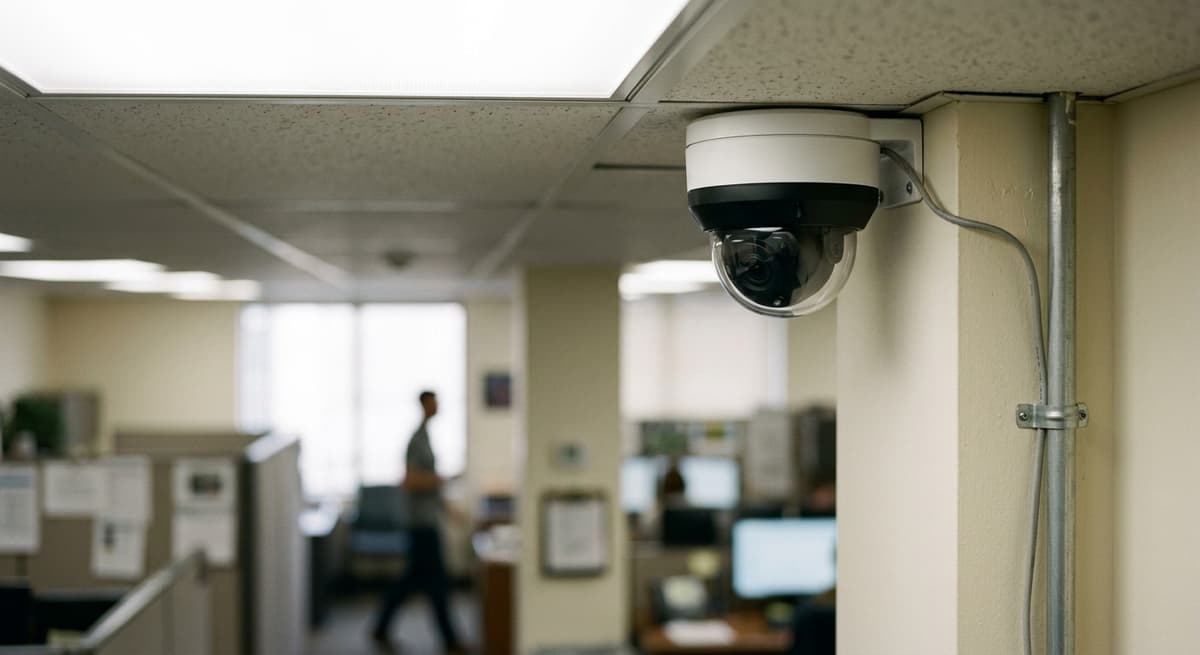
Felony Classification
Idaho Code 18-6605(4) makes any violation of the statute a felony; there is no misdemeanor first-offense tier and no second-or-subsequent-offense escalation built into the statute's text. Because Section 18-6605 does not set its own sentencing range, Idaho's general felony punishment statute (Idaho Code 18-112) applies:
| Penalty | Maximum |
|---|---|
| Prison time | Up to 5 years in state prison |
| Fine | Up to $50,000 |
The court may impose imprisonment, a fine, or both. The felony classification carries significant collateral consequences beyond the prison sentence and fine, including a permanent criminal record, potential sex offender registration requirements, loss of voting rights during incarceration, and restrictions on employment and professional licensing.
Aggravating Facts Prosecutors May Point To
Idaho Code 18-6605 itself does not create separate statutory tiers based on the following facts, but they can support additional or related charges, or influence sentencing within the felony range:
- Minor victims. When the victim is under 18 years of age, prosecutors may pursue additional charges or seek a harsher sentence within the felony range.
- Position of trust. When the offender is in a position of authority over the victim (employer, teacher, landlord, caregiver), courts may view the conduct as more egregious.
- Commercial exploitation. When voyeuristic images are sold, traded, or used for commercial purposes.
- Multiple victims. When the offender has targeted multiple individuals.
- Pattern of behavior. When evidence shows the conduct was part of an ongoing scheme rather than an isolated incident.
Sharing or Disseminating Voyeuristic Images
Idaho Code 18-6605 also criminalizes the nonconsensual sharing of intimate images, sometimes called revenge porn. This is not a separate statute. It is subsection (3) of the same video voyeurism law described above, and it carries the same felony classification, with no misdemeanor tier.
What the Dissemination Prong Covers
Under Idaho Code 18-6605(3), it is a crime to intentionally disseminate, publish, or sell, or to threaten or conspire to disseminate, publish, or sell, an image of an identifiable person whose intimate areas are exposed or who is engaged in a sexual act, when the person depicted expected the image to remain private and did not consent to its dissemination. This applies whether the image was originally obtained through voyeurism or through a previously consensual relationship. A 2026 amendment (House Bill 727, Idaho Session Laws ch. 121, effective July 1, 2026) added the threat language: before that date, only actual dissemination or conspiring to disseminate was covered, not a bare threat to do so.
Penalties
Like the rest of Idaho Code 18-6605, the dissemination offense is a felony with no misdemeanor first-offense tier. Because the statute sets no sentencing range of its own, Idaho's general felony punishment statute (Idaho Code 18-112) applies: up to 5 years in state prison and/or a fine of up to $50,000.
Exemptions
Idaho Code 18-6605(5) exempts:
- Interactive computer, information, and telecommunication services for content provided by another person, unless the provider intentionally aids or abets video voyeurism
- Images involving voluntary exposure in public or commercial settings
- Disclosures made in the public interest, including reporting of unlawful conduct or the lawful practices of law enforcement, criminal reporting, legal proceedings, or medical treatment
Relationship Between Voyeurism and Wiretapping Laws

Idaho's voyeurism statute (Idaho Code 18-6605) and its wiretapping statute (Idaho Code 18-6702) address different aspects of privacy but can overlap in certain situations.
Visual vs. Audio Recording
Idaho Code 18-6605 addresses visual privacy violations involving cameras and imaging devices. Idaho Code 18-6702 addresses audio privacy violations involving the interception of wire, oral, and electronic communications.
When a hidden camera captures both video and audio, both statutes may apply. The voyeurism charge covers the visual component, while a wiretapping charge may apply to any audio intercepted without proper consent.
Different Consent Standards
For audio recording, Idaho follows a one-party consent standard. You can record conversations you participate in. For visual recording in private spaces, the standard is different: the person being observed or recorded must consent. Being a participant in a conversation does not give you the right to secretly film someone in a bathroom, bedroom, or other private location.
Potential for Dual Charges
A single act of hidden camera placement can result in charges under both statutes if the device captures both video in a private space (voyeurism) and audio of private conversations (wiretapping). Prosecutors may file charges under one or both statutes depending on the circumstances.
Civil Remedies for Voyeurism Victims
Beyond criminal prosecution, victims of voyeurism in Idaho can pursue civil lawsuits against the offender.
Common Civil Claims
Invasion of privacy. Idaho courts recognize a common law right to privacy, and secret recording in private spaces constitutes an invasion of that right. Victims can seek compensatory damages for emotional distress, reputational harm, and other injuries.
Intentional infliction of emotional distress. When voyeuristic conduct is sufficiently outrageous, victims can bring a claim for intentional infliction of emotional distress.
Civil liability under wiretapping statute. If audio was also captured, victims can sue under Idaho Code 18-6709 for actual damages, statutory damages of $100 per day (minimum $1,000), punitive damages, and attorney fees.
Protective Orders
Victims can also seek protective orders (restraining orders) against voyeurism offenders. Under Idaho Code 39-6303, victims of certain offenses can petition for a protection order requiring the offender to stay away and cease contact.
Defenses to Voyeurism Charges
Consent
If the person being recorded consented to the recording, the conduct is not voyeuristic. Consent must be voluntary and informed. A person who does not know a camera is present has not consented, even if they have generally consented to being in the location.
No Reasonable Expectation of Privacy
If the recording took place in a location where the person did not have a reasonable expectation of privacy, the voyeurism statute does not apply. Recording someone in a public park, on a sidewalk, or at a public event does not violate Idaho Code 18-6605 (unless the recording targets intimate areas concealed by clothing).
Legitimate Purpose
Certain recordings in private spaces may be justified by a legitimate purpose. For example, a parent installing a baby monitor in a nursery is not committing voyeurism. A business owner placing a visible security camera in a stockroom (not a restroom or changing area) is acting within their rights.
Constitutional Challenges
In some cases, defendants have challenged voyeurism statutes on constitutional grounds, arguing that the laws are overly broad or vague. Idaho's statute has been drafted with sufficient specificity to withstand most constitutional challenges, as it clearly defines the prohibited conduct and the protected locations.
Technology and Evolving Privacy Threats
Modern technology has created new vectors for voyeuristic conduct that Idaho's laws must address.
Miniaturized Cameras
Cameras can now be concealed in everyday objects such as smoke detectors, electrical outlets, alarm clocks, picture frames, and even screws. These devices can be extremely difficult to detect and can transmit footage remotely via Wi-Fi, making it possible for an offender to view images from anywhere with an internet connection.
Smart Home Devices
Internet-connected security cameras, baby monitors, and smart home devices can be hacked or misused for voyeuristic purposes. Unauthorized access to these devices to view private footage may violate both Idaho's voyeurism statute and federal computer fraud laws.
Deepfakes and AI-Generated Content
Idaho has directly addressed AI-generated intimate images. HB 575 (Idaho Session Laws Ch. 105, effective July 1, 2024) created Idaho Code 18-6606, which criminalizes AI deepfake intimate images. A first offense is a misdemeanor unless the person depicted is under 18 or the offender has a prior conviction for the same or a similar offense within the past 5 years, in which case it is a felony carrying up to 10 years in state prison and a fine of up to $25,000. A 2026 amendment (House Bill 727, Idaho Session Laws ch. 121, effective July 1, 2026) added the under-18 trigger; before that date, only a repeat offense reached felony level. The law covers both the creation and distribution of AI-generated content depicting real individuals in intimate or sexual situations without consent. Idaho Code 18-6605 continues to govern non-AI-generated voyeuristic recordings; 18-6606 addresses the AI deepfake context specifically. The same 2026 bill also amended 18-6605's dissemination prong, described above.
How to Report Voyeurism in Idaho
If you discover a hidden camera or believe you are a victim of voyeurism in Idaho:
-
Contact local law enforcement immediately. Call your local police department or the Ada County Sheriff's Office at their non-emergency line, or call 911 if you feel in immediate danger.
-
Preserve evidence. If you find a hidden camera, do not touch or move it if possible. Take photographs of the device and its location. If you have received voyeuristic images, save copies with metadata intact.
-
Document everything. Write down the date, time, and location of the discovery. Note any potential suspects and circumstances that led to the discovery.
-
Contact the Idaho Attorney General's Office. The Idaho Attorney General handles cases involving internet crimes, exploitation, and privacy violations.
-
Consult an attorney. A lawyer experienced in privacy law can advise you on both criminal reporting and civil remedies.
Sex Offender Registration Considerations
Depending on the circumstances and charges, a voyeurism conviction in Idaho may require registration on the Idaho Sex Offender Registry. Under Idaho Code 18-8304, certain offenses involving sexual exploitation or privacy violations can trigger registration requirements. The determination depends on the specific charges, the nature of the conduct, and whether the victim was a minor.
Registration requirements include providing personal information to local law enforcement, maintaining current address records, and complying with residency and employment restrictions. Failure to register is a separate criminal offense.
Idaho Recording Law Sub-Topics
Audio Recording | Video Recording | Voyeurism Laws | Workplace Recording | Recording Police | Phone Call Recording | Security Cameras | Recording in Public | Landlord-Tenant | Dashcam Laws | School Recording | Medical Recording
More Idaho Recording Topics
More Idaho Laws
Frequently Asked Questions
What is video voyeurism under Idaho law?
Video voyeurism under Idaho Code 18-6605 is the crime of using any camera or imaging device to secretly record, photograph, or observe another person without their knowledge or consent in a place where they have a reasonable expectation of privacy. This includes hidden cameras in bathrooms, locker rooms, dressing rooms, and bedrooms.
What are the penalties for voyeurism in Idaho?
Any video voyeurism offense under Idaho Code 18-6605(4) is a felony outright; there is no misdemeanor first-offense tier. Because the statute sets no sentencing range of its own, Idaho's general felony punishment statute (Idaho Code 18-112) applies: up to 5 years in state prison and/or a fine of up to $50,000. Distributing voyeuristic images carries additional penalties.
Is revenge porn illegal in Idaho?
Yes. Idaho Code 18-6605(3) makes it a crime to intentionally disseminate, publish, or sell an intimate image of another person without their consent when the person had a reasonable expectation that the image would remain private. This is part of the same video voyeurism statute covered above, so it is a felony with no misdemeanor tier: up to 5 years in state prison and/or a fine of up to $50,000.
Can I sue someone for placing a hidden camera in my home in Idaho?
Yes. Beyond criminal prosecution, you can file a civil lawsuit for invasion of privacy, intentional infliction of emotional distress, and other claims. If the hidden camera also captured audio, you may have additional claims under Idaho Code 18-6709, which provides for actual damages, statutory damages of $100 per day (minimum $1,000), punitive damages, and attorney fees.
Does a voyeurism conviction require sex offender registration in Idaho?
It depends on the specific charges and circumstances. Under Idaho Code 18-8304, certain offenses involving sexual exploitation or privacy violations can trigger sex offender registration requirements. The determination is case-specific and may depend on whether the victim was a minor and the nature of the voyeuristic conduct.
Updates
Removed a fabricated statute, Idaho Code 18-6609, which was actually a retired pre-2022 section number for 18-6605 itself and had been given its own invented, contradictory misdemeanor and felony penalty tiers; folded the accurate dissemination-of-intimate-images conduct into 18-6605(3), which is a felony with no misdemeanor tier. Added a 2026 amendment (House Bill 727, effective July 1, 2026) that added threatening to disseminate an image to 18-6605's covered conduct and added an under-18-victim felony trigger to 18-6606.
Independently fact-checked against the cited primary sources
Corrected the video voyeurism penalty structure (Idaho Code 18-6605), which invented a misdemeanor first-offense tier and specific $2,000/$5,000 fines not present in the statute; the corpus text shows any violation is an unconditional felony, and since the section sets no sentencing range of its own, Idaho's default felony punishment statute (18-112, up to 5 years and/or $50,000, verified live) applies. Fixed in the intro paragraph, KeyTakeaways, the dedicated penalties section, and the FAQ.
Governing law re-checked for recent changes
Reviewed and approved by an editor
The Law Behind This Article
This article rests on the statutory provisions below, held in our own legal record and retrieved from the official source. Tap a section to read the operative text.
Idaho Code
§ 18-6605video voyeurismIn forcecited in 13 of our articles
18-6605. video voyeurism. (1) As used in this section: (a) "Broadcast" means the electronic transmittal of a visual image with the intent that it be viewed by a person or persons. (b) "Disseminate" means to make available by any means to any person.
Official text (excerpt) · last checked 2026-08-31 · Read the full text in our law library · Verify at legislature.idaho.gov
Cited in 14 court opinions in our collectionLatest citing opinion in our collection: 2026
Opinions citing this section in our collection:
- State v. Gomez-Alas (Idaho Supreme Court 2020, 167 Idaho 857)“…does not constitute an infamous crime against nature under Idaho Code sections 18-6605 and 18-6606; (2) there was…”
- State v. Martinez (Idaho Supreme Court 1986, 111 Idaho 281)“…4 ; Robbery, Idaho Code § 18-6503 ; Crime against nature, Idaho Code § 18-6605 ; Forcible sexual penetration by use of…”
- State v. Cook (Idaho Court of Appeals 2008, 146 Idaho 261)“…is unconstitutional. Id. at 712, 69 P.3d at 132. Idaho Code Section 18-6605, provides: Every pers…”
Identified automatically from the court opinions citing this section — not a ranking of which case controls.
Also relied on in: Idaho Laws on Recording in Public: Photography, Filming, and Audio Rights (2026), Idaho Security Camera Laws: Home, Business, and Surveillance Rules (2026), Idaho Workplace Recording Laws: Employee and Employer Rights (2026)
§ 18-6606DISCLOSING EXPLICIT SYNTHETIC MEDIAIn forcecited in 6 of our articles
18-6606. DISCLOSING EXPLICIT SYNTHETIC MEDIA. (1) A person is guilty of disclosing explicit synthetic media when the person knowingly: (a) Discloses explicit synthetic media and knows or reasonably should know that: (i) An identifiable person portrayed in whole or in part in the explicit synthetic…
Official text (excerpt) · last checked 2026-08-30 · Read the full text in our law library · Verify at legislature.idaho.gov
Cited in 1 court opinions in our collectionLatest citing opinion in our collection: 2020
Opinions citing this section in our collection:
- State v. Gomez-Alas (Idaho Supreme Court 2020, 167 Idaho 857)“…sence of male DNA found in the perineal area and iv) Idaho Code § 18-6606 which only requires “slight penetration…”
Identified automatically from the court opinions citing this section — not a ranking of which case controls.
Also relied on in: Idaho Video Recording Laws: Rules for Filming, Surveillance, and Privacy (2026), Idaho Deepfake Laws: AI Images, Voice Cloning & Penalties (2026), Idaho Sexting Laws: Legal Consequences and Penalties
§ 18-6702Interception and disclosure of wire, electronic or oral communications prohibitedIn forcecited in 21 of our articles
18-6702. Interception and disclosure of wire, electronic or oral communications prohibited. (1) Except as otherwise specifically provided in this chapter, any person shall be guilty of a felony and is punishable by imprisonment in the state prison for a term not to exceed five (5) years or by a…
Official text (excerpt) · last checked 2026-08-31 · Read the full text in our law library · Verify at legislature.idaho.gov
Cited in 6 court opinions in our collectionLatest citing opinion in our collection: 2019
In the courts (editorial summary, independently checked):Idaho courts have applied section 18-6702 to intercepted phone calls. Hoskins v. Howard (1998) held cordless telephone conversations are protected wire communications, so scanning, recording and disclosing one supported a claim. Chapman v. NYK Line North America (2009) noted 18-6702(2)(d) makes one-party-consent recording lawful.
Opinions citing this section in our collection:
- Hoskins v. Howard (Idaho Supreme Court 1998, 132 Idaho 311)✓A sheriff's deputy used a scanner to record a neighbor's cordless call and passed the tape on; the court held such calls are protected wire communications when part of the call crosses the phone network, so Section 18-6702 reached him, and vacated summary judgment in his favor.
- Chapman v. NYK LINE NORTH AMERICA, INC. (Idaho Supreme Court 2009, 147 Idaho 178)“…rsation with the consent of one party to the conversation. Idaho Code § 18-6702 (2)(d). Of course, an employer could im…”
- Bartnicki v. Vopper (Supreme Court of the United States 2001, 532 U.S. 514)“…16-11-66.1 (1996); Haw. Rev. Stat. § 803-42 (1993); Idaho Code § 18-6702 (1997); Ill. Comp. Stat., ch. 720, § 5…”
Identified automatically from the court opinions citing this section — not a ranking of which case controls.
Also relied on in: Idaho Recording Laws (2026): One-Party Consent Rules, Idaho Medical Recording Laws: Patient Rights, HIPAA, and One-Party Consent (2026), Idaho Audio Recording Laws: One-Party Consent Rules and Penalties (2026)
§ 18-6709Recovery of civil damages authorized. Any person whose wire, electronic or oral communication is intercepted, disclosed, or used in violation of this chapter shall have a civil cause of action against any person who intercepts, discloses, uses, or procures any other person to intercept, disclose, or use such communications, and shall be entitled to recover from any such person:In forcecited in 14 of our articles
18-6709. Recovery of civil damages authorized. Any person whose wire, electronic or oral communication is intercepted, disclosed, or used in violation of this chapter shall have a civil cause of action against any person who intercepts, discloses, uses, or procures any other person to intercept,…
Official text (excerpt) · last checked 2026-08-01 · Read the full text in our law library · Verify at legislature.idaho.gov
Also relied on in: Idaho Dashcam Laws: Recording Rules, Windshield Mounting, and Legal Limits (2026), Idaho Landlord-Tenant Recording Laws: Cameras, Privacy Rights, and Disputes (2026), Idaho Phone Call Recording Laws: Consent Rules for Landline, Cell, and VoIP (2026)
§ 18-8304Application of chapter — rulemaking authorityIn forcecited in 4 of our articles
18-8304. Application of chapter — rulemaking authority. (1) The provisions of this chapter shall apply to any person who: (a) On or after July 1, 1993, is convicted of the crime, or an attempt, a solicitation, or a conspiracy to commit a crime provided for in section 18-909 (assault with intent to…
Official text (excerpt) · last checked 2026-08-01 · Read the full text in our law library · Verify at legislature.idaho.gov
Cited in 29 court opinions in our collectionLatest citing opinion in our collection: 2025
Opinions citing this section in our collection:
- State v. Zichko (Idaho Supreme Court 1996, 129 Idaho 259)“…304(1) OF THE IDAHO CODE IS NOT UNCONSTITUTIONALLY VAGUE. Idaho Code section 18-8304(1) provides as follows: Any person wh…”
- State v. Yeoman (Idaho Supreme Court 2010, 149 Idaho 505)“…007, he moved to Idaho, but did not register as required by Idaho Code § 18-8304(1)(c). On February 22, 2008, the State…”
- State v. Dickerson (Idaho Court of Appeals 2006, 142 Idaho 514)“…ves the interpretation and the constitutionality of former Idaho Code § 18-8304 , a component of the Sex Offender Regis…”
Identified automatically from the court opinions citing this section — not a ranking of which case controls.
Also relied on in: Idaho Expungement Laws: Set-Aside, Record Sealing, and Your Options in 2026, Idaho Surveillance Camera Laws (2026 Guide)
§ 39-6303DefinitionsIn force
39-6303. Definitions. (1) "Domestic violence" means the physical injury, sexual abuse or forced imprisonment or threat thereof of a family or household member, or of a minor child by a person with whom the minor child has had or is having a dating relationship, or of an adult by a person with whom…
Official text (excerpt) · last checked 2026-08-01 · Read the full text in our law library · Verify at legislature.idaho.gov
Cited in 3 court opinions in our collectionLatest citing opinion in our collection: 2024
Opinions citing this section in our collection:
- Hoskinson v. Hoskinson (Idaho Supreme Court 2003, 139 Idaho 448)“…f the child; and 7. Domestic violence as defined in Idaho Code § 39-6303 whether or not in the presence of the…”
- Brownson v. Allen (Idaho Supreme Court 2000, 134 Idaho 60)“…the child; and (7) Domestic violence as defined in Idaho Code § 39-6303 whether or not in the presence of the…”
- Wilson v. Wilson (Idaho Supreme Court 2024)“…of imminent danger from domestic violence, as defined under Idaho Code sections 39-6303(1) and 39-6306(1). However, the magistr…”
Identified automatically from the court opinions citing this section — not a ranking of which case controls.
Search our full record of US law — 2.1 million sections, every state + federal →
Sources and References
- Idaho Code 18-6605 - Video Voyeurism(legislature.idaho.gov).gov
- Idaho Code 18-6606 - AI Deepfake Intimate Images (HB 575, eff. July 1, 2024)(legislature.idaho.gov).gov
- Idaho Code 18-6702 - Interception and Disclosure of Communications(legislature.idaho.gov).gov
- Idaho Code 18-6709 - Civil Remedies for Illegal Interception(legislature.idaho.gov).gov
- Idaho Code 18-8304 - Sex Offender Registration(legislature.idaho.gov).gov
- Idaho Code 39-6303 - Protection Orders(legislature.idaho.gov).gov
- Idaho Attorney General - Reporting Crimes(ag.idaho.gov).gov
- Idaho House Bill 727 (2026), Idaho Session Laws Ch. 121 - amending 18-6605 and 18-6606(legislature.idaho.gov).gov