
Idaho
Idaho Laws on Recording Police: Your Rights and Limitations (2026)
Independently fact-checked against primary sources (last audited August 15, 2026). · Reviewed by the RecordingLaw editorial team. · Law checked current as of August 9, 2026. · 6 primary sources cited on this page. How we verify our legal content
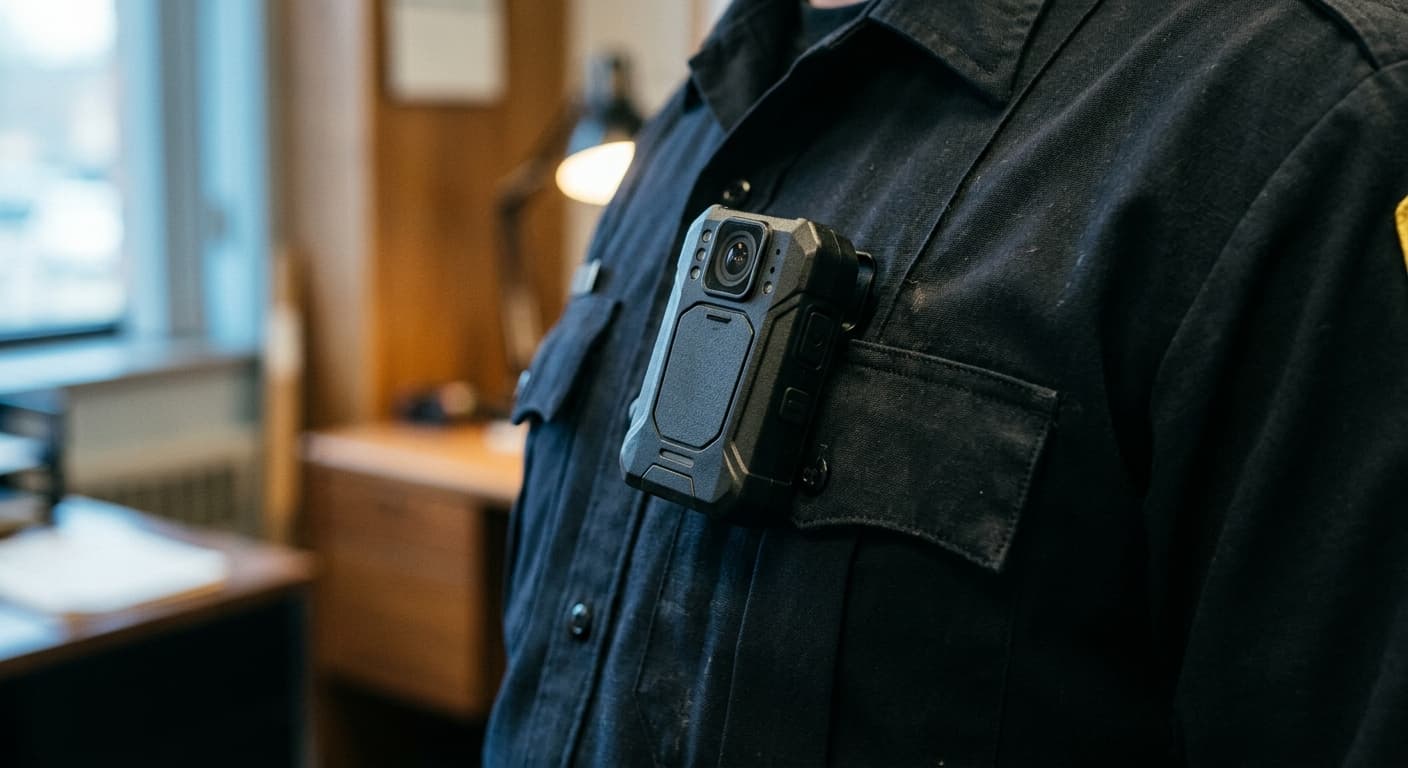
Idaho residents have a First Amendment right to record police officers performing their duties in public spaces. Idaho Code 18-6702 further permits participants to record any conversation without notifying the other party, covering direct encounters with officers. You may not physically interfere with police operations while recording.
Recording police officers in Idaho is protected by the First Amendment to the U.S. Constitution and supported by Idaho's one-party consent wiretapping law. Citizens, journalists, and bystanders have the right to document law enforcement activities that occur in public spaces, including traffic stops, arrests, protests, and other police encounters. This right is fundamental to government accountability and transparency.
This page covers the legal basis for recording police in Idaho, practical guidelines for doing so safely, limitations on the right to record, Idaho's approach to body cameras, courtroom recording rules, and what to do if your rights are violated.
The Legal Right to Record Police in Idaho
First Amendment Protections
The First Amendment protects the right to photograph and record matters of public interest, including the activities of law enforcement officers performing their official duties in public places. While the U.S. Supreme Court has not issued a definitive ruling specifically on the right to record police, multiple federal circuit courts have recognized this right, and the U.S. Department of Justice has affirmed it in statements of interest filed in federal cases.
The Ninth Circuit Court of Appeals, which covers Idaho, has directly recognized the right to record police officers in public. In Fordyce v. City of Seattle, 55 F.3d 436 (9th Cir. 1995), the court held that the First Amendment protects the right to film matters of public interest, including police activity. In Askins v. U.S. Department of Homeland Security, 899 F.3d 1035 (9th Cir. 2018), the Ninth Circuit held that the First Amendment protects photographing and recording matters of public interest, with the nature of the location shaping how that protection applies. The case arose from photography at Customs and Border Protection land ports of entry; the court vacated a motion-to-dismiss ruling and remanded for further fact-finding, without reaching qualified immunity or officer personal liability. Idaho residents have strong, controlling federal constitutional protections for recording law enforcement.
Idaho's One-Party Consent Law
In addition to First Amendment protections, Idaho's wiretapping statute supports the right to record police. Under Idaho Code 18-6702, you can record any conversation you are a party to without informing the other participants. When you are interacting with a police officer (during a traffic stop, a sidewalk encounter, or any other direct conversation), you can record that interaction without telling the officer.
Even when you are not directly conversing with the officer, you can record police activities visible and audible from public spaces. Conversations that occur in public settings where the speakers do not have a reasonable expectation of privacy are generally not protected by wiretapping statutes.
What You Can Record
In Idaho, you can legally record:
- Traffic stops involving yourself or others, from a safe distance
- Arrests occurring in public view
- Police interactions on public streets, sidewalks, and parks
- Protests and demonstrations where police are present
- Your own encounters with law enforcement during any type of stop, questioning, or investigation
- Police checkpoints and sobriety checkpoints
- Public meetings where law enforcement provides testimony or reports
- Government buildings from public areas (exterior or public interior spaces)
Limitations on Recording Police
While the right to record is well-established, it is not unlimited. Several restrictions apply to how and where you can record police officers.
No Physical Interference
You cannot physically interfere with police operations while recording. Idaho law prohibits obstructing or resisting an officer under Idaho Code 18-705, which makes it a misdemeanor to willfully resist, delay, or obstruct any public officer in the discharge of their duties.
Recording from a reasonable distance does not constitute obstruction. However, getting in the way of an arrest, blocking an officer's path, reaching into a police vehicle, or physically interfering with police equipment while filming crosses the line from protected recording into criminal obstruction.
Lawful Orders to Move Back
Officers may issue lawful orders to bystanders to maintain a safe distance from an active scene. You must comply with reasonable distance requests. The key question in any dispute is whether the officer's order was genuinely related to safety or operations, or whether it was an attempt to prevent recording.
Courts evaluate these situations based on the totality of the circumstances. An order to step back 15 feet from a traffic stop is likely reasonable. An order to leave the area entirely or to put your phone away may not be.
No Trespassing
You cannot trespass on private property to record police activities. Under Idaho Code 18-7008, entering or remaining on someone else's property without permission is a criminal offense. Your right to record does not override property rights.
You can, however, record police activities that are visible from a public location or from private property where you have a legal right to be (such as your own home, yard, or a business you are patronizing).
Secure Areas and Government Facilities
Some government facilities have security restrictions that limit recording. Military installations, certain federal buildings, and areas designated as secure zones may prohibit photography and recording. These restrictions are based on security concerns rather than an intent to prevent government accountability.
In Idaho, state government buildings are generally open to the public, and recording in public areas of these buildings is typically permitted. However, individual agencies may have specific policies about recording in certain areas.
Recording During a Traffic Stop

Traffic stops are one of the most common situations where people record police officers. In Idaho, you have the right to record during a traffic stop, whether you are the driver, a passenger, or a bystander. You may have also heard the old claim that officers touch a car's tail lights during a stop; see why you should not let police touch your tail lights for the real story behind that idea.
If You Are the Driver or Passenger
- You can use your smartphone to record the interaction
- You do not need to inform the officer that you are recording
- Keep your hands visible and move slowly when reaching for your phone
- Do not hold your phone in a way that could be mistaken for a weapon
- A dashcam that is already recording when the stop begins is perfectly legal
If You Are a Bystander
- You can record from a public sidewalk, roadway, or other public area
- Maintain a reasonable distance from the stop
- Do not approach the vehicle or the officer
- Follow any lawful orders to move back
- Do not shout instructions to the people being stopped, as this could be considered interference
Dashcams During Stops
Dashcams that run continuously are legal in Idaho and provide an excellent record of traffic stop interactions. The dashcam captures the officer's approach, the conversation (if audio is enabled), and the overall conduct of the stop. For more on dashcam legality, see Idaho dashcam laws.
What to Do If Police Tell You to Stop Recording
Officers may sometimes tell you to stop recording, put your phone away, or delete footage. In most cases, these orders are not legally justified, but how you respond matters.
Stay Calm and Be Respectful
Do not argue aggressively or physically resist. Calmly state that you believe you have a right to record in public. Do not escalate the situation.
Verbally Assert Your Rights
You can say something like: "I understand your concern, officer. I am recording from a public area and I am not interfering with your work. I believe I have the right to record under the First Amendment."
Do Not Physically Resist
If an officer takes your phone or orders you to delete footage, comply in the moment and address the violation later through legal channels. Physical resistance can lead to arrest and criminal charges, even if your recording rights were violated.
Never Delete Footage
If ordered to delete footage, you are not legally required to comply. However, if you feel unsafe refusing in the moment, know that deleted files can often be recovered by forensic specialists. The officer's order to delete footage may itself constitute a civil rights violation.
Document the Incident
After the encounter, write down the officer's name, badge number, department, date, time, and location. Note any witnesses. This information will be important if you file a complaint or lawsuit.
File a Complaint
You can file a complaint with:
- The officer's police department internal affairs division
- The Ada County Sheriff's Office (or the relevant county sheriff)
- The Idaho Peace Officer Standards and Training Council (POST)
- The American Civil Liberties Union of Idaho (ACLU of Idaho)
Pursue Legal Action
If your rights were violated, you may have a claim under 42 U.S.C. 1983, the federal civil rights statute that allows individuals to sue government officials who violate their constitutional rights. A successful claim can result in compensatory damages, punitive damages, and attorney fees.
Police Body Cameras in Idaho
No Statewide Mandate
Idaho does not have a statewide law requiring all police officers to wear body cameras, but the Idaho State Police have adopted formal body-worn camera standards. ISP Procedure 06.24, revised November 2025, governs body-camera activation, retention, and access. Idaho Code 31-871 sets tiered retention requirements for county sheriffs based on the recording's evidentiary value and the type of equipment used: recordings with evidentiary value must be retained at least 200 days; recordings without evidentiary value from equipment not affixed to a building or structure (such as body-worn or vehicle-mounted cameras) must be retained at least 60 days; and recordings without evidentiary value from equipment affixed to a building or structure must be retained at least 14 days. Municipal departments set their own policies.
Departments With Body Cameras
Major Idaho law enforcement agencies including the Boise Police Department have adopted body camera programs. The Idaho State Police follows ISP Procedure 06.24 (revised November 2025). For county sheriffs, Idaho Code 31-871 sets retention tiers based on evidentiary value and equipment type: at least 200 days for recordings with evidentiary value, at least 60 days for non-evidentiary recordings from equipment not affixed to a building or structure, and at least 14 days for non-evidentiary recordings from equipment affixed to a building or structure. Activation and public-release policies vary by department.
Public Records Access to Body Camera Footage
Idaho's Public Records Act (Idaho Code 74-101 through 74-126) provides the public with the right to access government records, including body camera footage. However, several exemptions may limit access:
- Footage that is part of an active investigation may be exempt from disclosure
- Footage depicting minors or victims of certain crimes may be redacted or withheld
- Footage captured inside private residences may have limited release
- Law enforcement agencies have argued that body camera footage is an "investigatory record" exempt under Idaho Code 74-124
To request body camera footage, submit a public records request to the relevant law enforcement agency in writing, identifying the specific incident and approximate date and time.
Recording in Idaho Courtrooms
Recording in Idaho courtrooms is governed by Idaho Court Administrative Rule 45 (ICAR 45), not by the general wiretapping statute.
Requirements for Courtroom Recording
- Audio and visual coverage of public court proceedings requires advance approval from the presiding judge
- Media outlets must submit a written request before the proceeding
- The judge has discretion to allow, limit, or revoke coverage at any time
- Equipment must be set up before the proceeding begins and cannot be moved during proceedings
What Cannot Be Recorded in Court
- Attorney-client communications
- Bench conferences between attorneys and the judge
- In-camera proceedings (held in the judge's chambers)
- Jury deliberations and jury selection
- Closed proceedings including adoptions, mental health hearings, child protective cases, and grand jury sessions
Members of the Public
While ICAR 45 primarily addresses media coverage, members of the public attending open court proceedings should seek the judge's permission before recording. Unauthorized recording in a courtroom can result in contempt of court charges.
Law Enforcement Recording Exceptions
Idaho Code 18-6702 provides specific exceptions that allow law enforcement to record conversations:
Consensual Recording
Law enforcement officers and individuals acting under their direction may record conversations when the officer is a party to the conversation or when one party has given consent. This is the legal basis for undercover recordings, informant recordings, and recordings of police-citizen interactions from the officer's perspective.
Emergency Services
Employees of law enforcement agencies, fire departments, and ambulance services may intercept and record incoming communications while acting within the scope of their employment and while a party to the communication. This covers 911 call recordings, dispatch communications, and emergency response coordination.
Court-Ordered Wiretaps
Law enforcement may conduct wiretapping without any party's consent when authorized by a court order. These orders require a showing of probable cause and are subject to strict procedural requirements.
Recording Federal Law Enforcement in Idaho
Federal law enforcement officers (FBI, DEA, ATF, ICE, U.S. Marshals) are subject to the same First Amendment protections when performing their duties in public. You can record federal agents in Idaho just as you can record state and local police.
However, recording near or inside federal facilities (courthouses, military bases, federal buildings) may be subject to additional restrictions under federal regulations. Always check for posted signage regarding photography and recording restrictions at federal facilities.
Recording at Protests and Demonstrations
Idaho has seen protests and public demonstrations on various issues, and recording at these events is protected by the First Amendment. Both participants and bystanders can document police presence and conduct at protests.
Key guidelines for recording at protests:
- You can record from any public vantage point
- Police cannot order you to stop recording unless you are physically interfering with their operations
- If police declare an unlawful assembly, you must follow dispersal orders, but you can continue recording while complying
- Livestreaming is legal and adds a layer of protection since the footage is immediately uploaded and cannot be deleted from your device
Idaho Recording Law Sub-Topics
Audio Recording | Video Recording | Voyeurism Laws | Workplace Recording | Recording Police | Phone Call Recording | Security Cameras | Recording in Public | Landlord-Tenant | Dashcam Laws | School Recording | Medical Recording
More Idaho Recording Topics
More Idaho Laws
Frequently Asked Questions
Can I record police officers in Idaho?
Yes. The First Amendment protects your right to record law enforcement officers performing their duties in public. Idaho's one-party consent law (Idaho Code 18-6702) also allows you to record conversations you participate in with officers. You must not interfere with police operations or trespass while recording.
Can a police officer tell me to stop recording in Idaho?
An officer can ask you to move back for safety reasons, but cannot legally order you to stop recording in a public place where you have a right to be. If you are not interfering with police operations, an order to stop recording or delete footage may violate your First Amendment rights. Stay calm, assert your rights politely, and address any violations through legal channels afterward.
Do Idaho police officers wear body cameras?
Idaho does not have a statewide body camera mandate. Individual law enforcement agencies decide whether to adopt body camera programs. Some departments, including the Boise Police Department, have implemented body cameras. Policies on activation, storage, and public release of footage vary by department.
Can I record inside an Idaho courtroom?
Recording in Idaho courtrooms requires advance approval from the presiding judge under Idaho Court Administrative Rule 45. Media outlets must submit a written request. Recording of attorney-client communications, bench conferences, jury deliberations, and closed proceedings is prohibited.
What should I do if a police officer confiscates my phone or deletes my footage in Idaho?
Do not physically resist. Note the officer's name, badge number, and department. File a complaint with the department's internal affairs division, the Idaho POST Council, or the ACLU of Idaho. You may also have a federal civil rights claim under 42 U.S.C. 1983 for violation of your First Amendment rights, which can result in damages and attorney fees.
Updates
Corrected the description of Askins v. U.S. Department of Homeland Security, which was a remanded case about photography at border ports of entry, not a ruling establishing personal liability for officers who stop recording, and replaced two dead-end case citation links with the actual opinions.
Independently fact-checked against the cited primary sources
Governing law re-checked for recent changes
Corrected the description of Idaho Code 31-871's body-camera retention tiers: the statute keys retention to whether a recording has evidentiary value and whether the equipment is affixed to a building, not to a 'felony/standard/administrative' classification the statute does not use.
Governing law re-checked for recent changes
Reviewed and approved by an editor
The Law Behind This Article
This article rests on the statutory provisions below, held in our own legal record and retrieved from the official source. Tap a section to read the operative text.
Idaho Code
§ 18-6702Interception and disclosure of wire, electronic or oral communications prohibitedIn forcecited in 21 of our articles
18-6702. Interception and disclosure of wire, electronic or oral communications prohibited. (1) Except as otherwise specifically provided in this chapter, any person shall be guilty of a felony and is punishable by imprisonment in the state prison for a term not to exceed five (5) years or by a…
Official text (excerpt) · last checked 2026-08-31 · Read the full text in our law library · Verify at legislature.idaho.gov
Cited in 6 court opinions in our collectionLatest citing opinion in our collection: 2019
In the courts (editorial summary, independently checked):Idaho courts have applied section 18-6702 to intercepted phone calls. Hoskins v. Howard (1998) held cordless telephone conversations are protected wire communications, so scanning, recording and disclosing one supported a claim. Chapman v. NYK Line North America (2009) noted 18-6702(2)(d) makes one-party-consent recording lawful.
Opinions citing this section in our collection:
- Hoskins v. Howard (Idaho Supreme Court 1998, 132 Idaho 311)✓A sheriff's deputy used a scanner to record a neighbor's cordless call and passed the tape on; the court held such calls are protected wire communications when part of the call crosses the phone network, so Section 18-6702 reached him, and vacated summary judgment in his favor.
- Chapman v. NYK LINE NORTH AMERICA, INC. (Idaho Supreme Court 2009, 147 Idaho 178)“…rsation with the consent of one party to the conversation. Idaho Code § 18-6702 (2)(d). Of course, an employer could im…”
- Bartnicki v. Vopper (Supreme Court of the United States 2001, 532 U.S. 514)“…16-11-66.1 (1996); Haw. Rev. Stat. § 803-42 (1993); Idaho Code § 18-6702 (1997); Ill. Comp. Stat., ch. 720, § 5…”
Identified automatically from the court opinions citing this section — not a ranking of which case controls.
§ 18-705Resisting and obstructing officers. Every person who wilfully resists, delays or obstructs any public officer, in the discharge, or attempt to discharge, of any duty of his office or who knowingly gives a false report to any peace officer, when no other punishment is prescribed, is punishable by a fine not exceeding one thousand dollars ($1,000), and imprisonment in the county jail not exceeding oneIn forcecited in 2 of our articles
18-705. Resisting and obstructing officers. Every person who wilfully resists, delays or obstructs any public officer, in the discharge, or attempt to discharge, of any duty of his office or who knowingly gives a false report to any peace officer, when no other punishment is prescribed, is…
Official text (excerpt) · last checked 2026-08-01 · Read the full text in our law library · Verify at legislature.idaho.gov
Cited in 50 court opinions in our collectionLatest citing opinion in our collection: 2025
Opinions citing this section in our collection:
- State v. Bishop (Idaho Supreme Court 2009, 146 Idaho 804)“…lley subjected himself to possible criminal liability under Idaho Code section 18-705, which makes it a crime to “knowingly g…”
- State v. Irvin C. Ray (Idaho Supreme Court 2012, 153 Idaho 564)“…r resisting or obstructing a public officer in violation of Idaho Code section 18-705. 4 When a reasonable person is unsure…”
- Rosenberger v. Kootenai County Sheriff's Department (Idaho Supreme Court 2004, 140 Idaho 853)“…tion for resisting or obstructing officers in violation of Idaho Code § 18-705 . Rosenberger filed suit in district co…”
Identified automatically from the court opinions citing this section — not a ranking of which case controls.
§ 31-871Classification and retention of recordsIn forcecited in 5 of our articles
31-871. Classification and retention of records. (1) County records shall be classified as follows: (a) "Law enforcement media recording" means a digital record created by a law enforcement agency in the performance of its duties that consists of a recording of visual or audible components or both.
Official text (excerpt) · last checked 2026-08-31 · Read the full text in our law library · Verify at legislature.idaho.gov
§ 74-101Definitions. As used in this chapter:In forcecited in 3 of our articles
74-101. Definitions. As used in this chapter: (1) "Applicant" means any person formally seeking a paid or volunteer position with a public agency. Applicant does not include any person seeking appointment to a position normally filled by election.
Official text (excerpt) · last checked 2026-08-01 · Read the full text in our law library · Verify at legislature.idaho.gov
Cited in 2 court opinions in our collectionLatest citing opinion in our collection: 2024
Opinions citing this section in our collection:
- Animal Legal Defense Fund v. Wasden (Court of Appeals for the Ninth Circuit 2018, 878 F.3d 1184)“…plicating records obtained via Idaho’s Public Records Act, Idaho Code § 74-101 et seq., or other lawful avenues.…”
- Amaral v. Post Falls Highway District (District Court, D. Idaho 2024)“…ikely submitted a request under Idaho’s Public Records Act. Idaho Code §§ 74-101 – 74-127.…”
Identified automatically from the court opinions citing this section — not a ranking of which case controls.
United States Code Title 18
§ 2511Interception and disclosure of wire, oral, or electronic communications prohibitedIn forcecited in 418 of our articles
Except as otherwise specifically provided in this chapter any person who— intentionally intercepts, endeavors to intercept, or procures any other person to intercept or endeavor to intercept, any wire, oral, or electronic communication; intentionally uses, endeavors to use, or procures any other person to use or endeavor to use any electronic, mechanical, or other device to intercept any oral communication when— such device is affixed to, or otherwise transmits a signal through, a wire, cable, or other like connection used in wire communication; or such device transmits communications by radio, or interferes with the transmission of such communication; or such person knows, or has reason to know, that such device or any component thereof has been sent through the mail or transported in interstate or foreign commerce; or such use or endeavor to use (A) takes place on the premises of any business or other commercial establishment the operations of which affect interstate or foreign commerce; or (B) obtains or is for the purpose of obtaining information relating to the operations of any business or other commercial establishment the operations of which affect interstate or foreign…
Official text (excerpt) · last checked 2026-08-28 · Read the full text in our law library · Verify at uscode.house.gov
Cited in 2,045 court opinions in our collectionLatest citing opinion in our collection: 2026
In the courts (editorial summary, independently checked):Griggs-Ryan v. Smith (1990) applied the Section 2511(2)(d) prior-consent exception, treating a tenant repeatedly told that all incoming calls were taped as having impliedly consented. United States v. United States District Court (1972) read the then-current Section 2511(3) as conferring no presidential surveillance power.
Opinions citing this section in our collection:
- Mitchell v. Forsyth (Supreme Court of the United States 1985, 472 U.S. 511)✓The Attorney General authorized a warrantless 1970 national security wiretap that caught the plaintiff's calls; the Court held the since-repealed Section 2511(3) disclaimer left the tap lawful under Title III, and that Mitchell had qualified immunity.
- United States v. United States District Court for the Eastern District of Michigan (Supreme Court of the United States 1972, 407 U.S. 297)✓The Attorney General approved warrantless wiretaps on members of a domestic group accused of bombing a CIA office; the Court read Section 2511(3) as a congressional disclaimer conferring no surveillance power, then held the Fourth Amendment required prior judicial approval.
- Forsyth v. Barr (Court of Appeals for the Fifth Circuit 1994, 19 F.3d 1527)✓Dallas police used, in an internal affairs probe of an officer, calls private parties allegedly intercepted illegally; assuming that was unlawful, the Fifth Circuit held Section 2517(1) and (2) allowed the disclosure and use, defeating the Section 2511(1)(c) and (d) claims.
Identified automatically from the court opinions citing this section — not a ranking of which case controls.
United States Code Title 42
§ 1983Civil action for deprivation of rightsIn forcecited in 50 of our articles
Every person who, under color of any statute, ordinance, regulation, custom, or usage, of any State or Territory or the District of Columbia, subjects, or causes to be subjected, any citizen of the United States or other person within the jurisdiction thereof to the deprivation of any rights, privileges, or immunities secured by the Constitution and laws, shall be liable to the party injured in an action at law, suit in equity, or other proper proceeding for redress, except that in any action brought against a judicial officer for an act or omission taken in such officer’s judicial capacity, injunctive relief shall not be granted unless a declaratory decree was violated or declaratory relief was unavailable. For the purposes of this section, any Act of Congress applicable exclusively to the District of Columbia shall be considered to be a statute of the District of Columbia.
Official text (excerpt) · last checked 2026-07-28 · Read the full text in our law library · Verify at uscode.house.gov
Cited in 282,365 court opinions in our collectionLatest citing opinion in our collection: 2026
Opinions citing this section in our collection:
- Ashcroft v. Iqbal (Supreme Court of the United States 2009, 556 U.S. 662)“…its brought against state officials under Rev. Stat. §1979, 42 U. S. C. §1983.” Hartman, 547 U. S., at 254, n. 2. Cf.…”
- Celotex Corp. v. Catrett, Administratrix of the Estate of Catrett (Supreme Court of the United States 1986, 477 U.S. 317)“…policeman as she left. Petitioner brought an action under 42 U. S. C. § 1983 claiming that the refusal of service a…”
- Monell v. New York City Dept. of Social Servs. (Supreme Court of the United States 1978, 436 U.S. 658)“…decided less than two decades ago. Focusing new light on 42 U. S. C. § 1983 , that decision widened access to the f…”
Identified automatically from the court opinions citing this section — not a ranking of which case controls.
Search our full record of US law — 2.1 million sections, every state + federal →
Sources and References
- Idaho Code 18-6702 - Interception and Disclosure of Communications(legislature.idaho.gov).gov
- Idaho Code 18-705 - Resisting or Obstructing Officers(legislature.idaho.gov).gov
- Idaho Code 31-871 - Sheriff Body-Worn Camera Retention(legislature.idaho.gov).gov
- Idaho Code 74-101 - Public Records Act(legislature.idaho.gov).gov
- Idaho Court Administrative Rule 45 - Cameras in the Courtroom(isc.idaho.gov).gov
- Idaho POST Council(post.idaho.gov).gov
- Fordyce v. City of Seattle, 55 F.3d 436 (9th Cir. 1995)(courtlistener.com)
- Askins v. U.S. Dept. of Homeland Security, 899 F.3d 1035 (9th Cir. 2018)(courtlistener.com)
- 42 U.S.C. 1983 - Civil Rights Statute(law.cornell.edu)
- 18 U.S.C. 2511 - Federal Wiretap Statute(law.cornell.edu)