
North Carolina
North Carolina Landlord-Tenant Recording Laws: Cameras and Consent
Independently fact-checked against primary sources (last audited August 15, 2026). · Reviewed by the RecordingLaw editorial team. · Law checked current as of August 15, 2026. · 9 primary sources cited on this page. How we verify our legal content
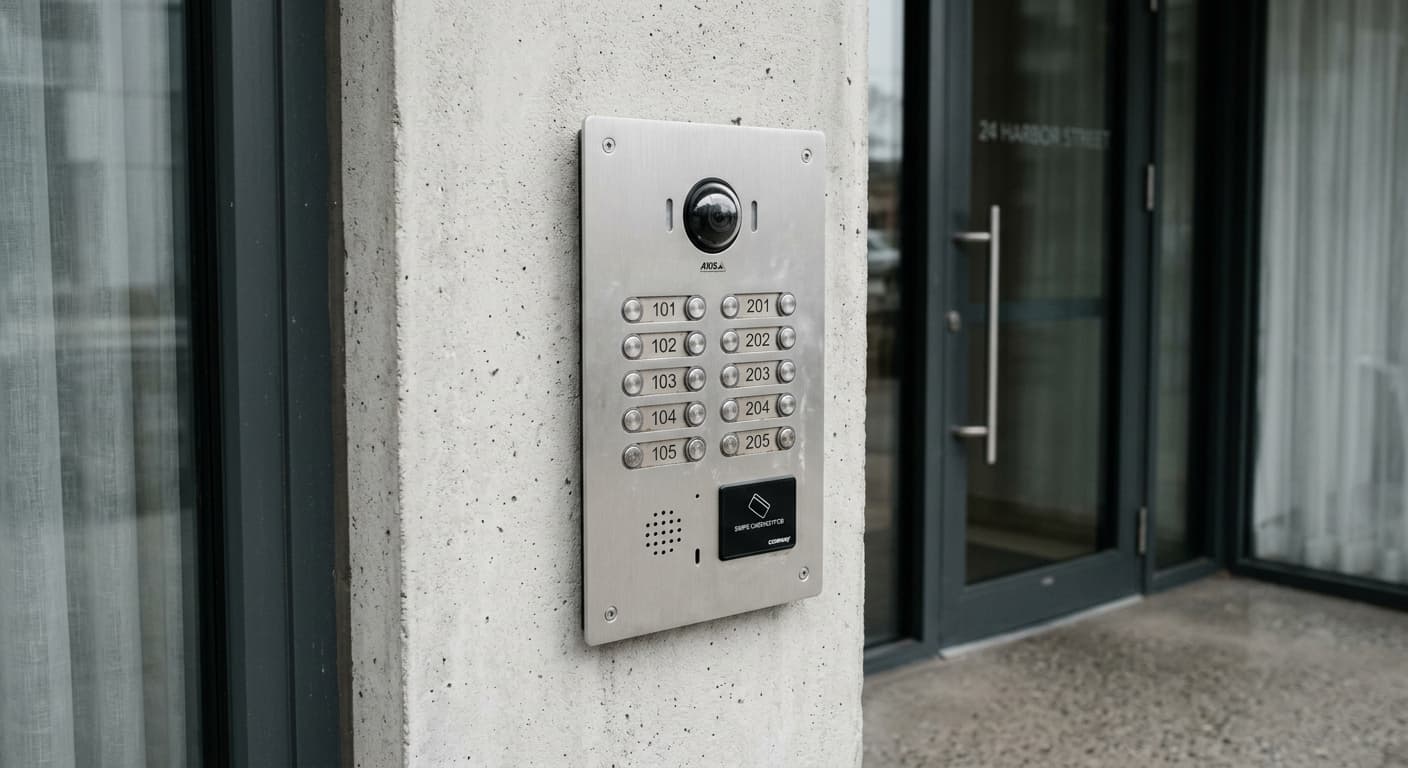
North Carolina is a one-party consent state under N.C. Gen. Stat. 15A-287, so both tenants and landlords may record any conversation they join without notifying the other party. Landlords may install cameras in common areas and building exteriors but cannot place cameras inside a tenant's rental unit.
The relationship between landlords and tenants in North Carolina often involves questions about recording. Tenants want to know if they can record conversations with their landlord about repairs, lease disputes, or security deposits. Landlords want to know where they can install security cameras on their rental properties. Both sides need to understand the rules that govern recording in rental housing.
North Carolina does not have a specific landlord-tenant surveillance statute. Instead, recording in rental properties is governed by the state's one-party consent wiretapping law, the voyeurism statute, general privacy principles, and the landlord-tenant provisions in N.C. Gen. Stat. Chapter 42.
Tenant Rights to Record
Can You Record Your Landlord?
Yes. Under North Carolina's one-party consent law (N.C. Gen. Stat. 15A-287), you can record any conversation you participate in without telling the other person. This includes conversations with your landlord, property manager, maintenance staff, and leasing office employees.
Common situations where tenants record landlord interactions include:
- Maintenance requests and follow-up: Recording verbal promises to make repairs creates a record that can be used in court if the landlord fails to follow through
- Lease disputes: Recording discussions about lease terms, rent increases, or security deposit issues preserves the exact words used by both parties
- Move-in and move-out inspections: Recording the inspection documents the property's condition and can prevent disputes about security deposit deductions
- Harassment or illegal entry: If your landlord enters your unit without proper notice or harasses you, recordings provide evidence for legal action
- Eviction discussions: Recording conversations about eviction threats or notices preserves the landlord's statements for potential legal proceedings
Recording Move-In and Move-Out Walkthroughs
Video recording your move-in and move-out walkthrough is one of the most valuable steps you can take as a tenant. A video walkthrough:
- Captures the condition of every room, appliance, fixture, and surface
- Documents any pre-existing damage that might otherwise be attributed to you
- Creates a time-stamped record that is difficult to dispute
- Preserves evidence for security deposit disputes under N.C. Gen. Stat. 42-52
When conducting a recorded walkthrough, narrate what you see as you go, noting any damage, wear, or issues. This audio narration, combined with the video, creates a comprehensive record.
Installing Your Own Security Cameras
Tenants can install security cameras inside their own rental units for personal security purposes. Because you have a right to privacy inside your unit, monitoring your own living space is permissible. However, consider these guidelines:
- Indoor cameras: You can install cameras inside your unit to monitor entry points, pet activity, or general security. These cameras are on your own leased premises.
- Doorbell cameras: Many tenants install doorbell cameras to monitor who comes to their door. Check your lease for provisions about modifications to the exterior of the unit.
- Exterior cameras: Mounting cameras on the exterior of the building typically requires landlord permission, as the exterior is common property controlled by the landlord.
- Audio recording: If your cameras record audio, the one-party consent rule applies. Audio recording of conversations you are not part of could violate the wiretapping statute.
Review your lease agreement before installing cameras. Some leases prohibit modifications to the property or require landlord approval for additions.
Landlord Rights to Install Cameras
Where Landlords Can Place Cameras
Landlords who own rental properties can install security cameras in certain areas for property protection and tenant safety. Permissible locations typically include:
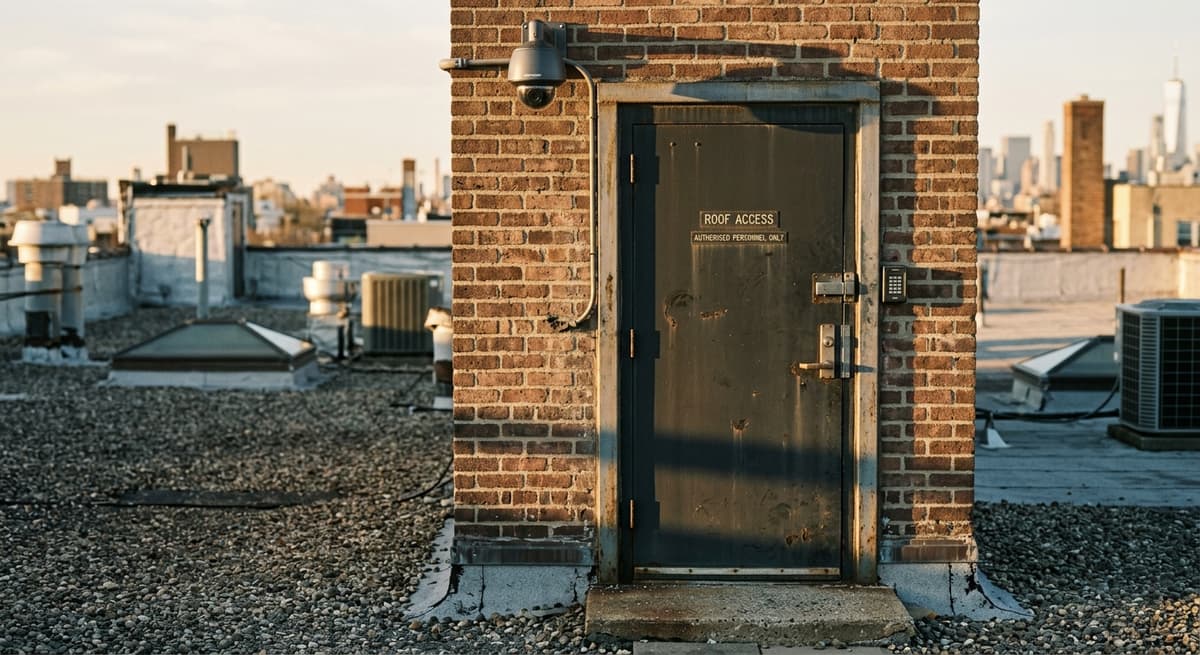
- Building exteriors: Monitoring the front entrance, back entrance, and sides of the building
- Parking lots and garages: Surveillance of shared parking areas for theft prevention and safety
- Common hallways and lobbies: Monitoring shared spaces in apartment buildings
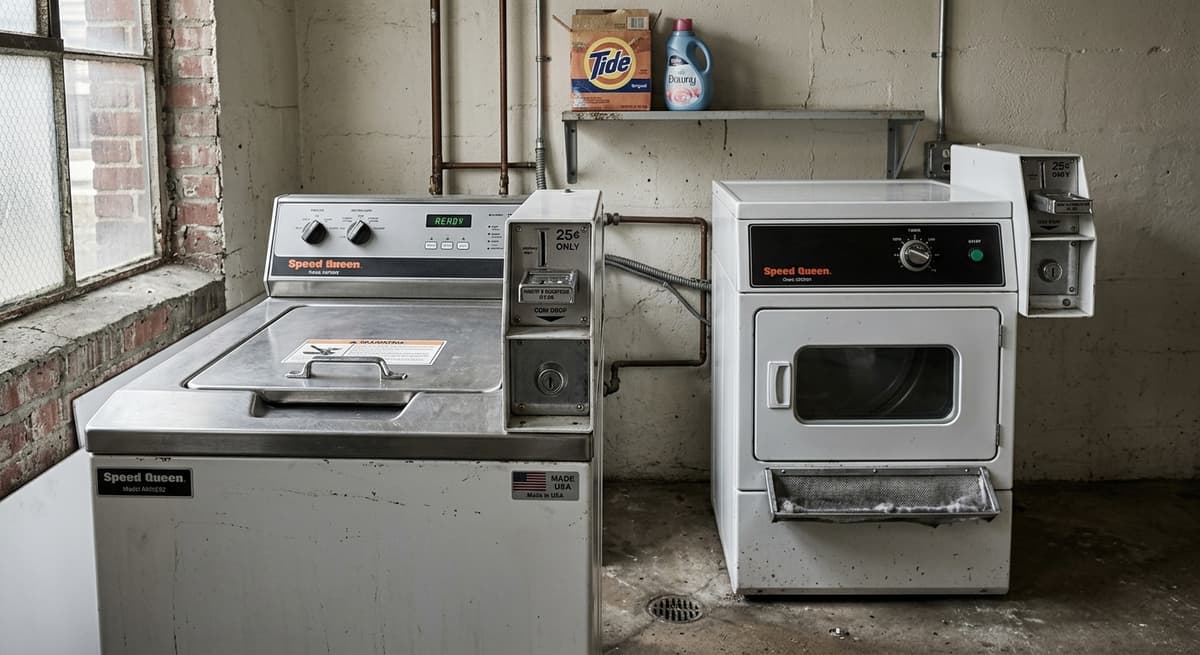
- Laundry rooms and storage areas: Surveillance of shared utility spaces
- Property perimeter: Monitoring fences, gates, and property boundaries
Where Landlords Cannot Place Cameras
Landlords face strict limitations on camera placement. The following locations are off-limits:
- Inside tenant living spaces: Tenants have a reasonable expectation of privacy inside their rental units. Installing cameras inside a tenant's apartment, house, or room is illegal and could result in criminal charges under N.C. Gen. Stat. 14-202
- Bathrooms: Recording in any bathroom, whether inside a unit or in a common area, violates the voyeurism statute
- Bedrooms: Cameras in or aimed at bedrooms constitute an invasion of privacy
- Private patios and balconies: If a tenant has an enclosed or screened private patio or balcony, the landlord should not aim cameras directly at this space
- Windows of rental units: Pointing cameras to look through tenant windows is prohibited
Audio Recording by Landlords
If a landlord's security cameras include microphones, the audio recording must comply with N.C. Gen. Stat. 15A-287. The landlord needs consent from at least one party to any conversation being recorded. Cameras in common areas that capture tenant conversations could violate the wiretapping statute if the landlord is not a participant in those conversations.
Best practice: Landlords should disable audio recording on all security cameras or limit audio-capable cameras to areas where the landlord regularly interacts with tenants (such as a leasing office with posted notice).
Lease Provisions About Recording
What Landlords Should Include in Leases
Landlords who install security cameras on rental properties should include a clear disclosure in the lease agreement. The disclosure should address:
- Camera locations: Identify where cameras are installed on the property
- What is recorded: Specify whether cameras record video only or video and audio
- Data retention: State how long recordings are stored before being overwritten
- Access to footage: Explain who can view the recordings and under what circumstances
- Purpose of surveillance: Describe the security and safety purposes for the cameras
Including a camera disclosure in the lease provides the landlord with documentation that the tenant was aware of the surveillance before signing.
What Tenants Should Look For
Before signing a lease, tenants should:
- Ask whether security cameras are installed on the property
- Request the specific locations of all cameras
- Verify that no cameras are inside the rental unit
- Ask whether cameras record audio
- Review any surveillance provisions in the lease
- Request copies of the landlord's camera policy
Security Deposit Disputes and Recording Evidence
How Recordings Help in Deposit Disputes
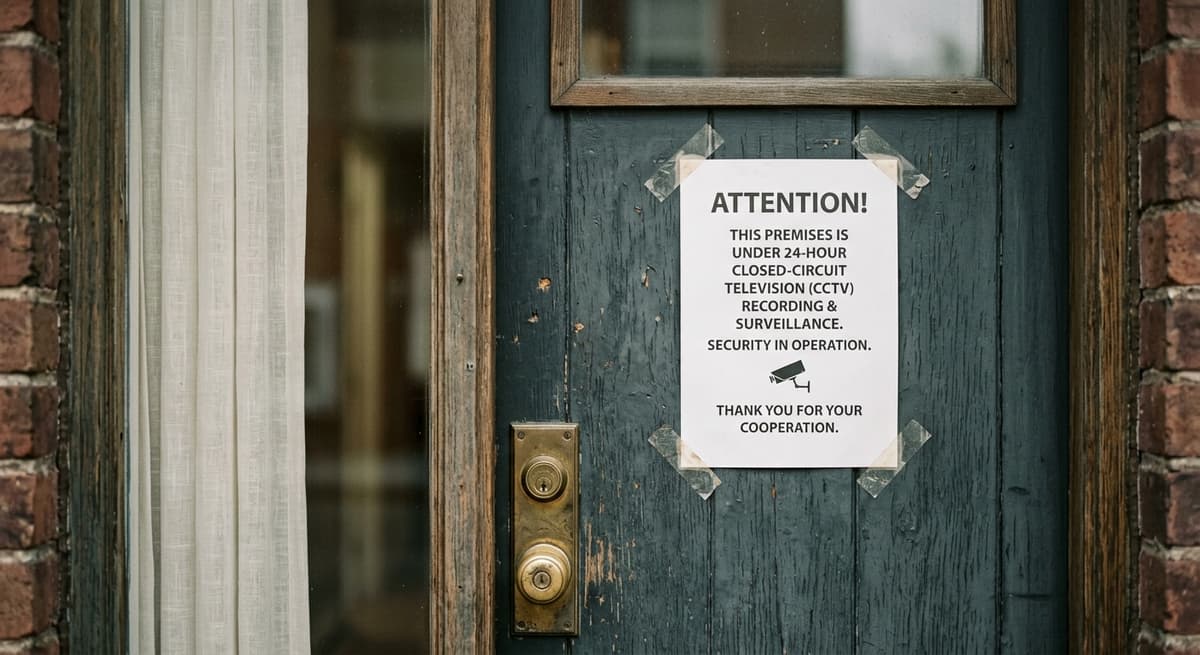
Under N.C. Gen. Stat. 42-52, landlords must account for security deposits within 30 days of the lease termination and provide an itemized list of deductions. Recordings can play a critical role in deposit disputes:
- Move-in video: Shows the condition of the unit when you took possession, rebutting claims of damage you did not cause
- Move-out video: Documents the condition when you left, proving you returned the unit in acceptable condition
- Recorded conversations: Preserve any verbal agreements about what constitutes normal wear and tear or what repairs the landlord agreed to handle
Filing a Claim
If your landlord improperly withholds your security deposit, North Carolina law allows you to sue in small claims court (magistrate court) for the return of the deposit. Recordings, including video walkthroughs and recorded conversations, are admissible evidence that can support your claim.
Illegal Entry and Recording
North Carolina's Entry Notice Requirements
North Carolina does not have a statewide statute specifying how much notice a landlord must give before entering a rental unit. Unlike many states that require 24 or 48 hours' notice, North Carolina relies on:
- Lease terms: Most well-drafted leases specify a notice period (typically 24 hours)
- Common law: Landlords have an implied right of entry for repairs and emergencies, but not unrestricted access
- Reasonable notice: Courts generally expect landlords to provide reasonable advance notice before non-emergency entry
Recording Unauthorized Entry
If you suspect your landlord is entering your unit without permission or proper notice, you can:
- Install a camera inside your unit that monitors the entry door
- Use a doorbell camera to record who approaches and enters
- Set up a camera-activated notification system to alert you when someone enters
Recordings of unauthorized entry can support claims for:
- Lease violations
- Invasion of privacy
- Constructive eviction (if the unauthorized entry pattern is severe enough)
- Restraining orders in extreme cases
Airbnb, Vacation Rentals, and Short-Term Stays
Disclosure Requirements for Short-Term Rental Hosts
Hosts who rent properties through platforms like Airbnb and VRBO must disclose any recording devices on the property. Major platforms require hosts to:
- Disclose all security cameras and recording devices in the listing
- Specify the location of each device
- Never place cameras inside guest bedrooms, bathrooms, or other private spaces
- Comply with all applicable state and local laws
Guest Privacy Rights
Short-term rental guests in North Carolina have the same reasonable expectation of privacy as long-term tenants inside their rented space. A host who installs hidden cameras inside a vacation rental unit faces criminal charges under N.C. Gen. Stat. 14-202 and civil liability for invasion of privacy.
Cameras monitoring the exterior of a vacation rental property (driveway, front porch, backyard) are generally permissible when properly disclosed.
North Carolina Recording Laws by Topic
Phone Call Recording | Audio Recording | Video Recording | Workplace Recording | Recording Police | Security Cameras | Recording in Public | Landlord-Tenant | Dashcam Laws | Schools | Medical Recording | Voyeurism & Hidden Cameras
Back to North Carolina Recording Laws
More North Carolina Recording Topics
More North Carolina Laws
Frequently Asked Questions
Can I record my landlord in North Carolina?
Yes. Under North Carolina's one-party consent law (N.C. Gen. Stat. 15A-287), you can record any conversation you participate in without telling your landlord. This includes recording discussions about repairs, lease terms, security deposits, and any instances of harassment or illegal entry.
Can my landlord install cameras inside my apartment in North Carolina?
No. Tenants have a reasonable expectation of privacy inside their rental units. A landlord who installs cameras inside a tenant's apartment faces criminal charges under the voyeurism statute (N.C. Gen. Stat. 14-202). Landlords can install cameras in common areas like hallways, lobbies, and parking lots, but not inside individual rental units.
Should I video record my move-in walkthrough in North Carolina?
Yes, it is highly recommended. A video walkthrough documents the condition of the unit at move-in and can prevent security deposit disputes. Under N.C. Gen. Stat. 42-52, landlords must itemize security deposit deductions, and your video evidence can challenge improper charges for pre-existing damage.
Can I install a doorbell camera on my rental unit in North Carolina?
You can install a doorbell camera, but check your lease for provisions about exterior modifications. Some landlords require approval before tenants attach anything to the exterior of the building. Indoor cameras monitoring your own unit are generally permissible without landlord approval.
What should I do if my landlord enters my unit without notice in North Carolina?
Document the unauthorized entry by installing an interior camera that monitors your entry door or using a doorbell camera. North Carolina does not have a specific statutory notice requirement, but most leases require 24 hours' notice for non-emergency entry. Recordings of unauthorized entry can support claims for lease violations, invasion of privacy, or constructive eviction.
Updates
Independently fact-checked against the cited primary sources; governing law re-checked for recent changes
Governing law re-checked for recent changes
Fixed ncleg.net URLs to ncleg.gov (15 occurrences).
Reviewed and approved by an editor
The Law Behind This Article
This article rests on the statutory provisions below, held in our own legal record and retrieved from the official source. Tap a section to read the operative text.
North Carolina General Statutes, Chapter 15A: Criminal Procedure Act.
§ 15A-287Interception and disclosure of wire, oral, or electronic communications prohibitedIn forcecited in 18 of our articles
(a) Except as otherwise specifically provided in this Article, a person is guilty of a Class H felony if, without the consent of at least one party to the communication, the person: (1) Willfully intercepts, endeavors to intercept, or procures any other person to intercept or endeavor to intercept, any wire, oral, or electronic communication. (2) Willfully uses, endeavors to use, or procures any other person to use or endeavor to use any electronic, mechanical, or other device to intercept any oral communication when: a. The device is affixed to, or otherwise transmits a signal through, a wire, cable, or other like connection used in wire communications; or b. The device transmits communications by radio, or interferes with the transmission of such communications.
Official text (excerpt) · last checked 2026-07-29 · Read the full text in our law library · Verify at ncleg.gov
Cited in 12 court opinions in our collectionLatest citing opinion in our collection: 2026
In the courts (editorial summary, independently checked):North Carolina courts apply Section 15A-287 to private recording. Kroh v. Kroh (2002) held it reaches one spouse's nonconsensual audio recording of the other in the family home, not video without sound, and adopted vicarious consent by a custodial parent. State v. McGriff (2002) held interception is not willful absent a bad purpose.
Opinions citing this section in our collection:
- State v. McGriff (Court of Appeals of North Carolina 2002, 151 N.C. App. 631)✓A neighbor's cordless phone picked up a call in which a girl said McGriff had tried to force oral sex on her, and she listened about an hour; the court held listening out of concern for a minor was not willful interception under Section 15A-287(a)(1), so the evidence came in.
- Wright v. TOWN OF ZEBULON (Court of Appeals of North Carolina 2010, 202 N.C. App. 540)✓A police chief hid a transmitter under a sergeant's patrol car seat to test whether he tipped off drug dealers; the court affirmed summary judgment on his Section 15A-287(a)(1) claim, finding the public safety purpose meant the interception was not willful.
- Kroh v. Kroh (Court of Appeals of North Carolina 2002, 152 N.C. App. 347)“…rs to intercept, . . . any . . . oral . . . communication.” G.S. § 15A-287(a)(l). An “oral communication” includes…”
Identified automatically from the court opinions citing this section — not a ranking of which case controls.
Also relied on in: North Carolina Smart Glasses Recording Laws 2026, North Carolina Video Recording Laws: Public, Private, and Voyeurism Rules, North Carolina Recording Laws (2026): One-Party Consent Rules
North Carolina General Statutes, Chapter 14: Criminal Law.
§ 14-202Secretly peeping into room occupied by another personIn forcecited in 12 of our articles
(a) Any person who shall peep secretly into any room occupied by another person shall be guilty of a Class 1 misdemeanor. (a1) Unless covered by another provision of law providing greater punishment, any person who secretly or surreptitiously peeps underneath or through the clothing being worn by another person, through the use of a mirror or other device, for the purpose of viewing the body of, or the undergarments worn by, that other person without their consent shall be guilty of a Class 1 misdemeanor. (b) The following definitions apply in this section: (1) Photographic image. - Any photograph or photographic reproduction, still or moving, or any videotape, motion picture, or live television transmission, or any digital image of any individual. (2) Private area of an individual. - The naked or undergarment clad genitals, pubic area, buttocks, or female breast of that individual. (3) Room. - Includes, but is not limited to, a bedroom, a rest room, a bathroom, a shower, a dressing room, a dressing stall, a cubicle, or other similar area designed to provide privacy. (4) Under circumstances in which that individual has a reasonable expectation of privacy.
Official text (excerpt) · last checked 2026-07-29 · Read the full text in our law library · Verify at ncleg.gov
Cited in 17 court opinions in our collectionLatest citing opinion in our collection: 2026
In the courts (editorial summary, independently checked):In Matter of Banks (1978) the North Carolina Supreme Court upheld G.S. 14-202 against vagueness and overbreadth challenges, reading secret peeping to require spying intended to invade the occupant's privacy. State v. Pell (2011) applied its sex offender registration provision and reversed an order unsupported by evidence.
Opinions citing this section in our collection:
- Matter of Banks (Supreme Court of North Carolina 1978, 295 N.C. 236)✓A trial judge held the secret peeping statute unconstitutional. The court reversed, construing the statute to reach only spying done with the wrongful purpose of invading the occupant's privacy, and held it was neither impermissibly vague nor overbroad on that reading.
- State v. Breathette (Court of Appeals of North Carolina 2010, 202 N.C. App. 697)“…any child of either sex under the age of 16 years. N.C. Gen. Stat. § 14-202 .l(a)(l)-(2). The statute is unambiguou…”
- State v. Pell (Court of Appeals of North Carolina 2011, 211 N.C. App. 376)✓A man pleaded guilty to eight counts of felony secret peeping and was ordered onto the sex-offender registry. The court held the danger-to-the-community standard in this section is not vague, but reversed the registration order because the risk evidence did not support it.
Identified automatically from the court opinions citing this section — not a ranking of which case controls.
Also relied on in: North Carolina Audio Recording Laws: One-Party Consent Rules, North Carolina School Recording Laws: Student, Parent, and Campus Rules, North Carolina Security Camera Laws: Home, Business, and HOA Rules
North Carolina General Statutes, Chapter 42: Landlord and Tenant.
§ 42-52Landlord's obligationsIn force
Upon termination of the tenancy, money held by the landlord as security may be applied as permitted in G.S. 42-51 or, if not so applied, shall be refunded to the tenant. In either case the landlord in writing shall itemize any damage and mail or deliver same to the tenant, together with the balance of the security deposit, no later than 30 days after termination of the tenancy and delivery of possession of the premises to the landlord. If the extent of the landlord's claim against the security deposit cannot be determined within 30 days, the landlord shall provide the tenant with an interim accounting no later than 30 days after termination of the tenancy and delivery of possession of the premises to the landlord and shall provide a final accounting within 60 days after termination of the tenancy and delivery of possession of the premises to the landlord. If the tenant's address is unknown the landlord shall apply the deposit as permitted in G.S. 42-51 after a period of 30 days and the landlord shall hold the balance of the deposit for collection by the tenant for at least six months.
Official text (excerpt) · last checked 2026-07-29 · Read the full text in our law library · Verify at ncleg.gov
Explore the law
This article also draws on these acts and chapters (opening at their first section): North Carolina General Statutes, Chapter 15A: Criminal Procedure Act. § 15A-101 (Definitions) · North Carolina General Statutes, Chapter 42: Landlord and Tenant. § 42-1 (Lessor and lessee not partners)
Related law for further reading — not part of this article’s citations.
Search our full record of US law — 2.1 million sections, every state + federal →
Sources and References
- N.C. Gen. Stat. Chapter 15A, Article 16 - Electronic Surveillance(ncleg.gov).gov
- N.C. Gen. Stat. 15A-287 - Interception and Disclosure Prohibited(ncleg.net).gov
- N.C. Gen. Stat. 14-202 - Secretly Peeping into Room(ncleg.net).gov
- N.C. Gen. Stat. Chapter 42 - Landlord and Tenant(ncleg.net).gov
- N.C. Gen. Stat. 42-52 - Tenant Security Deposit Act(ncleg.net).gov
- N.C. Gen. Stat. 15A-287 - Interception and Disclosure Prohibited(ncleg.gov).gov
- N.C. Gen. Stat. 14-202 - Secretly Peeping into Room(ncleg.gov).gov
- N.C. Gen. Stat. Chapter 42 - Landlord and Tenant(ncleg.gov).gov
- N.C. Gen. Stat. 42-52 - Tenant Security Deposit Act(ncleg.gov).gov