
North Carolina
North Carolina Dashcam Laws: Mounting, Recording, and Evidence Rules
Independently fact-checked against primary sources (last audited August 15, 2026). · Reviewed by the RecordingLaw editorial team. · Law checked current as of August 15, 2026. · 6 primary sources cited on this page. How we verify our legal content
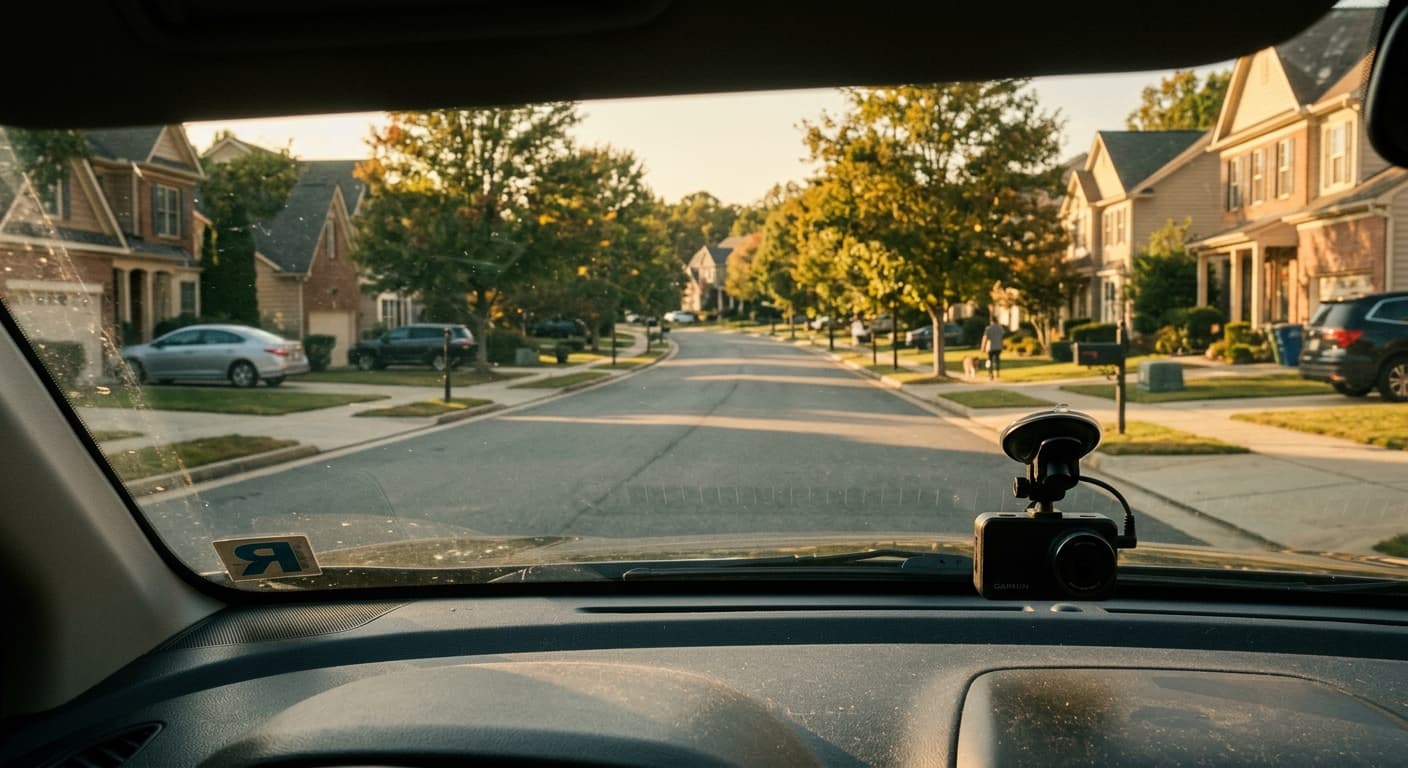
Dashcams are legal in North Carolina for both personal and commercial vehicles. Audio recording inside your vehicle is also permitted under N.C. Gen. Stat. 15A-287, the state's one-party consent law. North Carolina has no statute specifically addressing dashcam or windshield-object mounting, so mount the camera where it does not block your view as a matter of safe driving practice.
Dashcams are legal in North Carolina. The state has no law that specifically prohibits the use of dashboard cameras in personal or commercial vehicles. Drivers across North Carolina use dashcams to record traffic conditions, document accidents, protect against false claims, and monitor driving behavior. The only meaningful legal constraint involves how and where you mount the camera on your windshield.
This guide covers everything you need to know about dashcam laws in North Carolina, including mounting requirements, audio recording rules, using dashcam footage as evidence, commercial vehicle considerations, and practical tips for getting the most legal protection from your dashcam.
Are Dashcams Legal in North Carolina?
Yes. North Carolina does not have any statute that specifically addresses or restricts the use of dashboard cameras. You can legally:
- Install a dashcam in your personal vehicle
- Use a dashcam in a commercial vehicle (subject to employer policies)
- Record video of the road, traffic, and surrounding conditions while driving
- Record audio of conversations inside your vehicle (with one-party consent)
- Use front-facing, rear-facing, or multi-camera dashcam systems
- Use dashcams with GPS tracking, speed data, and other telemetry features
Windshield Mounting Requirements
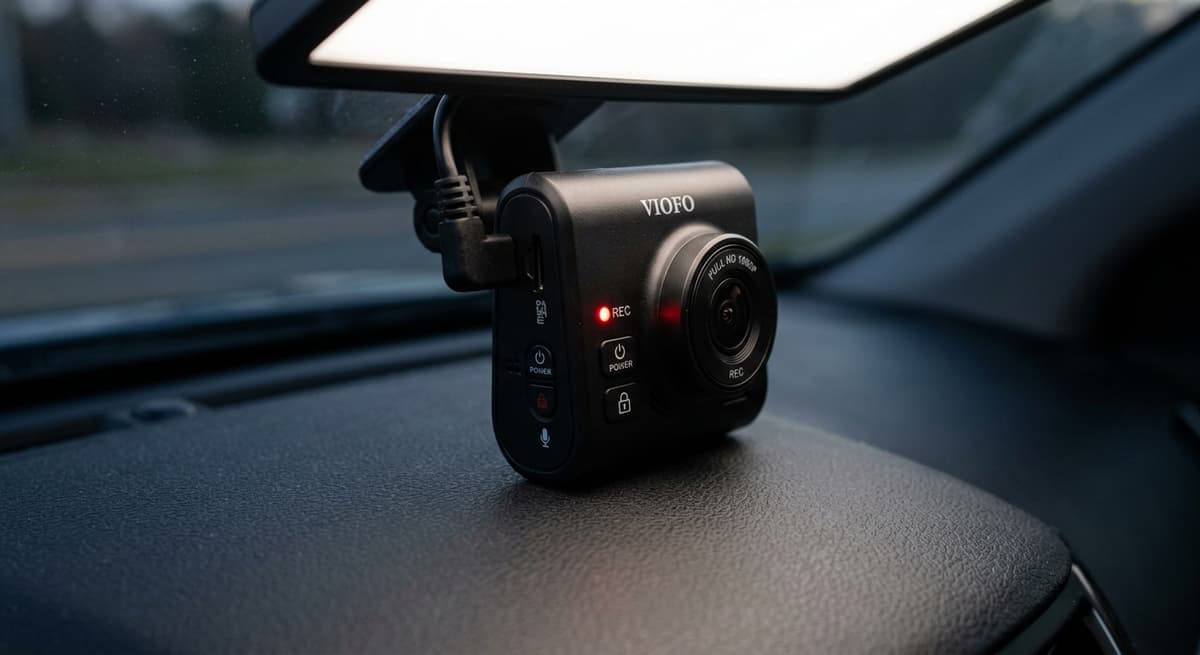
N.C. Gen. Stat. 20-127: What the Windshield Statute Actually Covers
Dashcams themselves are not regulated, and N.C. Gen. Stat. 20-127, the state's main windows-and-windshields statute, covers only two things: windshield wipers must be kept in good working order, and window tinting must meet specific light-transmission and reflectance limits. Its current text contains no clause about signs, stickers, or other objects mounted on the windshield.
North Carolina has no statute that specifically restricts where you can mount a dashcam or other object on the windshield. As a practical matter, though, a mount that blocks a meaningful part of your forward view is still worth avoiding: it could factor into a broader unsafe-equipment or careless-driving citation if it contributes to a crash, even without a dedicated windshield-obstruction statute to point to.
Safe Mounting Practices
To keep a dashcam mount from blocking your view:
- Mount behind the rearview mirror: The area behind the rearview mirror is already partially blocked, making it an ideal location that minimizes additional obstruction
- Use the top center of the windshield: Placing the camera near the top edge of the windshield keeps it out of your primary line of sight
- Choose a compact camera: Smaller dashcam units are less likely to obstruct your view
- Avoid the driver's direct line of sight: The camera should never be positioned where it blocks your view of the road, traffic signals, or pedestrians
- Use a dashboard mount: As an alternative to windshield mounting, some dashcams can be mounted on the dashboard itself, avoiding windshield obstruction entirely
- Secure the mount firmly: A dashcam that falls from the windshield while driving creates a distraction and potential hazard
What About Tinted Windows?
North Carolina has specific rules about window tinting under N.C. Gen. Stat. 20-127(b). Front side windows must allow more than 35% of light transmission, and the windshield can only have tinting along the top of the windshield above the manufacturer's AS-1 line. These rules apply independently of dashcam placement.
Audio Recording With Dashcams
One-Party Consent for In-Vehicle Audio
Most modern dashcams record audio by default, capturing conversations inside the vehicle. Under North Carolina's one-party consent law (N.C. Gen. Stat. 15A-287), you can record audio inside your vehicle because you are a party to conversations that take place while you are present.
This means you can legally record:
- Conversations with passengers in your vehicle
- Your own narration of road conditions or incidents
- Interactions with police officers during traffic stops
- Conversations during rideshare trips (when you are the driver)
- Verbal exchanges during roadside encounters
When Audio Recording Becomes Problematic
Audio recording with a dashcam could become a legal issue in narrow circumstances:
- When you leave the car: If your dashcam continues recording audio while your vehicle is parked and you are not present, it could capture conversations between people near your car. Because you are not a party to those conversations, the recording may violate the wiretapping statute.
- Cross-state travel: If you drive into a two-party consent state like Maryland, you should be aware of that state's rules. Most neighboring states follow one-party consent, but if you travel to states with stricter requirements, you may need to disable audio recording.
Disabling Audio
If you are concerned about audio recording compliance, most dashcams allow you to disable the microphone while keeping the video recording active. This eliminates any wiretapping concerns while preserving the visual evidence captured by the camera.
Using Dashcam Footage as Evidence
Traffic Accidents
Dashcam footage can be invaluable evidence in traffic accident cases. In North Carolina, the footage can:
- Establish fault: Show which driver ran a red light, failed to yield, or made an unsafe lane change
- Document road conditions: Record weather, visibility, road surface conditions, and traffic patterns at the time of the accident
- Capture the moment of impact: Provide a real-time record of exactly what happened
- Record post-accident interactions: Document conversations with other drivers, witnesses, and responding officers
Insurance Claims
Insurance companies regularly accept dashcam footage as evidence for claims. The footage can:
- Support your version of events in disputed claims
- Protect against fraudulent claims (staged accidents, exaggerated injuries)
- Speed up the claims process by providing clear evidence of what happened
- Potentially reduce your insurance premiums (some insurers offer dashcam discounts)
Criminal Cases
Dashcam footage can serve as evidence in criminal proceedings related to:
- DUI/DWI cases
- Hit and run incidents
- Road rage and aggressive driving
- Vehicular assault
- Reckless driving charges
- Crimes witnessed from your vehicle
Admissibility Requirements
For dashcam footage to be admitted as evidence in a North Carolina court, it must meet standard evidentiary requirements:
- Authentication: You must be able to testify that the footage is an accurate representation of what was recorded
- Timestamp accuracy: Ensure your dashcam's clock is set correctly, as inaccurate timestamps can undermine credibility
- Chain of custody: Demonstrate that the footage has not been altered since it was recorded
- Relevance: The footage must be related to the issues in the case
- Original file preservation: Keep the original recording unedited; present the unaltered file to the court
Dashcams and Traffic Stops
Recording Police During Traffic Stops
You have the right to record police officers during traffic stops in North Carolina. Your dashcam can continue recording throughout the stop, capturing both video and audio. Additionally:
- You can keep your dashcam running without informing the officer
- You can also use your phone to record the interaction
- Officers cannot order you to turn off your dashcam
- Officers cannot seize your dashcam or its memory card without a warrant
For more detailed guidance on recording police, see the dedicated recording police page.
If Asked About Your Dashcam
If an officer asks whether you have a dashcam, you are not required to volunteer this information. However, providing dashcam footage voluntarily can sometimes help resolve a situation in your favor, particularly if the footage supports your account of events.
Commercial Vehicle Dashcams
Fleet Management and Employer Requirements
Commercial vehicle operators in North Carolina may be required by their employer or fleet management company to use dashcams. These employer-mandated dashcams often include:
- Forward-facing cameras that record road conditions
- Driver-facing cameras that monitor driver behavior and alertness
- GPS tracking and speed monitoring
- Real-time video streaming to fleet management systems
- Automatic event detection (hard braking, collision, swerving)
Employee Privacy Considerations
Driver-facing dashcams in commercial vehicles raise privacy questions. In North Carolina:
- Employers can require driver-facing cameras as a condition of employment
- The cameras should not record during off-duty periods when the driver is using the vehicle for personal purposes
- Audio recording by employer-installed cameras follows the same one-party consent rules
- The NLRA may protect drivers who object to camera surveillance when acting in concert with other employees
Rideshare and Taxi Dashcams
Rideshare drivers (Uber, Lyft) and taxi operators in North Carolina can use dashcams in their vehicles. Some platform-specific considerations:
- Both Uber and Lyft allow dashcam use by drivers
- Posting a visible notice that recording is in progress is recommended (and may be required by the platform's policies)
- Recording audio of passengers follows one-party consent rules (you are a party to conversations in your vehicle)
- Some municipalities may have local regulations about cameras in for-hire vehicles
Parking Mode and Unattended Recording
What Is Parking Mode?
Many dashcams include a "parking mode" feature that activates recording when the camera detects motion or impact while the vehicle is parked. This feature can capture:
- Hit and run incidents while your car is parked
- Vandalism and break-in attempts
- Parking lot collisions
- Suspicious activity near your vehicle
Legal Considerations for Parking Mode
Parking mode video recording is generally permissible because it captures activity in public or semi-public spaces (streets, parking lots). However, the audio component raises questions:
- If the dashcam records audio during parking mode and captures conversations between passersby while you are not present, you are not a party to those conversations
- To avoid any wiretapping concerns, disable audio during parking mode or use a dashcam that only records video when in parking mode
Choosing and Using a Dashcam in North Carolina
Recommended Features
For maximum legal protection in North Carolina, look for a dashcam with:
- High resolution: 1080p minimum, 4K preferred, for clear identification of license plates and road details
- Wide-angle lens: 140 degrees or wider to capture a broad field of view
- GPS logging: Records your speed and location, which can corroborate your account of events
- Loop recording: Automatically overwrites old footage to maintain continuous recording
- Date and time stamp: Accurate timestamps add credibility to footage used as evidence
- Impact detection: Automatically saves footage when the camera detects a collision or sudden stop
- Night vision: Quality low-light recording for nighttime driving
- Parking mode: Motion-activated recording while the vehicle is parked
North Carolina Recording Laws by Topic
Phone Call Recording | Audio Recording | Video Recording | Workplace Recording | Recording Police | Security Cameras | Recording in Public | Landlord-Tenant | Dashcam Laws | Schools | Medical Recording | Voyeurism & Hidden Cameras
Back to North Carolina Recording Laws
More North Carolina Recording Topics
More North Carolina Laws
Frequently Asked Questions
Are dashcams legal in North Carolina?
Yes. North Carolina has no law that specifically prohibits dashcam use, and N.C. Gen. Stat. 20-127 (the state's windows-and-windshields statute) does not contain a windshield-obstruction rule -- it addresses only wipers and window tinting. You can install and operate a dashcam in any personal or commercial vehicle. As a matter of safe driving practice, mount it so it does not block your view of the road.
Where should I mount my dashcam in North Carolina?
Mount your dashcam behind the rearview mirror or near the top center of the windshield to minimize windshield obstruction. The camera should not block your view of the road, traffic signals, or pedestrians. Dashboard mounts are an alternative that avoids windshield obstruction entirely.
Can my dashcam record audio in North Carolina?
Yes. North Carolina's one-party consent law allows you to record audio inside your vehicle because you are a party to conversations that occur while you are present. If your dashcam records audio during parking mode when you are not in the car, consider disabling audio for that mode to avoid potential wiretapping concerns.
Can dashcam footage be used as evidence in North Carolina?
Yes. Dashcam footage is regularly used as evidence in traffic accident cases, insurance claims, and criminal proceedings in North Carolina. The footage must be authenticated, have an accurate timestamp, and be presented in its original unedited form to maximize its evidentiary value.
Can police take my dashcam footage during a traffic stop in North Carolina?
Police cannot seize your dashcam or its memory card without a warrant or court order. You can keep your dashcam running during a traffic stop, and officers cannot order you to turn it off. You may voluntarily provide footage, but you are not required to do so.
Updates
Independently fact-checked against the cited primary sources; governing law re-checked for recent changes
Corrected the windshield-mounting section: N.C. Gen. Stat. 20-127's current text covers only windshield wipers and window tinting, not a 'sign, poster, sticker, or nontransparent material' obstruction rule (that claim had no basis in the current statute and was repeated in the intro sentence, a KeyTakeaways bullet, a section heading, and the FAQ). Also fixed a stray editing note that misidentified Virginia as a two-party consent state (Virginia is one-party; replaced the example with Maryland, an actual two-party consent state).
Governing law re-checked for recent changes
Fixed ncleg.net URLs to ncleg.gov (2 occurrences).
Reviewed and approved by an editor
The Law Behind This Article
This article rests on the statutory provisions below, held in our own legal record and retrieved from the official source. Tap a section to read the operative text.
North Carolina General Statutes, Chapter 15A: Criminal Procedure Act.
§ 15A-287Interception and disclosure of wire, oral, or electronic communications prohibitedIn forcecited in 18 of our articles
(a) Except as otherwise specifically provided in this Article, a person is guilty of a Class H felony if, without the consent of at least one party to the communication, the person: (1) Willfully intercepts, endeavors to intercept, or procures any other person to intercept or endeavor to intercept, any wire, oral, or electronic communication. (2) Willfully uses, endeavors to use, or procures any other person to use or endeavor to use any electronic, mechanical, or other device to intercept any oral communication when: a. The device is affixed to, or otherwise transmits a signal through, a wire, cable, or other like connection used in wire communications; or b. The device transmits communications by radio, or interferes with the transmission of such communications.
Official text (excerpt) · last checked 2026-07-29 · Read the full text in our law library · Verify at ncleg.gov
Cited in 12 court opinions in our collectionLatest citing opinion in our collection: 2026
In the courts (editorial summary, independently checked):North Carolina courts apply Section 15A-287 to private recording. Kroh v. Kroh (2002) held it reaches one spouse's nonconsensual audio recording of the other in the family home, not video without sound, and adopted vicarious consent by a custodial parent. State v. McGriff (2002) held interception is not willful absent a bad purpose.
Opinions citing this section in our collection:
- State v. McGriff (Court of Appeals of North Carolina 2002, 151 N.C. App. 631)✓A neighbor's cordless phone picked up a call in which a girl said McGriff had tried to force oral sex on her, and she listened about an hour; the court held listening out of concern for a minor was not willful interception under Section 15A-287(a)(1), so the evidence came in.
- Wright v. TOWN OF ZEBULON (Court of Appeals of North Carolina 2010, 202 N.C. App. 540)✓A police chief hid a transmitter under a sergeant's patrol car seat to test whether he tipped off drug dealers; the court affirmed summary judgment on his Section 15A-287(a)(1) claim, finding the public safety purpose meant the interception was not willful.
- Kroh v. Kroh (Court of Appeals of North Carolina 2002, 152 N.C. App. 347)“…rs to intercept, . . . any . . . oral . . . communication.” G.S. § 15A-287(a)(l). An “oral communication” includes…”
Identified automatically from the court opinions citing this section — not a ranking of which case controls.
Also relied on in: North Carolina Smart Glasses Recording Laws 2026, North Carolina Video Recording Laws: Public, Private, and Voyeurism Rules, North Carolina Recording Laws (2026): One-Party Consent Rules
North Carolina General Statutes, Chapter 20: Motor Vehicles.
§ 20-127Windows and windshield wipersIn forcecited in 3 of our articles
(a) Windshield Wipers. - A vehicle that is operated on a highway and has a windshield shall have a windshield wiper to clear rain or other substances from the windshield in front of the driver of the vehicle and the windshield wiper shall be in good working order. If a vehicle has more than one windshield wiper to clear substances from the windshield, all the windshield wipers shall be in good working order. (b) Window Tinting Restrictions. - A window of a vehicle that is operated on a highway or a public vehicular area shall comply with this subsection. The windshield of the vehicle may be tinted only along the top of the windshield and the tinting may not extend more than five inches below the top of the windshield or below the AS1 line of the windshield, whichever measurement is longer. Provided, however, an untinted clear film which does not obstruct vision but which reduces or eliminates ultraviolet radiation from entering a vehicle may be applied to the windshield. Any other window of the vehicle may be tinted in accordance with the following restrictions: (1) The total light transmission of the tinted window shall be at least thirty-five percent (35%).
Official text (excerpt) · last checked 2026-09-01 · Read the full text in our law library · Verify at ncleg.gov
Cited in 3 court opinions in our collectionLatest citing opinion in our collection: 2011
Opinions citing this section in our collection:
- State v. Schiffer (Court of Appeals of North Carolina 1999, 132 N.C. App. 22)“…than permitted under North Carolina law. See N.C. Gen. Stat. § 20-127 (b) (Cum. Supp. 1997) (containing this…”
- State v. Veazey (Court of Appeals of North Carolina 2008, 191 N.C. App. 181)“…nside rearview mirror and a driver’s-side outside mirror); N.C. Gen. Stat. § 20-127 (a)-(b) (2007) (vehicle must have a win…”
- State v. Williams (Court of Appeals of North Carolina 2011, 215 N.C. App. 1)“…ey rode had tinted windows in violation of state law, see N.C. Gen.Stat. § 20-127(b), (d) (2009), and cited Perez for the…”
Identified automatically from the court opinions citing this section — not a ranking of which case controls.
Also relied on in: North Carolina Windshield Mounting Laws (2026 Guide), North Carolina Window Tint Laws (2026): Legal VLT Limits
Explore the law
This article also draws on these acts and chapters (opening at their first section): North Carolina General Statutes, Chapter 15A: Criminal Procedure Act. § 15A-101 (Definitions)
Related law for further reading — not part of this article’s citations.
Search our full record of US law — 2.1 million sections, every state + federal →
Sources and References
- N.C. Gen. Stat. 20-127 - Windows and Windshield Wipers(ncleg.gov).gov
- N.C. Gen. Stat. Chapter 15A, Article 16 - Electronic Surveillance(ncleg.gov).gov
- N.C. Gen. Stat. 15A-287 - Interception and Disclosure Prohibited(ncleg.net).gov
- NC DMV - Motor Vehicle Laws(ncdot.gov).gov
- National Labor Relations Act(nlrb.gov).gov
- N.C. Gen. Stat. 15A-287 - Interception and Disclosure Prohibited(ncleg.gov).gov