
North Carolina
North Carolina Phone Call Recording Laws: What You Need to Know
Independently fact-checked against primary sources (last audited August 15, 2026). · Reviewed by the RecordingLaw editorial team. · Law checked current as of August 15, 2026. · 9 primary sources cited on this page. How we verify our legal content

North Carolina is a one-party consent state under N.C. Gen. Stat. 15A-287, so you may record any phone call you participate in without notifying the other party. Recording a call you are not part of is a Class H felony.
North Carolina allows you to record your own phone calls without telling the other person. Under N.C. Gen. Stat. 15A-287, the state follows a one-party consent framework for recording wire, oral, and electronic communications. This means that as long as you are a participant in the phone call, you can record it without notifying or obtaining permission from anyone else on the line.
This guide covers everything you need to know about recording phone calls in North Carolina in 2026, including what the law actually says, how it applies to different types of calls, what happens when you call someone in another state, and how recorded calls can be used as evidence.
What North Carolina Law Says About Recording Phone Calls
The Core Statute: N.C. Gen. Stat. 15A-287
North Carolina's wiretapping and electronic surveillance laws are found in Chapter 15A, Article 16 of the North Carolina General Statutes. The primary statute, N.C. Gen. Stat. 15A-287, makes it illegal to willfully intercept, endeavor to intercept, or procure any other person to intercept any wire, oral, or electronic communication without the consent of at least one party.
The critical phrase is "without the consent of at least one party." Because you are always a party to your own phone calls, your own consent satisfies the one-party requirement. You do not need to tell the other person you are recording, and you do not need to play a beep tone or announcement.
Types of Phone Calls Covered
The statute covers all forms of wire and electronic communications. In practical terms, this includes:
- Landline telephone calls placed through traditional copper wire networks
- Cell phone calls made through cellular networks
- VoIP calls placed through services like Zoom, Microsoft Teams, Google Meet, Skype, and other internet-based platforms
- Video calls with audio on any platform, including FaceTime and WhatsApp
- Conference calls where multiple participants are on the line
The law does not distinguish between personal calls and business calls. The same one-party consent rule applies regardless of the purpose of the call.
What "Intercept" Means Under NC Law
The statute uses the term "intercept" to describe the prohibited conduct. Under N.C. Gen. Stat. 15A-286, "intercept" means the aural or other acquisition of the contents of any wire, oral, or electronic communication through the use of any electronic, mechanical, or other device. This definition is broad enough to cover recording with a smartphone, a dedicated voice recorder, a computer application, or any other tool capable of capturing audio.
Recording your phone call with a smartphone app, an external recorder, or built-in call recording software all fall within the scope of lawful one-party consent recording, as long as you are an active participant in the call.
Can You Record Your Own Phone Calls in North Carolina?
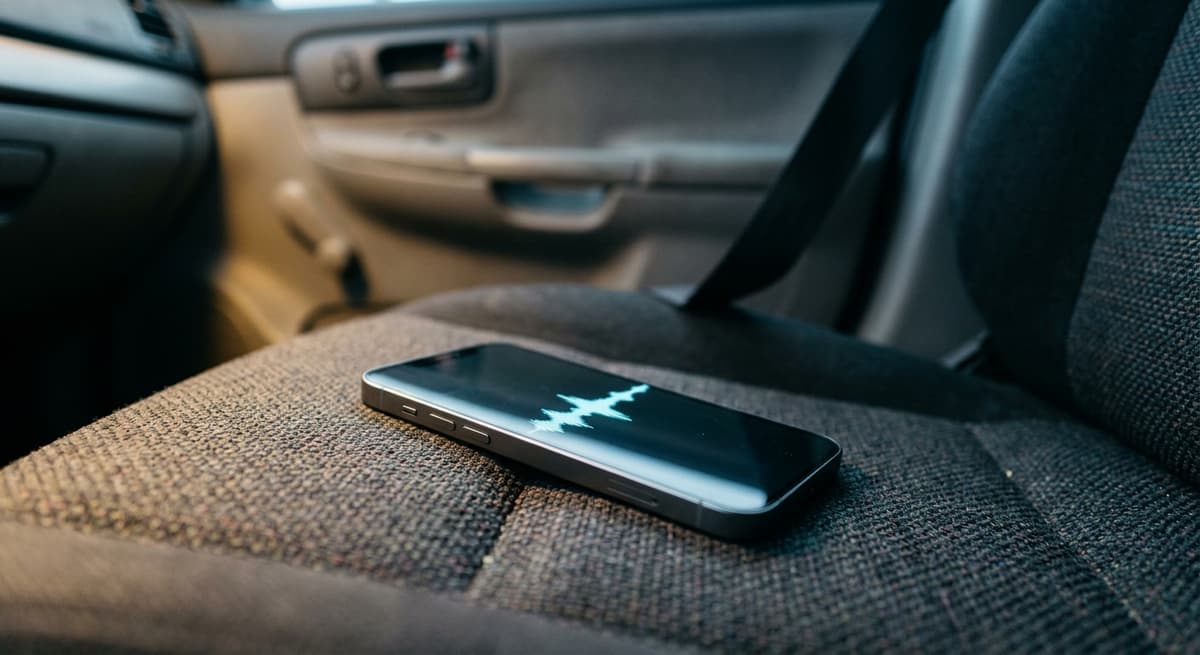
Yes. You have the legal right to record any phone call you participate in. North Carolina's one-party consent law means your own knowledge of and consent to the recording is sufficient. You do not need to:
- Tell the other person you are recording
- Play a beep tone during the call
- Get written or verbal consent from the other party
- Provide any notification before or during the call
This applies whether you are calling someone or receiving a call. The only requirement is that you are an active participant in the conversation being recorded.
What You Cannot Do
While you can freely record your own calls, the law draws a clear line at recording conversations you are not part of. The following activities are illegal under N.C. Gen. Stat. 15A-287:
- Wiretapping someone else's phone line to listen to or record their calls
- Using a listening device to capture a phone call between two other people
- Asking a third party to record a call you are not involved in, without consent from at least one participant
- Intercepting electronic communications such as emails, text messages, or data transmissions without authorization
Even if you have access to the phone (for example, a family plan where you pay the bill), you cannot record calls made by other people on that phone unless you are a party to those calls or have consent from at least one participant.
Recording Phone Calls Across State Lines

Why This Matters
The United States does not have a single, uniform recording consent law. Each state sets its own rules. When you place a call from North Carolina to someone in another state, the question becomes: which state's law applies?
The General Rule
Courts and legal experts generally agree that the stricter law applies in interstate calls. If you are in North Carolina (one-party consent) and you call someone in California (two-party consent), the California standard may apply. This means you could face liability under California law for recording that call without the other person's consent, even though the recording would be perfectly legal under North Carolina law.
Two-Party Consent States to Watch
The following states require consent from all parties to a phone call before recording is legal:
| State | Key Statute |
|---|---|
| California | Penal Code 632 |
| Connecticut | Conn. Gen. Stat. 52-570d |
| Florida | Fla. Stat. 934.03 |
| Illinois | 720 ILCS 5/14-2 |
| Maryland | Md. Code, Cts. & Jud. Proc. 10-402 |
| Massachusetts | Mass. Gen. Laws ch. 272, 99 |
| Montana | Mont. Code Ann. 45-8-213 |
| New Hampshire | N.H. Rev. Stat. Ann. 570-A:2 |
| Pennsylvania | 18 Pa.C.S. 5703 |
| Washington | Wash. Rev. Code 9.73.030 |
Best Practice for Interstate Calls
When calling someone in a two-party consent state, the safest approach is to inform the other party that you are recording. A simple statement like "I am recording this call for my records" at the beginning of the conversation protects you from potential liability. If the other person objects, you can either stop recording or end the call.
Federal Law: Title III of the Omnibus Crime Control Act
Federal wiretapping law under 18 U.S.C. 2511 also follows a one-party consent framework. The federal standard acts as a baseline, and states can impose stricter requirements (as two-party consent states do), but they cannot be more permissive than federal law. Since North Carolina's one-party consent standard matches the federal minimum, NC recordings that comply with state law also comply with federal law.
Business Phone Call Recording in North Carolina
Employer Recording of Business Calls
North Carolina businesses can record phone calls for legitimate business purposes, including:
- Quality assurance and customer service monitoring
- Training purposes to coach employees on call handling
- Compliance documentation for regulated industries like finance and healthcare
- Dispute resolution to maintain accurate records of verbal agreements
Under the one-party consent framework, a business only needs consent from one party to the call. If an employee is on the line, the employee's consent (or the employer's direction to record) satisfies the legal requirement.
Notice Requirements for Businesses
While North Carolina law does not require businesses to notify callers about recording, many businesses choose to provide notice as a best practice. Common methods include:
- A recorded announcement at the beginning of the call ("This call may be recorded for quality assurance purposes")
- A periodic beep tone during the call
- Written disclosure in service agreements or terms of service
- Verbal notice from the employee at the start of the conversation
Providing notice protects the business from liability in interstate calls and builds customer trust. It also addresses potential concerns under the Federal Trade Commission Act, which prohibits deceptive practices.
Employee Rights When Being Recorded
North Carolina employees have the right to record their own phone calls at work under the one-party consent law. This includes calls with supervisors, HR representatives, clients, and coworkers. However, employers may have internal policies that restrict or prohibit recording. Violating an employer's recording policy can result in disciplinary action or termination, even though the recording itself is legal under state law.
The National Labor Relations Act (NLRA) provides some protection. The NLRB has ruled that overly broad no-recording policies can violate Section 7 of the NLRA when they interfere with employees' rights to engage in protected concerted activity, such as documenting unsafe working conditions or wage violations.
Recording Phone Calls for Evidence in North Carolina
Admissibility in Court
Phone call recordings made in compliance with North Carolina's one-party consent law are generally admissible as evidence in both criminal and civil proceedings. To use a recording as evidence, you typically need to establish:
- Authentication: Prove the recording is genuine, unaltered, and accurately represents the conversation that took place
- Relevance: Show the recording relates to the issues being decided in the case
- Chain of custody: Demonstrate how the recording has been stored and handled since it was made
- Foundation testimony: Provide testimony from a person who can identify the voices on the recording
Criminal Cases
In criminal proceedings, illegally obtained recordings are inadmissible under North Carolina law. If you record a phone call without being a party to it and without consent, the recording cannot be used as evidence. The person who made the illegal recording may also face criminal charges for violating N.C. Gen. Stat. 15A-287.
Recordings obtained through lawful court-ordered wiretaps under N.C. Gen. Stat. 15A-290 are admissible when the wiretap was properly authorized by a judicial review panel.
Civil Cases
In civil cases, legally recorded phone calls can serve as evidence in contract disputes, harassment claims, personal injury cases, and family law matters. North Carolina courts have broad discretion in determining the admissibility of recordings, weighing their probative value against any potential for unfair prejudice.
Best Practices for Recording Evidence
If you plan to use a phone call recording as evidence in a North Carolina court:
- Keep the original recording file completely unedited
- Note the date, time, duration, and participants of the call immediately after recording
- Store the original file in a secure location with backup copies
- Do not share the recording unnecessarily before presenting it in court
- Consult with an attorney about proper procedures for introducing the recording as evidence
- Be prepared to testify about the circumstances under which the recording was made
Penalties for Illegal Phone Call Recording in North Carolina
Criminal Penalties
Illegally recording a phone call in North Carolina is a Class H felony under N.C. Gen. Stat. 15A-287. Under the state's structured sentencing system, the punishment depends on the offense class and the defendant's prior record level:
| Prior Record Level | Mitigated Minimum | Presumptive Minimum | Aggravated Minimum |
|---|---|---|---|
| Level I (no prior record) | 4-5 months | 5-6 months | 6-8 months |
| Level II | 4-6 months | 6-8 months | 8-10 months |
| Level III | 6-8 months | 8-10 months | 10-12 months |
| Level IV | 7-9 months | 9-11 months | 11-14 months |
| Level V | 9-12 months | 12-15 months | 15-19 months |
| Level VI (extensive record) | 12-16 months | 16-20 months | 20-25 months |
Additionally, willfully disclosing information from a lawfully intercepted communication to hinder a criminal investigation is a Class G felony, which carries more severe penalties.
Civil Liability
Under N.C. Gen. Stat. 15A-296, victims of illegal phone call recording can file a civil lawsuit and recover:
- Actual damages resulting from the illegal interception
- Statutory minimum damages of $100 per day for each day of violation, or $1,000, whichever is greater
- Punitive damages when the violation was willful
- Reasonable attorney fees and litigation costs
Common Questions About Recording Phone Calls in North Carolina
Can I Record a Phone Call With My Ex-Spouse?
Yes. As a one-party consent state, you can record phone calls with your ex-spouse as long as you are a participant in the call. This is common in custody and divorce disputes. However, you should not record calls between your child and your ex-spouse unless you are an active participant in the conversation.
Can I Record Customer Service Calls?
Yes. You can record any customer service call you participate in. Many businesses already record these calls on their end. When a company plays a message saying "this call may be recorded," that notice also serves as implicit consent for you to record the call as well.
Can I Record Calls With Government Officials?
Yes. You can record phone calls with government employees, including calls to state agencies, local government offices, and federal agencies. Government employees acting in their official capacity generally have a reduced expectation of privacy during business calls.
Can I Record Calls With My Attorney?
While legally permitted under one-party consent, recording calls with your own attorney without their knowledge is strongly discouraged. It could damage the attorney-client relationship and may have implications for attorney-client privilege. Always discuss recording with your lawyer beforehand.
Are Call Recording Apps Legal in North Carolina?
Yes. Apps like Rev Call Recorder, TapeACall, Cube ACR, and other call recording applications are legal to use in North Carolina as long as you are a party to the call being recorded. The app is simply a tool for exercising your legal right to record under the one-party consent law.
AI Transcription and Phone Call Recording
AI-powered transcription services and call recording tools have become widespread. Services like Otter.ai, Fireflies.ai, and built-in transcription features in platforms like Zoom and Microsoft Teams can automatically record and transcribe phone calls.
In North Carolina, using these tools follows the same one-party consent rules as any other recording method. If you are a party to the call, you can use an AI tool to record and transcribe it without notifying the other participants. However, if the call involves participants in two-party consent states, you should notify all participants before activating AI recording or transcription features.
Some AI tools join calls as a separate "participant" (appearing as a bot). While this does not change the legal analysis in North Carolina, it may alert the other party to the recording. Review the settings of any AI transcription tool to understand how it appears to other call participants.
North Carolina Recording Laws by Topic
Phone Call Recording | Audio Recording | Video Recording | Workplace Recording | Recording Police | Security Cameras | Recording in Public | Landlord-Tenant | Dashcam Laws | Schools | Medical Recording | Voyeurism & Hidden Cameras
Back to North Carolina Recording Laws
More North Carolina Recording Topics
More North Carolina Laws
Frequently Asked Questions
Is it legal to record a phone call in North Carolina without telling the other person?
Yes. North Carolina is a one-party consent state under N.C. Gen. Stat. 15A-287. You can record any phone call you participate in without informing or getting permission from the other person on the line.
Can I record a phone call from North Carolina to someone in California?
You should inform the California participant before recording. California is a two-party consent state, and the stricter law generally applies in interstate calls. Recording without the California participant's consent could expose you to liability under California Penal Code 632.
Can my employer record my work phone calls in North Carolina?
Yes. Under North Carolina's one-party consent law, your employer can record business calls as long as at least one party to the call consents. If the employer directs an employee to record or monitors calls for quality assurance, the legal requirement is met. Employers cannot, however, record personal calls made on company phones without consent from a participant.
Can a recorded phone call be used as evidence in North Carolina court?
Yes. Phone call recordings made in compliance with North Carolina's one-party consent law are generally admissible in both criminal and civil proceedings. The recording must be authenticated, relevant to the case, and presented through proper legal procedures. Illegally obtained recordings are inadmissible.
What is the penalty for illegally recording a phone call in North Carolina?
Illegally recording a phone call is a Class H felony under N.C. Gen. Stat. 15A-287, with a minimum sentence of 4 to 25 months in prison depending on your prior record level and a corresponding maximum term of up to 39 months. You can also face civil liability under N.C. Gen. Stat. 15A-296, with minimum damages of $100 per day or $1,000, plus actual damages, punitive damages, and attorney fees.
Updates
Rebuilt the Class H felony sentencing table to match the official chart (Mitigated/Presumptive/Aggravated minimum ranges by Prior Record Level, topping out at 25 months, not 39), harmonized the FAQ and changelog to describe the sentence as a 4-to-25-month minimum with a corresponding maximum of up to 39 months, and fixed a citation link that pointed to the wrong statute section.
Independently fact-checked against the cited primary sources; governing law re-checked for recent changes
Governing law re-checked for recent changes
Governing law re-checked for recent changes
Corrected Class H felony summary range: the minimum-sentence grid runs 4 to 25 months across Prior Record Levels I-VI under N.C. Gen. Stat. § 15A-1340.17(c), with corresponding maximum terms of up to 39 months under subsection (d). Fixed ncleg.net URLs to ncleg.gov. NLRB reference retained as general description (Stericycle standard controls no-recording-policy cases).
Reviewed and approved by an editor
The Law Behind This Article
This article rests on the statutory provisions below, held in our own legal record and retrieved from the official source. Tap a section to read the operative text.
North Carolina General Statutes, Chapter 15A: Criminal Procedure Act.
§ 15A-287Interception and disclosure of wire, oral, or electronic communications prohibitedIn forcecited in 18 of our articles
(a) Except as otherwise specifically provided in this Article, a person is guilty of a Class H felony if, without the consent of at least one party to the communication, the person: (1) Willfully intercepts, endeavors to intercept, or procures any other person to intercept or endeavor to intercept, any wire, oral, or electronic communication. (2) Willfully uses, endeavors to use, or procures any other person to use or endeavor to use any electronic, mechanical, or other device to intercept any oral communication when: a. The device is affixed to, or otherwise transmits a signal through, a wire, cable, or other like connection used in wire communications; or b. The device transmits communications by radio, or interferes with the transmission of such communications.
Official text (excerpt) · last checked 2026-07-29 · Read the full text in our law library · Verify at ncleg.gov
Cited in 12 court opinions in our collectionLatest citing opinion in our collection: 2026
In the courts (editorial summary, independently checked):North Carolina courts apply Section 15A-287 to private recording. Kroh v. Kroh (2002) held it reaches one spouse's nonconsensual audio recording of the other in the family home, not video without sound, and adopted vicarious consent by a custodial parent. State v. McGriff (2002) held interception is not willful absent a bad purpose.
Opinions citing this section in our collection:
- State v. McGriff (Court of Appeals of North Carolina 2002, 151 N.C. App. 631)✓A neighbor's cordless phone picked up a call in which a girl said McGriff had tried to force oral sex on her, and she listened about an hour; the court held listening out of concern for a minor was not willful interception under Section 15A-287(a)(1), so the evidence came in.
- Wright v. TOWN OF ZEBULON (Court of Appeals of North Carolina 2010, 202 N.C. App. 540)✓A police chief hid a transmitter under a sergeant's patrol car seat to test whether he tipped off drug dealers; the court affirmed summary judgment on his Section 15A-287(a)(1) claim, finding the public safety purpose meant the interception was not willful.
- Kroh v. Kroh (Court of Appeals of North Carolina 2002, 152 N.C. App. 347)“…rs to intercept, . . . any . . . oral . . . communication.” G.S. § 15A-287(a)(l). An “oral communication” includes…”
Identified automatically from the court opinions citing this section — not a ranking of which case controls.
§ 15A-286DefinitionsIn forcecited in 3 of our articles
As used in this Article, unless the context requires otherwise: (1) "Aggrieved person" means a person who was a party to any intercepted wire, oral, or electronic communication or a person against whom the interception was directed. (2) "Attorney General" means the Attorney General of the State of North Carolina, unless otherwise specified. (3) "Aural transfer" means a transfer containing the human voice at any point between and including the point of origin and the point of reception. (4) "Chapter 119 of the United States Code" means Chapter 119 of Part I of Title 18, United States Code, being Public Law 90-351, the Omnibus Crime Control and Safe Streets Act of 1968, as amended by the Electronic Communications Privacy Act of 1986. (5) "Communications common carrier" shall have the same meaning which is given the term "common carrier" by section 153(h) of Title 47 of the United States Code. (6) "Contents" when used with respect to any wire, oral, or electronic communication means and includes any information concerning the substance, purport, or meaning of that communication.
Official text (excerpt) · last checked 2026-07-29 · Read the full text in our law library · Verify at ncleg.gov
Cited in 9 court opinions in our collectionLatest citing opinion in our collection: 2025
Opinions citing this section in our collection:
- Wright v. TOWN OF ZEBULON (Court of Appeals of North Carolina 2010, 202 N.C. App. 540)“…ts violated the North Carolina Electronic Surveillance Act, N.C. Gen. Stat. §§ 15A-286 to -298 (2009) (“NCESA”), by willfully…”
- Kroh v. Kroh (Court of Appeals of North Carolina 2002, 152 N.C. App. 347)“…llance Act, Art. 16 of Chapter 15A of the General Statutes (N.C. Gen. Stat. §§ 15A-286 et seq. (2001)), and (4) i…”
- State v. McGriff (Court of Appeals of North Carolina 2002, 151 N.C. App. 631)“…he use of any electronic, mechanical, or other device.” N.C.G.S. § 15A-286(13) (2001). The key to our analy…”
Identified automatically from the court opinions citing this section — not a ranking of which case controls.
§ 15A-296Recovery of civil damages authorizedIn forcecited in 8 of our articles
(a) Any person whose wire, oral, or electronic communication is intercepted, disclosed, or used in violation of this Article, has a civil cause of action against any person who intercepts, discloses, uses, or procures any other person to intercept, disclose, or use such communications, and is entitled to recover from any other person: (1) Actual damages, but not less than liquidated damages, computed at the rate of one hundred dollars ($100.00) a day for each day of violation or one thousand dollars ($1,000), whichever is higher; (2) Punitive damages; and (3) A reasonable attorneys' fee and other litigation costs reasonably incurred. (b) Good faith reliance on a court order or on a representation made by the Attorney General or a district attorney is a complete defense to any civil or criminal action brought under this Article.
Official text (excerpt) · last checked 2026-07-29 · Read the full text in our law library · Verify at ncleg.gov
Cited in 4 court opinions in our collectionLatest citing opinion in our collection: 2026
Opinions citing this section in our collection:
- Kroh v. Kroh (Court of Appeals of North Carolina 2002, 152 N.C. App. 347)“…nce Act and awarded $1,000.00 in compensatory damages under G.S. § 15A-296. Following a bench trial on the remaini…”
- Riddick v. Gates Cnty. (Court of Appeals of North Carolina 2026)“…in the Board of Elections.” Plaintiff sues pursuant to N.C.G.S. § 15A-296, which creates a civil cause of action…”
- Wright v. TOWN OF ZEBULON (Court of Appeals of North Carolina 2010, 202 N.C. App. 540)“…damages, attorney’s fees, and associated litigation costs. N.C. Gen. Stat. § 15A-296(a) (2009); Kroh v. Kroh,…”
Identified automatically from the court opinions citing this section — not a ranking of which case controls.
Florida Statutes
§ 934.03Interception and disclosure of wire, oral, or electronic communications prohibited.In forcecited in 51 of our articles
(1) Except as otherwise specifically provided in this chapter, any person who:(a) Intentionally intercepts, endeavors to intercept, or procures any other person to intercept or endeavor to intercept any wire, oral, or electronic communication; (b) Intentionally uses, endeavors to use, or procures any other person to use or endeavor to use any electronic, mechanical, or other device to intercept any oral communication when:1. Such device is affixed to, or otherwise transmits a signal through, a wire, cable, or other like connection used in wire communication; or 2.
Official text (excerpt) · last checked 2026-08-31 · Read the full text in our law library · Verify at leg.state.fl.us
Cited in 74 court opinions in our collectionLatest citing opinion in our collection: 2026
In the courts (editorial summary, independently checked):State v. Walls (1978) held that recording an in-home oral communication without the consent of all parties violated section 934.03 and required suppression, and State v. Inciarrano (1985) held the statute protects only communications uttered with a reasonable expectation of privacy.
Opinions citing this section in our collection:
- State v. Walls (Supreme Court of Florida 1978, 356 So. 2d 294)✓An extortion victim secretly recorded threats made to him in his own home; the court held that was a protected oral communication, that recording it without every party's consent violated Section 934.03, and that Section 934.06 barred using the tape as evidence.
- SHARRON TASHA FORD v. CITY OF BOYNTON BEACH (District Court of Appeal of Florida 2021)“…ng oral communications in violation of the wiretap statute, section 934.03, Florida Statutes (2009), and for obstructing without vio…”
- State v. Calhoun (Circuit Court for the Judicial Circuits of Florida 1984, 7 Fla. Supp. 2d 3)“…hall not be violated” . . . (emphasis mine) Furthermore, section 934.03, Florida Statutes, makes it unlawful for *6 any person (…”
Identified automatically from the court opinions citing this section — not a ranking of which case controls.
United States Code Title 18
§ 2511Interception and disclosure of wire, oral, or electronic communications prohibitedIn forcecited in 418 of our articles
Except as otherwise specifically provided in this chapter any person who— intentionally intercepts, endeavors to intercept, or procures any other person to intercept or endeavor to intercept, any wire, oral, or electronic communication; intentionally uses, endeavors to use, or procures any other person to use or endeavor to use any electronic, mechanical, or other device to intercept any oral communication when— such device is affixed to, or otherwise transmits a signal through, a wire, cable, or other like connection used in wire communication; or such device transmits communications by radio, or interferes with the transmission of such communication; or such person knows, or has reason to know, that such device or any component thereof has been sent through the mail or transported in interstate or foreign commerce; or such use or endeavor to use (A) takes place on the premises of any business or other commercial establishment the operations of which affect interstate or foreign commerce; or (B) obtains or is for the purpose of obtaining information relating to the operations of any business or other commercial establishment the operations of which affect interstate or foreign…
Official text (excerpt) · last checked 2026-08-28 · Read the full text in our law library · Verify at uscode.house.gov
Cited in 2,045 court opinions in our collectionLatest citing opinion in our collection: 2026
In the courts (editorial summary, independently checked):Griggs-Ryan v. Smith (1990) applied the Section 2511(2)(d) prior-consent exception, treating a tenant repeatedly told that all incoming calls were taped as having impliedly consented. United States v. United States District Court (1972) read the then-current Section 2511(3) as conferring no presidential surveillance power.
Opinions citing this section in our collection:
- Mitchell v. Forsyth (Supreme Court of the United States 1985, 472 U.S. 511)✓The Attorney General authorized a warrantless 1970 national security wiretap that caught the plaintiff's calls; the Court held the since-repealed Section 2511(3) disclaimer left the tap lawful under Title III, and that Mitchell had qualified immunity.
- United States v. United States District Court for the Eastern District of Michigan (Supreme Court of the United States 1972, 407 U.S. 297)✓The Attorney General approved warrantless wiretaps on members of a domestic group accused of bombing a CIA office; the Court read Section 2511(3) as a congressional disclaimer conferring no surveillance power, then held the Fourth Amendment required prior judicial approval.
- Forsyth v. Barr (Court of Appeals for the Fifth Circuit 1994, 19 F.3d 1527)✓Dallas police used, in an internal affairs probe of an officer, calls private parties allegedly intercepted illegally; assuming that was unlawful, the Fifth Circuit held Section 2517(1) and (2) allowed the disclosure and use, defeating the Section 2511(1)(c) and (d) claims.
Identified automatically from the court opinions citing this section — not a ranking of which case controls.
Explore the law
This article also draws on these acts and chapters (opening at their first section): North Carolina General Statutes, Chapter 15A: Criminal Procedure Act. § 15A-101 (Definitions)
Related law for further reading — not part of this article’s citations.
Search our full record of US law — 2.1 million sections, every state + federal →
Sources and References
- N.C. Gen. Stat. Chapter 15A, Article 16 - Electronic Surveillance(ncleg.gov).gov
- N.C. Gen. Stat. 15A-287 - Interception and Disclosure Prohibited(ncleg.net).gov
- N.C. Gen. Stat. 15A-286 - Definitions for Electronic Surveillance(ncleg.gov).gov
- N.C. Gen. Stat. 15A-296 - Civil Remedies for Illegal Interception(ncleg.net).gov
- NC Courts Structured Sentencing Punishment Grids(nccourts.gov).gov
- Federal Wiretap Act - 18 U.S.C. 2511(law.cornell.edu)
- National Labor Relations Act(nlrb.gov).gov
- Federal Trade Commission Act(ftc.gov).gov
- N.C. Gen. Stat. 15A-287 - Interception and Disclosure Prohibited(ncleg.gov).gov
- N.C. Gen. Stat. 15A-296 - Civil Remedies for Illegal Interception(ncleg.gov).gov