
New Jersey
New Jersey Laws on Recording Police: Your Rights and Limits
Independently fact-checked against primary sources (last audited August 15, 2026). · Reviewed by the RecordingLaw editorial team. · Law checked current as of August 9, 2026. · 5 primary sources cited on this page. How we verify our legal content
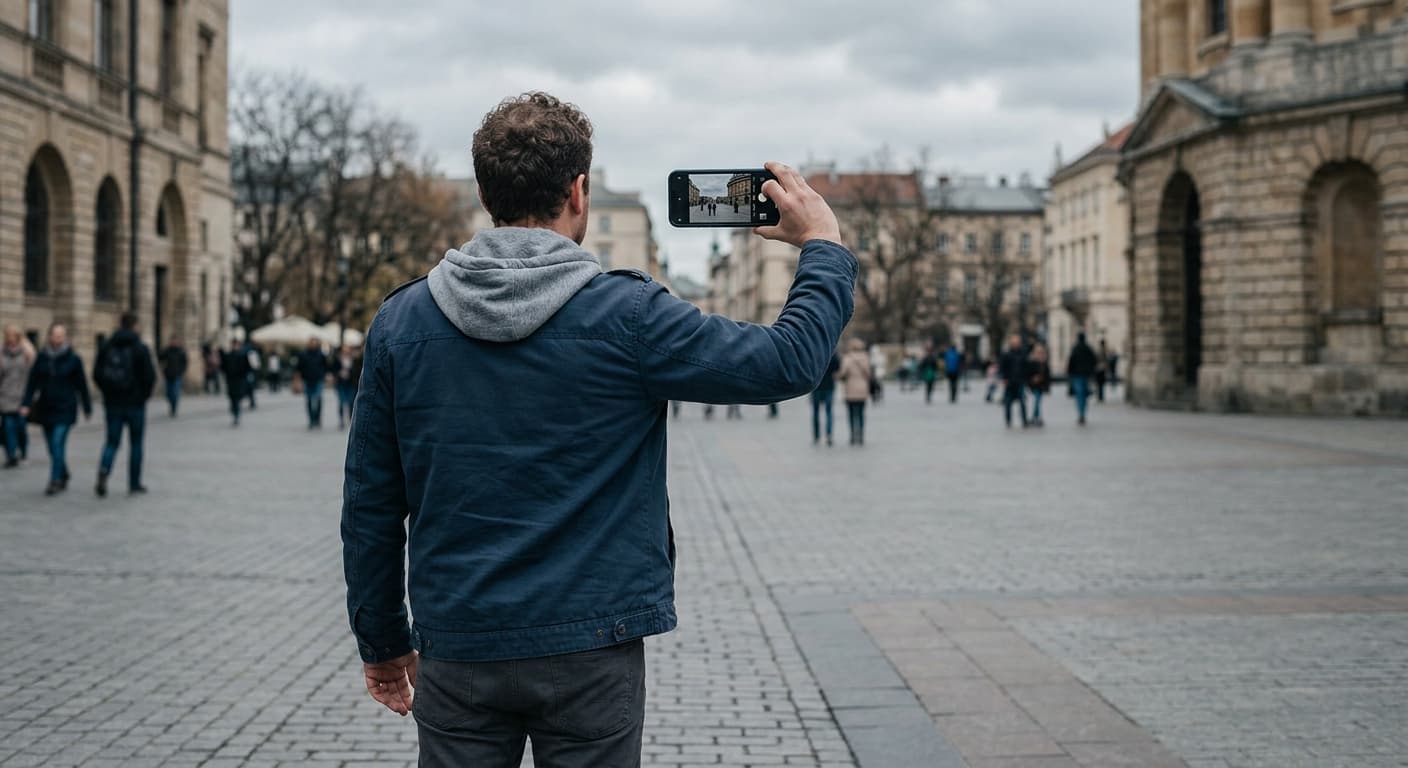
In New Jersey, you have the right to record police officers performing their duties in public. The First Amendment protects this right, as the Third Circuit confirmed in Fields v. City of Philadelphia (2017). New Jersey's one-party consent law under N.J. Stat. Ann. 2A:156A-4 also permits audio recording your own police encounters.
You have the right to record police officers in New Jersey. The First Amendment protects the act of filming, photographing, or otherwise recording law enforcement officers performing their official duties in public. The U.S. Court of Appeals for the Third Circuit, which covers New Jersey, established this right clearly in Fields v. City of Philadelphia (2017).
This guide covers your rights to record police in New Jersey, the legal protections available, practical limits on recording, access to body camera footage, and what to do if an officer interferes with your recording.
Your Constitutional Right to Record Police
The First Amendment Foundation
The right to record police officers in public stems from the First Amendment to the United States Constitution, which protects freedom of speech and freedom of the press. Courts across the country have recognized that recording government officials in the performance of their duties is a form of protected expression and a critical tool for government accountability.
The Third Circuit's 2017 ruling in Fields v. City of Philadelphia, 862 F.3d 353 (3d Cir. 2017), made this explicit for New Jersey, Pennsylvania, and Delaware (the three states in the Third Circuit). The court held that "the First Amendment protects the act of photographing, filming, or otherwise recording police officers conducting their official duties in public." This right is clearly established, meaning any officer who retaliates for protected recording after July 7, 2017 cannot claim qualified immunity.
This right belongs to everyone, not just journalists or members of the media. Any person standing in a public place can record police activity they observe.
What You Can Record
Under the First Amendment, you can record:
- Traffic stops, including your own
- Arrests taking place in public areas
- Police interactions with civilians on streets, sidewalks, and in parks
- Protests and demonstrations where police are present
- Public meetings where police provide testimony or security
- DUI checkpoints and enforcement operations visible from public spaces
- Police use of force incidents
- Your own encounters with police officers during stops, searches, or questioning
Audio Recording During Police Encounters
When you interact directly with police officers, New Jersey's one-party consent law under N.J. Stat. Ann. 2A:156A-4 allows you to audio record the conversation. You are a party to the conversation, so your consent satisfies the one-party requirement.
You do not need to tell the officer you are recording. However, some people choose to announce that they are recording as a transparency measure. Whether to announce or not is a personal decision, not a legal requirement.
Limits on Recording Police
Do Not Interfere With Police Operations
While you have the right to record, you must not interfere with police operations. Interference can include:
- Physically obstructing an officer from performing their duties
- Getting too close to an active crime scene or arrest in a way that creates a safety hazard
- Refusing lawful orders to move back to a safe distance
- Trespassing on private property to get a better angle
- Tampering with evidence or a crime scene while recording
New Jersey law prohibits obstruction of justice under N.J. Stat. Ann. 2C:29-1, which makes it an offense to purposely obstruct, impair, or pervert the administration of law. Recording police does not constitute obstruction, but physically interfering while recording could.
Can Police Order You to Stop Recording?
In general, no. An officer cannot lawfully order you to stop recording simply because you are recording. However, officers can issue lawful orders for other reasons that may affect your recording:
- An officer can order you to move back from a dangerous situation for safety
- An officer can order you to leave an area that has been lawfully closed to the public
- An officer can direct you to stop approaching if you are getting dangerously close
The key distinction is between an order to stop recording (generally unlawful) and an order related to your physical location or safety (potentially lawful).
Can Police Seize Your Phone or Camera?
An officer generally cannot seize your recording device without a warrant. The U.S. Supreme Court held in Riley v. California (2014) that police must obtain a warrant before searching a cell phone, even during a lawful arrest. This protection extends to the contents of your phone, including recordings.
An officer also cannot order you to delete your recordings. Doing so could constitute destruction of evidence and a violation of your civil rights.
Exceptions to the Warrant Requirement
In limited circumstances, police may be able to seize a device without a warrant:
- Exigent circumstances: If there is an immediate threat that evidence will be destroyed
- Consent: If you voluntarily hand over your device (never do this without legal advice)
- Plain view doctrine: If the device itself is evidence of a crime (rare in recording situations)
Even in these situations, the officer generally needs a warrant to access the contents of the device, including any recordings stored on it.
Recording Police During Traffic Stops
Your Rights as a Driver
If you are pulled over in New Jersey, you can record the traffic stop. This includes:
- Using your smartphone to video or audio record the interaction
- Keeping a dashcam running throughout the stop
- Using a passenger's phone to record (passengers also have the right to record)
You do not need to tell the officer you are recording. If the officer notices and asks you to stop, you can calmly state that you have the right to record. However, always prioritize your safety during traffic stops.
Your Rights as a Bystander
If you see a traffic stop while driving or walking, you can stop at a safe location and record. Stand at a reasonable distance on public property. Do not approach the vehicle or officers. Do not interfere with the stop.
Dashcam Recordings
Dashcam footage of police encounters is legal in New Jersey. There are no state laws prohibiting dashcams, and the one-party consent rule means the audio captured during your own traffic stop is lawfully recorded. Many attorneys recommend using a dashcam for this reason.
Police Body Camera Footage in New Jersey
The Attorney General's Directive
New Jersey Attorney General Matthew Platkin issued Directive 2025-1 in January 2025 following the Supreme Court's ruling in Fuster v. Township of Chatham, updating body-worn camera access and disclosure requirements. New Jersey law enforcement agencies are required to equip uniformed patrol officers with body-worn cameras under N.J.S.A. 40A:14-118.3 (P.L. 2020, c. 129). As of 2026, body cameras are deployed across most law enforcement agencies in the state.
Under the directive, officers must activate body cameras during specific types of encounters, including:
- All motor vehicle stops
- Investigatory stops and field interviews
- Arrests
- Use of force incidents
- Foot pursuits
- Emergency responses
Accessing Body Camera Footage
In January 2025, the New Jersey Supreme Court ruled in Fuster v. Township of Chatham, 259 N.J. 533 (2025). The plaintiff was requesting body-worn camera footage of his own recorded statement to police. The Court held that:
- OPRA contains no automatic exemption barring disclosure of a person's own recorded statement merely because an uncharged third party also appears in the footage
- Agencies cannot rely on a blanket confidentiality rule for uncharged persons to withhold footage a requester has an independent right to see
- Courts still weigh the privacy interests of any third parties shown in the footage against the requester's interest in access
This ruling clarified that OPRA's law-enforcement exemptions do not automatically block a person from obtaining footage of their own statement to police. To request footage, you can file an Open Public Records Act (OPRA) request with the relevant law enforcement agency.
Retention of Body Camera Footage
Under the Attorney General's directive, body camera recordings must be retained for a minimum period based on the type of encounter:
- Use of force incidents: At least 3 years
- Arrests: At least 3 years
- Motor vehicle stops: At least 180 days
- All other recordings: At least 180 days
If the footage is relevant to a pending investigation, complaint, or legal action, it must be retained until the matter is resolved.
What to Do If Police Interfere With Your Recording
During the Encounter
If an officer attempts to stop your recording or seize your device:
- Stay calm and do not physically resist
- Verbally assert your right: "I have a First Amendment right to record police activity in public"
- Do not delete any recordings at the officer's request
- Do not hand over your device without a warrant
- Comply with lawful orders to move back or leave an area
- Remember or note the officer's name, badge number, and agency
- Note the time, date, and location of the encounter
- Identify any witnesses who saw the interference
After the Encounter
If your rights were violated, you have several options:
- File a complaint with the officer's agency internal affairs division
- File a complaint with the New Jersey Office of the Attorney General
- Consult a civil rights attorney about a potential Section 1983 lawsuit for violation of your constitutional rights
- Contact the ACLU of New Jersey for guidance and potential legal representation
Section 1983 Claims
Under 42 U.S.C. 1983, you can sue state and local officials (including police officers) who violate your constitutional rights while acting under color of law. If an officer unlawfully interferes with your recording, you may be able to recover:
- Compensatory damages for any harm suffered
- Nominal damages even without provable harm (to vindicate your rights)
- Attorney's fees and costs
- Injunctive relief to prevent future violations
Recording Police and the Open Public Meetings Act
New Jersey's Open Public Meetings Act (N.J.S.A. 10:4-6 et seq.) requires most government meetings to be open to the public. When police officers testify at public hearings, present reports to municipal councils, or participate in public safety committee meetings, you have the right to record these proceedings.
Public bodies that possess functioning sound recording equipment must record the public portions of all meetings. You can also make your own recording of any public meeting.
New Jersey Recording Laws by Topic
Phone Call Recording | Audio Recording | Video Recording | Workplace Recording | Recording Police | Security Cameras | Recording in Public | Landlord-Tenant | Dashcam Laws | Schools | Medical Recording | Voyeurism & Hidden Cameras
Back to New Jersey Recording Laws
More New Jersey Recording Topics
More New Jersey Laws
Frequently Asked Questions
Can I legally record police officers in New Jersey?
Yes. The First Amendment protects your right to record police officers performing their duties in public. The Third Circuit confirmed this in Fields v. City of Philadelphia (2017), which covers New Jersey. You can film traffic stops, arrests, and any police activity visible from public property.
Do I have to tell the police I am recording them in New Jersey?
No. New Jersey is a one-party consent state, so you can audio record your own interactions with police without informing them. For video recording in public, no notification is required at all. However, some people choose to announce they are recording as a personal choice.
Can a police officer take my phone or make me delete a recording?
No. Under Riley v. California (2014), police generally need a warrant to seize or search your phone. An officer cannot order you to delete recordings. If an officer takes your phone or deletes recordings without a warrant, that may be a violation of your constitutional rights.
Can I get police body camera footage in New Jersey?
In many cases, yes. In Fuster v. Township of Chatham (2025), the NJ Supreme Court held that OPRA does not automatically exempt body-worn camera footage from disclosure to a crime victim requesting their own recorded statement, even if an uncharged third party also appears in it. You can request footage through an Open Public Records Act (OPRA) request, though agencies may still weigh other requesters privacy interests.
What should I do if police try to stop me from recording?
Stay calm and do not physically resist. Verbally assert your First Amendment right to record. Do not delete recordings or hand over your device without a warrant. Note the officer's name and badge number. After the encounter, file a complaint with internal affairs and consult a civil rights attorney about a potential Section 1983 claim.
Updates
Fixed three dead citation links (Fields v. City of Philadelphia, Riley v. California, and the Attorney General's body-worn camera policy), corrected the body-worn-camera equipping statute citation from N.J.S.A. 40A:14-118.5 to the correct 40A:14-118.3, and narrowed our description of Fuster v. Township of Chatham (2025): the case holds that OPRA does not exempt a crime victim's own recorded statement from disclosure just because an uncharged third party appears in it, not a general rule that officials cannot refuse any body-camera request.
Independently fact-checked against the cited primary sources
Governing law re-checked for recent changes
Governing law re-checked for recent changes
Reviewed and approved by an editor
The Law Behind This Article
This article rests on the statutory provisions below, held in our own legal record and retrieved from the official source. Tap a section to read the operative text.
New Jersey Statutes (Unannotated)
§ 2A:156A-3Interception, disclosure, use of wire, electronic, oral communication; violationIn forcecited in 12 of our articles
3. Except as otherwise specifically provided in this act, any person who: a. Purposely intercepts, endeavors to intercept, or procures any other person to intercept or endeavor to intercept any wire, electronic or oral communication; or b. Purposely discloses or endeavors to disclose to any other person the contents of any wire, electronic or oral communication, or evidence derived therefrom, knowing or having reason to know that the information was obtained through the interception of a wire, electronic or oral communication; or c. Purposely uses or endeavors to use the contents of any wire, electronic or oral communication, or evidence derived therefrom, knowing or having reason to know, that the information was obtained through the interception of a wire, electronic or oral communication; shall be guilty of a crime of the third degree. Subsections b. and c. of this section shall not apply to the contents of any wire, electronic or oral communication, or evidence derived therefrom, that has become common knowledge or public information.
Official text (excerpt) · last checked 2026-08-28 · Read the full text in our law library · Verify at lis.njleg.state.nj.us
Also relied on in: New Jersey Recording Laws (2026): One-Party Consent Rules, New Jersey AI Meeting Recording Laws (2026), New Jersey Dashcam Laws: Legality, Mounting, and Evidence Rules
§ 10:4-6"Senator Byron M. Baer Open Public Meetings Act."In forcecited in 2 of our articles
1. This act shall be known and may be cited as the "Senator Byron M. Baer Open Public Meetings Act."
Official text (excerpt) · last checked 2026-08-01 · Read the full text in our law library · Verify at lis.njleg.state.nj.us
Cited in 189 court opinions in our collectionLatest citing opinion in our collection: 2026
Opinions citing this section in our collection:
- South Jersey Publishing Co. v. New Jersey Expressway Authority (Supreme Court of New Jersey 1991, 124 N.J. 478)“…47:1 A-1 to -4, and in the Open Public Meetings Act, N.J.S.A. 10:4-6 to -21, requires the disclosure of the…”
- Times of Trenton Publishing Corp. v. Lafayette Yard Community Development Corp. (Supreme Court of New Jersey 2005, 183 N.J. 519)“…that the provisions of the Open Public Meetings Act, N.J.SA 10:4-6 to -21, and the Open Public Records Act…”
- Northwest Bergen County Utilities Authority v. Kathleen A. Donovan (075060) (Supreme Court of New Jersey 2016, 226 N.J. 432)“…lated requirements of the Open Public Meetings Act (OPMA), N.J.S.A. 10:4-6 to -21. Although the Authority mainta…”
Identified automatically from the court opinions citing this section — not a ranking of which case controls.
Also relied on in: New Jersey Laws on Recording in Public: Rights and Restrictions
United States Code Title 42
§ 1983Civil action for deprivation of rightsIn forcecited in 50 of our articles
Every person who, under color of any statute, ordinance, regulation, custom, or usage, of any State or Territory or the District of Columbia, subjects, or causes to be subjected, any citizen of the United States or other person within the jurisdiction thereof to the deprivation of any rights, privileges, or immunities secured by the Constitution and laws, shall be liable to the party injured in an action at law, suit in equity, or other proper proceeding for redress, except that in any action brought against a judicial officer for an act or omission taken in such officer’s judicial capacity, injunctive relief shall not be granted unless a declaratory decree was violated or declaratory relief was unavailable. For the purposes of this section, any Act of Congress applicable exclusively to the District of Columbia shall be considered to be a statute of the District of Columbia.
Official text (excerpt) · last checked 2026-07-28 · Read the full text in our law library · Verify at uscode.house.gov
Cited in 282,365 court opinions in our collectionLatest citing opinion in our collection: 2026
Opinions citing this section in our collection:
- Ashcroft v. Iqbal (Supreme Court of the United States 2009, 556 U.S. 662)“…its brought against state officials under Rev. Stat. §1979, 42 U. S. C. §1983.” Hartman, 547 U. S., at 254, n. 2. Cf.…”
- Celotex Corp. v. Catrett, Administratrix of the Estate of Catrett (Supreme Court of the United States 1986, 477 U.S. 317)“…policeman as she left. Petitioner brought an action under 42 U. S. C. § 1983 claiming that the refusal of service a…”
- Monell v. New York City Dept. of Social Servs. (Supreme Court of the United States 1978, 436 U.S. 658)“…decided less than two decades ago. Focusing new light on 42 U. S. C. § 1983 , that decision widened access to the f…”
Identified automatically from the court opinions citing this section — not a ranking of which case controls.
Also relied on in: Alabama Laws on Recording Police: Your Rights and Limits, Alaska Laws on Recording Police: Your Rights and Limits (2026), Arkansas Laws on Recording Police: Your Rights and Limits (2026)
Search our full record of US law — 2.1 million sections, every state + federal →
Sources and References
- Fields v. City of Philadelphia, 862 F.3d 353 (3d Cir. 2017)(courtlistener.com)
- N.J. Stat. Ann. 2A:156A-4 - Lawful Interception Activities(law.justia.com)
- Riley v. California, 573 U.S. 373 (2014)(supremecourt.gov).gov
- New Jersey Attorney General Directive 2021-5 - Body Worn Camera Policy(nj.gov).gov
- New Jersey Government Records Council - OPRA(nj.gov).gov
- New Jersey Open Public Meetings Act(nj.gov).gov
- 42 U.S.C. 1983 - Civil Rights Remedies(law.cornell.edu)
- N.J. Stat. Ann. 2C:29-1 - Obstructing Administration of Law(law.justia.com)
- New Jersey Office of the Attorney General(nj.gov).gov