
New Jersey
New Jersey Dashcam Laws: Legality, Mounting, and Evidence Rules
Independently fact-checked against primary sources (last audited August 15, 2026). · Reviewed by the RecordingLaw editorial team. · Law checked current as of August 15, 2026. · 4 primary sources cited on this page. How we verify our legal content
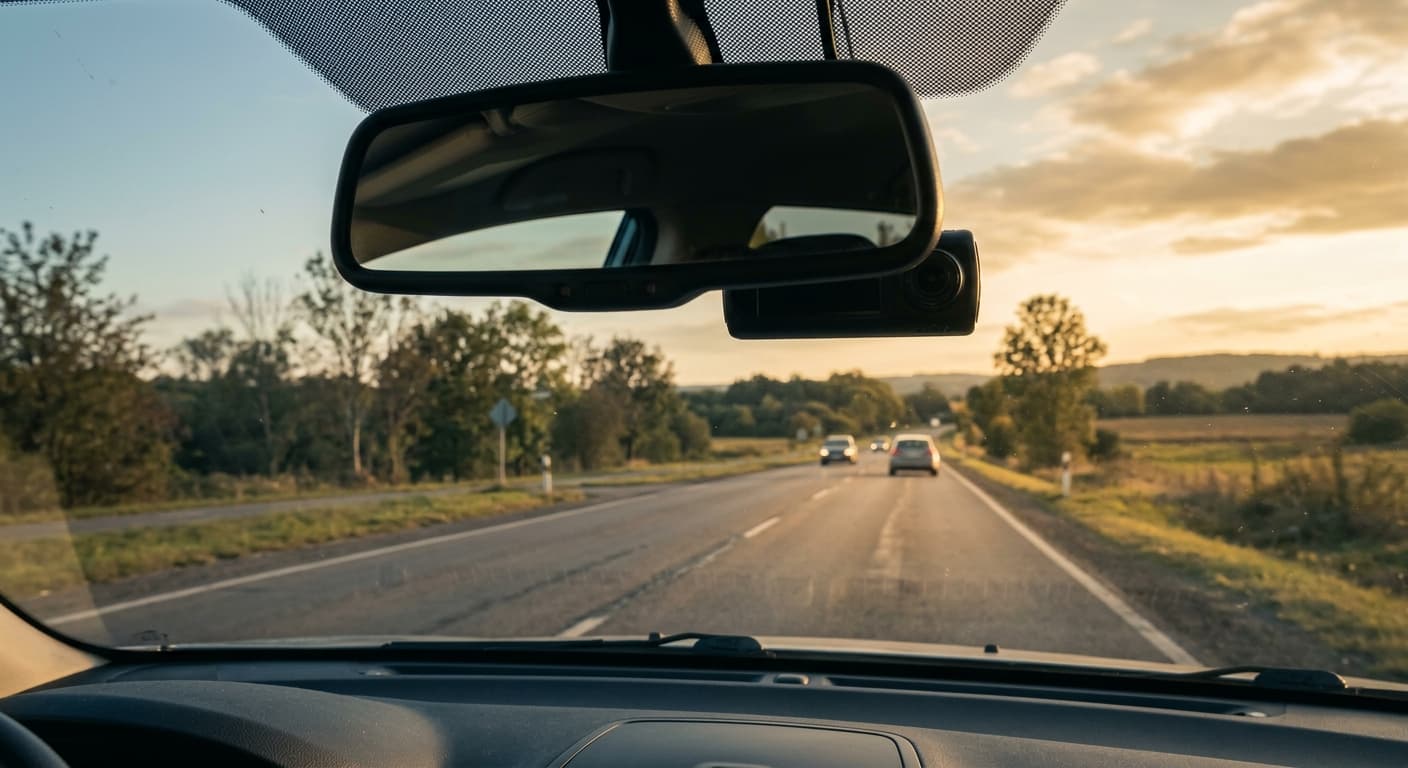
Dashcams are legal in New Jersey, and no state statute prohibits their use. Audio recording in your vehicle is permitted under the one-party consent rule of N.J.S.A. 2A:156A-4. Mount the camera so it does not materially obstruct your windshield view to stay in compliance.
Dashcams are legal in New Jersey. There is no state statute that prohibits drivers from using dashboard cameras in their vehicles. However, New Jersey does regulate how devices can be mounted on your windshield, and the state's audio recording laws apply to any dashcam that captures sound.
This guide covers the legality of dashcams in New Jersey, windshield mounting rules, audio recording considerations, using dashcam footage as evidence, and special rules for commercial vehicles and rideshare drivers.
Are Dashcams Legal in New Jersey?
Yes. New Jersey has no law prohibiting dashcams. You can use a dashboard camera to record video while driving on New Jersey roads. This applies to:
- Front-facing dashcams that record the road ahead
- Rear-facing dashcams that record behind your vehicle
- Dual-camera systems that record both front and rear views simultaneously
- Interior-facing cameras that record inside the vehicle cabin
- Multi-channel systems that record multiple angles
The key legal consideration is not whether you can use a dashcam, but how you mount it and what audio it captures.
Windshield Mounting Rules

New Jersey's Obstruction Law
N.J. Stat. Ann. 39:3-74 regulates what can be placed on or near a vehicle's windshield. The statute provides that no person shall drive a motor vehicle with any sign, poster, sticker, or other non-transparent material upon the front windshield, wings, deflectors, or side shields in a manner that materially obstructs, obscures, or impairs the driver's clear view of the highway or any intersecting highway.
How This Applies to Dashcams
A dashcam mounted on the windshield is permissible as long as it does not materially obstruct the driver's view. To comply with New Jersey law:
- Mount the dashcam behind the rearview mirror where it minimally affects your field of vision
- Use a small, compact dashcam that does not take up significant windshield space
- Avoid mounting in the center of the windshield directly in your line of sight
- Make sure the camera does not block your view of the road, traffic signals, or mirrors
- Consider a low-profile mount that attaches near the top edge of the windshield
Alternative Mounting Options
If you are concerned about windshield compliance, consider:
- Dashboard-mounted cameras that sit on top of the dash rather than on the windshield
- Rearview mirror cameras that replace or attach to your existing mirror
- Adhesive mounts placed in the upper corner of the windshield behind the mirror
- OBD-powered cameras that plug directly into your vehicle's data port and mount discreetly
Penalties for Windshield Obstruction
Violating N.J. Stat. Ann. 39:3-74 is a traffic offense. If a law enforcement officer determines that your dashcam materially obstructs your view, you could receive a citation. The fine is typically modest, but the officer could also request that you remove or reposition the device.
Audio Recording and Dashcams
One-Party Consent in Your Vehicle
New Jersey's one-party consent law under N.J. Stat. Ann. 2A:156A-4 applies to dashcam audio recording. Because you are always present in your own vehicle when the dashcam is recording, you are a party to any conversation that occurs. This means:
- Your conversations with passengers can be recorded because you are a participant
- Your conversations during traffic stops can be recorded because you are participating
- Phone calls you take while driving (hands-free) can be recorded because you are on the call
- Conversations with drive-through workers, toll collectors, or gas station attendants can be recorded because you are speaking with them
When Audio Recording Gets Complicated
Some situations require more careful analysis:
- Passengers' private conversations: If you are driving and two passengers have a private conversation in the back seat that you are not part of, recording their audio could raise wiretapping concerns. In practice, most courts would find that passengers in a moving car have a reduced expectation of privacy, but the issue has not been definitively resolved in New Jersey courts.
- Exterior audio: Dashcams that capture audio from outside the vehicle (through an open window, for example) may pick up conversations between pedestrians or other drivers. If those people have a reasonable expectation of privacy, the wiretapping statute could apply.
Disabling Audio
If you want to avoid any audio recording complications, most dashcams allow you to disable the microphone. This leaves you with video-only recording, which does not implicate the wiretapping statute. Many drivers choose this option for simplicity.
Using Dashcam Footage as Evidence
Traffic Accidents
Dashcam footage can be powerful evidence in traffic accident cases. It can show:
- Who was at fault by capturing the moments before, during, and after a collision
- Traffic light status at the time of an accident
- Speed and driving behavior of other vehicles
- Road conditions and weather at the time of the incident
- Hit-and-run vehicles including license plates and vehicle descriptions
Insurance Claims
Many insurance companies accept dashcam footage to support claims. The footage can help:
- Prove you were not at fault in an accident
- Expedite claim processing by providing clear visual evidence
- Counter false claims from other drivers
- Document road hazards that caused damage to your vehicle
Some insurers offer discounts for drivers who use dashcams, recognizing that the footage reduces fraudulent claims and speeds up claim resolution.
Criminal Cases
Dashcam footage can serve as evidence in criminal cases involving:
- DUI/DWI arrests: Your dashcam may capture your own driving behavior or the behavior of another driver
- Road rage incidents: Video evidence of aggressive driving, threats, or assault
- Hit and run: Capturing the fleeing vehicle's description and license plate
- Vandalism or theft: Recording damage or break-ins when your vehicle is parked (if the dashcam has a parking mode)
Admissibility Requirements
For dashcam footage to be admissible in New Jersey court, it must meet standard evidence requirements:
- Authentication: You must be able to testify that the footage is genuine and unaltered
- Relevance: The footage must relate to the issues in the case
- Chain of custody: You should be able to demonstrate how the footage has been stored since it was recorded
- Date and time accuracy: Dashcams with GPS and timestamp features provide stronger evidence
Best practice: Do not edit or alter dashcam footage. Save the original file and make copies for sharing. Note the date, time, and circumstances as soon as possible after the incident.
Dashcams and Traffic Stops
Recording During a Traffic Stop
You have the right to keep your dashcam running during a traffic stop in New Jersey. The First Amendment protects your right to record police officers performing their duties in public. Your dashcam footage of a traffic stop can document:
- What the officer said and did during the stop
- Whether proper procedures were followed
- Any use of force or inappropriate conduct
- The conditions at the scene
Can Police Demand Your Dashcam Footage?
An officer cannot demand that you hand over your dashcam or its memory card during a routine traffic stop. Under Riley v. California (2014), police generally need a warrant to search electronic devices.
However, if the officer has probable cause to believe your dashcam contains evidence of a crime (for example, if you witnessed a serious accident), they may be able to seize the device pending a warrant. Even then, they need a warrant to access the contents.
Can Police Order You to Turn Off Your Dashcam?
Generally, no. A dashcam running during a traffic stop records in a public space and does not interfere with police operations. An officer who orders you to turn off your dashcam without a legitimate safety reason may be violating your First Amendment rights.
Rideshare and Commercial Vehicle Dashcams
Rideshare Drivers (Uber and Lyft)
Rideshare drivers in New Jersey can legally use dashcams. Key considerations:
- Interior cameras: Legal under one-party consent because you (the driver) are present and a party to conversations with passengers
- Audio recording: Permitted under one-party consent because you participate in conversations with passengers
- Uber and Lyft policies: Both companies allow dashcam use by drivers. Check current platform policies for any specific requirements
- Passenger notification: While not legally required, many rideshare drivers post a small notice that the vehicle is equipped with a dashcam for safety purposes
Commercial Vehicles
Commercial vehicle operators in New Jersey may be subject to additional rules:
- Federal Motor Carrier Safety Administration (FMCSA) regulations may apply to certain types of in-cab cameras in commercial vehicles
- Employer policies: Many trucking and delivery companies have specific dashcam requirements
- Electronic Logging Device (ELD) requirements under 49 CFR Part 395 are separate from dashcam rules but may interact with them
- Two-party consent states: Commercial drivers who travel interstate must be aware of different recording laws in states they pass through, particularly Pennsylvania
Parked Vehicle Recording
Parking Mode Dashcams
Many modern dashcams have a parking mode that continues recording when the vehicle is parked and the engine is off. These cameras typically activate when they detect motion or impact. In New Jersey:
- Video recording in parking mode is legal in public and semi-public areas
- Audio recording considerations apply if the camera captures conversations near your parked vehicle
- Private parking structures may have their own surveillance policies
Parking mode can capture evidence of:
- Vehicle break-ins and theft
- Hit-and-run damage in parking lots
- Vandalism
- Accidents involving parked vehicles
New Jersey Recording Laws by Topic
Phone Call Recording | Audio Recording | Video Recording | Workplace Recording | Recording Police | Security Cameras | Recording in Public | Landlord-Tenant | Dashcam Laws | Schools | Medical Recording | Voyeurism & Hidden Cameras
Back to New Jersey Recording Laws
More New Jersey Recording Topics
More New Jersey Laws
Frequently Asked Questions
Are dashcams legal in New Jersey?
Yes. There is no New Jersey law prohibiting dashcams. You can use front-facing, rear-facing, and interior dashcams in your vehicle. The main legal consideration is mounting the camera so it does not materially obstruct your view of the road under N.J. Stat. Ann. 39:3-74.
Where should I mount my dashcam in New Jersey?
Mount your dashcam behind the rearview mirror or in the upper corner of the windshield where it does not materially obstruct your view. New Jersey law prohibits non-transparent materials on the windshield that impair the driver's clear view of the highway.
Can my dashcam record audio in New Jersey?
Yes. Under New Jersey's one-party consent law, you can record audio of conversations in your vehicle because you are present and a participant. This covers conversations with passengers, phone calls, and interactions during traffic stops.
Can I use dashcam footage as evidence in New Jersey?
Yes. Dashcam footage is generally admissible in New Jersey courts if properly authenticated. It can be used in traffic accident cases, insurance claims, criminal proceedings, and traffic stop disputes. Keep the original footage unedited for maximum evidentiary value.
Can police take my dashcam during a traffic stop?
An officer cannot demand your dashcam or its memory card during a routine traffic stop without a warrant. Under Riley v. California (2014), police need a warrant to search electronic devices. If they have probable cause to believe the dashcam contains evidence of a crime, they may seize the device pending a warrant.
Updates
Fixed two dead citation links: Riley v. California now points to the Supreme Court's official bound-volume PDF, and the Attorney General body-worn-camera reference now points to the live AG Directive 2021-5 policy PDF. No other changes were needed; the page's substantive dashcam, windshield-obstruction, and one-party-consent content was accurate.
Independently fact-checked against the cited primary sources; governing law re-checked for recent changes
Governing law re-checked for recent changes
Reviewed and approved by an editor
The Law Behind This Article
This article rests on the statutory provisions below, held in our own legal record and retrieved from the official source. Tap a section to read the operative text.
New Jersey Statutes (Unannotated)
§ 2A:156A-3Interception, disclosure, use of wire, electronic, oral communication; violationIn forcecited in 12 of our articles
3. Except as otherwise specifically provided in this act, any person who: a. Purposely intercepts, endeavors to intercept, or procures any other person to intercept or endeavor to intercept any wire, electronic or oral communication; or b. Purposely discloses or endeavors to disclose to any other person the contents of any wire, electronic or oral communication, or evidence derived therefrom, knowing or having reason to know that the information was obtained through the interception of a wire, electronic or oral communication; or c. Purposely uses or endeavors to use the contents of any wire, electronic or oral communication, or evidence derived therefrom, knowing or having reason to know, that the information was obtained through the interception of a wire, electronic or oral communication; shall be guilty of a crime of the third degree. Subsections b. and c. of this section shall not apply to the contents of any wire, electronic or oral communication, or evidence derived therefrom, that has become common knowledge or public information.
Official text (excerpt) · last checked 2026-08-28 · Read the full text in our law library · Verify at lis.njleg.state.nj.us
United States Code Title 18
§ 2511Interception and disclosure of wire, oral, or electronic communications prohibitedIn forcecited in 418 of our articles
Except as otherwise specifically provided in this chapter any person who— intentionally intercepts, endeavors to intercept, or procures any other person to intercept or endeavor to intercept, any wire, oral, or electronic communication; intentionally uses, endeavors to use, or procures any other person to use or endeavor to use any electronic, mechanical, or other device to intercept any oral communication when— such device is affixed to, or otherwise transmits a signal through, a wire, cable, or other like connection used in wire communication; or such device transmits communications by radio, or interferes with the transmission of such communication; or such person knows, or has reason to know, that such device or any component thereof has been sent through the mail or transported in interstate or foreign commerce; or such use or endeavor to use (A) takes place on the premises of any business or other commercial establishment the operations of which affect interstate or foreign commerce; or (B) obtains or is for the purpose of obtaining information relating to the operations of any business or other commercial establishment the operations of which affect interstate or foreign…
Official text (excerpt) · last checked 2026-08-28 · Read the full text in our law library · Verify at uscode.house.gov
Cited in 2,045 court opinions in our collectionLatest citing opinion in our collection: 2026
In the courts (editorial summary, independently checked):Griggs-Ryan v. Smith (1990) applied the Section 2511(2)(d) prior-consent exception, treating a tenant repeatedly told that all incoming calls were taped as having impliedly consented. United States v. United States District Court (1972) read the then-current Section 2511(3) as conferring no presidential surveillance power.
Opinions citing this section in our collection:
- Mitchell v. Forsyth (Supreme Court of the United States 1985, 472 U.S. 511)✓The Attorney General authorized a warrantless 1970 national security wiretap that caught the plaintiff's calls; the Court held the since-repealed Section 2511(3) disclaimer left the tap lawful under Title III, and that Mitchell had qualified immunity.
- United States v. United States District Court for the Eastern District of Michigan (Supreme Court of the United States 1972, 407 U.S. 297)✓The Attorney General approved warrantless wiretaps on members of a domestic group accused of bombing a CIA office; the Court read Section 2511(3) as a congressional disclaimer conferring no surveillance power, then held the Fourth Amendment required prior judicial approval.
- Forsyth v. Barr (Court of Appeals for the Fifth Circuit 1994, 19 F.3d 1527)✓Dallas police used, in an internal affairs probe of an officer, calls private parties allegedly intercepted illegally; assuming that was unlawful, the Fifth Circuit held Section 2517(1) and (2) allowed the disclosure and use, defeating the Section 2511(1)(c) and (d) claims.
Identified automatically from the court opinions citing this section — not a ranking of which case controls.
Search our full record of US law — 2.1 million sections, every state + federal →
Sources and References
- N.J. Stat. Ann. 39:3-74 - Windshield Obstruction(law.justia.com)
- N.J. Stat. Ann. 2A:156A-4 - Lawful Interception Activities(law.justia.com)
- Riley v. California, 573 U.S. 373 (2014)(supremecourt.gov).gov
- New Jersey Motor Vehicle Commission(nj.gov).gov
- FMCSA - Electronic Logging Devices(ecfr.gov).gov
- New Jersey Attorney General Directive 2021-5 - Body Worn Camera Policy(nj.gov).gov
- Federal Wiretap Act - 18 U.S.C. 2511(law.cornell.edu)