
New Jersey
New Jersey Laws on Recording in Public: Rights and Restrictions
Independently fact-checked against primary sources (last audited August 15, 2026). · Reviewed by the RecordingLaw editorial team. · Law checked current as of August 15, 2026. · 3 primary sources cited on this page. How we verify our legal content
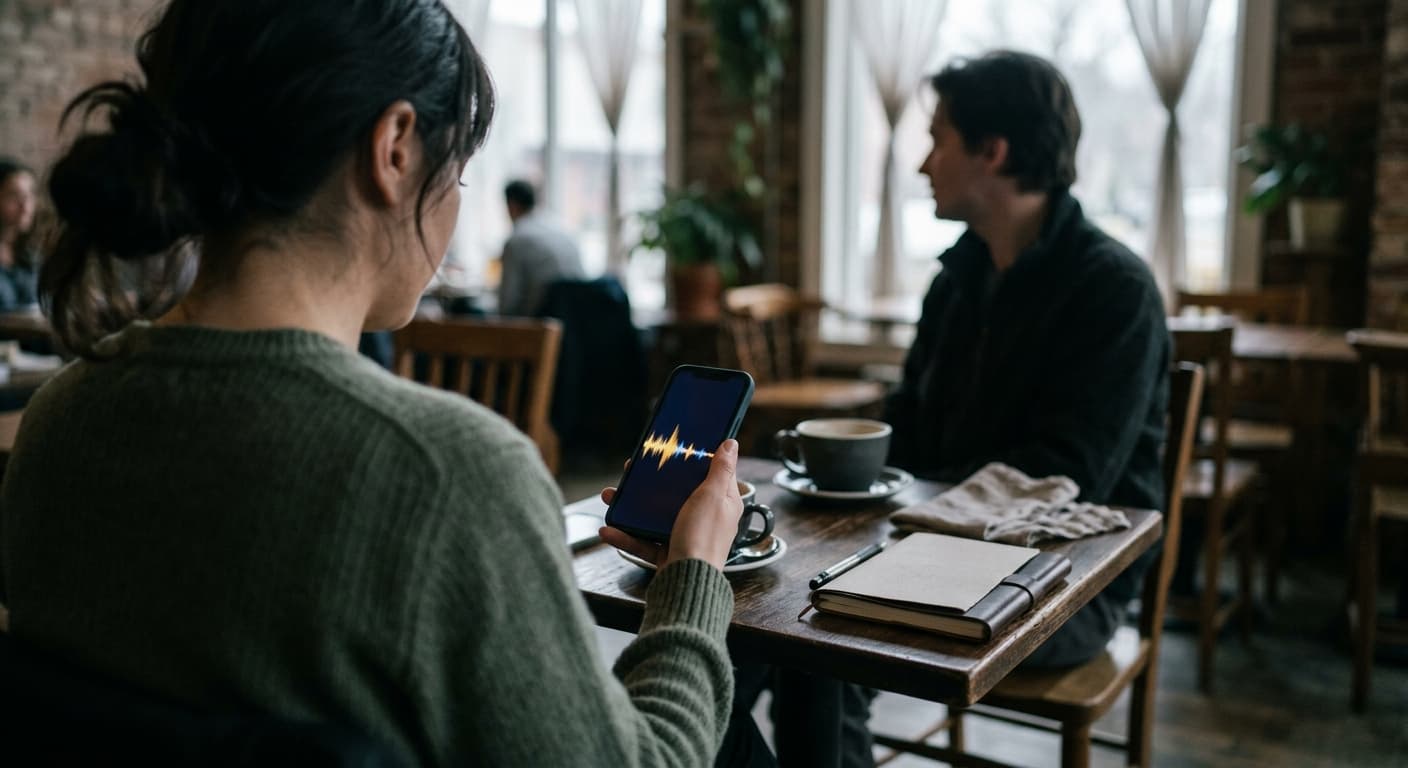
In New Jersey, the First Amendment gives you the right to film, photograph, and record in public places without obtaining consent from those you record. For audio, the one-party consent rule under N.J. Stat. Ann. 2A:156A-4 lets you record conversations you participate in.
New Jersey broadly protects your right to record in public spaces. The First Amendment to the United States Constitution guarantees the right to photograph, film, and record in areas open to public view. Combined with the state's one-party consent law under N.J. Stat. Ann. 2A:156A-4, New Jersey residents have significant freedom to document events, interactions, and activities in public.
This guide explains what you can and cannot record in public in New Jersey, including the rules for filming in streets, parks, government buildings, businesses, and at public events.
Your Right to Record in Public
The First Amendment Foundation
The First Amendment protects your right to gather information in public places. Courts have consistently held that recording what is plainly visible in public is a form of protected expression. This right applies to:
- All people, not just journalists or media professionals
- All recording devices, including smartphones, cameras, body cameras, and drones
- All forms of media, including video, photography, audio, and livestreaming
The Third Circuit Court of Appeals, which covers New Jersey, confirmed in Fields v. City of Philadelphia, 862 F.3d 353 (3d Cir. 2017) that the First Amendment protects the right to record in public spaces. While that case specifically addressed recording police, the principle extends to recording any person or event in a public setting. In January 2025, the New Jersey Supreme Court ruled in Fuster v. Township of Chatham, 259 N.J. 533 (2025), that OPRA does not automatically exempt police body-worn camera footage from disclosure to a crime victim requesting their own recorded statement, just because an uncharged third party also appears in it.
What You Can Record in Public
In public places throughout New Jersey, you can legally:
- Film people on streets, sidewalks, and in parks without their consent
- Photograph buildings, landscapes, and public art from public property
- Record public protests, rallies, and demonstrations
- Film traffic accidents, fires, and other emergencies from a safe distance
- Livestream public events on social media platforms
- Record government officials performing their duties in public
- Take photos and video in public transportation areas (subject to transit authority rules)
- Film from your own property anything visible from your vantage point
Video vs. Audio in Public
An important distinction in New Jersey law is the difference between video recording and audio recording in public:
Video only (no audio): Generally unrestricted in public places. The wiretapping statute governs "oral communications," "wire communications," and "electronic communications." Pure video without audio does not intercept any of these. You can freely video record in public without concern for the wiretapping law.
Audio recording: Subject to the wiretapping statute. Under the one-party consent rule, you can audio record conversations you are part of. However, recording audio of private conversations between other people that you are not participating in may violate N.J. Stat. Ann. 2A:156A-3 if those people have a reasonable expectation of privacy in their conversation.
The practical test: Conversations conducted at normal volume in crowded public areas typically lack a reasonable expectation of privacy. Conversations whispered in a secluded corner of a public park may have a greater privacy expectation. Context determines the analysis.
Recording Government Meetings and Proceedings
The Open Public Meetings Act
New Jersey's Open Public Meetings Act (OPMA) (N.J.S.A. 10:4-6 et seq.) guarantees that the public can "witness in full detail all phases of the deliberation, policy formulation and decision making" of public bodies. The law applies to:
- Municipal governing bodies (city councils, town committees)
- County freeholder/commissioner boards
- School boards and education committees
- State legislative committees
- Planning boards and zoning boards
- Public authorities and commissions
- Any multi-member body of a public agency created by law
Your Right to Record Government Meetings
Under the OPMA, you have the right to record any public portion of a government meeting. Public bodies that possess functioning sound recording equipment must record public sessions themselves. You can also:
- Video record the entire public session
- Audio record all public proceedings
- Livestream the meeting on social media
- Take photographs during the meeting
A public body cannot ban recording of its public sessions. It may set reasonable time, place, and manner restrictions (such as requiring that tripods not block aisles), but it cannot prohibit recording altogether.
Closed Sessions
The OPMA allows public bodies to go into closed (executive) session to discuss specific topics such as personnel matters, pending litigation, contract negotiations, and matters that could endanger public safety. You generally cannot record closed sessions unless the public body grants permission.
Recording at Public Events
Protests and Demonstrations
New Jersey protects your right to record protests and demonstrations in public spaces. This includes:
- Recording the demonstrators and their activities
- Filming police presence and actions at the event
- Livestreaming the event on social media
- Photographing signs, banners, and materials displayed publicly
Recording public protests is a protected First Amendment activity. Law enforcement cannot order you to stop recording a protest unless you are trespassing, obstructing traffic, or violating other laws unrelated to the act of recording.
Sporting Events and Concerts
Public sporting events and concerts held in public spaces can be recorded by attendees. However, when these events are held on private property (stadiums, arenas, convention centers), the venue owner sets the recording rules. Many venues prohibit professional recording equipment but allow personal smartphone recording.
Festivals and Street Fairs
Public festivals, parades, and street fairs held on public streets are open to recording. Organizers cannot prevent you from recording the public aspects of the event. However, if the event includes private areas (such as backstage or VIP sections), recording in those areas requires permission.
Recording on Private Property Open to the Public
Stores, Malls, and Restaurants
Businesses are private property, even when open to the public. Property owners and managers have the right to:
- Set recording policies for their premises
- Ask you to stop recording inside their business
- Ask you to leave if you refuse to stop recording
- Call police for trespassing if you refuse to leave after being asked
However, businesses cannot:
- Physically confiscate your recording device
- Force you to delete recordings already made
- Assault or detain you for recording (this could give rise to civil claims)
If a store employee asks you to stop recording and you refuse, the most they can do legally is ask you to leave. If you refuse to leave, you could be charged with trespassing.
Government Buildings Open to the Public
Government buildings present a unique situation. As a general rule:
- Public areas of government buildings (lobbies, hallways, courtrooms during public proceedings) can be recorded
- Restricted areas (behind security checkpoints, judges' chambers, secure offices) typically prohibit recording
- Courtrooms follow rules set by the presiding judge; New Jersey courts generally restrict cameras during active proceedings, although the Supreme Court has authorized some electronic coverage of court proceedings
The New Jersey Judiciary's policy on cameras in the courtroom is governed by Rule 1:14 of the Rules of General Application. Cameras may be permitted in some proceedings with the court's approval.
Photography and Public Recording Rights
Street Photography
Street photography is legal in New Jersey. When you are in a public place, you can photograph anyone and anything visible to you. Key principles:
- No consent required: You do not need permission to photograph people in public
- No release required: For personal or editorial use, you do not need a model release
- Commercial use: If you use someone's likeness for commercial purposes (advertising, product promotion), you may need their consent under New Jersey's right of publicity law
- Children in public: Photographing children in public is legal, though it may attract attention; the legality does not change based on the subject's age
Drones and Aerial Recording
Drone recording in New Jersey is subject to both state and federal law:
- The Federal Aviation Administration (FAA) regulates drone operations through 14 CFR Part 107
- New Jersey has additional restrictions on drone use near airports, prisons, and critical infrastructure
- Local municipalities may have their own drone ordinances
- Recording from a drone in a public area is generally legal for the video component
- If a drone records audio of private conversations, the wiretapping statute applies
Recording from Your Own Property
You can record anything visible from your own property. This includes filming:
- Activity on public streets and sidewalks adjacent to your home
- Events in public parks visible from your yard
- Construction or demolition on neighboring public land
- Traffic and pedestrian activity on your street
However, using zoom lenses or other technology to peer into a neighbor's private areas that are not visible to the naked eye may cross into invasion of privacy territory.
When Public Recording Becomes Illegal
Harassment and Stalking
Recording someone in public can become illegal when it constitutes harassment or stalking. Under New Jersey's harassment statute (N.J. Stat. Ann. 2C:33-4), repeatedly recording someone with the purpose of alarming or seriously annoying them could be charged as a petty disorderly persons offense.
Under the stalking statute (N.J. Stat. Ann. 2C:12-10), repeatedly following and recording someone in a way that would cause a reasonable person to fear for their safety could constitute stalking, which is a crime of the fourth degree or higher depending on the circumstances.
Upskirting and Hidden Camera Offenses
Recording under someone's clothing or in a way designed to capture intimate areas without consent is illegal under N.J. Stat. Ann. 2C:14-9, even in public spaces. Recording someone's undergarment-clad intimate parts without consent (upskirting) is a crime of the fourth degree, the same tier as mere observation without recording. Recording someone's actually exposed intimate parts or sexual activity without consent is a more serious crime of the third degree.
Recording for Criminal Purpose
Under the wiretapping statute, even recordings that would otherwise be legal lose protection if made "for the purpose of committing any criminal or tortious act." If you record in public with the intent to use the recording for blackmail, extortion, or another crime, the recording itself becomes illegal.
New Jersey Recording Laws by Topic
Phone Call Recording | Audio Recording | Video Recording | Workplace Recording | Recording Police | Security Cameras | Recording in Public | Landlord-Tenant | Dashcam Laws | Schools | Medical Recording | Voyeurism & Hidden Cameras
Back to New Jersey Recording Laws
More New Jersey Recording Topics
More New Jersey Laws
Frequently Asked Questions
Can I film people in public in New Jersey without their consent?
Yes. The First Amendment protects your right to photograph and video record in public places. You do not need consent from people who are visible in public spaces. However, using someone's likeness for commercial purposes may require their consent.
Can I record a city council meeting in New Jersey?
Yes. The Open Public Meetings Act guarantees your right to record public portions of government meetings. Public bodies cannot prohibit recording, though they can set reasonable restrictions like preventing tripods from blocking aisles.
Can a store employee tell me to stop recording in their business?
Yes. Businesses are private property and can set their own recording policies. An employee can ask you to stop recording and ask you to leave if you refuse. However, they cannot physically take your device or force you to delete recordings.
Is it legal to livestream in public in New Jersey?
Yes. Livestreaming from a public place is protected by the First Amendment. You can livestream events, protests, street scenes, and other activities visible from public property. The same rules that apply to recording also apply to livestreaming.
Can recording someone in public ever be illegal in New Jersey?
Yes, in limited circumstances. Recording someone repeatedly with the purpose of harassing or alarming them can violate New Jersey's harassment statute. Recording under someone's clothing violates the invasion of privacy law. Recording audio of private conversations you are not part of may violate the wiretapping statute.
Updates
Corrected the upskirting penalty classification (recording undergarment-clad intimate parts is a fourth-degree crime, not third degree; third degree applies to recording someone's actually exposed intimate parts or sexual activity), fixed a dead Fields v. City of Philadelphia citation link, narrowed our description of Fuster v. Township of Chatham (2025) to its actual OPRA holding, and removed a dead, mismatched Government Records Council link.
Independently fact-checked against the cited primary sources; governing law re-checked for recent changes
Corrected the degree of crime for recording/photographing someone's intimate parts without consent under N.J.S.A. 2C:14-9: it is a third-degree crime, not fourth-degree (fourth-degree applies only to mere observation without recording).
Governing law re-checked for recent changes
Reviewed and approved by an editor
The Law Behind This Article
This article rests on the statutory provisions below, held in our own legal record and retrieved from the official source. Tap a section to read the operative text.
New Jersey Statutes (Unannotated)
§ 2A:156A-3Interception, disclosure, use of wire, electronic, oral communication; violationIn forcecited in 12 of our articles
3. Except as otherwise specifically provided in this act, any person who: a. Purposely intercepts, endeavors to intercept, or procures any other person to intercept or endeavor to intercept any wire, electronic or oral communication; or b. Purposely discloses or endeavors to disclose to any other person the contents of any wire, electronic or oral communication, or evidence derived therefrom, knowing or having reason to know that the information was obtained through the interception of a wire, electronic or oral communication; or c. Purposely uses or endeavors to use the contents of any wire, electronic or oral communication, or evidence derived therefrom, knowing or having reason to know, that the information was obtained through the interception of a wire, electronic or oral communication; shall be guilty of a crime of the third degree. Subsections b. and c. of this section shall not apply to the contents of any wire, electronic or oral communication, or evidence derived therefrom, that has become common knowledge or public information.
Official text (excerpt) · last checked 2026-08-28 · Read the full text in our law library · Verify at lis.njleg.state.nj.us
Also relied on in: New Jersey Recording Laws (2026): One-Party Consent Rules, New Jersey AI Meeting Recording Laws (2026), New Jersey Dashcam Laws: Legality, Mounting, and Evidence Rules
§ 10:4-6"Senator Byron M. Baer Open Public Meetings Act."In forcecited in 2 of our articles
1. This act shall be known and may be cited as the "Senator Byron M. Baer Open Public Meetings Act."
Official text (excerpt) · last checked 2026-08-01 · Read the full text in our law library · Verify at lis.njleg.state.nj.us
Cited in 189 court opinions in our collectionLatest citing opinion in our collection: 2026
Opinions citing this section in our collection:
- South Jersey Publishing Co. v. New Jersey Expressway Authority (Supreme Court of New Jersey 1991, 124 N.J. 478)“…47:1 A-1 to -4, and in the Open Public Meetings Act, N.J.S.A. 10:4-6 to -21, requires the disclosure of the…”
- Times of Trenton Publishing Corp. v. Lafayette Yard Community Development Corp. (Supreme Court of New Jersey 2005, 183 N.J. 519)“…that the provisions of the Open Public Meetings Act, N.J.SA 10:4-6 to -21, and the Open Public Records Act…”
- Northwest Bergen County Utilities Authority v. Kathleen A. Donovan (075060) (Supreme Court of New Jersey 2016, 226 N.J. 432)“…lated requirements of the Open Public Meetings Act (OPMA), N.J.S.A. 10:4-6 to -21. Although the Authority mainta…”
Identified automatically from the court opinions citing this section — not a ranking of which case controls.
Also relied on in: New Jersey Laws on Recording Police: Your Rights and Limits
Search our full record of US law — 2.1 million sections, every state + federal →
Sources and References
- N.J. Stat. Ann. 2A:156A-4 - Lawful Interception Activities(law.justia.com)
- New Jersey Open Public Meetings Act(nj.gov).gov
- Fields v. City of Philadelphia, 862 F.3d 353 (3d Cir. 2017)(courtlistener.com)
- N.J. Stat. Ann. 2C:14-9 - Invasion of Privacy(law.justia.com)
- FAA - Unmanned Aircraft Systems (UAS)(faa.gov).gov
- New Jersey Judiciary - Courts(njcourts.gov).gov
- N.J. Stat. Ann. 2A:156A-3 - Prohibited Interception(law.justia.com)