
Minnesota
Minnesota Windshield Mounting Laws (2026 Guide)
Independently fact-checked against primary sources (last audited August 17, 2026). · Reviewed by the RecordingLaw editorial team. · Law checked current as of August 17, 2026. · 6 primary sources cited on this page. How we verify our legal content
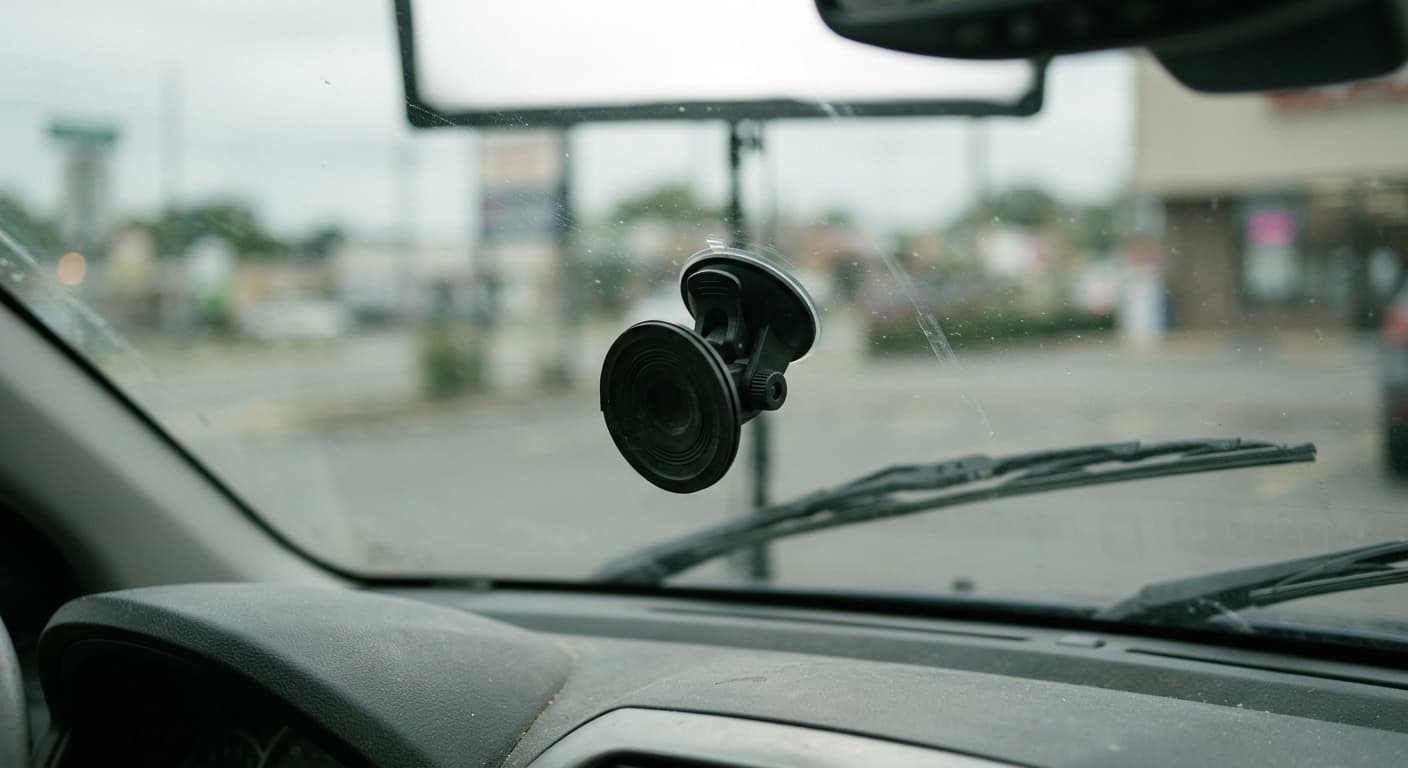
Minnesota prohibits objects suspended between the driver and the windshield under Minn. Stat. 169.71, but the statute expressly permits GPS devices near the bottommost portion of the windshield and driver feedback and safety monitoring equipment, the category that covers dashcams, immediately behind, slightly above, or slightly below the rearview mirror.
Minnesota is one of a small number of states that explicitly names GPS or navigation systems, driver feedback and safety monitoring equipment, and electronic toll collection devices as permitted windshield-mounted objects. Minn. Stat. 169.71 provides a general prohibition against objects suspended between the driver and the windshield, then carves out specific exceptions for six categories of devices and equipment. Understanding these exceptions is essential for any driver who uses a navigation system, runs a dashcam, or carries a toll transponder in Minnesota.
Minnesota Windshield Obstruction Law (Minn. Stat. 169.71)
Minnesota Statutes Section 169.71, Subdivision 1 sets out the general prohibition. A person must not drive or operate a motor vehicle with any objects suspended between the driver and the windshield. The statute then lists six exceptions to that rule.
The Six Permitted Windshield-Mounted Objects
Under Minn. Stat. 169.71, Subdivision 1, Paragraph (a), Clause (2), the following items are exempt from the general prohibition:
- Sun visors
- Rearview mirrors
- Driver feedback and safety monitoring equipment (including dashcams) when mounted immediately behind, slightly above, or slightly below the rearview mirror
- Global positioning systems or navigation systems when mounted or located near the bottommost portion of the windshield
- Electronic toll collection devices (such as E-ZPass or MnPass transponders)
- Transportation network company (TNC) identifying devices as defined in Minn. Stat. 169.58, Subdivision 5, when mounted or located near the bottommost portion of the windshield
This enumerated list is more detailed than what most states provide. Many states use broad language about "obstructing the driver's view" without naming specific device types.
GPS and Navigation Device Rules
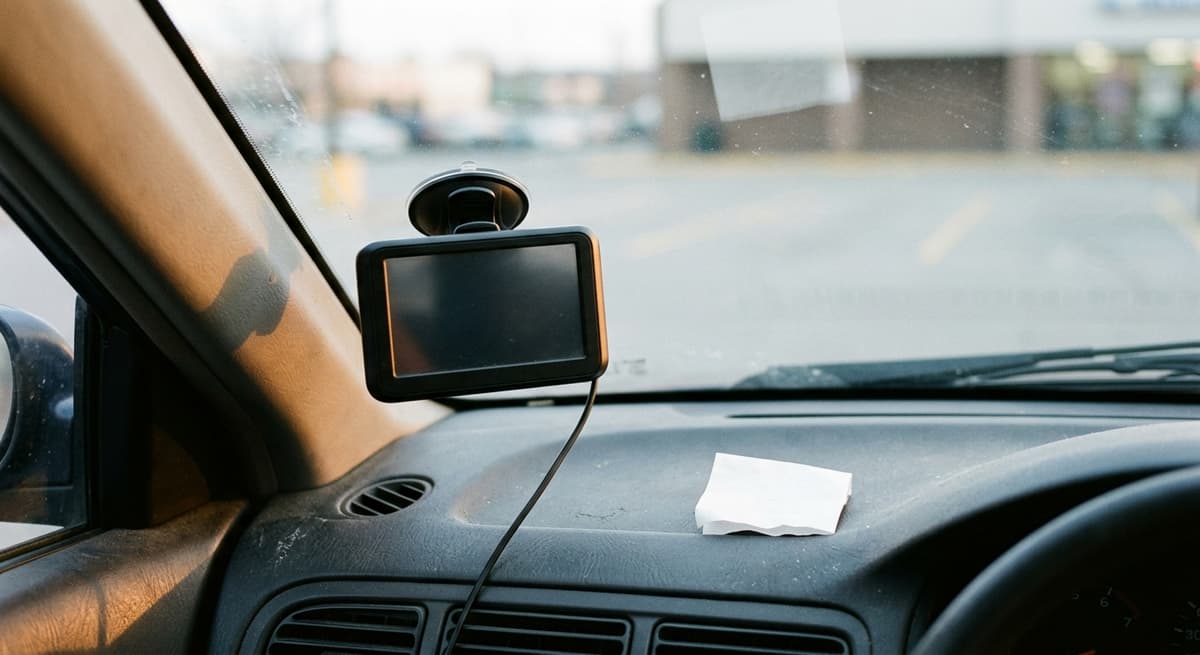
Minnesota law explicitly permits GPS and navigation systems on the windshield. The only placement requirement is that the device must be mounted or located near the bottommost portion of the windshield. The statute does not define "near" in inches or centimeters, so the standard is qualitative rather than numeric.
Practical Placement Guidelines
For compliance with Minn. Stat. 169.71, GPS and navigation device users should:
- Mount the device as low on the windshield as practical
- Keep the device on the passenger side when possible to avoid obstructing the driver's direct line of sight
- Use a suction cup mount that attaches to the lower windshield area
- Make sure the device does not block the driver's view of traffic, traffic signals, or road signs
Drivers who prefer a higher mounting position should consider a dashboard mount instead, which avoids the windshield restriction entirely.
Dashcam Mounting Requirements
Minnesota is among the states that specifically addresses dashcams through the "driver feedback and safety monitoring equipment" provision. A dashcam is permitted on the windshield, but the mounting location is restricted to immediately behind, slightly above, or slightly below the rearview mirror.
This placement requirement is different from the GPS rule. While GPS devices go near the bottom of the windshield, dashcams belong near the rearview mirror. This distinction makes sense from a visibility standpoint: a dashcam behind the mirror is largely hidden from the driver's forward view while still capturing the road ahead.
What Counts as "Safety Monitoring Equipment"
The statute uses the phrase "driver feedback and safety monitoring equipment." This broad category covers:
- Forward-facing dashcams
- Cabin-facing driver monitoring cameras
- Fleet telematics devices with camera components
- Advanced driver assistance system (ADAS) cameras
- Lane departure warning cameras
Any device that monitors driving behavior or records events for safety purposes falls under this exception, provided it is mounted near the rearview mirror.
Dashcam Audio Recording
Minnesota is a one-party consent state for audio recording. The driver counts as the consenting party, so recording audio inside the vehicle along with dashcam video is legal as long as the driver knows the dashcam is recording.
Electronic Toll Collection Devices
Minnesota permits electronic toll collection devices on the windshield without specifying a particular mounting location. The E-ZPass Minnesota program (formerly MnPass) provides transponder tags that are typically mounted on the inside of the windshield near the rearview mirror.
E-ZPass Tag Placement
According to the Minnesota Department of Transportation, the E-ZPass tag should be placed horizontally on the inside of the windshield near the rearview mirror. For vehicles with metallic tint on the windshield that may interfere with signal transmission, a license plate-mounted tag is available for a one-time fee of $15.
The electronic toll collection device exception was added to Minn. Stat. 169.71 in 2005 by 2005 Minn. Laws ch. 136, art. 8, sec. 2. The 2004 edition of the statute did not contain it.
Rideshare (TNC) Identifying Devices
Minn. Stat. 169.58, Subdivision 5 defines the requirements for transportation network company identifying devices. Drivers for services like Uber and Lyft may display up to two removable, interior-mounted trade dress devices on the windshield near the bottommost portion.
These devices may be illuminated with a steady beam of solid colored light when the driver is logged into the digital network. The identifying device must not display red, amber, or blue lights, must not flash or oscillate, and must not project a glaring or dazzling light.
Phone Mounts and the Hands-Free Law
Minnesota's hands-free law (Minn. Stat. 169.475), effective August 1, 2019, prohibits holding a wireless communications device while operating a motor vehicle. The law requires drivers to use voice-activated or hands-free mode for calls, texts, and app usage.
Where to Mount a Phone
The hands-free law makes phone mounts practically necessary, but Minn. Stat. 169.71 does not include a specific exemption for phone mounts on the windshield. A phone used as a GPS or navigation device would fall under the GPS/navigation exemption and could be mounted near the bottommost portion of the windshield.
For a phone not being used for navigation, the safest legal option is a dashboard mount, vent clip, or console mount. Windshield-mounting a phone that is not functioning as a navigation device could technically violate the general prohibition against objects suspended between the driver and the windshield.
Hands-Free Law Penalties
| Offense | Fine |
|---|---|
| First hands-free violation | $50 plus court fees |
| Second and subsequent violations | $275 plus court fees |
Only the $275 second-and-subsequent fine appears in the statute itself, at Minn. Stat. 169.475, Subdivision 2(b). The statute sets no dollar figure for a first offense; that amount comes from the statewide payables list rather than from Section 169.475. These penalties are separate from any windshield obstruction penalties.
Windshield Condition Requirements
Beyond mounted devices, Minn. Stat. 169.71 also regulates the physical condition of windshields.
Cracked or Discolored Windshields
Under Subdivision 1, Paragraph (a), Clause (1), a driver must not operate a vehicle with a windshield that is cracked or discolored to the extent that it limits or obstructs proper vision. There is no specific size threshold for cracks. The standard is whether the damage limits or obstructs the driver's view.
Signs, Posters, and Stickers
Subdivision 1, Paragraph (a), Clause (3) prohibits any sign, poster, or other nontransparent material on the windshield, side wings, or side or rear windows. The exception is certificates or papers required by law or authorized by the state director of the Division of Emergency Management or the commissioner of public safety.
Defrosting and Defogging
Under Subdivision 3, a driver must not operate a motor vehicle with the windshield or front side windows covered with steam or frost to the extent that it prevents proper vision. The vehicle must also be equipped with a windshield wiper device that the driver can control (Subdivision 2).
Window Tinting Rules
Minn. Stat. 169.71, Subdivision 4 governs window tinting separately from windshield-mounted devices.
Tint Limits
| Window | Light Transmittance | Reflectance |
|---|---|---|
| Windshield | No aftermarket tint allowed | Must not be reflective |
| Front side windows | 50% minimum (plus or minus 3%) | 20% maximum (plus or minus 3%) |
| Rear side windows | 50% minimum (plus or minus 3%) | 20% maximum (plus or minus 3%) |
| Rear window | 50% minimum (plus or minus 3%) | 20% maximum (plus or minus 3%) |
Minn. Stat. 169.71, Subdivision 4(1) bans any windshield material that makes the windshield more reflective or otherwise reduces light transmittance, and its stated exceptions (Subdivision 4a: unmodified factory glazing, a documented medical prescription, or certain pickups, vans, funeral vehicles, limousines, and police vehicles) do not include a general top-of-windshield tint strip or AS-1 line carve-out.
Medical Tint Exemption
Minnesota allows a medical exemption from tinting restrictions. A driver or passenger with a documented medical condition may use darker tinting if they carry a physician's statement or prescription in the vehicle. The medical documentation must:
- Specify whether the condition is temporary or permanent
- State the minimum percentage of light transmittance needed
- Include an expiration date no more than two years from the date of issue, unless the physician indicates the condition is permanent
Those requirements come from Subdivision 4a, paragraph (a), clause (2), and they are all a driver or passenger with their own prescription needs.
A separate rule covers borrowed documentation. Under Subdivision 4a, paragraph (b), a driver may rely on a prescription or physician's statement issued to a person who is not in the vehicle only if that person is the driver's parent, child, grandparent, grandchild, sibling, or spouse, or someone for whom the driver is a personal care attendant. In that situation only, the prescription or statement must also specify the make, model, and license plate of one or two vehicles that will have tinted windows, and the driver must have the document in the vehicle.
Law Enforcement and Emergency Vehicle Exemptions
Minn. Stat. 169.71, Subdivision 1 provides two exemptions for official vehicles:
- Law enforcement vehicles are exempt from both the windshield obstruction rules (Clause 2) and the prohibition on signs and nontransparent materials (Clause 3)
- Authorized emergency vehicles are exempt from the windshield obstruction rules (Clause 2) only
These exemptions allow police vehicles to mount equipment such as radar units, laptop computers, and camera systems on or near the windshield without violating the statute.
Penalties for Windshield Violations
Violations of Minn. Stat. 169.71 are classified as petty misdemeanors under the general penalty provisions of Minn. Stat. 169.89.
| Detail | Information |
|---|---|
| Offense classification | Petty misdemeanor |
| Maximum fine | $300 |
| Jail time | None (petty misdemeanors do not carry jail time) |
| Enhancement | Can be elevated to a misdemeanor if committed in a manner that endangers a person or property, or if preceded by two or more petty misdemeanor convictions in the prior 12 months |
The actual fine amount for a specific windshield violation is set by the Statewide Payables List maintained by the Minnesota Judicial Council. The payable amount is typically less than the $300 statutory maximum.
Fix-It Ticket Possibility
For windshield condition violations (cracks, frost, broken wipers), officers may issue a fix-it or equipment repair order rather than a citation. Correcting the issue within the timeframe specified by the officer typically satisfies the order without a fine.
More Minnesota Laws
Frequently Asked Questions
Can I mount a GPS on my windshield in Minnesota?
Yes. Minnesota Statutes Section 169.71 specifically permits global positioning systems and navigation systems on the windshield. The device must be mounted near the bottommost portion of the windshield. Dashboard mounts are also an option and avoid any windshield placement concerns.
Where can I mount a dashcam in Minnesota?
A dashcam must be mounted immediately behind, slightly above, or slightly below the rearview mirror under Minn. Stat. 169.71. Mounting a dashcam in other windshield locations, including on the dashboard in a position that blocks the windshield view, could violate Minnesota law.
Is it legal to mount my phone on the windshield in Minnesota?
If you are using the phone as a GPS or navigation device, it falls under the navigation system exemption and must be mounted near the bottommost portion of the windshield. For general phone use, a dashboard mount or vent clip is the safest legal option because the statute does not include a standalone phone mount exemption.
What is the fine for a windshield obstruction violation in Minnesota?
Windshield obstruction is a petty misdemeanor in Minnesota with a maximum fine of $300 and no jail time. The actual fine amount is set by the Statewide Payables List and is typically less than the statutory maximum. Repeat violations within 12 months can be enhanced to a misdemeanor.
Does Minnesota allow medical exemptions for darker window tint?
Yes. Under Minn. Stat. 169.71, Subdivision 4a, a driver or passenger with a qualifying medical condition can use darker tinting with a physician's statement. The documentation must specify the condition, the minimum light transmittance needed, and an expiration date no more than two years from issuance.
Updates
Corrected the windshield exception list to the enacted statutory wording, scoped the medical tint documentation rules to the right subdivision paragraphs, removed an unsourced account of when the toll transponder exception was added and an unverifiable licence points line, and clarified which hands free fine is set by statute.
Independently fact-checked against the cited primary sources; governing law re-checked for recent changes
Removed an unsupported claim that Minn. Stat. 169.71 grants a windshield tint-strip/AS-1-line exception (the statute's text bans any reflective or transmittance-reducing windshield material with no such carve-out), and removed a fabricated '2025 amendment' section whose quoted language does not appear in the current statute text.
Governing law re-checked for recent changes
Reviewed and approved by an editor
The Law Behind This Article
This article rests on the statutory provisions below, held in our own legal record and retrieved from the official source. Tap a section to read the operative text.
Minnesota Statutes, Chapter 169: TRAFFIC REGULATIONS
§ 169.71WINDSHIELDIn forcecited in 3 of our articles
Subdivision 1. Prohibitions generally; exceptions. (a) A person shall not drive or operate any motor vehicle with: (1) a windshield cracked or discolored to an extent to limit or obstruct proper vision; (2) any objects suspended between the driver and the windshield, other than: (i) sun visors; (ii) rearview mirrors; (iii) driver feedback and safety monitoring equipment when mounted immediately behind, slightly above, or slightly below the rearview mirror; (iv) global positioning systems or navigation systems when mounted or located near the bottommost portion of the windshield; (v) electronic toll collection devices; and (vi) an identifying device as provided in section 169.58, subdivision 5, when the device is mounted or located near the bottommost portion of the windshield; or (3) any sign, poster, or other nontransparent material upon the front windshield, sidewings, or side or rear windows of the vehicle, other than a certificate or other paper required to be so displayed by law or authorized by the state director of the Division of Emergency Management or the commissioner of public safety. (b) Paragraph (a), clauses (2) and (3), do not apply to law enforcement vehicles.
Official text (excerpt) · last checked 2026-09-07 · Read the full text in our law library · Verify at revisor.mn.gov
Cited in 17 court opinions in our collectionLatest citing opinion in our collection: 2026
In the courts (editorial summary, independently checked):State v. Varnado (1998) treated a Minn. Stat. 169.71 windshield violation as probable cause to stop but held it is only a petty misdemeanor that did not justify a frisk. State v. Smith (2002) assumed without deciding that the tinted window subdivision was unconstitutional and held the exclusionary rule still did not bar the evidence.
Opinions citing this section in our collection:
- State v. Smith (Court of Appeals of Minnesota 2002, 652 N.W.2d 546)✓A deputy stopped a car he could not see through for excessive tint under Minn. Stat. 169.71, subd. 4; the court assumed without deciding that the tint statute violated equal protection and held the exclusionary rule did not reach the evidence found after the stop.
- Gerding v. Commissioner of Public Safety (Court of Appeals of Minnesota 2001, 628 N.W.2d 197)✓An officer stopped Gerding after seeing an object hanging from her rear vision mirror; the court read the then-current Minn. Stat. 169.71, subd. 1 to bar any suspended object except sun visors and mirrors, whether or not it obstructed vision, so the stop was justified.
- State v. Varnado (Supreme Court of Minnesota 1998, 582 N.W.2d 886)✓Officers stopped Varnado for a cracked windshield and frisked her before seating her in a squad car; the court called that Minn. Stat. 169.71 violation a petty misdemeanor that justified the stop but not the frisk, and reinstated the suppression order.
Identified automatically from the court opinions citing this section — not a ranking of which case controls.
Also relied on in: Minnesota Dashcam Laws: Legality, Mounting Rules, and Evidence Use, Minnesota Window Tint Laws (2026): Legal VLT Limits
§ 169.475USE OF WIRELESS COMMUNICATIONS DEVICEIn forcecited in 2 of our articles
Subdivision 1. Definitions. (a) For purposes of this section, the following terms have the meanings given. (b) "Electronic message" means a self-contained piece of digital communication that is designed or intended to be transmitted between physical devices. An electronic message includes, but is not limited to: email; a text message; an instant message; a command or request to access a web page; a voice mail message; a transmitted image; transmitted video content, including through video calling; transmitted gaming data; and other data transmitted using a commonly recognized electronic communications protocol. An electronic message does not include: voice or audio data transmitted as a result of making a phone call; data transmitted between a motor vehicle and a wireless communications device located in the vehicle; data transmitted by a two-way radio, citizens band radio, or amateur radio used in accordance with Federal Communications Commission rules and regulations; or data transmitted automatically without direct initiation by a person.
Official text (excerpt) · last checked 2026-07-29 · Read the full text in our law library · Verify at revisor.mn.gov
Also relied on in: Minnesota Smart Glasses Recording Laws 2025
§ 169.58IDENTIFICATION LAMPSIn force
Subdivision 1. Wide or long vehicle. Any vehicle or combination of vehicles having a width including load thereon at any part in excess of 80 inches or which exceeds 30 feet in overall length may be equipped with identification lamps on the front displaying three amber or white lights and identification lamps on the rear displaying three red lights, and when so equipped the lights in each such group shall be evenly spaced not less than 6 nor more than 12 inches apart, along a horizontal line as near to the top of the vehicle as practicable, and these lights shall be visible from a distance of 500 feet to the front and rear, respectively, of the vehicle. Subd. 2. Red lamp; permit for volunteer emergency responders. Upon obtaining a permit from the commissioner of public safety, any motor vehicles operated by an active member of a volunteer fire department authorized by or contracting with any city, town, or township in this state, an emergency medical first responder, or an ambulance crew member may be equipped with a lamp emitting a red light to the front of such vehicle. The lens of such lamp shall be not more than three inches in diameter.
Official text (excerpt) · last checked 2026-07-29 · Read the full text in our law library · Verify at revisor.mn.gov
§ 169.89PENALTIESIn force
Subdivision 1. Violation; when petty misdemeanor enhanced to misdemeanor. Unless otherwise declared in this chapter with respect to particular offenses, it is a petty misdemeanor for any person to do any act forbidden or fail to perform any act required by this chapter; except that: (1) a violation which is committed in a manner or under circumstances so as to endanger or be likely to endanger any person or property; or (2) exclusive of violations relating to the standing or parking of an unattended vehicle, a violation of any of the provisions of this chapter, classified therein as a petty misdemeanor, when preceded by two or more petty misdemeanor convictions within the immediate preceding 12-month period; is a misdemeanor to which the provisions of subdivision 2 shall not apply. Subd. 2. Petty misdemeanor penalty; no jury trial. A person charged with a petty misdemeanor is not entitled to a jury trial but shall be tried by a judge without a jury. If convicted, the person is not subject to imprisonment but shall be punished by a fine of not more than $300. Subd. 3. [Obsolete] Subd. 4. Driver's record.
Official text (excerpt) · last checked 2026-07-29 · Read the full text in our law library · Verify at revisor.mn.gov
Cited in 23 court opinions in our collectionLatest citing opinion in our collection: 2016
Opinions citing this section in our collection:
- State v. Johnson (Supreme Court of Minnesota 1994, 514 N.W.2d 551)“…on in a year, he was charged with a misdemeanor pursuant to Minn.Stat. § 169.89, subd. I. 2 Appellant…”
- State v. Batzer (Court of Appeals of Minnesota 1989, 448 N.W.2d 565)“…ty misdemeanor and would result in a maximum fine of $100. Minn. Stat. § 169.89 , subd. 1(b). Appellant, however, had t…”
- State v. Host (Court of Appeals of Minnesota 1984, 350 N.W.2d 479)“…lties provided in section 169.89 apply. Id. Minn.Stat. § 169.89 (1982) in turn provides: Unless…”
Identified automatically from the court opinions citing this section — not a ranking of which case controls.
Search our full record of US law — 2.1 million sections, every state + federal →
Sources and References
- Minn. Stat. 169.71 - Windshield(revisor.mn.gov).gov
- Minn. Stat. 169.475 - Use of Wireless Communications Device(revisor.mn.gov).gov
- Minn. Stat. 169.58 - Vehicle Identification and TNC Devices(revisor.mn.gov).gov
- Minn. Stat. 169.89 - Penalties for Traffic Violations(revisor.mn.gov).gov
- MnDOT - E-ZPass Tag Information(dot.minnesota.gov).gov
- MnDOT - E-ZPass Minnesota Program(dot.minnesota.gov).gov
- Minn. Stat. 169.71 (2005 edition) - history note listing 2005 c 136 art 8 s 2(revisor.mn.gov)
- Minn. Stat. 171.12 - Department records; driving record contents(revisor.mn.gov)