
Michigan
Michigan Laws on Recording Police: Your Rights and Legal Limits (2026)
Independently fact-checked against primary sources (last audited August 15, 2026). · Reviewed by the RecordingLaw editorial team. · Law checked current as of August 15, 2026. · 6 primary sources cited on this page. How we verify our legal content
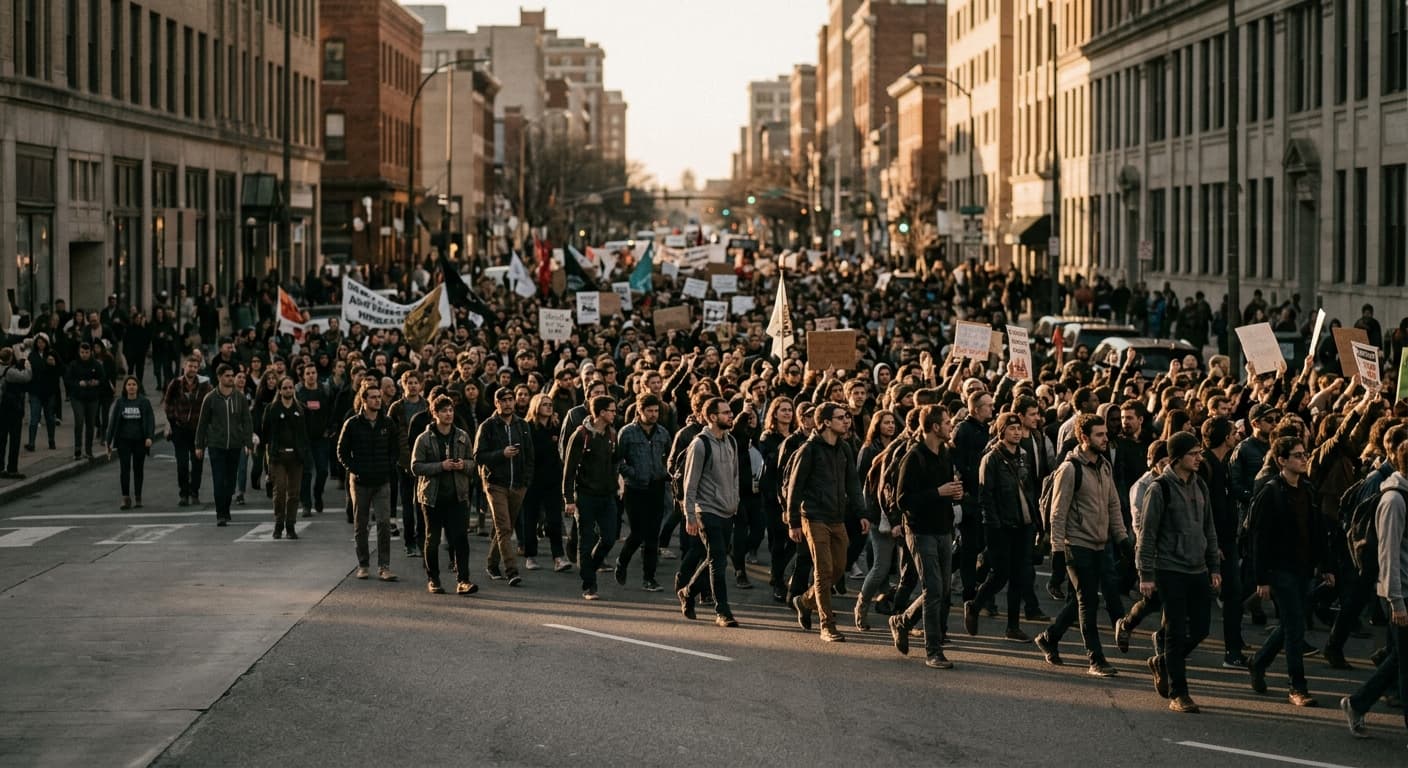
Michigan residents have a First Amendment right to record on-duty police officers in public spaces. Michigan's eavesdropping statute, MCL 750.539c, includes a participant exception recognized in Sullivan v. Gray: when you are part of the interaction, you may record it without the officer's consent.
Recording police officers in Michigan is legal, and the right to do so is grounded in both the First Amendment to the U.S. Constitution and Michigan's own recording laws. Whether you are directly interacting with an officer during a traffic stop or observing police activity from across the street, Michigan law protects your ability to document what officers do in public.
This guide explains the legal basis for recording police in Michigan, the limits of that right, what to do if officers tell you to stop recording, and how Michigan's eavesdropping statute applies to police interactions.
The First Amendment Right to Record Police
Constitutional Foundation
The right to record law enforcement officers performing their duties in public is protected by the First Amendment. Multiple federal circuit courts of appeals have recognized this right, and the U.S. Supreme Court has declined to disturb those rulings.
The legal reasoning is straightforward: the First Amendment protects the right to gather and disseminate information about government officials performing their public duties. Police officers acting in their official capacity in public spaces are government actors. Recording their conduct is a form of speech and press activity protected by the Constitution.
Sixth Circuit Recognition
The U.S. Sixth Circuit Court of Appeals, which has jurisdiction over Michigan, Ohio, Kentucky, and Tennessee, has addressed the right to record police in several decisions. In Crawford v. Geiger, 656 F. App'x 190 (6th Cir. 2016), the Sixth Circuit acknowledged First Amendment interests in recording police, but that decision is unpublished and not precedentially binding. The Sixth Circuit has not yet issued a published, binding opinion squarely holding a First Amendment right to record police in public -- making it an unsettled question at the circuit level, even as the practical right is widely recognized by district courts and the constitutional reasoning is persuasive across nearly every other federal circuit.
This means that both state and federal courts in Michigan recognize the constitutional right to record law enforcement.
Michigan's Eavesdropping Law and Police Recording
When You Are Interacting With Police
If you are directly interacting with a police officer, whether during a traffic stop, a street encounter, an arrest, or any other situation where you are speaking with the officer, you are a participant in that conversation. Under the Sullivan v. Gray participant exception, you can record the interaction without the officer's consent.
MCL 750.539a(2) defines "eavesdrop" as recording "the private discourse of others." When you are part of the conversation, it is not solely the discourse of "others." It is also your own. Therefore, recording your own interaction with police is not eavesdropping.
When You Are a Bystander
If you are observing and recording police activity from a distance and not participating in the conversation being recorded, the analysis is slightly different. The eavesdropping statute could theoretically apply if you are capturing private discourse that you are not part of.
However, two factors work in your favor:
-
First Amendment override. The constitutional right to record police performing public duties generally takes precedence over the eavesdropping statute in this context.
-
No "private discourse" in public. Police officers performing their duties in public spaces generally are not engaged in "private discourse" as defined by Michigan law. MCL 750.539a defines "private place" as a location where someone can reasonably expect to be safe from intrusion, explicitly excluding places accessible to the public. Officers on a public sidewalk or roadway have limited privacy expectations regarding their official conduct.
Police Officers and Expectation of Privacy
Police officers acting in their official capacity in public do not have the same expectation of privacy as private citizens. Their actions are public functions subject to public accountability. This principle applies regardless of whether the officer is making an arrest, issuing a citation, conducting a traffic stop, or interacting with members of the community.
However, officers may have privacy expectations in certain limited situations, such as personal conversations during breaks or communications within a police station that are not accessible to the public.
What You Can and Cannot Do While Recording Police
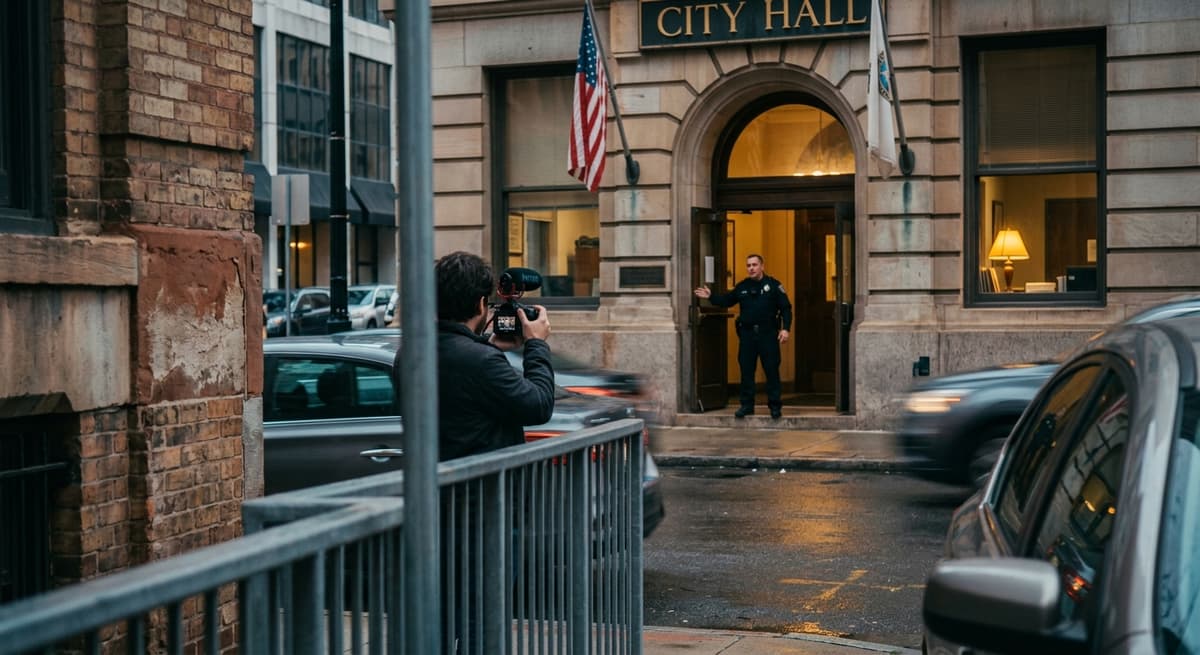
Your Rights
- Record from any public space. You can record from sidewalks, parks, your own property, or any other location where you have a legal right to be.
- Record without announcing it. You do not need to tell officers that you are recording. There is no duty to disclose.
- Record audio and video. Both audio and video recording of police in public is protected.
- Stream live. Broadcasting your recording live on social media or other platforms is protected speech.
- Refuse to stop recording. An officer's request to stop recording, by itself, does not create a legal obligation to comply (unless your recording is truly interfering with their duties).
Limitations
- Do not physically interfere with police. MCL 750.479 prohibits resisting, obstructing, or assaulting an officer performing their duties. If your recording activity physically blocks officers, prevents them from reaching a scene, or creates a safety hazard, you can be arrested.
- Obey lawful orders to move. Officers can establish reasonable perimeters for safety purposes around crime scenes, accident sites, and emergency operations. If an officer orders you to move back for legitimate safety reasons, you must comply. You can continue recording from the new location.
- Do not enter restricted areas. You cannot enter a crime scene, restricted area, or private property without authorization to get a better recording angle.
- Do not touch officers or their equipment. Physical contact with officers or interference with their equipment, vehicles, or communications is prohibited.
What to Do If Police Tell You to Stop Recording
Officers sometimes tell people to stop recording, even though no legal basis exists for the demand. Here is how to handle the situation:
Stay Calm and Assert Your Rights
Calmly state that you are exercising your First Amendment right to record in a public place. Do not argue, raise your voice, or make sudden movements. You might say something like: "I understand, officer. I am recording from a public space and I am not interfering with your work."
Do Not Physically Resist
If an officer insists or attempts to seize your device, do not physically resist. Clearly state that you do not consent to the seizure, but do not fight. Physical resistance can lead to arrest for obstruction or resisting an officer, creating legal problems that are separate from the recording issue.
Note the Officer's Information
If possible, remember or note the officer's name, badge number, patrol car number, and the time and location of the interaction. This information is essential if you later need to file a complaint or lawsuit.
File a Complaint
If you believe your rights were violated, you can file a complaint with the officer's department, the Michigan Department of Civil Rights, or the ACLU of Michigan. You may also have grounds for a federal civil rights lawsuit under 42 U.S.C. Section 1983.
Device Seizure and Search Rules
The Warrant Requirement
The U.S. Supreme Court held in Riley v. California, 573 U.S. 373 (2014), that police generally need a warrant to search the contents of a cell phone. This protection applies to recordings stored on your device.
In Michigan, police cannot:
- Take your phone without a warrant or valid exception to the warrant requirement
- Delete recordings from your device
- Force you to unlock your device or provide a passcode (though courts are split on biometric access)
- Review the contents of your phone without a warrant during a stop or arrest
Exceptions
Limited exceptions to the warrant requirement may apply in exigent circumstances, such as when officers reasonably believe that evidence on the device is in imminent danger of destruction. However, the mere fact that you are recording police activity does not create exigent circumstances.
Recording Police Body Cameras and Dashcams
Michigan does not have a statewide body camera mandate for police. Departments that operate body cameras are governed by the Law Enforcement Body-Worn Camera Privacy Act, MCL § 780.311 et seq., which sets electronic recording policy requirements. Individual departments set their own policies regarding body-worn cameras and dashcam equipment.
When officers are wearing body cameras, they are recording you while you may also be recording them. Both recordings are generally legal. Your recording may capture different angles, audio quality, or events that the officer's body camera misses.
Accessing Police Recordings
You can request copies of police body camera and dashcam footage through the Michigan Freedom of Information Act (FOIA), MCL 15.231. Departments must respond to FOIA requests within five business days, though they may charge reasonable fees for duplication and may redact certain portions under statutory exemptions.
Recording Public Government Meetings
Michigan's Open Meetings Act (MCL 15.263) provides an explicit statutory right to record public government meetings. The Act states that the right to attend a public meeting includes the right to:
- Tape-record the proceedings
- Videotape the proceedings
- Broadcast live on radio
- Telecast live on television
This right does not require prior approval from the public body. However, the public body may establish reasonable rules and regulations to minimize the possibility of disrupting the meeting.
Penalties for Interfering With Officers
While recording police is legal, interfering with their duties is not. MCL 750.479 establishes penalties for obstructing or resisting an officer:
| Offense | Maximum Prison | Maximum Fine |
|---|---|---|
| Obstruction of officer performing duties | 2 years | $2,000 |
| Assault on officer performing duties | 2 years | $2,000 |
| Assault causing injury to officer | 4 years | $5,000 |
Recording from a reasonable distance without interfering does not constitute obstruction. Courts evaluate whether the recording activity actually impeded the officer's ability to perform their duties, not whether the officer was annoyed or uncomfortable with being recorded.
Related Michigan Recording Laws
Audio Recording | Video Recording | Voyeurism & Hidden Cameras | Workplace Recording | Recording Police | Phone Call Recording | Security Cameras | Recording in Public | Landlord-Tenant | Dashcam Laws | Schools | Medical Recording
← Back to Michigan Recording Laws
More Michigan Recording Topics
More Michigan Laws
Frequently Asked Questions
Can I record police officers in Michigan?
Yes. You have a First Amendment right to record police officers performing their duties in public. If you are directly interacting with an officer, Michigan's participant exception also allows you to record without the officer's consent. You can record from any public space without announcing that you are recording.
Can police take my phone if I am recording them in Michigan?
Police generally cannot seize your phone without a warrant. The U.S. Supreme Court held in Riley v. California (2014) that police need a warrant to search a cell phone. Officers cannot delete your recordings, force you to unlock your device, or review your phone's contents during a stop without a warrant.
What should I do if a police officer tells me to stop recording in Michigan?
Calmly state that you are exercising your First Amendment right to record in a public place. Do not argue or make sudden movements. If the officer insists or attempts to seize your device, do not physically resist. Clearly state you do not consent, and note the officer's name and badge number. You can file a complaint afterward.
Can I be arrested for recording police in Michigan?
Recording police is legal and does not provide a lawful basis for arrest. However, you can be arrested if your recording activity physically interferes with officers performing their duties. MCL 750.479 prohibits obstructing an officer. Recording from a reasonable distance without interfering is not obstruction.
Can I get copies of police body camera footage in Michigan?
Yes. You can request body camera and dashcam footage through the Michigan Freedom of Information Act (FOIA). Departments must respond within five business days. They may charge reasonable fees and may redact portions under statutory exemptions, but they cannot refuse to acknowledge that recordings exist.
Updates
Independently fact-checked against the cited primary sources; governing law re-checked for recent changes
Removed an incorrect citation: MCL 28.295 is Michigan's ID-card fraud/forgery statute, not a body-worn camera policy statute. Body camera policy is governed by the Law Enforcement Body-Worn Camera Privacy Act (MCL 780.311 et seq.).
Governing law re-checked for recent changes
Reviewed and approved by an editor
The Law Behind This Article
This article rests on the statutory provisions below, held in our own legal record and retrieved from the official source. Tap a section to read the operative text.
Michigan Compiled Laws
§ 750.539cEavesdropping upon private conversationIn forcecited in 42 of our articles
Any person who is present or who is not present during a private conversation and who wilfully uses any device to eavesdrop upon the conversation without the consent of all parties thereto, or who knowingly aids, employs or procures another person to do the same in violation of this section, is guilty of a felony punishable by imprisonment in a state prison for not more than 2 years or by a fine of not more than $2,000.00, or both.
Official text (excerpt) · last checked 2026-08-28 · Read the full text in our law library · Verify at legislature.mi.gov
Cited in 32 court opinions in our collectionLatest citing opinion in our collection: 2025
In the courts (editorial summary, independently checked):Michigan courts read MCL 750.539c to reach third-party eavesdropping only. Sullivan v. Gray (1982) held the statutory phrase "private discourse of others" excludes recording by a participant in the conversation; People v. Lucas (1991) held an officer who answered an arrestee's ringing car phone did not violate the section.
Opinions citing this section in our collection:
- People v. Lucas (Michigan Court of Appeals 1991, 188 Mich. App. 554)✓Police answering the arrested defendant's ringing car phone took drug-purchase calls and testified to them; the court held the officer was not an eavesdropper because there was no private discourse between the sender and some other receiver, so MCL 750.539c was not violated.
- Sullivan v. Gray (Michigan Court of Appeals 1982, 117 Mich. App. 476)✓A party to a phone call about a failed car dealership sale secretly taped it and the transcript was used in later litigation; reading the statute to reach only the private discourse of others, the court held participant recording is not eavesdropping under MCL 750.539c.
- People v. Warner (Michigan Supreme Court 1977, 401 Mich. 186)✓A motel switchboard operator deliberately listened in on a guest's call and reported it to police; the court held her willful eavesdropping violated MCL 750.539c, but the defendant, not shown to be a party to the call, had no standing to suppress the resulting evidence.
Identified automatically from the court opinions citing this section — not a ranking of which case controls.
Also relied on in: Michigan Smart Glasses Recording Laws (2026), Michigan Landlord-Tenant Recording Laws: Surveillance, Privacy, and Tenant Rights (2026), Michigan Security Camera Laws: Rules for Homes, Businesses, and Neighbors (2026)
§ 15.231Short title; public policyIn forcecited in 6 of our articles
(1) This act shall be known and may be cited as the "freedom of information act". (2) It is the public policy of this state that all persons, except those persons incarcerated in state or local correctional facilities, are entitled to full and complete information regarding the affairs of government and the official acts of those who represent them as public officials and public employees, consistent with this act. The people shall be informed so that they may fully participate in the democratic process.
Official text (excerpt) · last checked 2026-07-30 · Read the full text in our law library · Verify at legislature.mi.gov
Cited in 386 court opinions in our collectionLatest citing opinion in our collection: 2026
Opinions citing this section in our collection:
- Booth Newspapers, Inc v. University of Michigan Board of Regents (Michigan Supreme Court 1993, 444 Mich. 211)“…SA 4.1800(11) et seq., or the Freedom of Information Act, MCL 15.231 et seq.; MSA 4.1801(1) et seq. We…”
- Herald Co. v. City of Bay City (Michigan Supreme Court 2000, 463 Mich. 111)“…that they may fully participate in the democratic process. [MCL 15.231(2); MSA 4.1801(1)(2) (emphasis added).]…”
- Coblentz v. City of Novi (Michigan Supreme Court 2006, 475 Mich. 558)“…m disclosure under the Freedom of Information Act (FOIA), MCL 15.231 et seq. We address also whether it was…”
Identified automatically from the court opinions citing this section — not a ranking of which case controls.
Also relied on in: Michigan Data Privacy Laws: Consumer Rights & Protections (2026), Public Records Laws by State: FOIA Guide for All 50 States (2026), Michigan Freedom of Information Act: 5 Business Days, Fees, and How to Appeal
§ 15.263Meetings, decisions, and deliberations of public body; requirements; attending or addressing meeting of public body; COVID-19 safety measures; tape-recording, videotaping, broadcasting, and telecasting proceedings; accommodation of absent members; remote attendance; rules; exclusion from meeting; exemptionsIn forcecited in 10 of our articles
(1) All meetings of a public body must be open to the public and must be held in a place available to the general public. All persons must be permitted to attend any meeting except as otherwise provided in this act. The right of a person to attend a meeting of a public body includes the right to tape-record, to videotape, to broadcast live on radio, and to telecast live on television the proceedings of a public body at a public meeting. The exercise of this right does not depend on the prior approval of the public body. However, a public body may establish reasonable rules and regulations in order to minimize the possibility of disrupting the meeting. For a meeting of a public body held in person before April 1, 2021, the public body shall do both of the following: (a) To the extent feasible under the circumstances, ensure adherence to social distancing and mitigation measures recommended by the Centers for Disease Control and Prevention for purposes of preventing the spread of COVID-19, including the measure that an individual remain at least 6 feet from anyone from outside the individual's household.
Official text (excerpt) · last checked 2026-07-30 · Read the full text in our law library · Verify at legislature.mi.gov
Cited in 94 court opinions in our collectionLatest citing opinion in our collection: 2026
Opinions citing this section in our collection:
- Booth Newspapers, Inc v. University of Michigan Board of Regents (Michigan Supreme Court 1993, 444 Mich. 211)“…ing violated the act by not taking place in a public forum. MCL 15.263(2); MSA 4.1800(13)(2). See also OAG 197…”
- Herald Co. v. City of Bay City (Michigan Supreme Court 2000, 463 Mich. 111)“…mbers shall take place at a meeting open to the public.... [MCL 15.263; MSA 4.1800(13).] The statute strictl…”
- Speicher v. Columbia Township Board of Trustees (Michigan Supreme Court 2014, 497 Mich. 125)“…o, J. MCL 15.261 et seq. MCR 7.215(J). MCL 15.263(2) requires that “[a]ll decisions of a…”
Identified automatically from the court opinions citing this section — not a ranking of which case controls.
Also relied on in: Michigan Audio Recording Laws: Consent Rules, Statutes, and Penalties (2026), Michigan Laws on Recording in Public: First Amendment Rights and Limits (2026), Michigan School Recording Laws: Rules for Students, Parents, and Teachers (2026)
§ 750.479Resisting or obstructing officer in discharge of duty; penalty; definitionsIn forcecited in 2 of our articles
(1) A person shall not knowingly and willfully do any of the following: (a) Assault, batter, wound, obstruct, or endanger a medical examiner, township treasurer, judge, magistrate, probation officer, parole officer, prosecutor, city attorney, court employee, court officer, or other officer or duly authorized person serving or attempting to serve or execute any process, rule, or order made or issued by lawful authority or otherwise acting in the performance of his or her duties. (b) Assault, batter, wound, obstruct, or endanger an officer enforcing an ordinance, law, rule, order, or resolution of the common council of a city board of trustees, the common council or village council of an incorporated village, or a township board of a township. (2) Except as provided in subsections (3), (4), and (5), a person who violates this section is guilty of a felony punishable by imprisonment for not more than 2 years or a fine of not more than $2,000.00, or both.
Official text (excerpt) · last checked 2026-07-30 · Read the full text in our law library · Verify at legislature.mi.gov
Cited in 171 court opinions in our collectionLatest citing opinion in our collection: 2026
Opinions citing this section in our collection:
- People v. Moreno (Michigan Supreme Court 2012, 491 Mich. 38)“…ompared the prior version of the resisting-arrest statute, MCL 750.479, to the current version, MCL 750.81d. T…”
- People v. Smith (Michigan Supreme Court 1985, 423 Mich. 427)“…and to resisting an officer in the discharge of his duty, MCL 750.479; MSA 28.747. At the same proceeding, he…”
- People v. Little (Michigan Supreme Court 1990, 434 Mich. 752)“…groin area. The defendant was charged with a violation of MCL 750.479; MSA 28.747, which is sometimes referre…”
Identified automatically from the court opinions citing this section — not a ranking of which case controls.
§ 750.539aDefinitionsIn forcecited in 30 of our articles
As used in sections 539a to 539i: (1) "Private place" means a place where one may reasonably expect to be safe from casual or hostile intrusion or surveillance but does not include a place to which the public or substantial group of the public has access. (2) "Eavesdrop" or "eavesdropping" means to overhear, record, amplify or transmit any part of the private discourse of others without the permission of all persons engaged in the discourse. Neither this definition or any other provision of this act shall modify or affect any law or regulation concerning interception, divulgence or recording of messages transmitted by communications common carriers. (3) "Surveillance" means to secretly observe the activities of another person for the purpose of spying upon and invading the privacy of the person observed. (4) "Person" means any individual, partnership, corporation or association.
Official text (excerpt) · last checked 2026-07-30 · Read the full text in our law library · Verify at legislature.mi.gov
Cited in 26 court opinions in our collectionLatest citing opinion in our collection: 2026
Opinions citing this section in our collection:
- Lewis v. LeGrow (Michigan Court of Appeals 2003, 258 Mich. App. 175)“…such unauthorized installation, is guilty of a felony.... MCL 750.539a provides the definitions of phrases use…”
- People v. Stone (Michigan Supreme Court 2001, 463 Mich. 558)“…permission of all persons engaged in the discourse.” MCL 750.539a(2); MSA 28.807(1)(2). In…”
- People v. Lucas (Michigan Court of Appeals 1991, 188 Mich. App. 554)“…e Commander Turner, in answering the mobile phone, violated MCL 750.539a et seq.; MSA 28.807(1)…”
Identified automatically from the court opinions citing this section — not a ranking of which case controls.
Also relied on in: Michigan Dashcam Laws: Windshield Rules, Audio Recording, and Legal Use (2026), Michigan Phone Call Recording Laws: Rules for Landlines, Cell Phones, and VoIP (2026), Michigan Recording Laws (2026): Consent Rules and Participant Exception
§ 780.311Short titleIn forcecited in 4 of our articles
This act shall be known and may be cited as the "law enforcement body-worn camera privacy act".
Official text (excerpt) · last checked 2026-07-30 · Read the full text in our law library · Verify at legislature.mi.gov
Cited in 1 court opinions in our collectionLatest citing opinion in our collection: 2025
Opinions citing this section in our collection:
- People of Michigan v. Juan Carlos Rodriguez (Michigan Court of Appeals 2025)“…316(2) of the Law Enforcement Body-Worn Camera Privacy Act, MCL 780.311 et seq., which provides that “[a] law e…”
Identified automatically from the court opinions citing this section — not a ranking of which case controls.
Also relied on in: Michigan Police Bodycam Laws: Retention & Public Records, How to Get a Police Report in Michigan (2026 Guide)
Search our full record of US law — 2.1 million sections, every state + federal →
Sources and References
- Michigan Legislature - MCL 750.539c (Eavesdropping)(legislature.mi.gov).gov
- Michigan Legislature - MCL 750.539a (Definitions)(legislature.mi.gov).gov
- Michigan Legislature - MCL 15.263 (Open Meetings Act)(legislature.mi.gov).gov
- Michigan Legislature - MCL 750.479 (Obstructing Officer)(legislature.mi.gov).gov
- Michigan Legislature - MCL 15.231 (FOIA)(legislature.mi.gov).gov
- ACLU - Recording Police(aclu.org)
- Michigan Legislature - MCL 780.311 (Electronic Recording Policy)(legislature.mi.gov).gov
- Fisher v. Perron, 30 F.4th 289 (6th Cir. 2022)(law.justia.com)