
Michigan
Michigan Landlord-Tenant Recording Laws: Surveillance, Privacy, and Tenant Rights (2026)
Independently fact-checked against primary sources (last audited August 15, 2026). · Reviewed by the RecordingLaw editorial team. · Law checked current as of August 15, 2026. · 5 primary sources cited on this page. How we verify our legal content
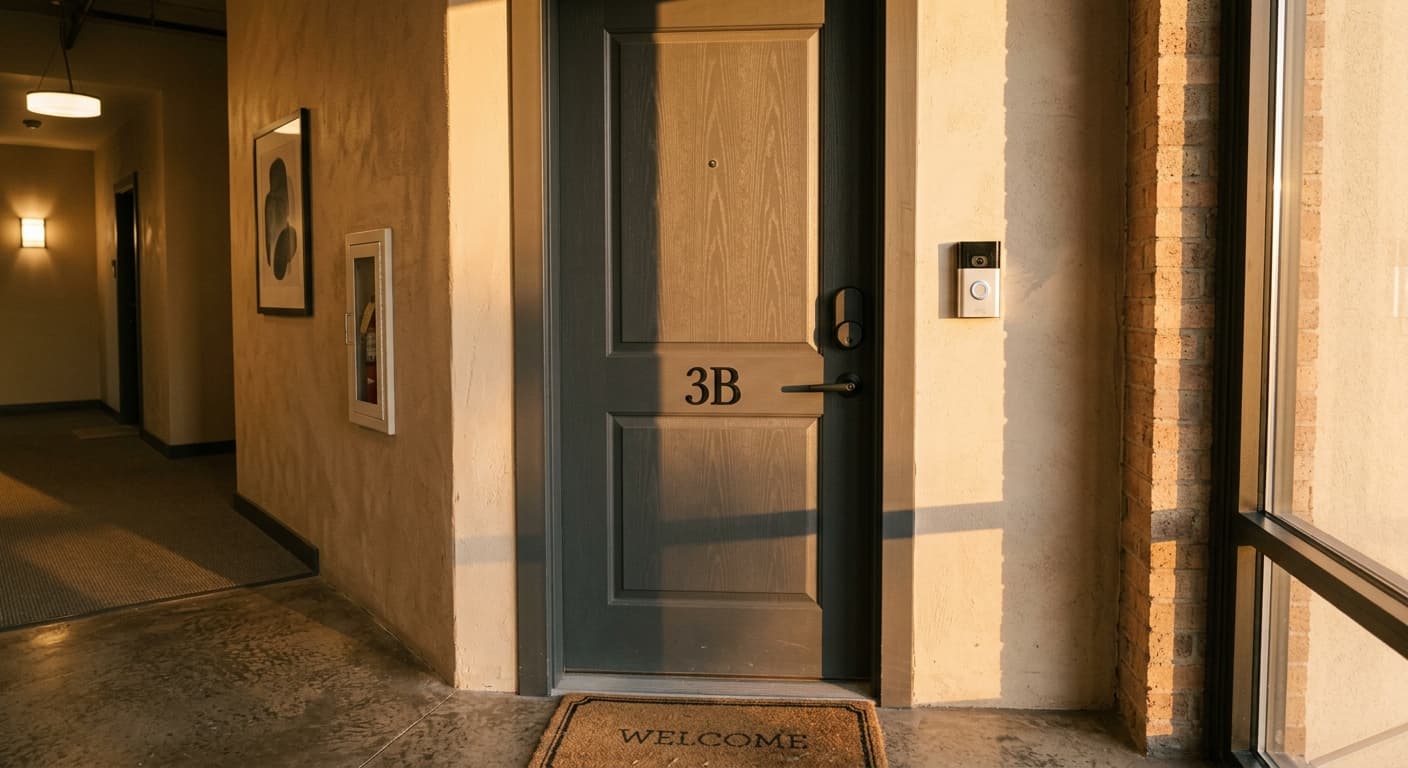
Michigan's eavesdropping statute (MCL 750.539c) reads as all-party, but courts recognize a participant exception: any party to a conversation may record it without notifying the other. Landlords may not place hidden cameras inside a rental unit. Tenants retain the right to record conversations with landlords and to install cameras within their own unit.
The relationship between landlords and tenants in Michigan creates unique recording law challenges. A landlord owns the building but does not have the right to surveil tenants in their private living spaces. A tenant occupies a private space but does not control the common areas of the building. Michigan's surveillance laws draw clear lines between what each party can and cannot do.
This guide covers landlord camera placement rules, tenant recording rights, audio surveillance restrictions, lease provisions, and the legal remedies available when boundaries are crossed.
Landlord Security Camera Rules
Where Landlords Can Place Cameras
Michigan landlords can install video security cameras in areas of the rental property that are accessible to multiple tenants, visitors, and the general public. Legal locations include:
- Building entrances and exits
- Lobbies and vestibules
- Hallways and stairwells
- Parking lots and garages
- Laundry rooms
- Mail rooms and package areas
- Exterior of the building (front, back, sides)
- Dumpster and recycling areas
- Common outdoor spaces
These areas do not qualify as "private places" under MCL 750.539a because they are accessible to a substantial group of people. Surveillance in these locations serves a legitimate security purpose and does not invade any individual tenant's private space.
Where Landlords Cannot Place Cameras
MCL 750.539d prohibits placing surveillance devices in any "private place" without the consent of the person entitled to privacy there. In the landlord-tenant context, prohibited locations include:
- Inside any tenant's apartment or rental unit. Once a unit is rented, the tenant is the person entitled to privacy, and the landlord cannot install cameras without their consent.
- Bathrooms and restrooms in common areas (these are private places even within shared spaces).
- Tenant storage areas that are assigned to individual tenants with locks.
- Inside garages or sheds assigned exclusively to a specific tenant.
A landlord who places a hidden camera inside a tenant's unit commits a felony punishable by up to 2 years in prison and a $2,000 fine for a first offense, or up to 5 years and $5,000 for a repeat offense.
The Residential Security Exception Does Not Help Landlords
MCL 750.539d's residential security exception allows security monitoring by "the owner or principal occupant." While the landlord owns the building, the tenant is the principal occupant of their individual unit. The landlord's ownership interest does not override the tenant's privacy rights inside the rented space.
This distinction is critical. A landlord who lives in one unit of a multi-unit building can have security cameras in their own unit and in common areas, but not in other tenants' units.
Tenant Recording Rights
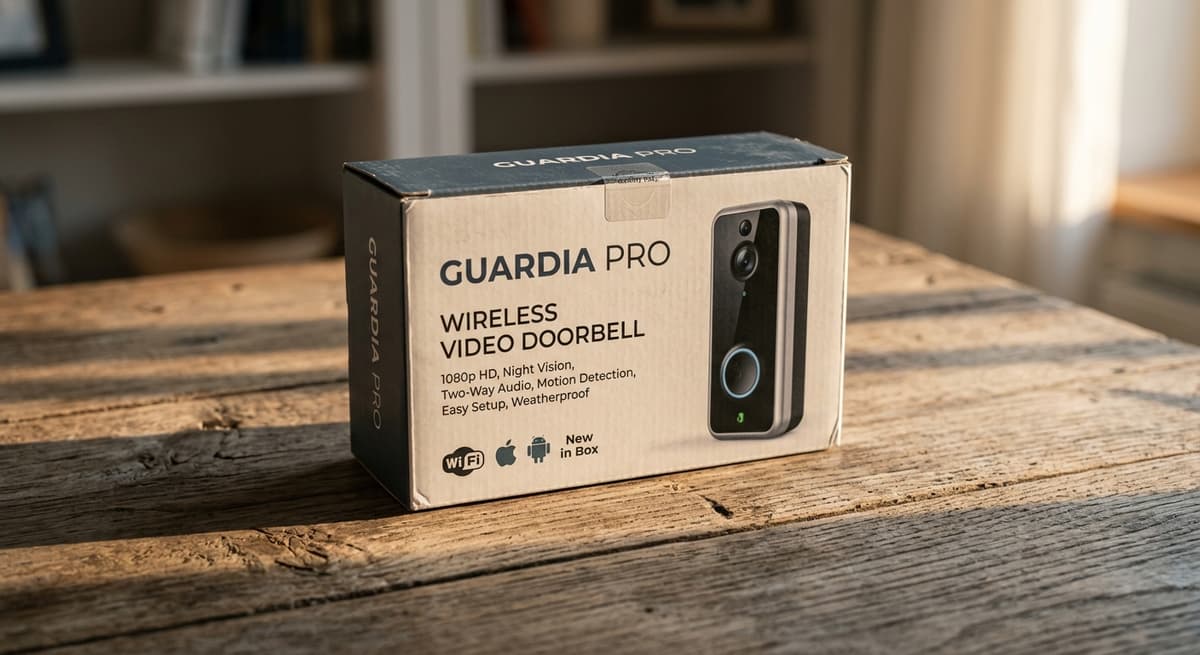
Cameras Inside the Rental Unit
As the principal occupant, a tenant can install security cameras inside their own rental unit under the residential security exception. This covers:
- Doorbell cameras on the unit's entrance
- Interior cameras for security monitoring
- Nanny cams and pet cameras
- Smart home devices with camera features
The tenant does not need the landlord's permission to use cameras inside their own unit for security purposes. However, lease agreements may contain restrictions on modifications to the property (such as drilling holes for camera mounts), and tenants should review their lease before installing permanently mounted equipment.
Recording Conversations With Landlords
Under the Sullivan v. Gray, 117 Mich. App. 476, 324 N.W.2d 58 (1982), participant exception, endorsed by the Sixth Circuit's Erie prediction in Fisher v. Perron, 30 F.4th 289 (6th Cir. 2022), tenants can record their own conversations with landlords, property managers, maintenance workers, and anyone else. This includes:
- In-person conversations during property inspections
- Phone calls with the landlord or management office
- Meetings about lease terms, rent increases, or repair requests
- Conversations during the move-in and move-out process
- Interactions with maintenance personnel entering the unit
Tenants do not need to disclose that they are recording. The participant exception allows recording without the other party's consent.
Recording Evidence of Landlord Violations
Tenants who record evidence of habitability violations, illegal entry, harassment, or discriminatory behavior by their landlord create valuable evidence for potential legal proceedings. Common scenarios include:
- Illegal entry: Recording a landlord entering without proper notice (Michigan requires reasonable notice before entry)
- Harassment: Documenting repeated unwanted visits, threats, or intimidating behavior
- Habitability issues: Video recording of unrepaired damage, mold, pest infestations, or dangerous conditions
- Discriminatory statements: Audio recording discriminatory statements by a landlord or property manager
Audio Recording by Surveillance Cameras
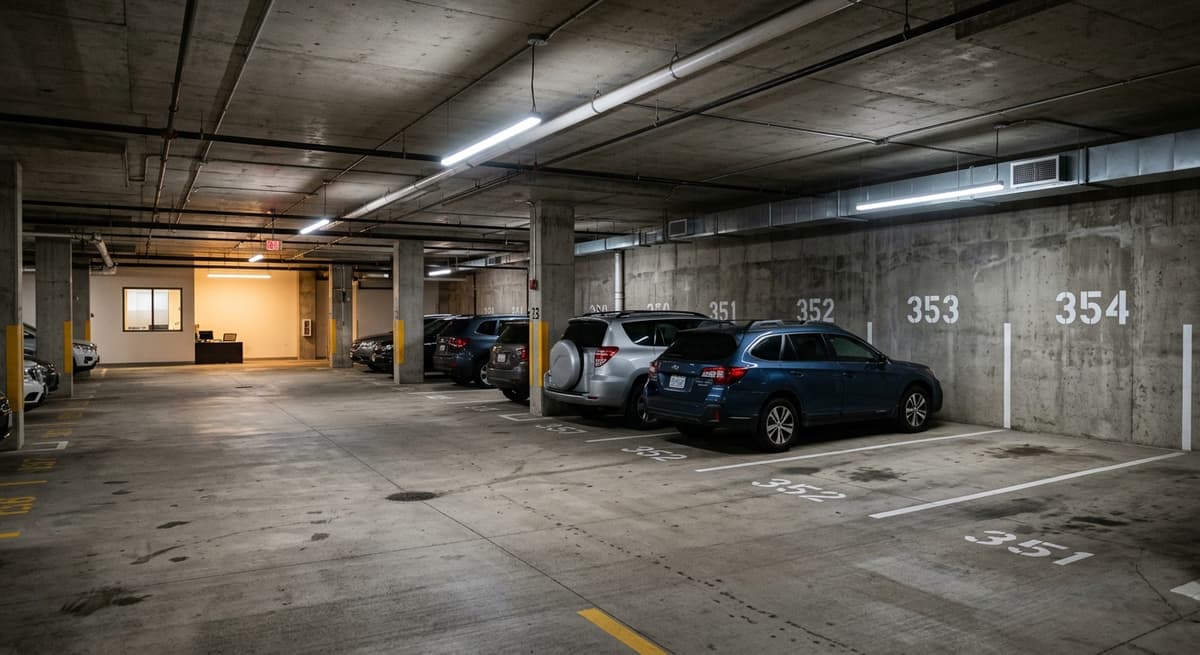
The Eavesdropping Problem for Landlords
Security cameras in common areas that record audio create significant legal risk for landlords. The eavesdropping statute (MCL 750.539c) prohibits recording "the private discourse of others" without consent. A landlord is not a participant in the conversations captured by a stationary camera in a hallway or lobby.
If tenants have conversations in common areas that they reasonably believe are private (such as a quiet conversation between two tenants in an otherwise empty hallway), an audio-recording camera could capture "private discourse" in violation of the statute.
Best Practices for Landlord Camera Audio
- Disable audio recording on common area cameras. This eliminates eavesdropping statute risk entirely.
- Post clear signage indicating that audio and video surveillance is in operation if audio is enabled.
- Include surveillance disclosure in leases. A lease provision stating that common areas are monitored by cameras with audio may constitute consent.
- Limit audio range to the immediate area of the camera, not entire hallways or outdoor spaces.
Lease Provisions About Recording and Surveillance
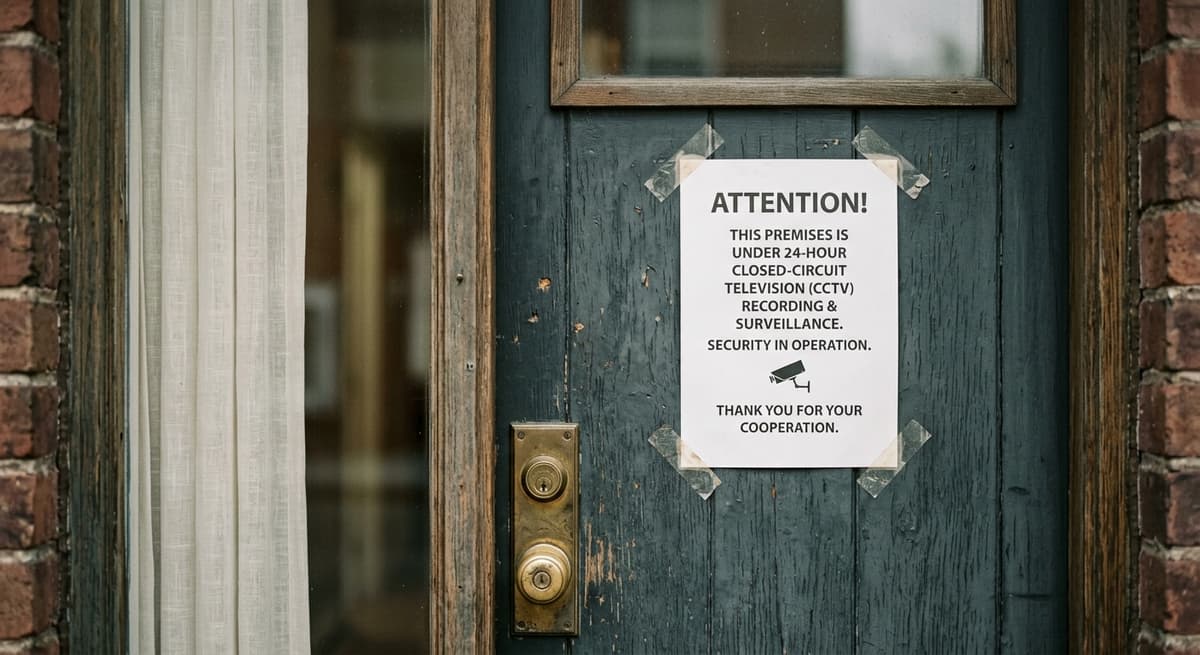
What Landlords Can Include in Leases
Michigan leases can include provisions regarding:
- Disclosure that common areas are monitored by security cameras
- Rules about tenant modifications to the property (relevant for camera installation)
- Noise monitoring disclosures
- Requirements for tenant-installed cameras (positioning, no interference with other tenants)
What Landlords Cannot Include in Leases
Michigan's Truth in Renting Act (MCL 554.633) prohibits a specific, enumerated list of lease provisions, including clauses that waive habitability remedies, security-deposit rights, jury-trial rights, and civil-rights protections. The Act's enumerated list does not separately address privacy or camera-surveillance provisions.
That said, a lease provision that purports to:
- Waive the tenant's right to privacy inside their unit
- Authorize the landlord to install cameras inside the tenant's unit
- Require the tenant to consent to hidden recording
- Waive the tenant's right to pursue legal remedies for privacy violations
would conflict with Michigan's eavesdropping statute (MCL 750.539c) and surveillance-device statute (MCL 750.539d), and is likely unenforceable on that basis rather than under the Truth in Renting Act specifically.
Landlord Entry and Recording
Notice Requirements
Michigan does not have a specific statute that defines the exact notice period for landlord entry. However, Michigan courts have held that landlords must provide "reasonable notice" before entering a tenant's unit, except in genuine emergencies. Most Michigan attorneys recommend at least 24 hours' written notice.
When a landlord enters a tenant's unit:
- The tenant can record the entry using cameras already installed in the unit
- The tenant can record conversations with the landlord during the visit under the participant exception
- The landlord cannot bring recording equipment into the unit without the tenant's consent
- The landlord cannot access or view the tenant's security camera footage
Emergency Entry
Landlords can enter without notice in genuine emergencies (fire, flooding, gas leak, medical emergency). A tenant's cameras may record the emergency entry, and that recording is legal under the residential security exception. However, a landlord cannot use "emergency entry" as a pretext to install surveillance equipment.
Remedies for Privacy Violations
Criminal Prosecution
A tenant who discovers a hidden camera installed by the landlord should contact local law enforcement. Illegal surveillance under MCL 750.539d is a felony. If the camera captured images of nudity or undress, additional charges under MCL 750.539j (voyeurism) may apply.
Civil Lawsuits
Under MCL 750.539h, tenants can file civil lawsuits against landlords who violate Michigan's surveillance laws. Available remedies include:
- Injunctive relief (court order to remove cameras and stop surveillance)
- Actual damages for emotional distress, relocation costs, and other harm
- Punitive damages to punish the landlord and deter future violations
Tenants may also have claims under:
- Common law invasion of privacy
- Michigan's landlord-tenant statutes for breach of the implied warranty of habitability and quiet enjoyment
- Federal housing discrimination laws if surveillance is targeted at tenants based on protected characteristics
Lease Termination
A landlord who installs hidden surveillance in a tenant's unit has fundamentally breached the landlord-tenant relationship. The tenant may have grounds to terminate the lease without penalty, move out, and recover damages including moving costs and rent differential.
Related Michigan Recording Laws
Audio Recording | Video Recording | Voyeurism & Hidden Cameras | Workplace Recording | Recording Police | Phone Call Recording | Security Cameras | Recording in Public | Landlord-Tenant | Dashcam Laws | Schools | Medical Recording
← Back to Michigan Recording Laws
More Michigan Recording Topics
More Michigan Laws
Frequently Asked Questions
Can my landlord put cameras inside my apartment in Michigan?
No. MCL 750.539d prohibits installing surveillance devices in a private place without the consent of the person entitled to privacy there. As the tenant, you are the principal occupant and the person entitled to privacy in your unit. A landlord who places a hidden camera inside your apartment commits a felony.
Can a landlord have security cameras in common areas in Michigan?
Yes. Landlords can install video cameras in common areas like lobbies, hallways, parking lots, and building entrances. These areas are accessible to multiple people and do not qualify as private places under Michigan law. Cameras in common area bathrooms are still prohibited.
Can I record my landlord in Michigan?
Yes. Under Michigan's participant exception from Sullivan v. Gray, you can record any conversation you are part of without telling the other person. This includes conversations with your landlord about lease terms, repairs, inspections, or any other topic. You do not need to disclose the recording.
Can I put a Ring doorbell on my apartment in Michigan?
As the principal occupant, you have the right to install security cameras for your unit under the residential security exception. However, check your lease for provisions about property modifications. In multi-unit buildings, position the camera to focus on your own entryway and avoid recording a neighbor's door or private space.
What should I do if I find a hidden camera in my rental unit in Michigan?
Contact local law enforcement immediately. Hidden cameras in a rental unit are a felony under MCL 750.539d. Do not touch or remove the device, as it is evidence. Document what you found with photographs. After reporting to police, consult an attorney about civil remedies including damages and lease termination.
Updates
Independently fact-checked against the cited primary sources; governing law re-checked for recent changes
Corrected the description of the Truth in Renting Act (MCL 554.633): its enumerated prohibitions do not cover privacy or camera-surveillance lease clauses; those clauses are instead addressed by Michigan's eavesdropping and surveillance-device statutes.
Governing law re-checked for recent changes
Reviewed and approved by an editor
The Law Behind This Article
This article rests on the statutory provisions below, held in our own legal record and retrieved from the official source. Tap a section to read the operative text.
Michigan Compiled Laws
§ 750.539dInstallation, placement, or use of device for observing, recording, transmitting, photographing or eavesdropping in private placeIn forcecited in 30 of our articles
(1) Except as otherwise provided in this section, a person shall not do either of the following: (a) Install, place, or use in any private place, without the consent of the person or persons entitled to privacy in that place, any device for observing, recording, transmitting, photographing, or eavesdropping upon the sounds or events in that place. (b) Distribute, disseminate, or transmit for access by any other person a recording, photograph, or visual image the person knows or has reason to know was obtained in violation of this section. (2) This section does not prohibit security monitoring in a residence if conducted by or at the direction of the owner or principal occupant of that residence unless conducted for a lewd or lascivious purpose. (3) A person who violates or attempts to violate this section is guilty of a crime as follows: (a) For a violation or attempted violation of subsection (1)(a): (i) Except as provided in subparagraph (ii), the person is guilty of a felony punishable by imprisonment for not more than 2 years or a fine of not more than $2,000.00, or both.
Official text (excerpt) · last checked 2026-08-31 · Read the full text in our law library · Verify at legislature.mi.gov
Cited in 24 court opinions in our collectionLatest citing opinion in our collection: 2026
In the courts (editorial summary, independently checked):Lewis v. LeGrow held a bedroom in a private home is a "private place" under MCL 750.539d and that consenting to sex does not consent to being secretly videotaped there, sustaining civil awards. People v. Wilkens affirmed convictions including one under the section for a camera hidden in a shower used by tenants.
Opinions citing this section in our collection:
- Lewis v. LeGrow (Michigan Court of Appeals 2003, 258 Mich. App. 175)✓A man hid a video camera in his own bedroom and taped three women having sex with him; the court held the bedroom was a private place under 539d and that consenting to sex did not mean consenting to be taped, so the jury verdicts against him stood.
- People v. Wilkens (Michigan Court of Appeals 2005, 267 Mich. App. 728)“…ne count of eavesdropping through installation of a camera, MCL 750.539d. [1] The trial court sentenced defenda…”
- People v. Waltonen (Michigan Court of Appeals 2007, 272 Mich. App. 678)“…drug house, MCL 333.7405(l)(d); one count of eavesdropping, MCL 750.539d; and four counts of engaging the servic…”
Identified automatically from the court opinions citing this section — not a ranking of which case controls.
Also relied on in: Michigan Smart Glasses Recording Laws (2026), Michigan Audio Recording Laws: Consent Rules, Statutes, and Penalties (2026), Michigan Medical Recording Laws: Patient Rights, HIPAA, and Doctor Visits (2026)
§ 554.633Rental agreement; prohibited provisions or clauses; violationIn forcecited in 2 of our articles
(1) A rental agreement shall not include a provision that does 1 or more of the following: (a) Waives or alters a remedy available to the parties when the premises are in a condition that violates the covenants of fitness and habitability required pursuant to section 39 of 1846 RS 84, MCL 554.139. (b) Provides that the parties waive a right established by 1972 PA 348, MCL 554.601 to 554.616, which regulates security deposits. (c) Excludes or discriminates against a person in violation of the Elliott-Larsen civil rights act, 1976 PA 453, MCL 37.2101 to 37.2804, or the persons with disabilities civil rights act, 1976 PA 220, MCL 37.1101 to 37.1607. (d) Provides for a confession of judgment by a party. (e) Exculpates the lessor from liability for the lessor's failure to perform, or negligent performance of, a duty imposed by law.
Official text (excerpt) · last checked 2026-07-30 · Read the full text in our law library · Verify at legislature.mi.gov
Cited in 11 court opinions in our collectionLatest citing opinion in our collection: 2025
Opinions citing this section in our collection:
- Calef v. West (Michigan Court of Appeals 2002, 252 Mich. App. 443)“…that the exculpatory clause of the parties’ lease violated MCL 554.633(l)(e), which provides in part: (…”
- Ypsilanti Housing Commission v. O'Day (Michigan Court of Appeals 2000, 240 Mich. App. 621)“…ture act of 1961, 1961 PA 236 , MCL 600.5701 to 600.5759.” MCL 554.633(1)©; MSA 26.1138(33)(1)©. Section 3 fur…”
- Gabrielle Beebe v. Ag Management Company LLC (Michigan Court of Appeals 2023)“…ress if a rental agreement includes provisions that violate MCL 554.633. In particular, MCL 554.636(1) provides…”
Identified automatically from the court opinions citing this section — not a ranking of which case controls.
§ 750.539aDefinitionsIn forcecited in 30 of our articles
As used in sections 539a to 539i: (1) "Private place" means a place where one may reasonably expect to be safe from casual or hostile intrusion or surveillance but does not include a place to which the public or substantial group of the public has access. (2) "Eavesdrop" or "eavesdropping" means to overhear, record, amplify or transmit any part of the private discourse of others without the permission of all persons engaged in the discourse. Neither this definition or any other provision of this act shall modify or affect any law or regulation concerning interception, divulgence or recording of messages transmitted by communications common carriers. (3) "Surveillance" means to secretly observe the activities of another person for the purpose of spying upon and invading the privacy of the person observed. (4) "Person" means any individual, partnership, corporation or association.
Official text (excerpt) · last checked 2026-07-30 · Read the full text in our law library · Verify at legislature.mi.gov
Cited in 26 court opinions in our collectionLatest citing opinion in our collection: 2026
Opinions citing this section in our collection:
- Lewis v. LeGrow (Michigan Court of Appeals 2003, 258 Mich. App. 175)“…such unauthorized installation, is guilty of a felony.... MCL 750.539a provides the definitions of phrases use…”
- People v. Stone (Michigan Supreme Court 2001, 463 Mich. 558)“…permission of all persons engaged in the discourse.” MCL 750.539a(2); MSA 28.807(1)(2). In…”
- People v. Lucas (Michigan Court of Appeals 1991, 188 Mich. App. 554)“…e Commander Turner, in answering the mobile phone, violated MCL 750.539a et seq.; MSA 28.807(1)…”
Identified automatically from the court opinions citing this section — not a ranking of which case controls.
Also relied on in: Michigan Dashcam Laws: Windshield Rules, Audio Recording, and Legal Use (2026), Michigan Phone Call Recording Laws: Rules for Landlines, Cell Phones, and VoIP (2026), Michigan Laws on Recording Police: Your Rights and Legal Limits (2026)
§ 750.539cEavesdropping upon private conversationIn forcecited in 42 of our articles
Any person who is present or who is not present during a private conversation and who wilfully uses any device to eavesdrop upon the conversation without the consent of all parties thereto, or who knowingly aids, employs or procures another person to do the same in violation of this section, is guilty of a felony punishable by imprisonment in a state prison for not more than 2 years or by a fine of not more than $2,000.00, or both.
Official text (excerpt) · last checked 2026-08-28 · Read the full text in our law library · Verify at legislature.mi.gov
Cited in 32 court opinions in our collectionLatest citing opinion in our collection: 2025
In the courts (editorial summary, independently checked):Michigan courts read MCL 750.539c to reach third-party eavesdropping only. Sullivan v. Gray (1982) held the statutory phrase "private discourse of others" excludes recording by a participant in the conversation; People v. Lucas (1991) held an officer who answered an arrestee's ringing car phone did not violate the section.
Opinions citing this section in our collection:
- People v. Lucas (Michigan Court of Appeals 1991, 188 Mich. App. 554)✓Police answering the arrested defendant's ringing car phone took drug-purchase calls and testified to them; the court held the officer was not an eavesdropper because there was no private discourse between the sender and some other receiver, so MCL 750.539c was not violated.
- Sullivan v. Gray (Michigan Court of Appeals 1982, 117 Mich. App. 476)✓A party to a phone call about a failed car dealership sale secretly taped it and the transcript was used in later litigation; reading the statute to reach only the private discourse of others, the court held participant recording is not eavesdropping under MCL 750.539c.
- People v. Warner (Michigan Supreme Court 1977, 401 Mich. 186)✓A motel switchboard operator deliberately listened in on a guest's call and reported it to police; the court held her willful eavesdropping violated MCL 750.539c, but the defendant, not shown to be a party to the call, had no standing to suppress the resulting evidence.
Identified automatically from the court opinions citing this section — not a ranking of which case controls.
Also relied on in: Michigan Security Camera Laws: Rules for Homes, Businesses, and Neighbors (2026), Michigan Laws on Recording in Public: First Amendment Rights and Limits (2026), Michigan School Recording Laws: Rules for Students, Parents, and Teachers (2026)
§ 750.539hCivil remediesIn forcecited in 22 of our articles
Any parties to any conversation upon which eavesdropping is practiced contrary to this act shall be entitled to the following civil remedies: (a) An injunction by a court of record prohibiting further eavesdropping. (b) All actual damages against the person who eavesdrops. (c) Punitive damages as determined by the court or by a jury.
Official text (excerpt) · last checked 2026-07-30 · Read the full text in our law library · Verify at legislature.mi.gov
Cited in 13 court opinions in our collectionLatest citing opinion in our collection: 2026
Opinions citing this section in our collection:
- McAuley v. General Motors Corp. (Michigan Supreme Court 1998, 457 Mich. 513)“…MSA 4.1801(10)(7), MCL 600.2911(2)(b); MSA 27A.2911(2)(b), MCL 750.539h(c); MSA 28.807(8)(c). In additio…”
- Eide v. Kelsey-Hayes Co. (Michigan Supreme Court 1988, 431 Mich. 26)“…violation); MCL 600.2911; MSA 27A.2911 (libel or slander); MCL 750.539h; MSA 28.807(8) (eavesdropping, allowing…”
- Anzaldua v. Band (Michigan Supreme Court 1998, 457 Mich. 530)“…this act, the court or jury who shall try the same); and MCL 750.539h(c); MSA 28.807(8)(c) (any party to a co…”
Identified automatically from the court opinions citing this section — not a ranking of which case controls.
Also relied on in: Michigan Recording Laws (2026): Consent Rules and Participant Exception, Michigan Video Recording Laws: Surveillance Rules, Consent, and Penalties (2026), Michigan Voyeurism and Hidden Camera Laws: MCL 750.539j Penalties and Protections (2026)
§ 750.539jSurveillance of or distribution, dissemination, or transmission of recording, photograph, or visual image of individual having reasonable expectation of privacy; prohibited conduct; violation as felony; penalty; exceptions; "surveil" definedIn forcecited in 19 of our articles
(1) A person shall not do any of the following: (a) Surveil another individual who is clad only in his or her undergarments, the unclad genitalia or buttocks of another individual, or the unclad breasts of a female individual under circumstances in which the individual would have a reasonable expectation of privacy. (b) Photograph, or otherwise capture or record, the visual image of the undergarments worn by another individual, the unclad genitalia or buttocks of another individual, or the unclad breasts of a female individual under circumstances in which the individual would have a reasonable expectation of privacy. (c) Distribute, disseminate, or transmit for access by any other person a recording, photograph, or visual image the person knows or has reason to know was obtained in violation of this section. (2) A person who violates or attempts to violate this section is guilty of a crime as follows: (a) For a violation or attempted violation of subsection (1)(a): (i) Except as provided in subparagraph (ii), the person is guilty of a felony punishable by imprisonment for not more than 2 years or a fine of not more than $2,000.00, or both.
Official text (excerpt) · last checked 2026-07-30 · Read the full text in our law library · Verify at legislature.mi.gov
Cited in 17 court opinions in our collectionLatest citing opinion in our collection: 2026
In the courts (editorial summary, independently checked):Michigan courts have applied MCL 750.539j to hidden cameras. In People of Michigan v. Jeffrey Thomas Mazur (2015) the Court of Appeals held the statute does not require that a defendant view the recorded material, and that its residential security-monitoring exception does not cover a camera used for a lewd or lascivious purpose.
Opinions citing this section in our collection:
- In Re L-S Morehead Minor (Michigan Court of Appeals 2026)“…e, was arrested for felony surveilling an unclothed person, MCL 750.539j(1)(a). The trial court authori…”
- In Re K N Klemkow Minor (Michigan Court of Appeals 2024)“…520g(2), and two counts of surveilling an unclothed person, MCL 750.539j. Respondent was arraigned on the crimin…”
- People of Michigan v. Cora Ladane Lymon (Michigan Supreme Court 2024)“…ither naked or clad in undergarments, MCL 28.722(r)(vi) and MCL 750.539j. These offenses all involve a sexual c…”
Identified automatically from the court opinions citing this section — not a ranking of which case controls.
Also relied on in: Michigan Drone Laws (2026): Privacy Statute, Preemption, and Warrants, Michigan Ring Doorbell Laws: What You Need to Know in 2026, Michigan Sexting Laws: Legal Consequences and Penalties
Explore the law
The laws cited above reference these related sections in their own text:
- Michigan Compiled Laws § 37.1101 — Short title view in our statute record · read at the official source
- Michigan Compiled Laws § 37.2101 — Short title view in our statute record · read at the official source
- Michigan Compiled Laws § 445.901 — Short title view in our statute record · read at the official source
- Michigan Compiled Laws § 554.601 — Definitions view in our statute record · read at the official source
- Michigan Compiled Laws § 554.616 — Effective date and applicability of act view in our statute record · read at the official source
- Michigan Compiled Laws § 600.5701 — Definitions view in our statute record · read at the official source
Related law for further reading — not part of this article’s citations.
Search our full record of US law — 2.1 million sections, every state + federal →
Sources and References
- Michigan Legislature - MCL 750.539d (Surveillance Devices)(legislature.mi.gov).gov
- Michigan Legislature - MCL 750.539a (Definitions)(legislature.mi.gov).gov
- Michigan Legislature - MCL 750.539c (Eavesdropping)(legislature.mi.gov).gov
- Michigan Legislature - MCL 554.633 (Truth in Renting Act)(legislature.mi.gov).gov
- Michigan Legislature - MCL 750.539h (Civil Remedies)(legislature.mi.gov).gov
- Fisher v. Perron (6th Cir. 2022)(law.justia.com)