
Michigan
Michigan Laws on Recording in Public: First Amendment Rights and Limits (2026)
Independently fact-checked against primary sources (last audited August 15, 2026). · Reviewed by the RecordingLaw editorial team. · Law checked current as of August 15, 2026. · 6 primary sources cited on this page. How we verify our legal content
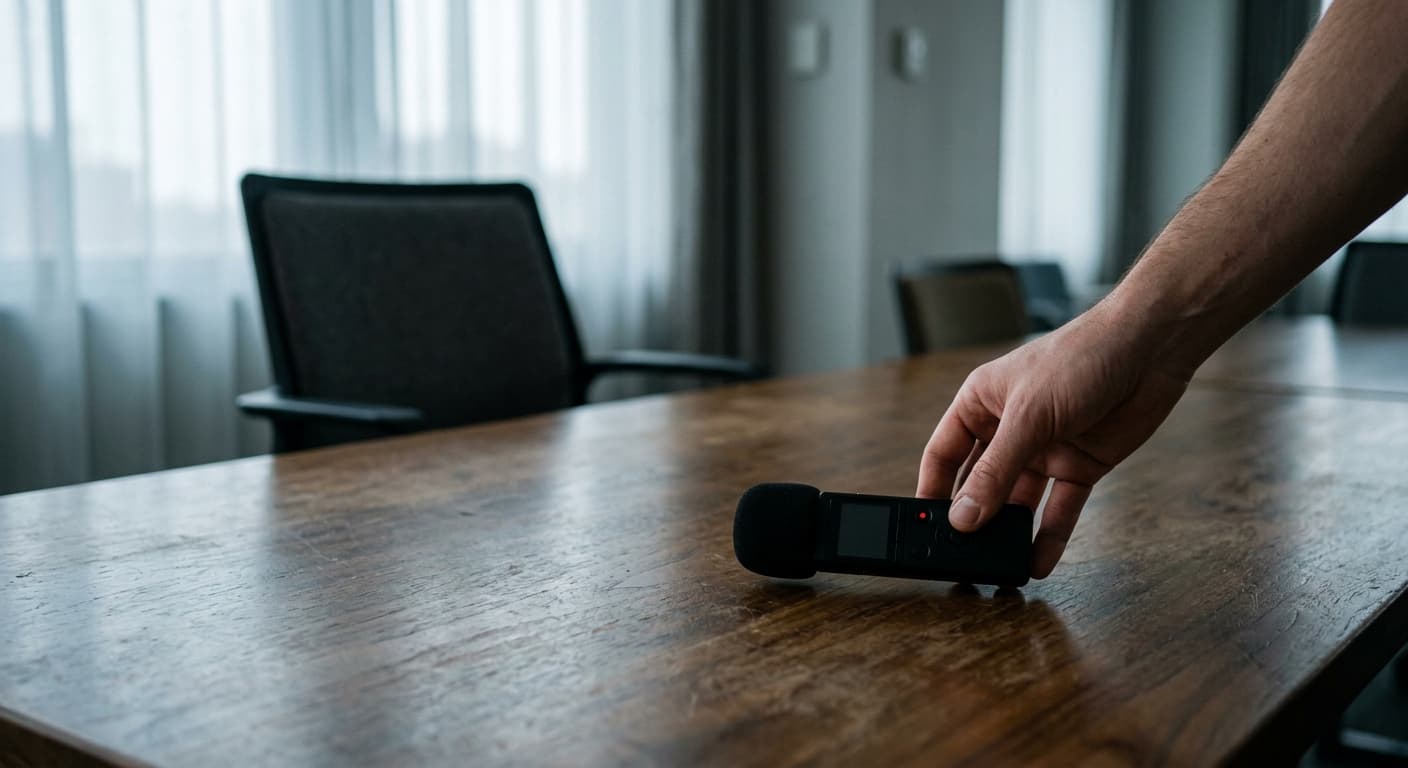
Recording in public places is legal in Michigan and protected by the First Amendment. Michigan's eavesdropping statute, MCL 750.539c, targets private discourse and does not apply where the public has access. A participant in any conversation may record it freely under the participant exception recognized by Michigan courts.
Michigan strongly protects the right to record in public spaces. The First Amendment, Michigan's statutory framework, and the Open Meetings Act all combine to give individuals broad freedom to photograph, film, and audio record in areas accessible to the public.
However, the line between public and private can blur, and Michigan's eavesdropping statute adds complexity when audio recording captures private conversations. This guide covers every scenario you are likely to encounter when recording in public in Michigan.
The First Amendment and Public Recording
Constitutional Protections
The First Amendment to the U.S. Constitution protects the right to gather information in public places. This protection extends to:
- Taking photographs in public
- Recording video on public streets, sidewalks, and parks
- Livestreaming public events on social media
- Recording government buildings from public spaces
- Filming police officers performing their duties
No federal or Michigan state law prohibits recording in public. The right to record is part of the broader right to free speech and press that the First Amendment guarantees.
What Counts as a "Public Place" in Michigan
MCL 750.539a defines "private place" as a place where a person may reasonably expect to be safe from casual or hostile intrusion or surveillance, "but does not include a place to which the public or substantial group of the public has access."
By this definition, the following are not private places, and recording is legal:
- Public sidewalks, streets, and roadways
- Public parks, trails, and recreation areas
- Government buildings open to the public (courthouses, city halls, DMV offices)
- Public transit (buses, trains, stations)
- Retail stores, restaurants, and shopping malls (with caveats for private property)
- Outdoor festivals, fairs, and public events
- Sports stadiums and concert venues (subject to venue policies)
- Public beaches and waterfront areas
Audio Recording in Public Spaces
When Audio Recording Is Unrestricted
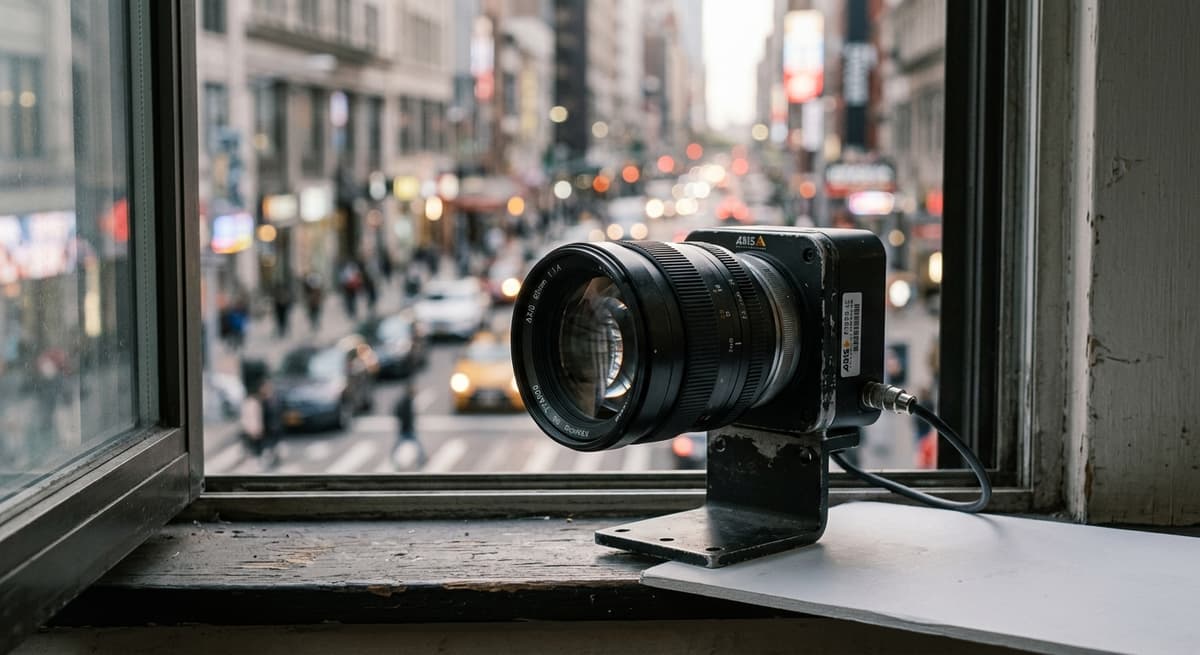
Michigan's eavesdropping statute (MCL 750.539c) prohibits recording "the private discourse of others." In public spaces where conversations can be overheard by passersby, there is generally no "private discourse" to protect.
You can freely record audio in public when:
- The speakers are talking at normal or raised volume in an open area
- The conversation takes place where others can easily hear it
- The speakers have not taken steps to ensure privacy
- You are participating in the conversation (participant exception applies)
When Audio Recording May Be Restricted
Even in a public location, certain conversations may qualify as "private discourse" if the speakers have taken steps to create a reasonable expectation of privacy. Examples include:
- Two people whispering closely together in a secluded corner of a park
- A conversation at a restaurant table where the speakers are making efforts to keep their voices low and private
- A phone call on a public bench where the caller is speaking quietly
Using electronic amplification equipment to capture a conversation from a distance that you could not otherwise hear may violate the eavesdropping statute, even in a public setting. The statute prohibits using any device to record the "private discourse of others," and amplification equipment is specifically covered.
The Participant Exception in Public
If you are part of a conversation in public, you can always record it under the Sullivan v. Gray, 117 Mich. App. 476, 324 N.W.2d 58 (1982), participant exception. Your participation removes any "discourse of others" concern. This applies whether you are chatting with a friend on the sidewalk, speaking with a vendor at a farmers' market, or interacting with a government employee at a public office.
Recording on Private Property Open to the Public
Stores, Restaurants, and Businesses
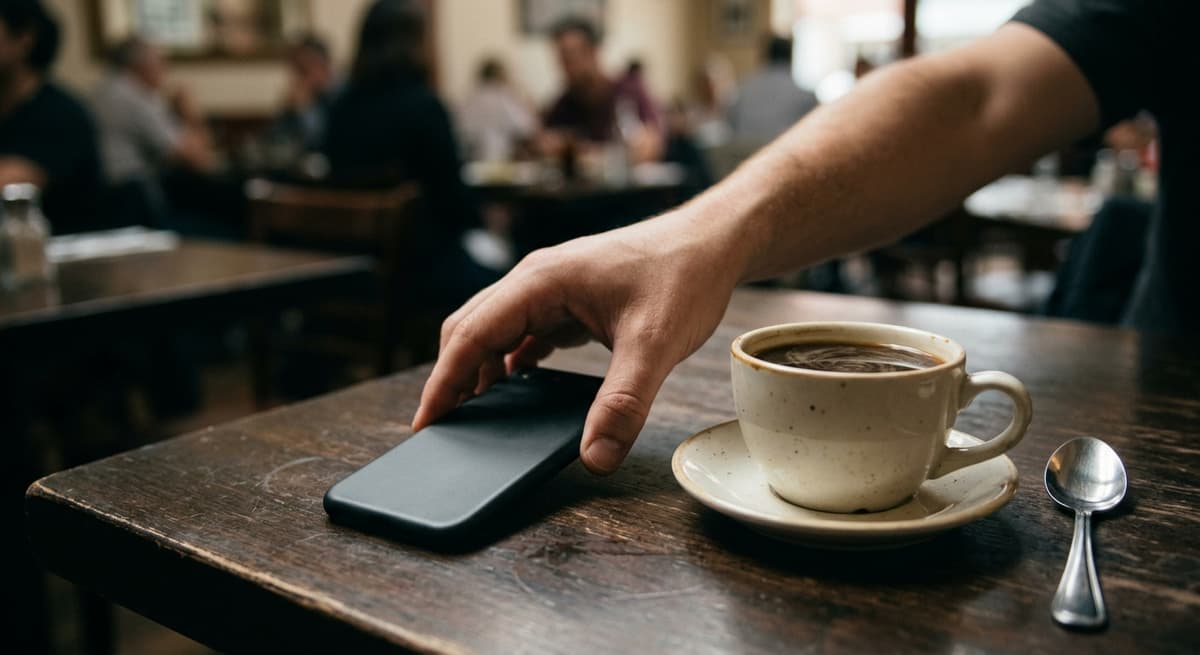
Private businesses that invite the public onto their premises (retail stores, restaurants, banks, gyms) occupy a middle ground. While these locations are not "private places" under the eavesdropping statute because the public has access, the property owner retains the right to set rules for their property.
Your rights:
- You can record video and audio in areas open to the public within the business
- The eavesdropping statute's "private place" restrictions do not apply to public areas of the business
- The participant exception allows you to record your own conversations with employees or other customers
The business's rights:
- The business can ask you to stop recording on their property
- If you refuse, the business can ask you to leave
- If you refuse to leave after being asked, you may be trespassing under Michigan law
- The business can ban recording through posted policies
Private Events in Public Venues
Events held in public venues may have recording restrictions. A concert at a public park, for example, may prohibit recording as a condition of ticket purchase. These restrictions are contractual, not criminal. Violating them may result in ejection from the event, not criminal prosecution.
Recording Government Activities
Open Meetings Act (MCL 15.263)
Michigan's Open Meetings Act provides one of the strongest statutory protections for recording government proceedings in the country. The Act states that the right to attend a public meeting includes the right to:
- Tape-record the proceedings
- Videotape the proceedings
- Broadcast live on radio
- Telecast live on television
This right applies to all meetings of public bodies, including city councils, county commissions, school boards, planning commissions, library boards, and any other governmental entity required to hold open meetings.
The right does not require prior approval. A public body may establish reasonable rules to minimize disruption (such as designating a specific area for cameras), but it cannot prohibit recording outright.
Recording in Government Buildings
You generally have the right to record in public areas of government buildings, including hallways, lobbies, and public service counters. However, some areas within government buildings may be restricted:
- Courtrooms (recording rules are set by the presiding judge)
- Secure areas (jails, law enforcement operational areas)
- Locations where recording would interfere with government operations
The Michigan Supreme Court adopted Administrative Order 2019-1 (expanded media coverage) allowing cameras in Michigan courtrooms under certain conditions. Individual judges retain discretion over recording in their courtrooms.
Recording at Polling Places
Michigan law regulates recording at polling places during elections. Voters may take selfies with their ballots (Michigan repealed its ballot selfie ban), but recording that disrupts voting, intimidates voters, or violates ballot secrecy rules is prohibited. Election workers at polling places can establish reasonable rules about recording.
Street Photography and Public Photography Rights
General Rules
Street photography and public photography are legal in Michigan. You do not need anyone's permission to photograph or film:
- People walking on public sidewalks or streets
- Buildings, landmarks, and architecture visible from public spaces
- Public events, protests, and gatherings
- Vehicles on public roads
- Anything visible from a public location
No Right to Privacy in Public Appearance
A person who walks down a public sidewalk has no legal expectation of privacy regarding their physical appearance and movements. You can photograph and film them without their consent.
However, photographing someone in a way that constitutes harassment or stalking may violate other Michigan laws, including the stalking statute (MCL 750.411h). The recording itself is legal, but using it as part of a pattern of harassment is not.
Commercial Use Considerations
While taking photographs in public is legal, using someone's image for commercial purposes without their consent may create civil liability under Michigan's common law right of publicity. This applies to advertising, product packaging, and commercial endorsements, not to journalism, art, or non-commercial uses.
Drones and Public Recording
Michigan does not have a comprehensive state drone law. Drone operators must comply with FAA regulations for unmanned aircraft systems. Recording video from a drone in public airspace over public areas is generally legal.
However, using a drone to record in areas where people have a reasonable expectation of privacy (over fenced backyards, through windows) may violate MCL 750.539d. The analysis depends on whether the area being recorded qualifies as a "private place" under Michigan law.
Restrictions on Recording in Specific Public Locations
Hospitals and Medical Facilities
Public areas of hospitals (lobbies, waiting rooms, hallways) are accessible to the public, but recording may be restricted by facility policies to protect patient privacy under HIPAA and Michigan health privacy laws. Hospitals can ask you to stop recording and require you to leave if you refuse.
Schools
Public school buildings and grounds are government property, but access is restricted during school hours. Recording by parents and visitors is generally subject to school policies. Student privacy under FERPA adds another layer of complexity. See the schools recording page for details.
Transportation Facilities
Airports, train stations, and bus terminals are open to the public and recording is generally permitted in public areas. However, TSA screening areas, restricted zones, and operational areas may have recording restrictions based on federal security regulations.
What Is Not Protected
Even in public, certain recording conduct can create legal liability:
- Harassment: Using recording as a tool to stalk or harass someone
- Trespassing: Recording while on private property after being asked to leave
- Obstruction: Recording in a way that physically blocks or impedes emergency services, police, or government operations
- Voyeurism: Using cameras or lenses to record under clothing or into private areas, even from a public location
Related Michigan Recording Laws
Audio Recording | Video Recording | Voyeurism & Hidden Cameras | Workplace Recording | Recording Police | Phone Call Recording | Security Cameras | Recording in Public | Landlord-Tenant | Dashcam Laws | Schools | Medical Recording
← Back to Michigan Recording Laws
More Michigan Recording Topics
More Michigan Laws
Frequently Asked Questions
Is it legal to record in public in Michigan?
Yes. Recording video and taking photographs in public places is legal in Michigan and protected by the First Amendment. Michigan's eavesdropping statute explicitly excludes places accessible to the public from the definition of private place. You can record on sidewalks, in parks, at public events, and in government buildings open to the public.
Can I record audio in public in Michigan?
Audio recording in public is generally legal when the speakers have no reasonable expectation of privacy. Conversations held at normal volume in open public spaces are not private discourse under the eavesdropping statute. However, using electronic amplification to capture a whispered conversation from a distance may violate the law.
Can I record a city council meeting in Michigan?
Yes. The Michigan Open Meetings Act (MCL 15.263) explicitly protects the right to tape-record, videotape, broadcast, and telecast proceedings of any public body at a public meeting. This right does not require prior approval. The public body may set reasonable rules to minimize disruption but cannot prohibit recording.
Can a store ask me to stop recording in Michigan?
Yes. While recording in a business open to the public is not a criminal offense, the business owner has the right to set rules for their private property. If asked to stop recording, you should comply. If you refuse to stop and refuse to leave when asked, you may be trespassing under Michigan law.
Can I take photos of strangers in public in Michigan?
Yes. People in public places have no legal expectation of privacy regarding their physical appearance and movements. You can photograph or film anyone visible from a public location without their consent. However, using someone's image for commercial purposes without consent may create civil liability, and using recording to stalk or harass is illegal.
Updates
Independently fact-checked against the cited primary sources; governing law re-checked for recent changes
Governing law re-checked for recent changes
Reviewed and approved by an editor
The Law Behind This Article
This article rests on the statutory provisions below, held in our own legal record and retrieved from the official source. Tap a section to read the operative text.
Michigan Compiled Laws
§ 750.539cEavesdropping upon private conversationIn forcecited in 42 of our articles
Any person who is present or who is not present during a private conversation and who wilfully uses any device to eavesdrop upon the conversation without the consent of all parties thereto, or who knowingly aids, employs or procures another person to do the same in violation of this section, is guilty of a felony punishable by imprisonment in a state prison for not more than 2 years or by a fine of not more than $2,000.00, or both.
Official text (excerpt) · last checked 2026-08-28 · Read the full text in our law library · Verify at legislature.mi.gov
Cited in 32 court opinions in our collectionLatest citing opinion in our collection: 2025
In the courts (editorial summary, independently checked):Michigan courts read MCL 750.539c to reach third-party eavesdropping only. Sullivan v. Gray (1982) held the statutory phrase "private discourse of others" excludes recording by a participant in the conversation; People v. Lucas (1991) held an officer who answered an arrestee's ringing car phone did not violate the section.
Opinions citing this section in our collection:
- People v. Lucas (Michigan Court of Appeals 1991, 188 Mich. App. 554)✓Police answering the arrested defendant's ringing car phone took drug-purchase calls and testified to them; the court held the officer was not an eavesdropper because there was no private discourse between the sender and some other receiver, so MCL 750.539c was not violated.
- Sullivan v. Gray (Michigan Court of Appeals 1982, 117 Mich. App. 476)✓A party to a phone call about a failed car dealership sale secretly taped it and the transcript was used in later litigation; reading the statute to reach only the private discourse of others, the court held participant recording is not eavesdropping under MCL 750.539c.
- People v. Warner (Michigan Supreme Court 1977, 401 Mich. 186)✓A motel switchboard operator deliberately listened in on a guest's call and reported it to police; the court held her willful eavesdropping violated MCL 750.539c, but the defendant, not shown to be a party to the call, had no standing to suppress the resulting evidence.
Identified automatically from the court opinions citing this section — not a ranking of which case controls.
Also relied on in: Michigan Smart Glasses Recording Laws (2026), Michigan Landlord-Tenant Recording Laws: Surveillance, Privacy, and Tenant Rights (2026), Michigan Security Camera Laws: Rules for Homes, Businesses, and Neighbors (2026)
§ 15.263Meetings, decisions, and deliberations of public body; requirements; attending or addressing meeting of public body; COVID-19 safety measures; tape-recording, videotaping, broadcasting, and telecasting proceedings; accommodation of absent members; remote attendance; rules; exclusion from meeting; exemptionsIn forcecited in 10 of our articles
(1) All meetings of a public body must be open to the public and must be held in a place available to the general public. All persons must be permitted to attend any meeting except as otherwise provided in this act. The right of a person to attend a meeting of a public body includes the right to tape-record, to videotape, to broadcast live on radio, and to telecast live on television the proceedings of a public body at a public meeting. The exercise of this right does not depend on the prior approval of the public body. However, a public body may establish reasonable rules and regulations in order to minimize the possibility of disrupting the meeting. For a meeting of a public body held in person before April 1, 2021, the public body shall do both of the following: (a) To the extent feasible under the circumstances, ensure adherence to social distancing and mitigation measures recommended by the Centers for Disease Control and Prevention for purposes of preventing the spread of COVID-19, including the measure that an individual remain at least 6 feet from anyone from outside the individual's household.
Official text (excerpt) · last checked 2026-07-30 · Read the full text in our law library · Verify at legislature.mi.gov
Cited in 94 court opinions in our collectionLatest citing opinion in our collection: 2026
Opinions citing this section in our collection:
- Booth Newspapers, Inc v. University of Michigan Board of Regents (Michigan Supreme Court 1993, 444 Mich. 211)“…ing violated the act by not taking place in a public forum. MCL 15.263(2); MSA 4.1800(13)(2). See also OAG 197…”
- Herald Co. v. City of Bay City (Michigan Supreme Court 2000, 463 Mich. 111)“…mbers shall take place at a meeting open to the public.... [MCL 15.263; MSA 4.1800(13).] The statute strictl…”
- Speicher v. Columbia Township Board of Trustees (Michigan Supreme Court 2014, 497 Mich. 125)“…o, J. MCL 15.261 et seq. MCR 7.215(J). MCL 15.263(2) requires that “[a]ll decisions of a…”
Identified automatically from the court opinions citing this section — not a ranking of which case controls.
Also relied on in: Michigan Audio Recording Laws: Consent Rules, Statutes, and Penalties (2026), Michigan Laws on Recording Police: Your Rights and Legal Limits (2026), Michigan School Recording Laws: Rules for Students, Parents, and Teachers (2026)
§ 750.411hStalking; definitions; violation as misdemeanor; penalties; probation; conditions; evidence of continued conduct as rebuttable presumption; additional penaltiesIn forcecited in 9 of our articles
(1) As used in this section: (a) "Course of conduct" means a pattern of conduct composed of a series of 2 or more separate noncontinuous acts evidencing a continuity of purpose. (b) "Dating relationship" means frequent, intimate associations primarily characterized by the expectation of affectional involvement. This term does not include a casual relationship or an ordinary fraternization between 2 individuals in a business or social context. (c) "Emotional distress" means significant mental suffering or distress that may, but does not necessarily, require medical or other professional treatment or counseling. (d) "Harassment" means conduct directed toward a victim that includes, but is not limited to, repeated or continuing unconsented contact that would cause a reasonable individual to suffer emotional distress and that actually causes the victim to suffer emotional distress. Harassment does not include constitutionally protected activity or conduct that serves a legitimate purpose.
Official text (excerpt) · last checked 2026-07-30 · Read the full text in our law library · Verify at legislature.mi.gov
Cited in 122 court opinions in our collectionLatest citing opinion in our collection: 2026
Opinions citing this section in our collection:
- McNEILL-MARKS v. MIDMICHIGAN MEDICAL CENTER-GRATIOT (Michigan Court of Appeals 2016, 316 Mich. App. 1)“…n from “stalking” plaintiff, as that term is “defined under MCL 750.411h and MCL 750.411i, which includes but is…”
- Hayford v. Hayford (Michigan Court of Appeals 2008, 279 Mich. App. 324)“…ion 411h or 411i of the Michigan penal code, 1931 PA 328 , MCL 750.411h and 750.411Í. (j) Any other spec…”
- Nastal v. Henderson & Associates Investigations, Inc (Michigan Supreme Court 2005, 471 Mich. 712)“…that serves a legitimate purpose.” MCL 750.411h(1)(c). The circuit court conclud…”
Identified automatically from the court opinions citing this section — not a ranking of which case controls.
Also relied on in: Michigan Drone Laws (2026): Privacy Statute, Preemption, and Warrants, Michigan Restraining Order Laws (2026): How to Get a Personal Protection Order, Michigan GPS Tracking Laws: Is It Legal to Put a Tracker on a Car? (2026)
§ 750.539aDefinitionsIn forcecited in 30 of our articles
As used in sections 539a to 539i: (1) "Private place" means a place where one may reasonably expect to be safe from casual or hostile intrusion or surveillance but does not include a place to which the public or substantial group of the public has access. (2) "Eavesdrop" or "eavesdropping" means to overhear, record, amplify or transmit any part of the private discourse of others without the permission of all persons engaged in the discourse. Neither this definition or any other provision of this act shall modify or affect any law or regulation concerning interception, divulgence or recording of messages transmitted by communications common carriers. (3) "Surveillance" means to secretly observe the activities of another person for the purpose of spying upon and invading the privacy of the person observed. (4) "Person" means any individual, partnership, corporation or association.
Official text (excerpt) · last checked 2026-07-30 · Read the full text in our law library · Verify at legislature.mi.gov
Cited in 26 court opinions in our collectionLatest citing opinion in our collection: 2026
Opinions citing this section in our collection:
- Lewis v. LeGrow (Michigan Court of Appeals 2003, 258 Mich. App. 175)“…such unauthorized installation, is guilty of a felony.... MCL 750.539a provides the definitions of phrases use…”
- People v. Stone (Michigan Supreme Court 2001, 463 Mich. 558)“…permission of all persons engaged in the discourse.” MCL 750.539a(2); MSA 28.807(1)(2). In…”
- People v. Lucas (Michigan Court of Appeals 1991, 188 Mich. App. 554)“…e Commander Turner, in answering the mobile phone, violated MCL 750.539a et seq.; MSA 28.807(1)…”
Identified automatically from the court opinions citing this section — not a ranking of which case controls.
Also relied on in: Michigan Dashcam Laws: Windshield Rules, Audio Recording, and Legal Use (2026), Michigan Phone Call Recording Laws: Rules for Landlines, Cell Phones, and VoIP (2026), Michigan Recording Laws (2026): Consent Rules and Participant Exception
§ 750.539dInstallation, placement, or use of device for observing, recording, transmitting, photographing or eavesdropping in private placeIn forcecited in 30 of our articles
(1) Except as otherwise provided in this section, a person shall not do either of the following: (a) Install, place, or use in any private place, without the consent of the person or persons entitled to privacy in that place, any device for observing, recording, transmitting, photographing, or eavesdropping upon the sounds or events in that place. (b) Distribute, disseminate, or transmit for access by any other person a recording, photograph, or visual image the person knows or has reason to know was obtained in violation of this section. (2) This section does not prohibit security monitoring in a residence if conducted by or at the direction of the owner or principal occupant of that residence unless conducted for a lewd or lascivious purpose. (3) A person who violates or attempts to violate this section is guilty of a crime as follows: (a) For a violation or attempted violation of subsection (1)(a): (i) Except as provided in subparagraph (ii), the person is guilty of a felony punishable by imprisonment for not more than 2 years or a fine of not more than $2,000.00, or both.
Official text (excerpt) · last checked 2026-08-31 · Read the full text in our law library · Verify at legislature.mi.gov
Cited in 24 court opinions in our collectionLatest citing opinion in our collection: 2026
In the courts (editorial summary, independently checked):Lewis v. LeGrow held a bedroom in a private home is a "private place" under MCL 750.539d and that consenting to sex does not consent to being secretly videotaped there, sustaining civil awards. People v. Wilkens affirmed convictions including one under the section for a camera hidden in a shower used by tenants.
Opinions citing this section in our collection:
- Lewis v. LeGrow (Michigan Court of Appeals 2003, 258 Mich. App. 175)✓A man hid a video camera in his own bedroom and taped three women having sex with him; the court held the bedroom was a private place under 539d and that consenting to sex did not mean consenting to be taped, so the jury verdicts against him stood.
- People v. Wilkens (Michigan Court of Appeals 2005, 267 Mich. App. 728)“…ne count of eavesdropping through installation of a camera, MCL 750.539d. [1] The trial court sentenced defenda…”
- People v. Waltonen (Michigan Court of Appeals 2007, 272 Mich. App. 678)“…drug house, MCL 333.7405(l)(d); one count of eavesdropping, MCL 750.539d; and four counts of engaging the servic…”
Identified automatically from the court opinions citing this section — not a ranking of which case controls.
Also relied on in: Michigan Medical Recording Laws: Patient Rights, HIPAA, and Doctor Visits (2026), Michigan Voyeurism and Hidden Camera Laws: MCL 750.539j Penalties and Protections (2026), Michigan Workplace Recording Laws: Employee and Employer Rights (2026)
Search our full record of US law — 2.1 million sections, every state + federal →
Sources and References
- Michigan Legislature - MCL 750.539a (Definitions)(legislature.mi.gov).gov
- Michigan Legislature - MCL 750.539c (Eavesdropping)(legislature.mi.gov).gov
- Michigan Legislature - MCL 15.263 (Open Meetings Act)(legislature.mi.gov).gov
- Michigan Legislature - MCL 750.539d (Surveillance Devices)(legislature.mi.gov).gov
- Michigan Legislature - MCL 750.411h (Stalking)(legislature.mi.gov).gov
- FAA - UAS Regulations(faa.gov).gov