
Michigan
Michigan Windshield Mounting Laws (2026 Guide)
Independently fact-checked against primary sources (last audited August 17, 2026). · Reviewed by the RecordingLaw editorial team. · Law checked current as of August 17, 2026. · 9 primary sources cited on this page. How we verify our legal content
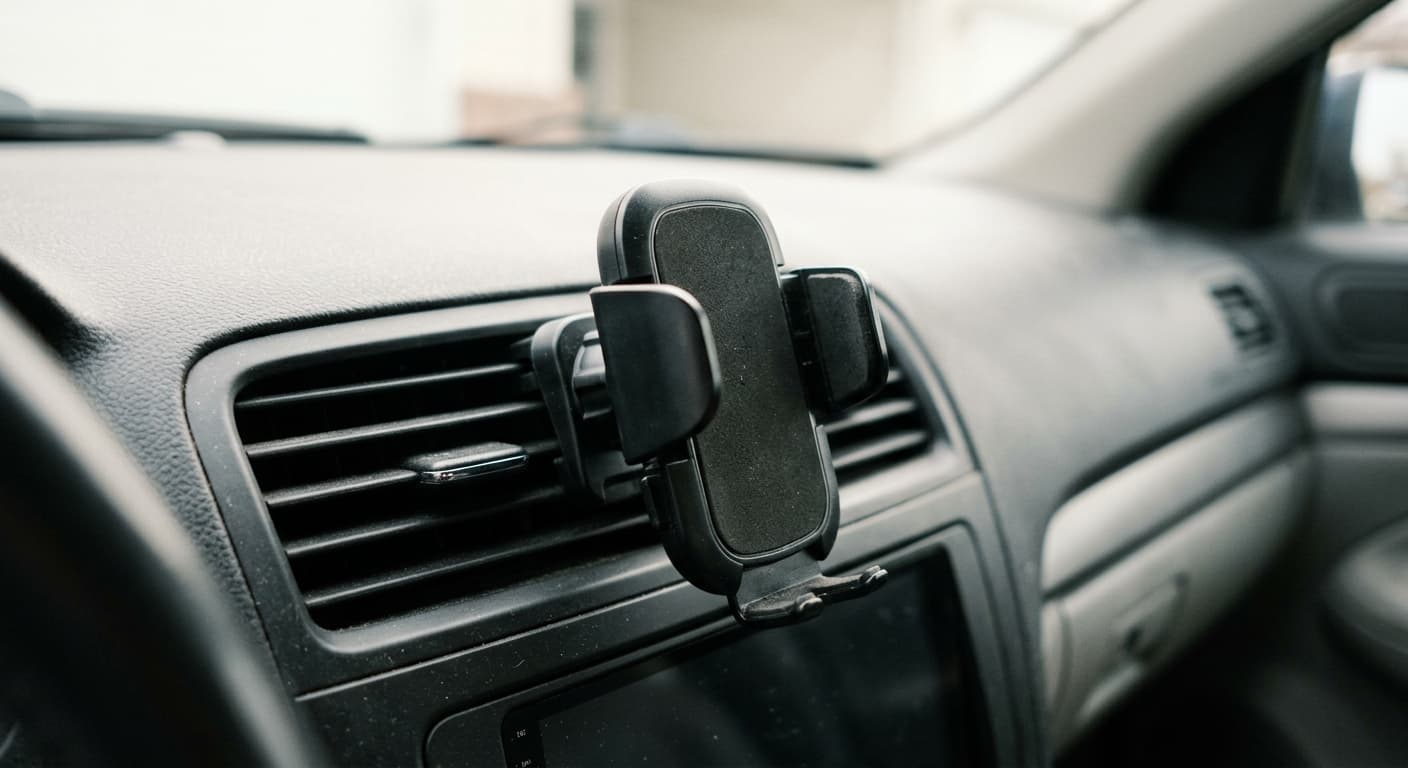
Michigan law (MCL 257.709) allows drivers to mount a dashcam, GPS, or phone on the windshield provided the device does not obstruct the driver's clear view of the road. A second statute, MCL 257.708b(3), adds a placement rule aimed at aftermarket navigation and vehicle-information displays: they may be mounted on the windshield or above the dashboard, but not within the deployment profile of the vehicle's airbags. Michigan sets no size limit, and a position behind the rearview mirror satisfies both rules most easily.
Michigan drivers need to understand both the state's windshield obstruction law and its newer hands-free driving law. Together, these statutes control what you can mount on your windshield and how you can use electronic devices behind the wheel.
This guide breaks down the exact statutes, permitted devices, penalties, exemptions, and how the 2023 hands-free law changed the rules for phone mounts in Michigan.
Michigan Windshield Obstruction Law (MCL 257.709)
The primary statute governing windshield-mounted devices in Michigan is MCL 257.709, part of the Michigan Vehicle Code (Act 300 of 1949). This section regulates windshields, windows, mirrors, and equipment visibility requirements.
What the Law Prohibits
Under MCL 257.709(1), a person cannot operate a motor vehicle with any of the following on the front windshield, the side windows next to the driver or front passenger, or the sidewings forward of the driver or front passenger:
- Signs or posters
- Nontransparent material
- Window applications
- Reflective film
- Nonreflective film
The statute also prohibits any "object that obstructs the vision of the driver of the vehicle, except as authorized by law." This catch-all provision is the legal basis for enforcement against improperly mounted devices.
The Obstruction Standard
MCL 257.709 does not set a specific size limit or placement zone for windshield-mounted devices. Instead, this section applies a functional test: does the object obstruct the driver's vision? A small GPS unit mounted near the corner of the windshield would not typically violate this standard. A large tablet mounted in the center of the windshield likely would.
This approach gives drivers more flexibility than states with strict measurement rules, but it also gives law enforcement more discretion in deciding what counts as an obstruction.
Section 709 is not the only rule that matters, though. A separate section of the vehicle code, MCL 257.708b, sets a device-specific placement limit for aftermarket navigation and vehicle-information displays. That rule is covered in the next section.
GPS and Navigation Device Mounts
Michigan law permits GPS and navigation devices on the windshield as long as they do not obstruct your view of the road. A second statute, MCL 257.708b, addresses these devices directly.
MCL 257.708b(1) bars operating a motor vehicle with a television or similar electronic device that displays a video image the operator can view while the vehicle is in motion. Subsection (2)(b) excepts "a vehicle information or navigation system for use in displaying only information pertaining to vehicle location, available routes and destinations, road layouts, weather conditions, traffic and road conditions, vehicle conditions, or traveler services."
Subsection (3) then sets where an aftermarket device of that kind may go. It "may be installed or mounted on the windshield or above the dashboard, but shall not be mounted within the deployment profile of the vehicle airbags or in a manner that interferes with the operator's view or control."
So a windshield-mounted GPS is expressly permitted in Michigan, subject to two limits: keep it out of the airbag deployment zone, and keep it from interfering with your view or control of the vehicle. A violation of section 708b is a civil infraction under MCL 257.708b(5).
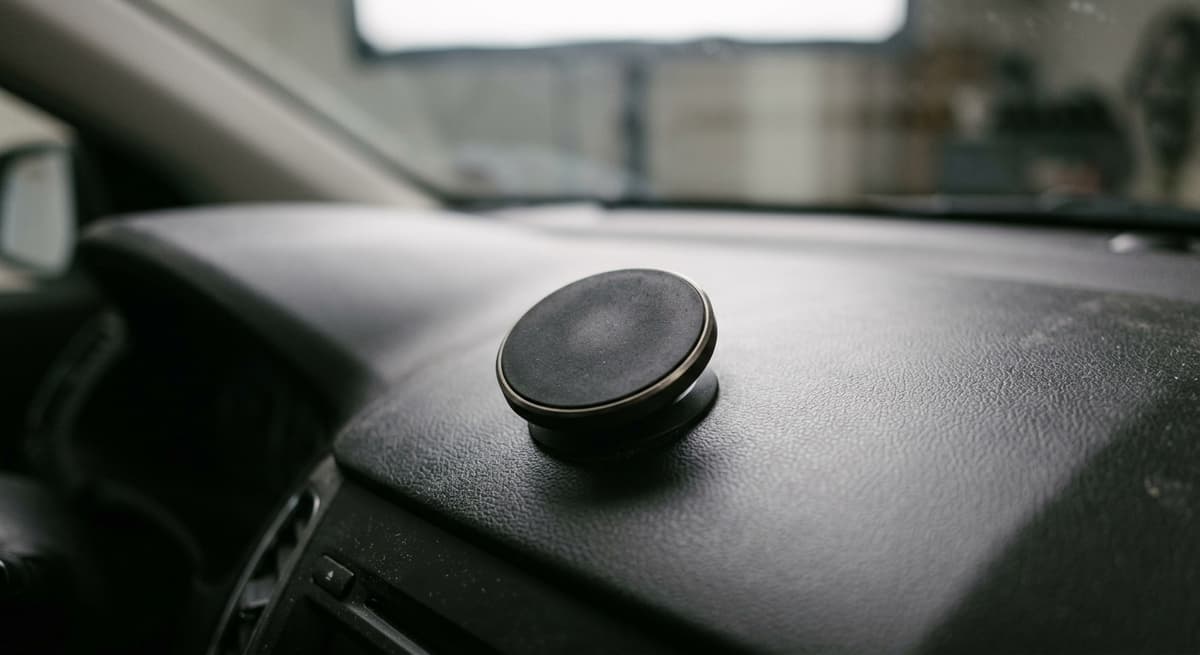
Best Placement Practices
To stay within the law and avoid a traffic stop:
- Keep the mount clear of the airbag deployment profile. A passenger front airbag typically deploys upward out of the dashboard and against the lower passenger area of the windshield, which makes that corner a poor choice under MCL 257.708b(3)
- Keep the device as small as reasonably possible
- Make sure the mount does not block your view of traffic, signals, or road signs
- Avoid placing devices directly in front of the steering wheel
A GPS or phone mounted behind the rearview mirror keeps the device out of your primary line of sight and away from the airbag deployment zone, which makes it the safest default placement in Michigan.
Phone Mounts and the Hands-Free Law (MCL 257.602b)
Michigan's hands-free law, codified at MCL 257.602b, took effect on June 30, 2023. This law fundamentally changed how Michigan drivers can use mobile phones in vehicles.
What the Law Requires
Under MCL 257.602b, a driver cannot hold or use a mobile electronic device while operating a motor vehicle. This prohibition covers:
- Making or receiving phone calls by hand
- Texting or typing
- Watching videos
- Browsing the internet or social media
- Any manual interaction with the device
The Mount Exception
The law explicitly permits the use of a mobile electronic device that is "placed in a mount." When your phone is in a windshield mount, dashboard mount, or vent mount, you may:
- Use voice commands or voice-operated features
- Activate or deactivate a feature with a single button press, tap, or swipe
- Use navigation apps
- Take hands-free calls
This means a windshield-mounted phone is not just legal in Michigan but is the recommended way to use your phone while driving. The mount must hold the device securely so you do not need to hold it in your hand.
Penalties for Hands-Free Law Violations
The fines for violating Michigan's hands-free law under MCL 257.602b increase with each offense:
| Offense | Fine (No Crash) | Fine (Crash Involved) |
|---|---|---|
| First violation | $100 | $200 |
| Second or subsequent | $250 | $500 |
Drivers with three or more violations within a three-year period must complete a basic driver improvement course. Community service of 16 hours (first offense) or 24 hours (subsequent offenses) may also be ordered.
Dashcam Mounting Rules
Dashcams are legal in Michigan, but the same obstruction standard from MCL 257.709 applies. A dashcam cannot be mounted in a position that obstructs the driver's clear view of the highway.
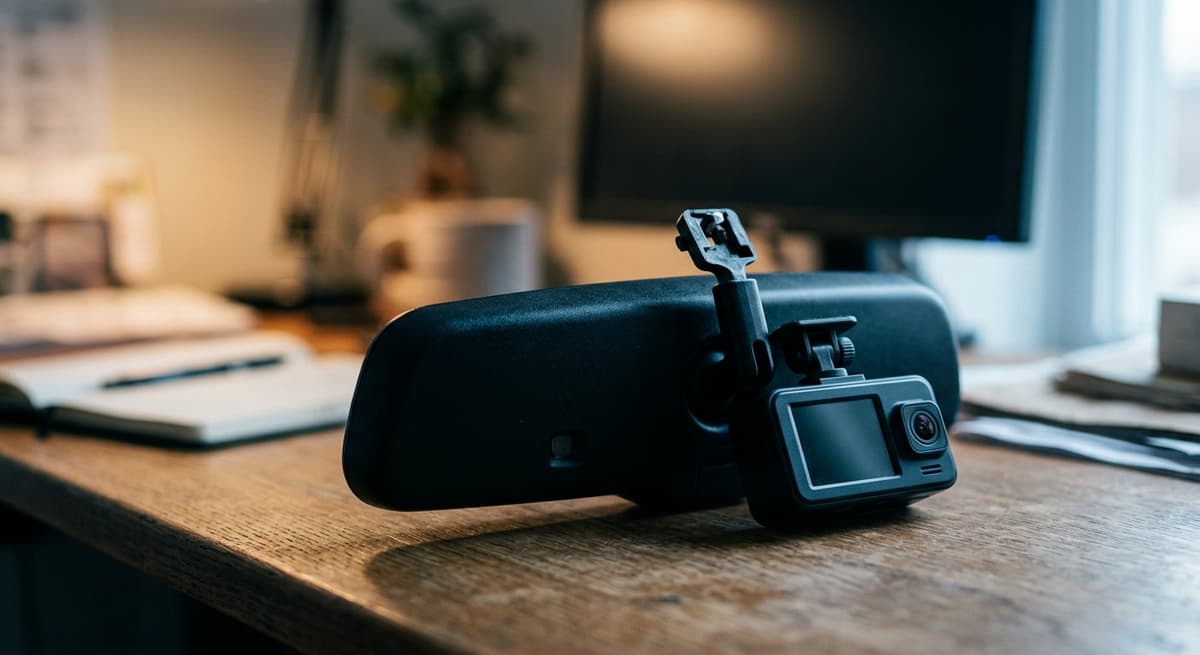
Recommended Dashcam Placement
The best location for a dashcam in Michigan is behind the rearview mirror, where the camera has a clear view of the road without blocking the driver's line of sight. The area where the factory tint strip meets the clear glass is an ideal spot.
Mounting a dashcam on the dashboard is also acceptable and avoids any windshield obstruction concerns entirely.
Commercial Vehicle Exception
Under MCL 257.709(6), trucks with a gross weight over 10,000 pounds, truck tractors, buses, and trucks carrying hazardous materials that require placards have separate equipment requirements. These vehicles must be equipped with a hot air windshield defroster, electrically heated windshield, or another device to keep the windshield in operable condition. The obstruction rules for these vehicles are evaluated differently.
Audio Recording Notice
Michigan's eavesdropping statute, MCL 750.539c, makes it a felony to use a device to eavesdrop on a private conversation without the consent of all parties to it. In practice, Michigan is treated as a one-party consent state because that provision targets eavesdropping on a conversation by someone who is not a party to it, not a participant recording their own conversation. If your dashcam captures audio of a conversation you are part of, you generally satisfy the one-party consent standard courts have applied; audio captured of a conversation you are not part of falls under the statute's stricter all-party consent language. You do not need to notify passengers that audio is being recorded, though doing so is a common courtesy.
Windshield Tint Regulations
MCL 257.709 also governs windshield tinting in Michigan. The rules are straightforward:
Windshield Tint Strip
A non-reflective tint strip is permitted along the top edge of the windshield. The tint cannot extend more than 4 inches from the top of the windshield, or lower than the factory shade band, whichever is closer to the top.
Front Side Windows
The front side windows (next to the driver and front passenger) and the sidewings follow the same 4-inch rule for tint strips. Michigan does not permit aftermarket tint on the main viewing area of the front side windows.
Rear Windows
Rear side windows and the rear windshield may have any level of tint darkness. However, the tint material cannot create a total solar reflectance of 35% or more in the visible light range. Silver and gold reflective films are specifically banned on all windows.
Medical Exemption for Window Tint
Under MCL 257.709(3)(e), a driver or passenger with a light-sensitive or photosensitive medical condition may use a special window treatment that would otherwise violate the tinting rules. To qualify:
- A physician or optometrist must determine the treatment is medically necessary
- The vehicle owner or operator must carry a signed letter from the physician or optometrist
- The window treatment cannot interfere with or obstruct the driver's clear vision of the highway or intersecting highways
Toll Transponders and Stickers
Michigan does not operate a statewide toll road system, so toll transponders are not a common windshield item. However, drivers who travel to toll states (like Ohio, Indiana, or Illinois) may have transponders such as E-ZPass mounted on their windshields.
These small transponders are generally permitted under MCL 257.709 because they are small, transparent or nearly transparent, and do not obstruct the driver's view. No specific Michigan statute addresses toll transponder placement.
Exemptions from Windshield Restrictions
MCL 257.709 includes several exemptions from the general prohibition on windshield materials:
| Exemption | Details |
|---|---|
| Factory shade band/tint strip | Non-reflective tint within the top 4 inches of the windshield |
| Rearview mirrors | Factory and aftermarket rearview mirrors are permitted |
| Law-required certificates | Registration stickers, inspection decals, and other legally required displays |
| Medical window treatment | Physician-certified treatment for light sensitivity (must carry letter) |
| Commercial vehicle equipment | Trucks over 10,000 lbs, buses, and hazmat vehicles have separate rules |
Penalties for Windshield Violations
A violation of MCL 257.709 is a civil infraction under Michigan law, because MCL 257.683(6) makes a violation of any provision in sections 683 to 711 a civil infraction. Equipment violations in this section carry the following consequences:
- Fine: Up to $100 for a standard civil infraction under MCL 257.907
- Points: Zero. Defective equipment violations do not add points to your driving record
- Fix-it option: MCL 257.907(9) requires the court to waive the civil fine, costs, and assessments when a person "has received a civil infraction citation for defective safety equipment on a vehicle under section 683," once a law enforcement agency certifies that the repair was made before the appearance date on the citation. MCL 257.683(2) lets an officer who finds a defect in equipment issue a citation "for a violation of a provision of sections 683 to 711," a range that includes section 709.
Whether the waiver reaches a given windshield citation therefore turns on the phrase "defective safety equipment," not on the section number. A broken or missing piece of required equipment fits that description more naturally than an accessory a driver chose to stick to the glass, and Michigan courts have not settled the point. Do not assume the fine will be waived automatically for removing the item. Ask the issuing court what repair or dismissal options apply to your citation.
Kelsey's Law: Teen Driver Restrictions (MCL 257.602c)
Michigan's Kelsey's Law, named after Kelsey Raffaele who died in a cellphone-related crash in 2010, imposes stricter rules on young drivers.
Under MCL 257.602c, drivers with a Level 1 or Level 2 graduated license cannot use a cellular telephone while operating a motor vehicle. This restriction applies regardless of whether the phone is mounted or used hands-free. The only exceptions are calls to report:
- A traffic accident
- A medical emergency
- A serious road hazard
- A situation where the driver believes their personal safety is in jeopardy
A violation results in a civil infraction. MCL 257.320a specifically excludes section 602c from Michigan's point system, so a Kelsey's Law violation adds zero points to the teen's driving record. Unlike a Level 1 supervised-driving or Level 2 curfew-and-passenger violation, a Kelsey's Law violation is not among the violations MCL 257.310e specifically lists as extending the graduated license's provisional period, and the statute does not require a driver reexamination. Whether such a violation could still count as a generic moving violation for graduated-license purposes is not settled by the statute's text, so cautious teen drivers should not treat the zero-points rule as making a citation consequence-free.
This means that even though a windshield phone mount is legal for adult drivers in Michigan, teen drivers with a graduated license cannot use a mounted phone while driving.
How Michigan Compares to Neighboring States
Michigan's approach to windshield mounting is more permissive than some neighboring states:
| State | GPS/Phone Mount Allowed | Specific Placement Rules |
|---|---|---|
| Michigan | Yes, if no obstruction | No size limit; a nav display must clear the airbag deployment zone (MCL 257.708b(3)) |
| Ohio | Yes, if no obstruction | No size/placement limits specified |
| Indiana | Yes, with restrictions | Must not obstruct view |
| Illinois | Yes, with restrictions | Lower windshield area preferred |
| Wisconsin | Yes, if no obstruction | No specific measurement requirements |
Michigan's functional "does it obstruct" test gives drivers more flexibility than states that impose strict size or placement zones. However, it also means enforcement can vary between officers and jurisdictions.
Recent Legal Changes
2023: Hands-Free Law (Public Act 38 of 2023)
The most significant recent change affecting windshield mounts was the hands-free law that took effect June 30, 2023. Before this law, Michigan only prohibited texting while driving. The new law bans all handheld phone use, making windshield mounts and other hands-free accessories essential for legal phone use while driving.
No Changes to MCL 257.709
The core windshield obstruction statute has not been amended recently. The law remains focused on the functional obstruction standard rather than specific device measurements or placement rules.
More Michigan Laws
Frequently Asked Questions
Can I mount a GPS or phone on my windshield in Michigan?
Yes. Michigan law (MCL 257.709) permits GPS units, phone mounts, and other devices on the windshield as long as they do not obstruct the driver's clear view of the road. There is no size limit, but MCL 257.708b(3) adds a placement rule for aftermarket navigation and vehicle-information displays: they may be mounted on the windshield or above the dashboard, but not within the deployment profile of the vehicle's airbags or in a manner that interferes with the operator's view or control. The hands-free law (MCL 257.602b) actually encourages phone mounts because drivers must use phones hands-free while driving.
Is it legal to use a dashcam in Michigan?
Yes. Dashcams are legal in Michigan as long as they do not obstruct the driver's view. The recommended placement is behind the rearview mirror or on the dashboard. Michigan's eavesdropping statute (MCL 750.539c) requires the consent of all parties to a conversation, but courts have applied it only to someone recording a conversation they are not part of, not a participant recording their own conversation. That means a driver's own dashcam capturing a conversation the driver is part of is generally treated as the one-party consent outcome, while audio of a conversation the driver is not part of falls under the statute's stricter all-party language. You do not need to notify passengers, though doing so is a common courtesy.
What is the penalty for a windshield obstruction ticket in Michigan?
A windshield obstruction violation under MCL 257.709 is a civil infraction with a maximum fine of $100, because MCL 257.683(6) makes a violation of sections 683 to 711 a civil infraction. It carries zero points on your driving record. The certification-based fix-it fine waiver in MCL 257.907(9) is written for a citation for 'defective safety equipment on a vehicle under section 683,' so whether it reaches a windshield citation depends on whether the item is treated as defective safety equipment. Do not assume the fine is waived automatically; ask the issuing court about your options.
Can teen drivers use a phone mounted on the windshield in Michigan?
No. Under Kelsey's Law (MCL 257.602c), drivers with a Level 1 or Level 2 graduated license cannot use a cell phone while driving, even if it is mounted or used hands-free. The only exceptions are emergency calls. A violation is a civil infraction, but MCL 257.320a explicitly excludes it from Michigan's point system, and it does not trigger the graduated-license extension or reexamination consequences that apply to other GDL restrictions.
Does Michigan require hands-free phone use while driving?
Yes. Since June 30, 2023, Michigan law (MCL 257.602b) prohibits holding or manually using a mobile electronic device while driving. Drivers must place phones in a mount or use voice-operated and hands-free modes. First-offense fines are $100, and fines double if a crash is involved.
Updates
Corrected the guidance on GPS and navigation mounts to cite MCL 257.708b(3), which allows a windshield or above-dashboard mount but bars placement within the vehicle airbag deployment profile, and rewrote the fix-it fine waiver explanation to reflect that MCL 257.683 covers sections 683 to 711 including section 709.
Corrected the stated penalty for a Kelsey's Law (teen driver cellphone) violation: Michigan's point schedule (MCL 257.320a) explicitly assesses zero points for this offense, and the statute does not impose a 12-month graduated-license extension or a reexamination requirement, contrary to what this page previously stated.
Independently fact-checked against the cited primary sources; governing law re-checked for recent changes
Governing law re-checked for recent changes
Corrected two grounding errors: the MCL 257.907(9) fix-it fine waiver is limited to section 683 equipment citations and does not extend to a windshield-obstruction citation under MCL 257.709 (swept 3 restatements); and reworded the audio-recording note because MCL 750.539c's text itself requires consent of all parties, with Michigan's one-party outcome resting on how courts apply the participant exception rather than the statute's bare text.
Corrected the dashcam FAQ answer, which still called Michigan an unqualified 'one-party consent state'; MCL 750.539c's text requires consent of all parties, and the one-party outcome for a driver's own dashcam rests on courts limiting the statute to conversations the recorder is not part of.
Governing law re-checked for recent changes
Reviewed and approved by an editor
The Law Behind This Article
This article rests on the statutory provisions below, held in our own legal record and retrieved from the official source. Tap a section to read the operative text.
Michigan Compiled Laws
§ 257.709Windshields and windows; prohibitions; rearview mirrors; exceptions; windshield wipers; exemption; hot air windshield defroster or electrically heated windshield or other device; windshield device; definitionsIn forcecited in 6 of our articles
(1) A person shall not operate a motor vehicle with any of the following: (a) A sign, poster, nontransparent material, window application, reflective film, or nonreflective film upon or in the front windshield, the side windows immediately adjacent to the driver or front passenger, or the sidewings adjacent to and forward of the driver or front passenger, except that a tinted film may be used along the top edge of the windshield and the side windows or sidewings immediately adjacent to the driver or front passenger if the material does not extend more than 4 inches from the top of the windshield, or lower than the shade band, whichever is closer to the top of the windshield. (b) A rear window or side window to the rear of the driver composed of, covered by, or treated with a material that creates a total solar reflectance of 35% or more in the visible light range, including a silver or gold reflective film. (c) An object that obstructs the vision of the driver of the vehicle, except as authorized by law.
Official text (excerpt) · last checked 2026-09-07 · Read the full text in our law library · Verify at legislature.mi.gov
Cited in 19 court opinions in our collectionLatest citing opinion in our collection: 2026
In the courts (editorial summary, independently checked):People v. Pitts (1997) upheld MCL 257.709 against an equal protection challenge, finding the ban on applied tint film rationally related to driver and officer safety, and held a tint violation is an equipment violation carrying no points. People v. Dillon (2012) rejected a vagueness attack, construing the dangling-object subsection.
Opinions citing this section in our collection:
- People v. Davis (Michigan Court of Appeals 2002, 250 Mich. App. 357)✓An officer saw air fresheners dangling from the mirror of the car Davis drove; the court found the record amply supported that this may have violated MCL 257.709 (1)(c) and that, with speeding and lane weaving, the traffic stop was permissible.
- People v. Dillon (Michigan Court of Appeals 2012, 296 Mich. App. 506)✓An air freshener hung two or three inches below Dillon's mirror; the court held MCL 257.709 was not void for vagueness because dangling ornament, suspended object and obstructs are commonly understood terms, and that the officer had reasonable suspicion to stop.
- People v. Pitts (Michigan Court of Appeals 1997, 222 Mich. App. 260)✓Pitts was cited for aftermarket tint film on his front side windows; the court held a MCL 257.709 tint violation is an equipment civil infraction carrying no license points rather than a moving obstructed-vision violation, and rejected his equal protection challenge.
Identified automatically from the court opinions citing this section — not a ranking of which case controls.
Also relied on in: Michigan Dashcam Laws: Windshield Rules, Audio Recording, and Legal Use (2026), Michigan Window Tint Laws (2026): Legal VLT Limits
§ 257.602bHolding or using a mobile electronic device while operating a motor vehicle; prohibited; exception for commercial motor vehicle and school bus; "use a mobile electronic device" defined; situational exceptions; violation as civil infraction; fine; local ordinances superseded; multiple violations penalty and enforcement; sunset applicability; definitionsIn forcecited in 2 of our articles
(1) Except as otherwise provided in this section, an individual shall not hold or use a mobile electronic device while operating a motor vehicle. This subsection does not apply to an individual operating a commercial motor vehicle or a school bus. (2) Except as otherwise provided in this section, an individual shall not hold or use a mobile electronic device while operating a commercial motor vehicle or a school bus. As used in this subsection, "use a mobile electronic device" means 1 or more of the following: (a) Using a mobile electronic device to do any task, including, but not limited to, any of the following: (i) Send or receive a telephone call. (ii) Send, receive, or read a text message. (iii) View, record, or transmit a video. (iv) Access, read, or post to a social networking site. (b) Reaching for a mobile electronic device in a manner that requires a driver to maneuver so that the driver is no longer in a seated driving position, restrained by a seat belt that is installed as required by 49 CFR 393.93 and adjusted in accordance with the vehicle manufacturer's instructions.
Official text (excerpt) · last checked 2026-07-30 · Read the full text in our law library · Verify at legislature.mi.gov
Cited in 1 court opinions in our collectionLatest citing opinion in our collection: 2021
Opinions citing this section in our collection:
- Hoosier v. Hudson (District Court, E.D. Michigan 2021)“…laws typically results in civil infractions and fines. See Mich. Comp. Laws § 257.602b(6) (setting fines of $100 for first of…”
Identified automatically from the court opinions citing this section — not a ranking of which case controls.
§ 257.602cIndividual issued level 1 or 2 graduated license; use of cellular telephone prohibited; exceptions; violation as civil infraction; local ordinance; report; "Kelsey's Law."In forcecited in 2 of our articles
(1) Except as provided in this section, and in addition to the requirements of section 602b, an individual issued a level 1 or level 2 graduated license under section 310e shall not use a cellular telephone while operating a motor vehicle upon a highway or street. For purposes of this subsection, "use" means to initiate a call, answer a call, or listen to or engage in verbal communication through the cellular telephone. (2) Subsection (1) does not apply to an individual who is using a cellular telephone to do any of the following: (a) Report a traffic accident, medical emergency, or serious road hazard. (b) Report a situation in which the individual believes the individual's personal safety is in jeopardy. (c) Report or avert the perpetration or potential perpetration of a criminal act against the individual or another individual. (3) An individual who violates this section is responsible for a civil infraction.
Official text (excerpt) · last checked 2026-07-30 · Read the full text in our law library · Verify at legislature.mi.gov
§ 257.907Civil infraction; payment of civil fine and costs; certification of repair of defective equipment; collection of civil fines or costs; waiver of fine, cost, and assessment; civil infraction arising out of ownership or operation of commercial quadricycle; "moving violation" definedIn forcecited in 4 of our articles
(1) A violation of this act, or a local ordinance that substantially corresponds to a provision of this act, that is designated a civil infraction must not be considered a lesser included offense of a criminal offense. (2) Permission may be granted for payment of a civil fine and costs to be made within a specified period of time or in specified installments but, unless permission is included in the order or judgment, the civil fine and costs must be payable immediately. Except as otherwise provided, a person found responsible or responsible "with explanation" for a civil infraction must pay costs as provided in subsection (4) and 1 or more of the following civil fines, as applicable: (a) Except as otherwise provided, for a civil infraction under this act or a local ordinance that substantially corresponds to a provision of this act, the person must be ordered to pay a civil fine of not more than $100.00. (b) If the civil infraction was a moving violation that resulted in an at-fault collision with another vehicle, an individual, or any other object, the civil fine ordered under this section is increased by $25.00 but the total civil fine must not be more than $100.00.
Official text (excerpt) · last checked 2026-07-30 · Read the full text in our law library · Verify at legislature.mi.gov
Cited in 7 court opinions in our collectionLatest citing opinion in our collection: 2020
Opinions citing this section in our collection:
- Board of Library Commissioners v. Judges of the 70th District Court (Michigan Court of Appeals 1982, 118 Mich. App. 379)“…ts represented approximately 89% and fines 11%. Pursuant to MCL 257.907(3); MSA 9.2607(3), amounts collected th…”
- In re Justin (Michigan Supreme Court 2012, 490 Mich. 394)“…nd 3(A)(5) of the Code of Judicial Conduct; MCL 257.32¿(3); MCL 257.907(9); and MCL 257.732. Additionally, the…”
- in Re Hon James M Justin (Michigan Supreme Court 2012)“…sly not limited to, violations of MCL 257.732; MCL 257.328; MCL 257.907; MCL 769.1(f); MCL 769.6; MCL 771.1(2);…”
Identified automatically from the court opinions citing this section — not a ranking of which case controls.
Also relied on in: Michigan Car Seat Laws: Requirements and Guidelines
§ 257.320aRecording date of conviction, civil infraction determination, or probate court disposition and number of points; interview; violation committed in another stateIn forcecited in 2 of our articles
(1) Within 5 days after receipt of a properly prepared abstract from a court of this state or another state, the secretary of state shall record the date of conviction, civil infraction determination, or probate court disposition, and the number of points for each, based on the following formula, except as otherwise provided in this section and section 629c: (a) Manslaughter, negligent homicide, or a felony resulting from the operation of a 6 motor vehicle, ORV, or snowmobile points (b) A violation of section 601b(2) or (3), 601c(1) or (2), or 653a(3) or (4) or, beginning 6 October 31, 2010, a violation of section 601d points (c) A violation of section 625(1), (4), (5), (7), or (8), section 81134 or 82127(1) of the natural resources and environmental protection act, 1994 PA 451, MCL 324.81134 and 6 324.82127, or a law or ordinance substantially corresponding to section 625(1), (4), points (5), (7), or (8), or section 81134 or 82127(1) of the natural resources and environmental protection act, 1994 PA 451, MCL 324.81134 and 324.82127 (d) Failing to stop and disclose identity at the scene of an accident when required by 6 law points (e) Operating a motor vehicle in…
Official text (excerpt) · last checked 2026-07-30 · Read the full text in our law library · Verify at legislature.mi.gov
Cited in 8 court opinions in our collectionLatest citing opinion in our collection: 2009
Opinions citing this section in our collection:
- People v. Pitts (Michigan Court of Appeals 1997, 222 Mich. App. 260)“…essed for any moving violation not specifically enumerated. MCL 257.320a; MSA 9.2020(1). From March 1981…”
- Dawson v. Secretary of State (Michigan Court of Appeals 2007, 274 Mich. App. 723)“…ed in a two-year period under the point system set forth in MCL 257.320a and MCL 257.629c. [4] The offenses i…”
- People v. Droog (Michigan Court of Appeals 2009, 282 Mich. App. 68)“…ng the imposition of points against the records of drivers, MCL 257.320a, and possible sanctions against driver’…”
Identified automatically from the court opinions citing this section — not a ranking of which case controls.
§ 257.310eGraduated licensingIn force
(1) Except as otherwise provided in this act, an operator's or chauffeur's license issued to a person who is 17 years of age or less shall be in a form as prescribed in section 310, and valid only upon the issuance of a graduated driver license. (2) The secretary of state shall designate graduated licensing provisions in a manner that clearly indicates that the person is subject to the appropriate provisions described in this section. (3) Except as otherwise provided in section 303, a person who is not less than 14 years and 9 months of age may be issued a level 1 graduated licensing status to operate a motor vehicle if the person has satisfied all of the following conditions: (a) Passed a vision test and met health standards as prescribed by the secretary of state. (b) Successfully completed segment 1 of a driver education course as that term is defined in section 7 of the driver education provider and instructor act, 2006 PA 384, MCL 256.627, including a minimum of 6 hours of on-the-road driving time with the instructor. (c) Received written approval of a parent or legal guardian.
Official text (excerpt) · last checked 2026-07-30 · Read the full text in our law library · Verify at legislature.mi.gov
Cited in 10 court opinions in our collectionLatest citing opinion in our collection: 2026
Opinions citing this section in our collection:
- Monaco v. Home-Owners Insurance Company (Michigan Court of Appeals 2016, 317 Mich. App. 738)“…orizing Alison’s unaccompanied operation of the car. 2 MCL 257.310e(4) applied to Alison, and it provides t…”
- Mohamed Ahmed v. Tokio Marine America Insurance Company (Michigan Court of Appeals 2021)“…hicle Code, MCL 257.1 et seq., specifically MCL 257.326 and MCL 257.310e(4). Id. at 750. MCL 257.326 provides th…”
- Woodman v. Kera LLC (Michigan Supreme Court 2010, 486 Mich. 228)“…(1). MCL 700.5105. MCL 330.1717(l)(b). MCL 257.310e(3)(c). MCL 409.103(2)(a) and (b)…”
Identified automatically from the court opinions citing this section — not a ranking of which case controls.
§ 750.539cEavesdropping upon private conversationIn forcecited in 42 of our articles
Any person who is present or who is not present during a private conversation and who wilfully uses any device to eavesdrop upon the conversation without the consent of all parties thereto, or who knowingly aids, employs or procures another person to do the same in violation of this section, is guilty of a felony punishable by imprisonment in a state prison for not more than 2 years or by a fine of not more than $2,000.00, or both.
Official text (excerpt) · last checked 2026-08-28 · Read the full text in our law library · Verify at legislature.mi.gov
Cited in 32 court opinions in our collectionLatest citing opinion in our collection: 2025
In the courts (editorial summary, independently checked):Michigan courts read MCL 750.539c to reach third-party eavesdropping only. Sullivan v. Gray (1982) held the statutory phrase "private discourse of others" excludes recording by a participant in the conversation; People v. Lucas (1991) held an officer who answered an arrestee's ringing car phone did not violate the section.
Opinions citing this section in our collection:
- People v. Lucas (Michigan Court of Appeals 1991, 188 Mich. App. 554)✓Police answering the arrested defendant's ringing car phone took drug-purchase calls and testified to them; the court held the officer was not an eavesdropper because there was no private discourse between the sender and some other receiver, so MCL 750.539c was not violated.
- Sullivan v. Gray (Michigan Court of Appeals 1982, 117 Mich. App. 476)✓A party to a phone call about a failed car dealership sale secretly taped it and the transcript was used in later litigation; reading the statute to reach only the private discourse of others, the court held participant recording is not eavesdropping under MCL 750.539c.
- People v. Warner (Michigan Supreme Court 1977, 401 Mich. 186)✓A motel switchboard operator deliberately listened in on a guest's call and reported it to police; the court held her willful eavesdropping violated MCL 750.539c, but the defendant, not shown to be a party to the call, had no standing to suppress the resulting evidence.
Identified automatically from the court opinions citing this section — not a ranking of which case controls.
Also relied on in: Michigan Smart Glasses Recording Laws (2026), Michigan Landlord-Tenant Recording Laws: Surveillance, Privacy, and Tenant Rights (2026), Michigan Security Camera Laws: Rules for Homes, Businesses, and Neighbors (2026)
§ 257.683Driving or moving vehicle in unsafe condition; condition and adjustment of parts and equipment; stopping and inspecting vehicle; citation; training requirements as motor carrier enforcement officer; additional parts and accessories; exceptions; violation as civil infractionIn forcecited in 2 of our articles
(1) A person shall not drive or move or the owner shall not cause or knowingly permit to be driven or moved on a highway a vehicle or combination of vehicles that is in such an unsafe condition as to endanger a person, or that does not contain those parts or is not at all times equipped with lamps and other equipment in proper condition and adjustment as required in sections 683 to 711, or that is equipped in a manner in violation of sections 683 to 711. A person shall not do an act forbidden or fail to perform an act required under sections 683 to 711. (2) A police officer on reasonable grounds shown may stop a motor vehicle and inspect the motor vehicle, and if a defect in equipment is found, the officer may issue the driver a citation for a violation of a provision of sections 683 to 711. (3) In order to be classified as a motor carrier enforcement officer, a police officer must have training equal to the minimum training requirements, including any annual training updates, established by the department of state police for an officer of the motor carrier division of the department of state police.
Official text (excerpt) · last checked 2026-07-30 · Read the full text in our law library · Verify at legislature.mi.gov
Cited in 26 court opinions in our collectionLatest citing opinion in our collection: 2026
Opinions citing this section in our collection:
- Bruce T Wood v. City of Detroit (Michigan Court of Appeals 2018)“…e tire came off, not before it came off. 3 In addition, MCL 257.683 provides in relevant part: (1)…”
- People v. Pitts (Michigan Court of Appeals 1997, 222 Mich. App. 260)“…nguage contained in the Michigan Vehicle Code, specifically MCL 257.683; MSA 9.2383 and MCL 257.709; MSA 9.2409…”
- Kohn v. Ford Motor Co. (Michigan Court of Appeals 1986, 151 Mich. App. 300)“…NW2d 295 (1976). [9] MRE 702. [10] MRE 703. [11] MCL 257.683(1); MSA 9.2383(1), MCL 257.705(c); MSA…”
Identified automatically from the court opinions citing this section — not a ranking of which case controls.
Search our full record of US law — 2.1 million sections, every state + federal →
Sources and References
- MCL 257.709 - Windshields and windows; prohibitions(legislature.mi.gov).gov
- MCL 257.602b - Use of mobile electronic device while operating motor vehicle(legislature.mi.gov).gov
- MCL 257.602c - Kelsey's Law teen driver cellphone restriction(legislature.mi.gov).gov
- MCL 257.907 - Civil infraction penalties(legislature.mi.gov).gov
- Michigan State Police - Distracted Driving(michigan.gov).gov
- Michigan Secretary of State - New Drivers Under 18(michigan.gov).gov
- Michigan Courts - Civil Infraction Fine Schedule(courts.michigan.gov).gov
- MCL 257.320a - Point system; assessment of points for violations(legislature.mi.gov).gov
- MCL 257.310e - Graduated licensing system; restrictions, violations, and provisional period extension(legislature.mi.gov).gov
- MCL 257.708b - Television or similar electronic device displaying video image; aftermarket navigation display mounting(legislature.mi.gov)
- MCL 257.683 - Equipment requirements; officer citation authority; violations of sections 683 to 711 as civil infractions(legislature.mi.gov)