
Iowa
Iowa Dashcam Laws: Recording Rules, Windshield Mounting, and Legal Limits (2026)
Independently fact-checked against primary sources (last audited August 15, 2026). · Reviewed by the RecordingLaw editorial team. · Law checked current as of August 15, 2026. · 7 primary sources cited on this page. How we verify our legal content
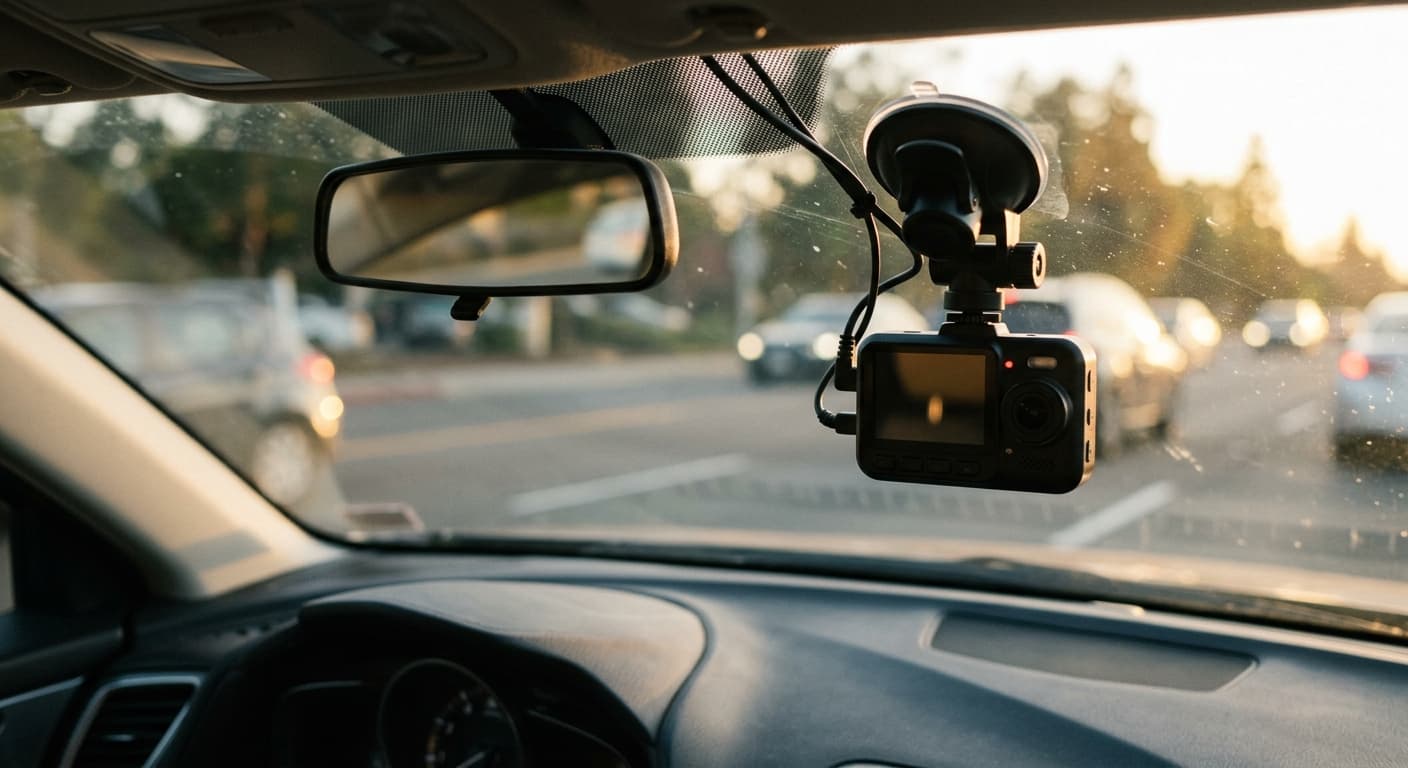
Dashcam use is legal in Iowa. Iowa Code 808B.2 establishes one-party consent, allowing drivers to record audio in their vehicles without informing passengers. Iowa Code 321.438 prohibits windshield obstructions, so mount your dashcam behind the rearview mirror or on the dashboard to stay compliant.
Iowa does not have a standalone dashcam law. Dashboard cameras are legal throughout the state under Iowa's one-party consent framework. Iowa Code Section 808B.2 allows any party to a conversation to record without informing others. As the driver, you are a party to conversations in your vehicle.
Iowa also has a separate eavesdropping statute (Iowa Code Section 727.8) that adds another layer of protection against third-party recording. Understanding how both laws apply to dashcam use is important for Iowa drivers.
Iowa Dashcam Legality Overview
Is It Legal to Use a Dashcam in Iowa?
Yes. Iowa law does not prohibit dashcam use. Both video-only and audio-enabled dashcams are legal.
Video-Only vs. Audio-Enabled Dashcams
| Feature | Legal Status in Iowa |
|---|---|
| Video-only dashcam | Legal on public roads |
| Dashcam with audio (driver present) | Legal under one-party consent |
| Exterior road audio | Legal (no privacy expectation) |
| Interior audio when driver is absent | May violate eavesdropping statute |
Windshield Mounting Rules
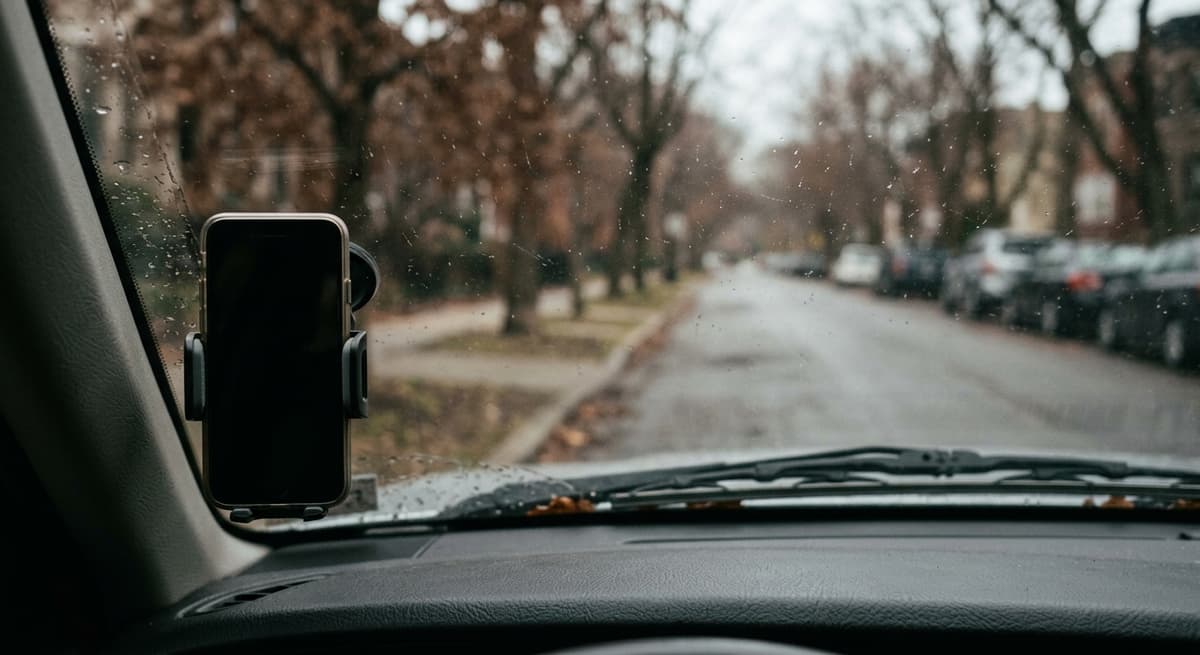
Iowa Code Section 321.438
Iowa's vehicle equipment requirements under Iowa Code Section 321.438 address windshield conditions. The statute prohibits materials that obstruct the driver's view.
Best Practices
- Behind the rearview mirror: Most common and safest placement
- Dashboard mount: Avoids windshield entirely
- Lower passenger-side corner: Out of driver's line of sight
- Choose dashcams rated for Iowa's temperature range (winter lows below -20 F, summer dashboard temperatures above 150 F)
Audio Recording and Consent
Iowa Code Section 808B.2
The wiretapping statute makes it illegal to intentionally intercept communications without the consent of at least one party. The driver's consent satisfies this requirement for vehicle conversations.
Iowa Code Section 727.8: The Eavesdropping Statute
Iowa's separate eavesdropping law makes it illegal for a person, having no right or authority to do so, to tap into or connect a listening or recording device to a telephone or other communication wire, or to use electronic or mechanical means to listen to, record, or otherwise intercept a conversation or communication of any kind. This is a serious misdemeanor punishable by up to 1 year in jail and a $2,560 fine.
For dashcam users, this means:
- Recording your own conversations is legal
- Leaving a dashcam running to capture conversations you are not part of may violate the eavesdropping statute
- The two statutes work together: 808B.2 governs electronic interception, 727.8 covers broader eavesdropping
Rideshare Drivers
Iowa rideshare drivers can record under one-party consent. The Iowa Department of Transportation does not specifically regulate dashcam use. Posting a notice is a best practice.
Using Dashcam Footage as Evidence
Accident Claims
Iowa follows a modified comparative negligence system with a 51% bar. Dashcam evidence establishing fault can be critical. Enable date/time stamps, use high-resolution cameras, and preserve originals.
Admissibility
Footage must be relevant, authentic, unaltered, and properly preserved. Audio recorded under one-party consent is admissible in Iowa courts.
Law Enforcement
Iowa law enforcement may request footage during investigations. You are not required to provide it without a warrant.
Iowa's Ag-Gag Trespass-Recording Law (§ 727.8A) and ALDF v. Reynolds
Iowa Code § 727.8A (the camera-while-trespassing ag-gag statute, enacted as HF 775) creates enhanced penalties for placing recording devices on any trespassed real property, with no limitation to agricultural or commercial land. In Animal Legal Defense Fund v. Reynolds, 89 F.4th 1071 (8th Cir. 2024), the Eighth Circuit upheld § 727.8A's Use Provision under intermediate scrutiny, assuming the recording activity was protected speech; the separate Place Provision was not decided for lack of standing. This is one of the few state ag-gag laws to survive federal scrutiny. For dashcam users, the practical impact is narrow -- dash cameras on a public road are not affected -- but drivers who pull onto private agricultural land to record are subject to this statute.
Criminal Penalties
| Statute | Offense | Classification | Max Prison | Max Fine |
|---|---|---|---|---|
| Iowa Code 808B.2 | Illegal interception | Class D Felony | 5 years | $10,245 |
| Iowa Code 727.8 | Eavesdropping | Serious Misdemeanor | 1 year | $2,560 |
Civil Liability
Iowa Code Section 808B.8 provides a civil cause of action. Victims can sue for actual damages, punitive damages, and attorney fees.
Commercial Vehicles
Commercial trucking on Iowa's interstate highways increasingly uses dashcams. The FMCSA does not mandate or prohibit them.
Privacy Considerations
Parking Mode
Parking mode recording is generally legal on public streets. Recording on private property may raise concerns under both the eavesdropping statute and property rights.
Sharing Footage
Posting dashcam footage online is legal if lawfully recorded. Avoid using footage for harassment.
Explore More Iowa Recording Laws
Audio Recording | Video Recording | Voyeurism Laws | Workplace Recording | Recording Police | Phone Call Recording | Security Cameras | Recording in Public | Landlord-Tenant Recording | Dashcam Laws | School Recording | Medical Recording
More Iowa Recording Topics
More Iowa Laws
Frequently Asked Questions
Are dashcams legal in Iowa?
Yes. Iowa does not prohibit dashcams. Both video-only and audio-enabled dashcams are legal. Under one-party consent (Iowa Code 808B.2), the driver can record audio without informing passengers.
Do I need to tell passengers my dashcam records audio in Iowa?
No. Iowa's one-party consent law allows you to record conversations you participate in without notification.
Where should I mount my dashcam in Iowa?
Mount behind the rearview mirror or on the dashboard. Iowa Code 321.438 addresses windshield obstructions. Avoid center placements.
Can dashcam footage be used in Iowa courts?
Yes. Dashcam footage is admissible if relevant, authentic, unaltered, and lawfully obtained.
What are the penalties for illegal dashcam recording in Iowa?
Illegal interception is a Class D felony carrying up to 5 years in prison and a $10,245 fine. Eavesdropping is a serious misdemeanor with up to 1 year in jail and a $2,560 fine.
Updates
Clarified that Iowa's mandatory court surcharges are added on top of the $10,245 maximum felony fine for illegal interception, not included within it, so the statute's actual fine cap and total exposure were previously understated.
Independently fact-checked against the cited primary sources; governing law re-checked for recent changes
Corrected the § 727.8A description: the statute applies to any trespassed real property, not just agricultural or commercial property as previously stated.
Governing law re-checked for recent changes
Replaced a fabricated quotation attributed to Iowa Code 727.8 with the statute's actual operative language (tapping/connecting a device or electronically/mechanically intercepting a communication).
Governing law re-checked for recent changes
Reviewed and approved by an editor
The Law Behind This Article
This article rests on the statutory provisions below, held in our own legal record and retrieved from the official source. Tap a section to read the operative text.
Iowa Code, Chapter 808B: INTERCEPTION OF COMMUNICATIONS
§ 808B.2Unlawful acts — penalty.In forcecited in 18 of our articles
1. Except as otherwise specifically provided in this chapter, a person who does any of the following commits a class “D” felony: a. Willfully intercepts, endeavors to intercept, or procures any other person to intercept or endeavor to intercept, a wire, oral, or electronic communication. b. Willfully uses, endeavors to use, or procures any other person to use or endeavor to use an electronic, mechanical, or other device to intercept any oral communication when either of the following applies: (1) The device is affixed to, or otherwise transmits a signal through, a wire, cable, or other like connection used in wire communication. (2) The device transmits communications by radio, or interferes with the transmission of radio communications. c. Willfully discloses, or endeavors to disclose, to any other person the contents of a wire, oral, or electronic communication, knowing or having reason to know that the information was obtained through the interception of a wire, oral, or electronic communication in violation of this subsection. d.
Official text (excerpt) · last checked 2026-08-31 · Read the full text in our law library · Verify at legis.iowa.gov
Cited in 10 court opinions in our collectionLatest citing opinion in our collection: 2017
In the courts (editorial summary, independently checked):Iowa courts have applied 808B.2 to covert recordings by private parties. State v. Spencer (2007) read its one-party consent exception to include vicarious consent, but only where a parent has a good faith, objectively reasonable basis for consenting for a minor child. Papillon v. Jones (2017) applied it to a hidden home recorder.
Opinions citing this section in our collection:
- Brenda Papillon v. Bryon Jones (Supreme Court of Iowa 2017, 892 N.W.2d 763)✓A man left a hidden voice-activated recorder in his ex-girlfriend's home and captured her private phone calls, then used them in their custody case; the court affirmed liability under Section 808B.2 but held punitive damages require proof he knew he was violating the chapter.
- Amended June 6, 2017 Brenda Papillon v. Bryon Jones (Supreme Court of Iowa 2017)“…n in district court against Jones, alleging a violation of Iowa Code section 808B.2, which prohibits “willfully intercept[…”
- Iowa Beta Chapter of Phi Delta Theta Fraternity v. State, University of Iowa (Supreme Court of Iowa 2009, 763 N.W.2d 250)✓A nonmember hid a recorder in a fraternity's private meeting room and gave the tape to university officials who used it to discipline the chapter; the court held the tape was a protected oral communication and read "willfully" in Section 808B.2 to mean purposeful conduct.
Identified automatically from the court opinions citing this section — not a ranking of which case controls.
Also relied on in: Iowa Recording Laws (2026): One-Party Consent Rules, Iowa Smart Glasses Recording Laws (2026), Iowa Security Camera Laws: Home, Business, and HOA Rules (2026)
Iowa Code, Chapter 321: MOTOR VEHICLES AND LAW OF THE ROAD
§ 321.438Windshields and windows.In forcecited in 4 of our articles
1. A person shall not drive a motor vehicle equipped with a windshield, sidewings, or side or rear windows which do not permit clear vision. 2. A person shall not operate on the highway a motor vehicle equipped with a front windshield, a side window to the immediate right or left of the driver, or a sidewing forward of and to the left or right of the driver which is excessively dark or reflective so that it is difficult for a person outside the motor vehicle to see into the motor vehicle through the windshield, window, or sidewing. a. The department shall adopt rules establishing a minimum measurable standard of transparency which shall apply to violations of this subsection. b. This subsection does not apply to a person who operates a motor vehicle owned or leased by a federal, state, or local law enforcement agency if the operation is part of the person’s official duties. 3. Every motor vehicle except a motorcycle, or a vehicle included in the provisions of section 321.383 or section 321.115 shall be equipped with a windshield in accordance with section 321.444.
Official text (excerpt) · last checked 2026-09-07 · Read the full text in our law library · Verify at legis.iowa.gov
Cited in 14 court opinions in our collectionLatest citing opinion in our collection: 2025
In the courts (editorial summary, independently checked):Iowa courts have applied section 321.438 mainly to validate traffic stops. State v. Aderholdt (1996) found an officer had reasonable cause to believe windows were tinted beyond subsection 2, and State of Iowa v. Gatkek Dual Lieth (2025) held a trooper's observation of a cracked windshield under subsection 1 gave probable cause to stop.
Opinions citing this section in our collection:
- State v. Aderholdt (Supreme Court of Iowa 1996, 545 N.W.2d 559)✓A trooper stopped a car whose occupants were unbelted and whose windows later metered at six percent light transmission; the court held he had reasonable cause to believe the tint exceeded what Iowa Code 321.438(2) permits, which helped justify the stop.
- State of Iowa v. Cassidy Jo Poage (Court of Appeals of Iowa 2025)“…his observation of the window-tint traffic violation. See Iowa Code §§ 321.438(2), 321.482 (2024). He also planned to…”
- State of Iowa v. Gatkek Dual Lieth (Court of Appeals of Iowa 2025)✓A trooper stopped the car Lieth rode in after seeing two windshield cracks, one in front of the driver's view; the court agreed that observing a violation of Iowa Code 321.438(1) gave probable cause for the stop, and treated his mistake-of-law argument as unpreserved.
Identified automatically from the court opinions citing this section — not a ranking of which case controls.
Also relied on in: Iowa Locks In 50% Front-Side Tint Floor: HF 766 Takes Effect July 1, Iowa Window Tint Laws (2026): Legal VLT Limits, Iowa Windshield Mounting Laws (2026 Guide)
Iowa Code, Chapter 727: HEALTH, SAFETY, AND WELFARE
§ 727.8Electronic and mechanical eavesdropping.In forcecited in 15 of our articles
1. “Monitoring device” means a digital video or audio streaming or recording device that records, listens to, or otherwise intercepts video or audio communications in order to provide proof of or prevent criminal activity that is placed outside of a person’s dwelling or other structure that is not in a shared hallway and is on real property owned or leased by the person. 2. Any person, having no right or authority to do so, who taps into or connects a listening or recording device to any telephone or other communication wire, or who by any electronic or mechanical means listens to, records, or otherwise intercepts a conversation or communication of any kind, commits a serious misdemeanor. 3. This section does not apply to any of the following: a. The recording by a sender or recipient of a message or one who is openly present and participating in or listening to a communication from recording such message or communication. b. The use of any radio or television receiver to receive any communication transmitted by radio or wireless signal. c. The use of a monitoring device.
Official text (excerpt) · last checked 2026-07-29 · Read the full text in our law library · Verify at legis.iowa.gov
Cited in 8 court opinions in our collectionLatest citing opinion in our collection: 2024
In the courts (editorial summary, independently checked):State v. Reid (1986) read the section's exception to let a sender, recipient, or person openly present and participating record a conversation without all-party consent or a court order. State v. Philpott (2005) affirmed a conviction for leaving a voice-activated recorder running in an office during the defendant's absence.
Opinions citing this section in our collection:
- State v. Philpott (Supreme Court of Iowa 2005, 702 N.W.2d 500)✓A court clerk left a voice-activated recorder running on her desk while at lunch, capturing coworkers; the court affirmed her section 727.8 conviction, holding a jury could find she intended to record conversations that took place during her absence.
- State v. Reid (Supreme Court of Iowa 1986, 394 N.W.2d 399)✓Police had a ten-year-old girl call the defendant and taped the call, then videotaped his station interview without telling him; the court held both recordings fell within section 727.8's exception for a participant, so no court order or all-party consent was needed.
- State v. Fox (Supreme Court of Iowa 1992, 493 N.W.2d 829)✓A deputy monitored a county jail inmate's outgoing phone call, and what she said led to a cell search that turned up marijuana; the court held the right or authority to monitor under section 727.8 comes from chapter 808B, whose law-enforcement exception covered him.
Identified automatically from the court opinions citing this section — not a ranking of which case controls.
Also relied on in: Iowa Audio Recording Laws: One-Party Consent Rules and Penalties (2026), Iowa Landlord-Tenant Recording Laws: Surveillance and Privacy Rights (2026), Iowa Medical Recording Laws: Patient Rights, HIPAA, and One-Party Consent (2026)
§ 727.8ACameras or electronic surveillance devices — trespass.In forcecited in 9 of our articles
A person committing a trespass as defined in section 716.7 who knowingly places or uses a camera or electronic surveillance device that transmits or records images or data while the device is on the trespassed property commits an aggravated misdemeanor for a first offense and a class “D” felony for a second or subsequent offense.
Official text (excerpt) · last checked 2026-07-29 · Read the full text in our law library · Verify at legis.iowa.gov
Cited in 2 court opinions in our collectionLatest citing opinion in our collection: 2026
Opinions citing this section in our collection:
- Animal Legal Defense Fund v. Kimberly Reynolds (Court of Appeals for the Eighth Circuit 2024, 89 F.4th 1071)“…or data while the device is on the trespassed property[.]” Iowa Code § 727.8A (“the Act”). Five animal-welfare groups…”
- Iowa Citizens for Community Improvement v. Kimberly Reynolds (Court of Appeals for the Eighth Circuit 2026)“…animal-welfare groups sued several Iowa officials, alleging Iowa Code § 727.8A violates their members’ First Amendment…”
Identified automatically from the court opinions citing this section — not a ranking of which case controls.
Also relied on in: Iowa Ring Doorbell Laws: What You Need to Know in 2026, Iowa Surveillance Camera Laws (2026 Guide), Iowa Laws on Recording in Public: First Amendment Rights and Limits (2026)
Iowa Code, Chapter 902: FELONIES
§ 902.9Maximum sentence for felons.In forcecited in 7 of our articles
1. The maximum sentence for any person convicted of a felony shall be that prescribed by statute or, if not prescribed by statute, if other than a class “A” felony shall be determined as follows: a. Reserved. b. A class “B” felon shall be confined for no more than twenty-five years. c. An habitual offender shall be confined for no more than fifteen years. d. A class “C” felon, not an habitual offender, shall be confined for no more than ten years, and in addition shall be sentenced to a fine of at least one thousand three hundred seventy dollars but not more than thirteen thousand six hundred sixty dollars. e. A class “D” felon, not an habitual offender, shall be confined for no more than five years, and in addition shall be sentenced to a fine of at least one thousand twenty-five dollars but not more than ten thousand two hundred forty-five dollars. 2. The surcharges required by sections 911.1, 911.2A, and 911.5 shall be added to a fine imposed on a class “C” or class “D” felon, as provided by those sections, and are not a part of or subject to the maximums set in this section.
Official text (excerpt) · last checked 2026-07-29 · Read the full text in our law library · Verify at legis.iowa.gov
Cited in 166 court opinions in our collectionLatest citing opinion in our collection: 2026
Opinions citing this section in our collection:
- State of Iowa v. Andre Letroy Antwan Harrington (Supreme Court of Iowa 2017)“…a sentence of incarceration greater than one year. See Iowa Code § 902.9(1)(a)–(e). Thus, any immigrati…”
- State v. Ayers (Supreme Court of Iowa 1999, 590 N.W.2d 25)“…imposed a $500 fine for each conviction. See Iowa Code §§ 902.9 (3), 903.1(2). Ayers appeals onl…”
- State v. Iowa District Court for Black Hawk County (Supreme Court of Iowa 2000, 616 N.W.2d 575)“…of incarceration not to exceed ten years. See Iowa Code § 902.9 (setting forth a maximum sentence of t…”
Identified automatically from the court opinions citing this section — not a ranking of which case controls.
Also relied on in: Iowa Video Recording Laws: Where You Can and Cannot Film (2026), Iowa GPS Tracking Laws: Is It Legal to Put a Tracker on a Car? (2026)
Search our full record of US law — 2.1 million sections, every state + federal →
Sources and References
- Iowa Code 808B.2 - Unlawful Acts and Penalty(legis.iowa.gov).gov
- Iowa Code 727.8 - Electronic and Mechanical Eavesdropping(legis.iowa.gov).gov
- Iowa Code Section 321.438 - Windshield Requirements(legis.iowa.gov).gov
- Iowa Code 727.8A - Trespass with camera or electronic surveillance device(legis.iowa.gov).gov
- Iowa Department of Transportation(iowadot.gov).gov
- Federal Motor Carrier Safety Administration(fmcsa.dot.gov).gov
- Animal Legal Defense Fund v. Reynolds, 89 F.4th 1071 (8th Cir. 2024)(law.justia.com)
- Iowa Code 902.9 - Maximum Sentence for Felons (Surcharges Are Additional)(legis.iowa.gov).gov