
Iowa
Iowa Security Camera Laws: Home, Business, and HOA Rules (2026)
Independently fact-checked against primary sources (last audited August 15, 2026). · Reviewed by the RecordingLaw editorial team. · Law checked current as of August 15, 2026. · 5 primary sources cited on this page. How we verify our legal content
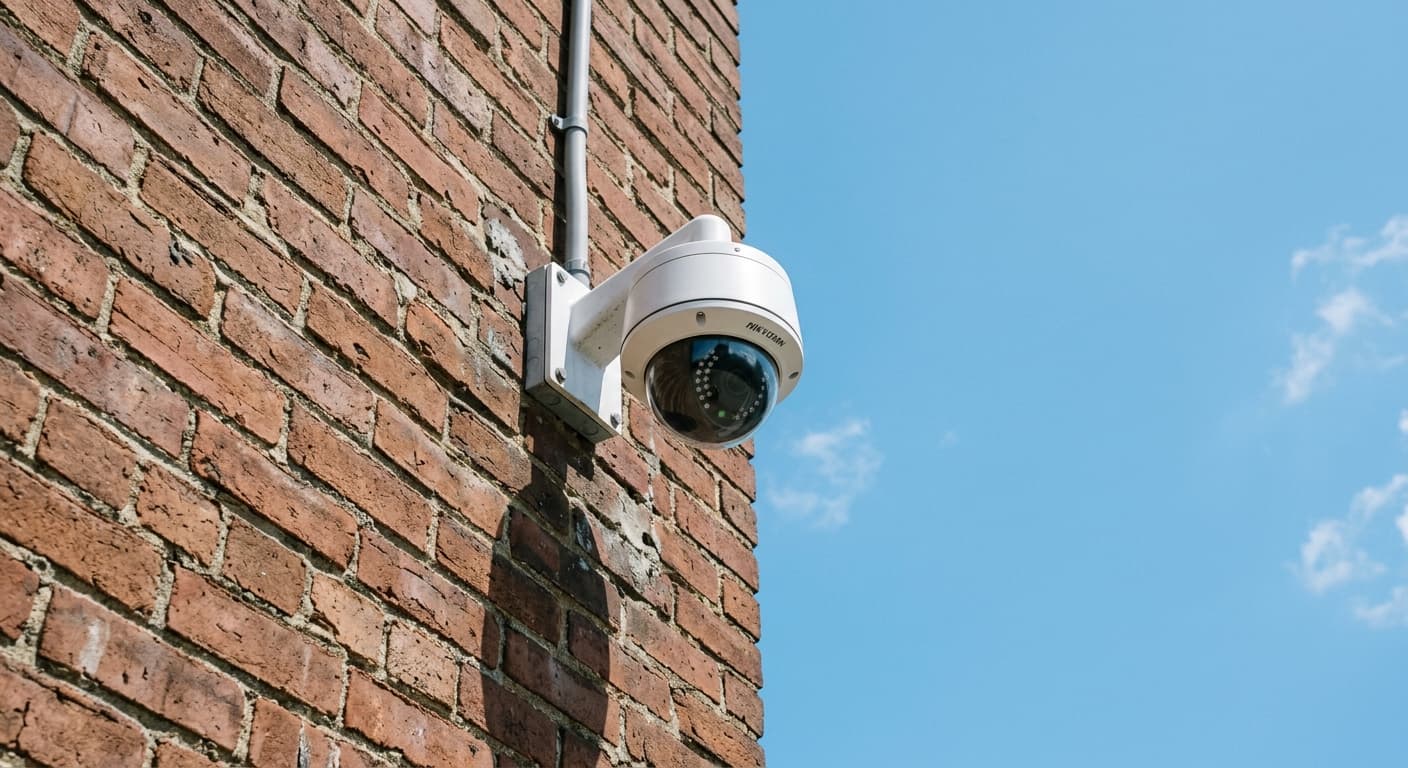
Iowa homeowners and tenants may install security cameras on their own property under Iowa Code 727.8, which explicitly authorizes monitoring devices for crime prevention. Audio recording follows the one-party consent rule in Iowa Code 808B.2, while Iowa Code 709.21 makes it a crime to view, photograph, or film someone in a state of nudity, without consent and for the purpose of arousing or gratifying sexual desire, in an area where they have a reasonable expectation of privacy.
Iowa law provides clear authority for property owners to use security cameras. Under Iowa Code 727.8, property owners and lessees may use monitoring devices placed on their own real property. This provision, combined with general privacy principles and the trespass-recording law, creates the framework governing security camera use across Iowa.
This guide covers the legal rules for residential and commercial security cameras in Iowa, including what you can and cannot record, audio recording considerations, neighbor disputes, HOA restrictions, and how security camera footage is used as evidence.
Iowa's Legal Framework for Security Cameras
Iowa Code 727.8: The Monitoring Device Exception
Iowa Code 727.8, Iowa's eavesdropping statute, includes a specific exception for security monitoring. The statute provides that nothing in the section prohibits the use by any person of a monitoring device placed on real property owned or leased by that person.
This exception has several important characteristics:
- It applies to both property owners and lessees (tenants)
- The monitoring device must be placed on the person's own real property, outside the dwelling or other structure and not in a shared hallway
- The exception is broad and does not limit the type of monitoring device. Note that a companion statute, Iowa Code § 727.8A, creates enhanced criminal penalties for placing monitoring devices on someone else's property during a trespass. In Animal Legal Defense Fund v. Reynolds, 89 F.4th 1071 (8th Cir. 2024), the Eighth Circuit upheld § 727.8A against First Amendment challenge, confirming that Iowa's property-based recording restrictions are constitutionally valid
- It covers both video and audio monitoring equipment placed outside the dwelling
This means Iowa law specifically authorizes you to install and operate audio-capable security cameras on the exterior of your own property, even if those cameras capture audio of conversations occurring within range. Indoor audio-capable cameras fall outside this exception and instead rely on Iowa's one-party consent law.
Iowa Code 808B.2: Audio on Security Cameras
When security cameras include audio recording capability, Iowa Code 808B.2 (the wiretapping statute) becomes relevant. Iowa's one-party consent rule generally requires that at least one party to a conversation consent to its recording.
However, the monitoring device exception in Iowa Code 727.8 provides additional authorization only for audio recording through security systems placed outside your dwelling or other structure (and not in a shared hallway). Indoor audio-capable cameras fall outside that exception and depend on Iowa's one-party consent law instead.
Iowa Code 709.21: Privacy Limitations
Iowa Code 709.21 limits where security cameras can be pointed. It is a crime to knowingly view, photograph, or film a person in a state of full or partial nudity, without consent, for the purpose of arousing or gratifying the sexual desire of any person, when that person has a reasonable expectation of privacy. This applies even to cameras on your own property if they are aimed at areas used by guests, tenants, or household members for private activities, though an ordinary security camera positioned for home-security reasons rather than a sexual purpose does not by itself satisfy 709.21's elements.
Residential Security Camera Rules
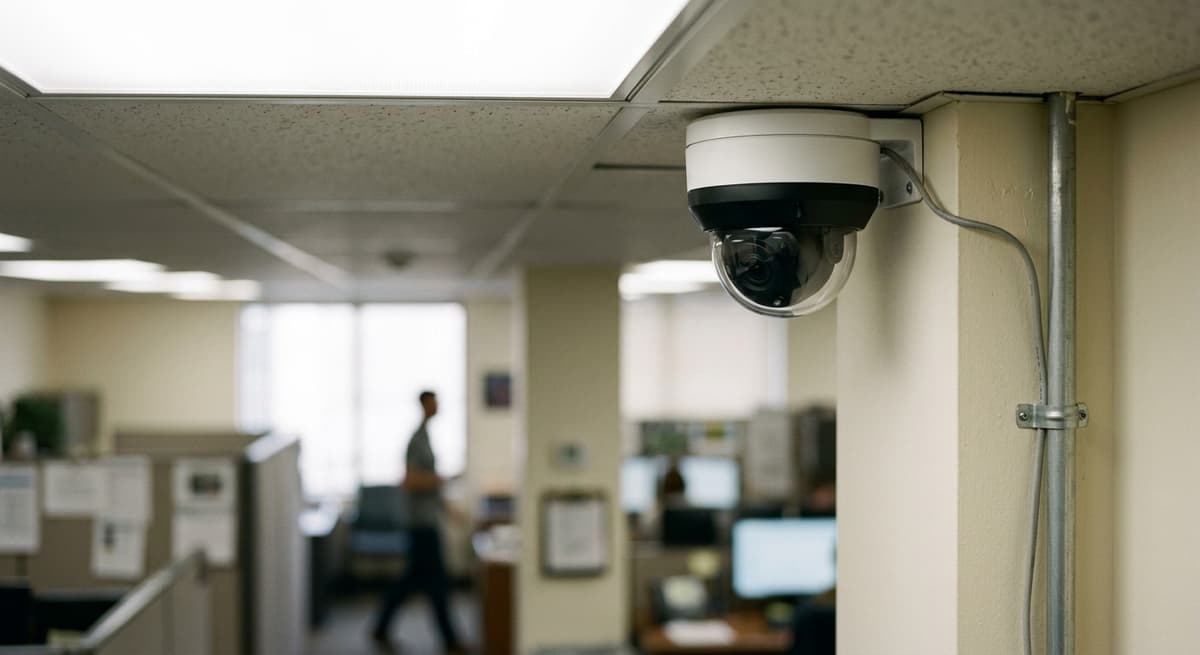
Cameras on Your Own Home
Iowa homeowners have broad rights to install security cameras on their property. You can place cameras:
- On exterior walls and eaves of your home
- At entry points (front door, back door, garage)
- In your driveway and on walkways
- In your yard and garden areas
- At gates and fence lines on your property
- Inside your home in common areas (video is generally unrestricted; if the camera also records audio, the Iowa Code 727.8 monitoring device exception does not cover indoor placement, so Iowa's one-party consent law governs instead)
Smart Doorbells and Video Systems
Smart doorbell cameras (such as Ring, Nest Hello, and similar devices) are legal in Iowa. These devices are monitoring devices placed on your own property, which falls squarely within the Iowa Code 727.8 exception. They can record:
- Video of anyone who approaches your door
- Audio of conversations at your doorstep
- Motion-triggered recordings of activity near your entrance
- Live video feeds accessible through smartphone apps
Where You Cannot Point Cameras
Even on your own property, security cameras must respect others' privacy. You should not aim cameras:
- Directly into a neighbor's windows, especially bedrooms and bathrooms
- At a neighbor's private enclosed backyard or patio area not visible from public spaces
- Into spaces where a reasonable person would expect privacy from observation
- At areas specifically designated for private activities
Recording your neighbor's property from a camera mounted on your home is generally permissible if the camera captures areas visible from public vantage points. The concern arises when cameras are positioned to surveil areas that would not normally be visible.
Audio Recording Considerations for Home Cameras
Many modern security cameras record audio in addition to video. In Iowa, the monitoring device exception in 727.8 authorizes audio recording through home security systems placed outside the dwelling, not indoors and not in a shared hallway. However, best practices include:
- Being aware that cameras with audio may capture neighbor conversations
- Adjusting audio sensitivity to minimize incidental capture of neighbor discussions
- Understanding that the "no criminal, tortious, or injurious purpose" limitation in 808B.2 still applies
Business Security Camera Rules
Employer Surveillance Rights
Iowa businesses can install video security cameras in their commercial spaces. If those cameras also record audio, the property owner/lessee monitoring device exception in Iowa Code 727.8 only covers devices placed outside a building and not in a shared hallway, so indoor audio recording instead depends on Iowa's one-party consent law. Businesses commonly install cameras in:
- Retail sales floors and customer areas
- Warehouses, storage rooms, and inventory areas
- Cash register and point-of-sale areas
- Parking lots and exterior perimeters
- Loading docks and delivery areas
- Lobbies, hallways, and reception areas
Where Business Cameras Are Prohibited
Businesses cannot install cameras in areas where employees or customers have a reasonable expectation of privacy:
- Employee restrooms and bathrooms
- Locker rooms and changing areas
- Break rooms designated for personal privacy
- Nursing rooms or lactation spaces
- Dressing rooms in retail stores
Installing cameras in these locations could violate Iowa Code 709.21 and expose the business to criminal charges and civil liability.
Notice Requirements for Businesses
Iowa does not have a specific statute requiring businesses to post signs notifying customers or employees about security camera surveillance. However, posting visible notices is a strongly recommended practice because it:
- Deters criminal activity
- Reduces the risk of invasion of privacy claims
- Creates a record that people on the premises were aware of cameras
- Demonstrates good faith in the event of a legal dispute
Many Iowa businesses post signs such as "Premises under video surveillance" or "Security cameras in use" at building entrances and in monitored areas.
Audio Recording in Business Settings
If business security cameras record audio, the monitoring device exception in Iowa Code 727.8 only authorizes this outside the building and not in a shared hallway; indoor audio recording instead depends on Iowa's one-party consent law. However, businesses should be aware that:
- Audio recording of private employee conversations in areas where employees expect privacy may create legal exposure
- Recording customer phone calls through ambient audio capture is different from recording face-to-face interactions
- Audio-enabled cameras in conference rooms or private offices fall outside the 727.8 exception and require one-party consent to record audio
Tenant and Renter Security Camera Rights
Tenant Rights Under Iowa Law
Iowa Code 727.8 allows lessees (tenants) to use monitoring devices on their leased property, but the statute's monitoring device definition covers only devices placed outside the dwelling and not in a shared hallway. This means tenants in Iowa can:
- Install exterior security cameras at their rented apartment or house
- Use smart doorbell cameras on their rental unit's entrance
- Place cameras in windows facing outward (public-facing views)
- Use video-only interior cameras in their own living spaces (audio-capable indoor cameras fall outside the 727.8 exception and instead depend on Iowa's one-party consent law)
Landlord Approval
While Iowa law permits tenants to use monitoring devices on leased property, lease agreements may contain provisions about modifications to the rental unit. Tenants should:
- Review their lease for any restrictions on installing devices
- Check if the lease requires landlord approval for exterior modifications
- Use non-permanent mounting solutions when possible (adhesive mounts rather than screws)
- Consider discussing camera installation with the landlord to avoid disputes
Shared Spaces
In multi-unit buildings, security cameras in shared spaces (hallways, parking areas, laundry rooms) are typically the landlord's responsibility. Tenants generally do not have the authority to install cameras in common areas unless authorized by the landlord or property management.
Neighbor Disputes Over Security Cameras
Common Issues
Security camera disputes between Iowa neighbors typically involve:
- Cameras aimed at a neighbor's property, windows, or yard
- Concerns about audio recording of conversations
- Floodlights or infrared illuminators associated with cameras
- Data storage and who has access to footage
Legal Analysis
Iowa courts would evaluate neighbor security camera disputes by considering:
- Location of the camera: Is it on the camera owner's property?
- What the camera captures: Does it record areas where the neighbor has a reasonable expectation of privacy?
- Purpose of the camera: Is it for legitimate security purposes or designed to harass?
- Impact on the neighbor: Does the surveillance create an unreasonable intrusion?
A security camera aimed at your own front door that incidentally captures a portion of your neighbor's driveway is likely permissible. A camera specifically positioned to peer into your neighbor's bedroom window could violate Iowa Code 709.21 or constitute a common law invasion of privacy.
Resolving Disputes
Before pursuing legal action, Iowa neighbors should:
- Discuss the concern directly with the camera owner
- Request that the camera angle be adjusted to minimize intrusion
- Contact local mediation services if direct discussion fails
- Consult with an attorney if the issue involves genuine privacy violations
- File a police report if the camera placement appears designed to harass or stalk
HOA and Condominium Rules
HOA Authority Over Security Cameras
Iowa homeowners' associations (HOAs) may have rules governing security cameras within their communities. Common HOA restrictions include:
- Limitations on the size and visibility of exterior cameras
- Requirements for camera color to match building aesthetics
- Restrictions on where cameras can be mounted
- Rules about camera angles to protect neighbor privacy
- Approval requirements before installation
Legal Hierarchy
In Iowa, HOA rules operate as contractual obligations between the homeowner and the association. However, HOA rules cannot override state law. An HOA could restrict where cameras are placed for aesthetic reasons, but it cannot prevent a homeowner from using monitoring devices on their property if Iowa Code 727.8 authorizes it.
If an HOA attempts to completely ban security cameras, homeowners may have grounds to challenge the restriction as unreasonable, particularly if it interferes with their ability to protect their property.
Security Camera Footage as Evidence
Admissibility in Court
Security camera footage is commonly used as evidence in Iowa courts. The footage must meet standard evidentiary requirements:
- Authentication: Under Iowa Rule of Evidence 5.901, the footage must be shown to be what it purports to be
- Relevance: The footage must relate to a fact at issue
- Best evidence rule: Original footage is preferred over copies when the content of the recording is at issue
Providing Footage to Law Enforcement
Iowa residents are not required to share security camera footage with police. However, voluntarily providing footage can assist investigations and is generally recommended when:
- A crime has occurred on or near your property
- Police specifically request footage related to an active investigation
- The footage captures evidence of a hit-and-run, theft, or assault
If police request your footage and you decline, they may seek a court order or warrant to obtain it.
Data Retention
Iowa does not have a specific law requiring security camera footage to be retained for a certain period. However, if you are aware that footage may be relevant to a legal proceeding, you may have a legal obligation to preserve it. Destroying footage after receiving notice of litigation could result in sanctions for spoliation of evidence.
Smart Home Integration and Privacy
Connected Camera Systems
Modern security cameras often integrate with smart home ecosystems (Amazon Alexa, Google Home, Apple HomeKit). Iowa's monitoring device exception applies regardless of the technology used. However, privacy considerations arise when:
- Camera feeds are stored on cloud servers operated by third parties
- Multiple users have access to the camera system
- AI features analyze footage and identify individuals
- Cameras are accessible remotely through internet connections
Ring Neighbors and Community Programs
Community safety programs like Ring Neighbors allow users to share camera footage with neighbors and law enforcement. Participation is voluntary, and Iowa residents who participate should understand that shared footage may be visible to others in the community and to law enforcement agencies.
Data Security
Security camera owners in Iowa have a practical responsibility to secure their camera systems against unauthorized access. Best practices include:
- Using strong, unique passwords for camera accounts
- Enabling two-factor authentication
- Keeping camera firmware updated
- Using encrypted connections for remote access
- Regularly reviewing who has access to camera feeds
More Iowa Recording Laws
Audio Recording | Video Recording | Voyeurism and Hidden Cameras | Workplace Recording | Recording Police | Phone Call Recording | Security Cameras | Recording in Public | Landlord-Tenant Recording | Dashcam Laws | School Recording | Medical Recording
More Iowa Recording Topics
See Also
- Iowa Surveillance Camera Laws covers home, HOA, neighbor, workplace, and landlord camera rules in Iowa.
More Iowa Laws
Frequently Asked Questions
Are security cameras legal in Iowa?
Yes. Iowa Code 727.8 explicitly allows property owners and lessees to use monitoring devices on their own real property. You can install security cameras on your home or business premises for crime prevention and security purposes. Cameras must not be aimed at areas where people have a reasonable expectation of privacy.
Can my security camera record audio in Iowa?
Outdoors, yes. The monitoring device exception in Iowa Code 727.8 covers both video and audio monitoring on the exterior of your own property. Indoors, that exception does not apply, so audio recording instead relies on Iowa's one-party consent law under Iowa Code 808B.2. Be aware that audio-enabled cameras may capture neighbor conversations, so positioning cameras carefully is advisable.
Can I point my security camera at my neighbor's property in Iowa?
Your camera can capture areas of a neighbor's property that are visible from public vantage points. However, you should not aim cameras directly at a neighbor's windows, private enclosed areas, or spaces where they have a reasonable expectation of privacy. Doing so could violate Iowa Code 709.21 or constitute an invasion of privacy.
Can my landlord install security cameras in my apartment in Iowa?
A landlord can install cameras in common areas (hallways, parking lots, building entrances) but cannot install cameras inside your rental unit without your knowledge and consent. Cameras in tenant bathrooms, bedrooms, or other private spaces violate Iowa Code 709.21. Tenants have the right to use their own exterior monitoring devices in their leased space under Iowa Code 727.8; indoor audio-capable devices fall outside that exception.
Do I have to give police my security camera footage in Iowa?
You are not required to voluntarily provide footage to police. However, police can obtain a court order or warrant to compel production of footage relevant to a criminal investigation. Voluntarily providing footage of crimes captured by your cameras is generally recommended to assist law enforcement.
Updates
Replaced a fabricated citation (Iowa Code 716.7A, which is actually an unrelated agricultural-trespass statute) with the correct camera-while-trespassing statute, Iowa Code 727.8A, and clarified that Iowa Code 709.21 only restricts camera placement when done for a sexual purpose, not merely because a camera could capture a private area.
Independently fact-checked against the cited primary sources; governing law re-checked for recent changes
Governing law re-checked for recent changes
Clarified throughout the article that Iowa Code 727.8's monitoring-device exception (which authorizes audio-capable security cameras) covers only devices placed outside a dwelling or building and not in a shared hallway; indoor audio recording relies on Iowa's one-party consent law instead.
Corrected two remaining passages that said the Iowa Code 727.8 monitoring-device exception covers indoor audio recording; the statute only exempts devices placed outside the dwelling and not in a shared hallway.
Governing law re-checked for recent changes
Reviewed and approved by an editor
The Law Behind This Article
This article rests on the statutory provisions below, held in our own legal record and retrieved from the official source. Tap a section to read the operative text.
Iowa Code, Chapter 727: HEALTH, SAFETY, AND WELFARE
§ 727.8Electronic and mechanical eavesdropping.In forcecited in 15 of our articles
1. “Monitoring device” means a digital video or audio streaming or recording device that records, listens to, or otherwise intercepts video or audio communications in order to provide proof of or prevent criminal activity that is placed outside of a person’s dwelling or other structure that is not in a shared hallway and is on real property owned or leased by the person. 2. Any person, having no right or authority to do so, who taps into or connects a listening or recording device to any telephone or other communication wire, or who by any electronic or mechanical means listens to, records, or otherwise intercepts a conversation or communication of any kind, commits a serious misdemeanor. 3. This section does not apply to any of the following: a. The recording by a sender or recipient of a message or one who is openly present and participating in or listening to a communication from recording such message or communication. b. The use of any radio or television receiver to receive any communication transmitted by radio or wireless signal. c. The use of a monitoring device.
Official text (excerpt) · last checked 2026-07-29 · Read the full text in our law library · Verify at legis.iowa.gov
Cited in 8 court opinions in our collectionLatest citing opinion in our collection: 2024
In the courts (editorial summary, independently checked):State v. Reid (1986) read the section's exception to let a sender, recipient, or person openly present and participating record a conversation without all-party consent or a court order. State v. Philpott (2005) affirmed a conviction for leaving a voice-activated recorder running in an office during the defendant's absence.
Opinions citing this section in our collection:
- State v. Philpott (Supreme Court of Iowa 2005, 702 N.W.2d 500)✓A court clerk left a voice-activated recorder running on her desk while at lunch, capturing coworkers; the court affirmed her section 727.8 conviction, holding a jury could find she intended to record conversations that took place during her absence.
- State v. Reid (Supreme Court of Iowa 1986, 394 N.W.2d 399)✓Police had a ten-year-old girl call the defendant and taped the call, then videotaped his station interview without telling him; the court held both recordings fell within section 727.8's exception for a participant, so no court order or all-party consent was needed.
- State v. Fox (Supreme Court of Iowa 1992, 493 N.W.2d 829)✓A deputy monitored a county jail inmate's outgoing phone call, and what she said led to a cell search that turned up marijuana; the court held the right or authority to monitor under section 727.8 comes from chapter 808B, whose law-enforcement exception covered him.
Identified automatically from the court opinions citing this section — not a ranking of which case controls.
Also relied on in: Iowa Audio Recording Laws: One-Party Consent Rules and Penalties (2026), Iowa Dashcam Laws: Recording Rules, Windshield Mounting, and Legal Limits (2026), Iowa Landlord-Tenant Recording Laws: Surveillance and Privacy Rights (2026)
§ 727.8ACameras or electronic surveillance devices — trespass.In forcecited in 9 of our articles
A person committing a trespass as defined in section 716.7 who knowingly places or uses a camera or electronic surveillance device that transmits or records images or data while the device is on the trespassed property commits an aggravated misdemeanor for a first offense and a class “D” felony for a second or subsequent offense.
Official text (excerpt) · last checked 2026-07-29 · Read the full text in our law library · Verify at legis.iowa.gov
Cited in 2 court opinions in our collectionLatest citing opinion in our collection: 2026
Opinions citing this section in our collection:
- Animal Legal Defense Fund v. Kimberly Reynolds (Court of Appeals for the Eighth Circuit 2024, 89 F.4th 1071)“…or data while the device is on the trespassed property[.]” Iowa Code § 727.8A (“the Act”). Five animal-welfare groups…”
- Iowa Citizens for Community Improvement v. Kimberly Reynolds (Court of Appeals for the Eighth Circuit 2026)“…animal-welfare groups sued several Iowa officials, alleging Iowa Code § 727.8A violates their members’ First Amendment…”
Identified automatically from the court opinions citing this section — not a ranking of which case controls.
Also relied on in: Iowa Recording Laws (2026): One-Party Consent Rules, Iowa Ring Doorbell Laws: What You Need to Know in 2026, Iowa Surveillance Camera Laws (2026 Guide)
Iowa Code, Chapter 709: SEXUAL ABUSE
§ 709.21Invasion of privacy — nudity.In forcecited in 12 of our articles
1. A person who knowingly views, photographs, or films another person, for the purpose of arousing or gratifying the sexual desire of any person, commits invasion of privacy if all of the following apply: a. The other person does not consent or is unable to consent to being viewed, photographed, or filmed. b. The other person is in a state of full or partial nudity. c. The other person has a reasonable expectation of privacy while in a state of full or partial nudity. 2. As used in this section: a. “Full or partial nudity” means the showing of any part of the human genitals or pubic area or buttocks, or any part of the nipple of the breast of a female, with less than fully opaque covering. b. “Photographs or films” means the making of any photograph, motion picture film, videotape, or any other recording or transmission of the image of a person. 3. A person who violates this section commits an aggravated misdemeanor.
Official text (excerpt) · last checked 2026-08-31 · Read the full text in our law library · Verify at legis.iowa.gov
Cited in 19 court opinions in our collectionLatest citing opinion in our collection: 2026
In the courts (editorial summary, independently checked):Iowa courts apply section 709.21 element by element. State of Iowa v. Nathaniel Wade Marchant affirmed a conviction on circumstantial proof of hidden bedroom cameras; State of Iowa v. Paul Andrew Monahan reversed, finding no objectively reasonable expectation of privacy at open public restroom urinals.
Opinions citing this section in our collection:
- State of Iowa v. Paul Andrew Monahan (Court of Appeals of Iowa 2018, 919 N.W.2d 635)✓A man was convicted under section 709.21 for allegedly looking at teenage boys at urinals in a public restroom at a track meet; the court reversed, finding no objectively reasonable expectation of privacy at those open urinals and insufficient evidence of a sexual purpose.
- Iowa Supreme Court Attorney Disciplinary Board v. Templeton (Supreme Court of Iowa 2010, 784 N.W.2d 761)✓A lawyer repeatedly peered into women's bedroom and bathroom windows and pleaded guilty to six counts of invasion of privacy under section 709.21; the court did not interpret the statute but held those convictions reflected adversely on his fitness to practice law.
- State of Iowa v. Nathaniel Wade Marchant (Court of Appeals of Iowa 2026)✓The mother's live-in partner hid a camera in her 13-year-old daughter's bedroom, and over 1,000 nude images were found on his phones; the court held the circumstantial evidence sufficed to sustain his invasion-of-privacy conviction under section 709.21(1).
Identified automatically from the court opinions citing this section — not a ranking of which case controls.
Also relied on in: Iowa Video Recording Laws: Where You Can and Cannot Film (2026), Iowa Voyeurism and Hidden Camera Laws: Iowa Code 709.21 Penalties (2026), Iowa Workplace Recording Laws: Employee and Employer Rights (2026)
Iowa Code, Chapter 716: DAMAGE AND TRESPASS TO PROPERTY
§ 716.7AFood operation trespass.In force
1. As used in this section, unless the context otherwise requires: a. “Apiary” and “bee” mean the same as defined in section 160.1A. b. “Food animal” means an animal belonging to the bovine, caprine, ovine, or porcine species; farm deer as defined in section 170.1; turkeys, chickens, or other poultry; fish or other aquatic organisms confined in private waters for human consumption; or bees. c. “Food establishment”, “food processing plant”, and “farmers market” mean the same as defined in section 137F.1. d. (1) “Food operation” means any of the following: (a) A location where a food animal is produced, maintained, or otherwise housed or kept, or processed in any manner. (b) A location other than as described in subparagraph division (a) where a food animal is kept, including an apiary, livestock market, vehicle or trailer attached to a vehicle, fair, exhibition, or a business operated by a person licensed to practice veterinary medicine pursuant to chapter 169.
Official text (excerpt) · last checked 2026-07-29 · Read the full text in our law library · Verify at legis.iowa.gov
Iowa Code, Chapter 808B: INTERCEPTION OF COMMUNICATIONS
§ 808B.2Unlawful acts — penalty.In forcecited in 18 of our articles
1. Except as otherwise specifically provided in this chapter, a person who does any of the following commits a class “D” felony: a. Willfully intercepts, endeavors to intercept, or procures any other person to intercept or endeavor to intercept, a wire, oral, or electronic communication. b. Willfully uses, endeavors to use, or procures any other person to use or endeavor to use an electronic, mechanical, or other device to intercept any oral communication when either of the following applies: (1) The device is affixed to, or otherwise transmits a signal through, a wire, cable, or other like connection used in wire communication. (2) The device transmits communications by radio, or interferes with the transmission of radio communications. c. Willfully discloses, or endeavors to disclose, to any other person the contents of a wire, oral, or electronic communication, knowing or having reason to know that the information was obtained through the interception of a wire, oral, or electronic communication in violation of this subsection. d.
Official text (excerpt) · last checked 2026-08-31 · Read the full text in our law library · Verify at legis.iowa.gov
Cited in 10 court opinions in our collectionLatest citing opinion in our collection: 2017
In the courts (editorial summary, independently checked):Iowa courts have applied 808B.2 to covert recordings by private parties. State v. Spencer (2007) read its one-party consent exception to include vicarious consent, but only where a parent has a good faith, objectively reasonable basis for consenting for a minor child. Papillon v. Jones (2017) applied it to a hidden home recorder.
Opinions citing this section in our collection:
- Brenda Papillon v. Bryon Jones (Supreme Court of Iowa 2017, 892 N.W.2d 763)✓A man left a hidden voice-activated recorder in his ex-girlfriend's home and captured her private phone calls, then used them in their custody case; the court affirmed liability under Section 808B.2 but held punitive damages require proof he knew he was violating the chapter.
- Amended June 6, 2017 Brenda Papillon v. Bryon Jones (Supreme Court of Iowa 2017)“…n in district court against Jones, alleging a violation of Iowa Code section 808B.2, which prohibits “willfully intercept[…”
- Iowa Beta Chapter of Phi Delta Theta Fraternity v. State, University of Iowa (Supreme Court of Iowa 2009, 763 N.W.2d 250)✓A nonmember hid a recorder in a fraternity's private meeting room and gave the tape to university officials who used it to discipline the chapter; the court held the tape was a protected oral communication and read "willfully" in Section 808B.2 to mean purposeful conduct.
Identified automatically from the court opinions citing this section — not a ranking of which case controls.
Also relied on in: Iowa Smart Glasses Recording Laws (2026), Iowa Medical Recording Laws: Patient Rights, HIPAA, and One-Party Consent (2026), Iowa Phone Call Recording Laws: One-Party Consent for Calls (2026)
Search our full record of US law — 2.1 million sections, every state + federal →
Sources and References
- Iowa Code 727.8 - Electronic and Mechanical Eavesdropping(legis.iowa.gov).gov
- Iowa Code 808B.2 - Unlawful Acts and Penalty(legis.iowa.gov).gov
- Iowa Code 709.21 - Invasion of Privacy (Nudity)(legis.iowa.gov).gov
- Iowa Code 727.8A - Cameras or Electronic Surveillance Devices, Trespass(legis.iowa.gov).gov
- Iowa Rule of Evidence 5.901 - Authenticating or Identifying Evidence(legis.iowa.gov).gov
- ACLU of Iowa - Taking Photos or Videos in Iowa(aclu-ia.org)